
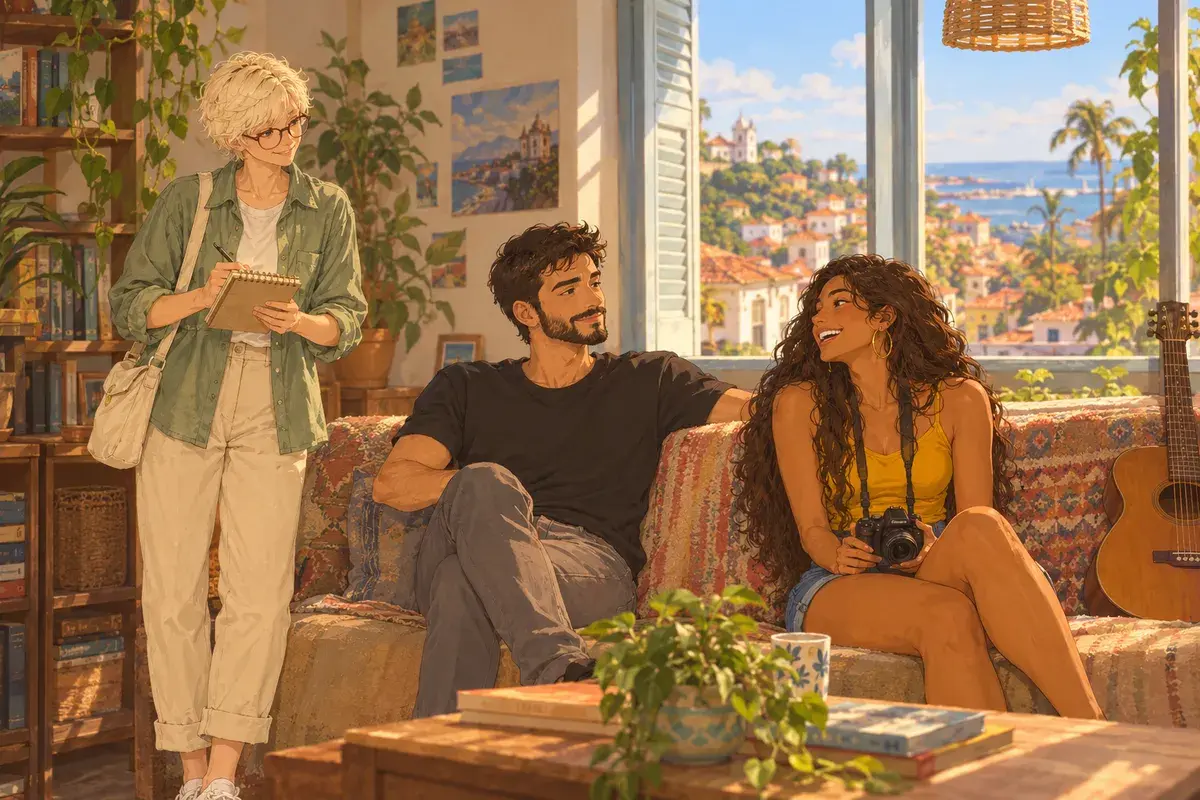
Portuguese dialogue with translation · B1 · 18 lines
Posso fazer algumas perguntas? Can I ask you a few questions?
Comic · 15 panels
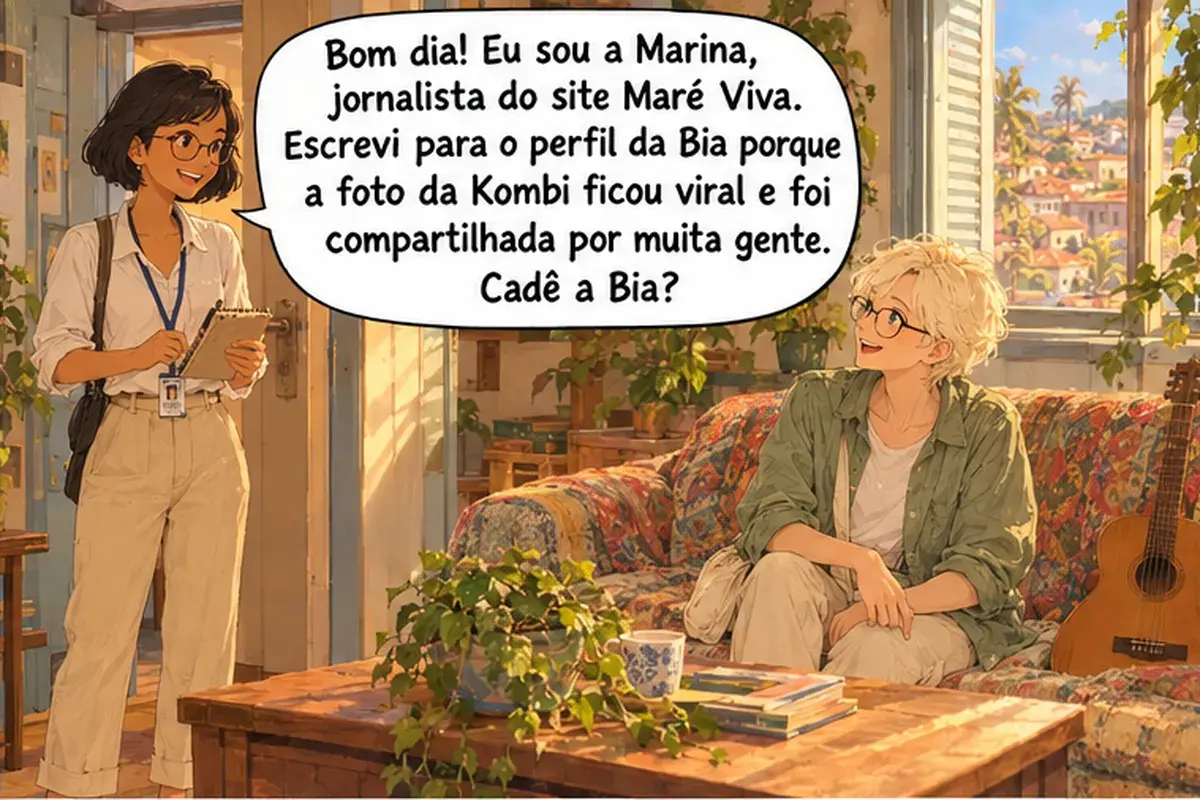
- Marina
Bom dia! Eu sou a Marina, jornalista do site Maré Viva. Escrevi para o perfil da Bia porque a foto da Kombi ficou viral e foi compartilhada por muita gente. Cadê a Bia?
Good morning! I'm Marina, a journalist with the website Maré Viva. I wrote to Bia's profile because the photo of the Kombi went viral and was shared by a lot of people. Where's Bia?
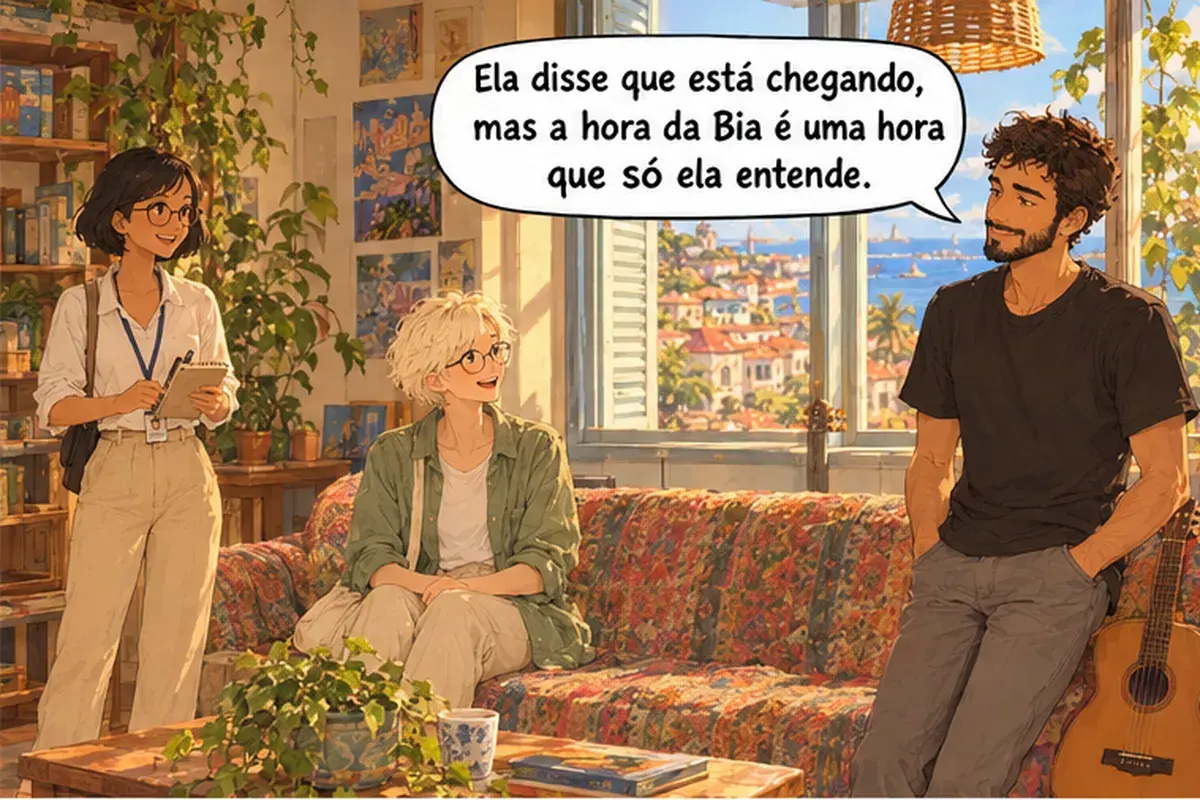
- Léo
Ela disse que está chegando, mas a hora da Bia é uma hora que só ela entende.
She said she's almost here, but Bia's time is a time that only she understands.
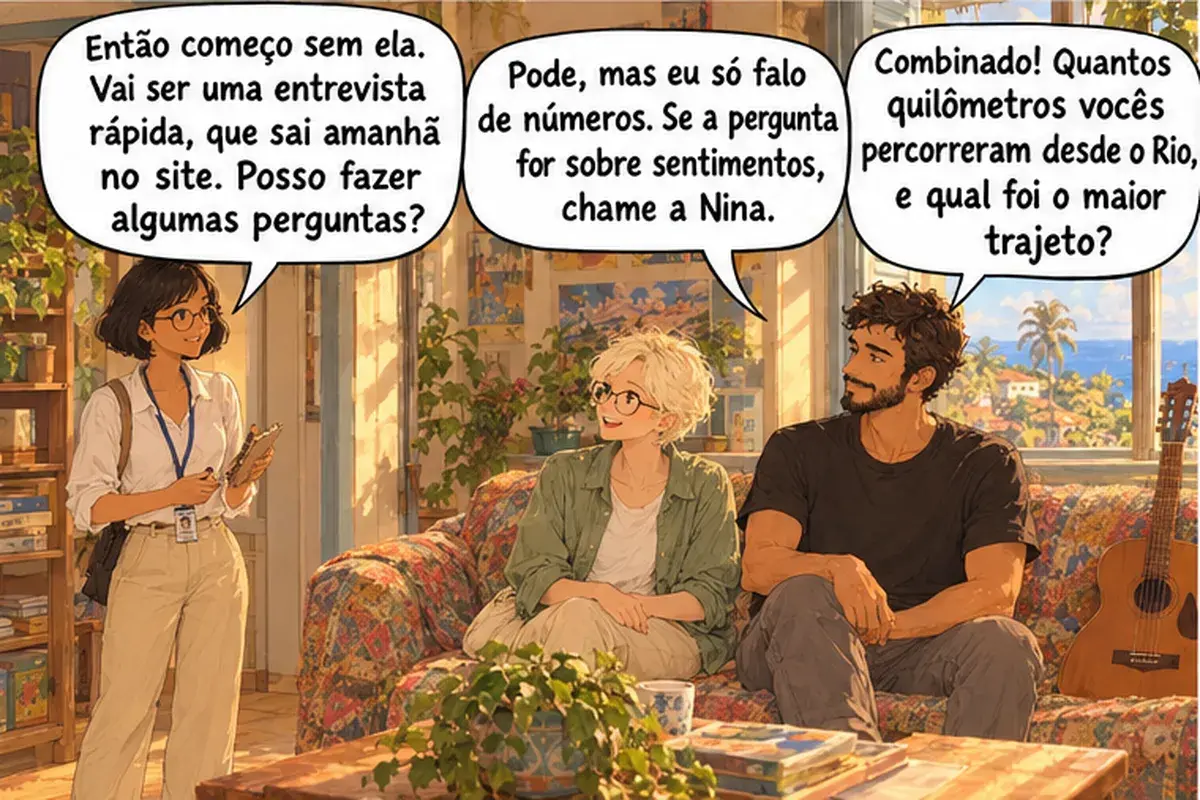
- Marina
Então começo sem ela. Vai ser uma entrevista rápida, que sai amanhã no site. Posso fazer algumas perguntas?
So I'll start without her. It'll be a quick interview, coming out tomorrow on the site. Can I ask a few questions?
- Léo
Pode, mas eu só falo de números. Se a pergunta for sobre sentimentos, chame a Nina.
Sure, but I only talk about numbers. If the question is about feelings, call Nina.
- Marina
Combinado! Quantos quilômetros vocês percorreram desde o Rio, e qual foi o maior trajeto?
Deal! How many kilometers have you covered since Rio, and which was the longest route? (to several people)
- Léo
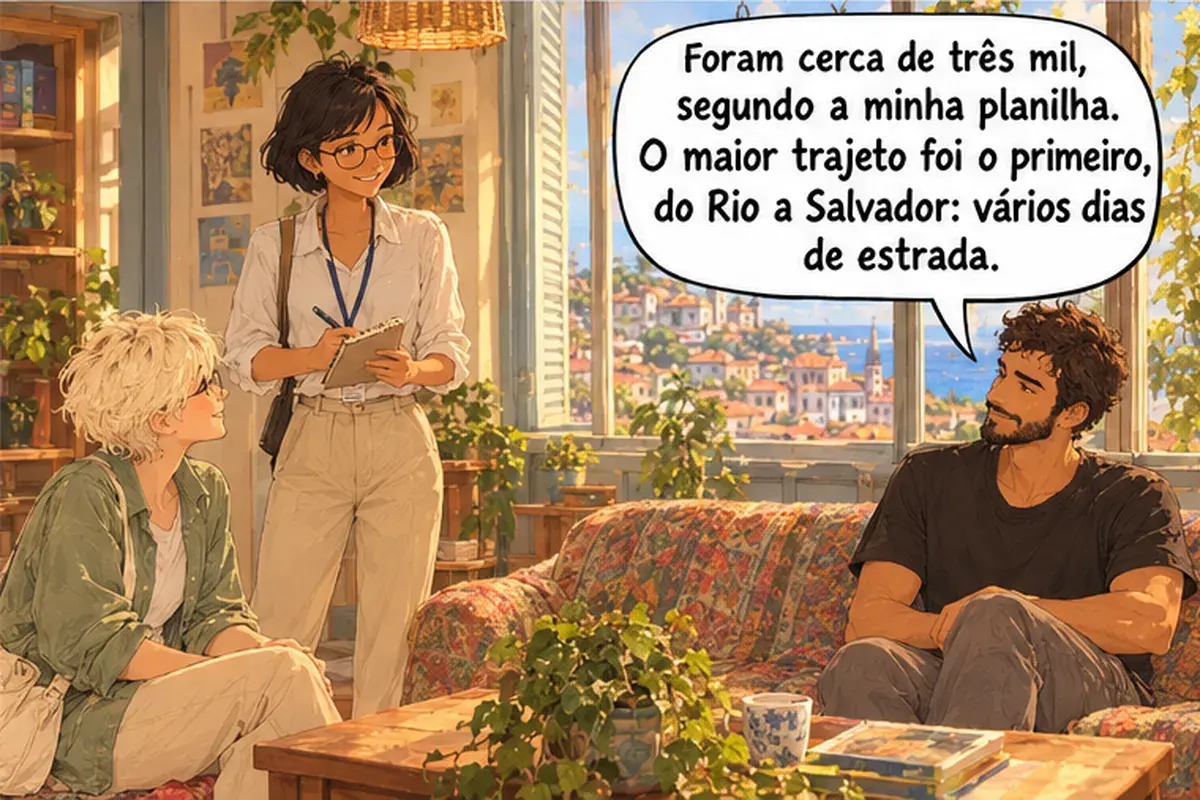
Foram cerca de três mil, segundo a minha planilha. O maior trajeto foi o primeiro, do Rio a Salvador: vários dias de estrada.
It was about three thousand, according to my spreadsheet. The longest route was the first one, from Rio to Salvador: several days on the road.
- Marina
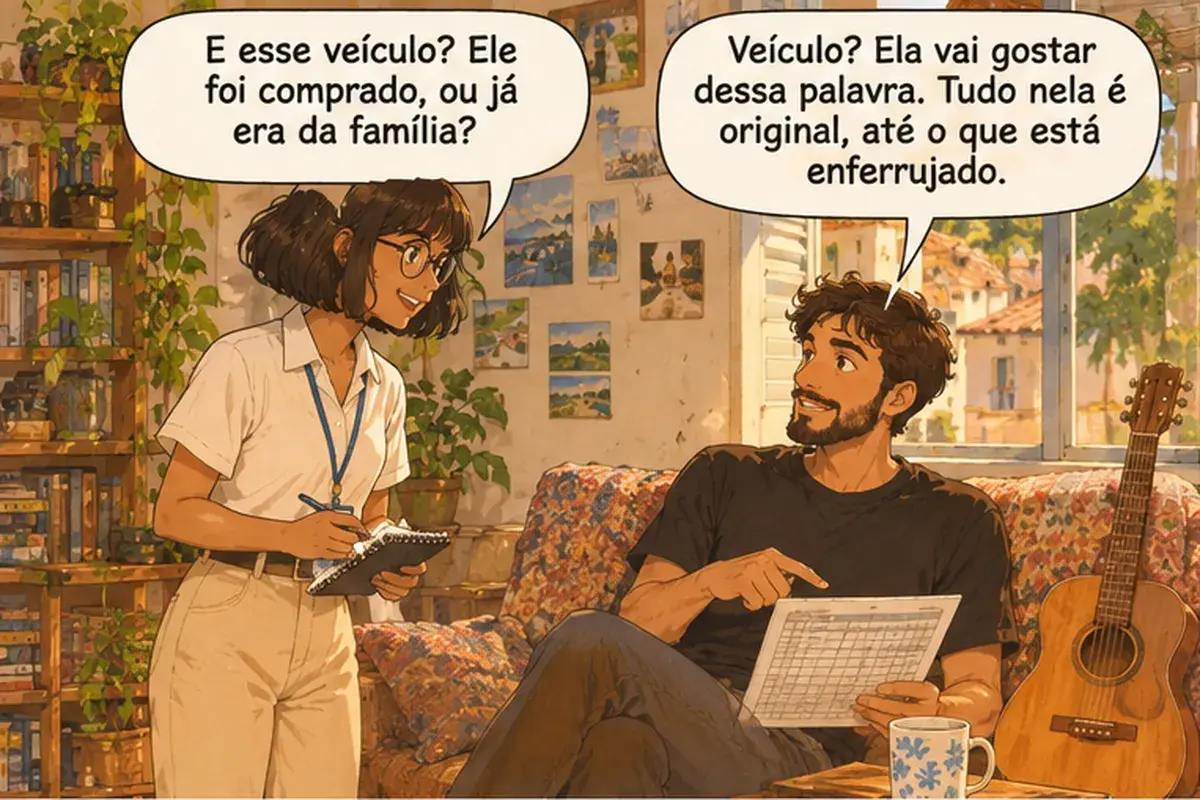
E esse veículo? Ele foi comprado, ou já era da família?
And this vehicle? Was it bought, or was it already in the family?
- Léo
Veículo? Ela vai gostar dessa palavra. Tudo nela é original, até o que está enferrujado.
Vehicle? She'll like that word. Everything about her is original, even what's rusty.
- Nina
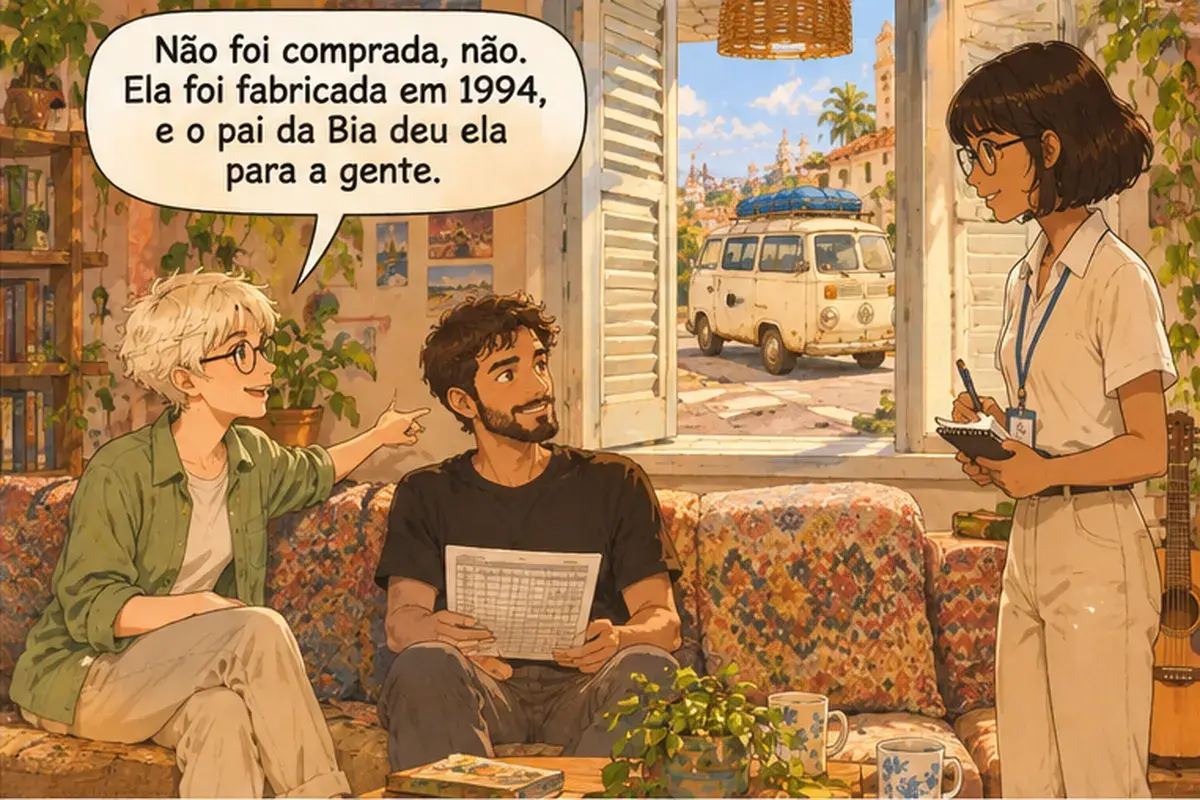
Não foi comprada, não. Ela foi fabricada em 1994, e o pai da Bia deu ela para a gente.
No, she wasn't bought. She was made in 1994, and Bia's dad gave her to us.
- Marina
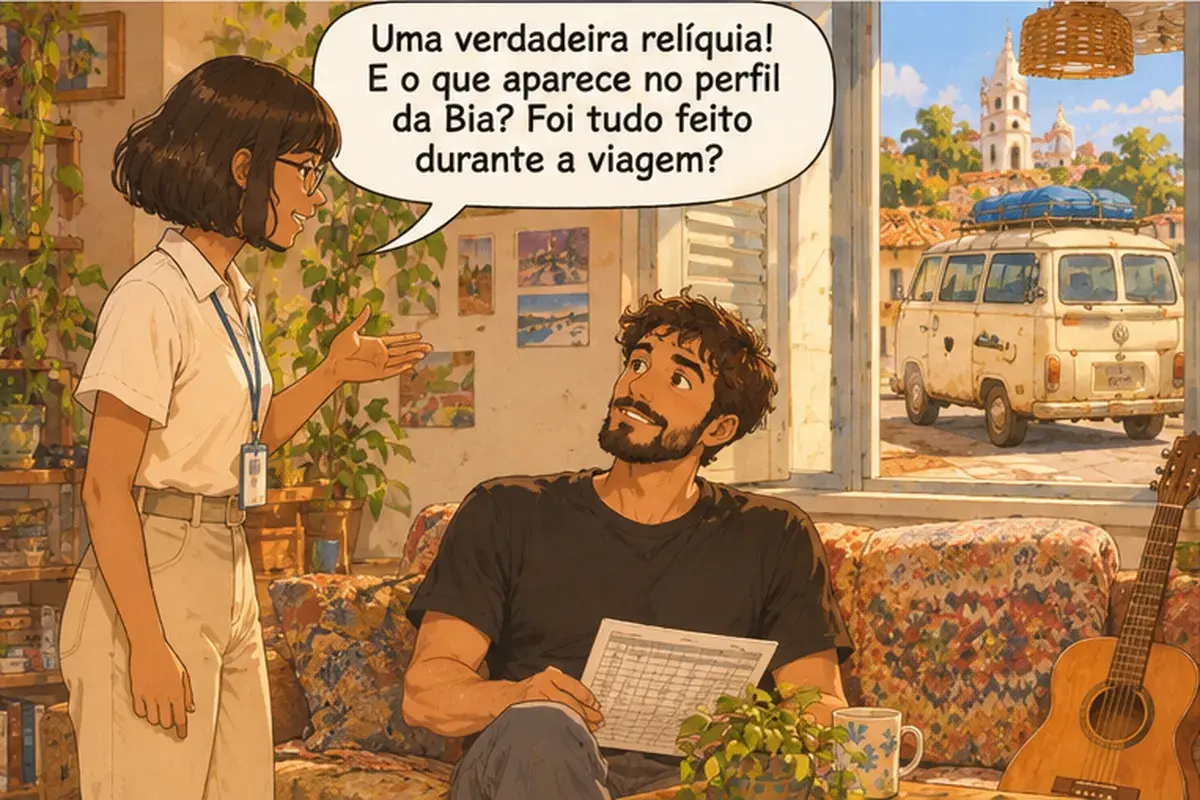
Uma verdadeira relíquia! E o que aparece no perfil da Bia? Foi tudo feito durante a viagem?
A real relic! And what appears on Bia's profile? Was it all made during the trip?
- Nina
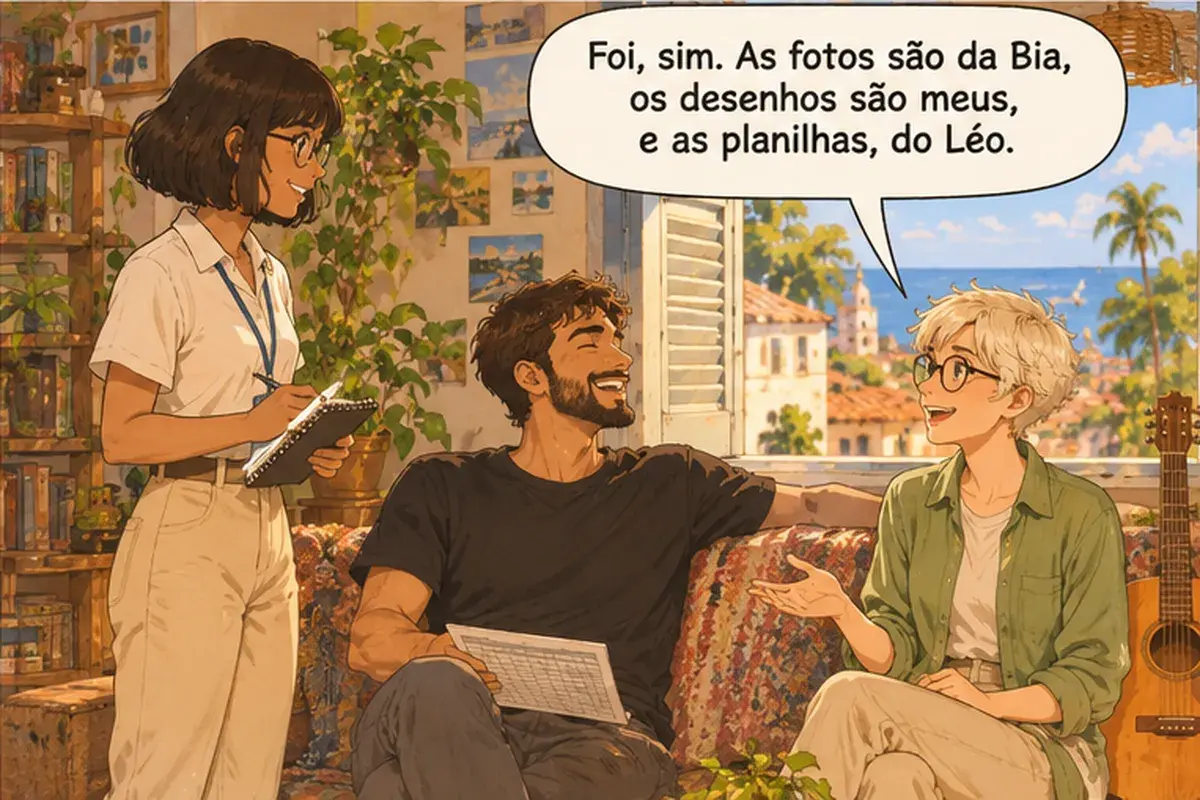
Foi, sim. As fotos são da Bia, os desenhos são meus, e as planilhas, do Léo.
Yes, it was. The photos are Bia's, the drawings are mine, and the spreadsheets are Léo's.
- Léo
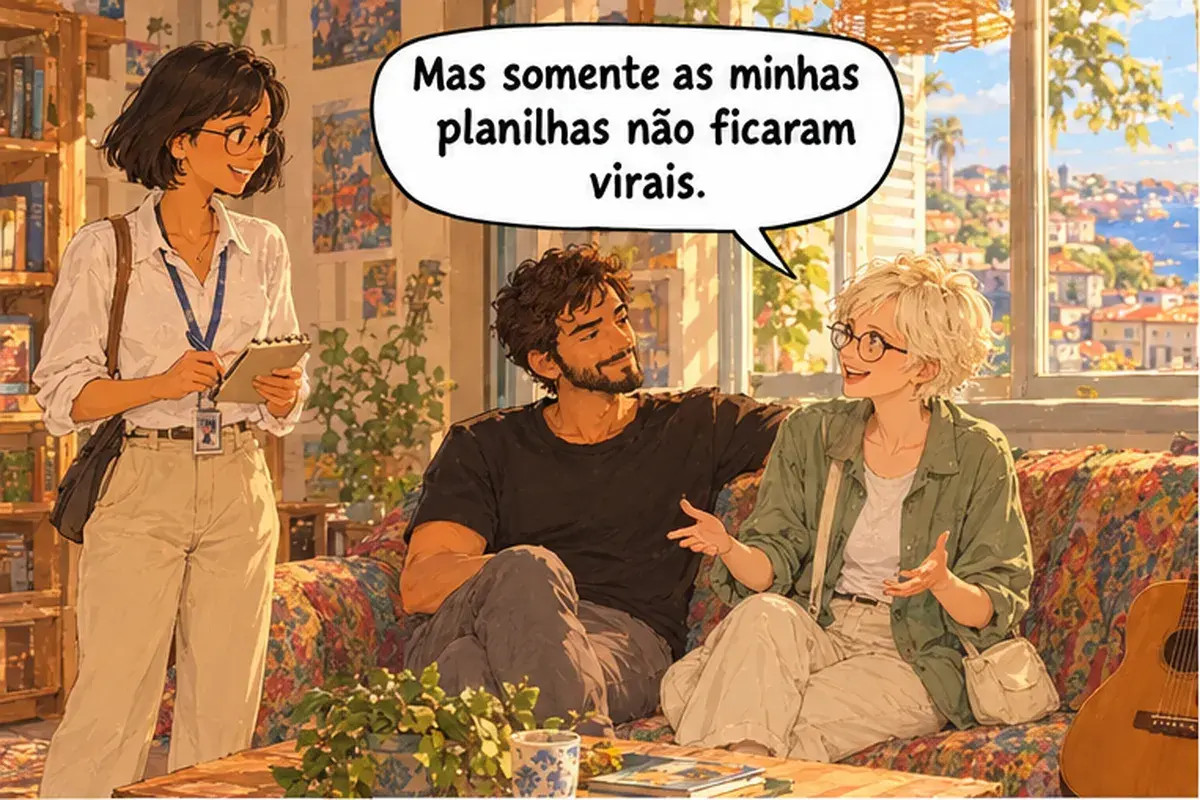
Mas somente as minhas planilhas não ficaram virais.
But only my spreadsheets didn't go viral.
- Bia
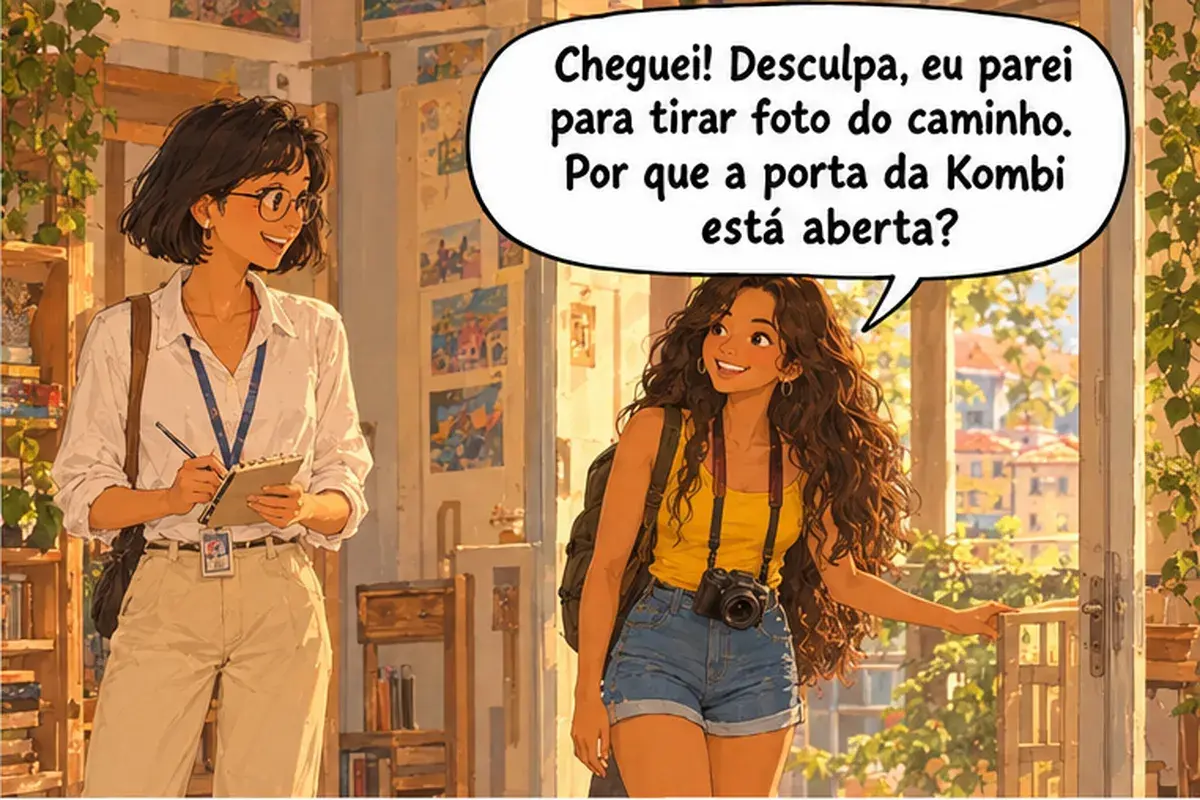
Cheguei! Desculpa, eu parei para tirar foto do caminho. Por que a porta da Kombi está aberta?
I made it! Sorry, I stopped to take a photo of the road. Why is the Kombi's door open?
- Léo
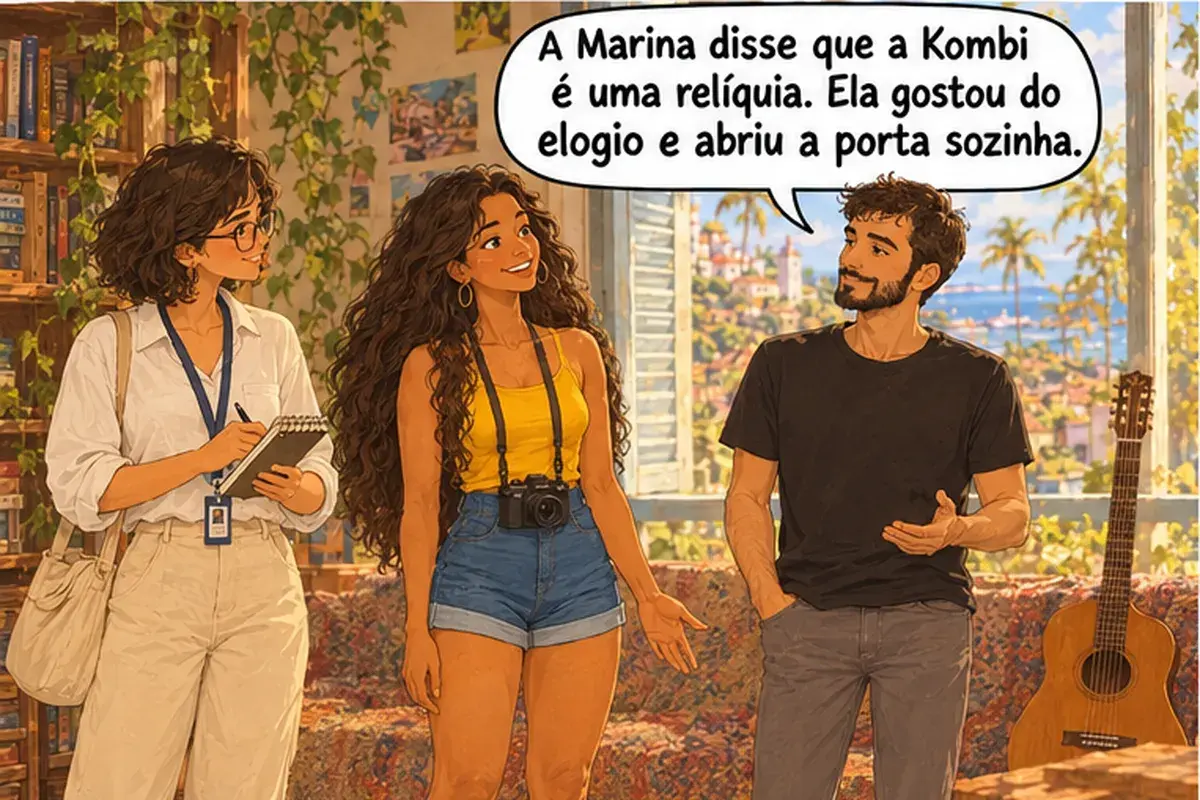
A Marina disse que a Kombi é uma relíquia. Ela gostou do elogio e abriu a porta sozinha.
Marina said the Kombi is a relic. She liked the compliment and opened the door by herself.
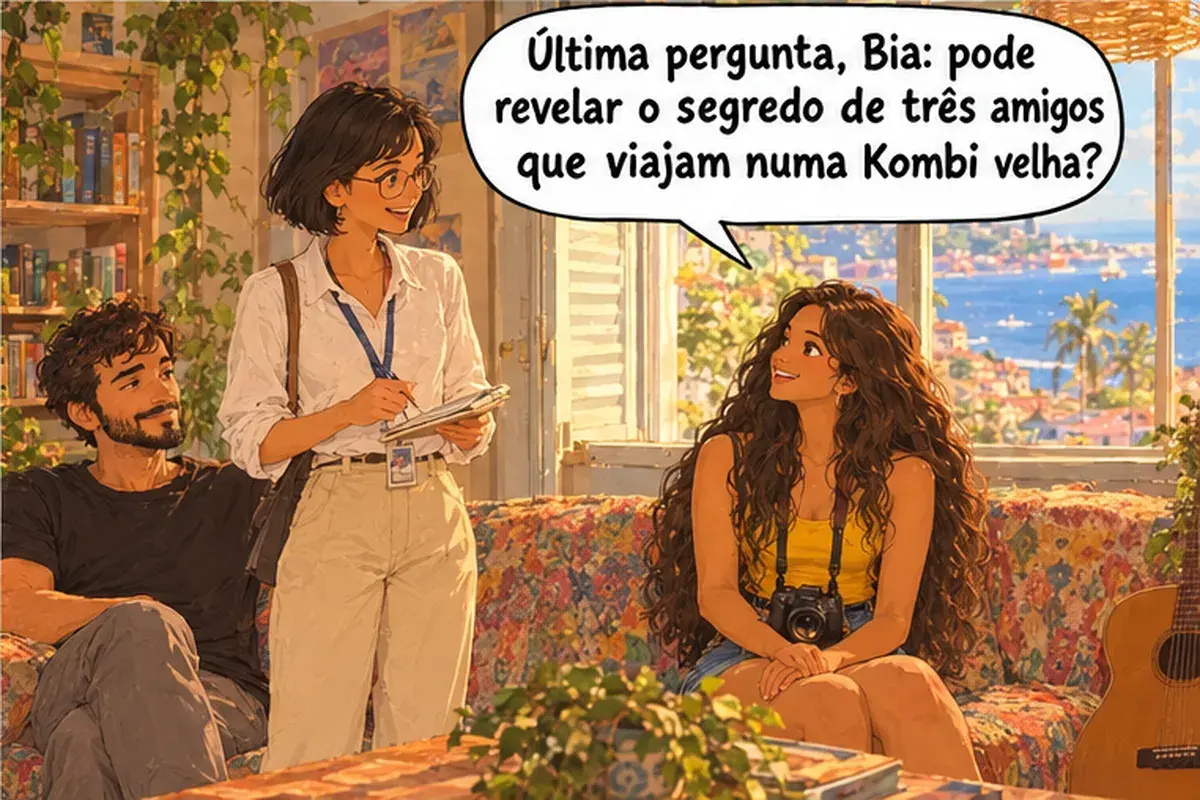
- Marina
Última pergunta, Bia: pode revelar o segredo de três amigos que viajam numa Kombi velha?
Last question, Bia: can you reveal the secret of three friends traveling in an old Kombi?
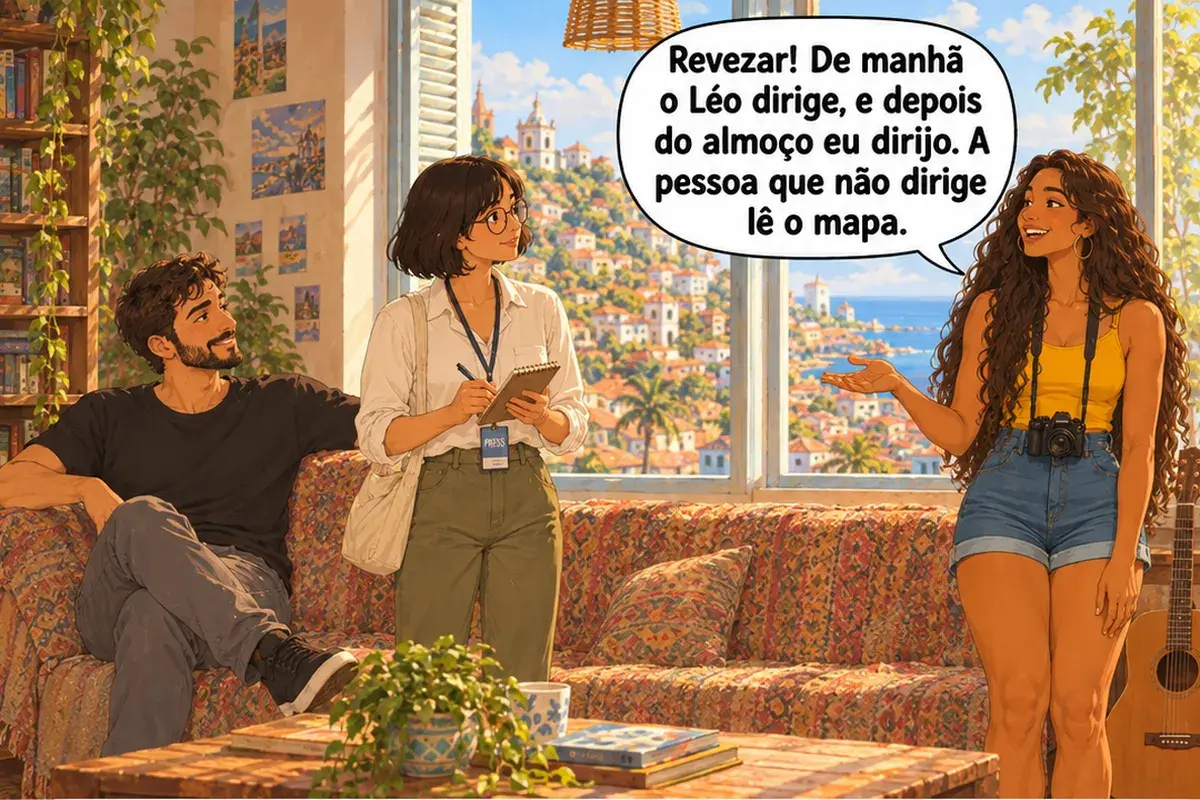
- Bia
Revezar! De manhã o Léo dirige, e depois do almoço eu dirijo. A pessoa que não dirige lê o mapa.
Taking turns! In the morning Léo drives, and after lunch I drive. Whoever isn't driving reads the map.
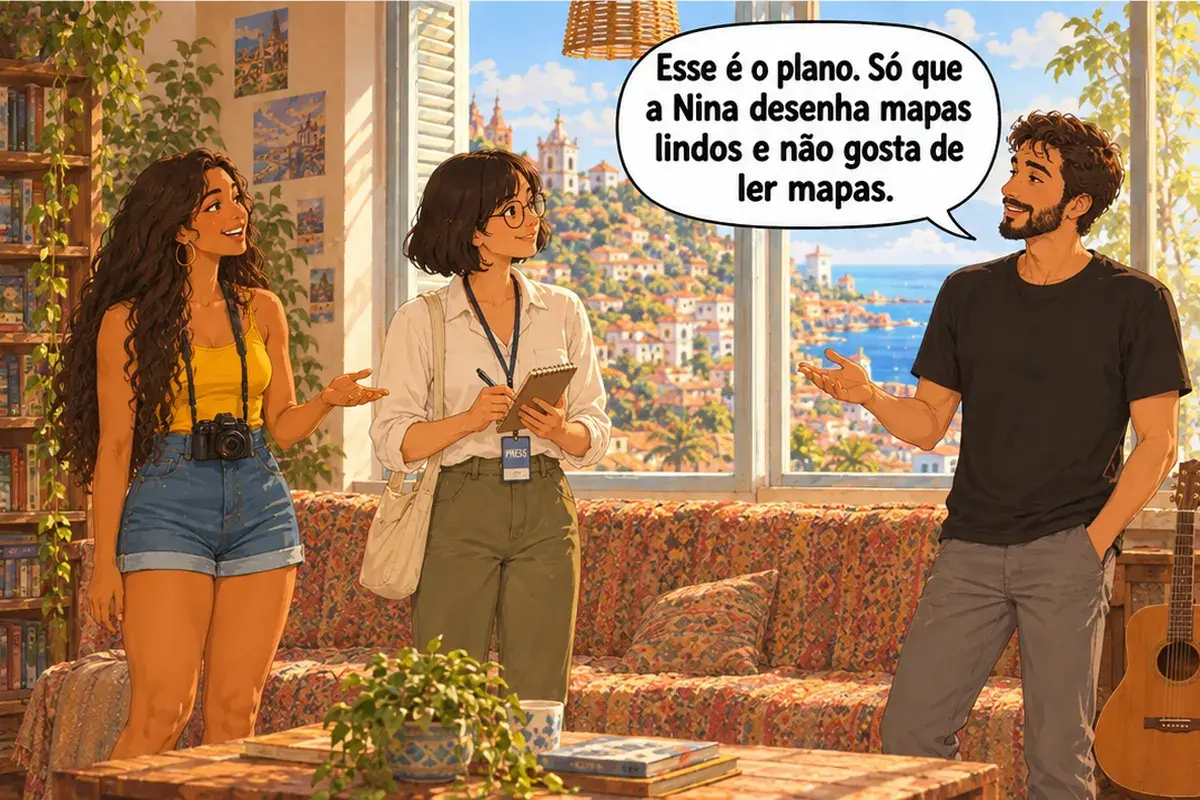
- Léo
Esse é o plano. Só que a Nina desenha mapas lindos e não gosta de ler mapas.
That's the plan. It's just that Nina draws beautiful maps and doesn't like reading maps.
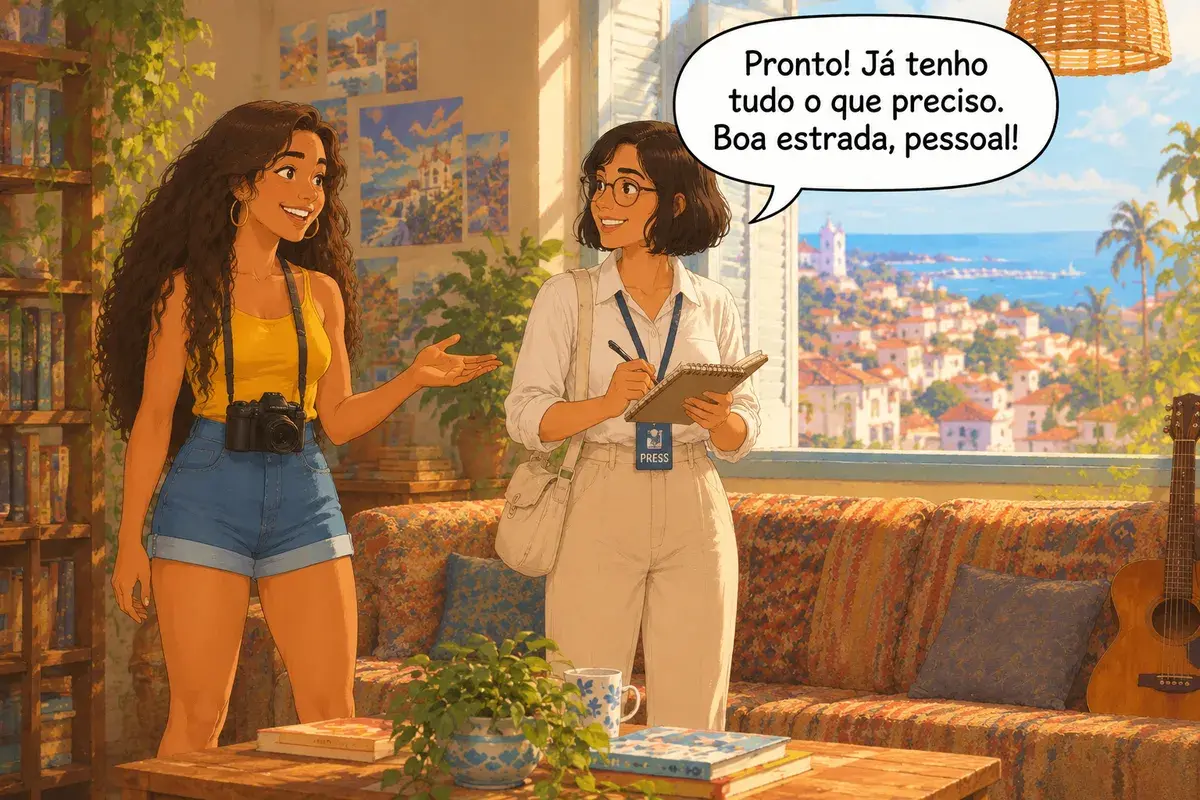
- Marina
Pronto! Já tenho tudo o que preciso. Boa estrada, pessoal!
Done! I have everything I need. Have a safe drive, everyone!
Grammar for this text
- a foto da Kombi ficou viral e foi compartilhada por muita gente — passive voice:
foi compartilhadameans “was shared” (foi+ participle; the participle is feminine, likefoto;portells you “by whom”).viralis an internet word for photos and videos that everyone shares. The journalist talks like the news; friends would use the active form:muita gente compartilhou a foto. - Ela disse que está chegando — reported speech:
disse que+ present tense, like English “she said she's coming”. - A Marina disse que a Kombi é uma relíquia — the same pattern:
disse que+ present tense. - cerca de três mil, segundo a minha planilha —
cerca demeans “about” (before a number);segundohere doesn't mean “second”, it means “according to”. - Veículo? Ela vai gostar dessa palavra —
veículois a word for documents and the news; in speech people saycarro.originalmeans “genuine” andatémeans “even”: even the rusty parts are genuine. - Ele foi comprado, ou já era da família? — passive with no “by whom”: people use it in real life too, when it doesn't matter who did it.
- Ela foi fabricada em 1994 — the same:
foi+ the participlefabricada. - Foi tudo feito durante a viagem? —
feitois the participle offazer(an irregular one, unit 14). - As fotos são da Bia, os desenhos são meus — Nina answers casually, without the passive.
- O pai da Bia deu ela para a gente — in speech, friends put
elaafter the verb:deu ela,comprei ela. In writing you would seea deu(see the section on “him, her” before the verb). The strict way out is to repeat the noun:deu a Kombi para a gente.
Words and grammar of the unit: Read a news story about yourself.
Learn the words from the texts with flashcards
In the app, you can tap any word in a text to see its translation, forms and examples, and new words stick with flashcards. 15 minutes a day.
Start for freeEverything is open for free. No card needed to sign up.