

Portuguese dialogue with translation · B1 · 16 lines
A Kombi foi fabricada em 1994 The Kombi was made in 1994
Comic · 16 panels
- Marina
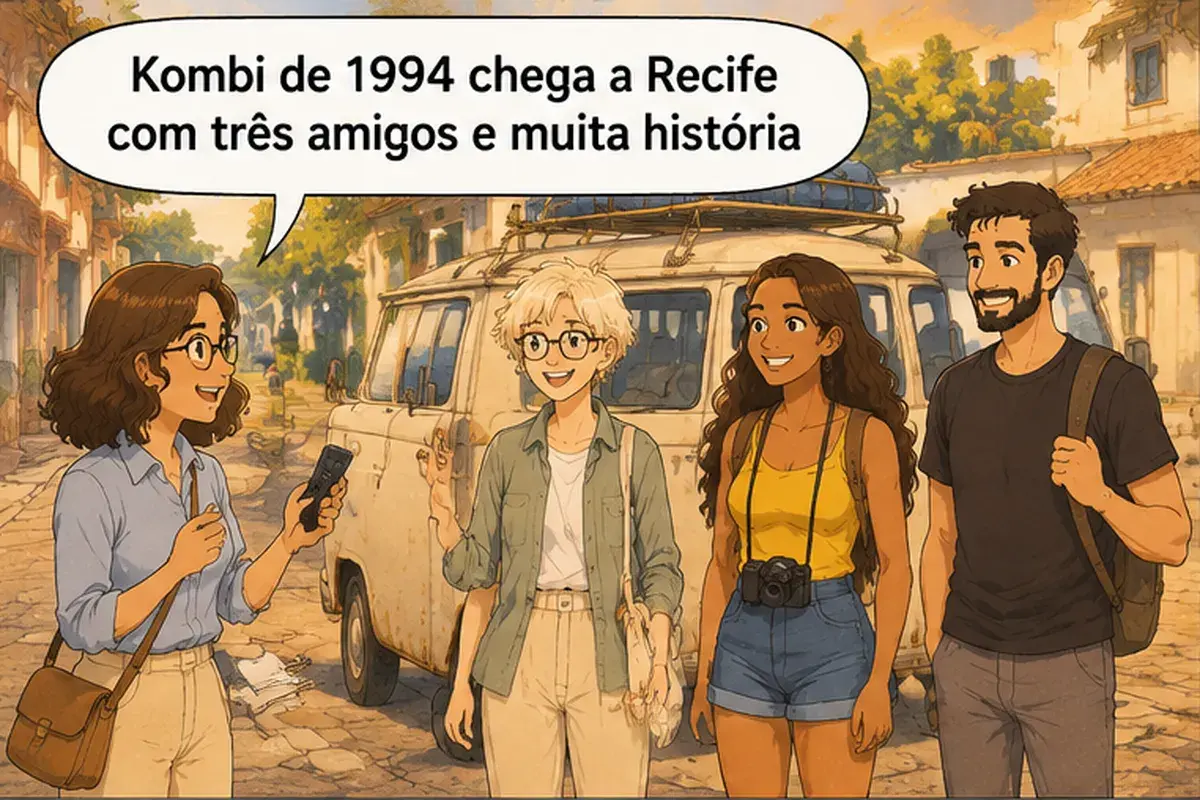
Kombi de 1994 chega a Recife com três amigos e muita história
1994 Kombi arrives in Recife with three friends and lots of stories

- Marina
A Kombi foi fabricada em 1994. Os amigos a chamam de Branquinha.
The Kombi was made in 1994. The friends call her Branquinha.
- Marina
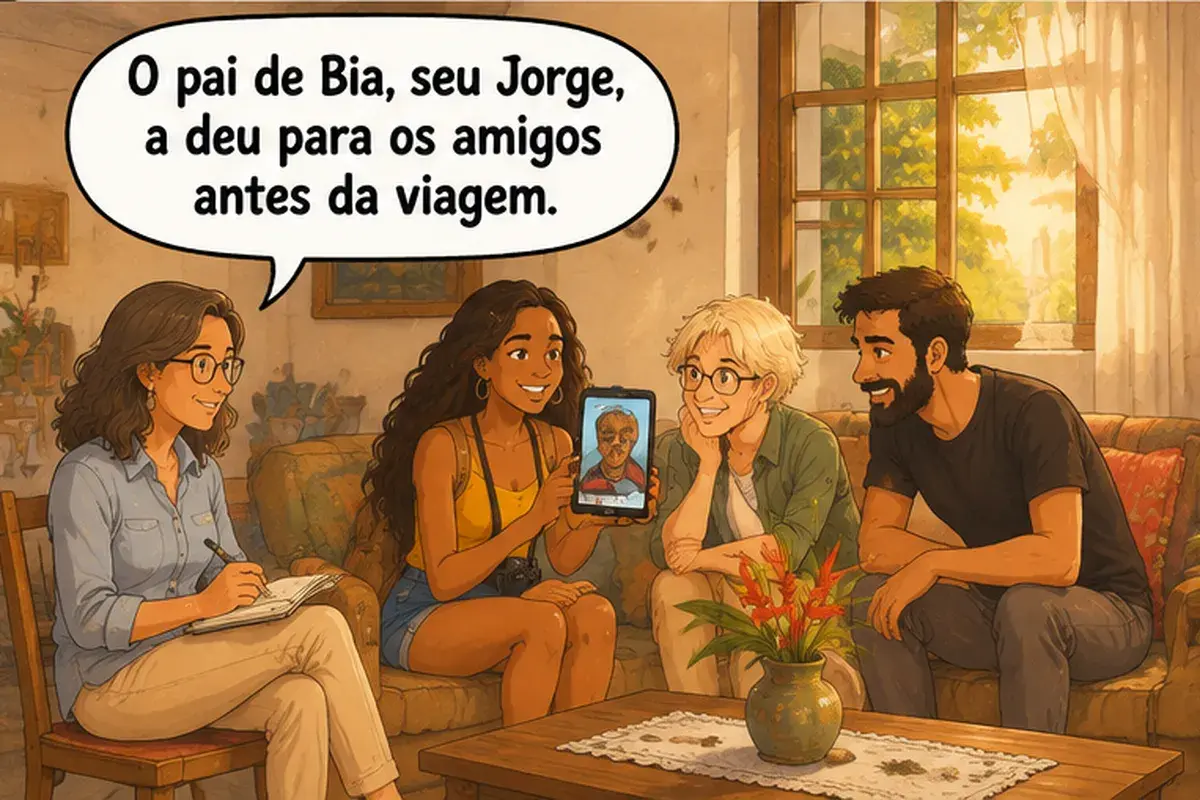
O pai de Bia, seu Jorge, a deu para os amigos antes da viagem.
Bia's father, Seu Jorge, gave her to the friends before the trip.
- Marina
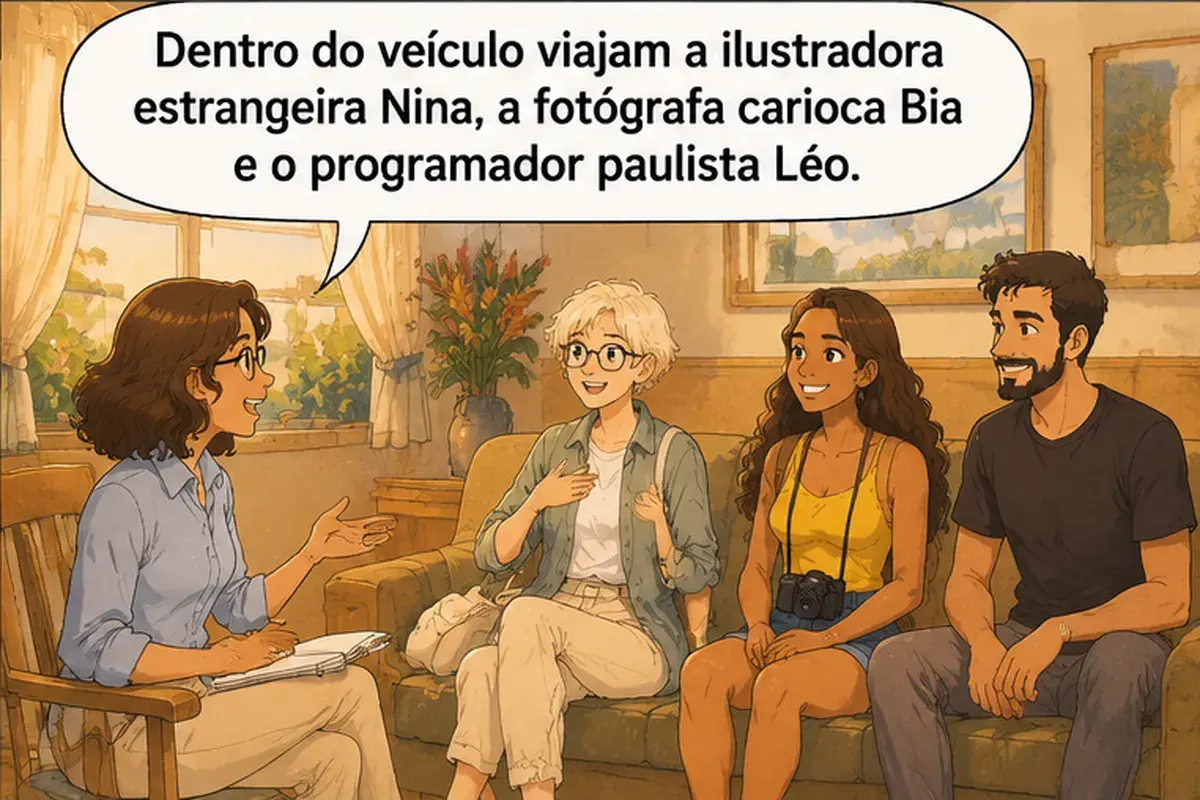
Dentro do veículo viajam a ilustradora estrangeira Nina, a fotógrafa carioca Bia e o programador paulista Léo.
Traveling inside the vehicle are the foreign illustrator Nina, Bia, a photographer from Rio, and Léo, a programmer from São Paulo.
- Marina
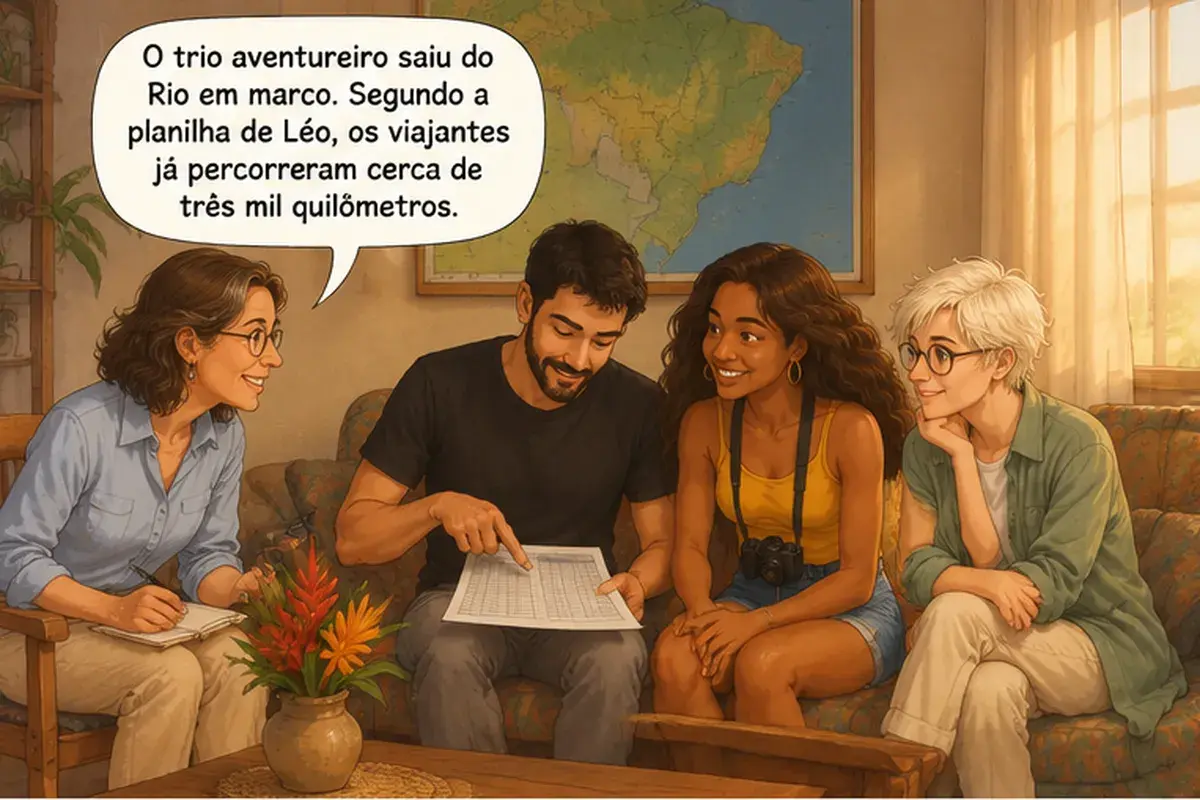
O trio aventureiro saiu do Rio em março. Segundo a planilha de Léo, os viajantes já percorreram cerca de três mil quilômetros.
The adventurous trio left Rio in March. According to Léo's spreadsheet, the travelers have already covered about three thousand kilometers.
- Marina
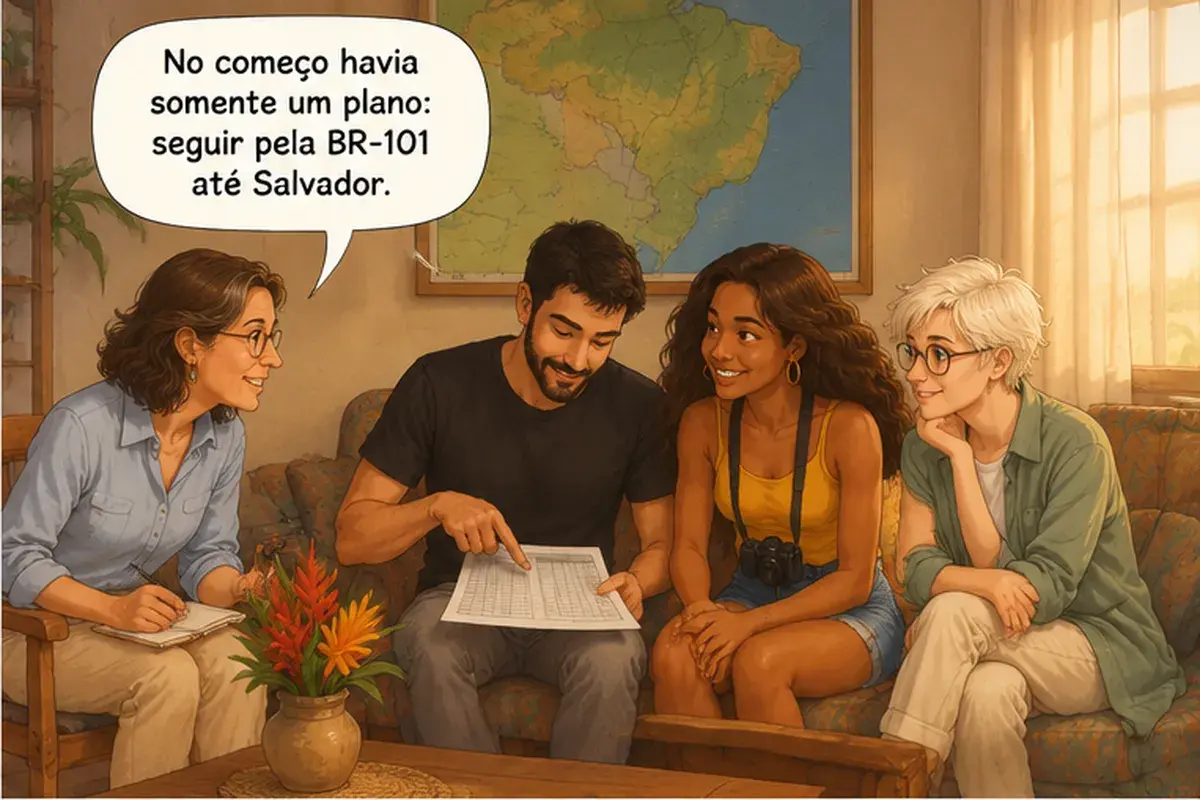
No começo havia somente um plano: seguir pela BR-101 até Salvador.
At first there was only one plan: to take the BR-101 to Salvador.
- Marina
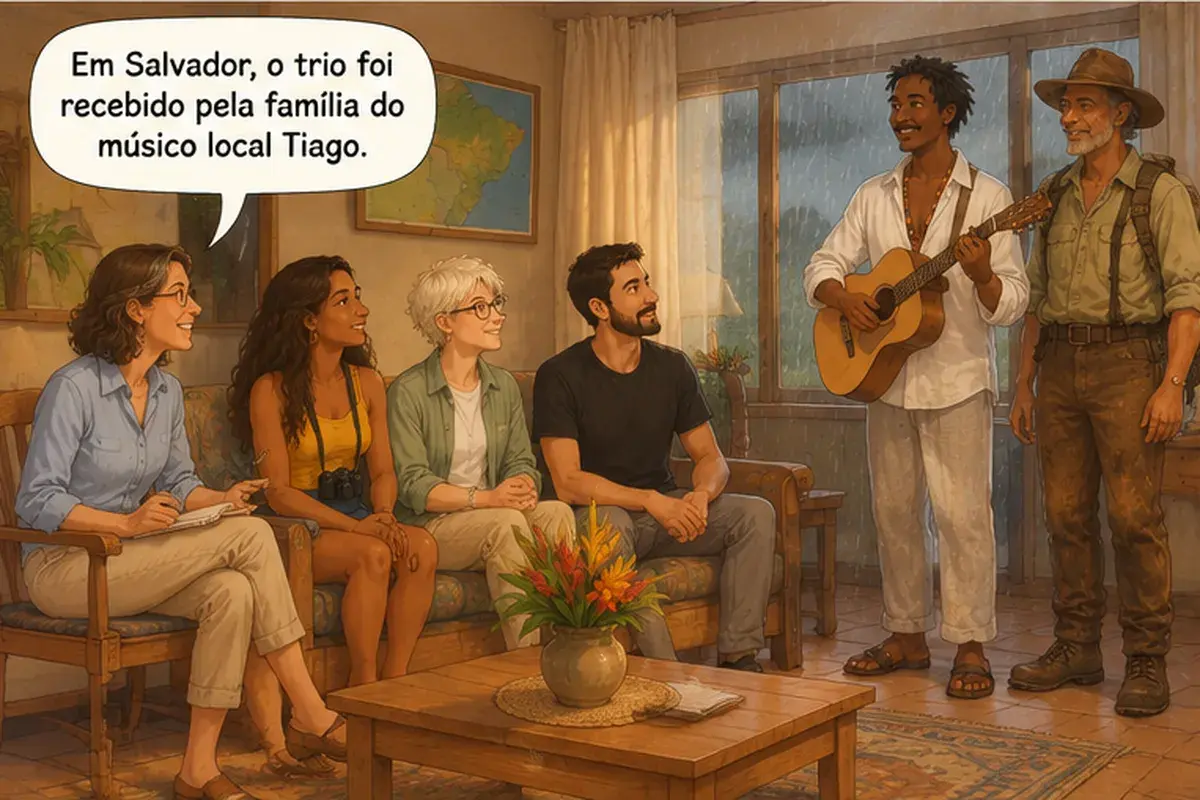
Em Salvador, o trio foi recebido pela família do músico local Tiago.
In Salvador, the trio was received by the family of the local musician Tiago.
- Marina
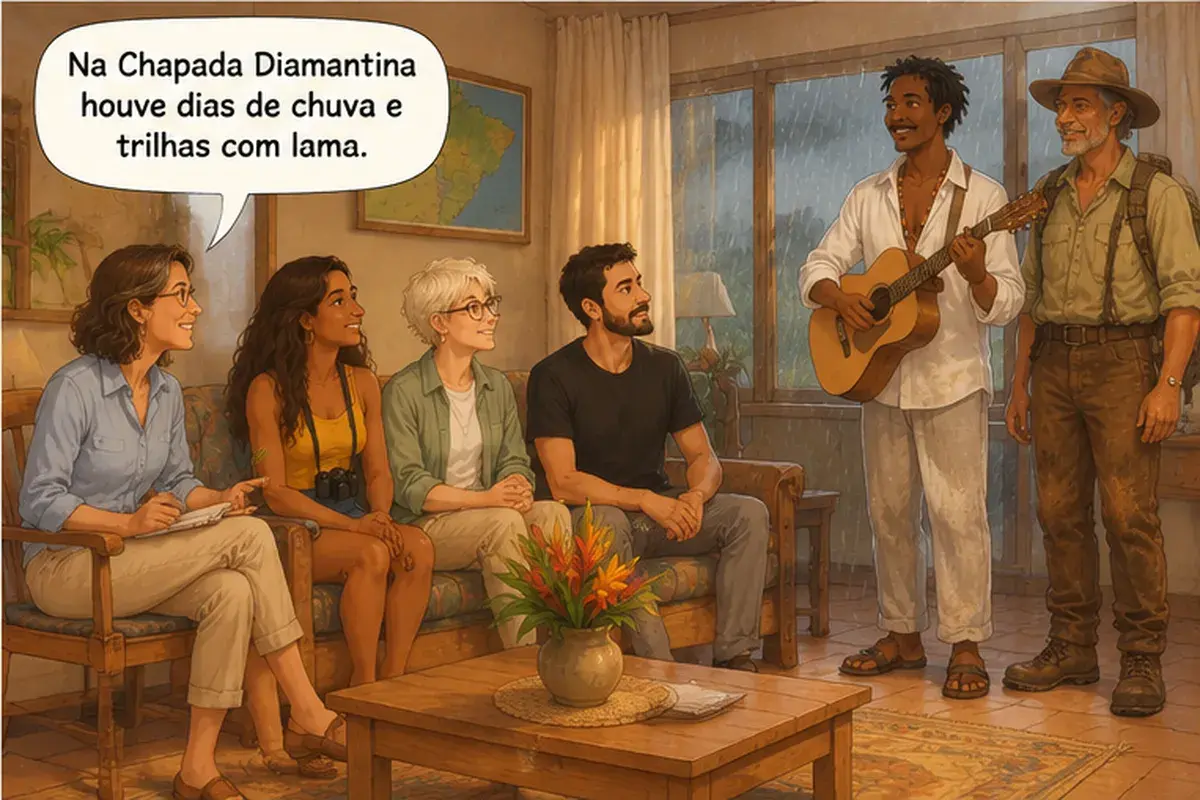
Na Chapada Diamantina houve dias de chuva e trilhas com lama.
In Chapada Diamantina there were days of rain and muddy trails.
- Marina
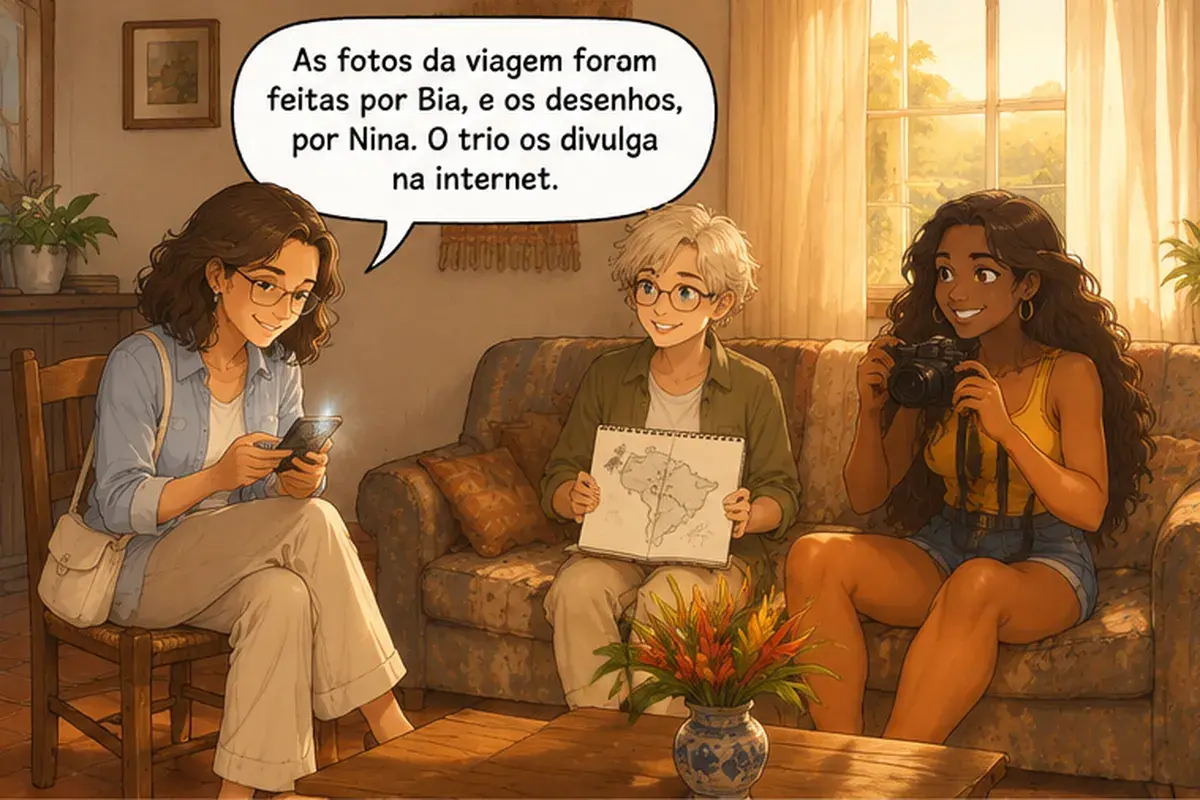
As fotos da viagem foram feitas por Bia, e os desenhos, por Nina. O trio os divulga na internet.
The photos from the trip were taken by Bia, and the drawings were made by Nina. The trio spreads them online.
- Marina
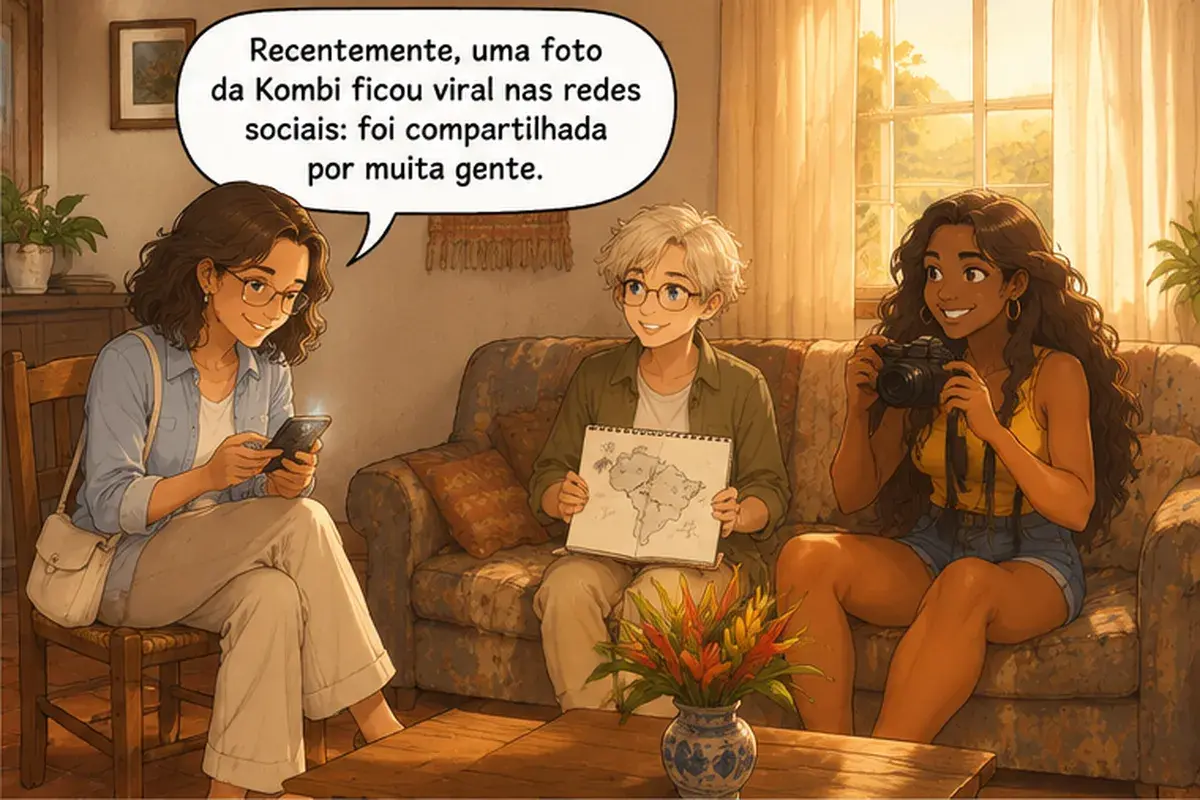
Recentemente, uma foto da Kombi ficou viral nas redes sociais: foi compartilhada por muita gente.
Recently, a photo of the Kombi went viral on social media: it was shared by a lot of people.
- Marina
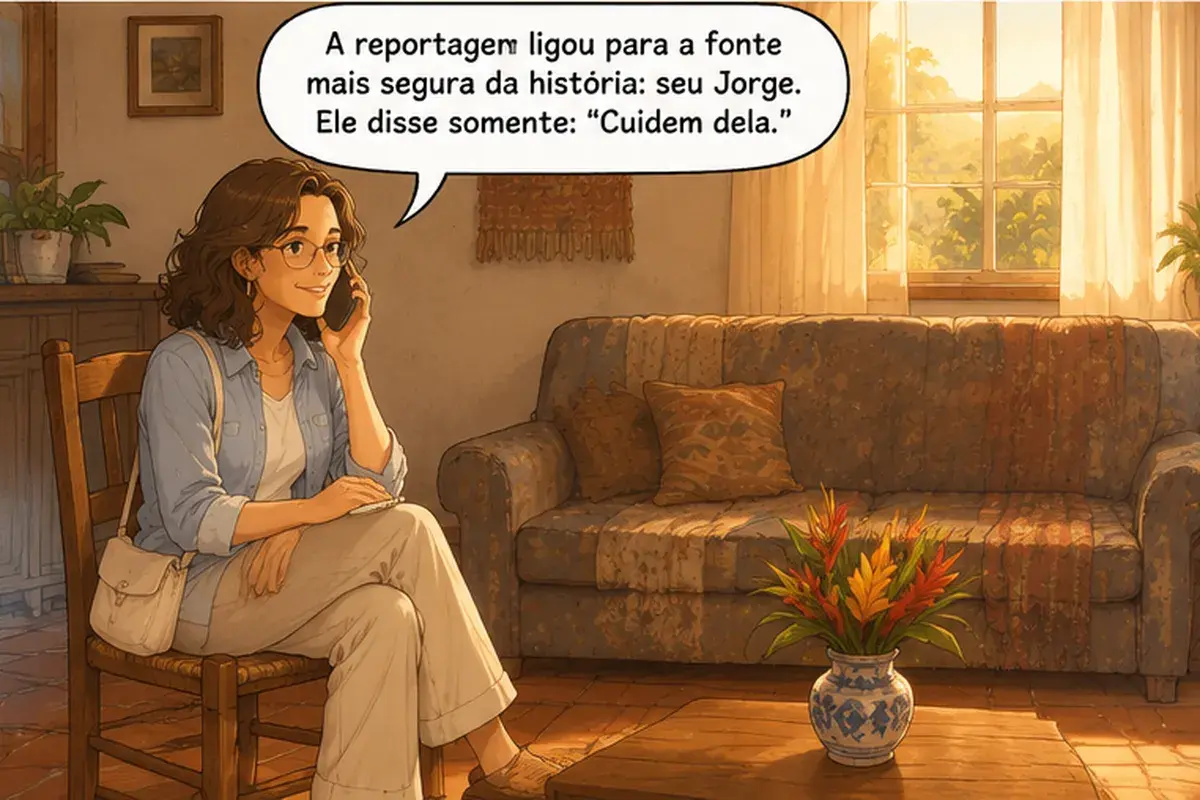
A reportagem ligou para a fonte mais segura da história: seu Jorge. Ele disse somente: “Cuidem dela.”
The report called the most reliable source in the story: Seu Jorge. He said only: “Take care of her (to several people).”
- Marina
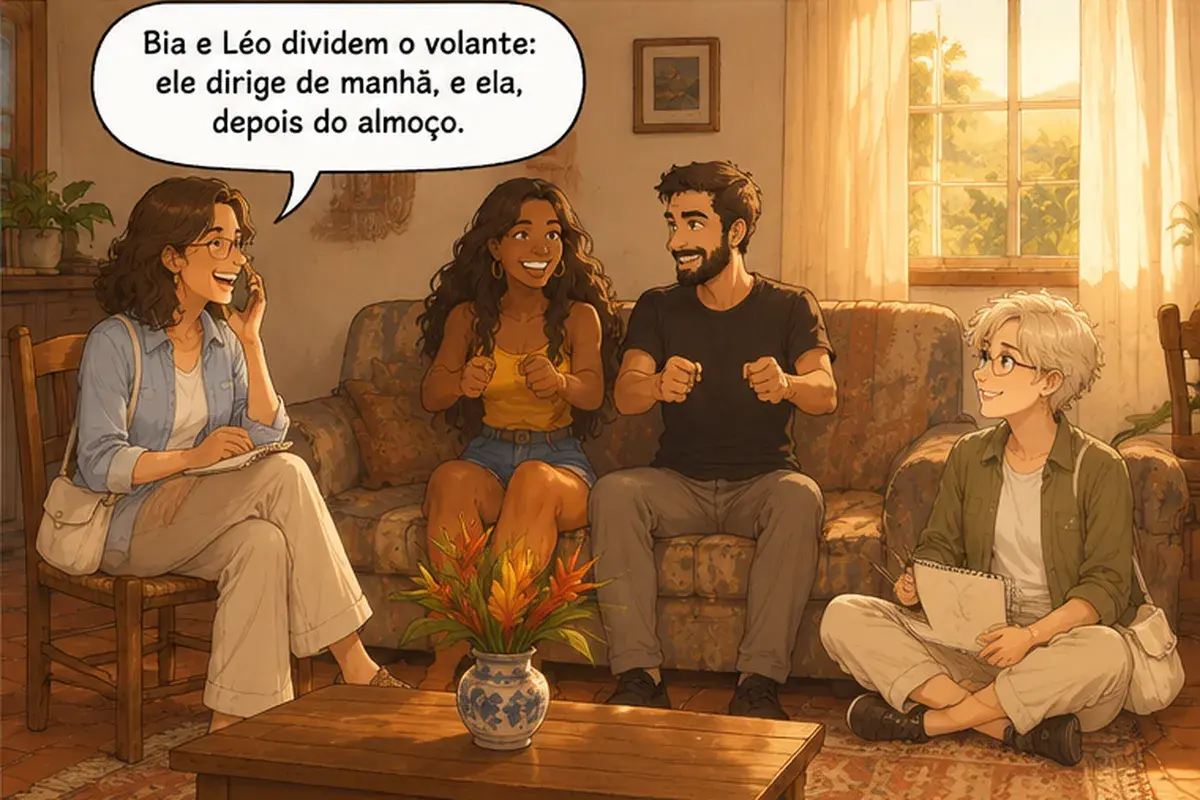
Bia e Léo dividem o volante: ele dirige de manhã, e ela, depois do almoço.
Bia and Léo share the wheel: he drives in the morning, and she drives after lunch.
- Marina
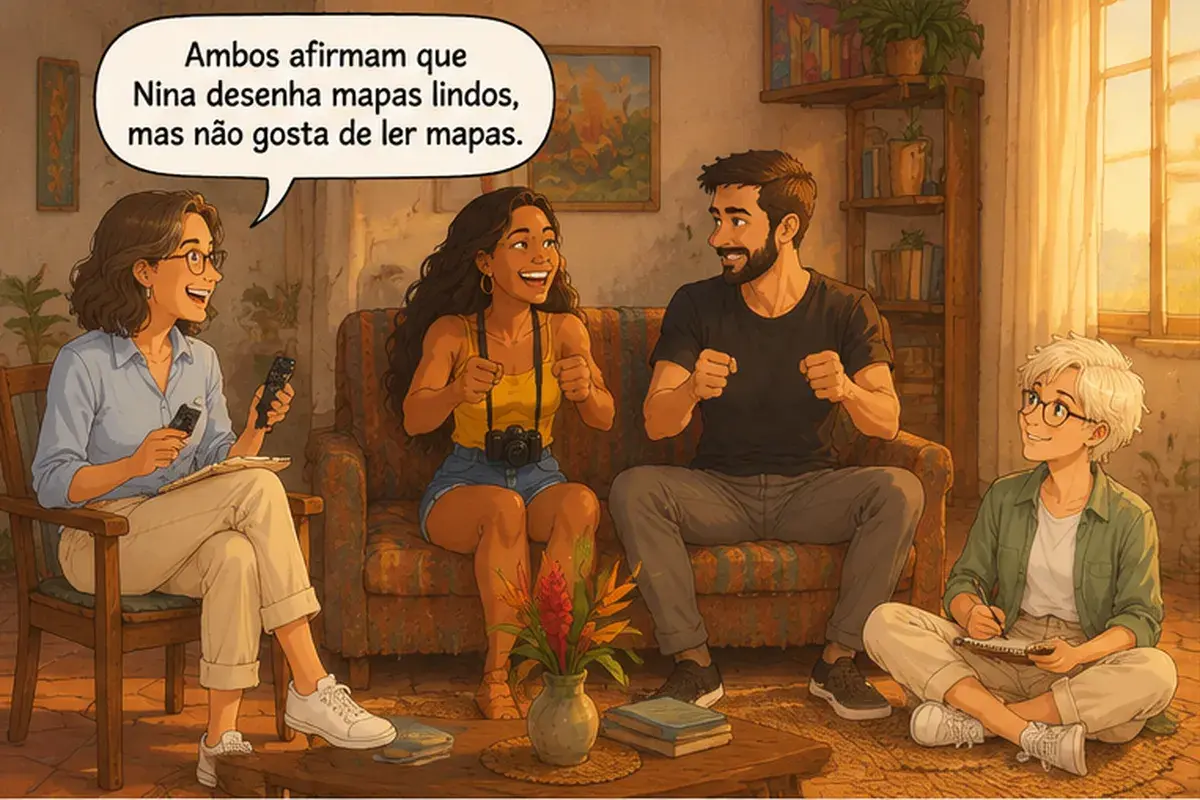
Ambos afirmam que Nina desenha mapas lindos, mas não gosta de ler mapas.
Both state that Nina draws beautiful maps but doesn't like reading maps.
- Marina
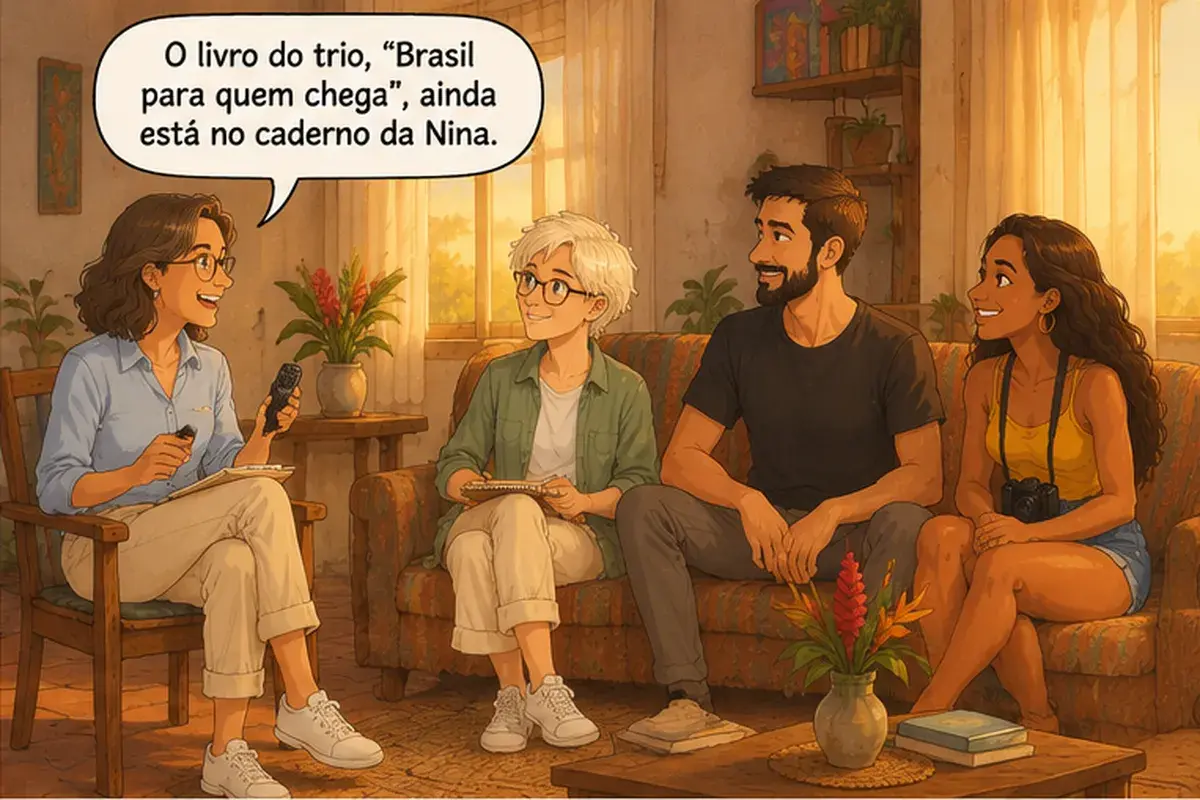
O livro do trio, “Brasil para quem chega”, ainda está no caderno da Nina.
The trio's book, “Brazil for Those Who Arrive”, is still in Nina's notebook.
- Marina
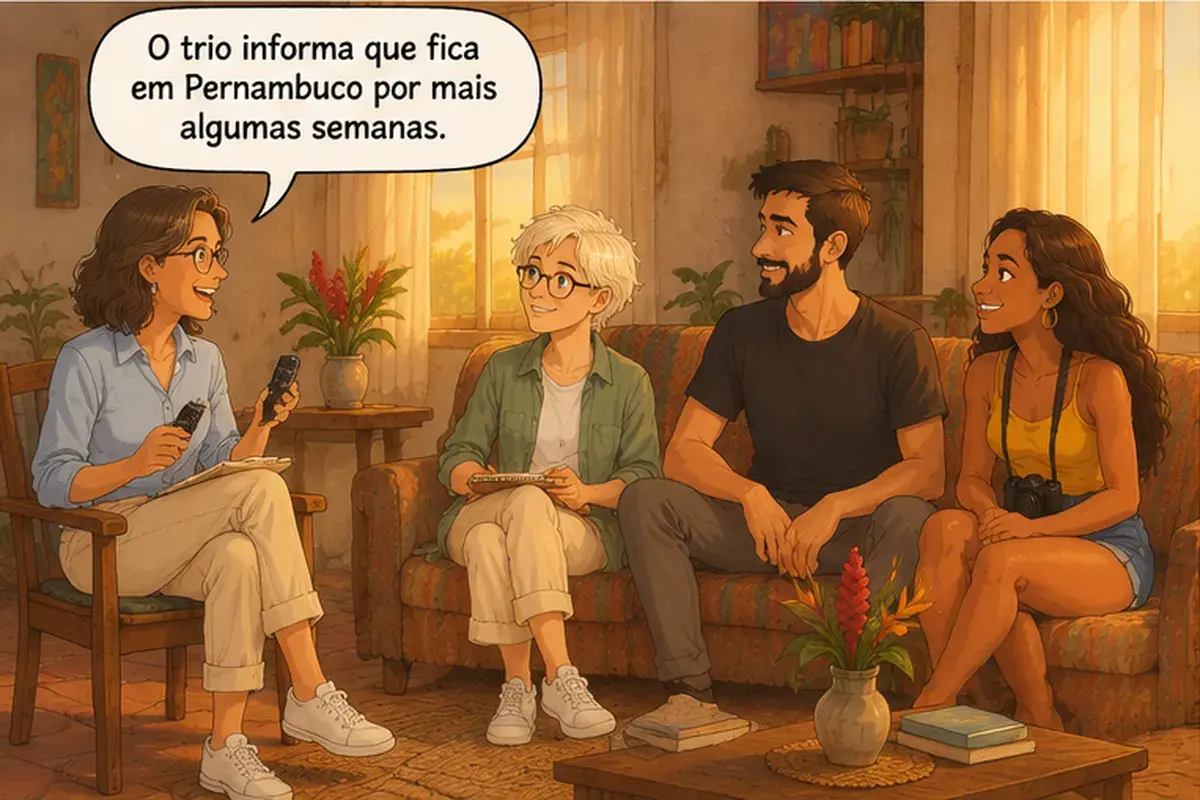
O trio informa que fica em Pernambuco por mais algumas semanas.
The trio reports that they're staying in Pernambuco for a few more weeks.
- Marina
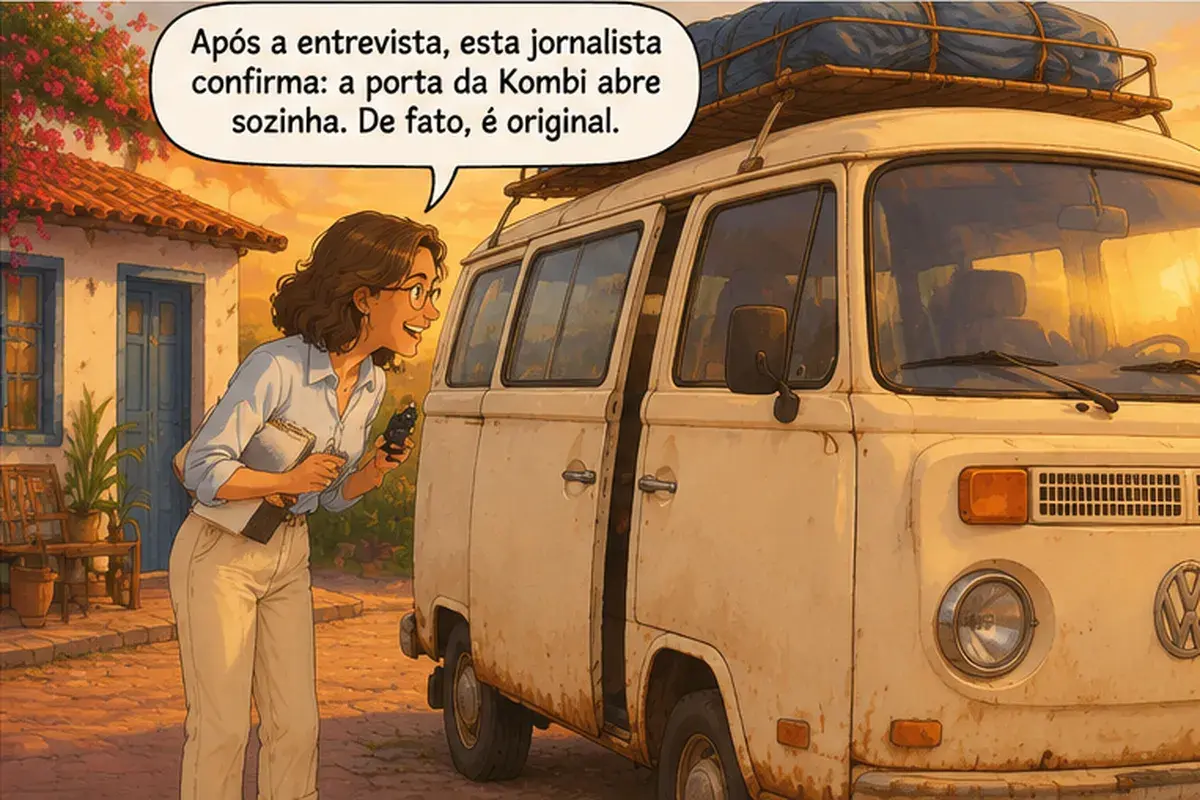
Após a entrevista, esta jornalista confirma: a porta da Kombi abre sozinha. De fato, é original.
After the interview, this journalist confirms: the Kombi's door opens by itself. In fact, it's original.
Grammar for this text
- A Kombi foi fabricada em 1994 — passive voice:
foi+ the participlefabricada(“was made”). The participle is feminine, likeKombi. - As fotos da viagem foram feitas por Bia — plural:
foram+feitas, fromfazer(an irregular participle, unit 14). - Os amigos a chamam de Branquinha — here
abefore the verb is not an article, it means “her” (the Kombi). - O trio os divulga —
osmeans “them” (the photos and drawings). People write like this; in speech you would hearchamam ela. - o trio foi recebido pela família —
recebidocomes fromreceber;pela=por+a: “by”. - havia somente um plano —
haviameans “there was” (the background). - houve dias de chuva —
houvemeans “there were” (an event) and always stays singular. In speech people saytinhaandteve. Recognize these only; don't say them yourself. - Ambos afirmam que Nina desenha mapas lindos, mas não gosta de ler mapas. —
ambosmeans “both” (written; in speechos dois);afirmammeans “state” (in speechdizem). - Segundo a planilha de Léo —
segundomeans “according to”; in an article the name has no article. - Cuidem dela —
cuidemis the command forvocêsfromcuidar(“take care”);dela=de+ela: “of her”. - De fato —
de fatomeans “in fact” and confirms what was said. - O trio informa que fica em Pernambuco por mais algumas semanas. —
informameans “reports”, an official word.
Words and grammar of the unit: Read a news story about yourself.
Learn the words from the texts with flashcards
In the app, you can tap any word in a text to see its translation, forms and examples, and new words stick with flashcards. 15 minutes a day.
Start for freeEverything is open for free. No card needed to sign up.