

Portuguese story with translation · B1 · 18 lines
Eu dormia quando a jardineira parou I was sleeping when the open-air truck stopped
Comic · 12 panels
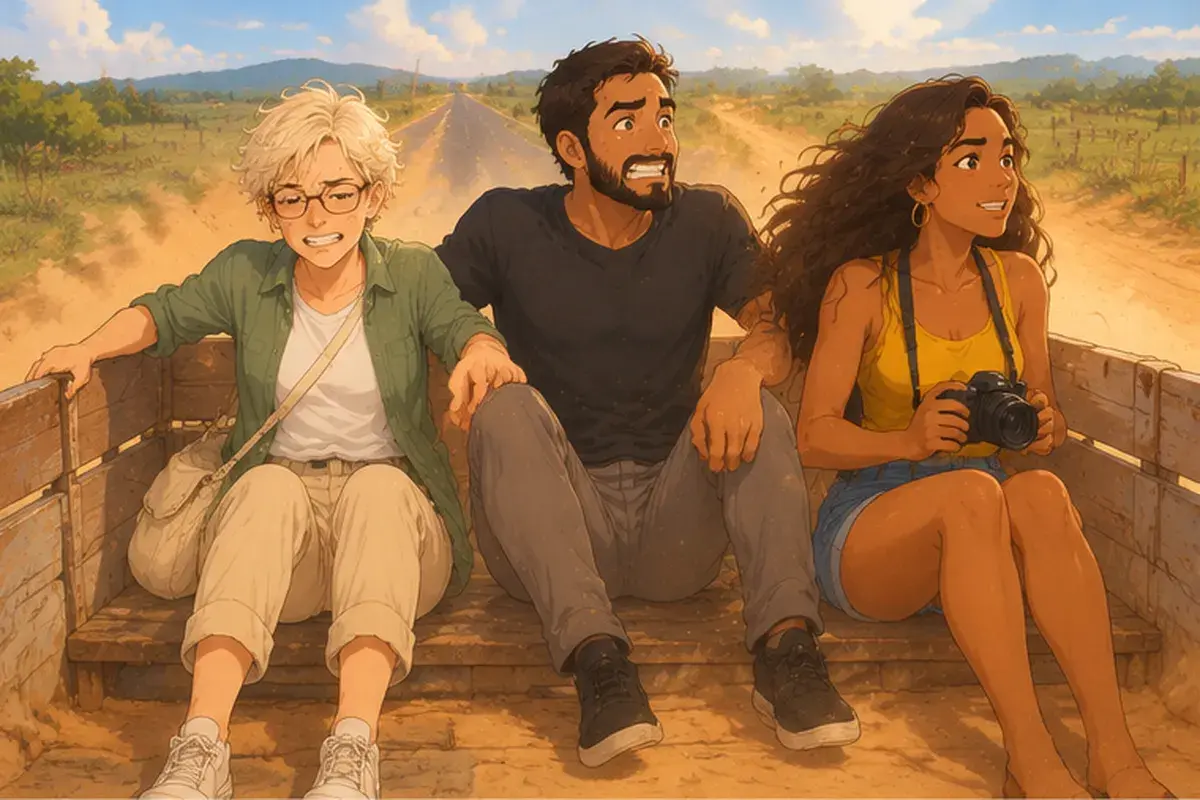
No começo, o asfalto acabou e a jardineira entrou na areia.
At first, the asphalt ended and the open-air truck went onto the sand.
O caminho era longo, e cada solavanco sacudia todo mundo.
The road was long, and every jolt shook everyone.

O vento soprava, a poeira entrava em tudo, e o Léo amarrou o lenço na boca e no nariz.
The wind was blowing, the dust was getting into everything, and Léo tied the scarf over his mouth and nose.
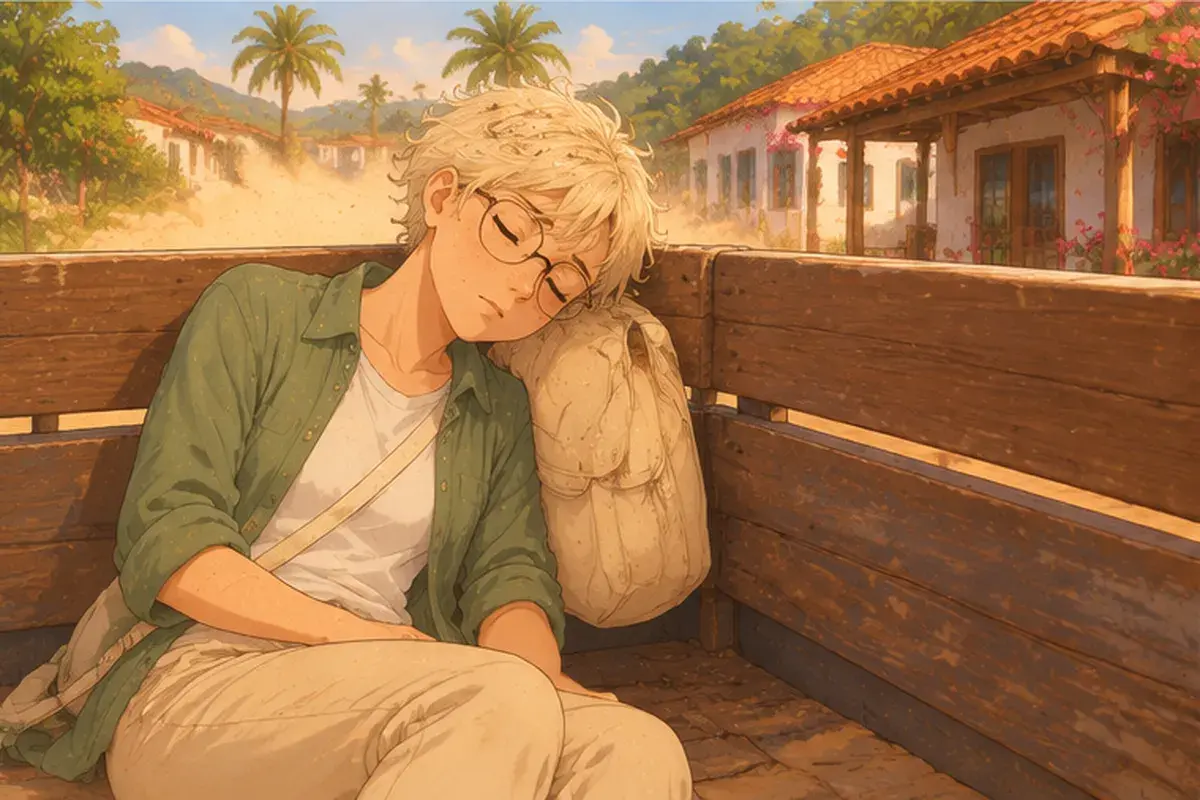
Eu só queria cochilar um pouco, mas peguei no sono.
I only wanted to doze off for a bit, but I fell asleep.
Eu dormia quando a jardineira parou.
I was sleeping when the open-air truck stopped.
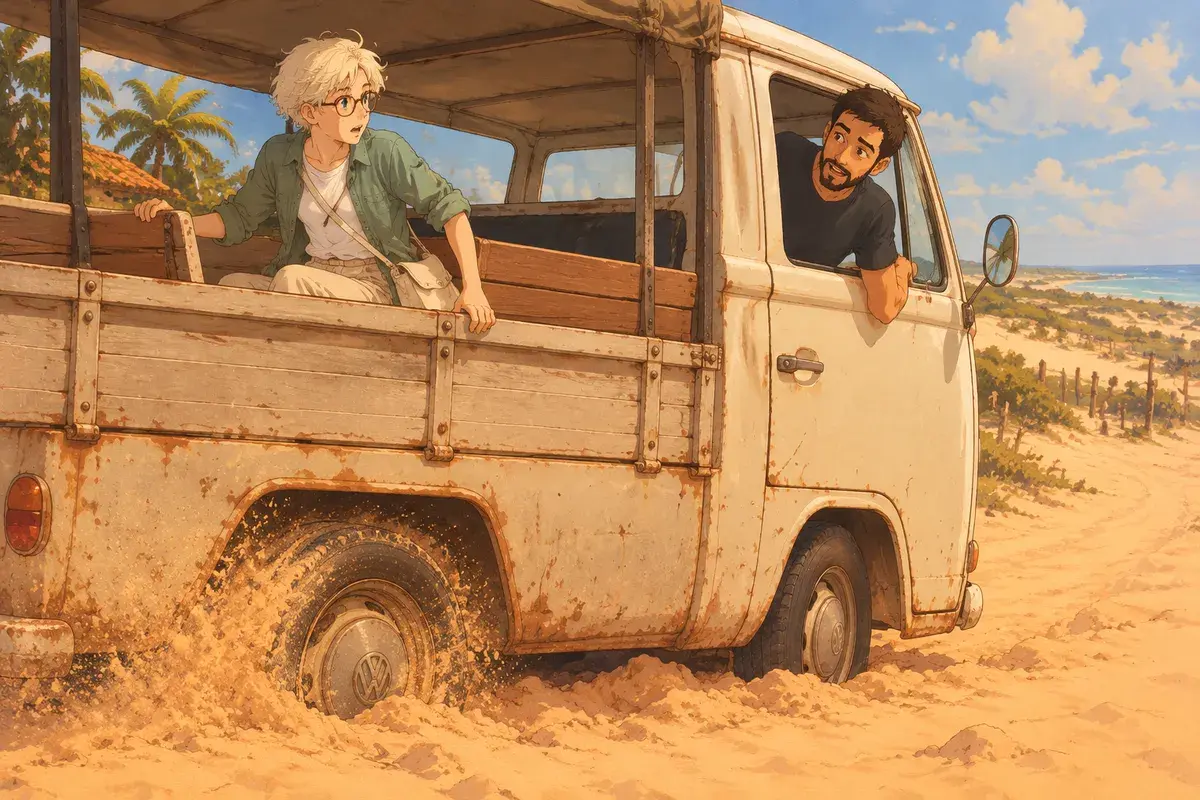
A parada foi inesperada: a areia estava fofa demais, e ela atolou no meio do caminho.
The stop was unexpected: the sand was too soft, and it got stuck halfway.
Primeiro o motorista deu ré, mas as rodas só giravam.
First the driver backed up, but the wheels just spun.
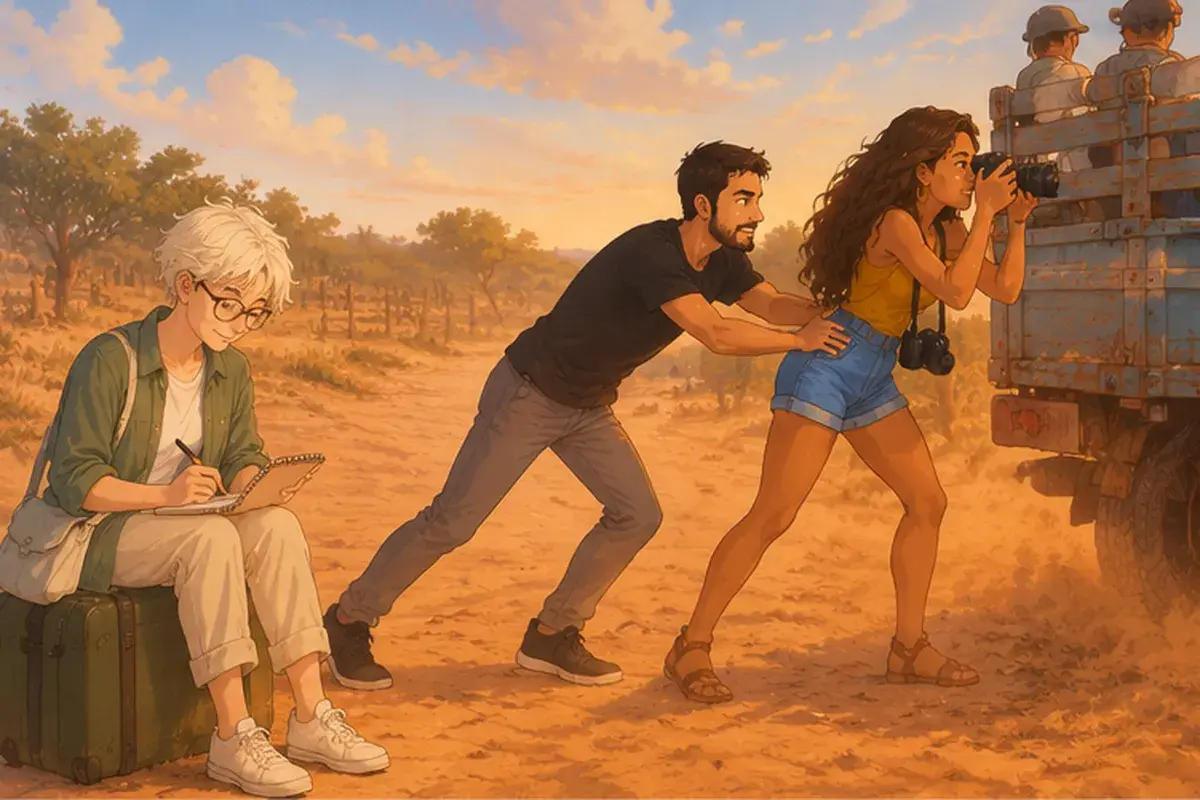
Em seguida, todo mundo desceu, e o Léo, embora não goste de areia, empurrou mais que o motorista.
Then everyone got out, and Léo, even though he doesn't like sand, pushed harder than the driver.
Enquanto isso, a Bia tirava fotos da cena, e eu desenhava o Léo no caderno.
Meanwhile, Bia was taking photos of the scene, and I was drawing Léo in my notebook.
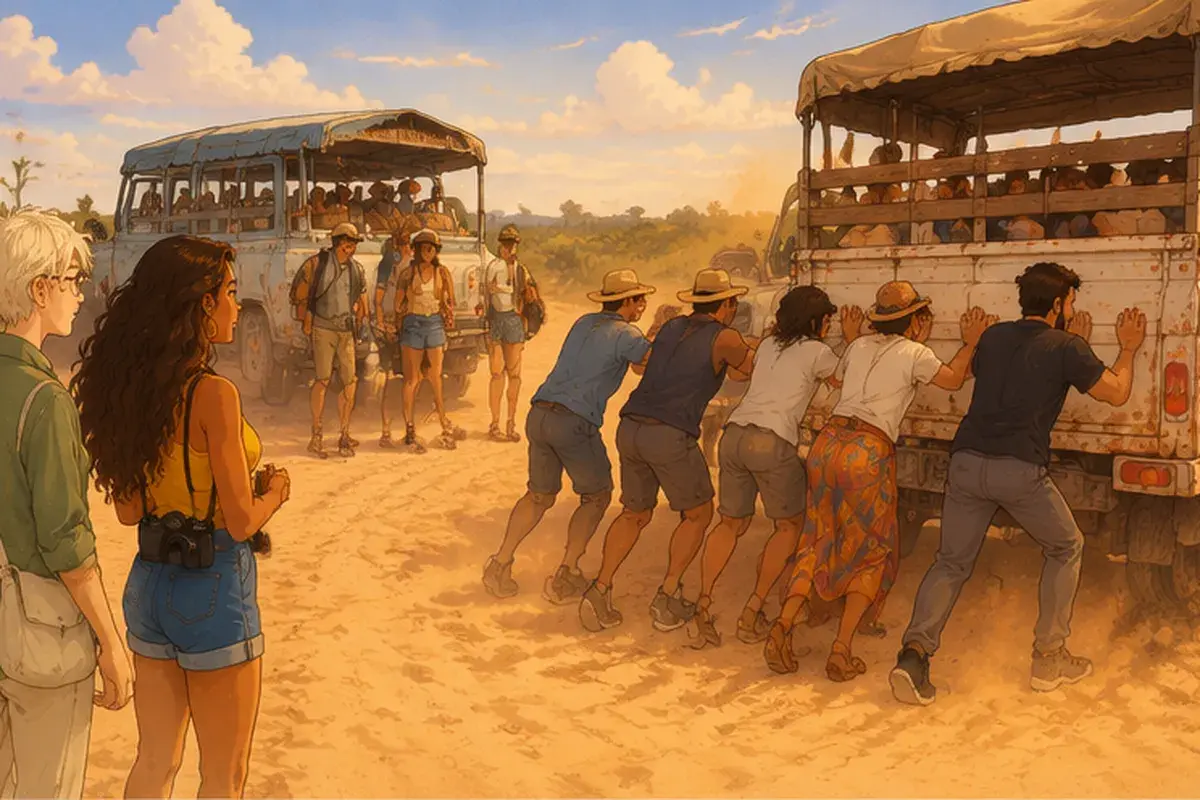
Logo depois, outra jardineira chegou, e os passageiros dela ajudaram a empurrar.
Right after that, another open-air truck arrived, and its passengers helped push.
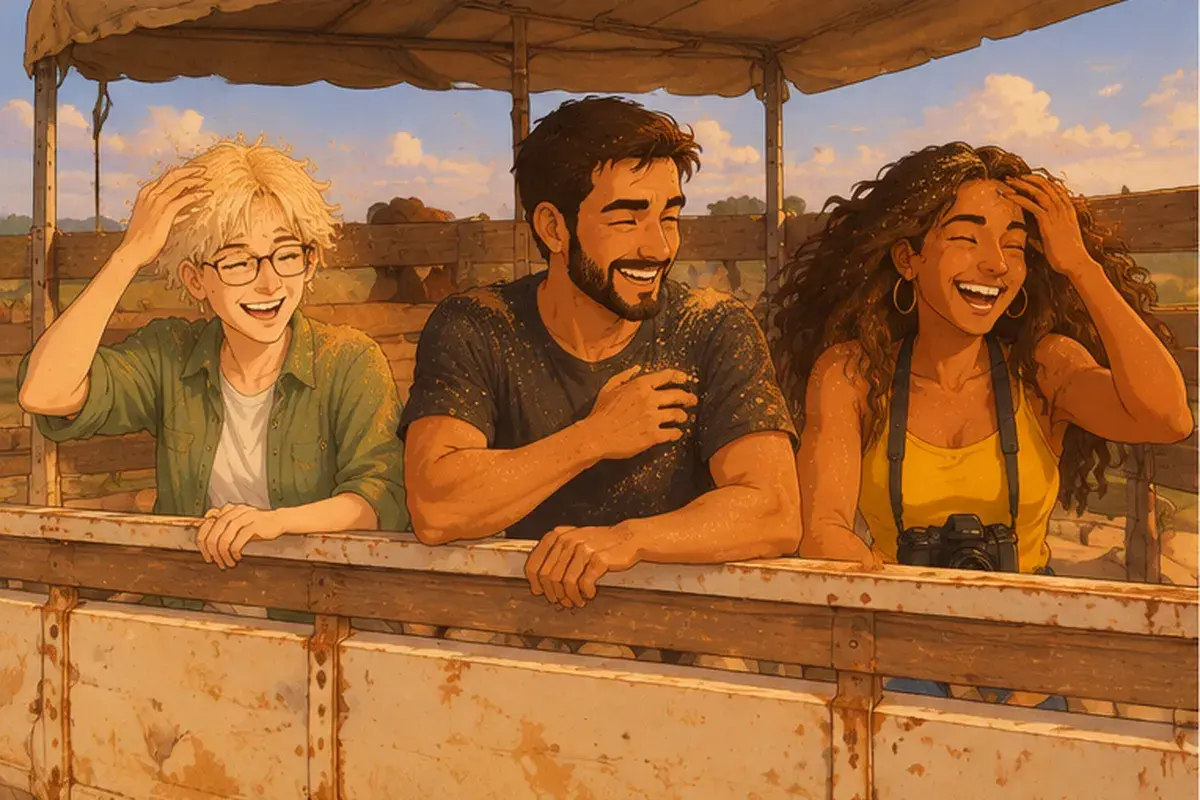
Por fim, a jardineira saiu da areia, e a gente acabou subindo de novo com areia até o pescoço.
Finally, the open-air truck got out of the sand, and we ended up climbing back on with sand up to our necks.
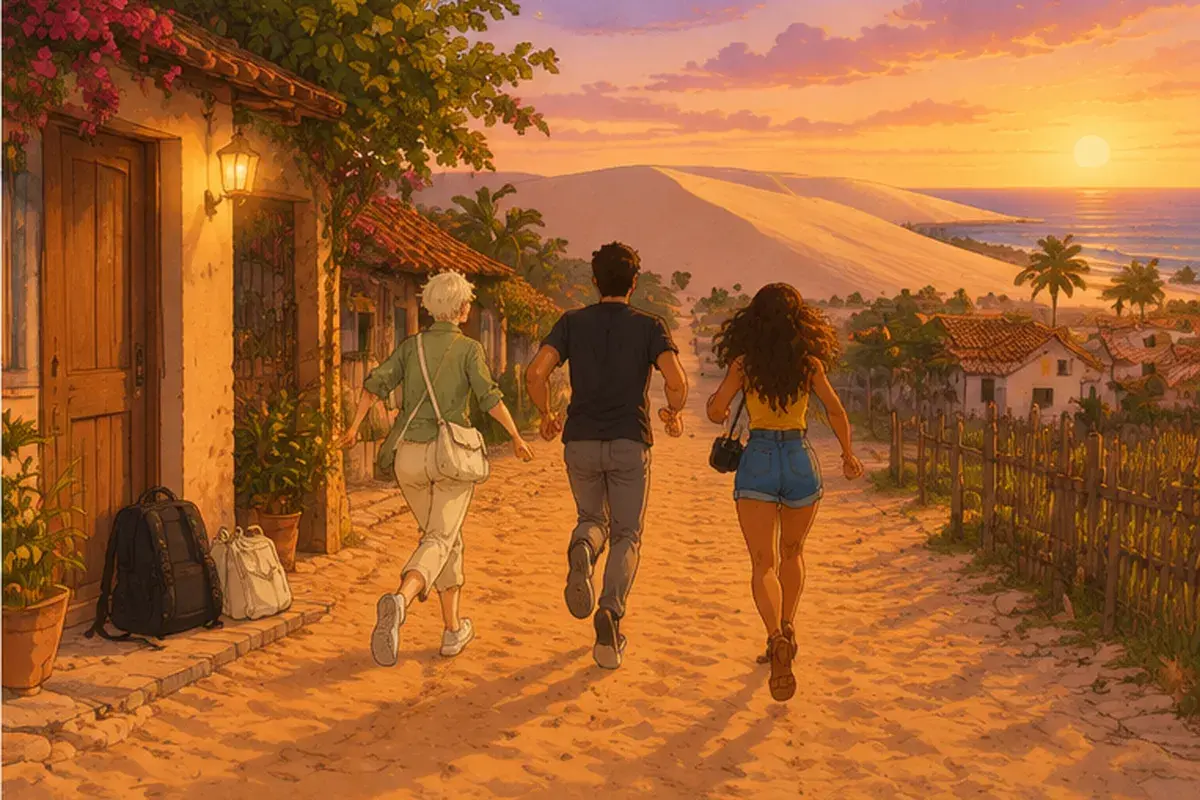
No fim da tarde, chegamos à vila, deixamos as malas na pousada e corremos para a duna.
At the end of the afternoon, we got to the village, left our bags at the guesthouse and ran to the dune.

Na duna tinha centenas de pessoas esperando o pôr do sol.
On the dune there were hundreds of people waiting for the sunset.
O sol desceu devagar, e o céu ficou dourado: foi um espetáculo.
The sun went down slowly, and the sky turned golden: it was a spectacle.

Quando anoiteceu, o céu ficou roxo, e a praia parecia infinita.
When it got dark, the sky turned purple, and the beach seemed endless.
Aquele cenário tirou o fôlego da gente, e até a Bia parou de tirar fotos.
That scenery took our breath away, and even Bia stopped taking photos.

Ela disse que era o paraíso. O Léo disse que o paraíso tinha menos areia no sapato.
She said it was paradise. Léo said paradise had less sand in the shoes.

Na volta, o vento apagava os nossos rastros. Na pousada, esvaziei os sapatos: saiu quase uma duna.
On the way back, the wind was erasing our tracks. At the guesthouse, I emptied my shoes: almost a whole dune came out.
Grammar for this text
- Eu dormia quando a jardineira parou —
dormiais the imperfect ofdormir(stemdorm-+-ia): the sleep was going on, like a background.parouis the preterite: the event that cut in. English does the same with "was sleeping when... stopped". More in the unit's grammar blocks. - O vento soprava, a poeira entrava em tudo —
sopravaandentravaare the imperfect ofsoprar("to blow") andentrar: the scene that kept going around them. Buto Léo amarrouis one single action, in the preterite. - Eu só queria cochilar um pouco, mas peguei no sono —
queriais the imperfect (a wish at that moment).peguei no sonomeans "I fell asleep" (literally "I caught sleep"):pegar no sonois the moment of falling asleep, whilecochilaris to doze. - A areia estava fofa demais — here
fofameans "soft, loose". It's the same word asfofo("cute", unit 20), but about sand it means soft and loose.demaisafter an adjective means "too". - Enquanto isso, a Bia tirava fotos da cena, e eu desenhava o Léo —
enquanto issomeans "meanwhile". Both verbs are in the imperfect: two storylines running side by side. - Aquele cenário tirou o fôlego da gente —
tirar o fôlegomeans "to take someone's breath away";da gentemeans "of us", so "took our breath away".cenáriois the scenery that opens up before your eyes. - saiu quase uma duna —
saiuis the preterite ofsair: here it means "came out". - embora não goste —
emborais followed by the subjunctive: "even though he doesn't like it". acabou subindo —acabar+ gerund means "ended up climbing back on".
Words and grammar of the unit: Tell the story of a trip in order.
Learn the words from the texts with flashcards
In the app, you can tap any word in a text to see its translation, forms and examples, and new words stick with flashcards. 15 minutes a day.
Start for freeEverything is open for free. No card needed to sign up.