
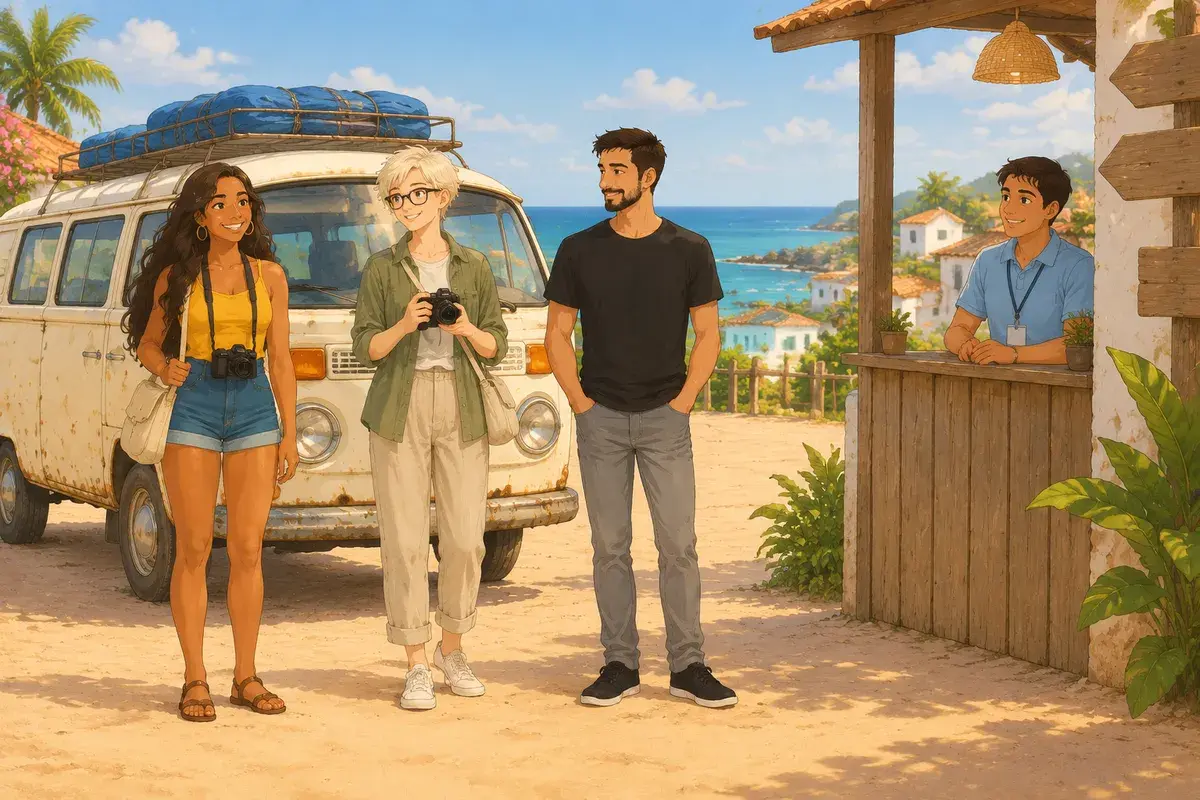
Portuguese dialogue with translation · B1 · 18 lines
Dá para ir de carro até a vila? Can we get to the village by car?
Comic · 16 panels
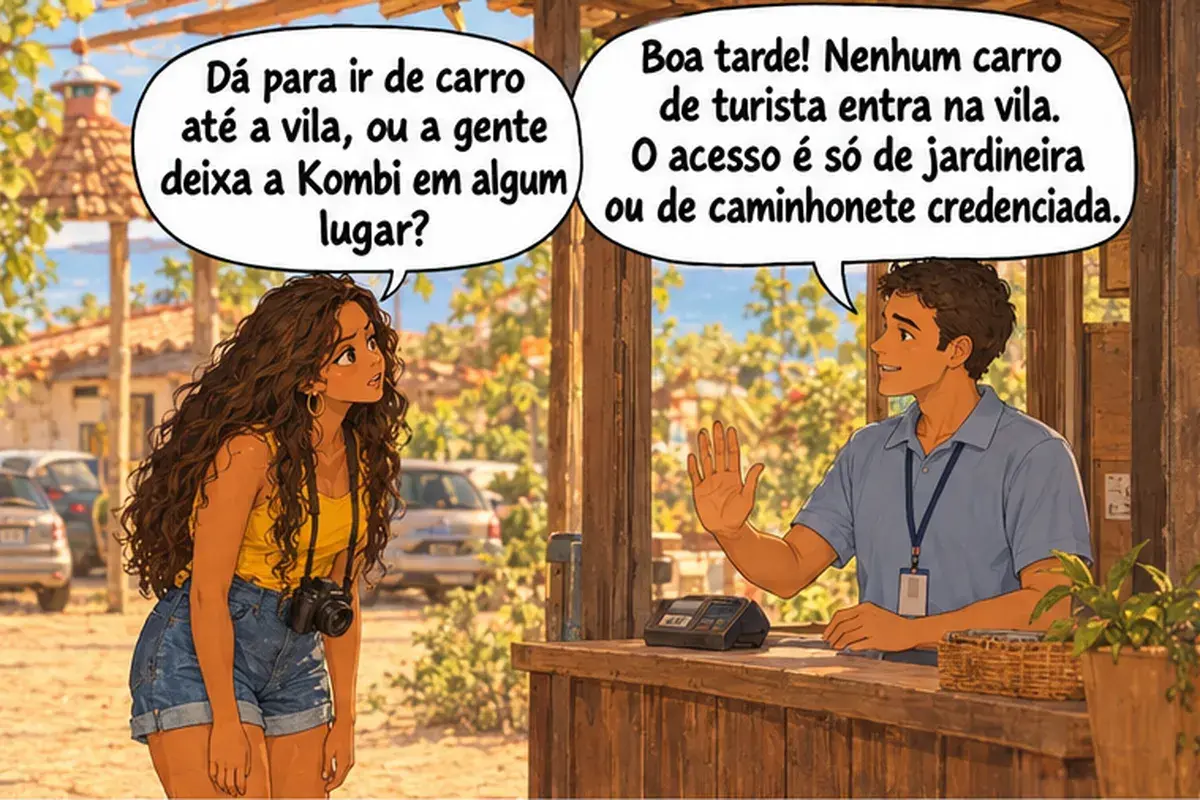
- Bia
Dá para ir de carro até a vila, ou a gente deixa a Kombi em algum lugar?
Can we get to the village by car, or do we leave the Kombi somewhere?
- Atendente
Boa tarde! Nenhum carro de turista entra na vila. O acesso é só de jardineira ou de caminhonete credenciada.
Good afternoon! No tourist cars enter the village. The only access is by open-air truck or by authorized pickup truck.
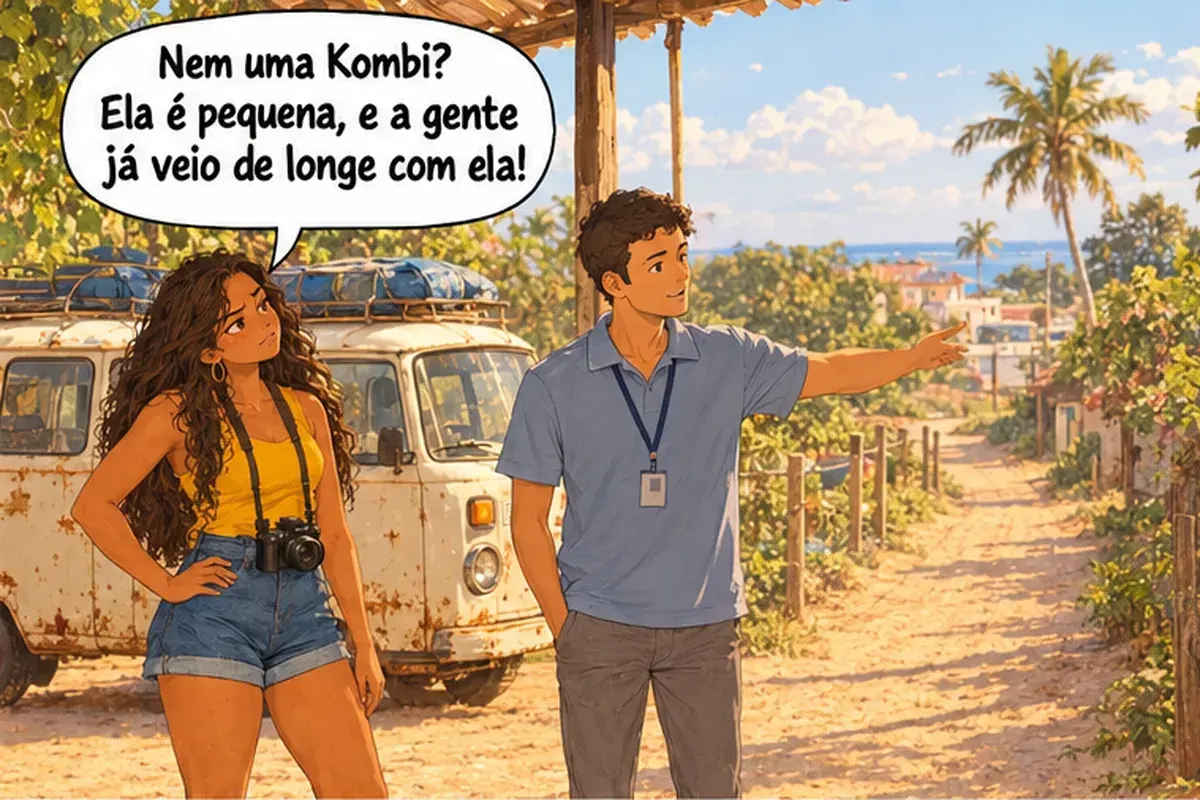
- Bia
Nem uma Kombi? Ela é pequena, e a gente já veio de longe com ela!
Not even a Kombi? It's small, and we already came a long way in it!
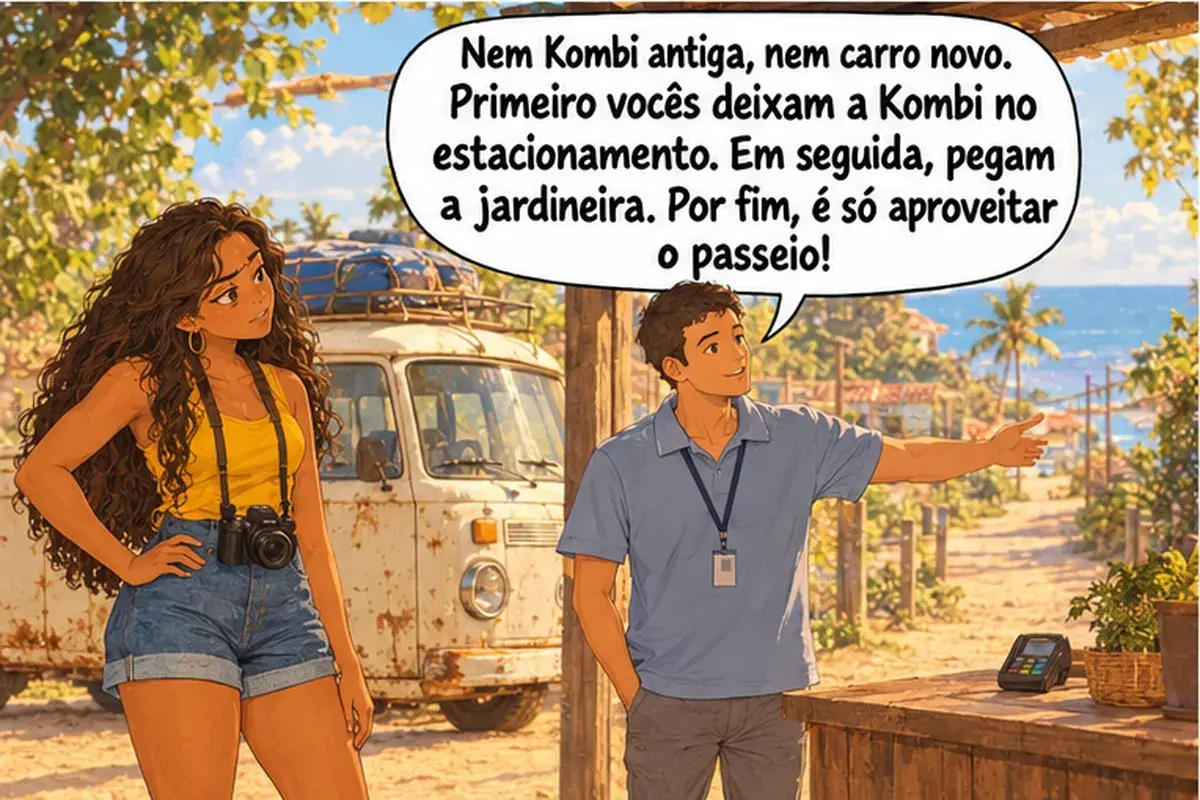
- Atendente
Nem Kombi antiga, nem carro novo. Primeiro vocês deixam a Kombi no estacionamento. Em seguida, pegam a jardineira. Por fim, é só aproveitar o passeio!
Not an old Kombi, not a new car. First you leave the Kombi in the parking lot (to several people). Then you take the open-air truck (to several people). Finally, all you have to do is enjoy the ride!
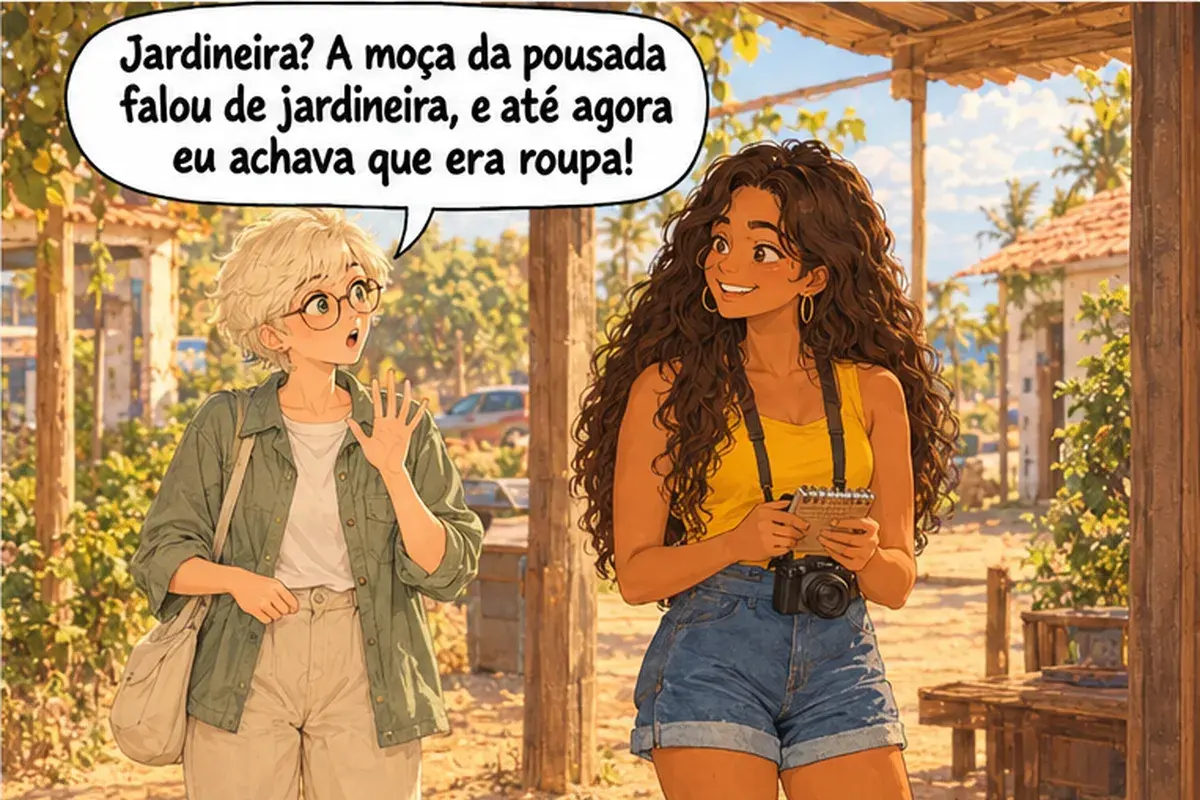
- Nina
Jardineira? A moça da pousada falou de jardineira, e até agora eu achava que era roupa!
An open-air truck? The woman at the guesthouse talked about an open-air truck, and until now I thought that was clothing!
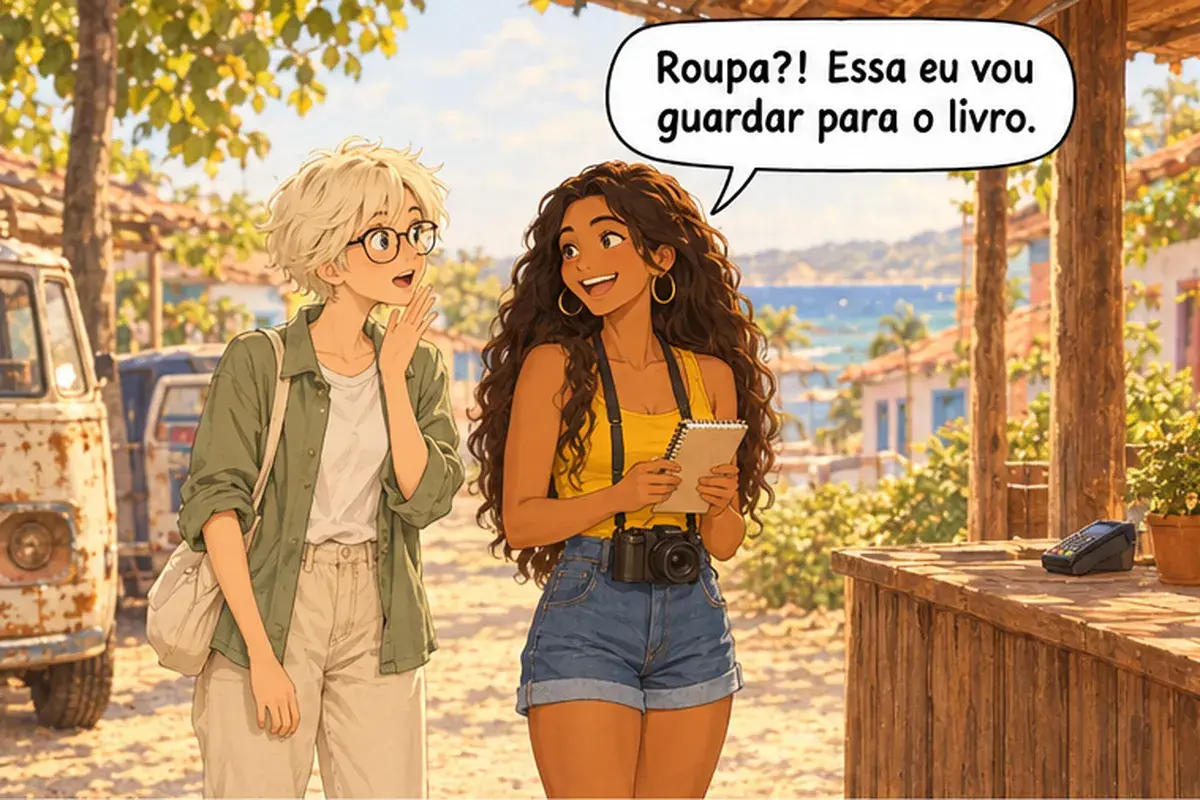
- Bia
Roupa?! Essa eu vou guardar para o livro.
Clothing?! I'm saving that one for the book.
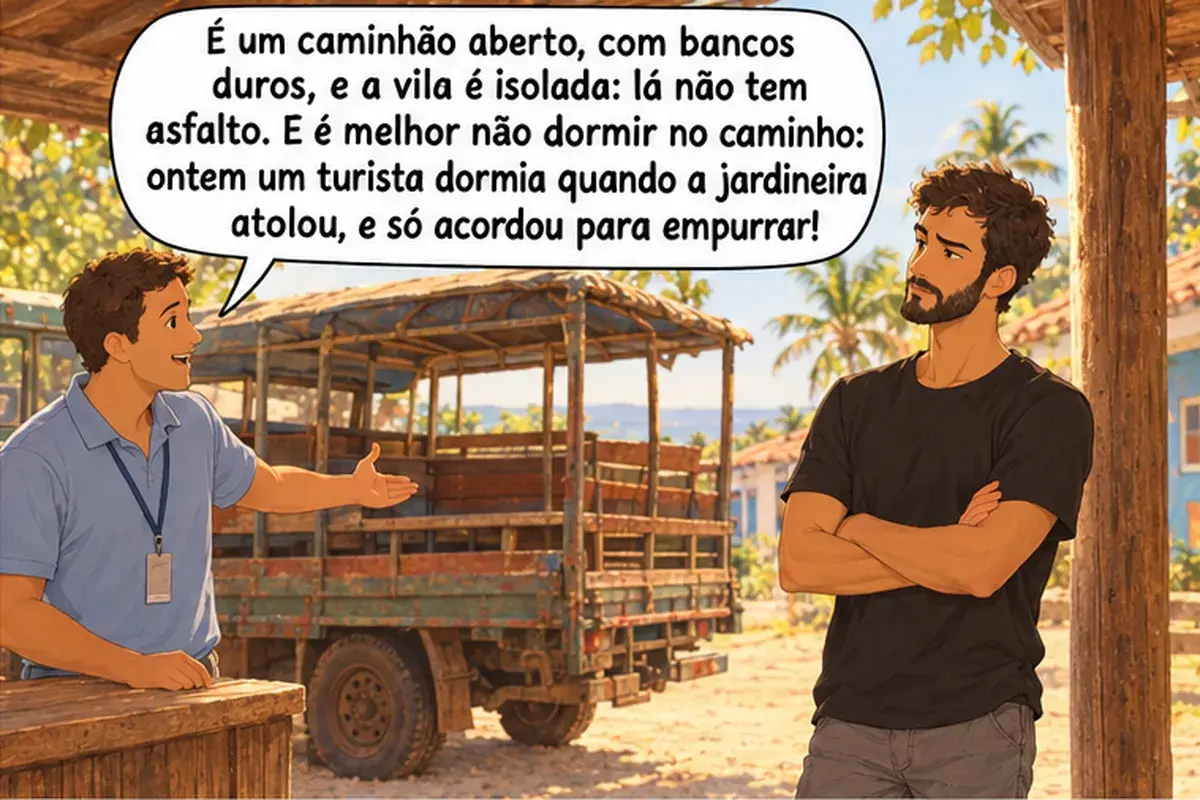
- Atendente
É um caminhão aberto, com bancos duros, e a vila é isolada: lá não tem asfalto. E é melhor não dormir no caminho: ontem um turista dormia quando a jardineira atolou, e só acordou para empurrar!
It's an open truck with hard benches, and the village is remote: there's no asphalt there. And it's best not to sleep on the way: yesterday a tourist was sleeping when the open-air truck got stuck, and he only woke up to push!
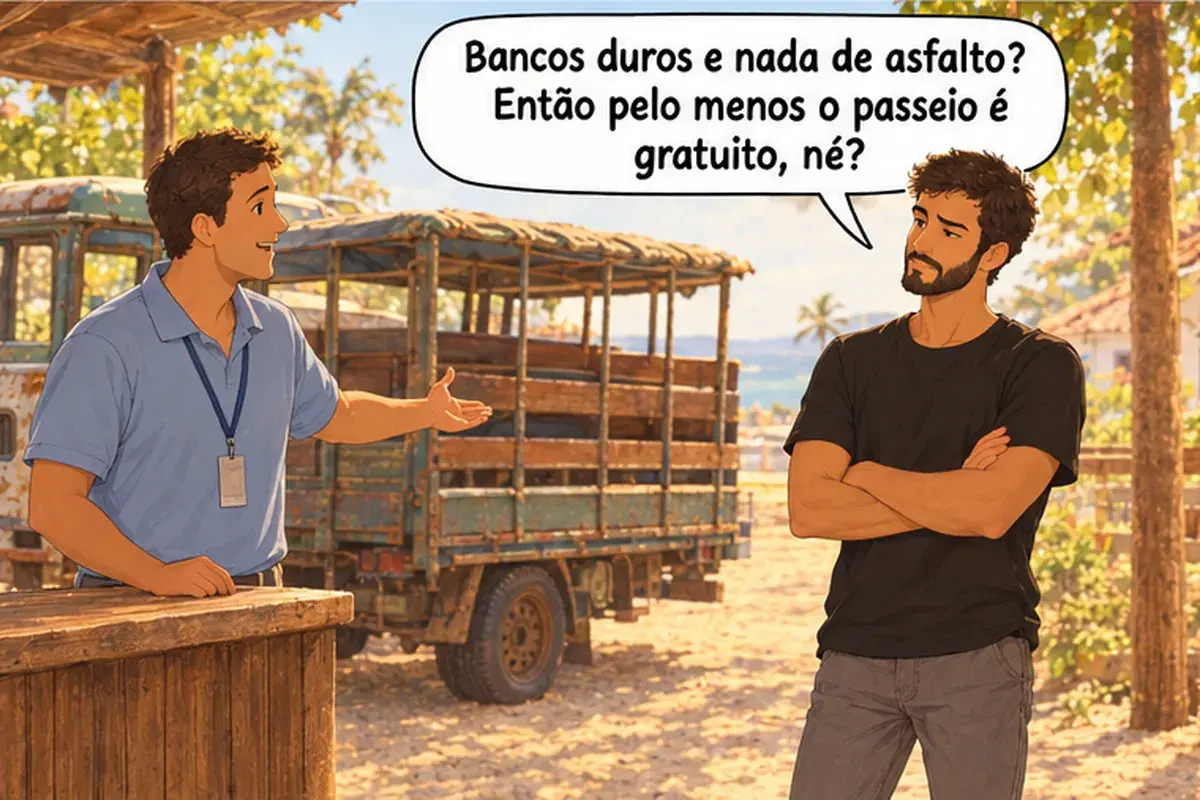
- Léo
Bancos duros e nada de asfalto? Então pelo menos o passeio é gratuito, né?
Hard benches and no asphalt? Then at least the ride is free, right?
- Atendente
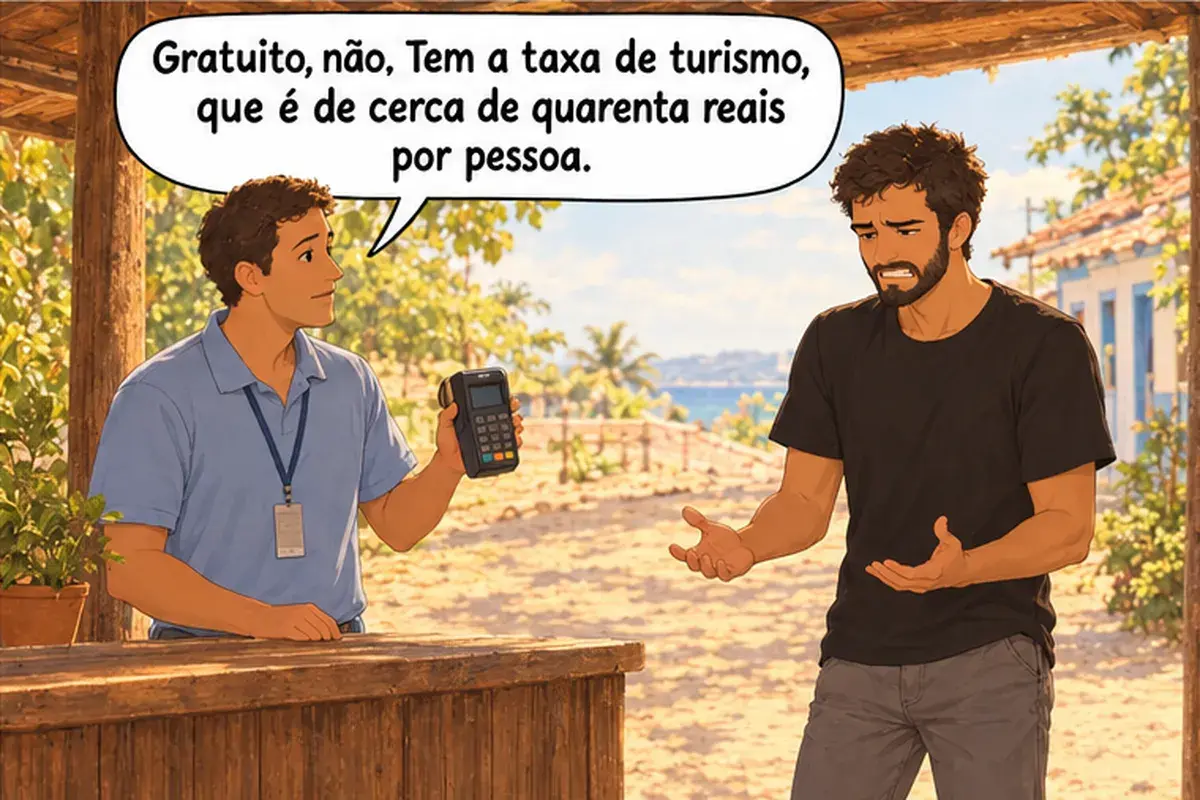
Gratuito, não. Tem a taxa de turismo, que é de cerca de quarenta reais por pessoa.
Free, no. There's the tourism fee, which is about forty reais per person.
- Léo
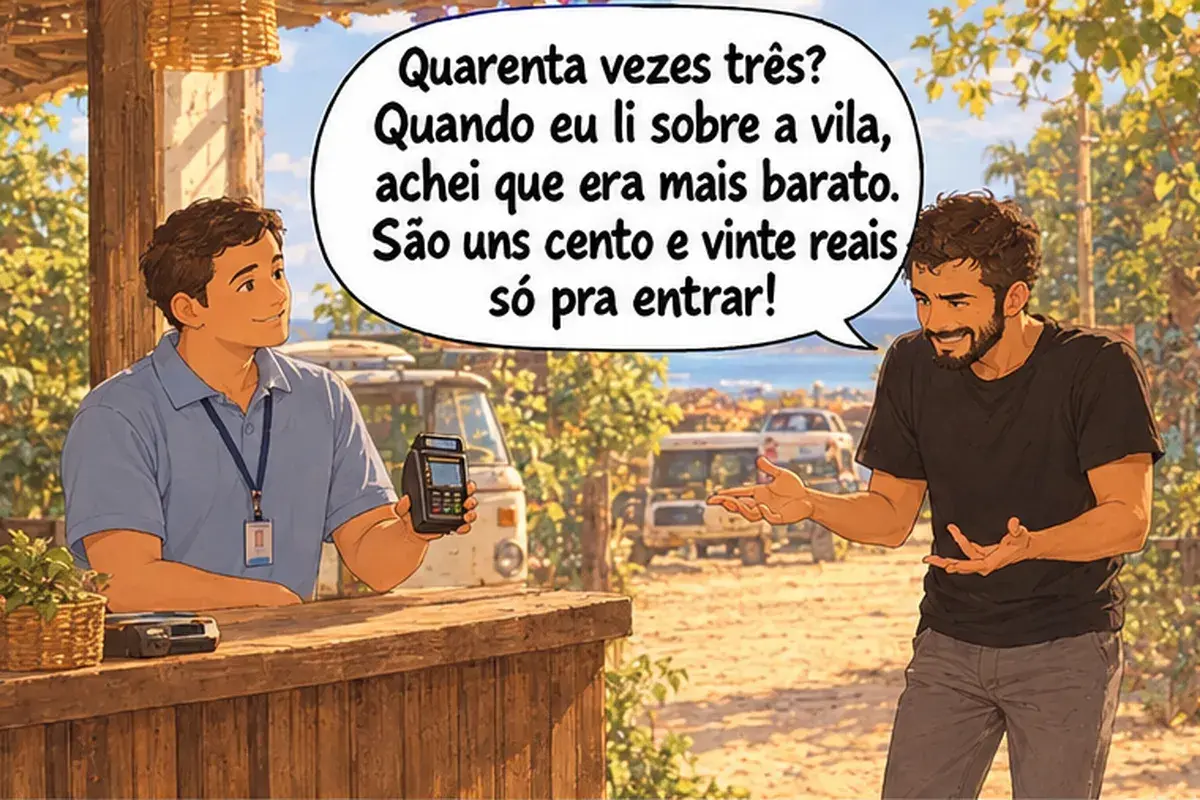
Quarenta vezes três? Quando eu li sobre a vila, achei que era mais barato. São uns cento e vinte reais só pra entrar!
Forty times three? When I read about the village, I thought it was cheaper. That's around a hundred twenty reais just to get in!
- Atendente
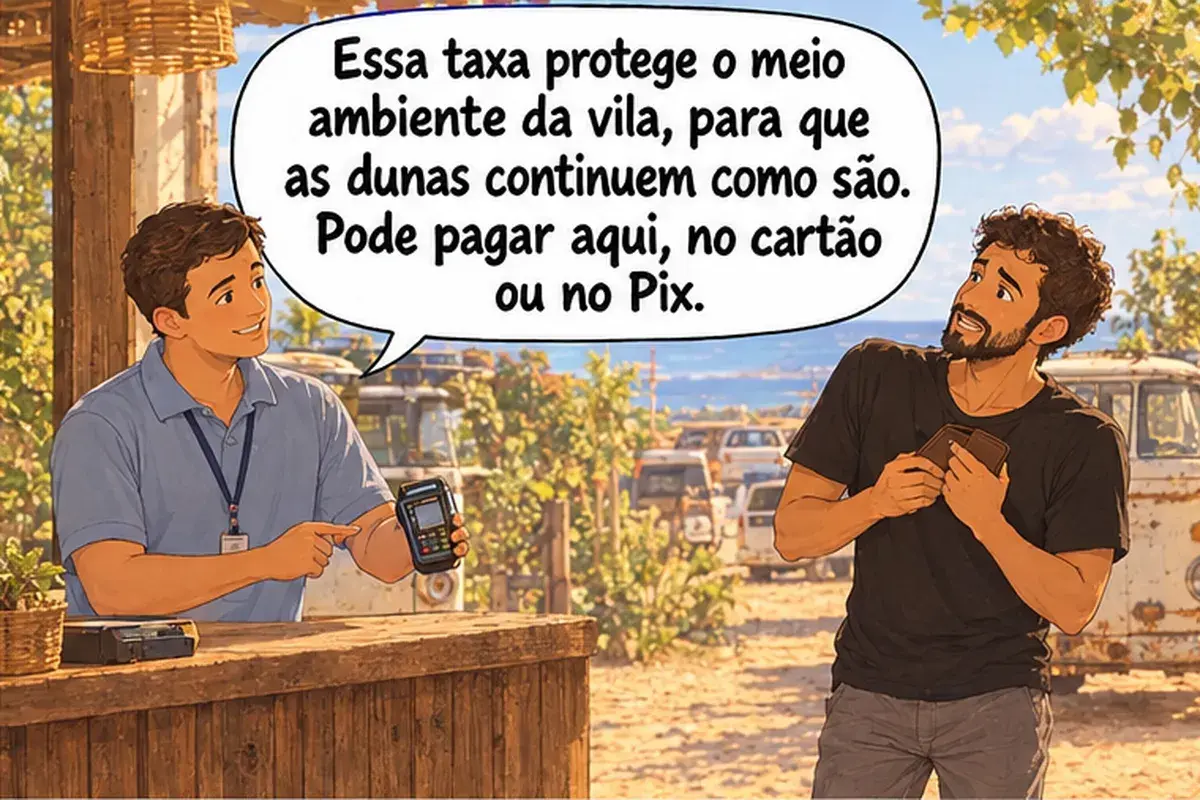
Essa taxa protege o meio ambiente da vila, para que as dunas continuem como são. Pode pagar aqui, no cartão ou no Pix.
That fee protects the village's environment, so that the dunes stay the way they are. You can pay here, by card or with Pix.
- Léo
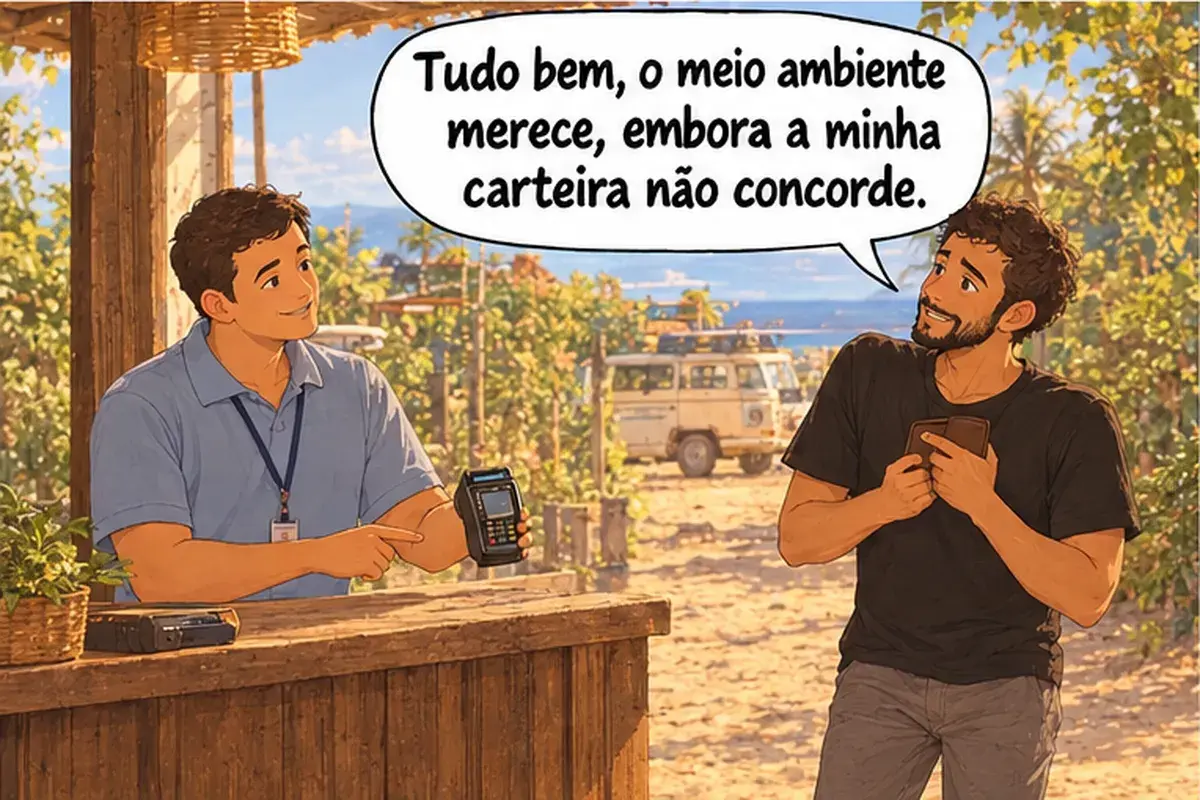
Tudo bem, o meio ambiente merece, embora a minha carteira não concorde.
Fine, the environment deserves it, even though my wallet doesn't agree.
- Nina
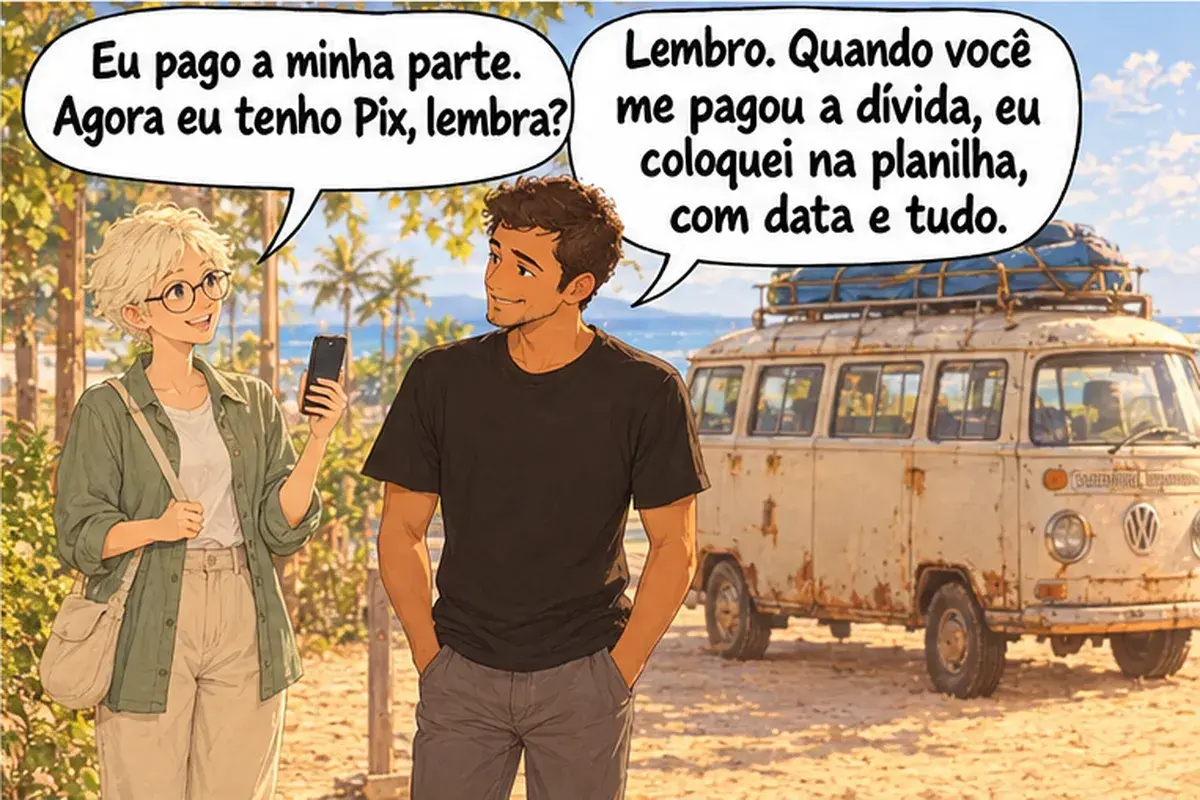
Eu pago a minha parte. Agora eu tenho Pix, lembra?
I'll pay my share. I have Pix now, remember?
- Léo
Lembro. Quando você me pagou a dívida, eu coloquei na planilha, com data e tudo.
I remember. When you paid me back the debt, I put it in the spreadsheet, with the date and everything.
- Motorista
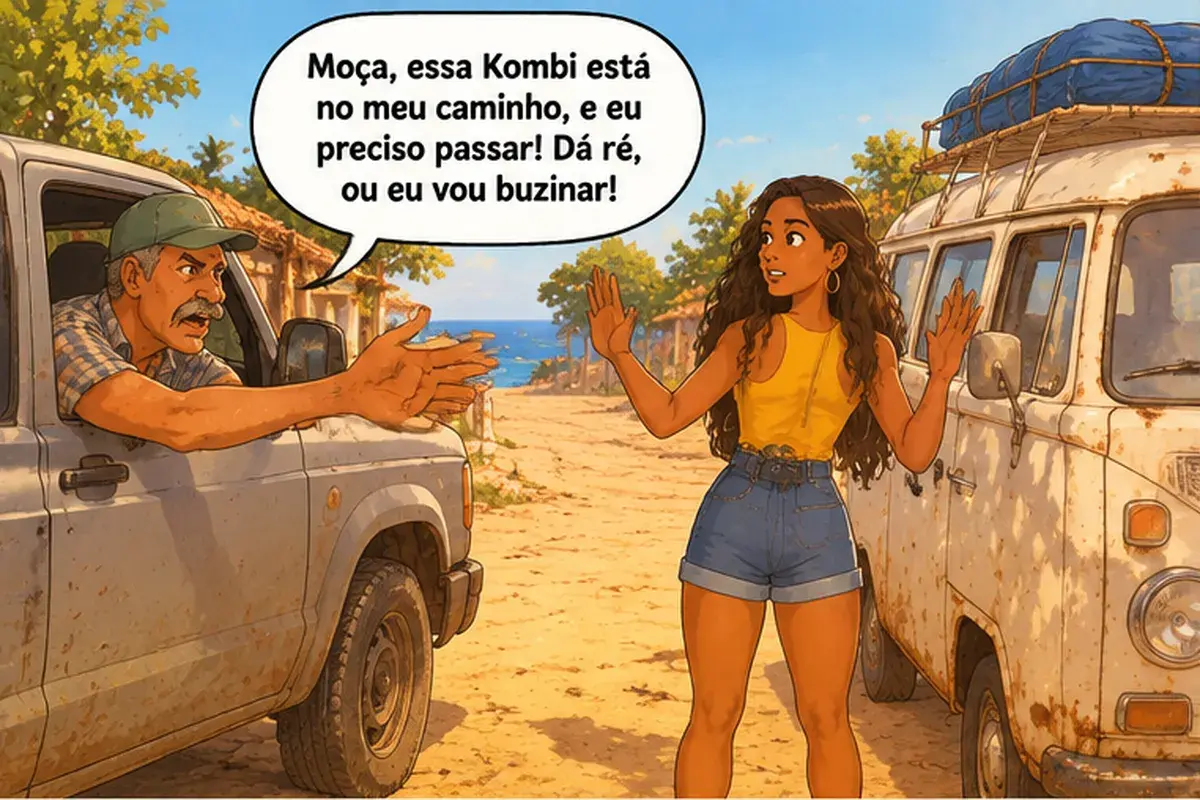
Moça, essa Kombi está no meu caminho, e eu preciso passar! Dá ré, ou eu vou buzinar!
Excuse me, that Kombi is in my way, and I need to get through! Back up, or I'll honk!
- Bia
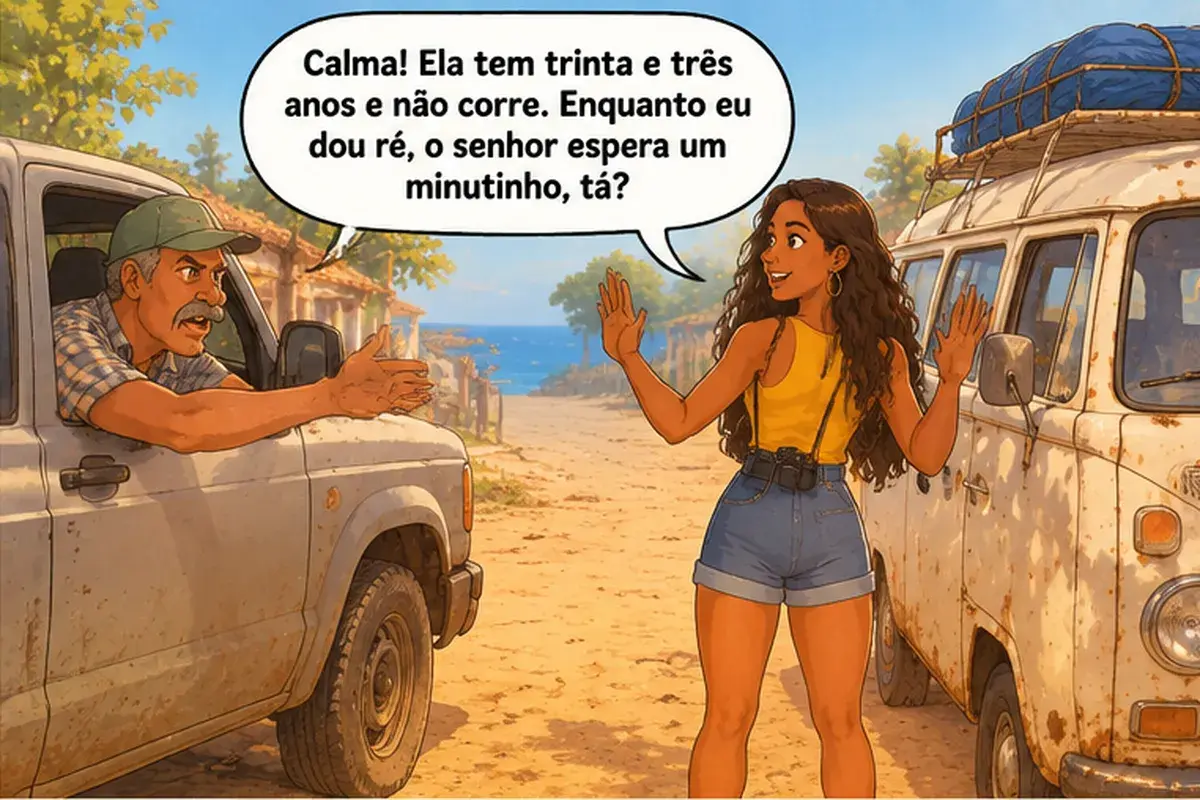
Calma! Ela tem trinta e três anos e não corre. Enquanto eu dou ré, o senhor espera um minutinho, tá?
Calm down! It's thirty-three years old and it doesn't speed. While I back up, you wait just a minute, OK? (formal)
- Atendente
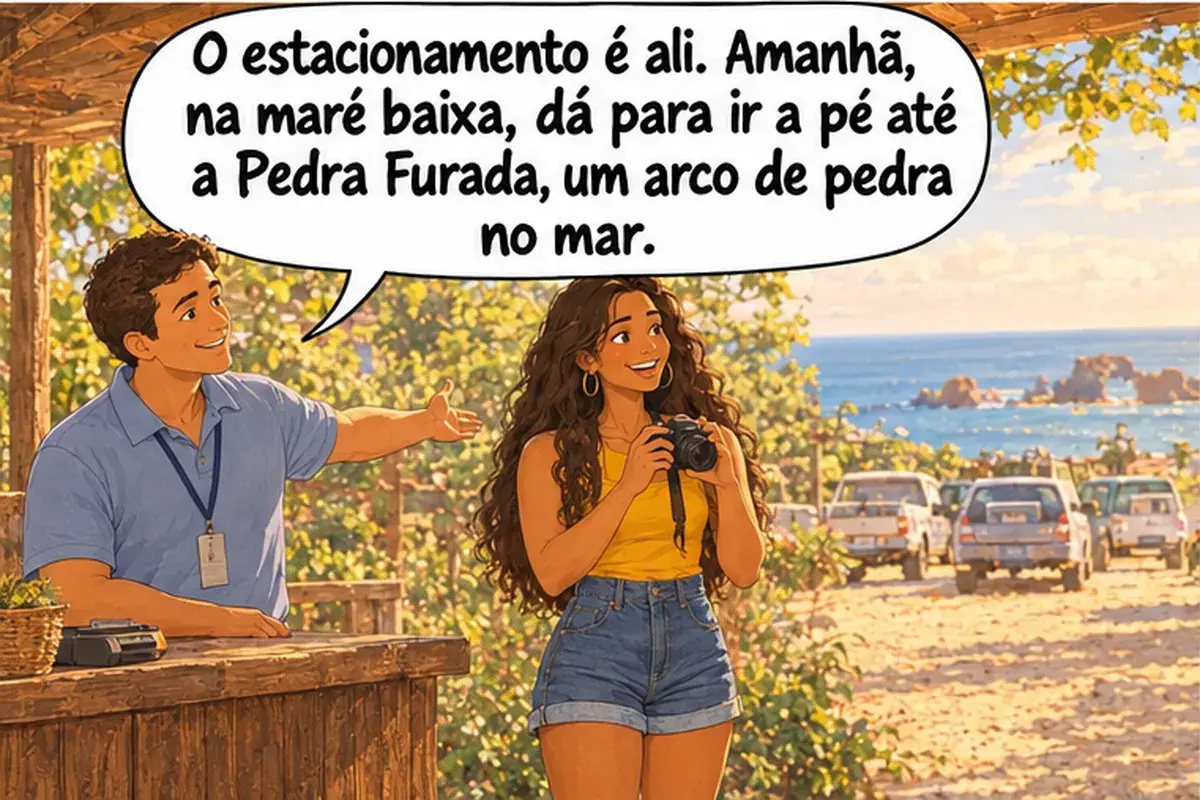
O estacionamento é ali. Amanhã, na maré baixa, dá para ir a pé até a Pedra Furada, um arco de pedra no mar.
The parking lot is over there. Tomorrow, at low tide, you can walk to Pedra Furada, a stone arch in the sea.
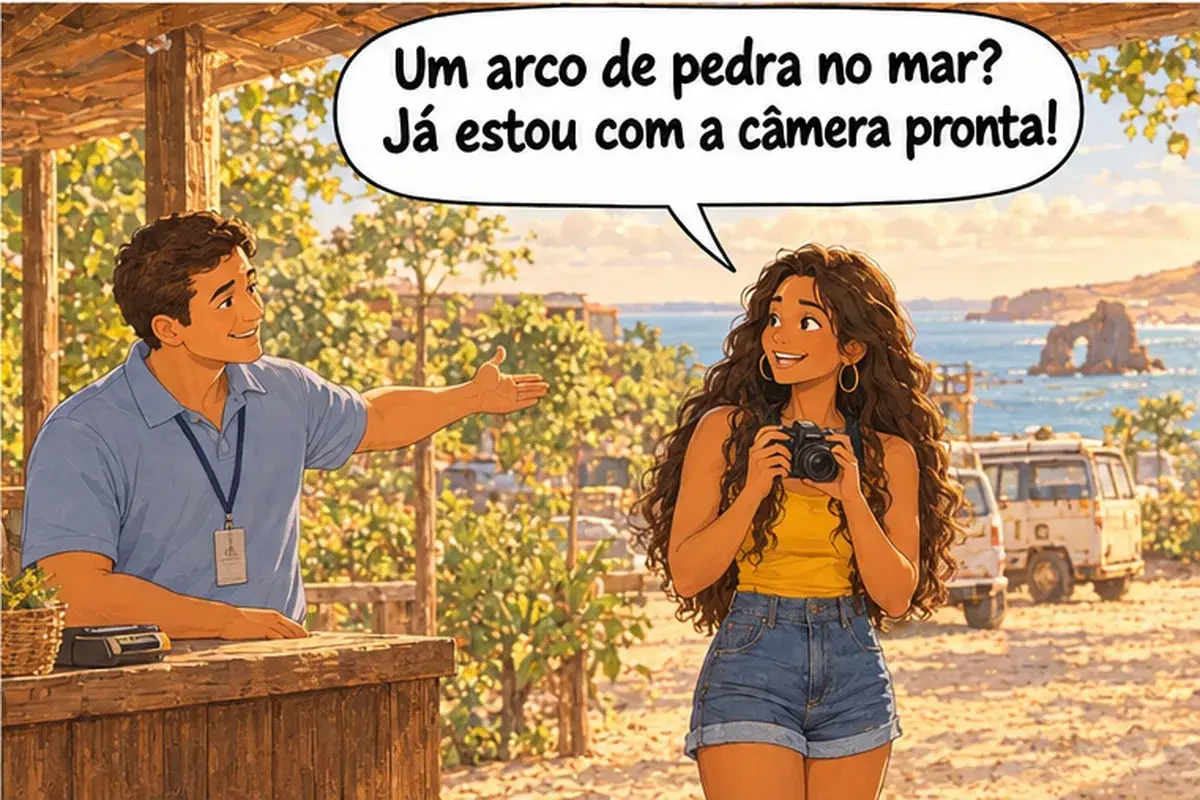
- Bia
Um arco de pedra no mar? Já estou com a câmera pronta!
A stone arch in the sea? I already have my camera ready!
Grammar for this text
- até agora eu achava que era roupa —
achavais the imperfect: Nina thought so for a long time, up to this moment.achei(preterite) would mean she thought it just once.jardineiraalso means overalls with straps, which is why the joke works. - Primeiro vocês deixam a Kombi no estacionamento. Em seguida, pegam a jardineira. Por fim, é só aproveitar o passeio! — the linking words come at the start of the sentence and lay out the steps.
é só+ infinitive means "all you have to do is...". - ontem um turista dormia quando a jardineira atolou — an interrupted action:
dormia(imperfect) is the background,atolou(preterite) is the event that cut in (atolarmeans to get stuck in sand). é melhor não dormir —é melhor+ infinitive means "it's best not to...". - Essa taxa protege o meio ambiente da vila, para que as dunas continuem como são —
para que+ subjunctive means "so that" when the subject changes.continuemcomes fromcontinuar(with-arverbs the ending is-em). - embora a minha carteira não concorde —
emborameans "although" and is followed by the subjunctive:concordobecomesconcorde(fromconcordar).merecemeans "deserves it". - Amanhã, na maré baixa, dá para ir a pé até a Pedra Furada —
maré baixameans "low tide" (marécovers both high and low tide).dá para+ infinitive means "it's possible to...", andir a pémeans "to go on foot". - Enquanto eu dou ré, o senhor espera um minutinho, tá? —
enquanto+ present means "while".dar rémeans "to back up".minutinhosoftens the request, andtá?means "OK?", casual Brazilian speech forestá.
Words and grammar of the unit: Tell the story of a trip in order.
Learn the words from the texts with flashcards
In the app, you can tap any word in a text to see its translation, forms and examples, and new words stick with flashcards. 15 minutes a day.
Start for freeEverything is open for free. No card needed to sign up.