
Portuguese story with translation · A2 · 15 lines
Tomara que dê certo! I hope it works out!
Comic · 15 panels

Na véspera, eu não pude dormir de tanta emoção.
The night before, I couldn't sleep from all the excitement.
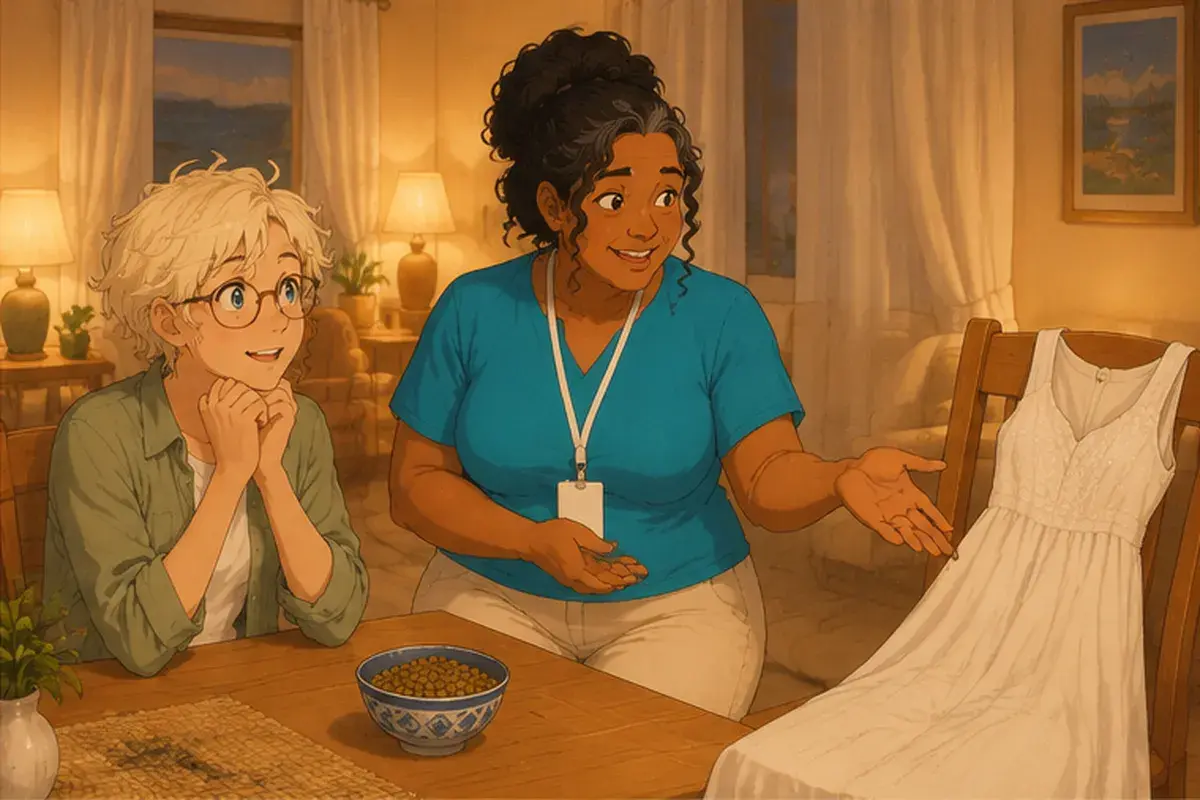
No Brasil, o réveillon tem muitas simpatias: roupa branca, a cor da paz, lentilha e sete ondas.
In Brazil, New Year's Eve has lots of good-luck rituals: white clothes, the color of peace, lentils, and seven waves.
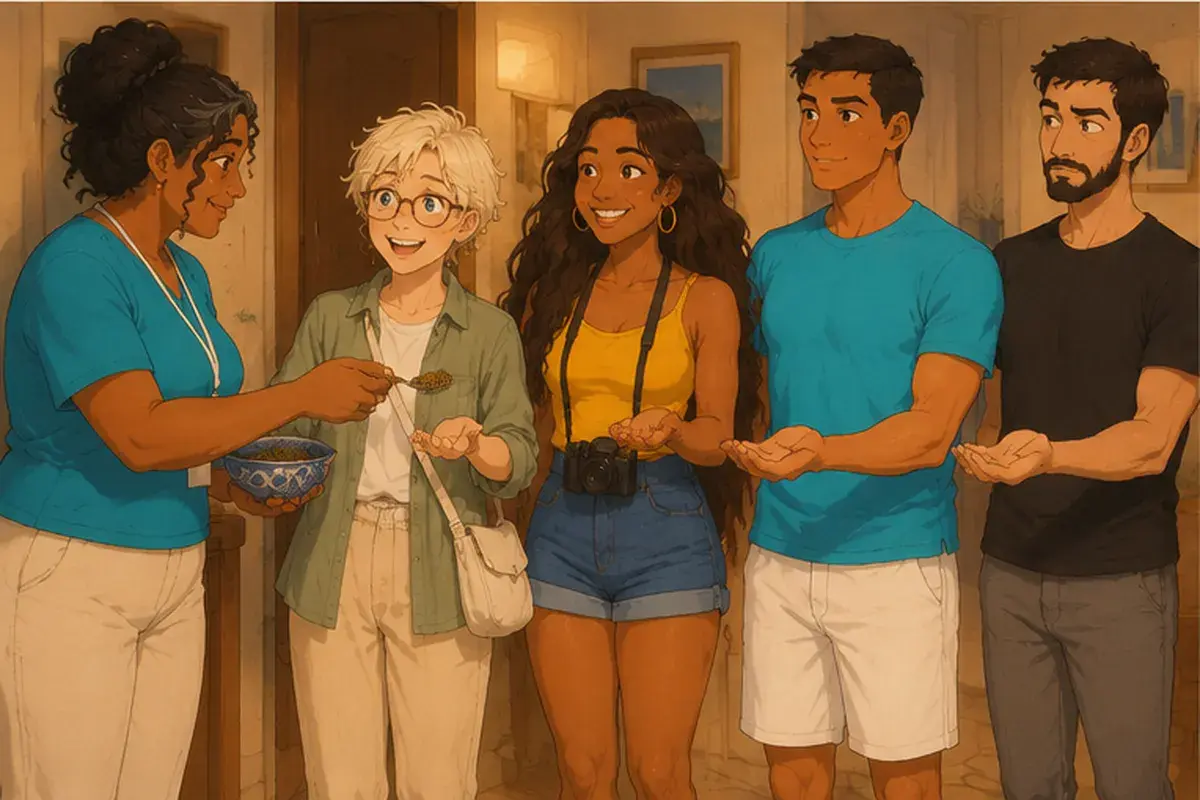
Antes de sair, a Regina deu uma colher de lentilha para cada um. “Traz dinheiro!”, ela disse.
Before leaving, Regina gave everyone a spoonful of lentils. "It brings money!" she said.
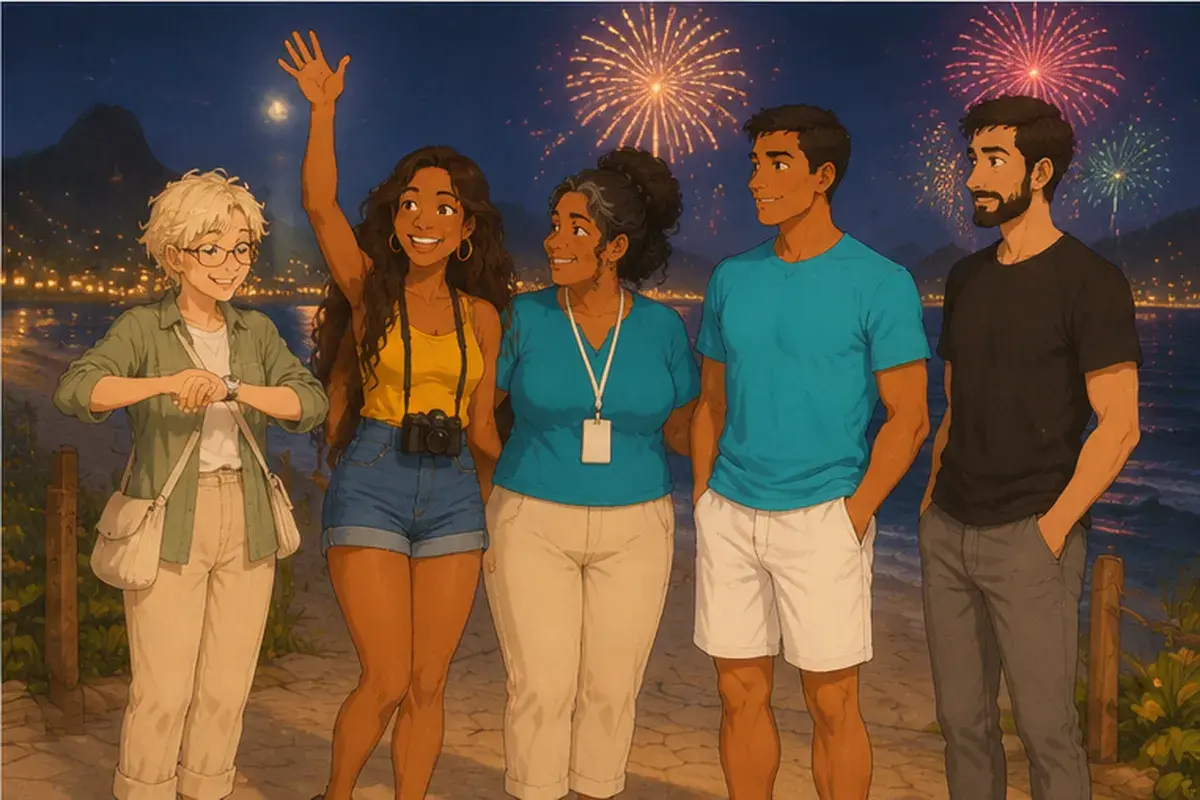
Ninguém se perdeu, e a Bia chegou às dez e meia. Para ela, isso é cedo!
No one got lost, and Bia arrived at ten thirty. For her, that's early!
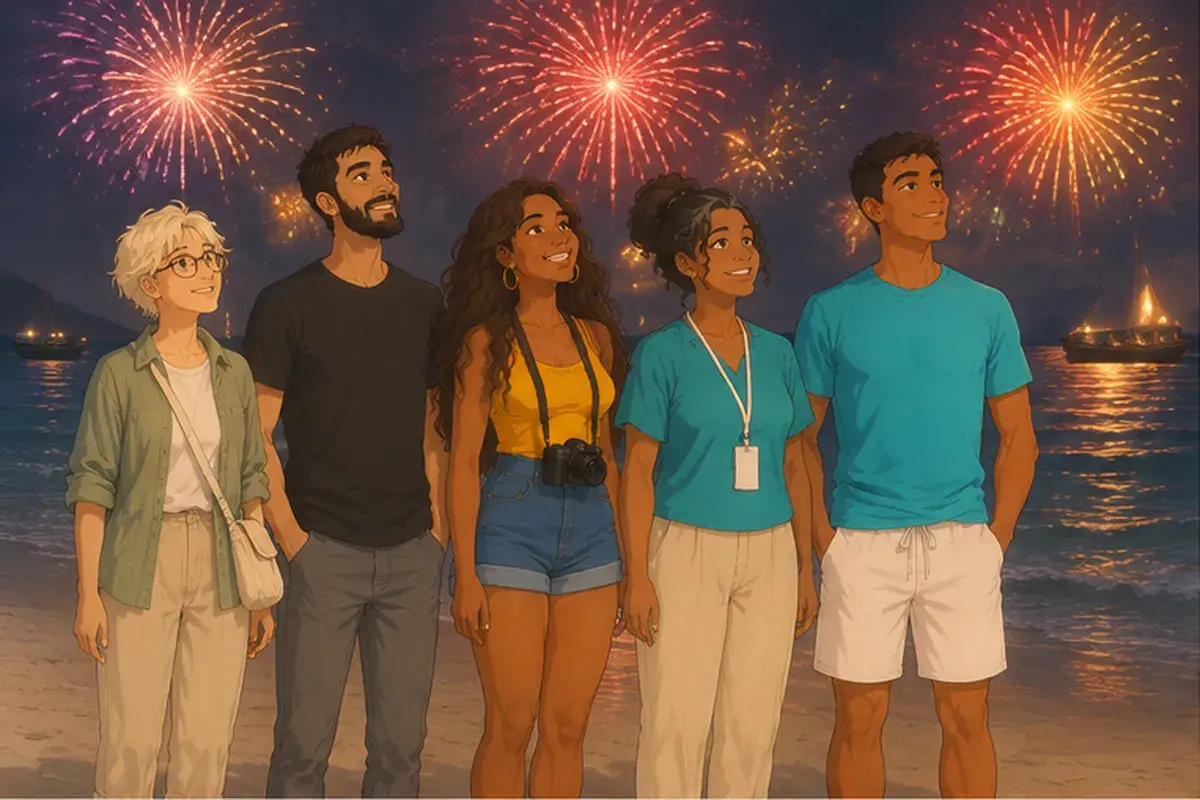
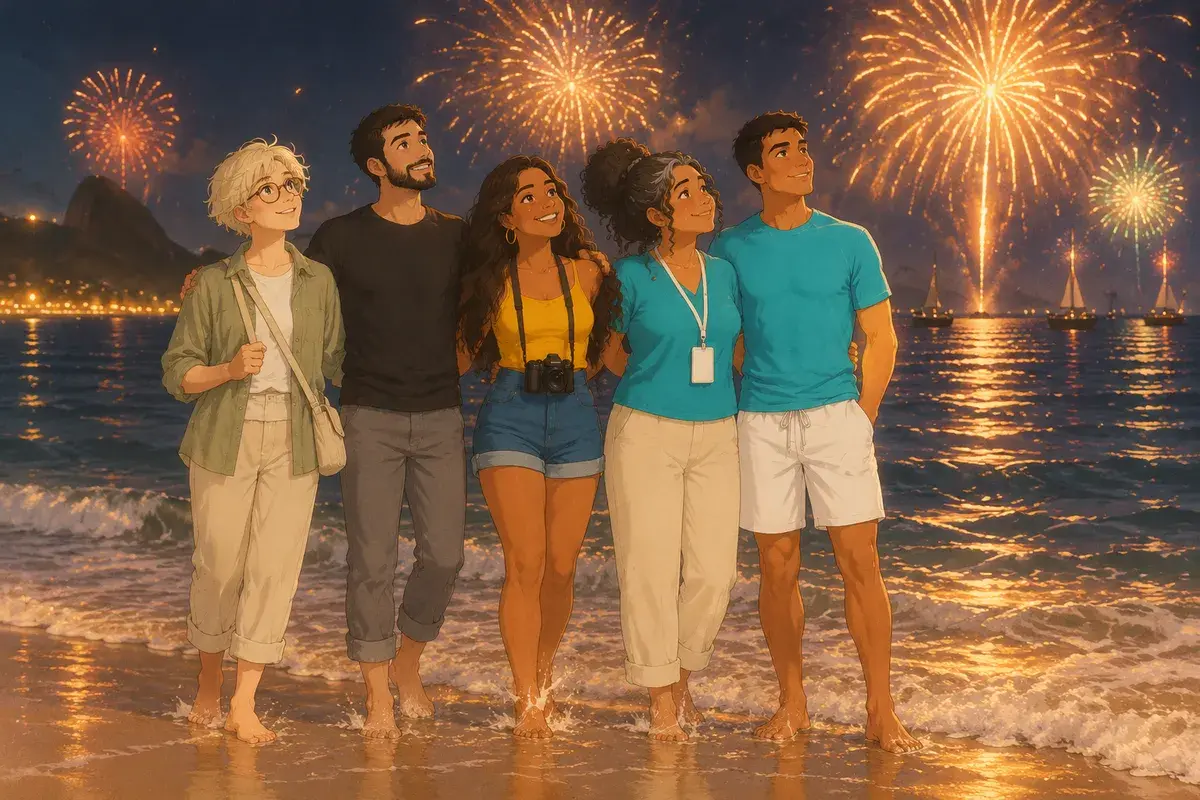
À meia-noite, a queima de fogos começou a estourar em cima dos barcos. O céu inteiro brilhou.
At midnight, the fireworks show started going off above the boats. The whole sky shone.
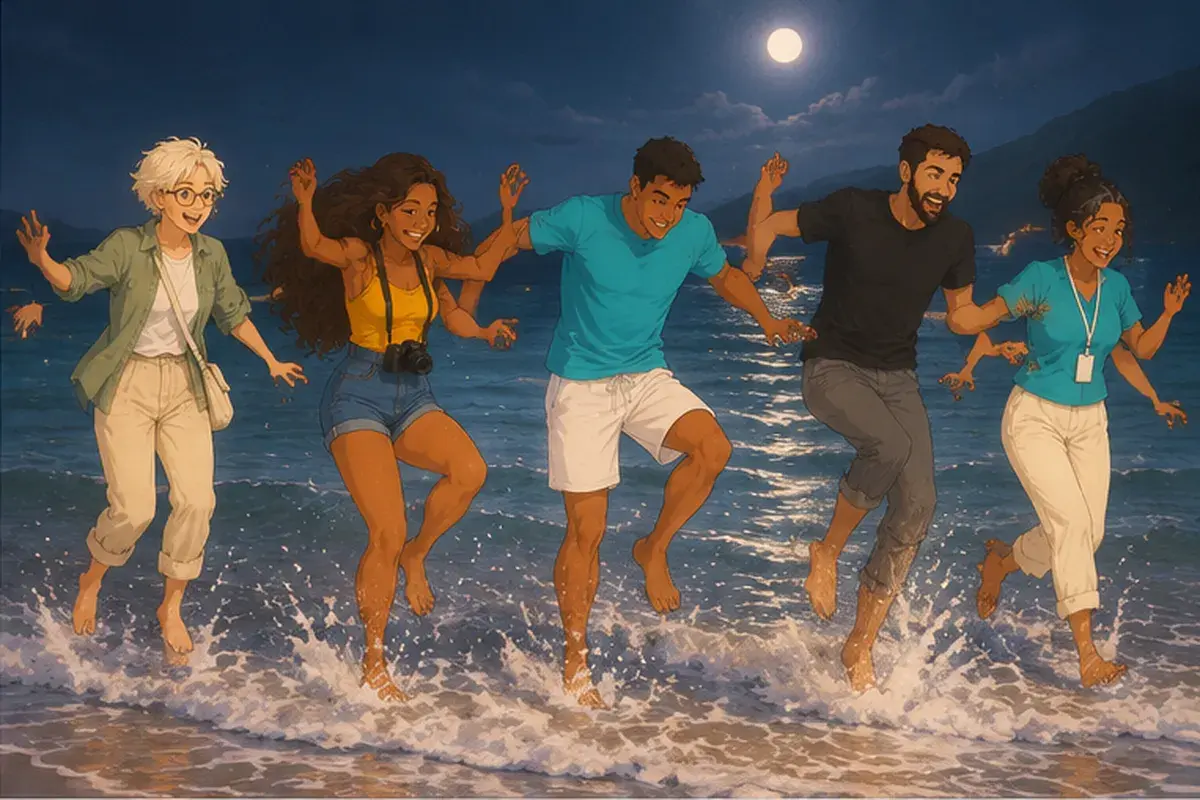
Pulamos sete ondas e fizemos um pedido em cada uma.
We jumped seven waves and made a wish on each one.

O meu pedido: falar português sem medo. O da Bia: um trabalho grande.
My wish: to speak Portuguese without fear. Bia's: a big job.
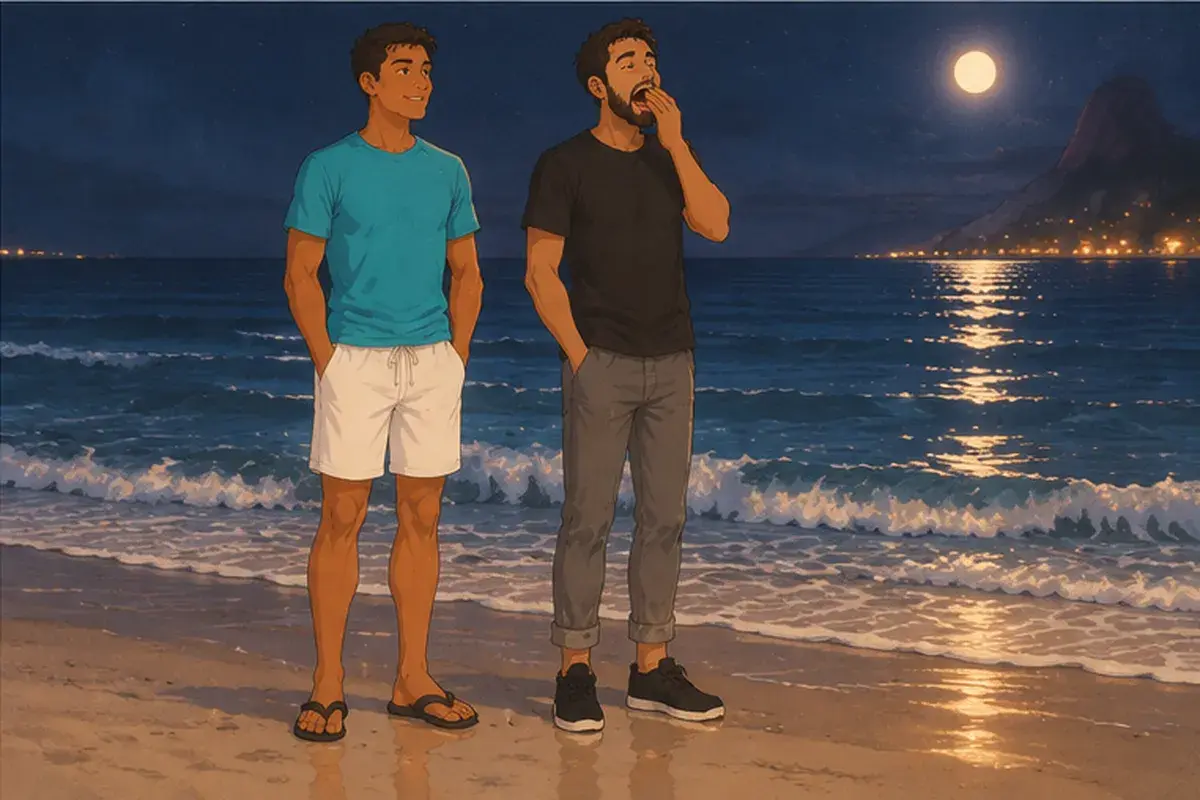
O Caio pediu ondas boas. O Léo pediu só uma coisa: dormir.
Caio asked for good waves. Léo asked for just one thing: to sleep.
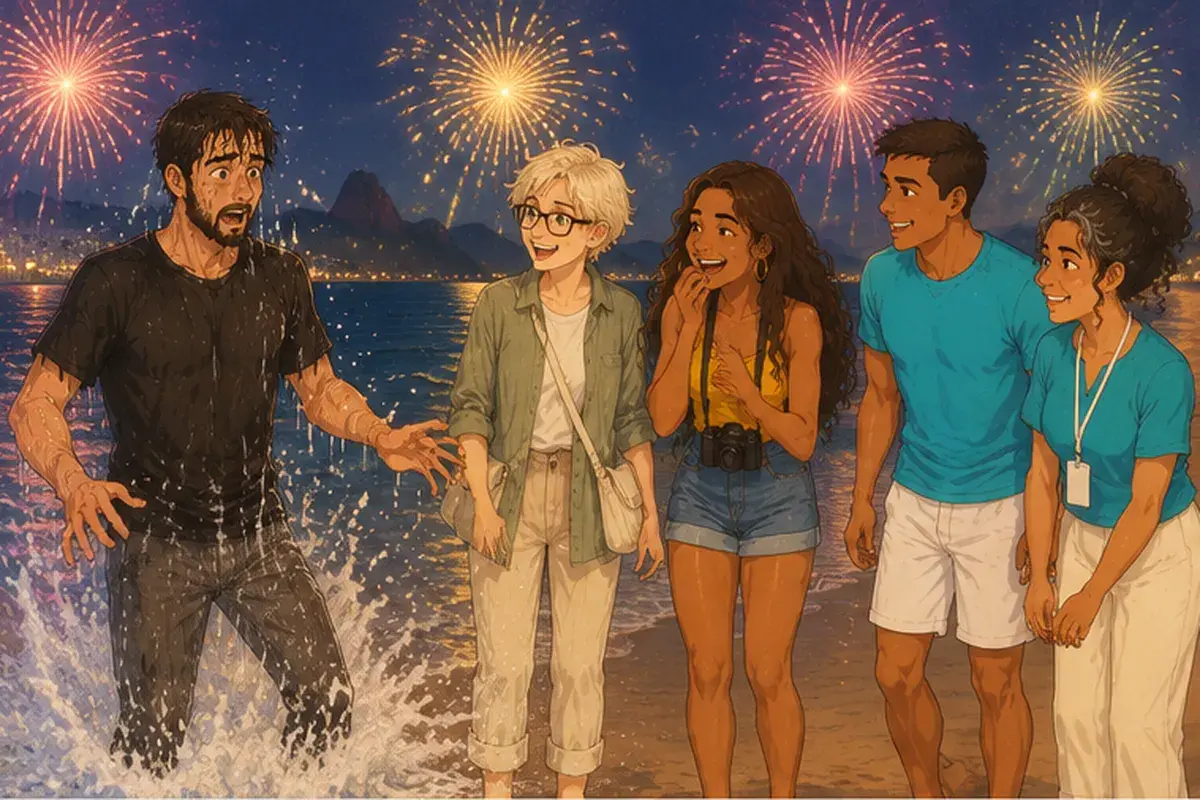
Na última onda, o Léo não pôde pular: ela chegou primeiro, e ele mergulhou sem querer, de camiseta preta e tudo.
On the last wave, Léo couldn't jump: it got there first, and he went under by accident, black T-shirt and all.

Muita gente jogou flores brancas no mar para a Iemanjá. Eu joguei uma também.
Lots of people threw white flowers into the sea for Iemanjá. I threw one too.
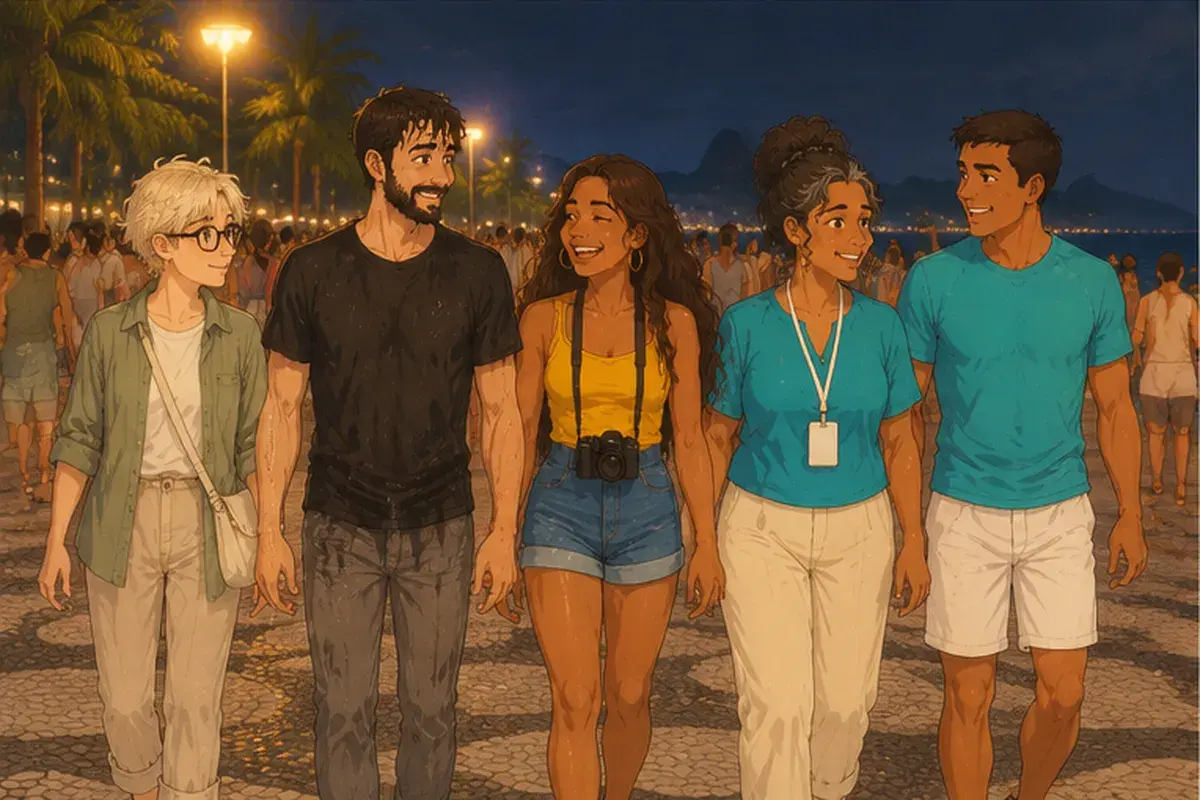
Quando os fogos acabaram, a multidão voltou a andar, devagar.
When the fireworks ended, the crowd started walking again, slowly.
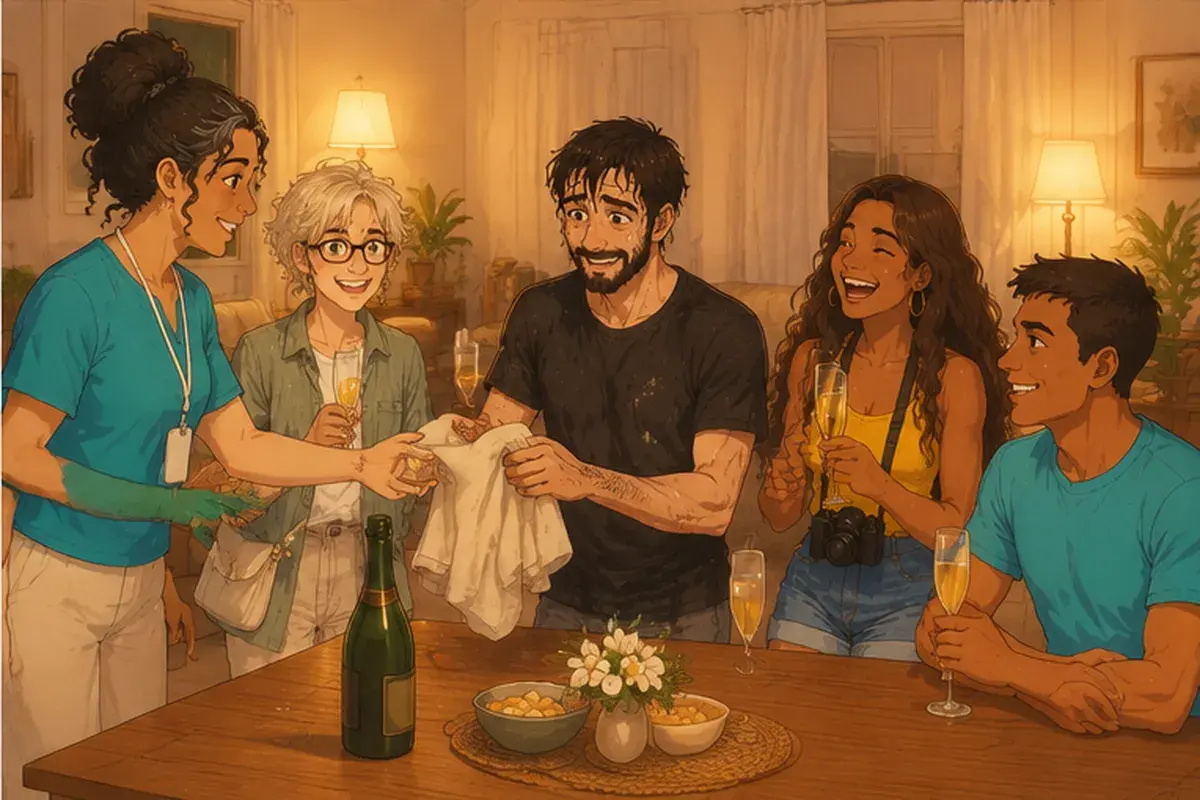
Em casa, a Regina deu uma taça de espumante para cada um — e uma toalha para o Léo.
At home, Regina gave everyone a glass of sparkling wine — and a towel for Léo.
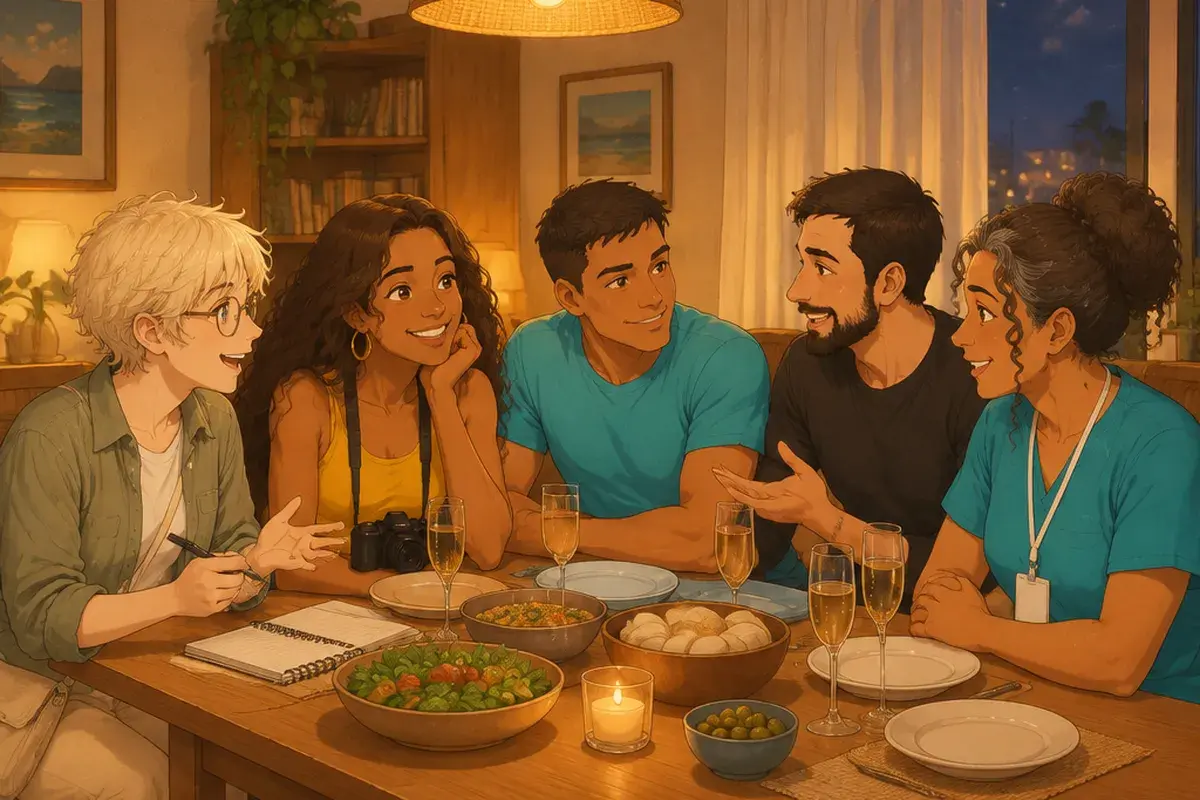
Na mesa, planejamos o ano que vem: promessas e metas.
At the table, we planned next year: promises and goals.

Eu tenho esperança: no futuro, tenho muitos sonhos para realizar. Tomara que dê certo!
I have hope: in the future, I have lots of dreams to make come true. I hope it works out!
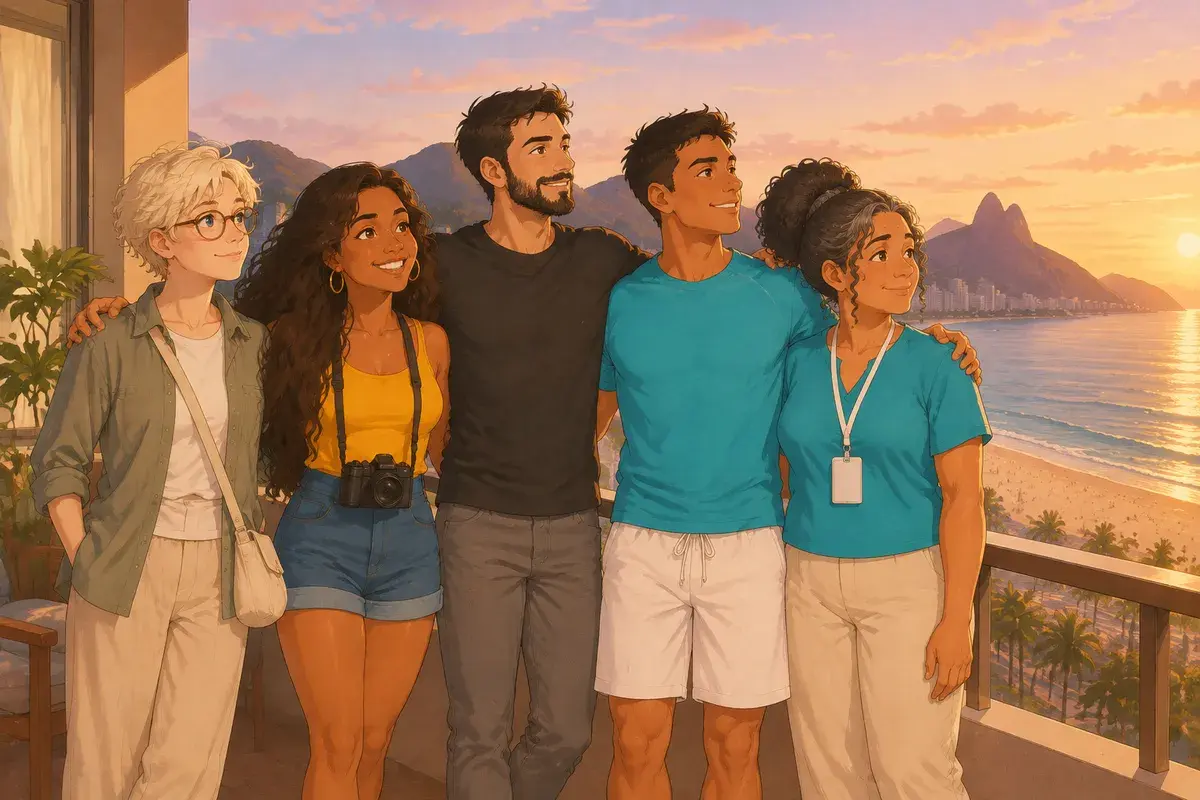
Foi o meu primeiro Ano-Novo sem neve — e com amigos.
It was my first New Year's without snow — and with friends.
Grammar for this text
- não pude dormir and não pôde pular — the preterite of poder (can): pude — "I could, I managed to", pôde — "he could". With não: "couldn't, didn't manage to". The accent in pôde tells it apart from pode ("can", present). The rule is in the unit grammar.
- começou a estourar — começar a + infinitive: "started doing"; estourar — to go off with a bang, like fireworks.
- voltou a andar — voltar a + infinitive: "to start doing again" (the crowd started walking again). Without a, voltar just means "to come back".
- Quando os fogos acabaram — acabar without de: "to end".
- jogou flores — here jogar means "to throw", not "to play". People throw white flowers into the sea for Iemanjá, the goddess of the sea.
- sem querer — a set phrase: "by accident".
- Traz dinheiro! — traz means "brings": the present of trazer, ele / ela form (trago — "I bring", unit 6). Later in the same line, a Regina deu — "Regina gave" (dar) and ela disse — "she said" (dizer); both forms are in the unit 7 table.
- Pulamos, fizemos, planejamos — the nós form of the preterite. pulamos and planejamos look just like the present; the story about the past tells you it's the past. fizemos is from fazer (unit 7). Ninguém se perdeu — "no one got lost" (se perder, unit 5). O da Bia = o pedido da Bia: the noun isn't repeated, just like English "Bia's".
- Tomara que dê certo! — a set phrase, "I hope it works out". After tomara que comes a special form: dê, from dar; dar certo — "to work out" (unit 6). The rule comes in B1.
Words and grammar of the unit: Arrange to meet in a crowd.
Learn the words from the texts with flashcards
In the app, you can tap any word in a text to see its translation, forms and examples, and new words stick with flashcards. 15 minutes a day.
Start for freeEverything is open for free. No card needed to sign up.