

Portuguese dialogue with translation · A2 · 14 lines
Tenho uma dúvida. Pode explicar? I have a question. Can you explain?
Comic · 13 panels
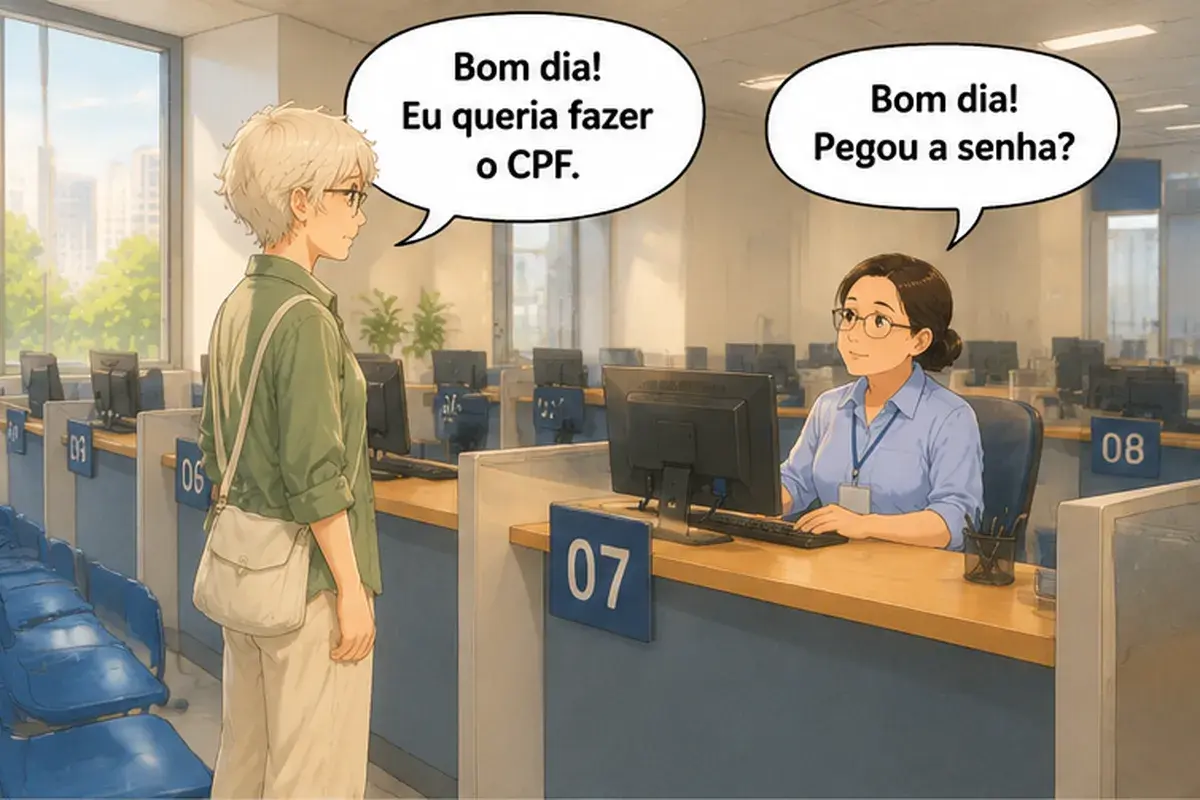
- Nina
Bom dia! Eu queria fazer o CPF.
Good morning! I'd like to get a CPF.
- Atendente
Bom dia! Pegou a senha?
Good morning! Did you take a number?
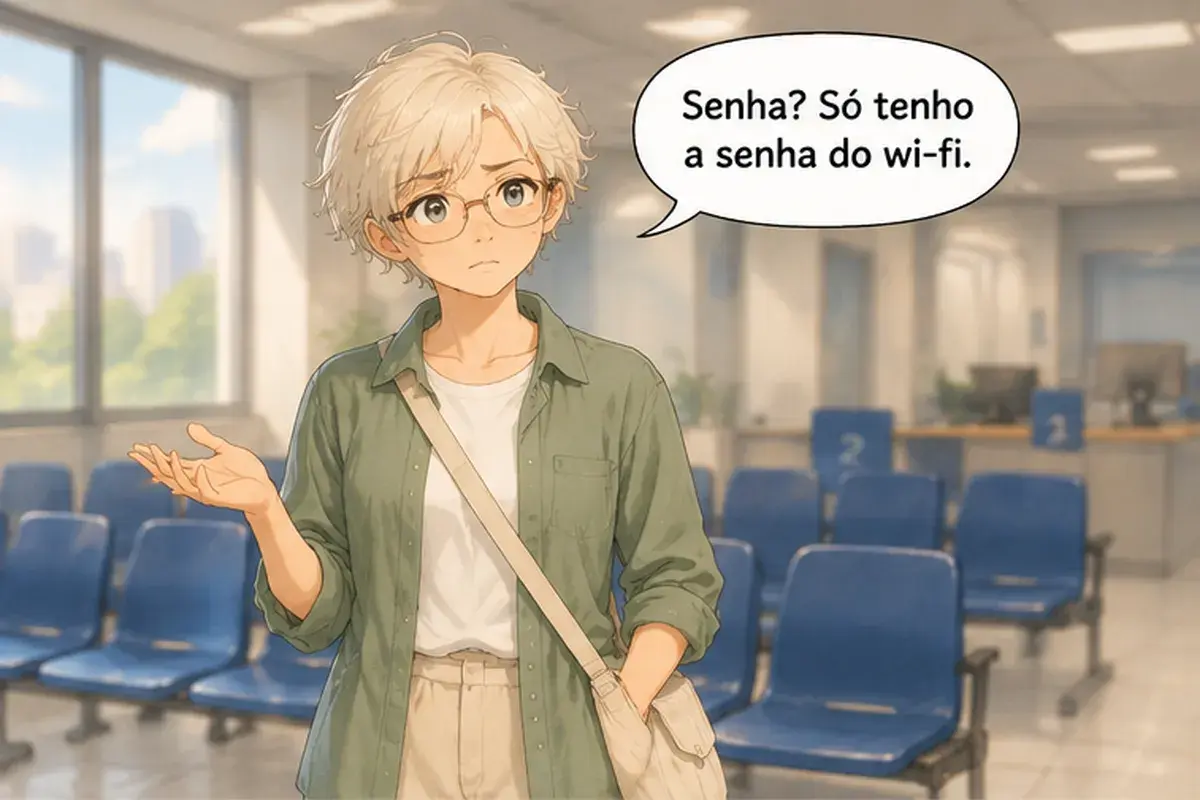
- Nina
Senha? Só tenho a senha do wi-fi.
Password? I only have the Wi-Fi password.
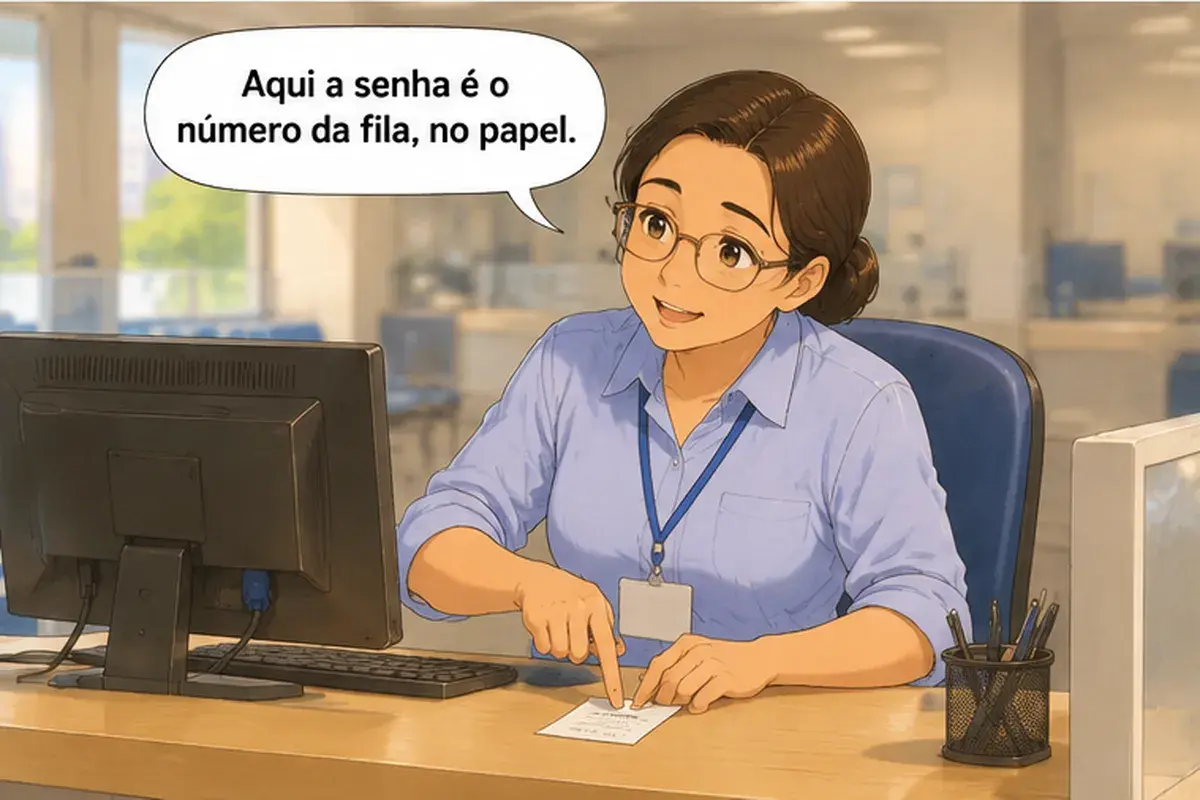
- Atendente
Aqui a senha é o número da fila, no papel.
Here the senha is the number in line, on the paper.
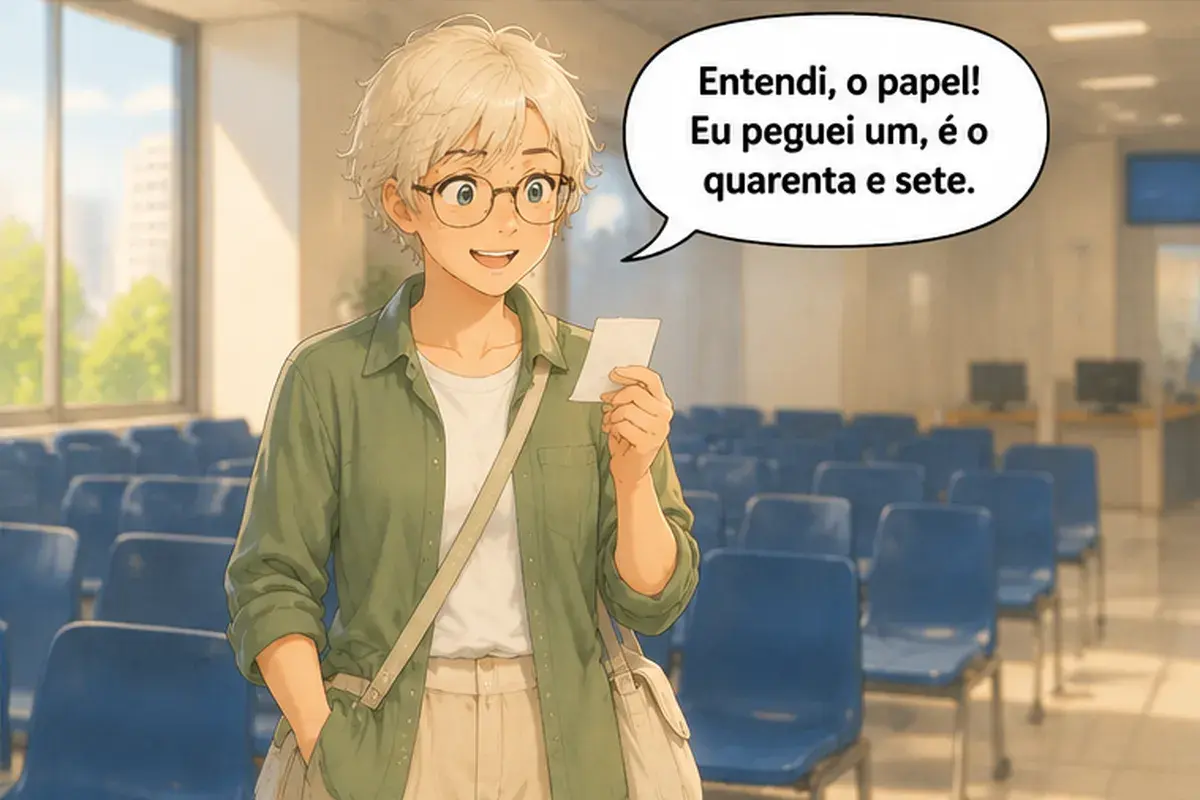
- Nina
Entendi, o papel! Eu peguei um, é o quarenta e sete.
Got it, the paper! I took one, it's forty-seven.
- Atendente
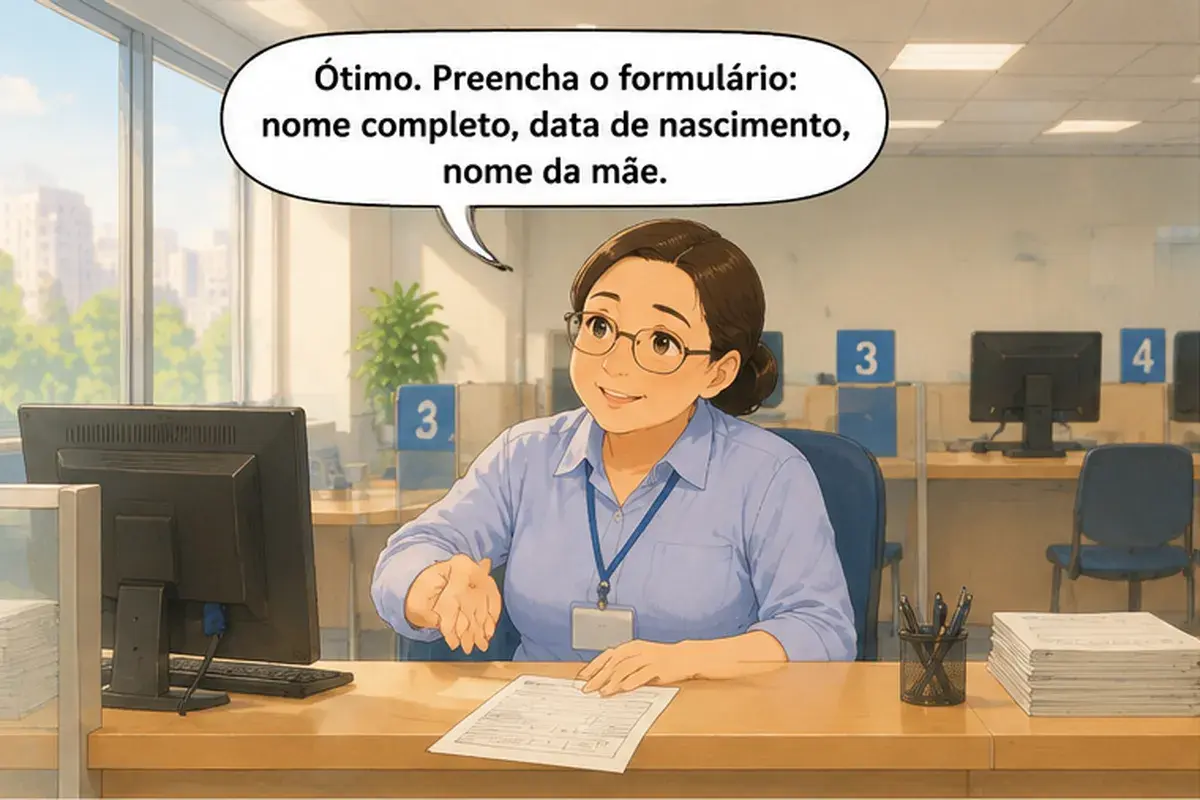
Ótimo. Preencha o formulário: nome completo, data de nascimento, nome da mãe.
Great. Fill out the form: full name, date of birth, mother's name.
- Nina
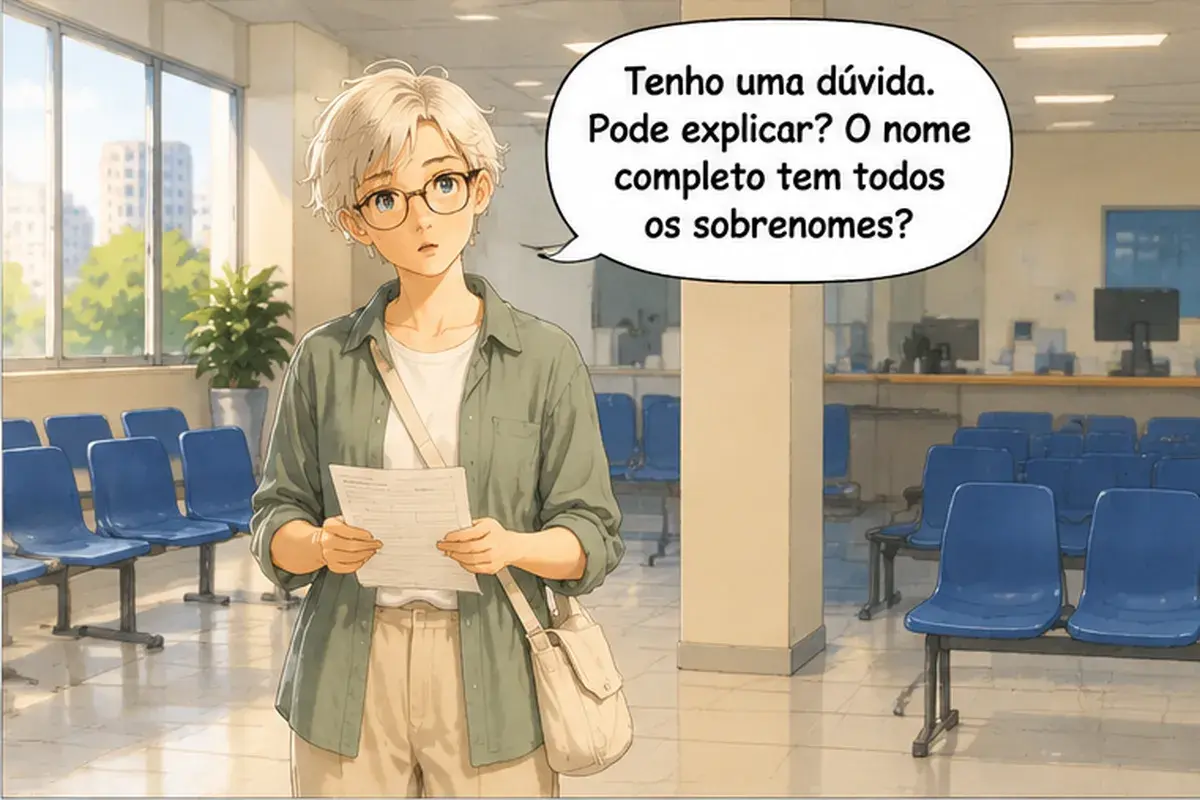
Tenho uma dúvida. Pode explicar? O nome completo tem todos os sobrenomes?
I have a question. Can you explain? Does the full name have all the last names?
- Atendente
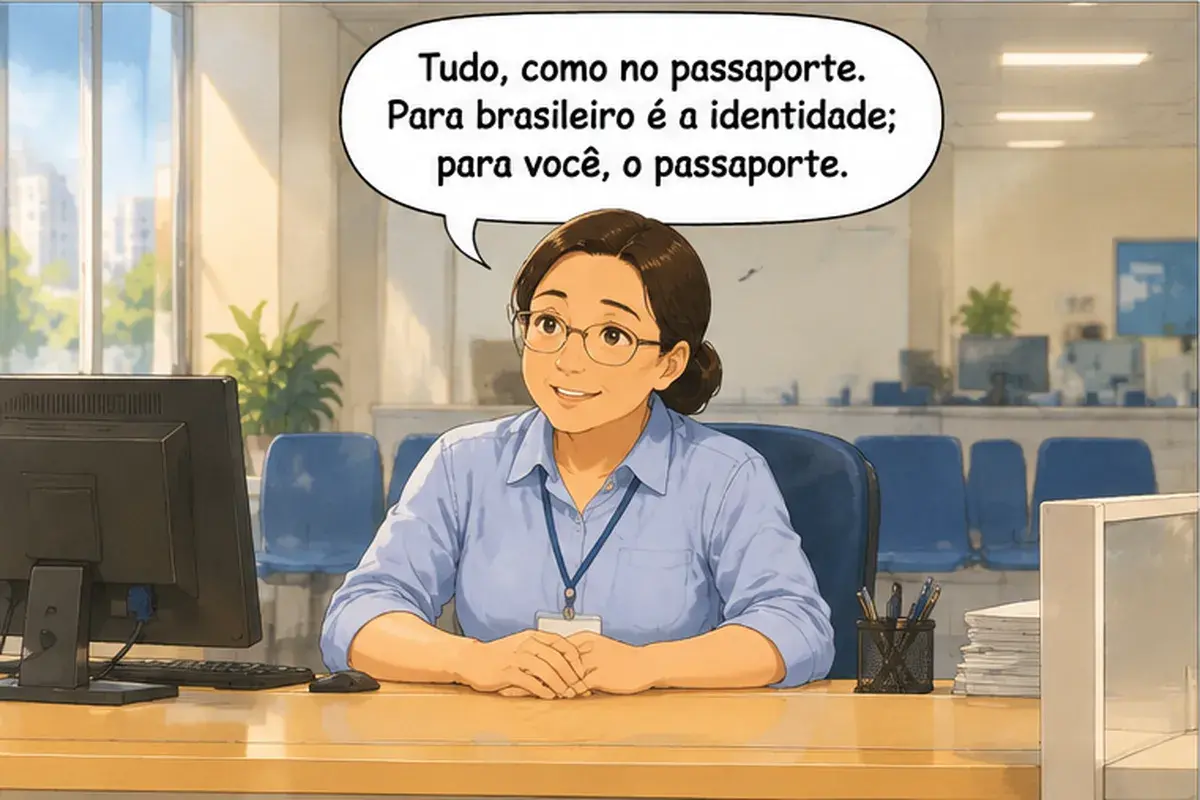
Tudo, como no passaporte. Para brasileiro é a identidade; para você, o passaporte.
All of them, like on the passport. For a Brazilian it's the ID card; for you, the passport.
- Nina
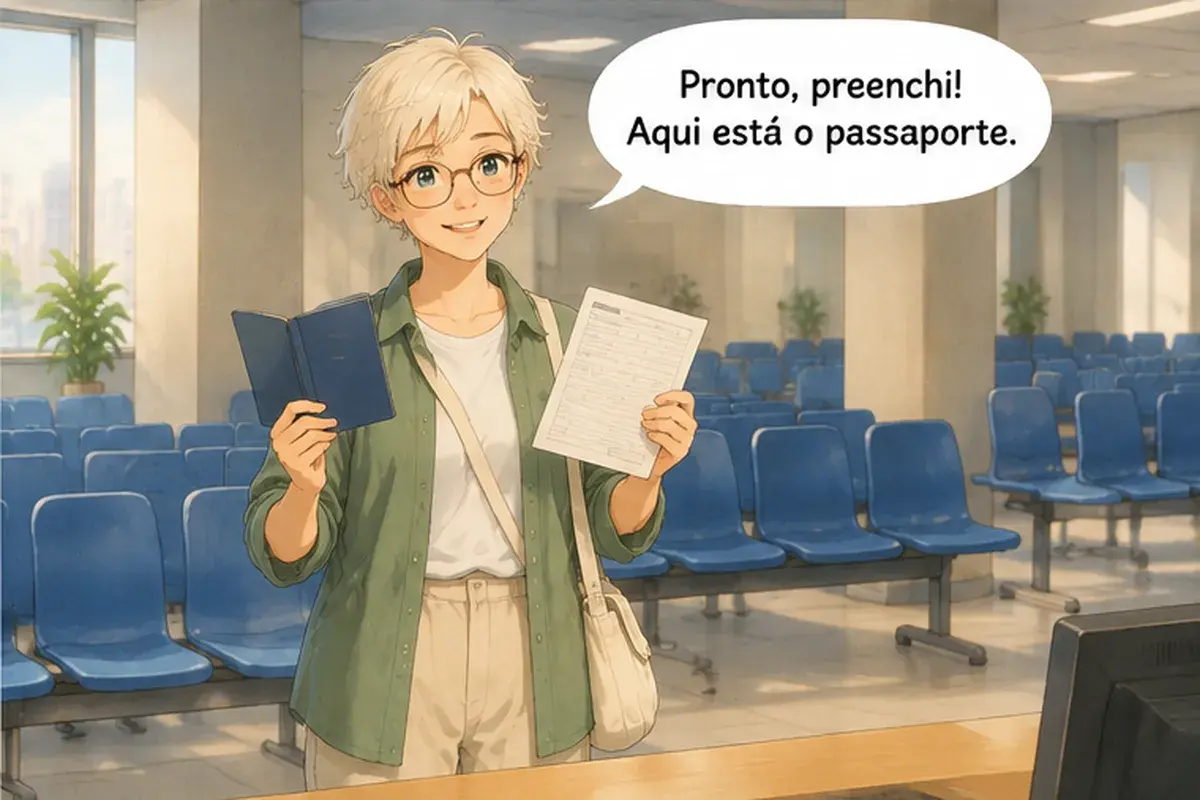
Pronto, preenchi! Aqui está o passaporte.
Done, I filled it out! Here's the passport.
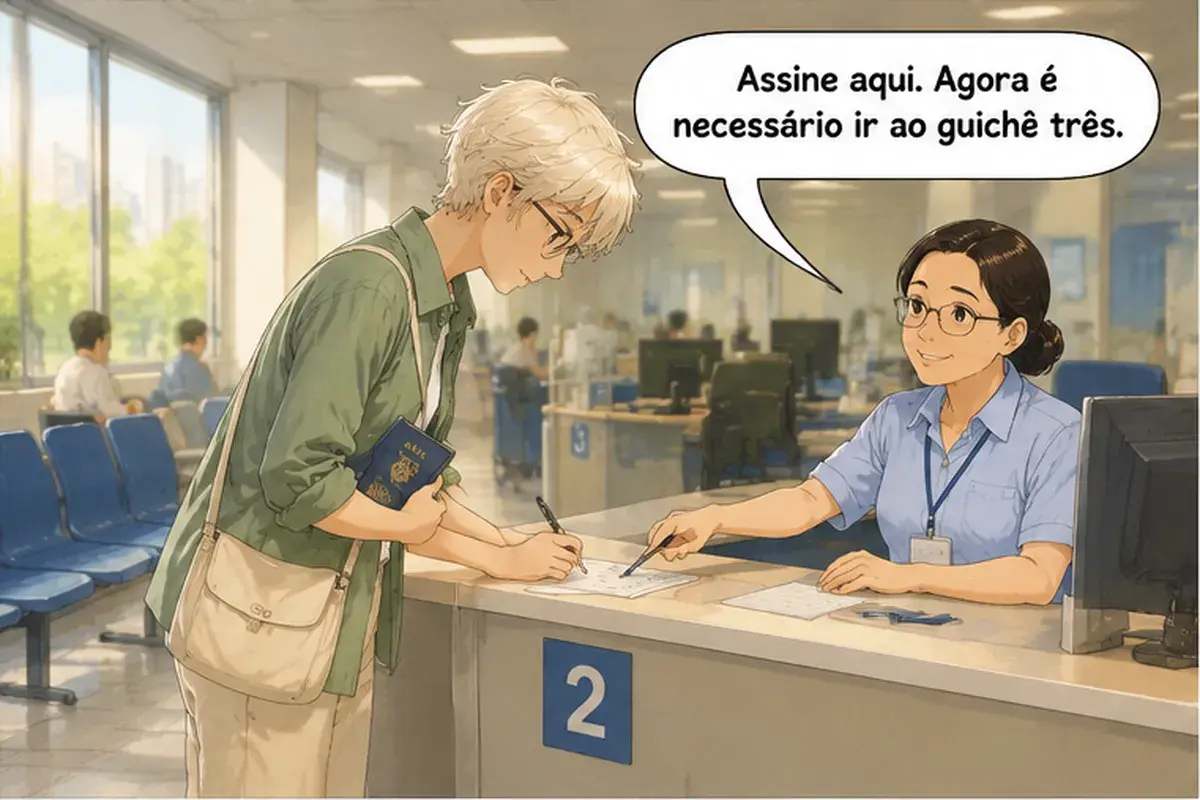
- Atendente
Assine aqui. Agora é necessário ir ao guichê três.
Sign here. Now it's necessary to go to window three.
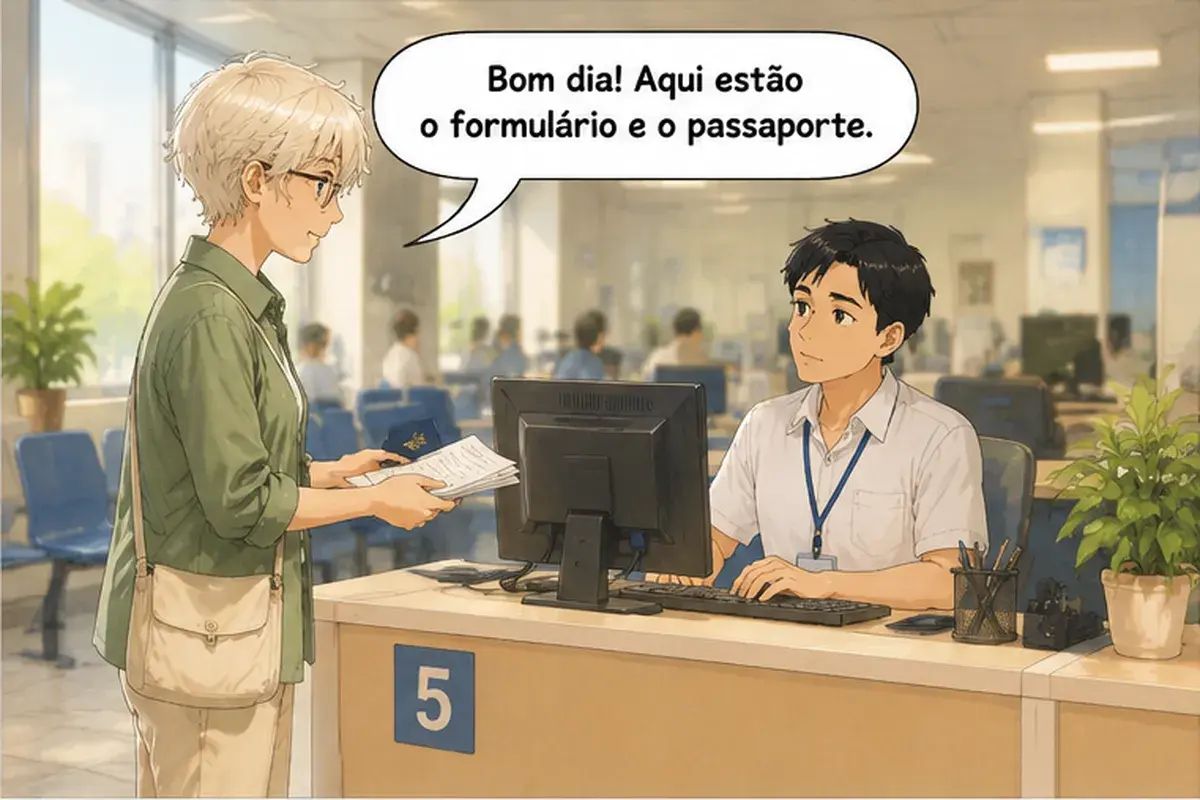
- Nina
Bom dia! Aqui estão o formulário e o passaporte.
Good morning! Here are the form and the passport.
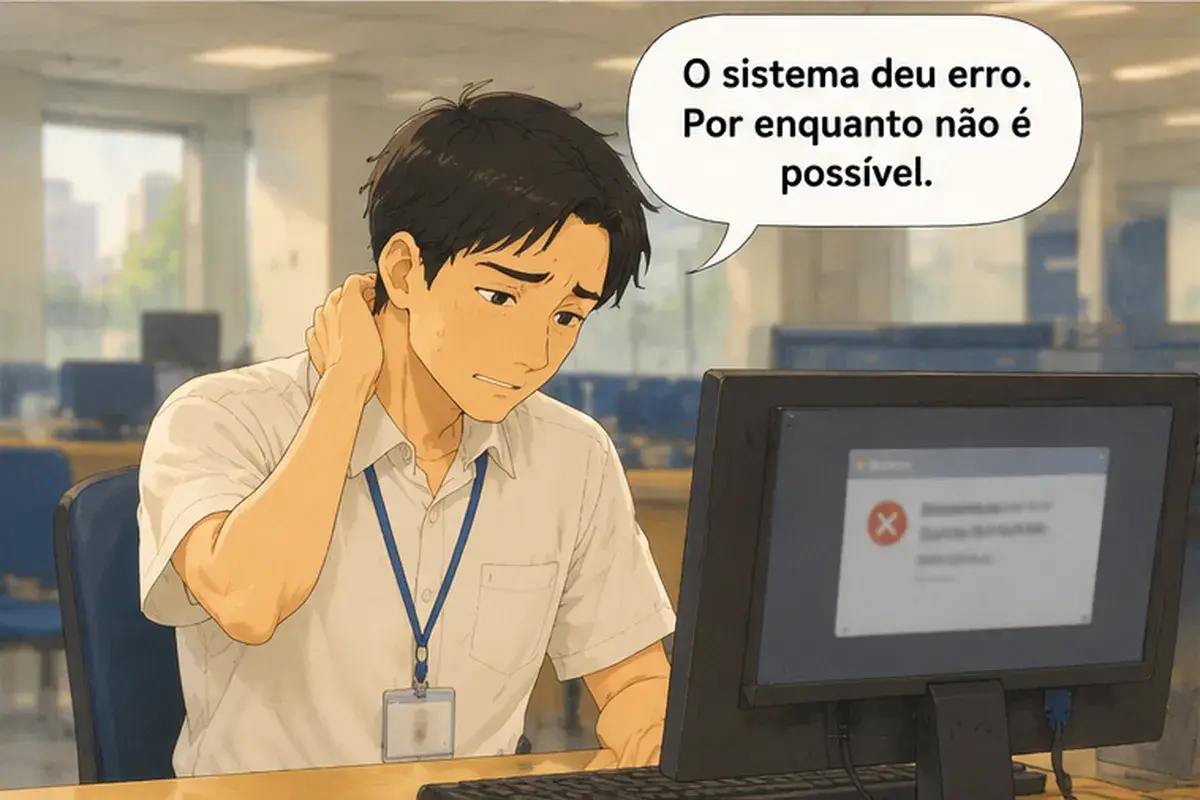
- Funcionário
O sistema deu erro. Por enquanto não é possível.
The system gave an error. For now, it's not possible.
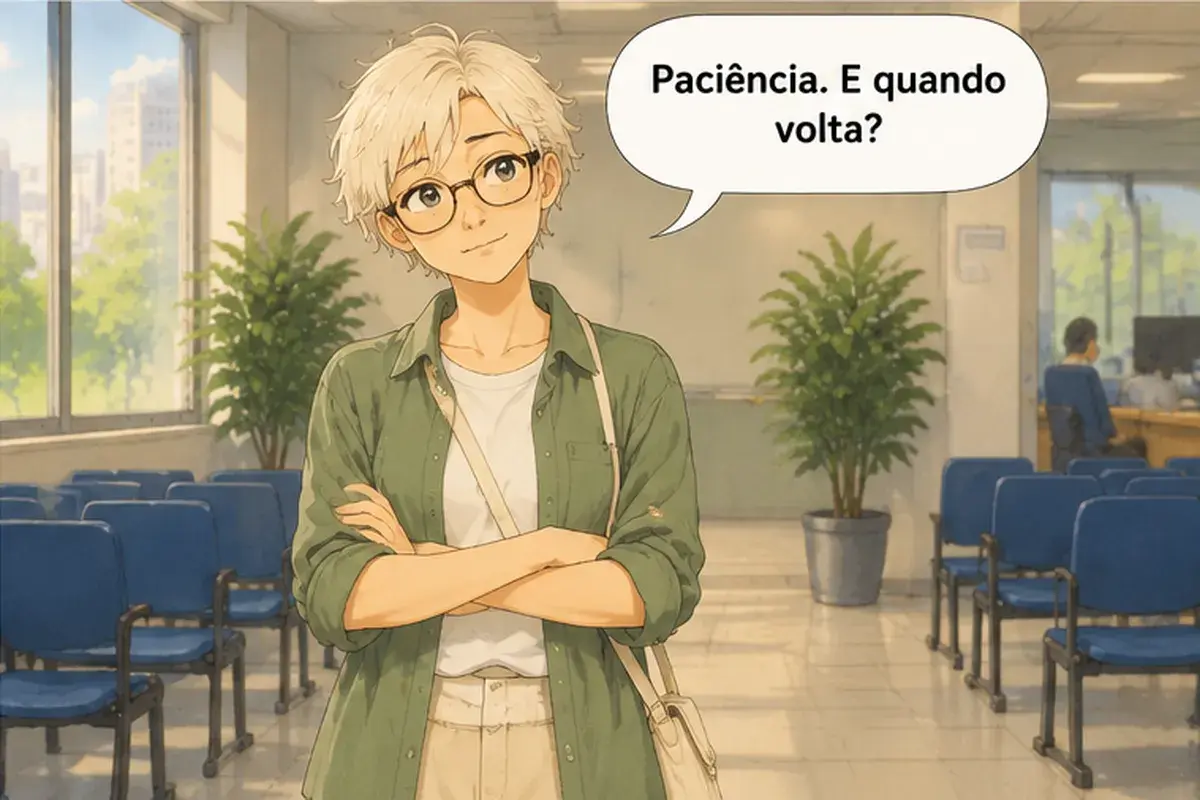
- Nina
Paciência. E quando volta?
Patience. And when will it be back?
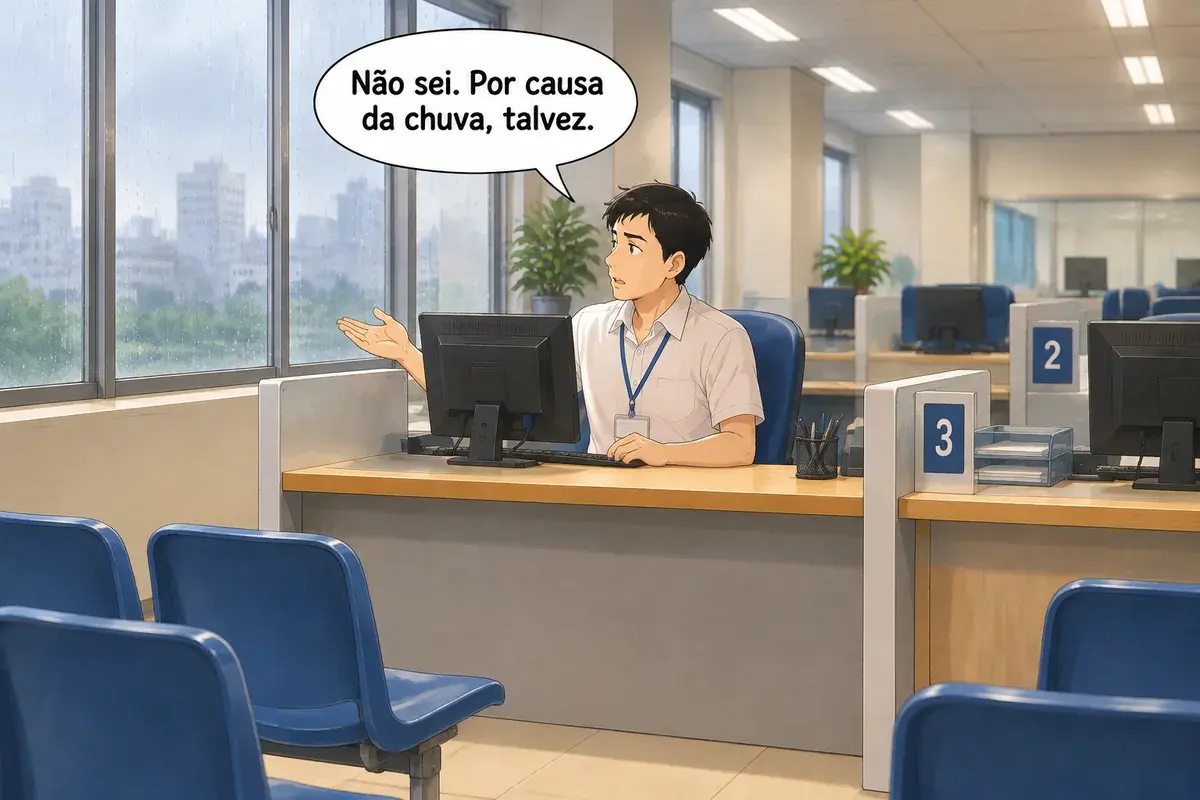
- Funcionário
Não sei. Por causa da chuva, talvez.
I don't know. Because of the rain, maybe.
Grammar for this text
- Pegou a senha? — you know senha as "password" (A1). In a line it has a second meaning: "number ticket, your number in line". Nina only knows the first one and makes a joke: Só tenho a senha do wi-fi — "I only have the Wi-Fi password".
- Tenho uma dúvida. Pode explicar? — dúvida is not just "a question" but "a doubt, something unclear". Pode explicar? — "Can you explain?" (pode is the você form of poder). Two phrases that will help you at any counter window.
- Para brasileiro é a identidade; para você, o passaporte — here para means "for whom": for a Brazilian, the ID card; for you, the passport. In the second half the verb é is left out so it isn't repeated, just like in English.
- Preencha o formulário, Assine aqui — polite commands (unit 6): preencher → preencha, assinar → assine: an -er verb changes its ending to -a, an -ar verb to -e. Then Nina answers preenchi — "I filled it out" (the preterite of preencher).
- Agora é necessário ir ao guichê três — é necessário + infinitive means "it's necessary to", with no person. necessário doesn't change here, because what's needed is an action (ir), not a thing. ao = a + o.
- O sistema deu erro — deu is the preterite of dar: "it gave" (dei — "I gave"). Literally "the system gave an error"; people say dar erro about any glitch. sistema is masculine, even though it ends in -a.
- Por enquanto não é possível — por enquanto means "for now". Por causa da chuva — "because of the rain": por causa de + a (chuva is feminine), and de + a join into da.
Words and grammar of the unit: Get a document and wait in line.
Learn the words from the texts with flashcards
In the app, you can tap any word in a text to see its translation, forms and examples, and new words stick with flashcards. 15 minutes a day.
Start for freeEverything is open for free. No card needed to sign up.