

Portuguese dialogue with translation · A2 · 16 lines
Esse ônibus passa em Copacabana? Does this bus go through Copacabana?
Comic · 16 panels
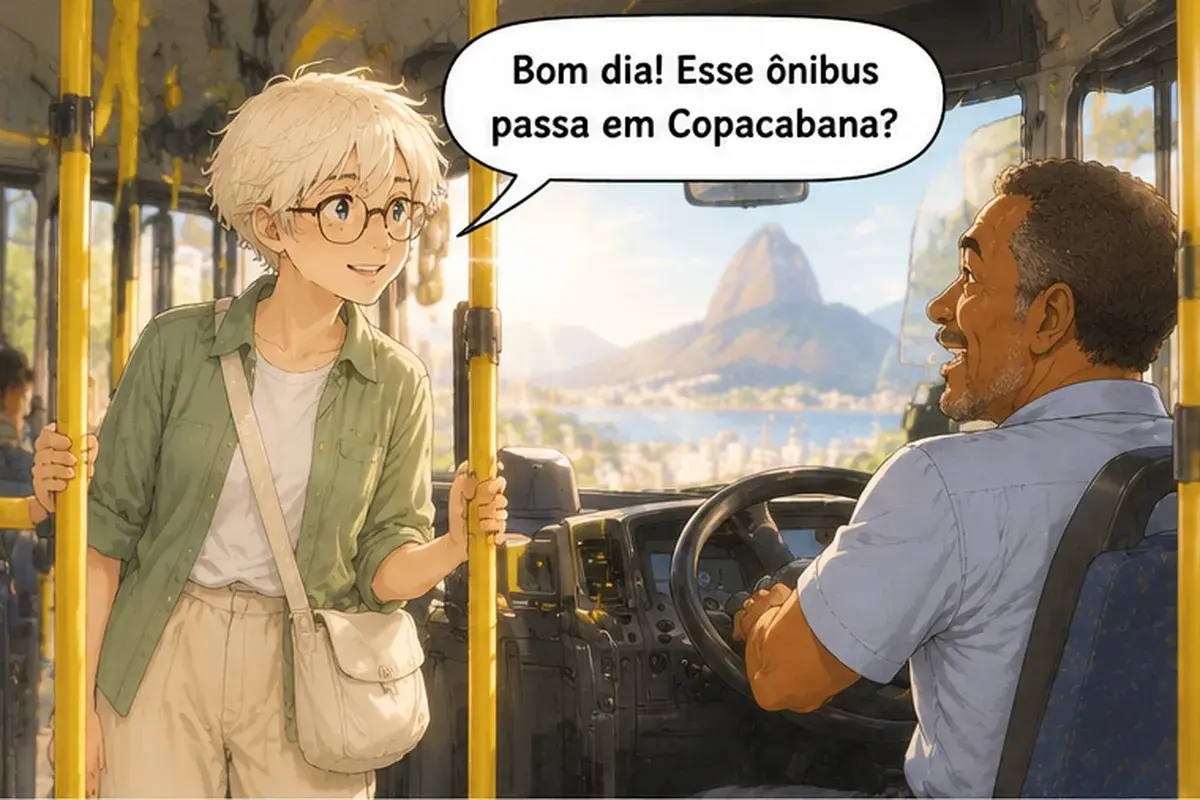
- Nina
Bom dia! Esse ônibus passa em Copacabana?
Good morning! Does this bus go through Copacabana?
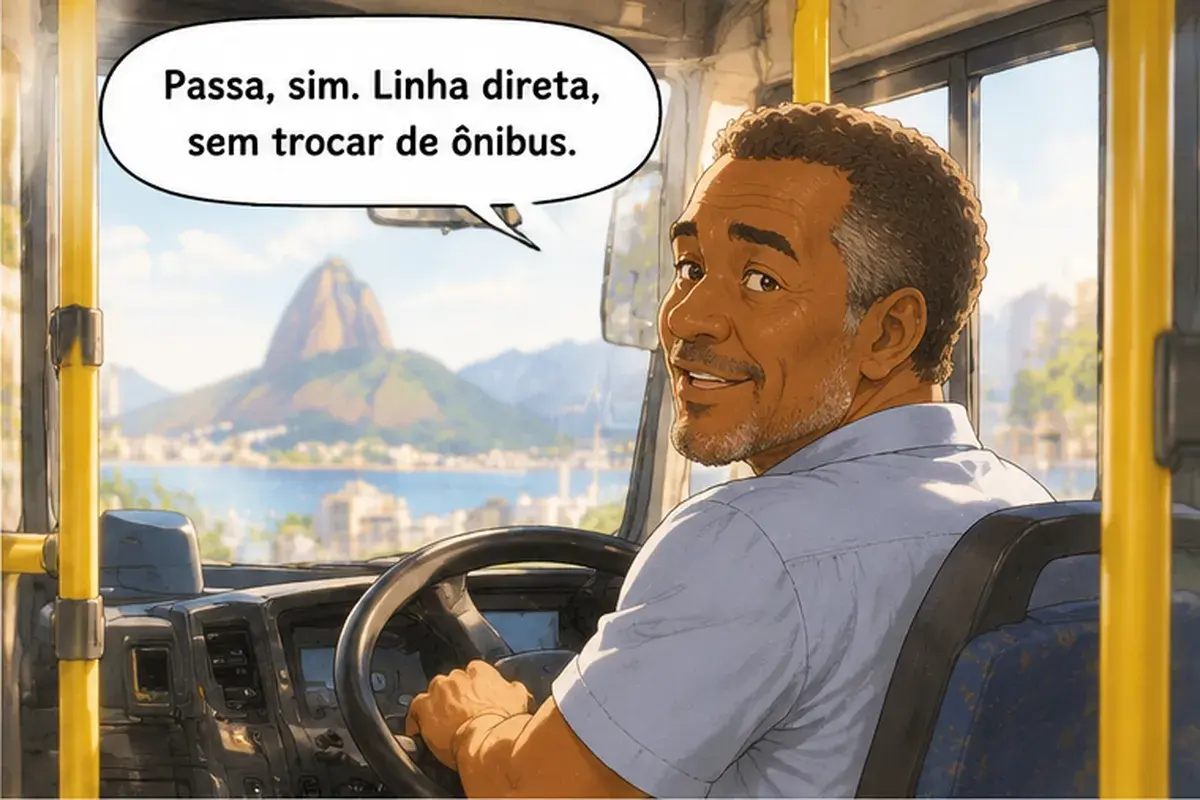
- Motorista
Passa, sim. Linha direta, sem trocar de ônibus.
Yes, it does. A direct line, without changing buses.

- Nina
Posso pagar em dinheiro?
Can I pay in cash?
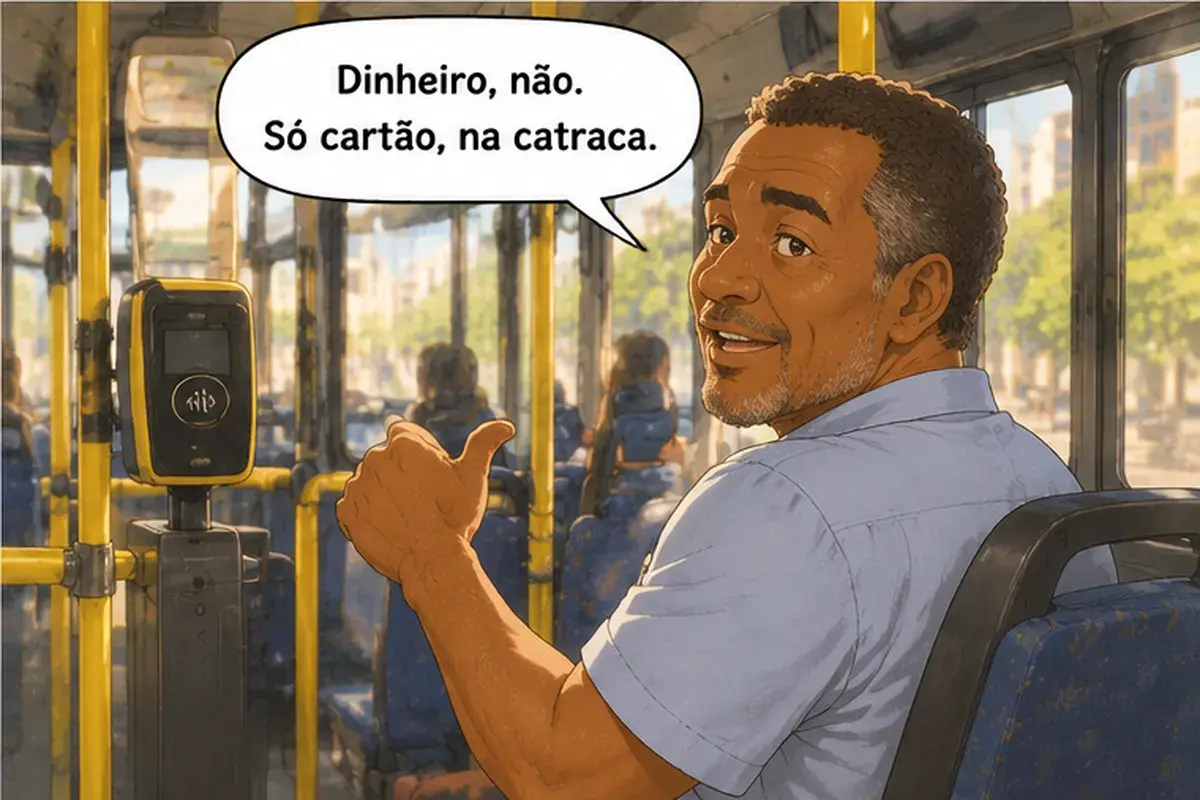
- Motorista
Dinheiro, não. Só cartão, na catraca.
No cash. Card only, at the turnstile.
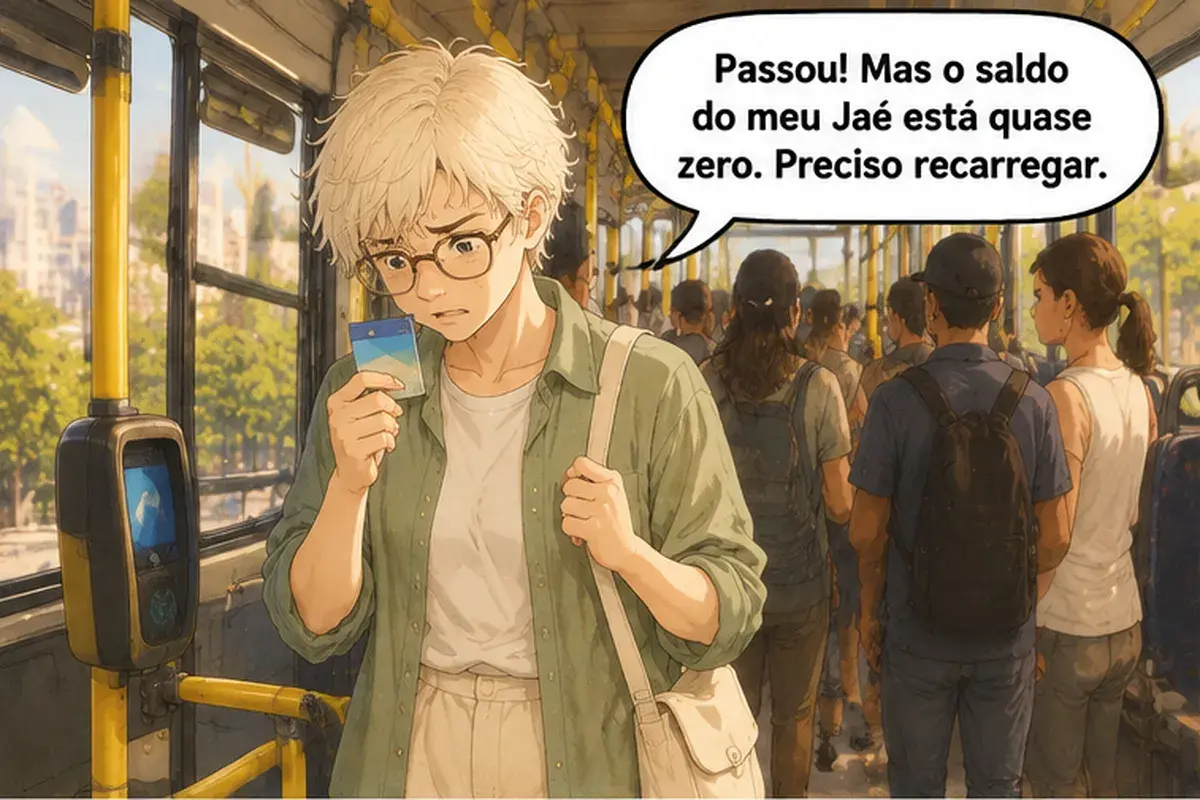
- Nina
Passou! Mas o saldo do meu Jaé está quase zero. Preciso recarregar.
It went through! But the balance on my Jaé is almost zero. I need to reload it.

- Passageira
Recarrega hoje, moça. Amanhã, sem saldo, você vai a pé.
Reload it today, miss. Tomorrow, with no balance, you'll go on foot.

- Nina
Está lotado! Eu vou em pé?
It's packed! Am I going to ride standing up?

- Senhor
Todo mundo vai em pé, moça. Hoje tem muito passageiro.
Everyone rides standing up, miss. There are a lot of passengers today.
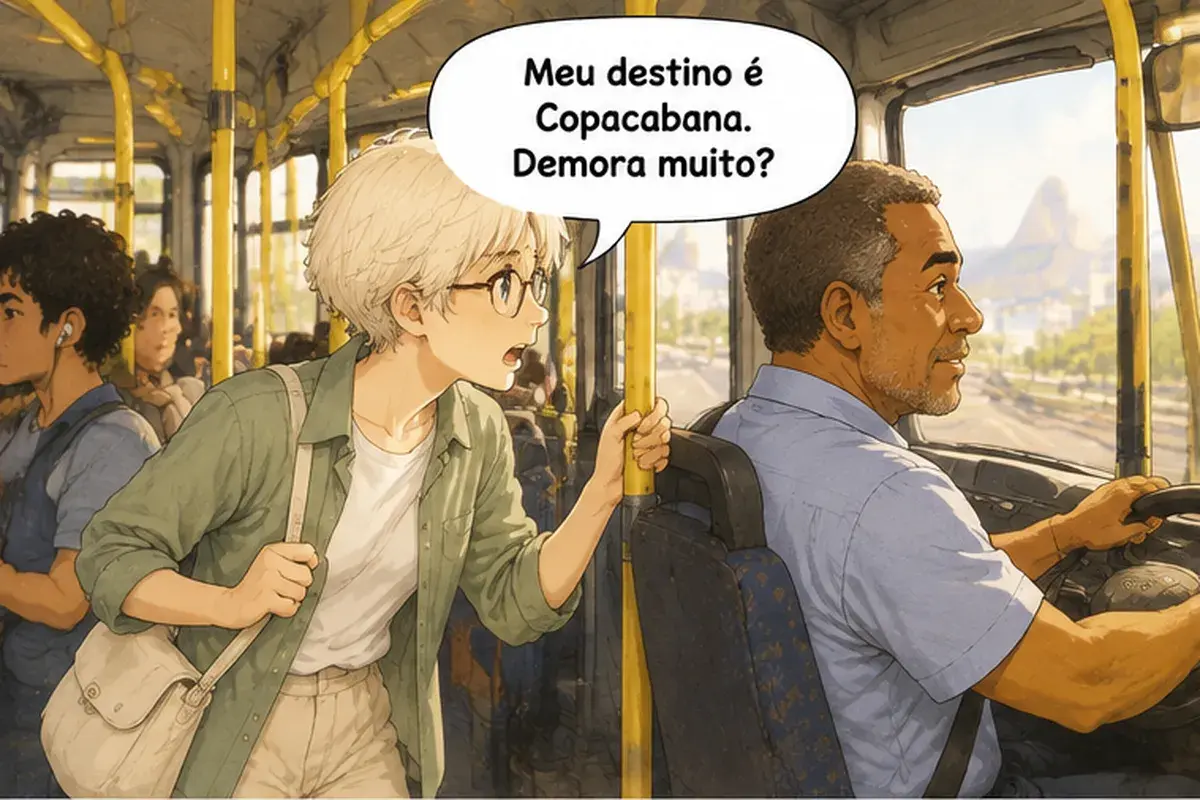
- Nina
Meu destino é Copacabana. Demora muito?
My destination is Copacabana. Does it take long?
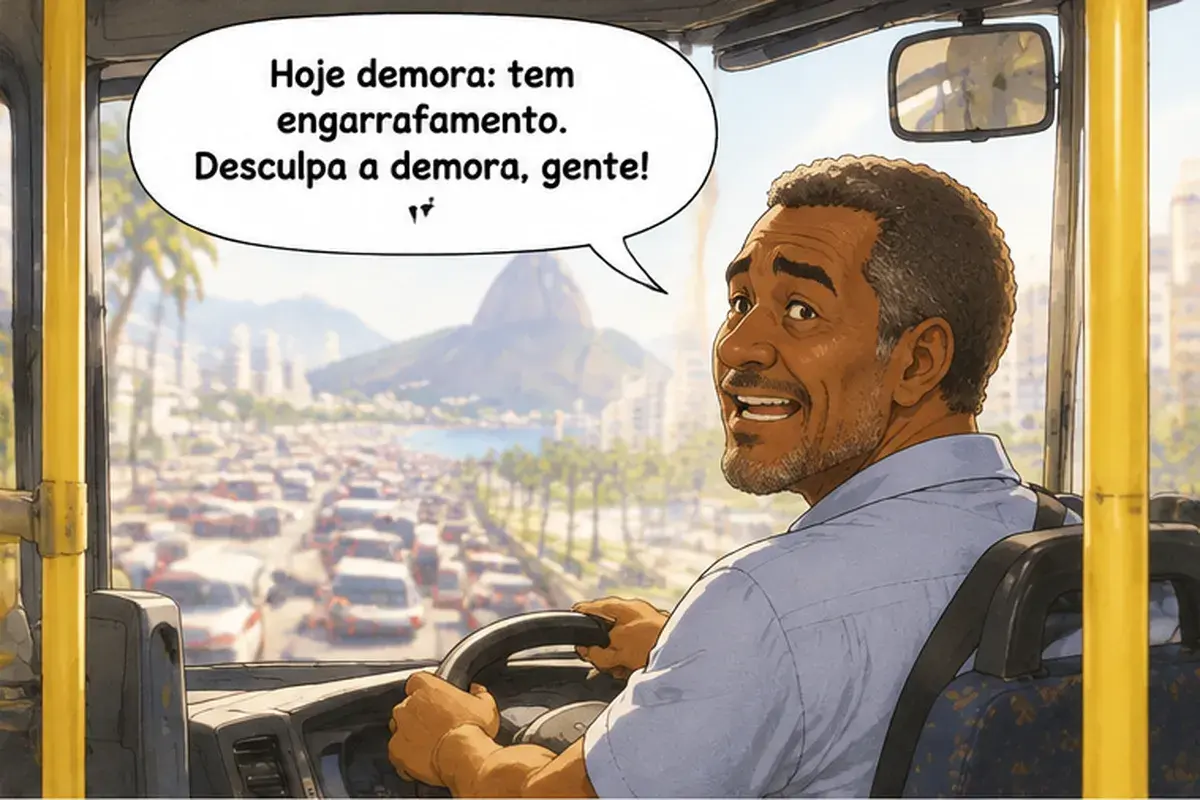
- Motorista
Hoje demora: tem engarrafamento. Desculpa a demora, gente!
Today it takes long: there's a traffic jam. Sorry for the delay, everyone!
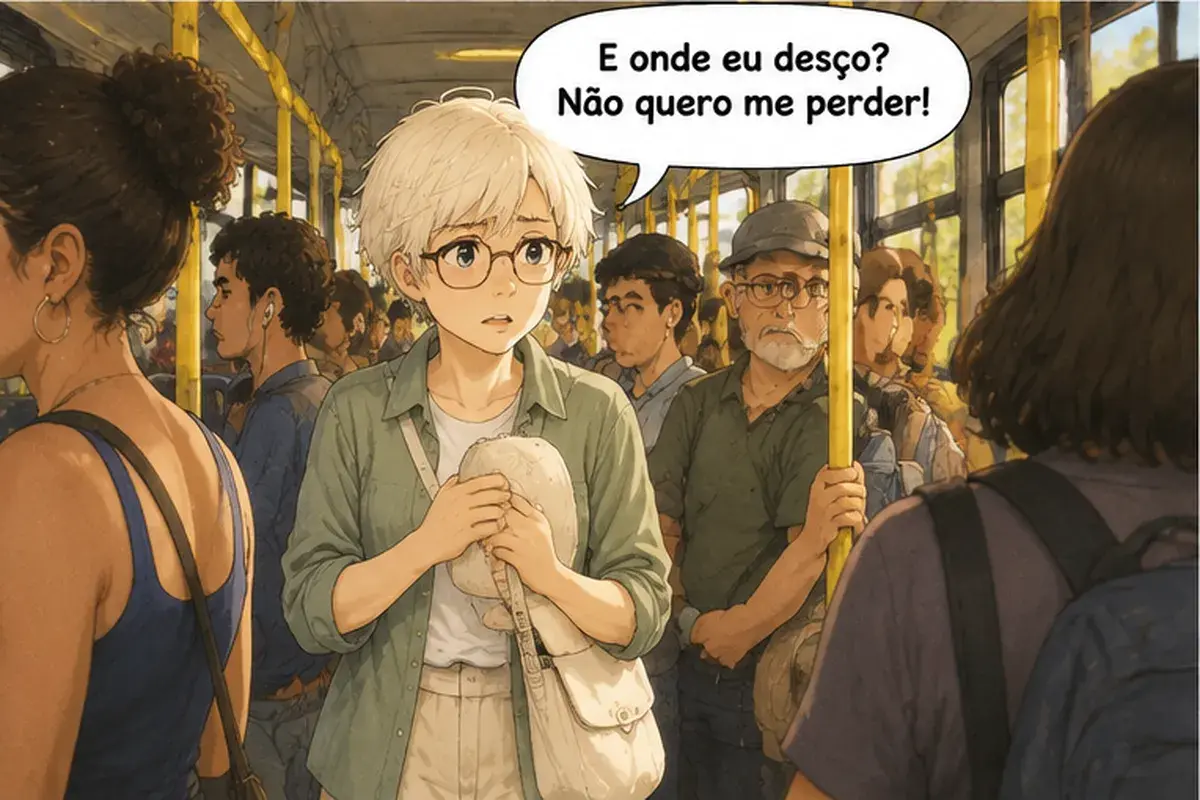
- Nina
E onde eu desço? Não quero me perder!
And where do I get off? I don't want to get lost!
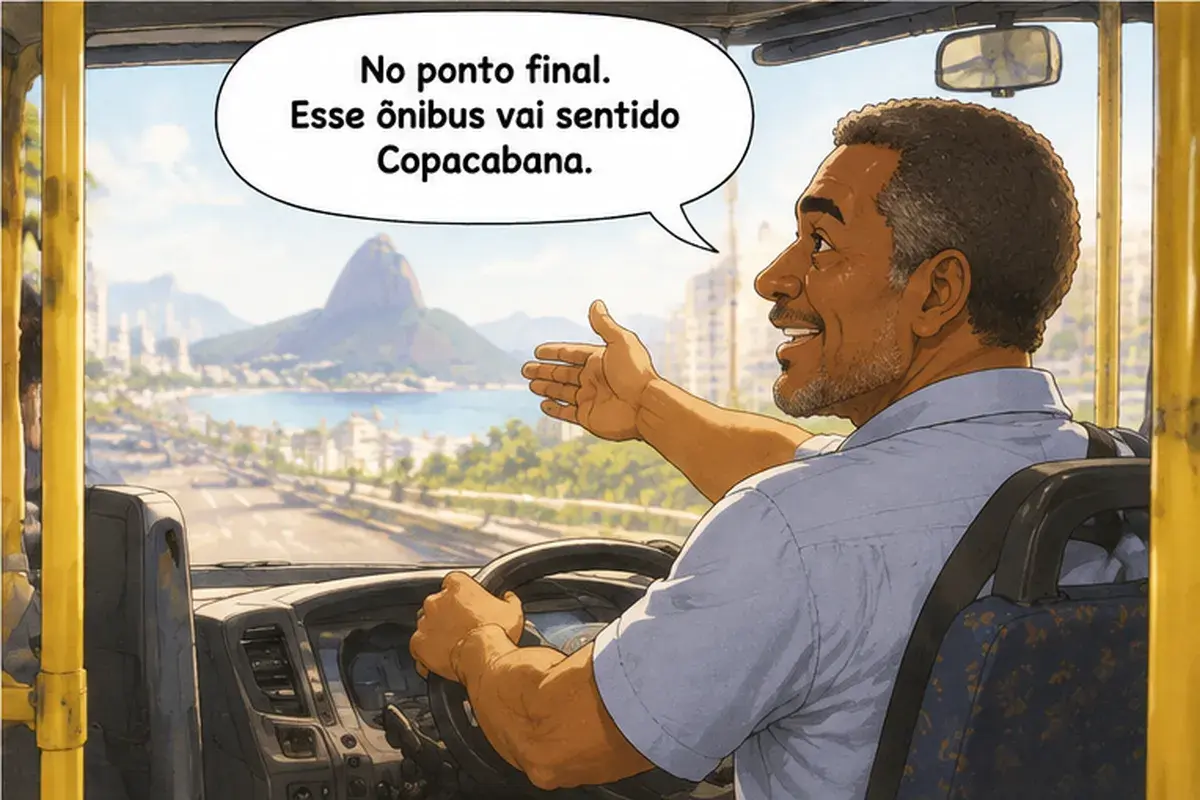
- Motorista
No ponto final. Esse ônibus vai sentido Copacabana.
At the last stop. This bus goes in the direction of Copacabana.

- Passageira
Desce no próximo, moça! Eu sei: me perdi muito no início.
Get off at the next one, miss! I know: I got lost a lot at first.
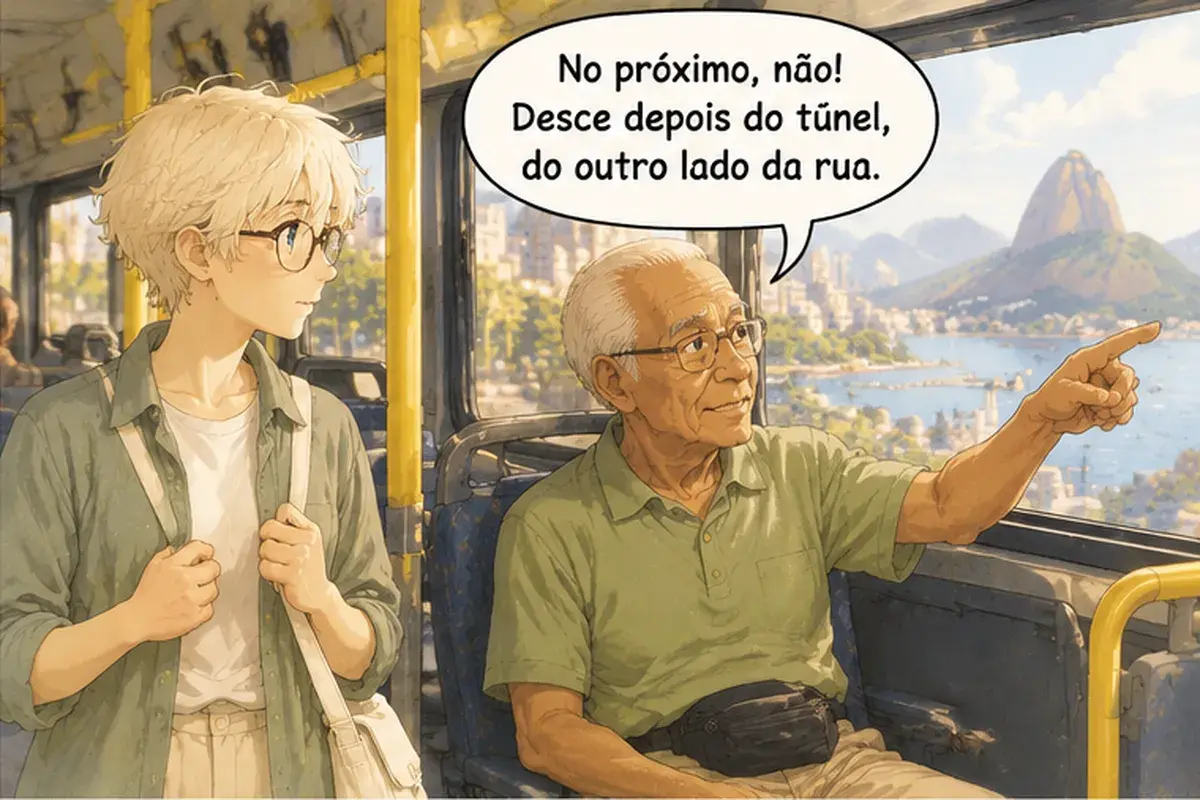
- Senhor
No próximo, não! Desce depois do túnel, do outro lado da rua.
Not at the next one! Get off after the tunnel, on the other side of the street.
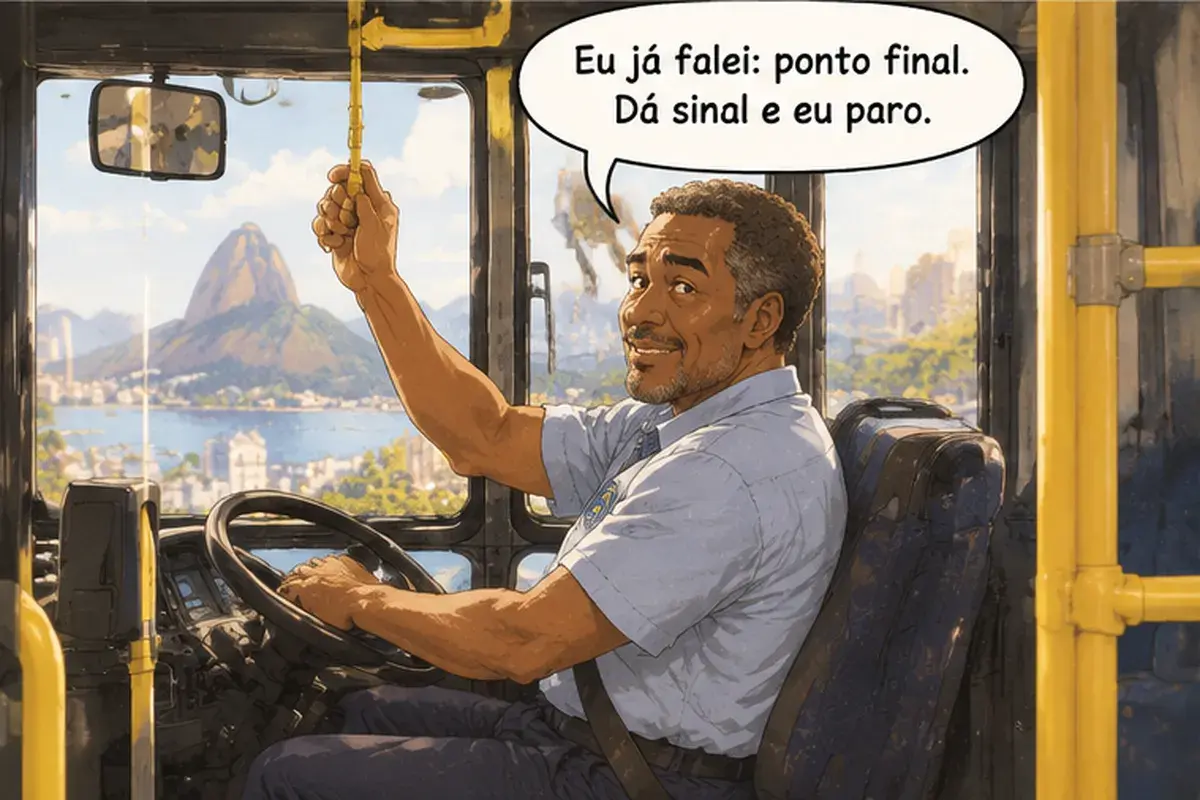
- Motorista
Eu já falei: ponto final. Dá sinal e eu paro.
I already said: last stop. Give a signal and I'll stop.
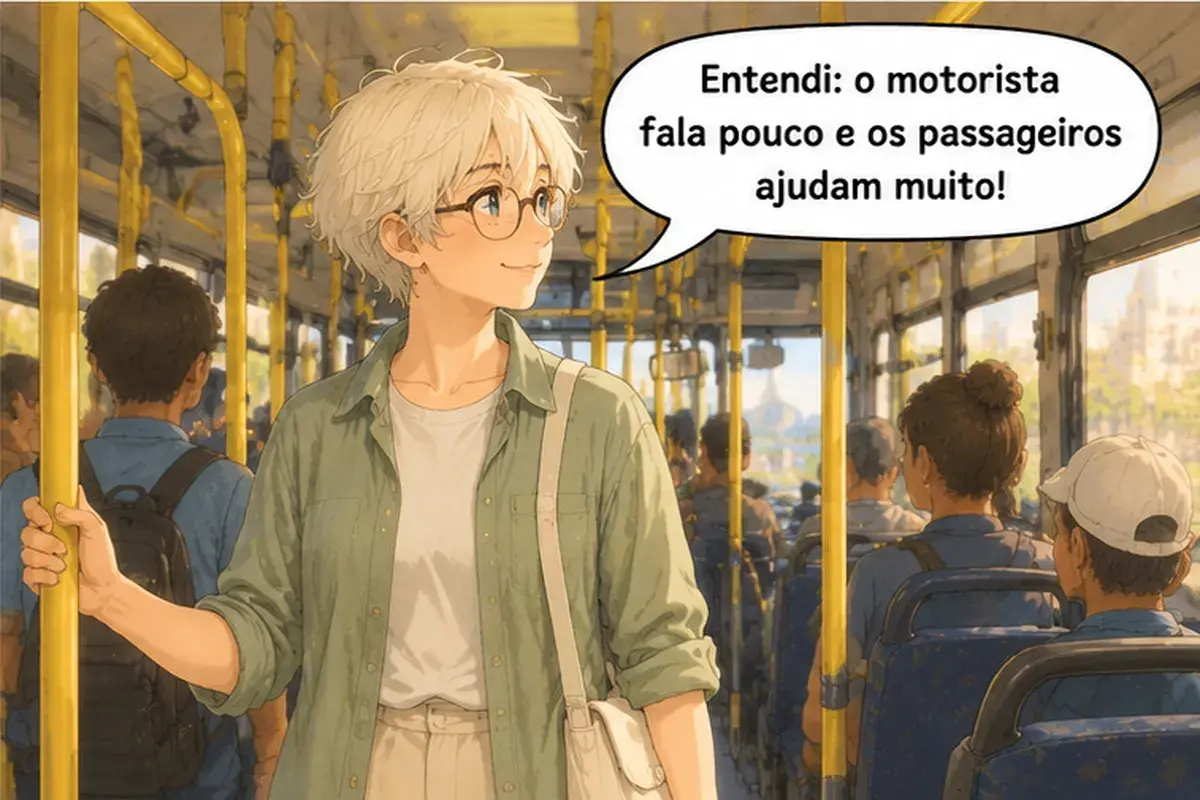
- Nina
Entendi: o motorista fala pouco e os passageiros ajudam muito!
Got it: the driver doesn't talk much, and the passengers help a lot!
Grammar for this text
- Eu sei: me perdi muito no início — me perdi is the preterite of the reflexive verb perder-se (to get lost). me goes before the verb (unit 1), perdi is the eu form of perder (unit 3). Don't mix them up: perdi o celular — I lost my phone, but me perdi — I got lost myself. The rule is in the unit grammar.
- Linha direta, sem trocar de ônibus — linha direta is a direct line. sem + infinitive means "without doing": sem trocar — without changing. trocar de ônibus — to change buses; in this meaning you need de.
- Recarrega hoje, moça and Desce no próximo! — a casual command: the você form of the present (recarrega, desce), like Olha! in A1. moça — a way to address a woman you don't know, like "miss". no próximo — the word ponto is left out: "at the next (stop)".
- você vai a pé and Eu vou em pé? — a pé means "on foot", em pé means "standing up".
- Hoje demora: tem engarrafamento — here demora is a verb: "it takes a long time". tem — "there is". But in Desculpa a demora, demora is a noun, "delay": the two forms just look the same.
- Dá sinal e eu paro — dá is a casual command of dar: dar sinal — to signal (press the button) so the bus stops. paro — "I'll stop": the present tense used for the future.
Words and grammar of the unit: Take the bus without getting lost.
Learn the words from the texts with flashcards
In the app, you can tap any word in a text to see its translation, forms and examples, and new words stick with flashcards. 15 minutes a day.
Start for freeEverything is open for free. No card needed to sign up.