

Portuguese dialogue with translation · A2 · 15 lines
Espero que goste! I hope you like it!
Comic · 11 panels
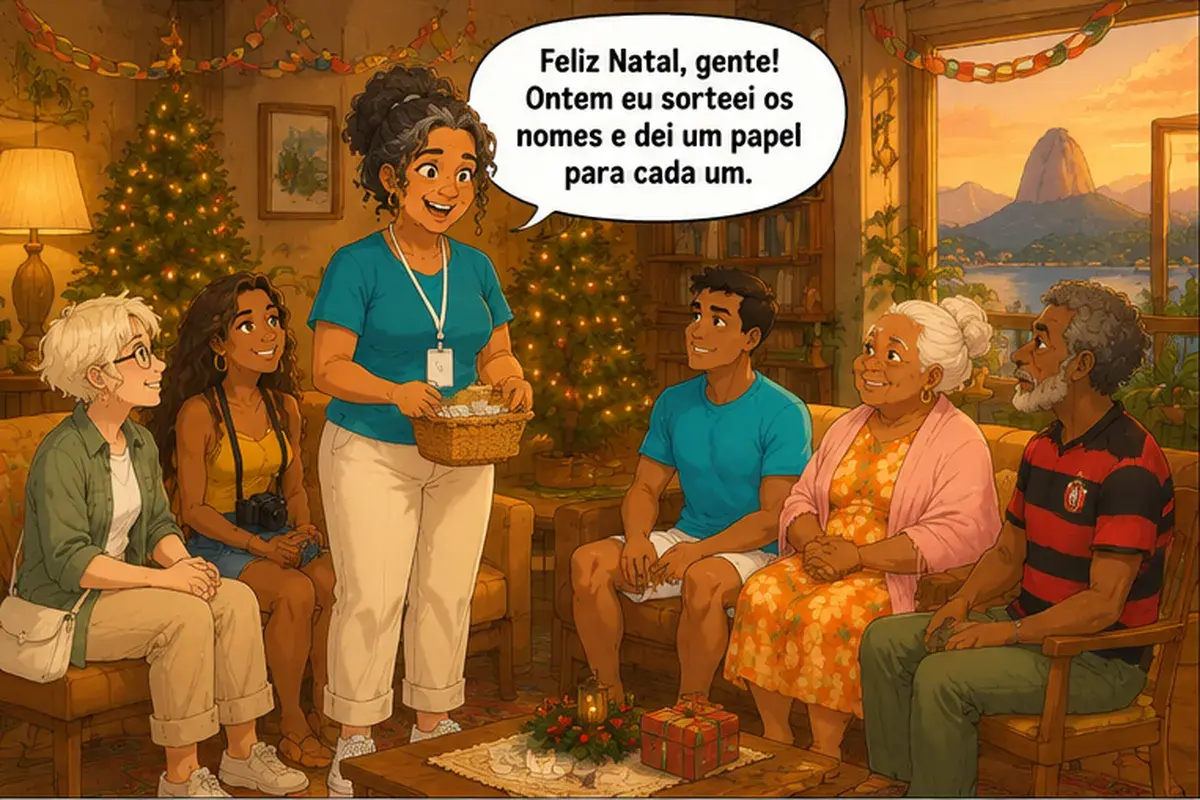
- Regina
Feliz Natal, gente! Ontem eu sorteei os nomes e dei um papel para cada um.
Merry Christmas, everyone! Yesterday I drew the names and gave everyone a piece of paper.
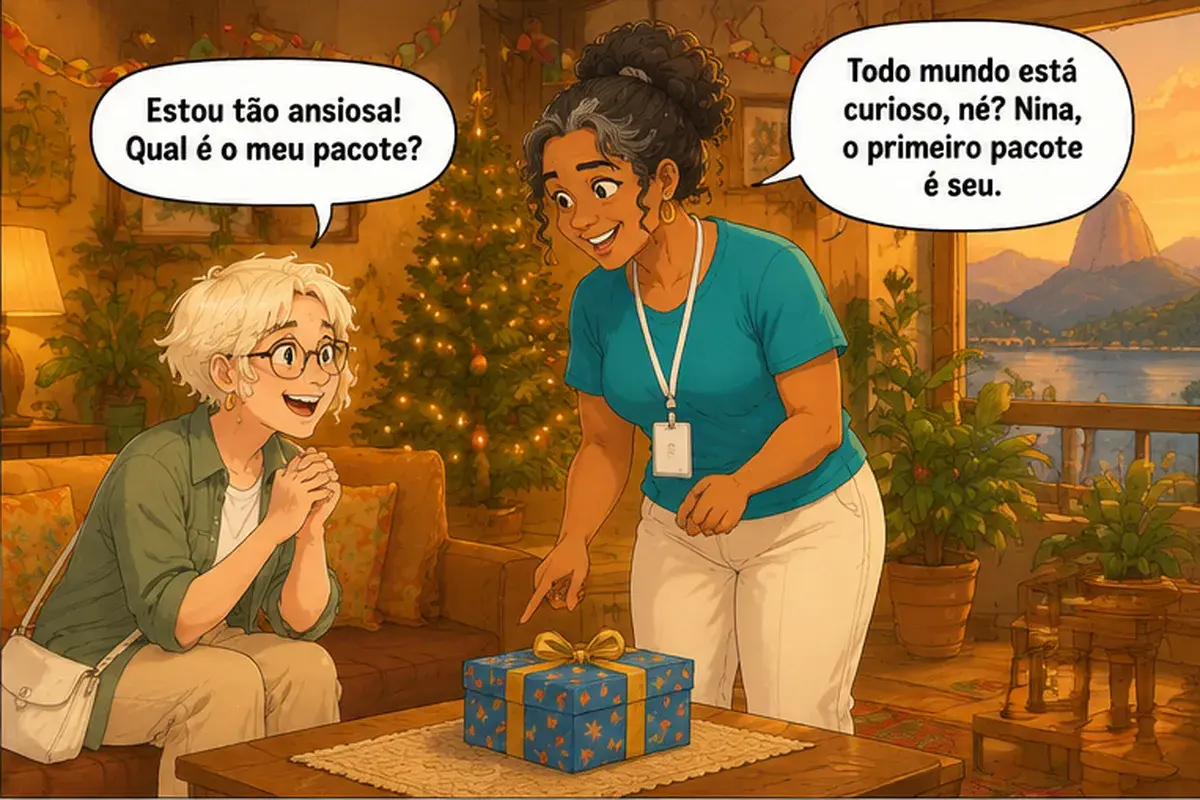
- Nina
Estou tão ansiosa! Qual é o meu pacote?
I'm so excited! (woman speaking) Which package is mine?
- Regina
Todo mundo está curioso, né? Nina, o primeiro pacote é seu.
Everyone's curious, right? Nina, the first package is yours.
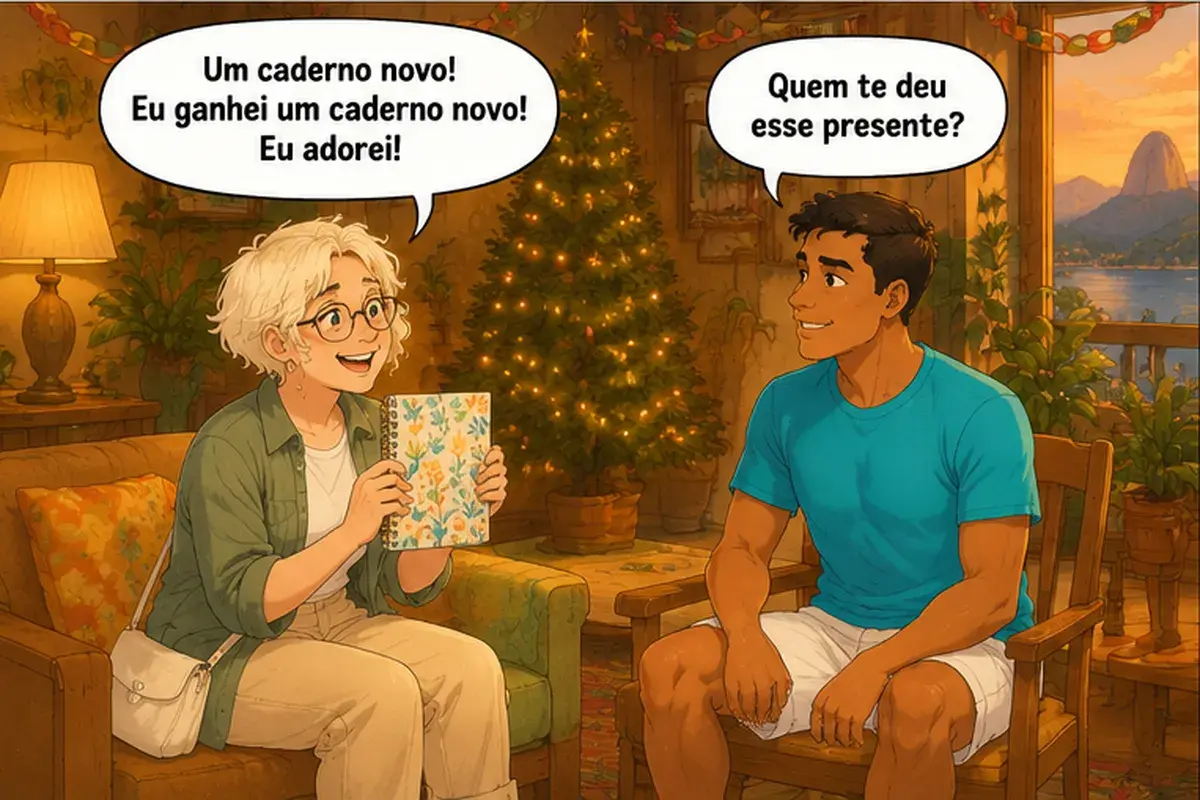
- Nina
Um caderno novo! Eu ganhei um caderno novo! Eu adorei!
A new notebook! I got a new notebook! I love it!
- Caio
Quem te deu esse presente?
Who gave you this present?
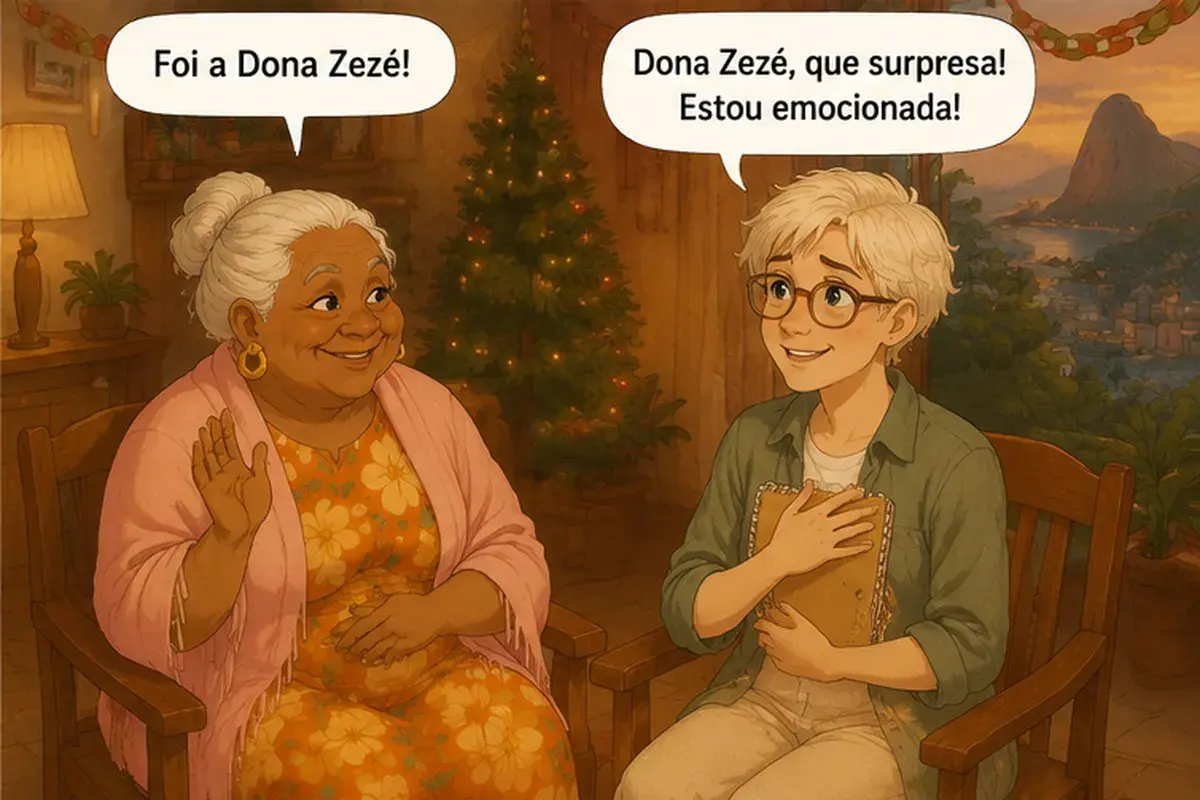
- Dona Zezé
Foi a Dona Zezé!
It was Dona Zezé!
- Nina
Dona Zezé, que surpresa! Estou emocionada!
Dona Zezé, what a surprise! I'm touched! (woman speaking)
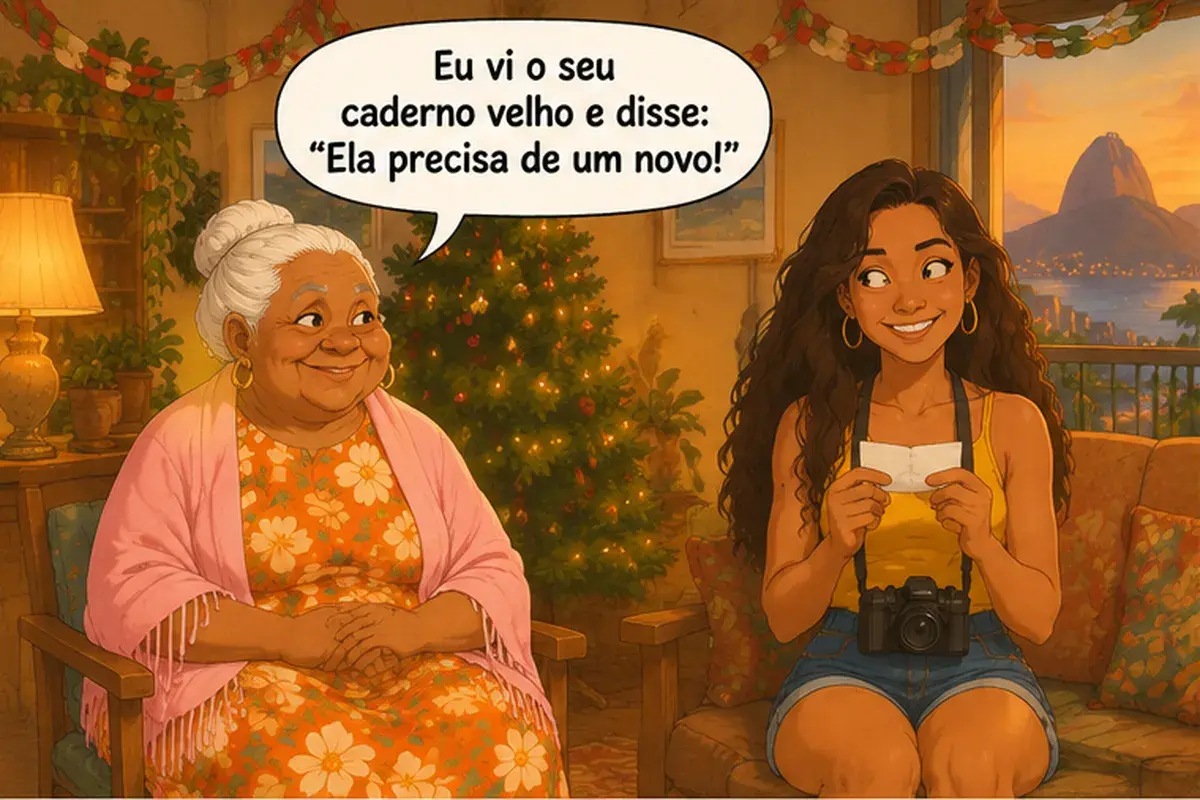
- Dona Zezé
Eu vi o seu caderno velho e disse: “Ela precisa de um novo!”
I saw your old notebook and said, "She needs a new one!"
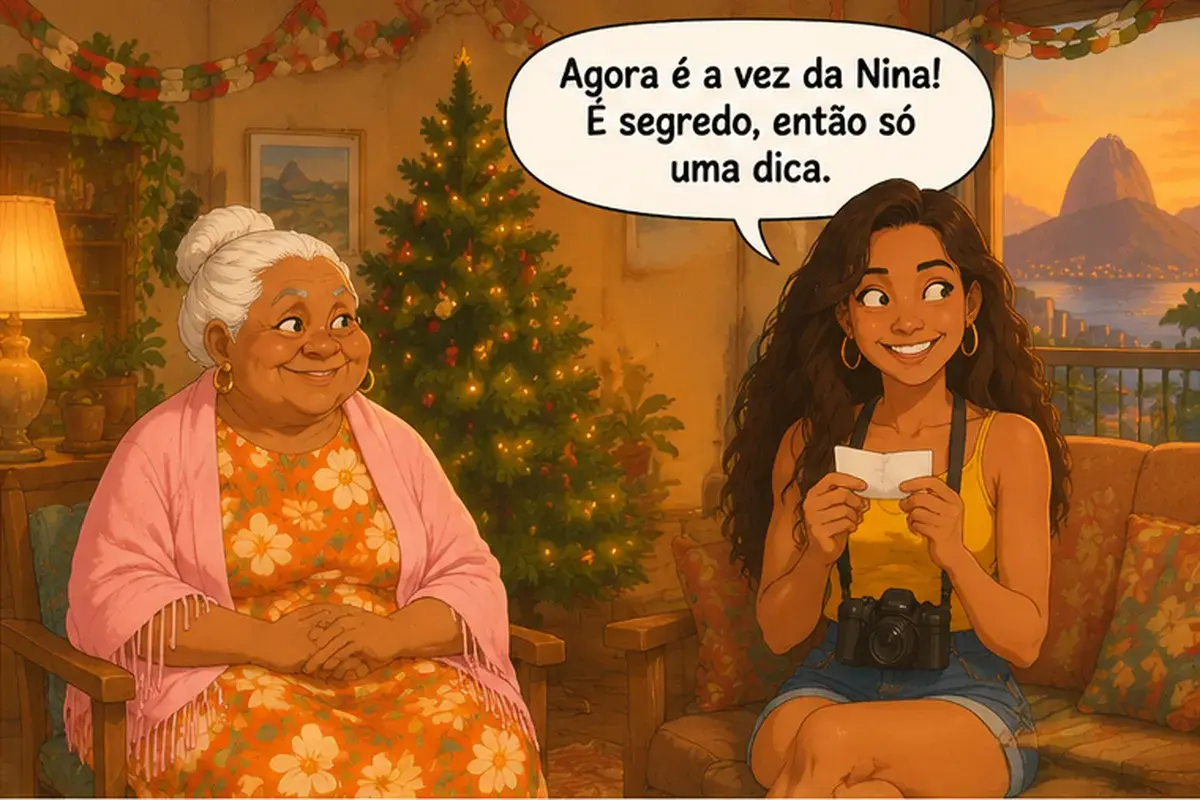
- Bia
Agora é a vez da Nina! É segredo, então só uma dica.
Now it's Nina's turn! It's a secret, so just a hint.
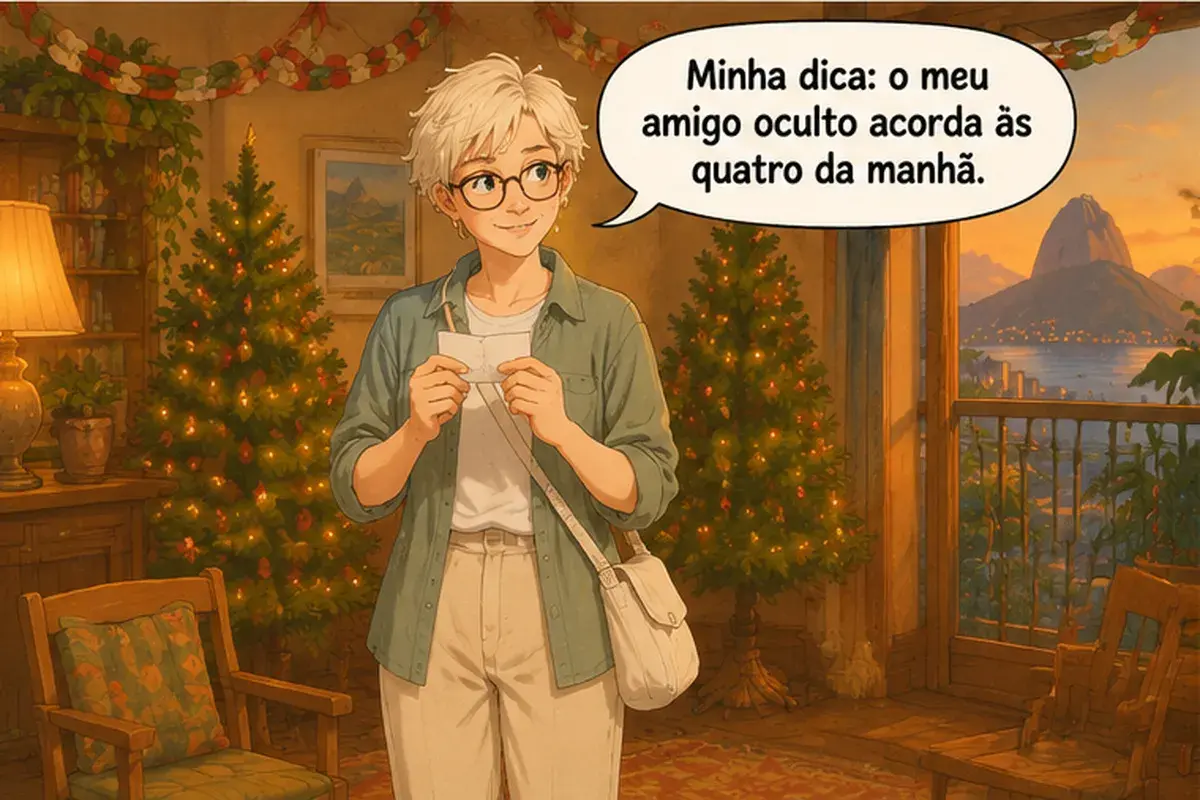
- Nina
Minha dica: o meu amigo oculto acorda às quatro da manhã.
My hint: the person I drew for Secret Santa gets up at four in the morning.
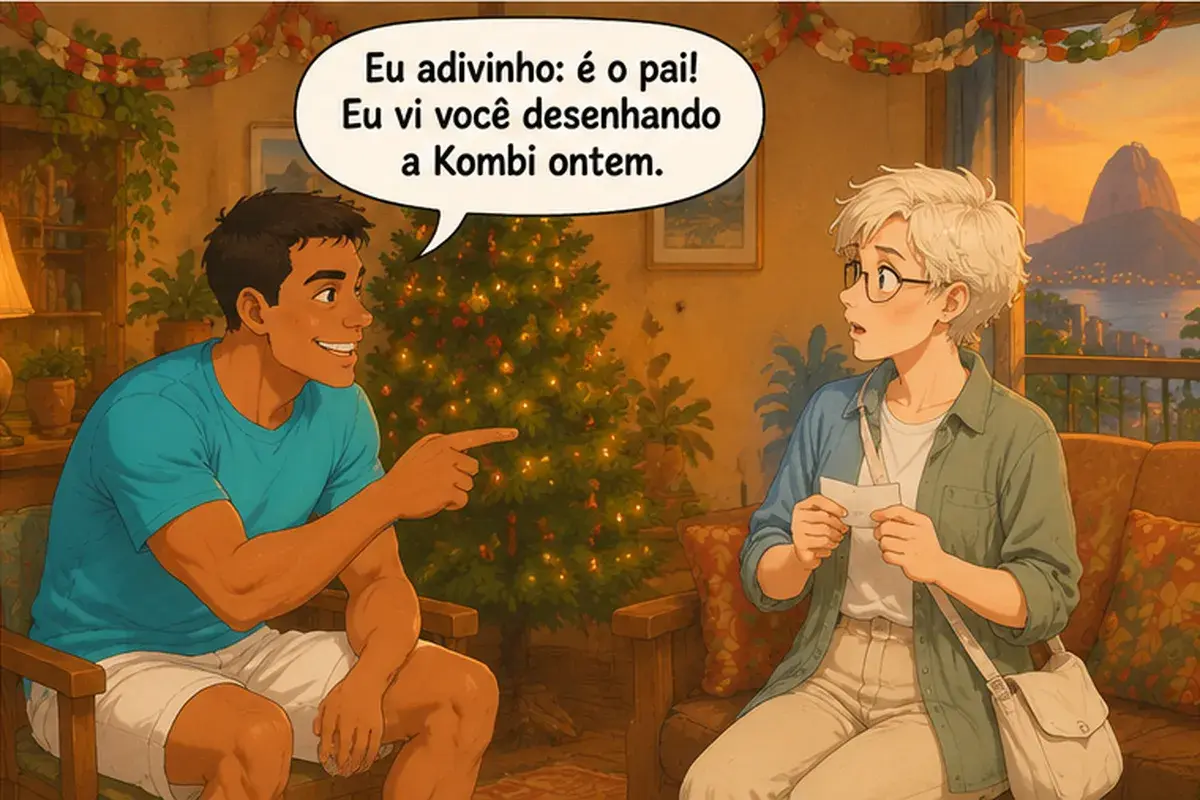
- Caio
Eu adivinho: é o pai! Eu vi você desenhando a Kombi ontem.
I'm guessing: it's Dad! I saw you drawing the Kombi yesterday.
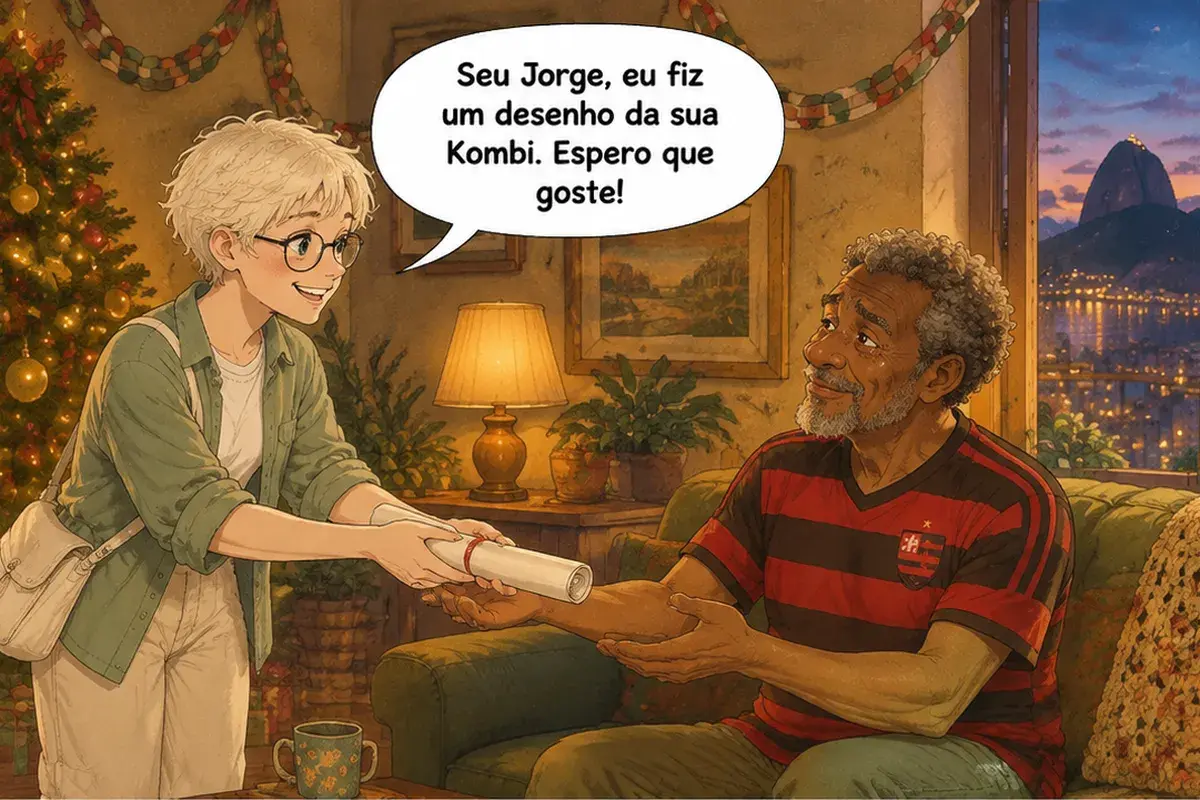
- Nina
Seu Jorge, eu fiz um desenho da sua Kombi. Espero que goste!
Seu Jorge, I made a drawing of your Kombi. I hope you like it!
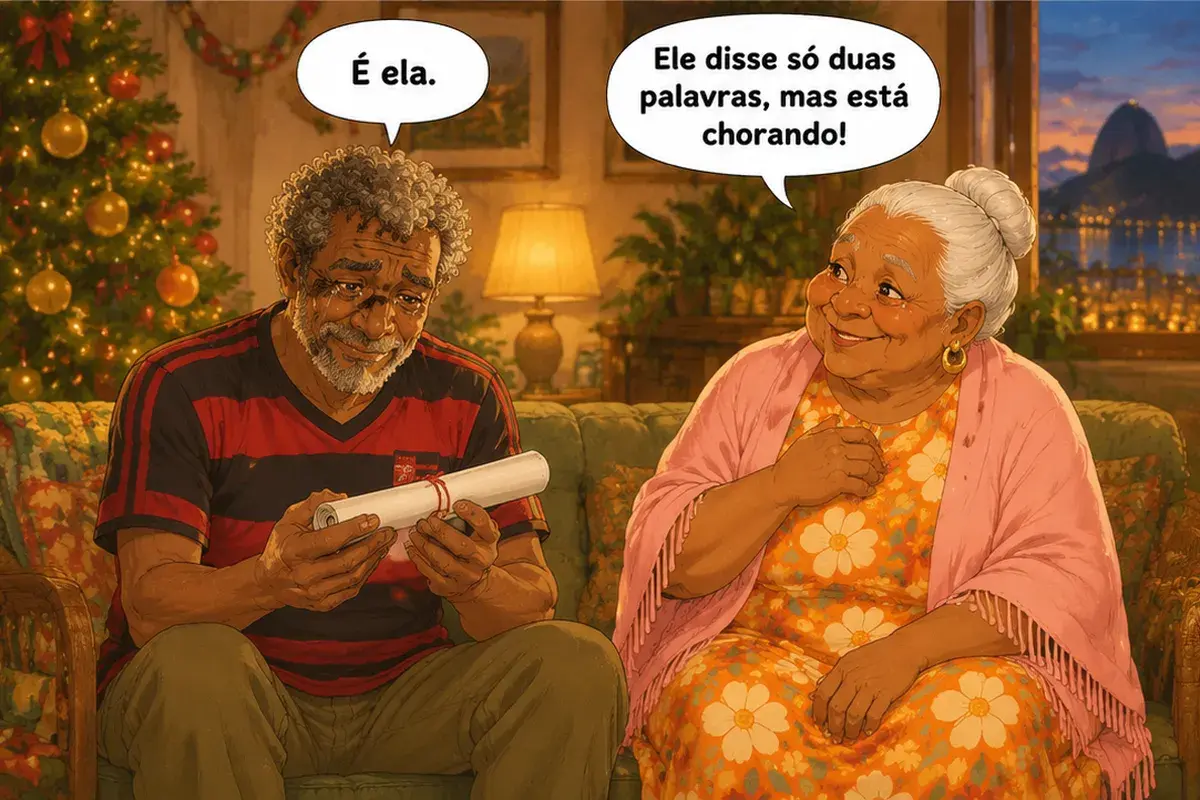
- Jorge
É ela.
It's her.
- Dona Zezé
Ele disse só duas palavras, mas está chorando!
He only said two words, but he's crying!
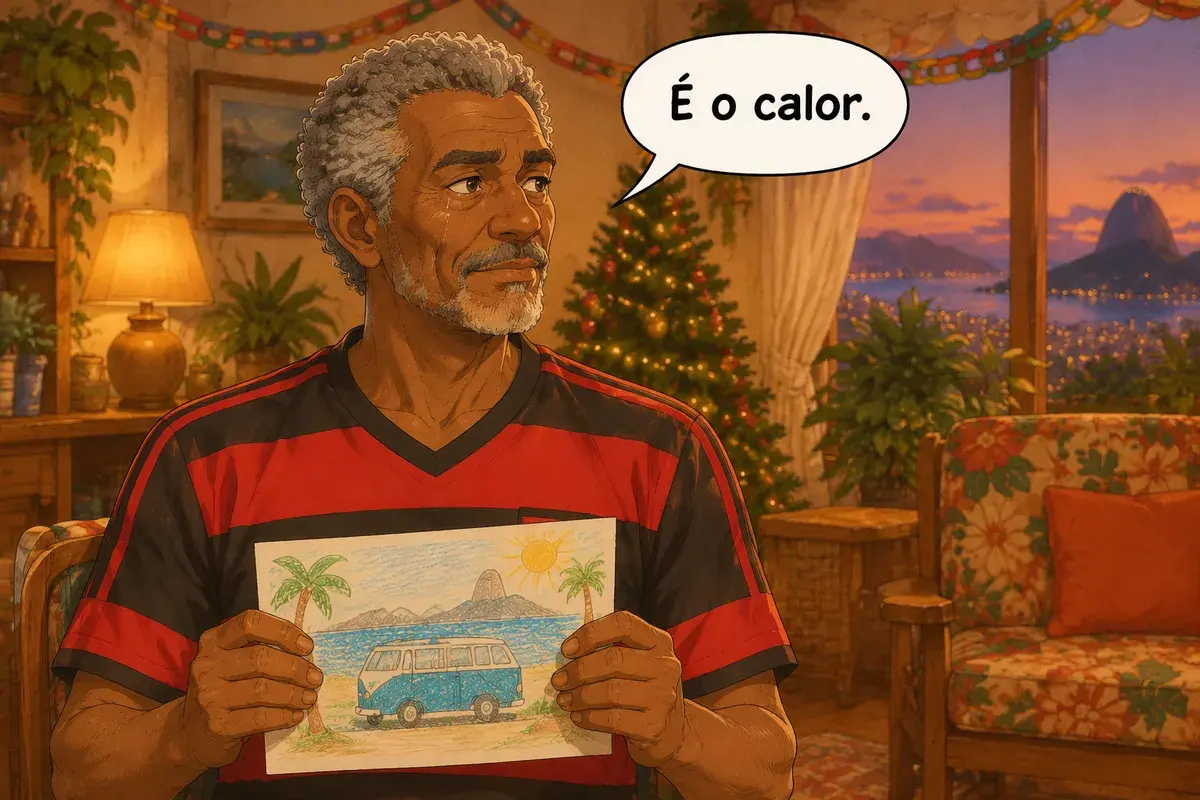
- Jorge
É o calor.
It's the heat.
Grammar for this text
- Ontem eu sorteei os nomes e dei um papel para cada um — sorteei is the preterite, eu form: sortear is regular, like passear (-ear → -eei). dei — "I gave", an irregular form of dar: the stem d- plus -ei. The table is in the unit grammar. cada um — "each one, everyone".
- Eu ganhei um caderno novo — ganhei — "I got (as a present)", from ganhar. Not "I won" or "I earned": the present makes the meaning clear.
- Quem te deu esse presente? — deu — "he / she gave", from dar. te — "(to) you", it goes before the verb (unit 1). After quem the verb is in the ele form.
- Foi a Dona Zezé! — foi — "it was...", the preterite of ser (ir has the same letters, but "went" doesn't fit here). This is how you answer the question "who?". Dona Zezé talks about herself in the third person, like a soap opera heroine.
- Eu vi o seu caderno velho e disse — vi — "I saw", from ver; disse — "I said", from dizer. Later, in Ele disse só duas palavras, it's the same form disse, but it means "he said": dizer has the same eu and ele forms.
- Eu vi você desenhando a Kombi ontem — vi — "I saw", from ver; você desenhando — "you drawing", just like English "I saw you drawing".
- É ela. and É o calor. — ela is the van: a Kombi is feminine. Seu Jorge is hiding his tears: "these aren't tears, it's the heat".
- Espero que goste! — a set phrase: espero — "I hope" (esperar), goste — a special form of gostar (present subjunctive, a B1 topic). Learn it as a whole. For several people — gostem.
Words and grammar of the unit: Wish people well and give a present.
Learn the words from the texts with flashcards
In the app, you can tap any word in a text to see its translation, forms and examples, and new words stick with flashcards. 15 minutes a day.
Start for freeEverything is open for free. No card needed to sign up.