

Portuguese story with translation · A2 · 16 lines
Boas festas e tudo de bom! Happy holidays and all the best!
Comic · 14 panels

No calendário, era véspera de Natal. No Rio, fez trinta e cinco graus!
On the calendar, it was Christmas Eve. In Rio, it was thirty-five degrees!
Na sala, a árvore tinha enfeites, luzes e uma estrela.
In the living room, the tree had ornaments, lights and a star.
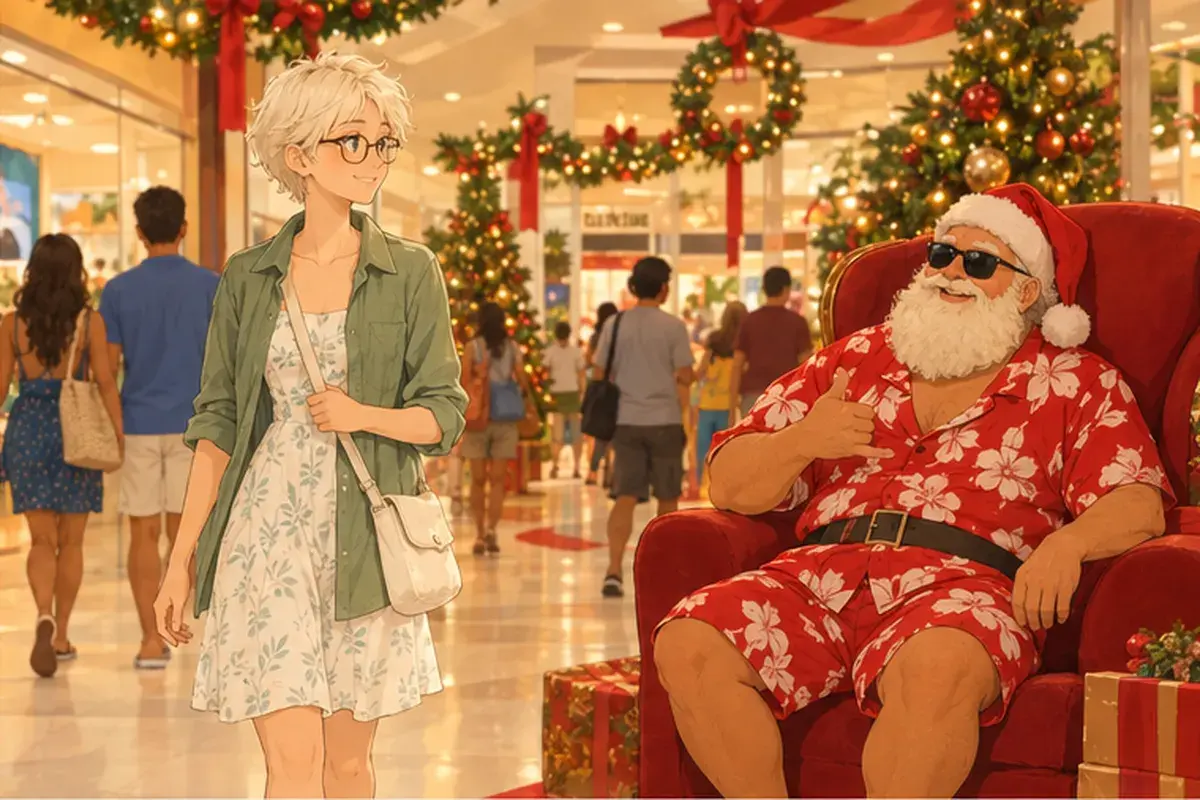
No shopping, eu vi o Papai Noel de óculos de sol.
At the mall, I saw Santa Claus in sunglasses.
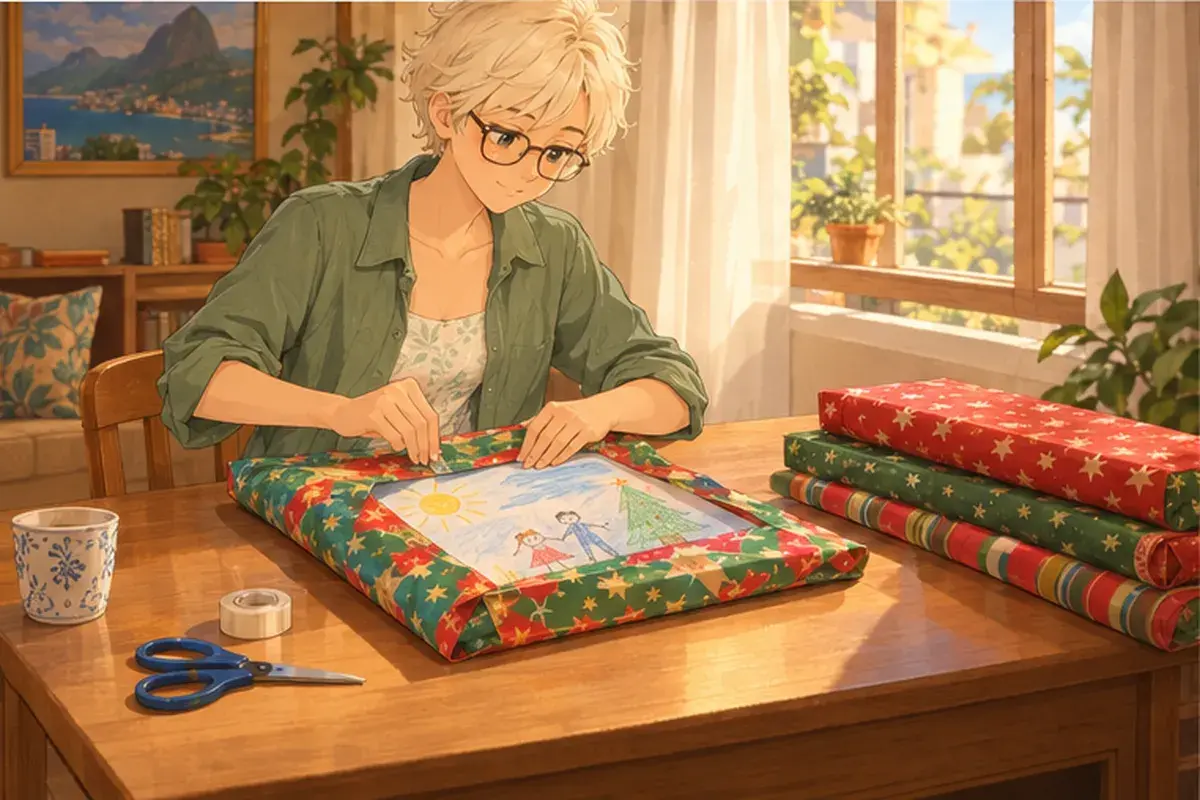
De manhã, eu embrulhei o desenho para o Seu Jorge três vezes.
In the morning, I wrapped the drawing for Seu Jorge three times.

À noite, a Regina reuniu todos os parentes na sala.
In the evening, Regina gathered all the relatives in the living room.

A Bia chegou atrasada, claro. E ela mora aqui!
Bia arrived late, of course. And she lives here!

Na casa da Bia, a ceia é à meia-noite: é a tradição.
At Bia's house, the Christmas Eve dinner is at midnight: it's the tradition.

Antes da ceia, a gente fez o amigo oculto. O Seu Jorge guardou o meu desenho no bolso.
Before the Christmas Eve dinner, we did Secret Santa. Seu Jorge put my drawing in his pocket.

A Dona Zezé foi à missa e voltou para a ceia.
Dona Zezé went to Mass and came back for the Christmas Eve dinner.

Na mesa, a Regina colocou velas, peru, rabanada e panetone.
Regina put candles, turkey, rabanada and panettone on the table.

À meia-noite, o Seu Jorge abriu o espumante, e nós fizemos um brinde.
At midnight, Seu Jorge opened the sparkling wine, and we made a toast.

Todo mundo comemorou e desejou: “Feliz Natal! Boas festas e tudo de bom!”
Everyone celebrated and wished each other, "Merry Christmas! Happy holidays and all the best!"

Aí começou a pergunta do ano: uva-passa no arroz, sim ou não?
Then came the question of the year: raisins in the rice, yes or no?
O Seu Jorge disse: “Com uva-passa!” A Bia disse: “Sem!”
Seu Jorge said, "With raisins!" Bia said, "Without!"
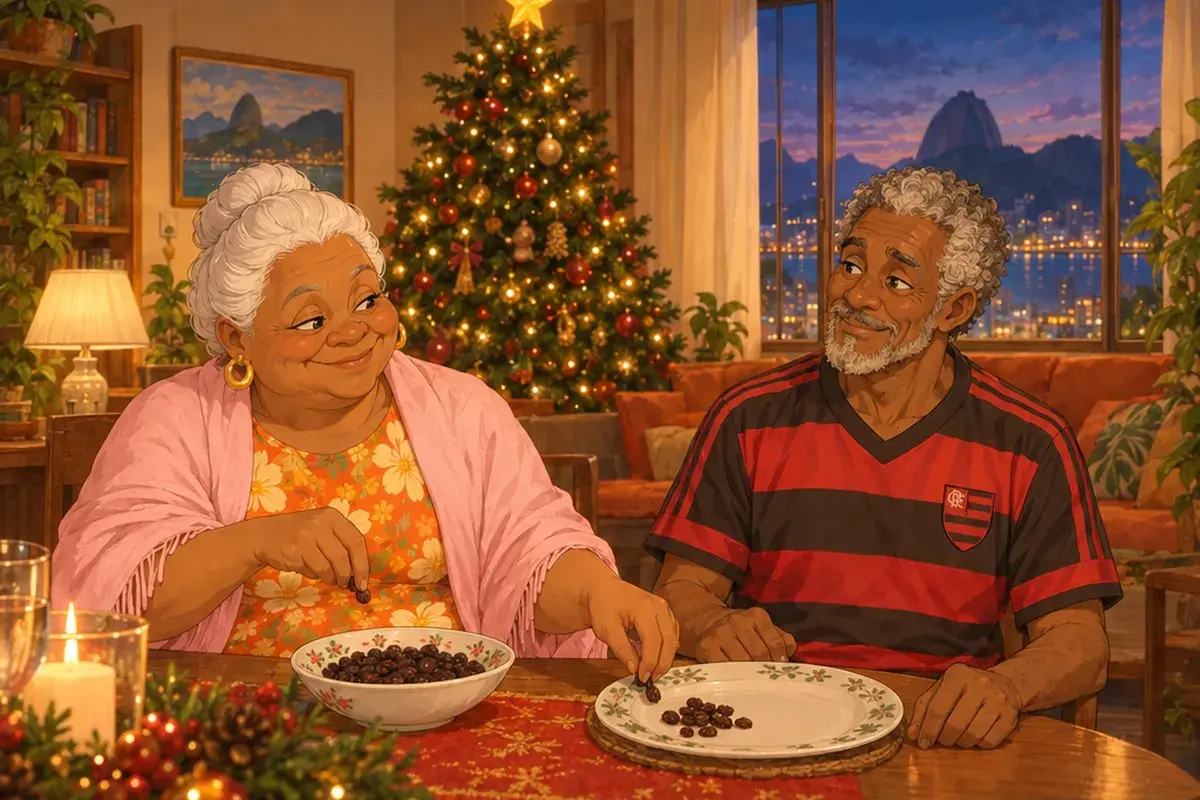
A Dona Zezé não disse nada. Ela escolheu as uvas-passas do prato dela, uma por uma, e deu para ele.
Dona Zezé didn't say anything. She picked the raisins out of her plate, one by one, and gave them to him.

No ano passado eu vi neve. Este ano eu vi o Papai Noel de bermuda.
Last year I saw snow. This year I saw Santa Claus in Bermuda shorts.
Grammar for this text
- era véspera de Natal — era is a ready-made form: "it was" (the imperfect of ser; the rule is in unit 11). Remember it: era + a time or a description (era tarde — it was late). véspera de Natal — Christmas Eve, December 24.
- fez trinta e cinco graus — fez — "it did, it made", from fazer. This is how people talk about the weather: literally "it made 35 degrees", meaning "it was 35 degrees". The table is in the unit grammar.
- a árvore tinha enfeites — tinha — a ready-made form of ter: "had; there was, there were" (tinha muita gente — there were a lot of people). The rule is in unit 11.
- eu vi o Papai Noel de óculos de sol — vi — "I saw", from ver. de óculos de sol — "in sunglasses": here de means "wearing".
- a gente fez o amigo oculto — a gente means "we", but the verb is in the ele form: fez. fazer amigo oculto — "to do Secret Santa". The real nós form is in nós fizemos um brinde.
- A Dona Zezé foi à missa — here foi is from ir: "went". à = a + a. ser has the same letters; the context tells you the meaning (unit 5).
- O Seu Jorge disse … A Bia disse … deu para ele — disse — "he said, she said", from dizer; deu — "she gave", from dar (both are in the table in the unit grammar). Dona Zezé didn't argue: she doesn't want the raisins, so she quietly gave them to the one who's for them.
- Boas festas e tudo de bom! — set phrases for good wishes: boas festas — "happy holidays", tudo de bom — "all the best".
Words and grammar of the unit: Wish people well and give a present.
Learn the words from the texts with flashcards
In the app, you can tap any word in a text to see its translation, forms and examples, and new words stick with flashcards. 15 minutes a day.
Start for freeEverything is open for free. No card needed to sign up.