

Portuguese dialogue with translation · A2 · 15 lines
O que aconteceu? What happened?
Comic · 11 panels
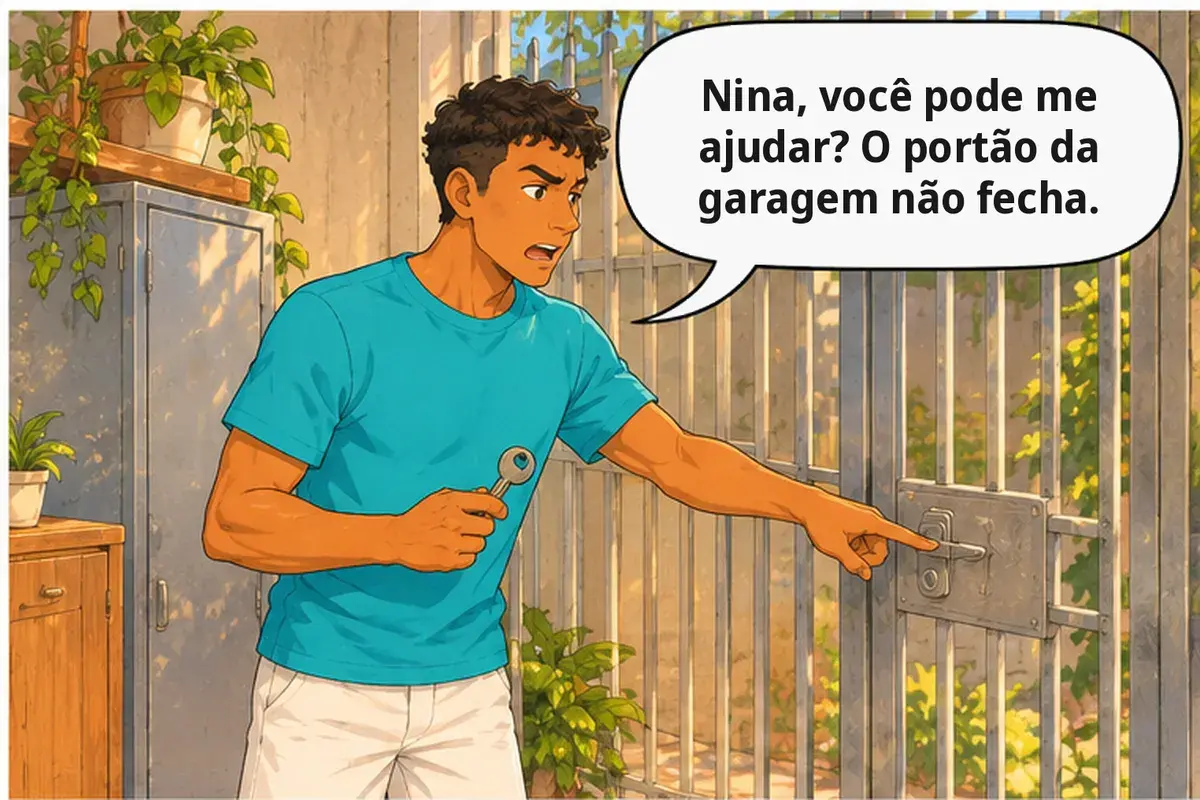
- Caio
Nina, você pode me ajudar? O portão da garagem não fecha.
Nina, can you help me? The garage gate won't close.
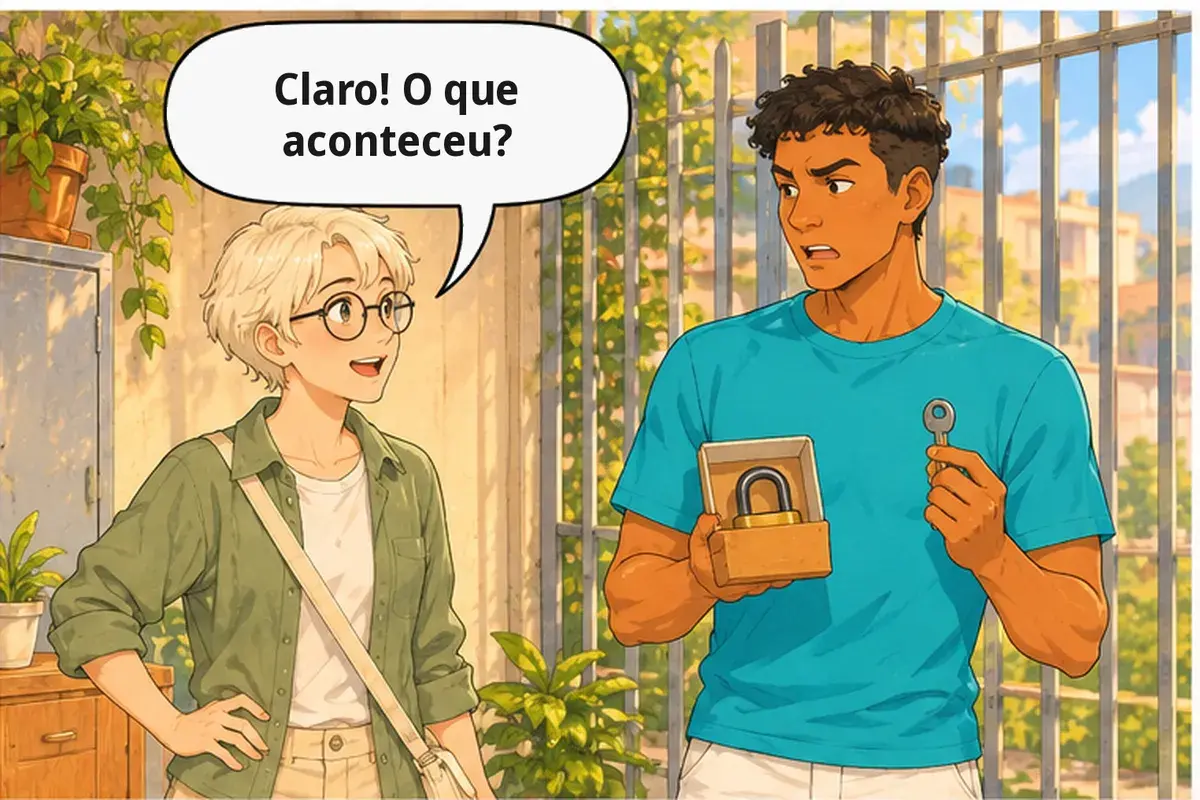
- Nina
Claro! O que aconteceu?
Sure! What happened?
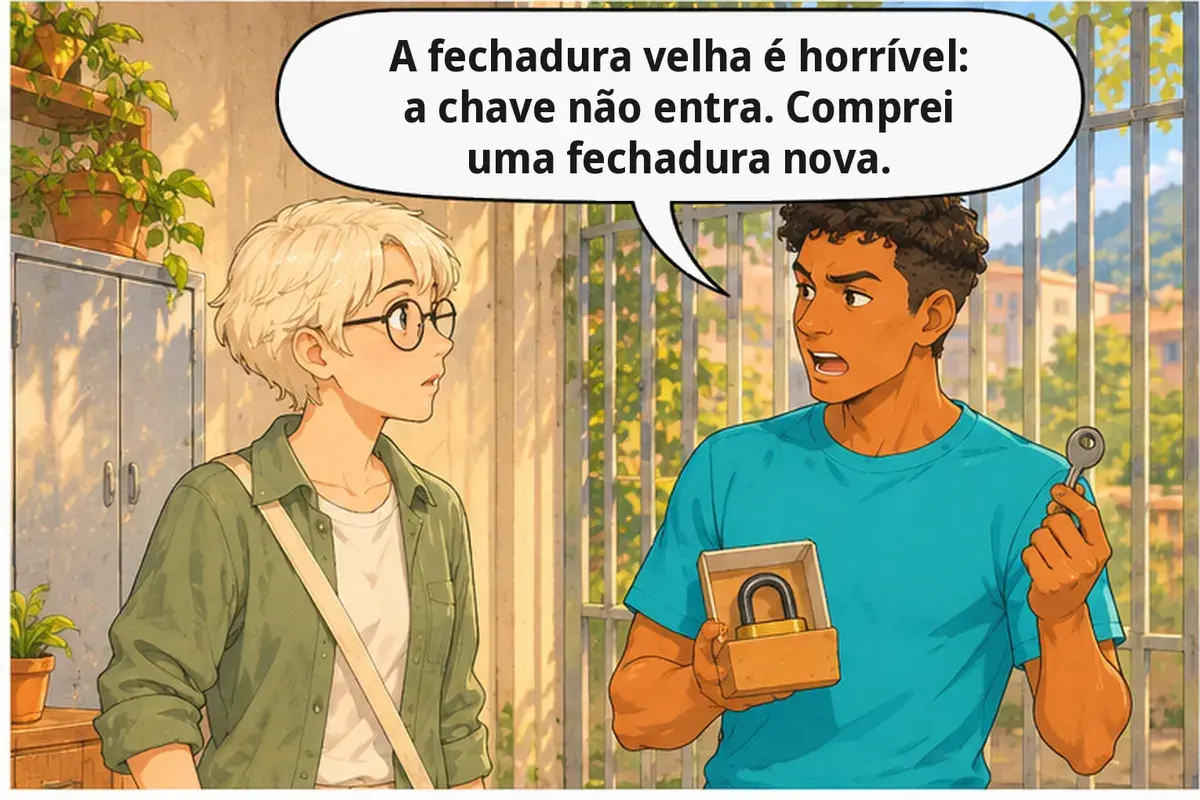
- Caio
A fechadura velha é horrível: a chave não entra. Comprei uma fechadura nova.
The old lock is awful: the key won't go in. I bought a new lock.
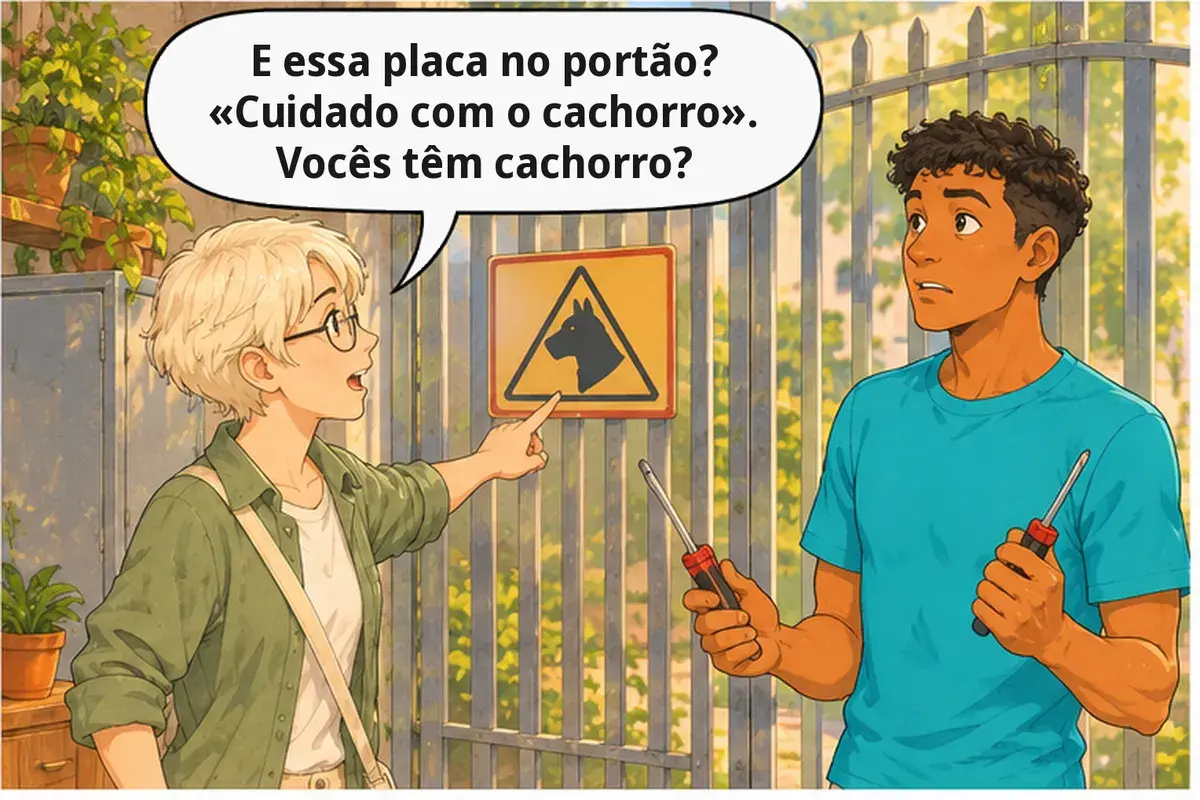
- Nina
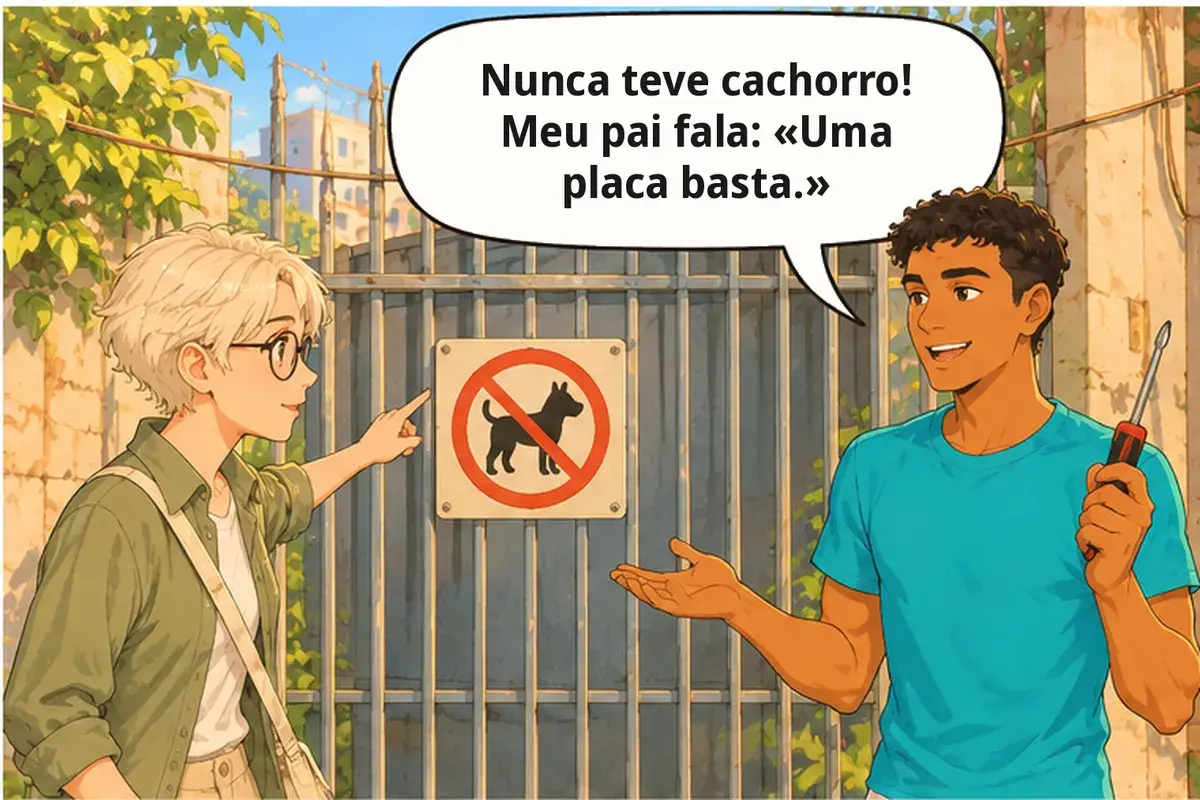
E essa placa no portão? «Cuidado com o cachorro». Vocês têm cachorro?
And what about that sign on the gate? "Beware of the dog." Do you have a dog? (to several people)
- Caio
Nunca teve cachorro! Meu pai fala: «Uma placa basta.»
There was never a dog! My dad says: "One sign is enough."
- Nina
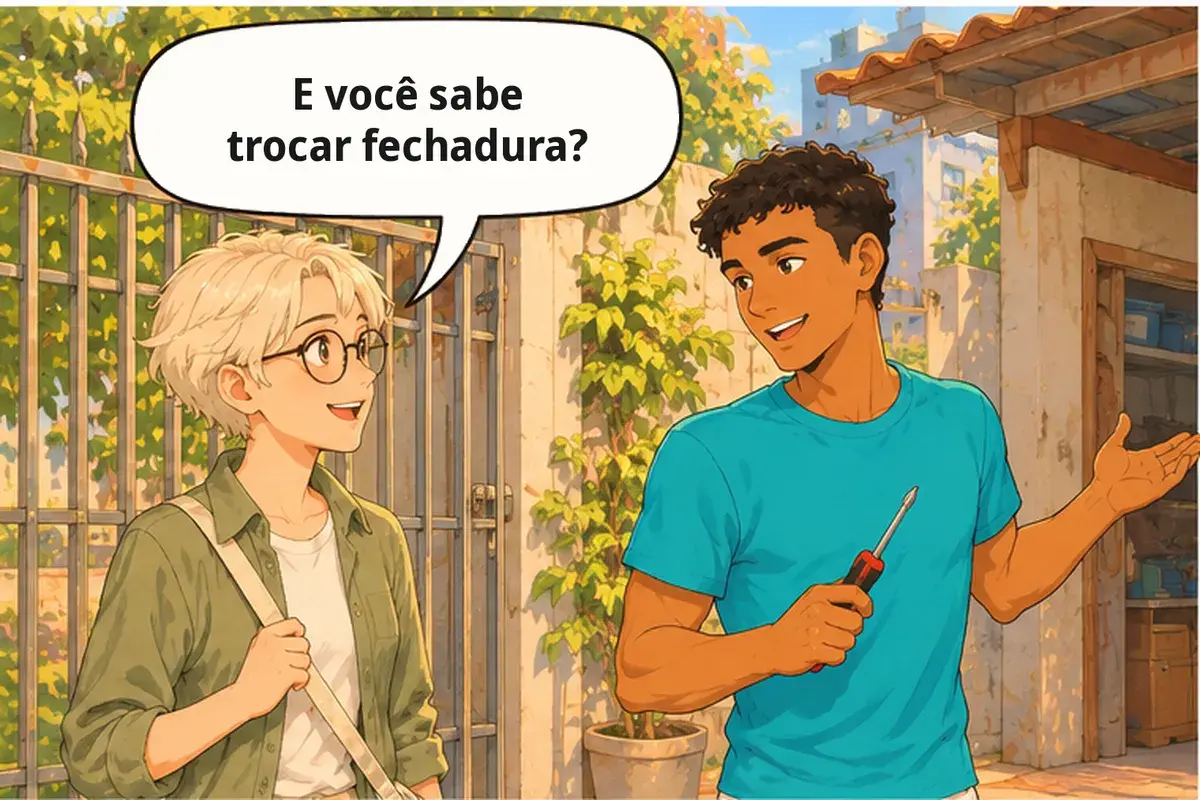
E você sabe trocar fechadura?
And do you know how to change a lock?
- Caio
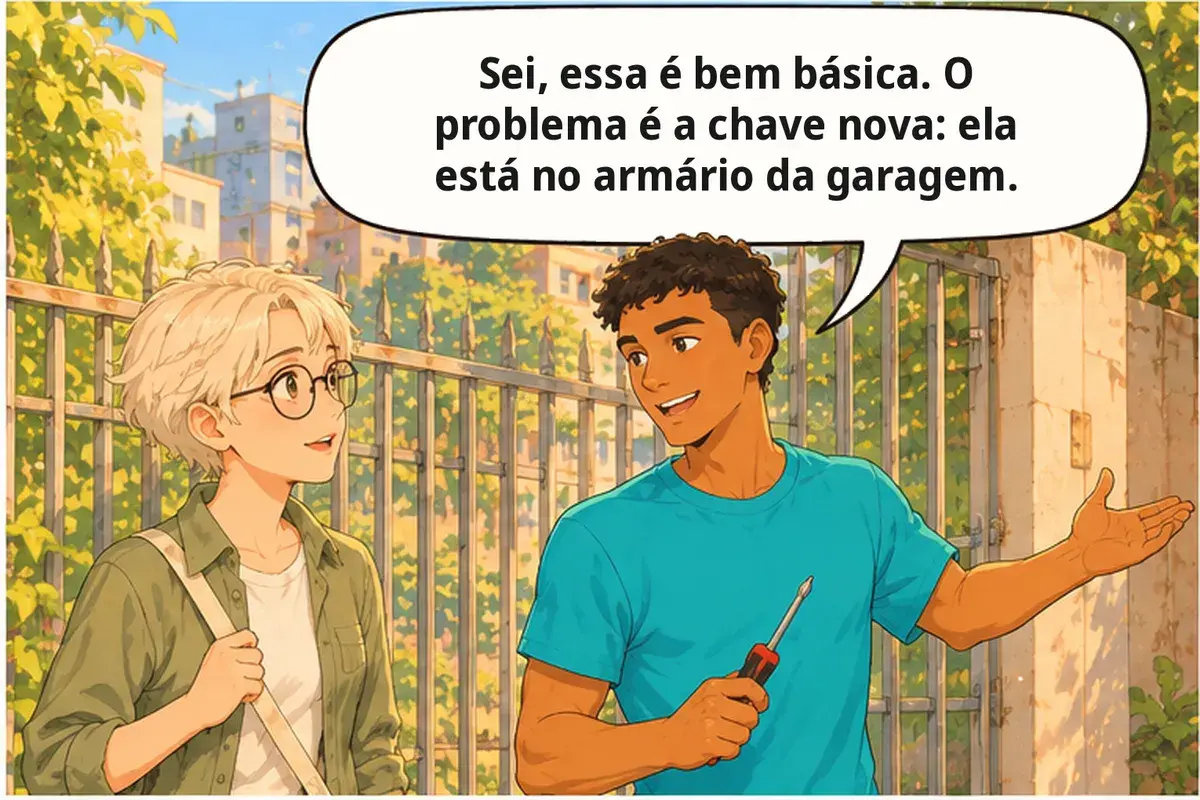
Sei, essa é bem básica. O problema é a chave nova: ela está no armário da garagem.
Yes, this one is pretty basic. The problem is the new key: it's in the garage cabinet.
- Nina
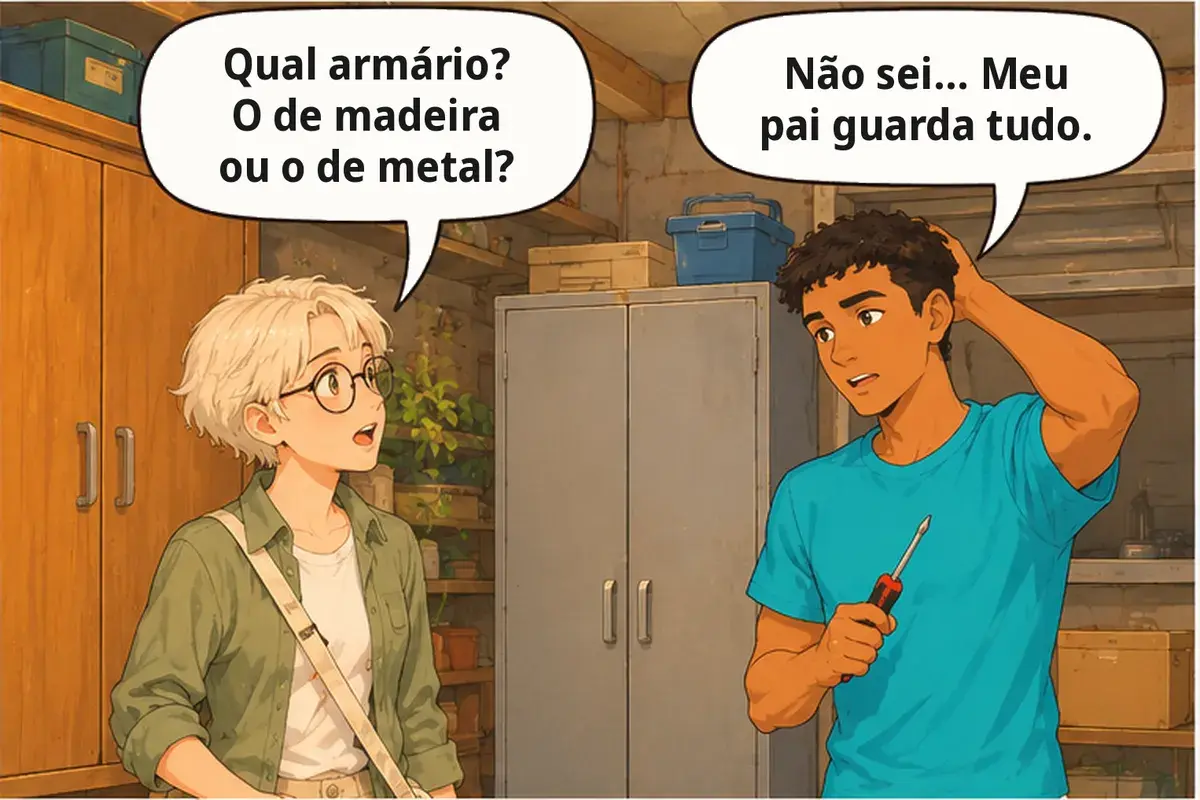
Qual armário? O de madeira ou o de metal?
Which cabinet? The wooden one or the metal one?
- Caio
Não sei... Meu pai guarda tudo.
I don't know... My dad keeps everything.
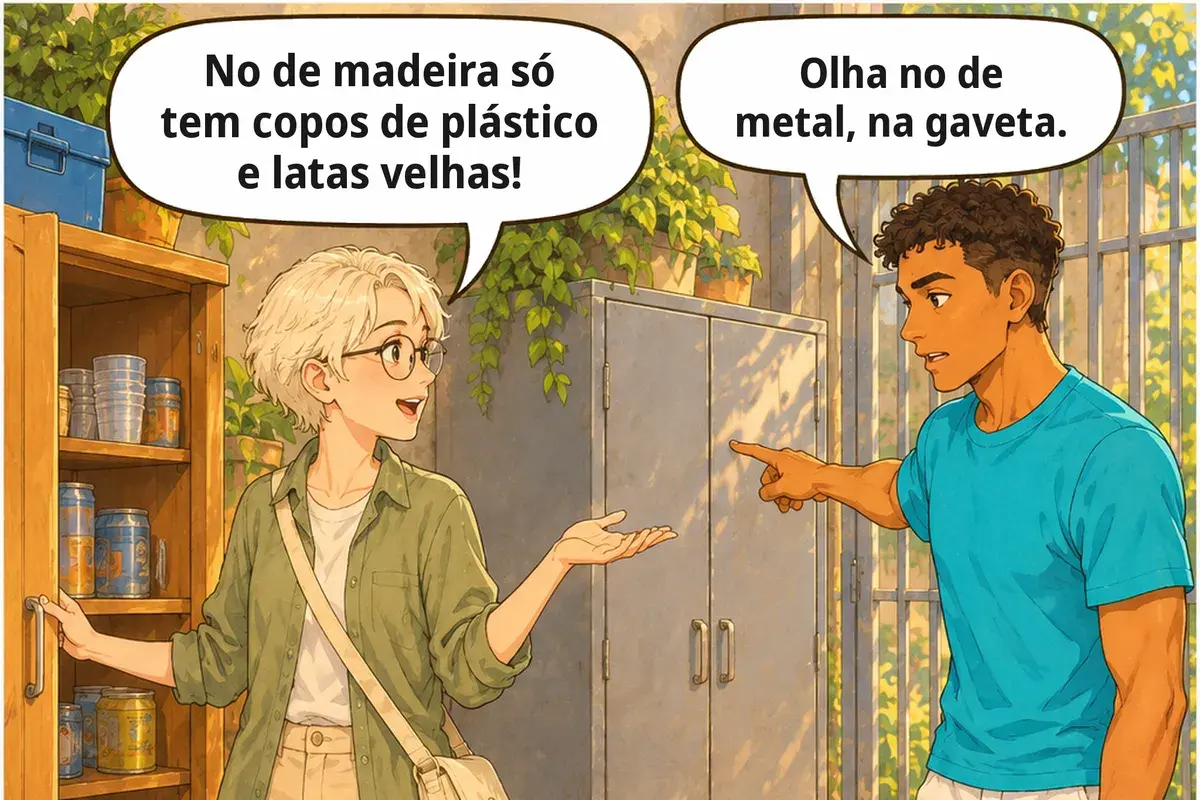
- Nina
No de madeira só tem copos de plástico e latas velhas!
In the wooden one there are only plastic cups and old cans!
- Caio
Olha no de metal, na gaveta.
Look in the metal one, in the drawer.
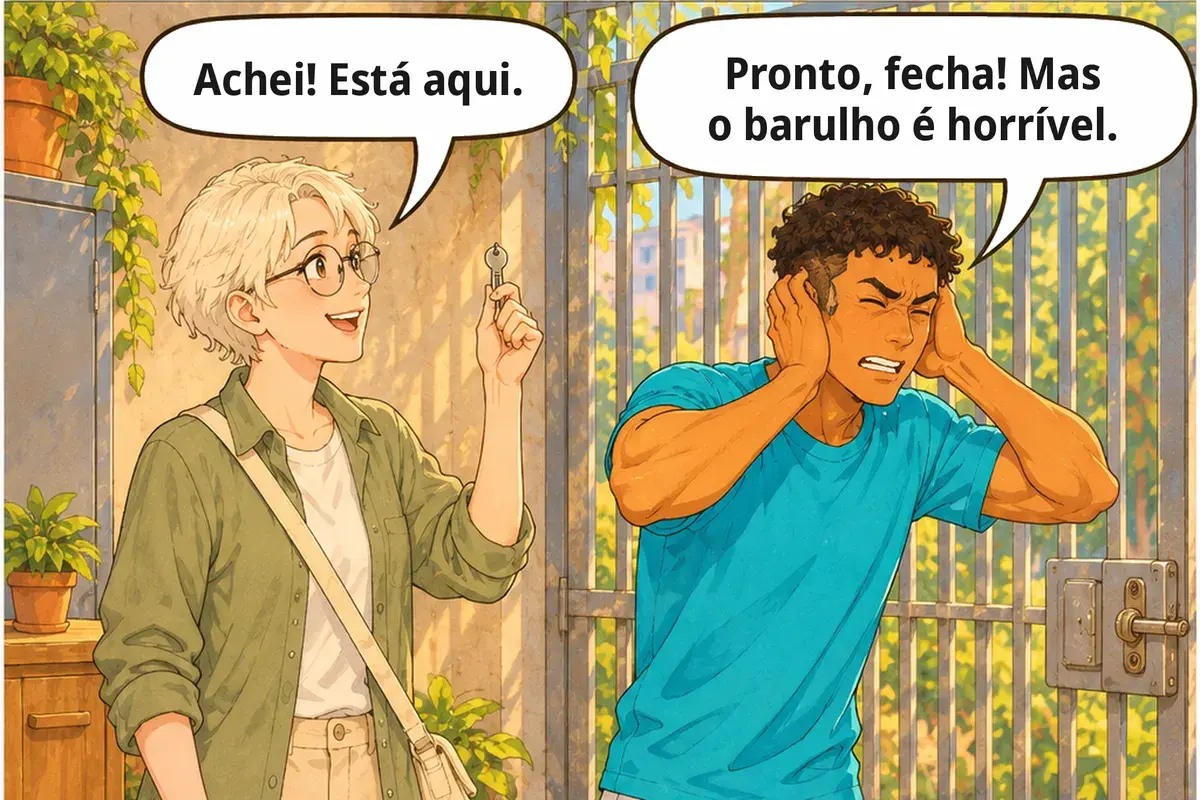
- Nina
Achei! Está aqui.
Found it! Here it is.
- Caio
Pronto, fecha! Mas o barulho é horrível.
There, it closes! But the noise is awful.

- Nina
Pois é. Pelo menos ninguém entra sem a gente ouvir!
Yeah, I know. At least nobody comes in without us hearing!
- Caio
É verdade. Agora a gente tem cachorro!
That's true. Now we have a dog!
Grammar for this text
- O que aconteceu? — "What happened?" aconteceu is the preterite of acontecer ("to happen"), in the "you/he/she/it" form.
- A fechadura velha é horrível — "The old lock is awful." fechadura is a lock in a door or gate. It is built from fechar ("to close") plus the ending -dura. A padlock is a different word: cadeado.
- Nunca teve cachorro! — "There was never a dog!" teve is the preterite of ter, an irregular form (the stem is different from tem). tem means "there is", and teve means "there was".
- Uma placa basta. — "One sign is enough." bastar has only two forms, basta and bastam (for things). The joke: Seu Jorge's sign does the job of a dog.
- E você sabe trocar fechadura? — "And do you know how to change a lock?" saber + infinitive means "to know how to". There is no article: it is about locks in general, not one particular lock.
- O de madeira ou o de metal? — "The wooden one or the metal one?" o de madeira means "the one made of wood": you don't repeat armário, only the article o stays.
- No de madeira — "In the wooden one." The same idea again: the noun is left out, and no is em + o.
- Pelo menos ninguém entra sem a gente ouvir! — "At least nobody comes in without us hearing!" After sem ("without") comes a plain infinitive: sem a gente ouvir. pelo menos means "at least".
Words and grammar of the unit: Keep the House in Order.
Learn the words from the texts with flashcards
In the app, you can tap any word in a text to see its translation, forms and examples, and new words stick with flashcards. 15 minutes a day.
Start for freeEverything is open for free. No card needed to sign up.