

Portuguese dialogue with translation · A2 · 14 lines
Hoje é sábado: todo mundo ajuda! Today is Saturday: everybody helps!
Comic · 11 panels
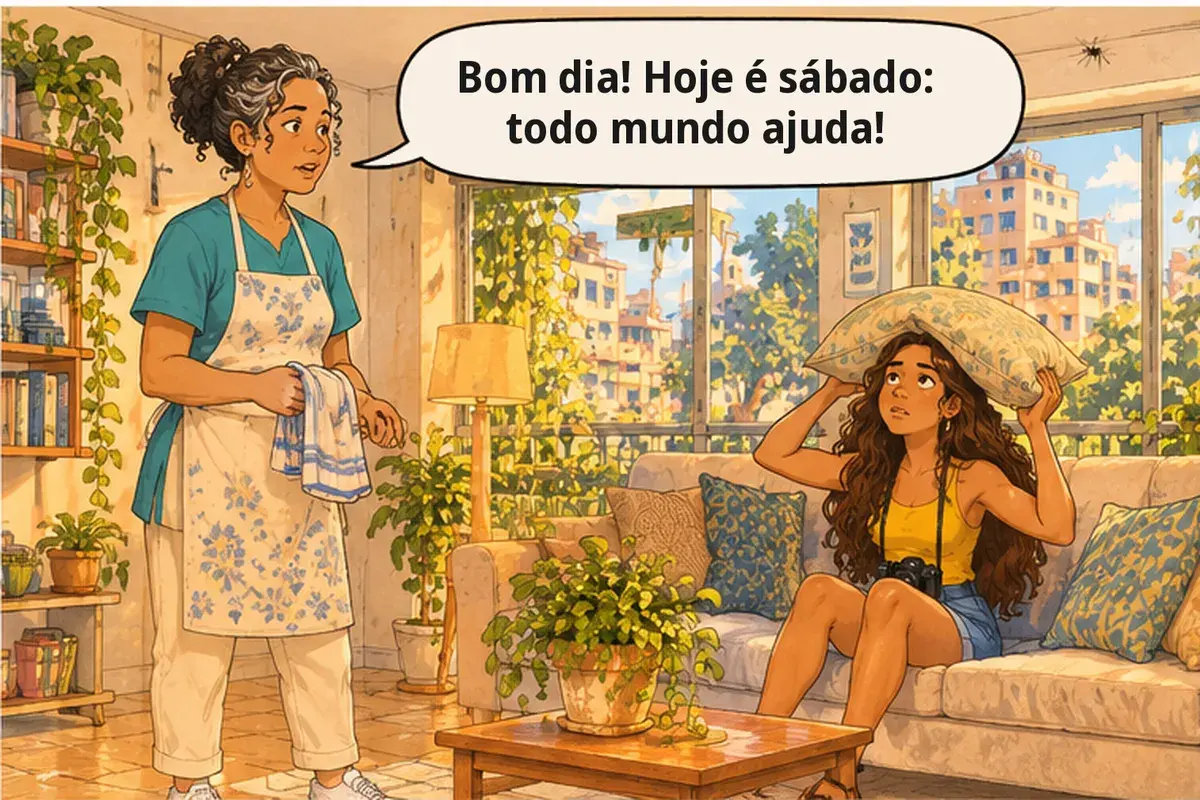
- Regina
Bom dia! Hoje é sábado: todo mundo ajuda!
Good morning! Today is Saturday: everybody helps!

- Bia
Mãe, ainda é cedo! Tem um mosquito no teto, e eu não dormi nada.
Mom, it's still early! There's a mosquito on the ceiling, and I didn't sleep at all.
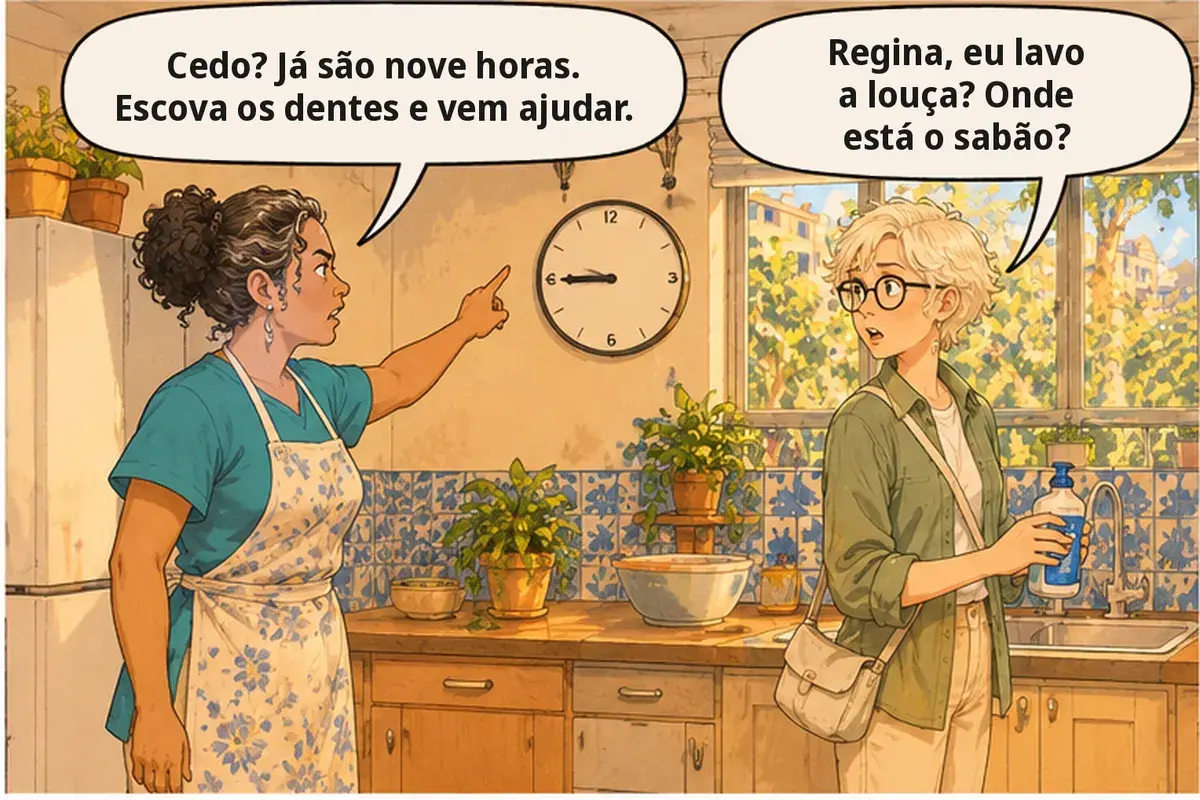
- Regina
Cedo? Já são nove horas. Escova os dentes e vem ajudar.
Early? It's already nine o'clock. Brush your teeth and come help.
- Nina
Regina, eu lavo a louça? Onde está o sabão?
Regina, should I wash the dishes? Where's the soap?
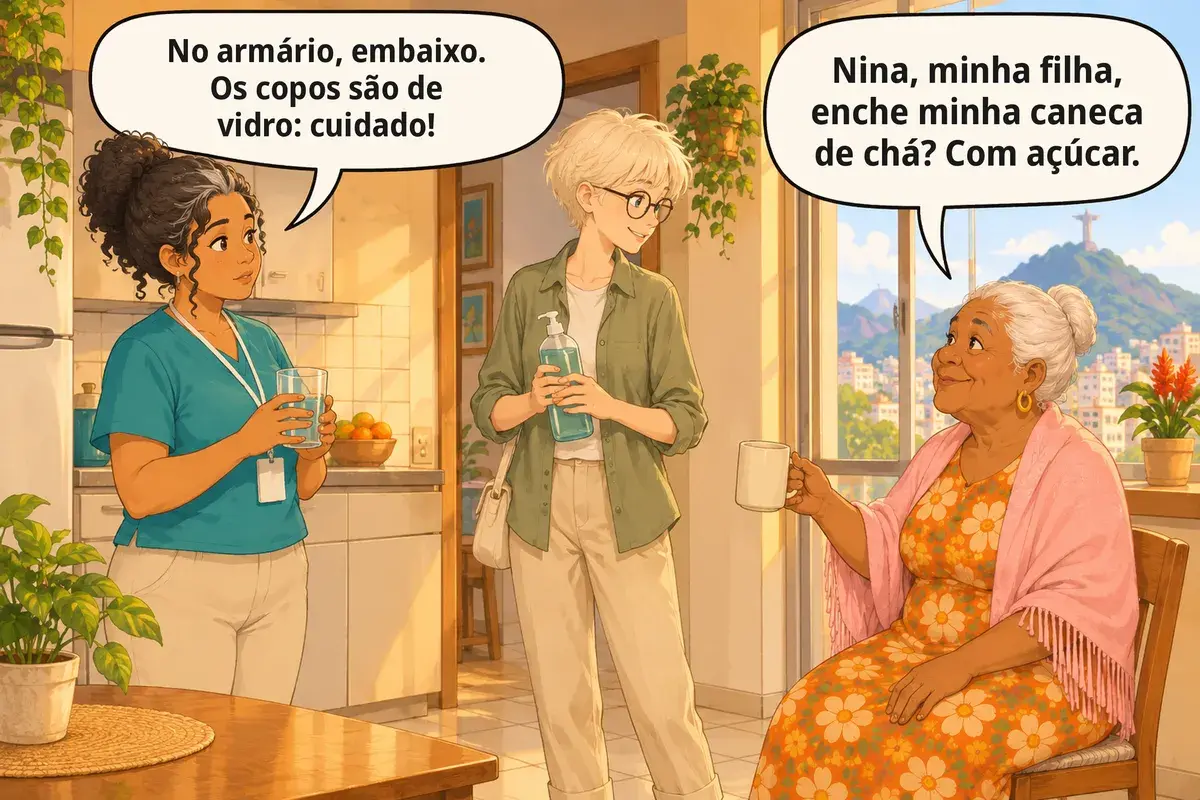
- Regina
No armário, embaixo. Os copos são de vidro: cuidado!
In the cabinet, at the bottom. The glasses are made of glass: careful!
- Dona Zezé
Nina, minha filha, enche minha caneca de chá? Com açúcar.
Nina, dear, will you fill my mug with tea? With sugar.
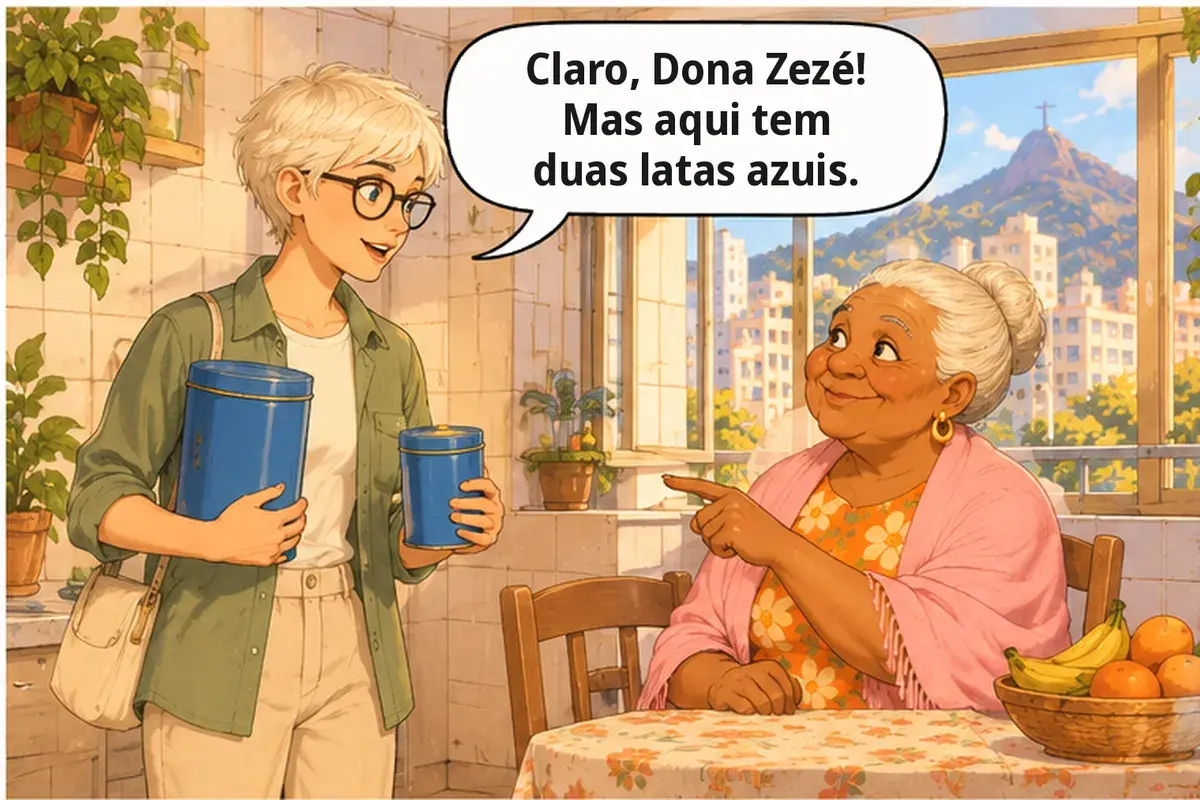
- Nina
Claro, Dona Zezé! Mas aqui tem duas latas azuis.
Of course, Dona Zezé! But there are two blue cans here.
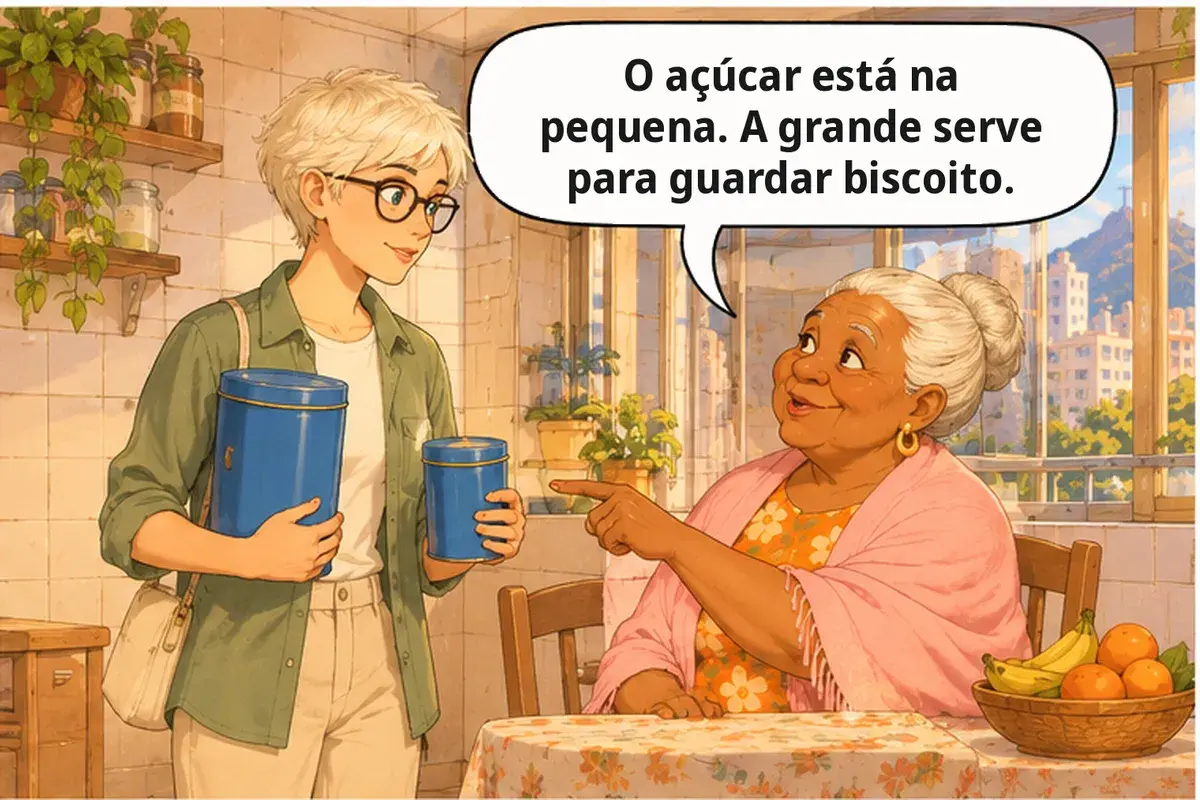
- Dona Zezé
O açúcar está na pequena. A grande serve para guardar biscoito.
The sugar is in the small one. The big one is for keeping cookies.
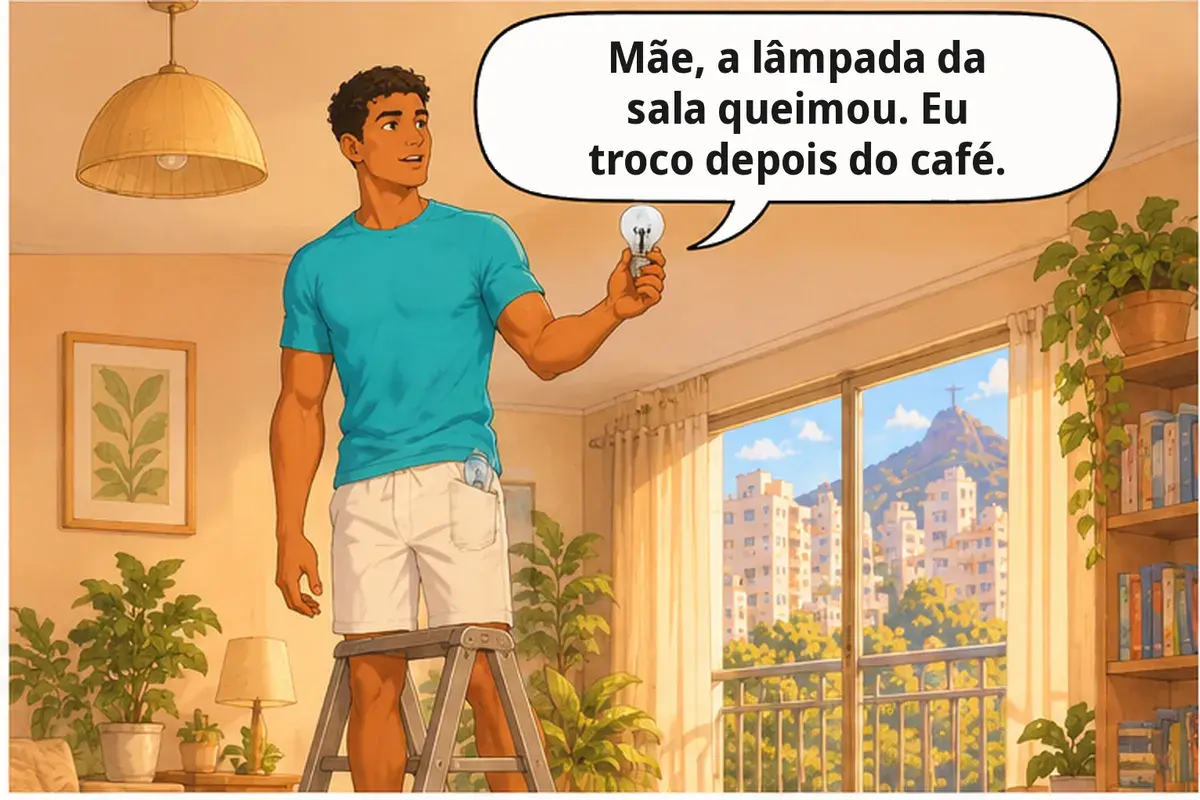
- Caio
Mãe, a lâmpada da sala queimou. Eu troco depois do café.
Mom, the living room light bulb burned out. I'll change it after breakfast.
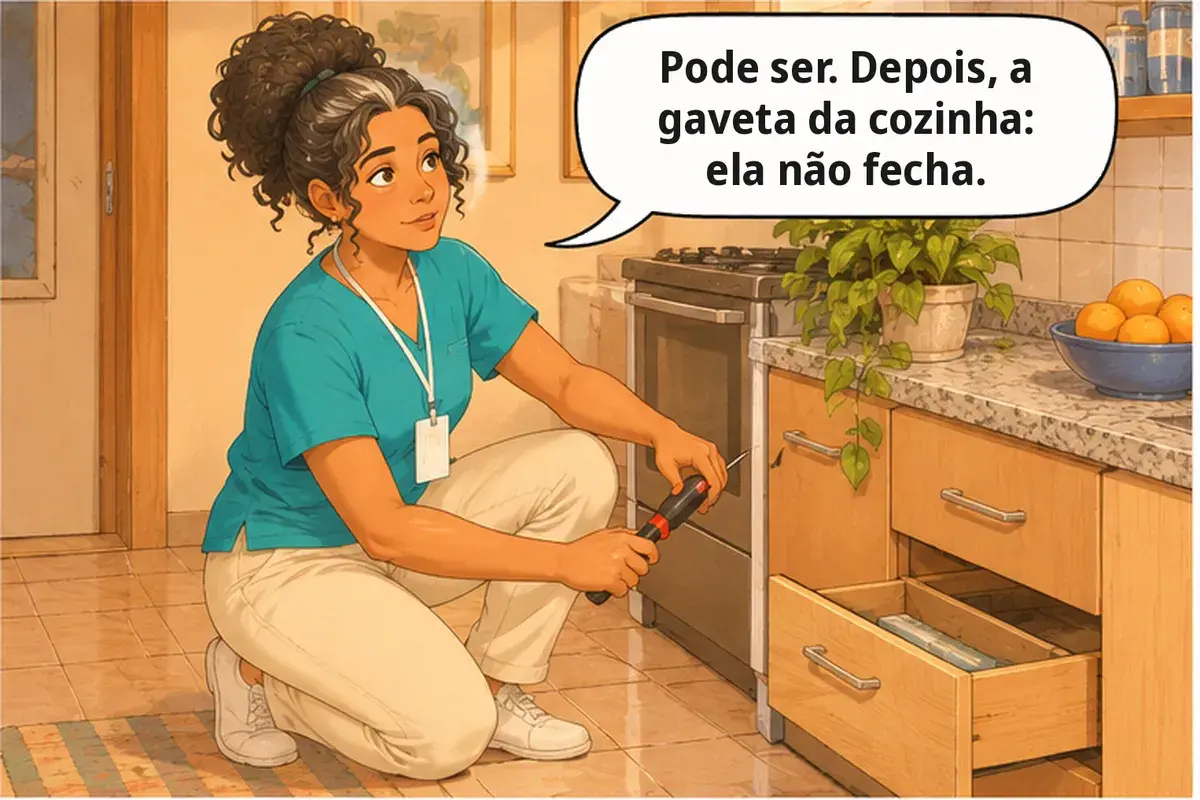
- Regina
Pode ser. Depois, a gaveta da cozinha: ela não fecha.
Sure. Then the kitchen drawer: it won't close.
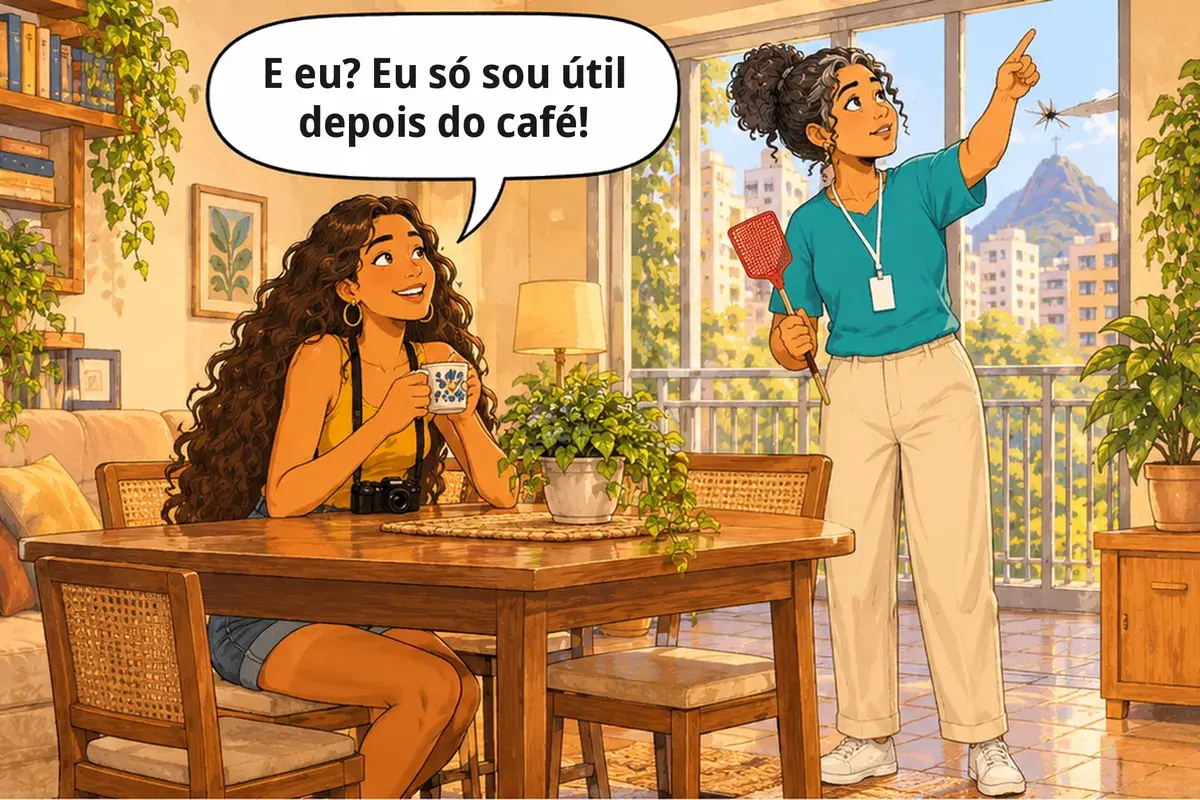
- Bia
E eu? Eu só sou útil depois do café!
What about me? I'm only useful after breakfast!
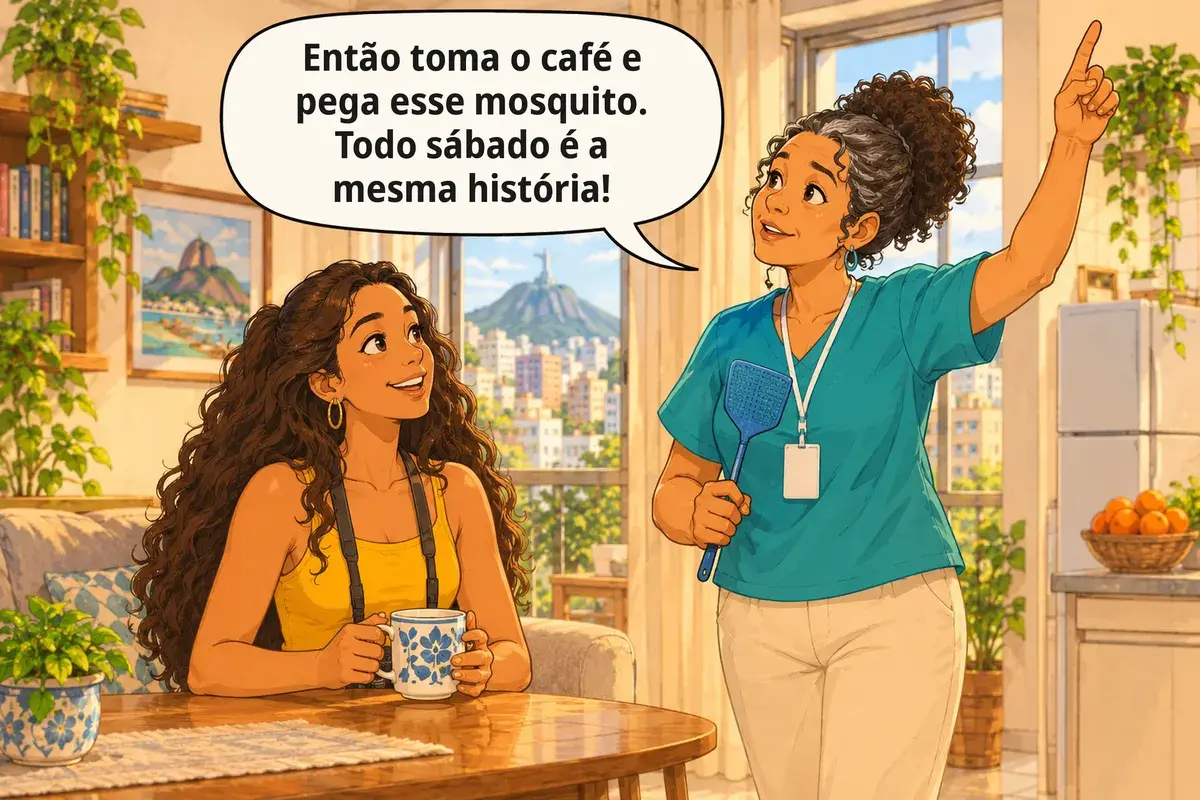
- Regina
Então toma o café e pega esse mosquito. Todo sábado é a mesma história!
Then have your coffee and catch that mosquito. Every Saturday it's the same story!
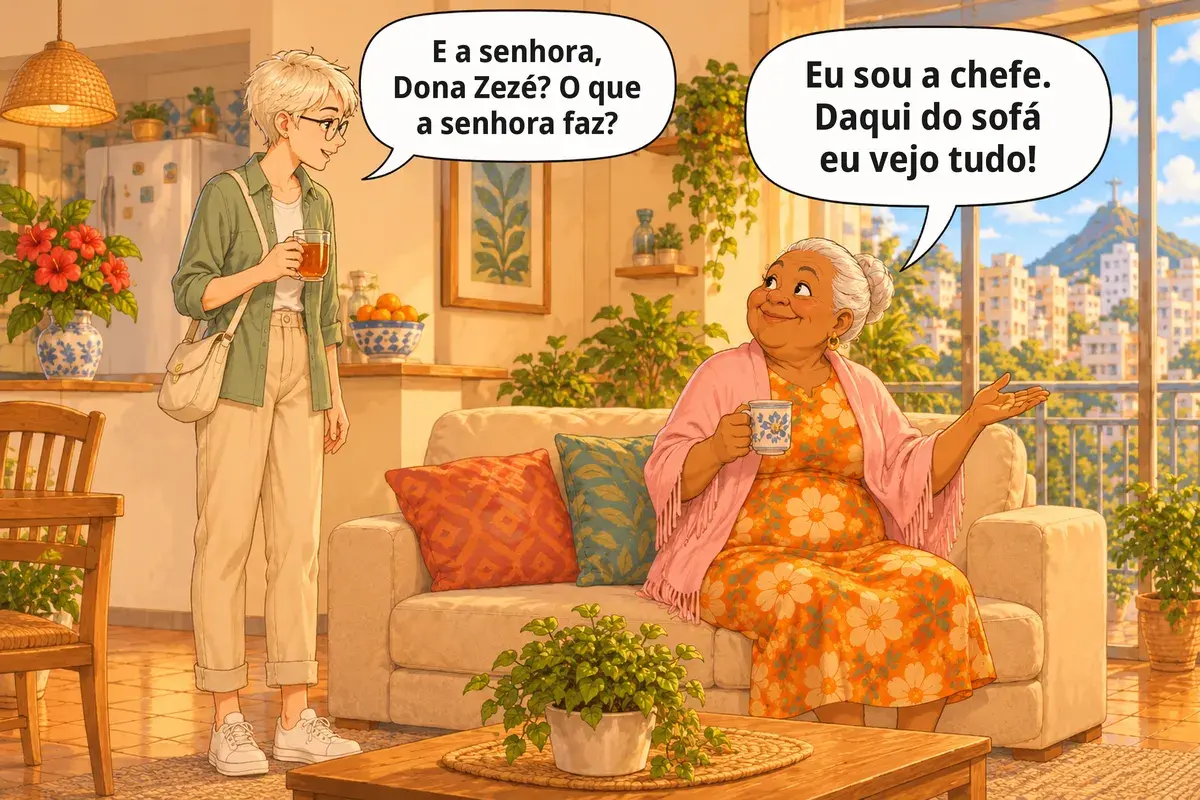
- Nina
E a senhora, Dona Zezé? O que a senhora faz?
And you, Dona Zezé? What do you do? (formal)
- Dona Zezé
Eu sou a chefe. Daqui do sofá eu vejo tudo!
I'm the boss. From here on the sofa I see everything!
Grammar for this text
- Escova os dentes e vem ajudar — "Brush your teeth and come help." These are casual commands: escova and vem look exactly like the você form of the present tense. They mean "brush" and "come", the way people talk at home (unit 6).
- Os copos são de vidro — "The glasses are made of glass." de vidro means "of glass", so it works like the English adjective "glass" (see this unit's grammar). cuidado means "careful".
- enche minha caneca de chá? — "Will you fill my mug with tea?" enche is the same casual command, from encher ("to fill"). What you fill it with takes de. A question tone makes the request softer.
- A grande serve para guardar biscoito. — "The big one is for keeping cookies." serve para + infinitive means "is for" or "is used to" (see this unit's grammar). a grande is "the big one" (the can): you don't say lata a second time.
- A lâmpada da sala queimou — "The living room light bulb burned out." queimou is the preterite of queimar, in the "you/he/she/it" form. You know this verb from unit 2 ("to get sunburned"); for a light bulb it means "to burn out".
- Eu troco depois do café — "I'll change it after breakfast." troco is the eu form of trocar. café here means "breakfast": a short way to say it instead of the full name.
- Todo sábado é a mesma história! — "Every Saturday it's the same story!" todo sábado means "every Saturday", with no preposition (see this unit's grammar). a mesma história means "the same old thing", literally "the same story".
Words and grammar of the unit: Keep the House in Order.
Learn the words from the texts with flashcards
In the app, you can tap any word in a text to see its translation, forms and examples, and new words stick with flashcards. 15 minutes a day.
Start for freeEverything is open for free. No card needed to sign up.