

Portuguese dialogue with translation · A2 · 14 lines
Procure um policial ou um bombeiro Look for a police officer or a firefighter
Comic · 14 panels

- Nina
Bia, vamos escrever o capítulo do carnaval? O nome é “Carnaval sem problemas”.
Bia, shall we write the Carnival chapter? The title is "Carnival Without Problems".

- Bia
Gostei! Primeiro, a segurança: leva pouco dinheiro e deixa a carteira em casa.
I like it! First, safety: take little money and leave your wallet at home.
- Nina
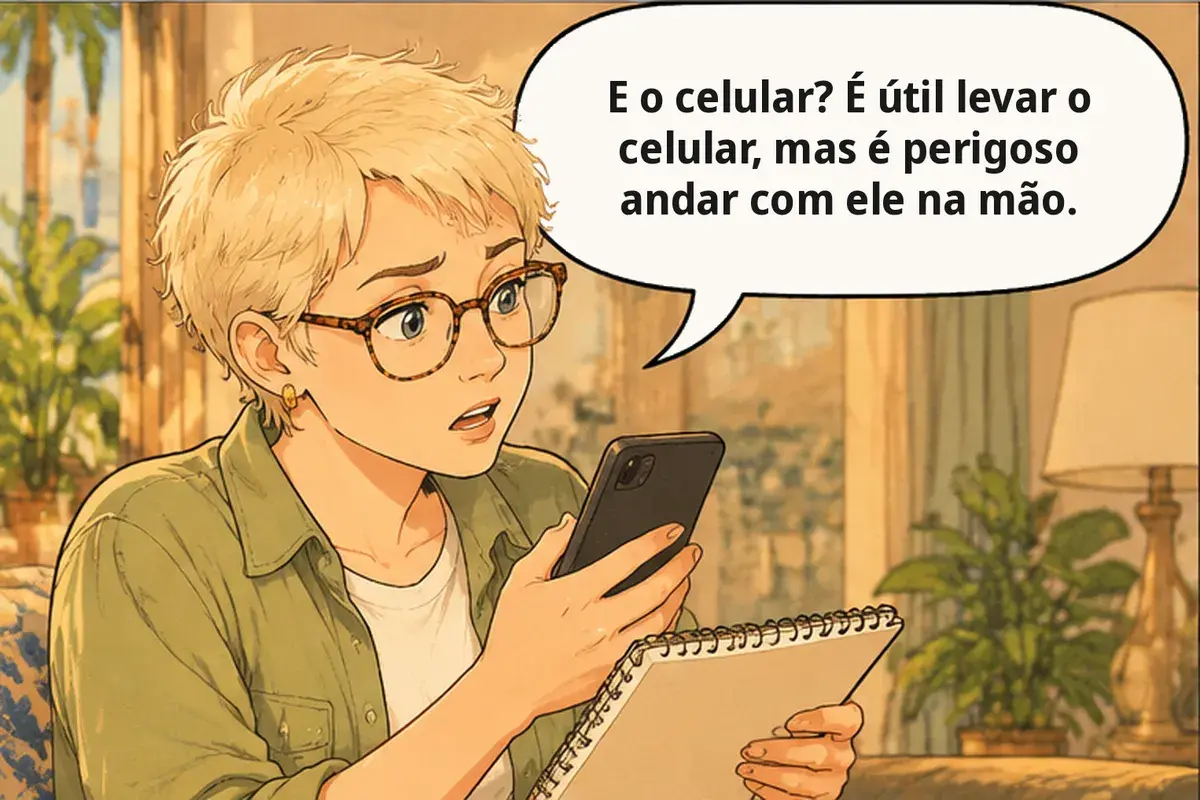
E o celular? É útil levar o celular, mas é perigoso andar com ele na mão.
And the phone? It's useful to take your phone, but it's dangerous to walk with it in your hand.

- Bia
Escreve também sobre a praia. O que houve com você em novembro?
Write about the beach too. What happened to you in November?
- Nina
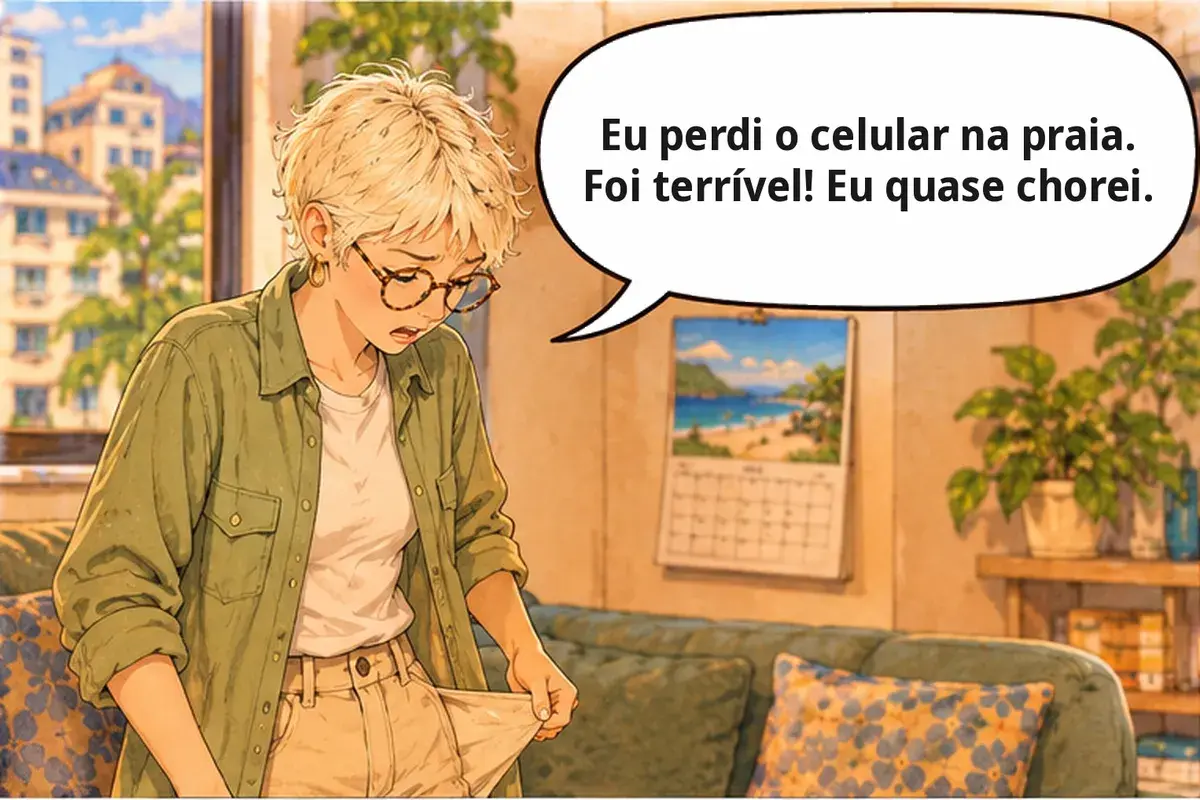
Eu perdi o celular na praia. Foi terrível! Eu quase chorei.
I lost my phone at the beach. It was terrible! I almost cried.
- Bia
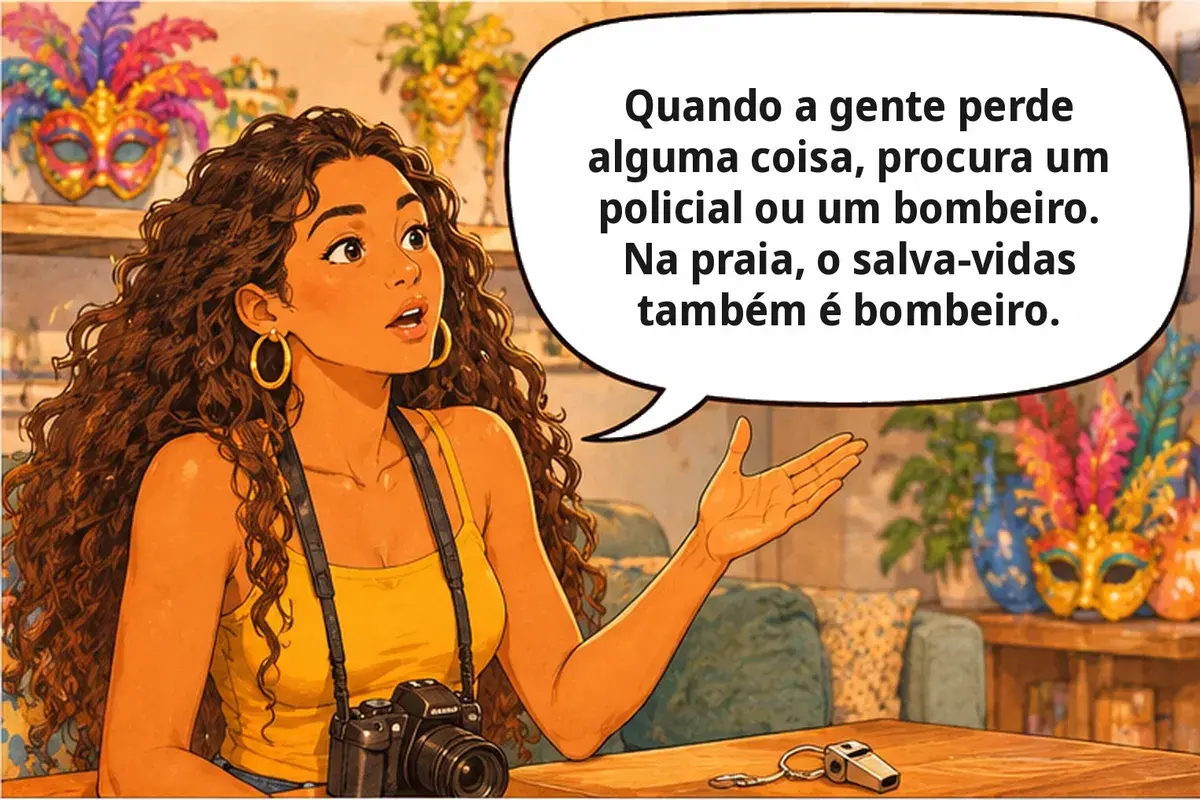
Quando a gente perde alguma coisa, procura um policial ou um bombeiro. Na praia, o salva-vidas também é bombeiro.
When we lose something, we look for a police officer or a firefighter. At the beach, the lifeguard is also a firefighter.
- Nina
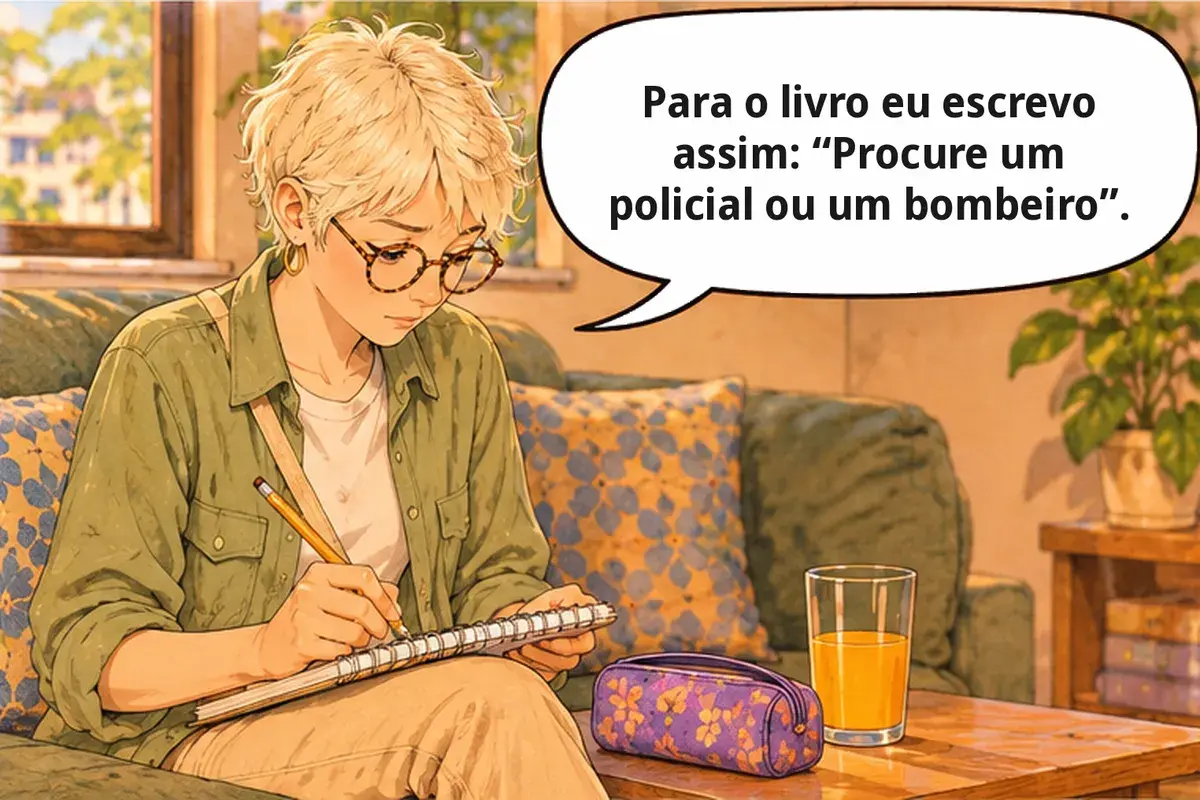
Para o livro eu escrevo assim: “Procure um policial ou um bombeiro”.
For the book I'll write it like this: "Look for a police officer or a firefighter."

- Bia
Certamente! Você já fala como um livro. E com mau tempo?
Certainly! You already talk like a book. And what about bad weather?

- Nina
Todo mundo foge da chuva, e a gente se perde. É melhor combinar um ponto de encontro antes.
Everyone runs away from the rain, and we get lost. It's better to arrange a meeting point ahead of time.
- Bia
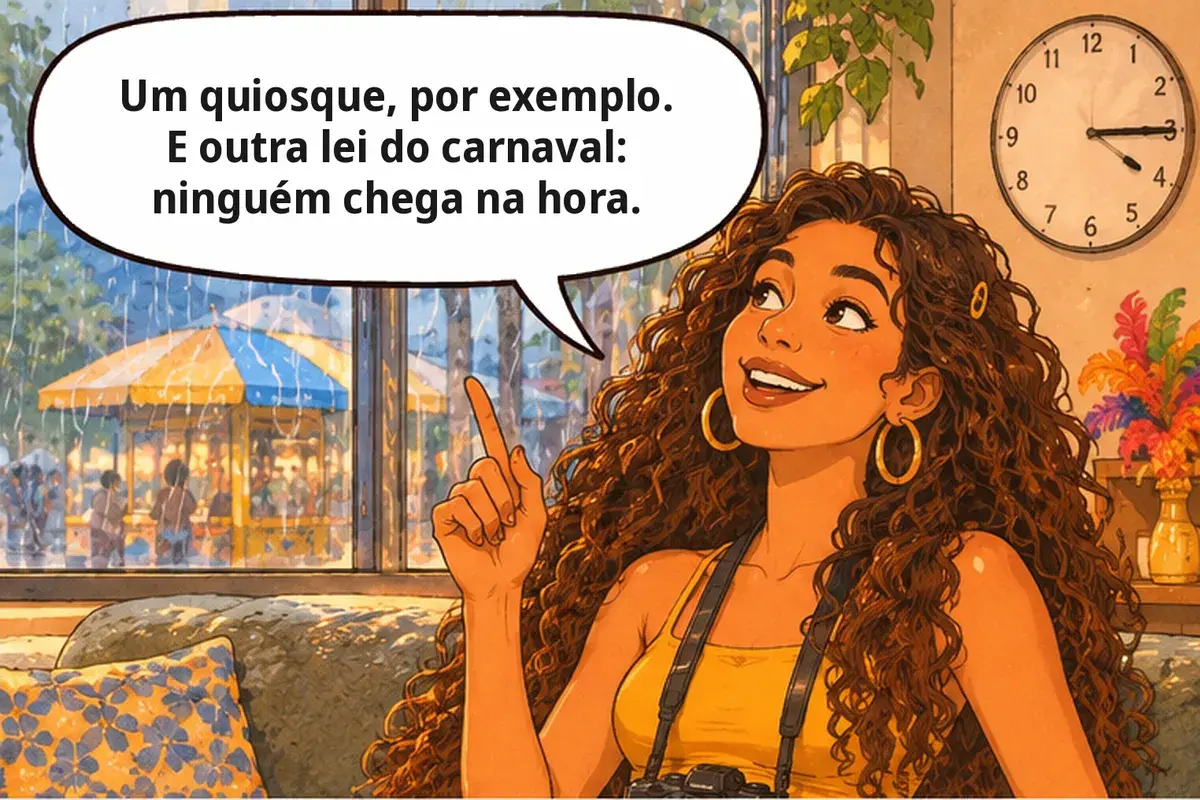
Um quiosque, por exemplo. E outra lei do carnaval: ninguém chega na hora.
A beach kiosk, for example. And another Carnival law: nobody arrives on time.
- Nina
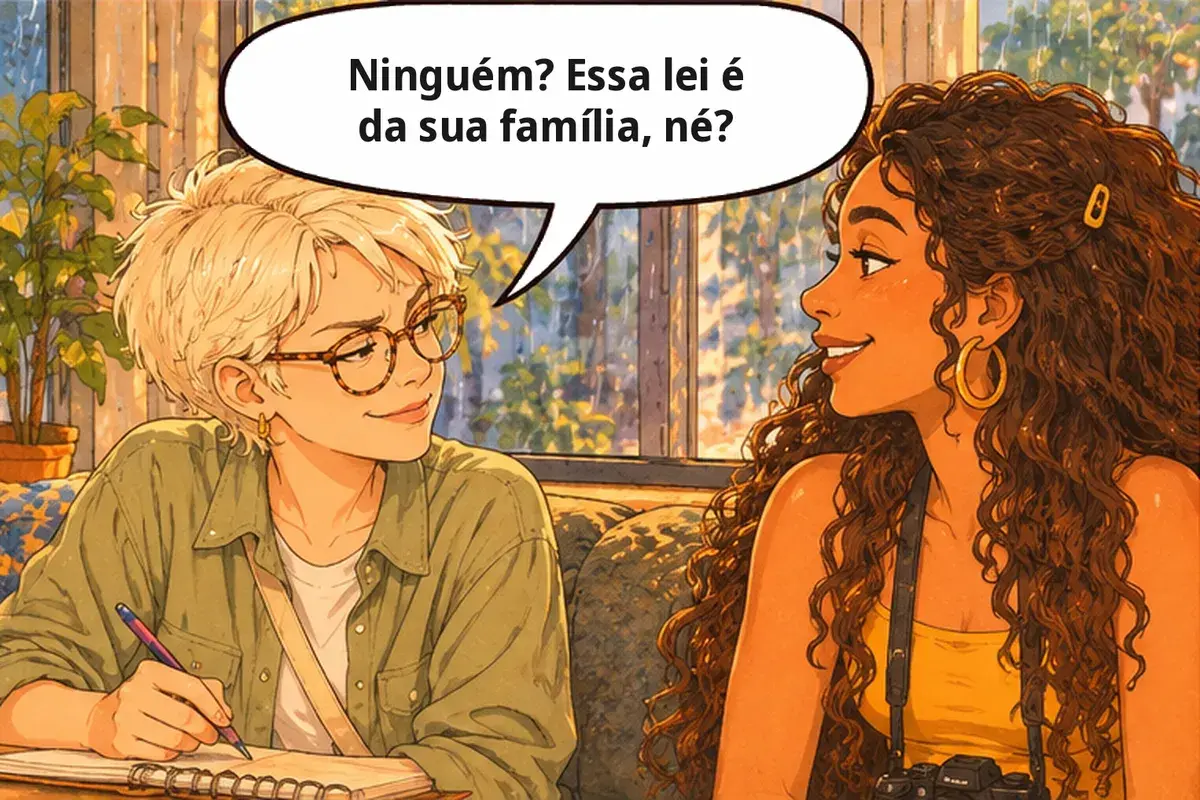
Ninguém? Essa lei é da sua família, né?
Nobody? That law is from your family, right?

- Bia
Mentira! A gente chega só um pouco depois.
That's a lie! We only arrive a little later.

- Nina
Um pouco? Duas horas! Contra isso não tem remédio. Eu escrevo: “Chegue na hora”.
A little? Two hours! There's nothing to be done about that. I'll write: "Arrive on time."

- Bia
Na hora? Impossível!
On time? Impossible!
Grammar for this text
- É útil levar o celular, mas é perigoso andar com ele na mão — the pattern is
é+ adjective + infinitive: "it's useful to take, but it's dangerous to walk". The adjective never changes (see the unit grammar). After a preposition,elecan stand for a thing:com elemeans "with it". - O que houve com você em novembro? —
houvemeans "happened", fromhaverwith no subject. It means the same as the A1 question "what's wrong?" withser, and it never changes for person or number. In November (unit 3) Nina left her phone in the sand. - Quando a gente perde alguma coisa —
a gente("we") takes the você form of the verb (the same one as ele / ela):perde,procura,se perde,chega. - o salva-vidas também é bombeiro — in Rio, beach lifeguards work for the fire department, so people go to a firefighter for help.
- Procure um policial —
procureis a polite command fromprocurar, likefaleorvenha: it is how books and signs are written.chegue("arrive") works the same way. - Certamente! — a bookish "certainly". Bia teases that Nina now talks like a book. A friend would usually say
claro. - E com mau tempo? —
maumeans "bad" (see the unit grammar). - todo mundo foge da chuva —
fogemeans "runs away", fromfugir;fugir demeans "to run away from something". - Contra isso não tem remédio — literally "against this there is no medicine": "there's nothing to be done."
Words and grammar of the unit: Put together a Carnival costume.
Learn the words from the texts with flashcards
In the app, you can tap any word in a text to see its translation, forms and examples, and new words stick with flashcards. 15 minutes a day.
Start for freeEverything is open for free. No card needed to sign up.