

Portuguese dialogue with translation · A2 · 16 lines
Gente, cadê vocês? Guys, where are you?
Comic · 16 panels
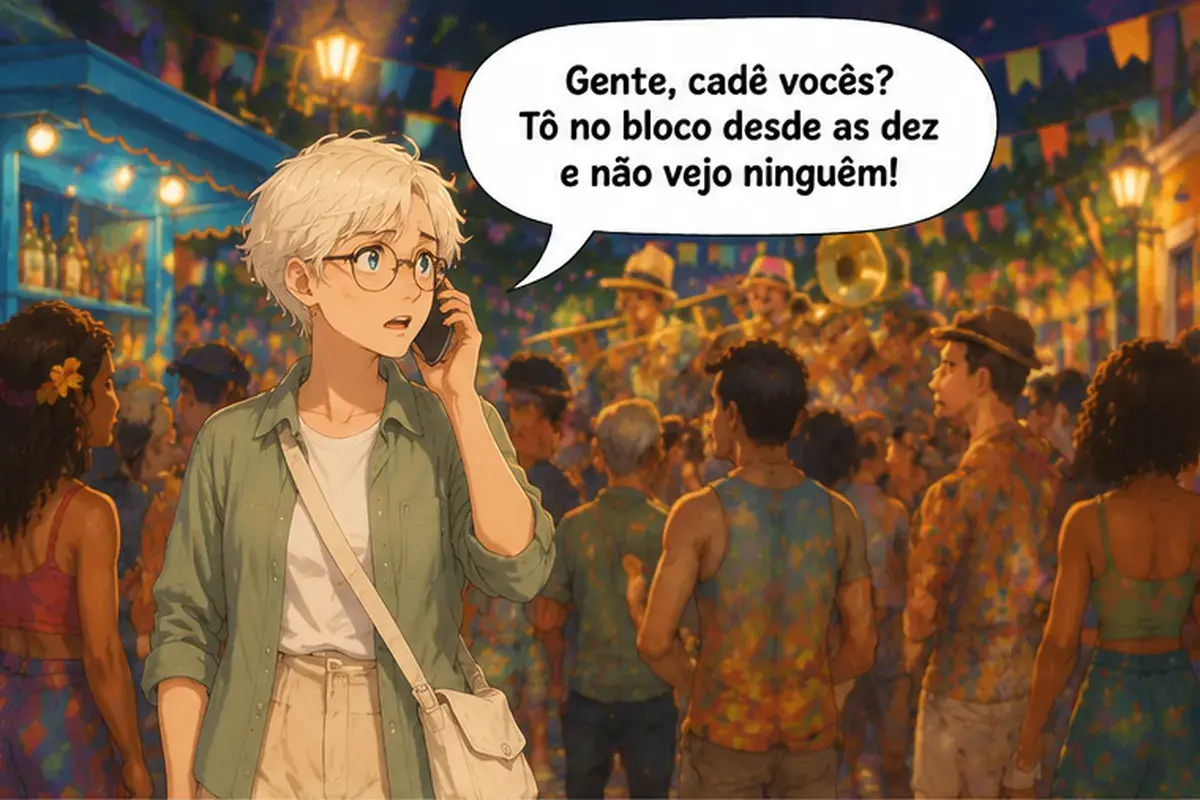
- Nina
Gente, cadê vocês? Tô no bloco desde as dez e não vejo ninguém!
Guys, where are you? I've been at the bloco since ten and I don't see anyone!
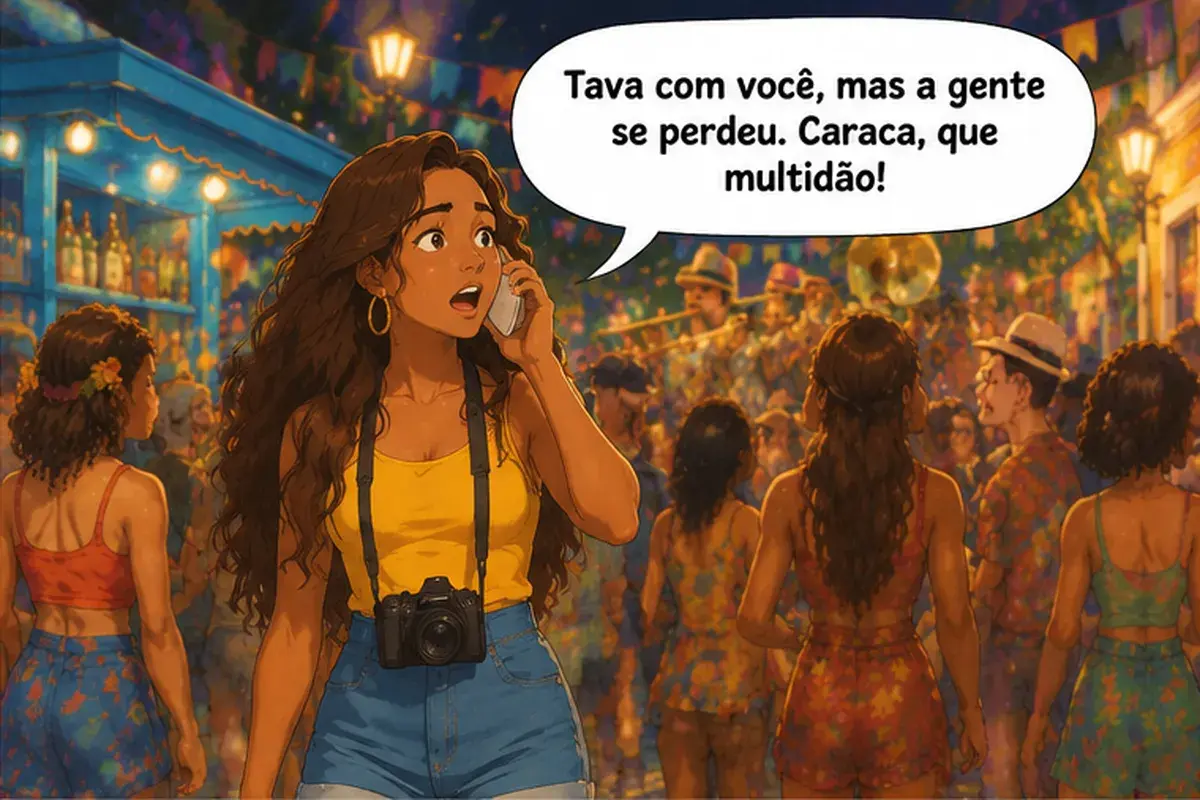
- Bia
Tava com você, mas a gente se perdeu. Caraca, que multidão!
I was with you, but we got lost. Wow, what a crowd!
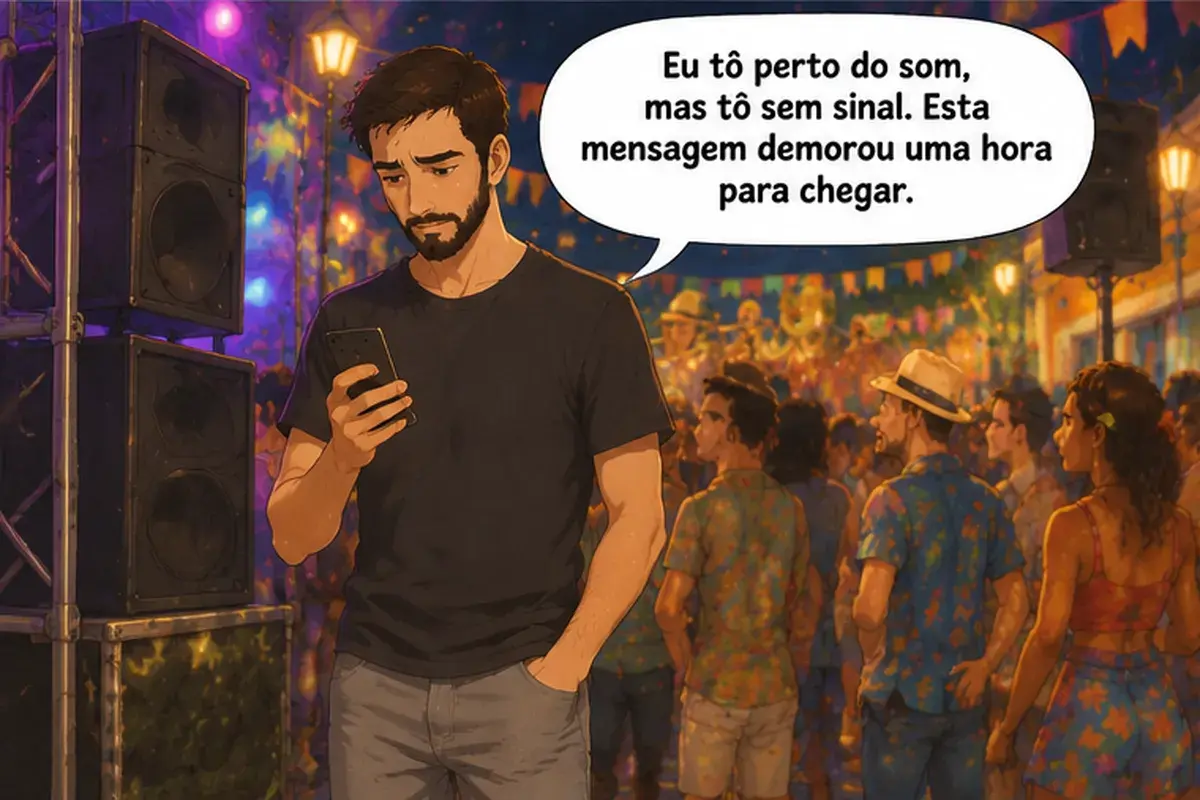
- Léo
Eu tô perto do som, mas tô sem sinal. Esta mensagem demorou uma hora para chegar.
I'm near the music, but I have no signal. This message took an hour to arrive.
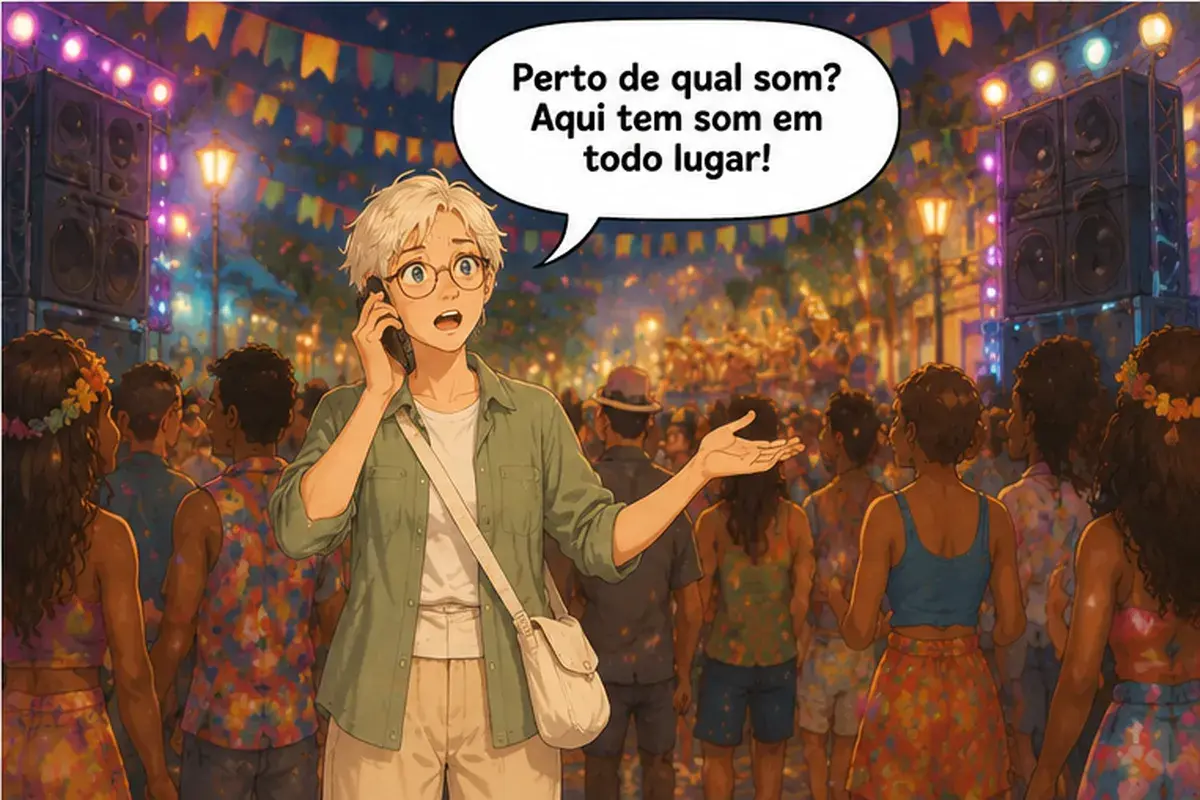
- Nina
Perto de qual som? Aqui tem som em todo lugar!
Near which music? There's music everywhere here!
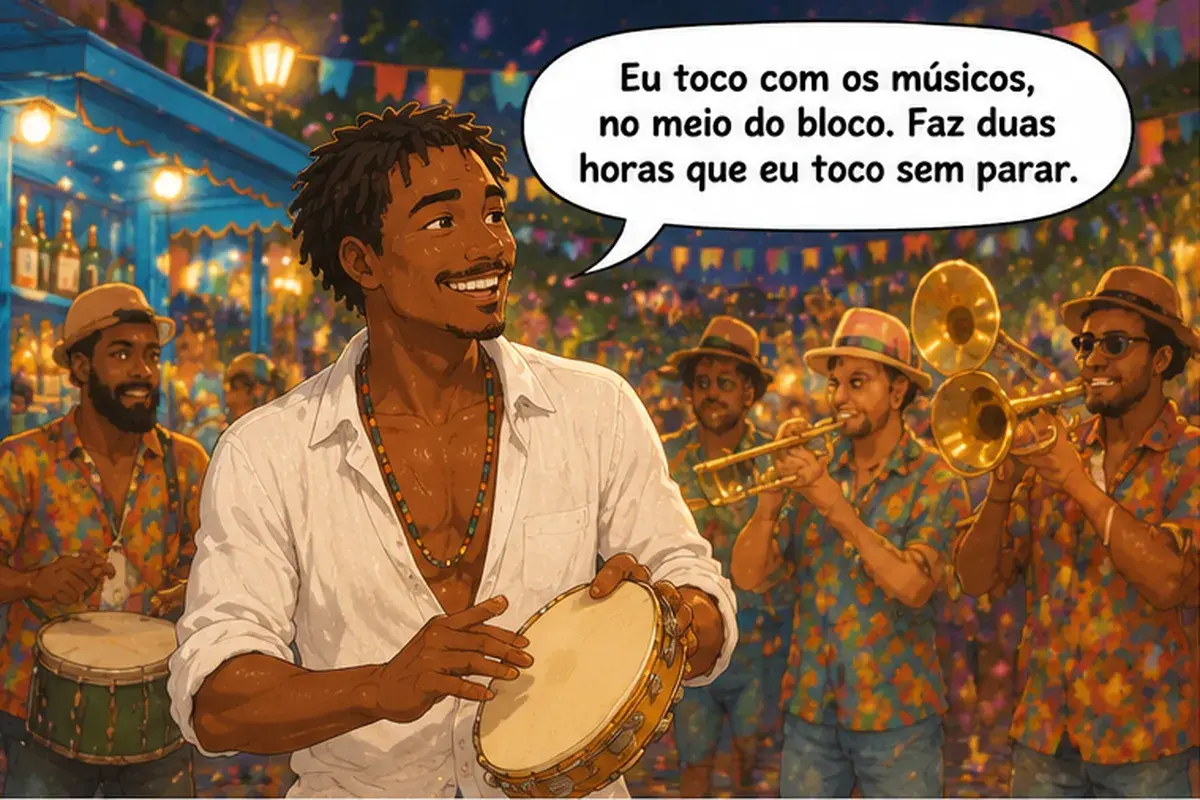
- Tiago
Eu toco com os músicos, no meio do bloco. Faz duas horas que eu toco sem parar.
I'm playing with the musicians in the middle of the bloco. I've been playing nonstop for two hours.
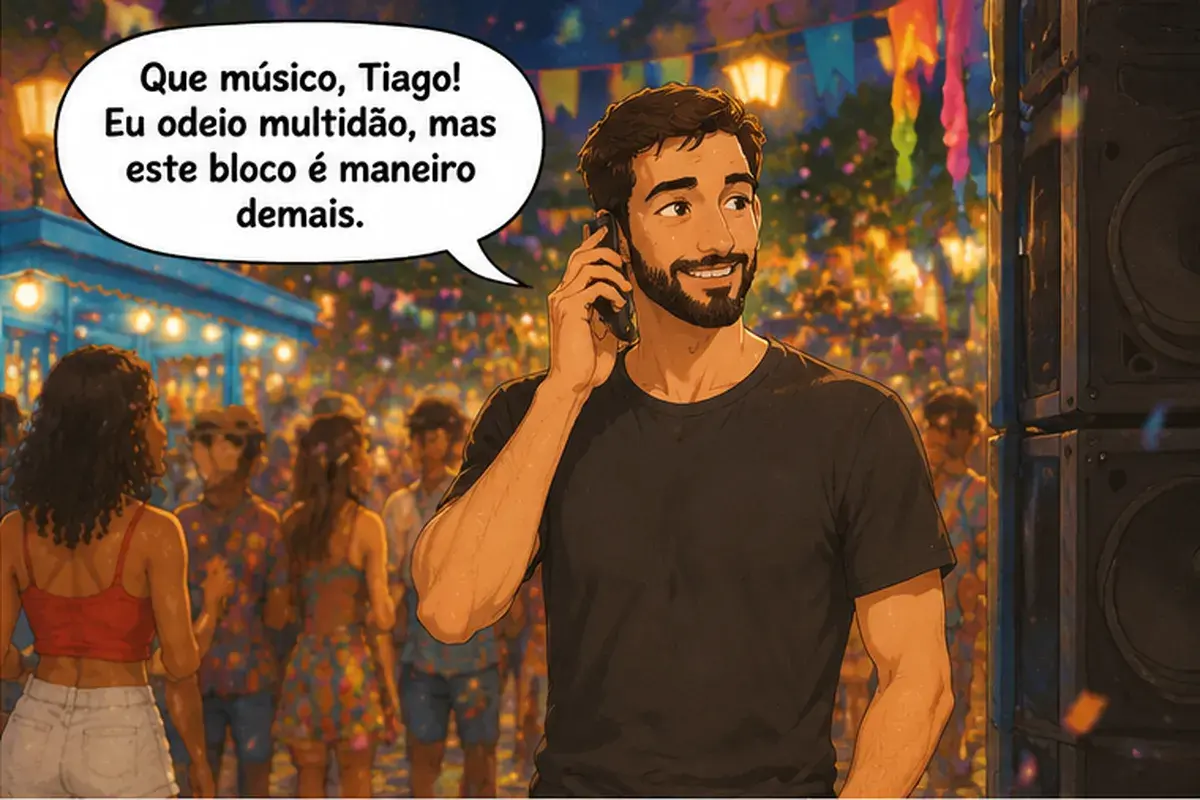
- Léo
Que músico, Tiago! Eu odeio multidão, mas este bloco é maneiro demais.
What a musician, Tiago! I hate crowds, but this bloco is so cool.

- Nina
Vejo um quiosque azul e um homem fantasiado de abacaxi.
I see a blue kiosk and a man dressed up as a pineapple.

- Bia
O abacaxi é top! Todo mundo pro quiosque azul. Partiu?
The pineapple is awesome! Everyone to the blue kiosk. Let's go?
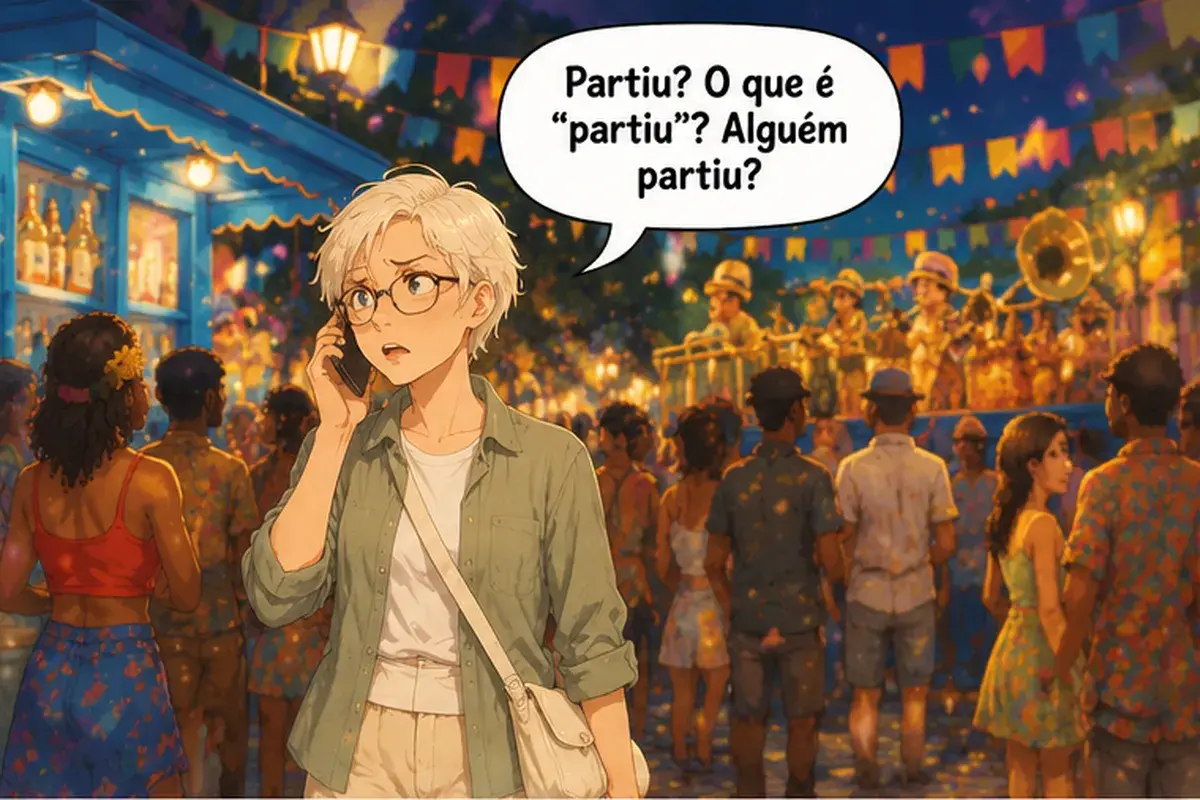
- Nina
Partiu? O que é “partiu”? Alguém partiu?
"Partiu"? What's "partiu"? Did someone leave?
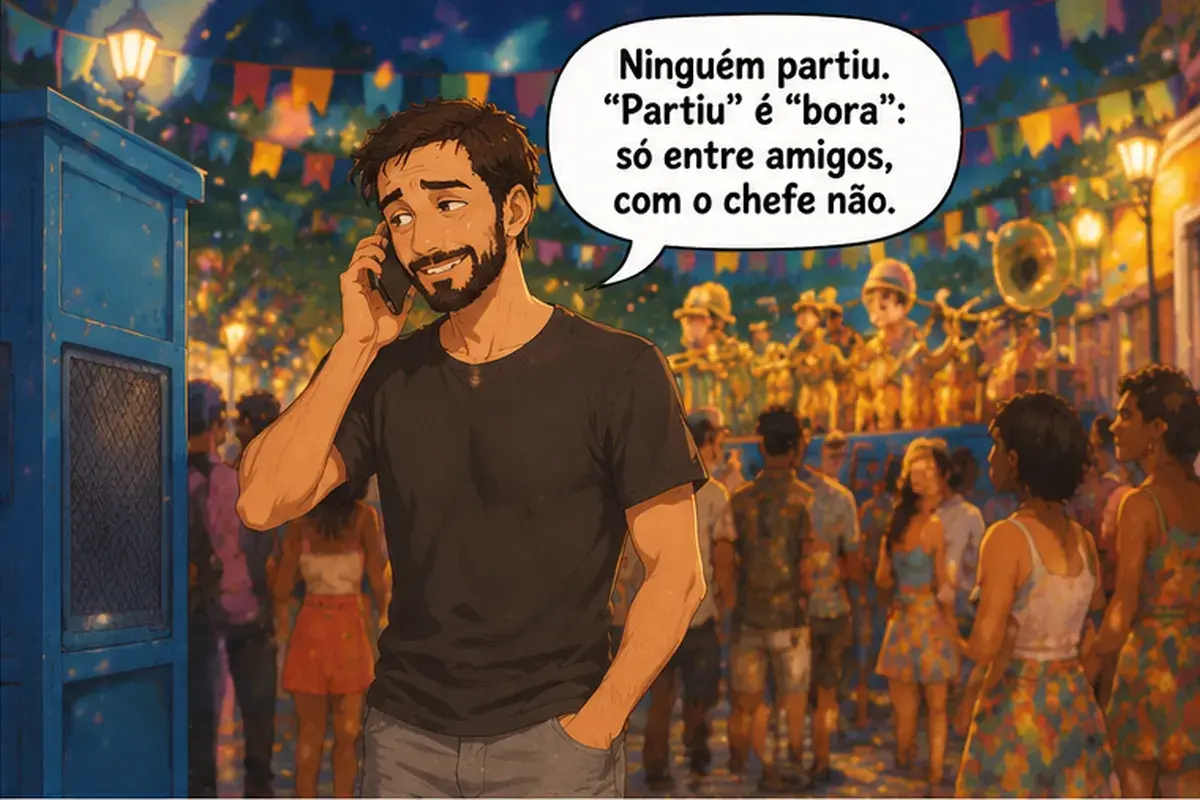
- Léo
Ninguém partiu. “Partiu” é “bora”: só entre amigos, com o chefe não.
Nobody left. "Partiu" is "bora": only among friends, not with the boss.
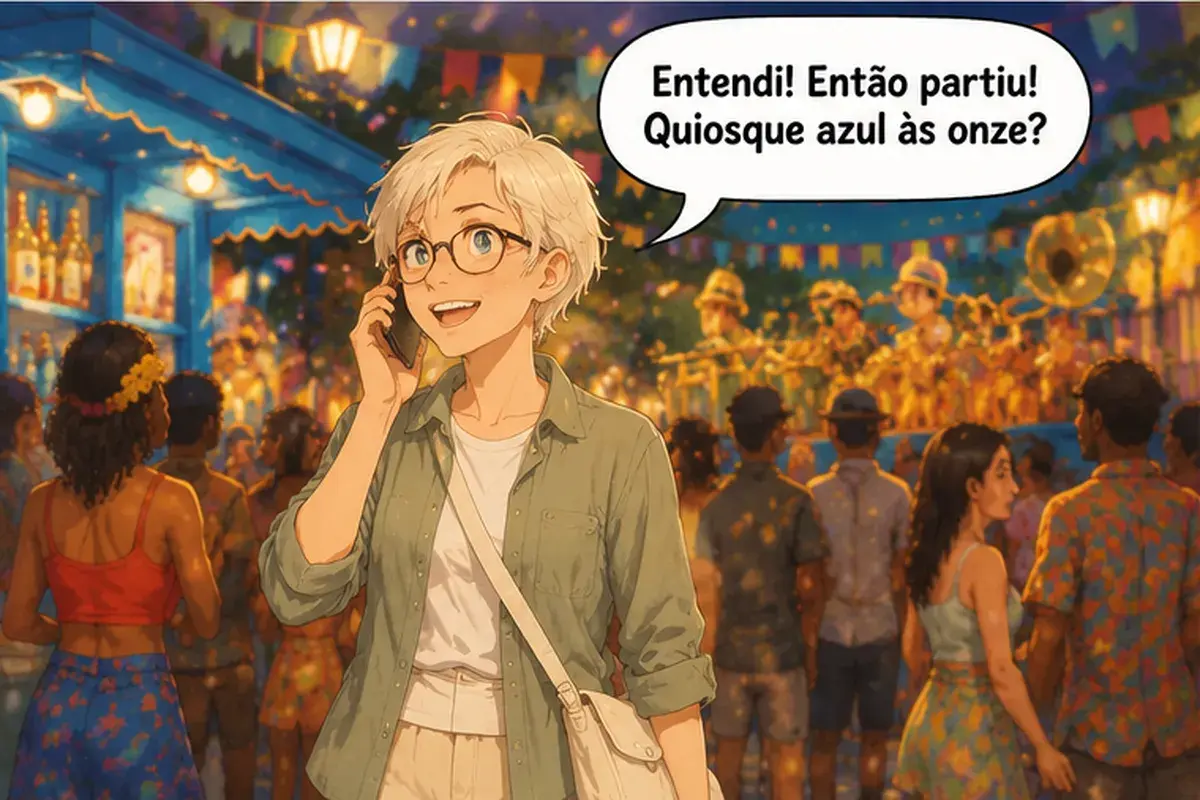
- Nina
Entendi! Então partiu! Quiosque azul às onze?
Got it! Then let's go! Blue kiosk at eleven?
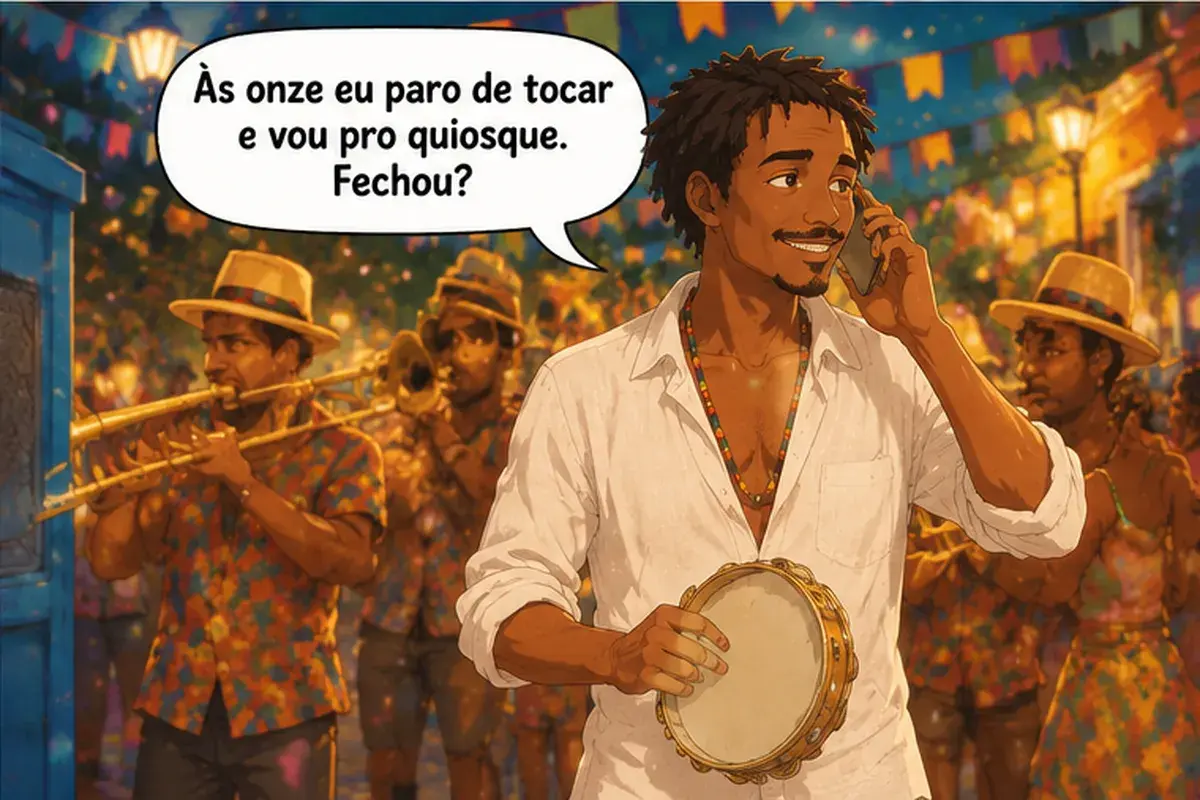
- Tiago
Às onze eu paro de tocar e vou pro quiosque. Fechou?
At eleven I'll stop playing and go to the kiosk. Deal?
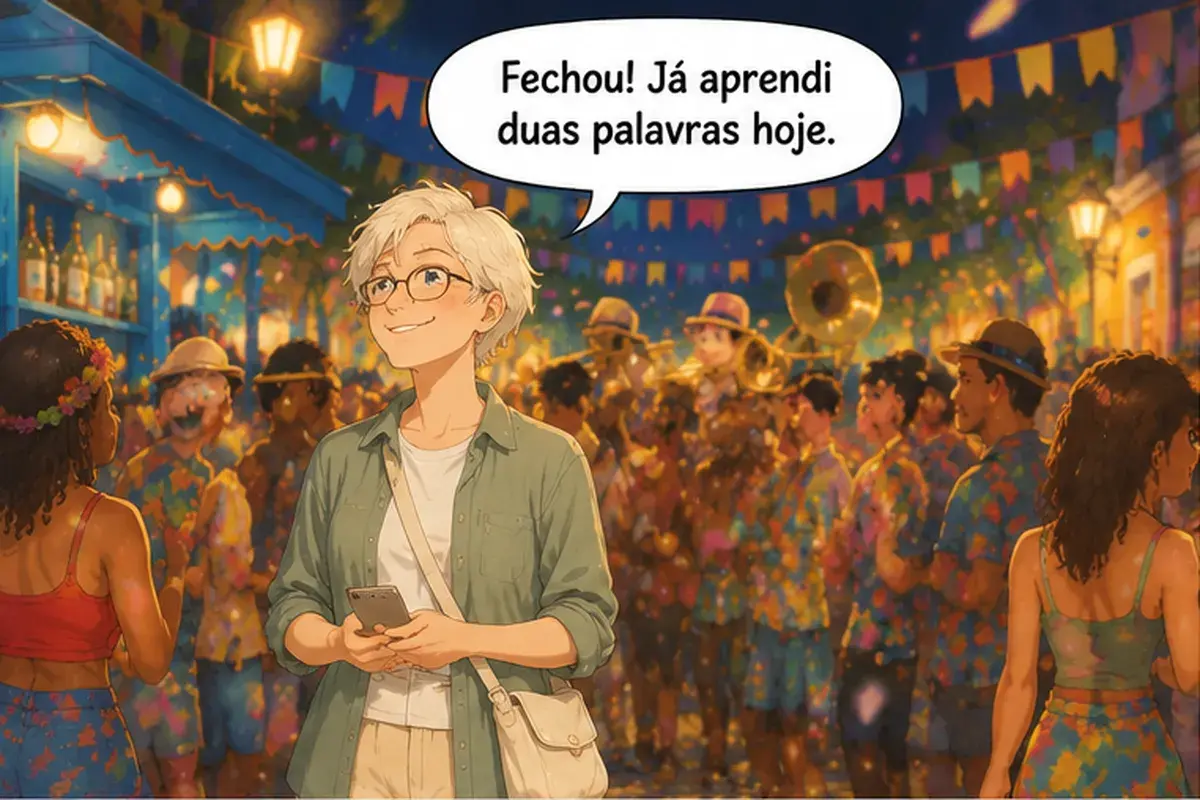
- Nina
Fechou! Já aprendi duas palavras hoje.
Deal! I've already learned two words today.
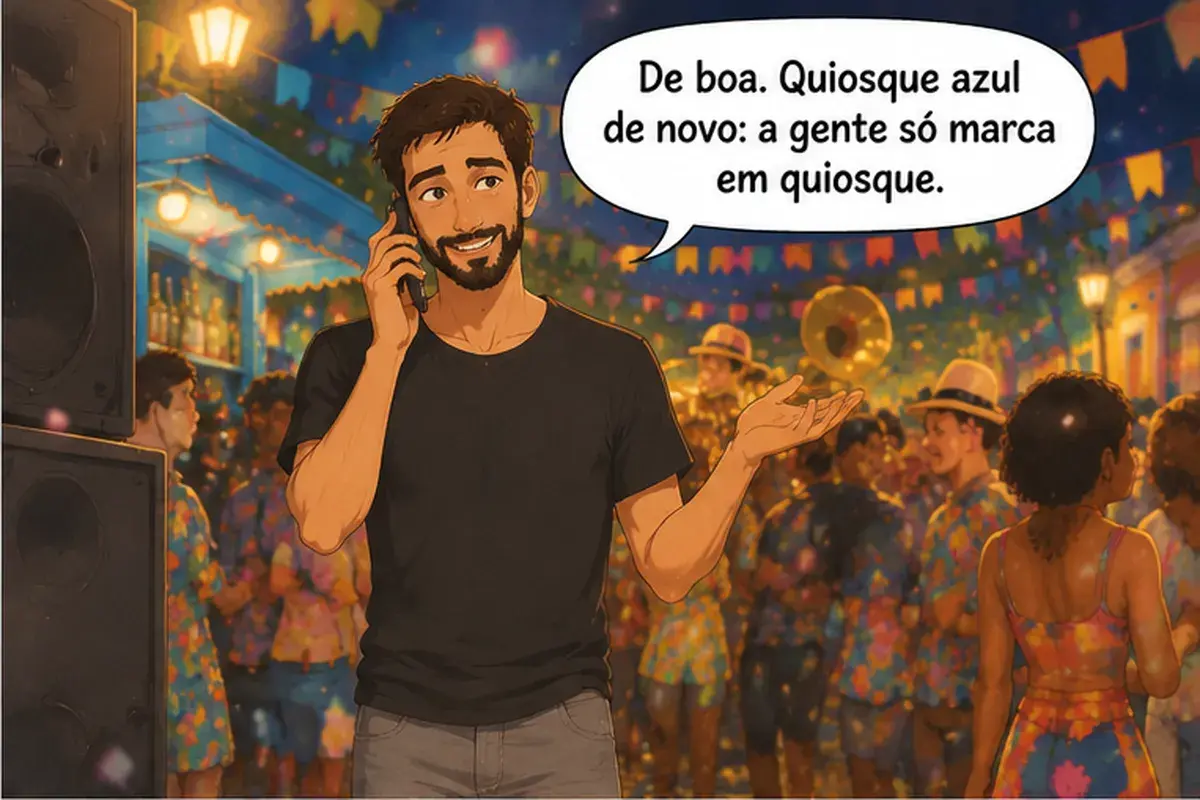
- Léo
De boa. Quiosque azul de novo: a gente só marca em quiosque.
No problem. The blue kiosk again: we only ever arrange to meet at kiosks.

- Bia
Tô chegando!
I'm almost there!
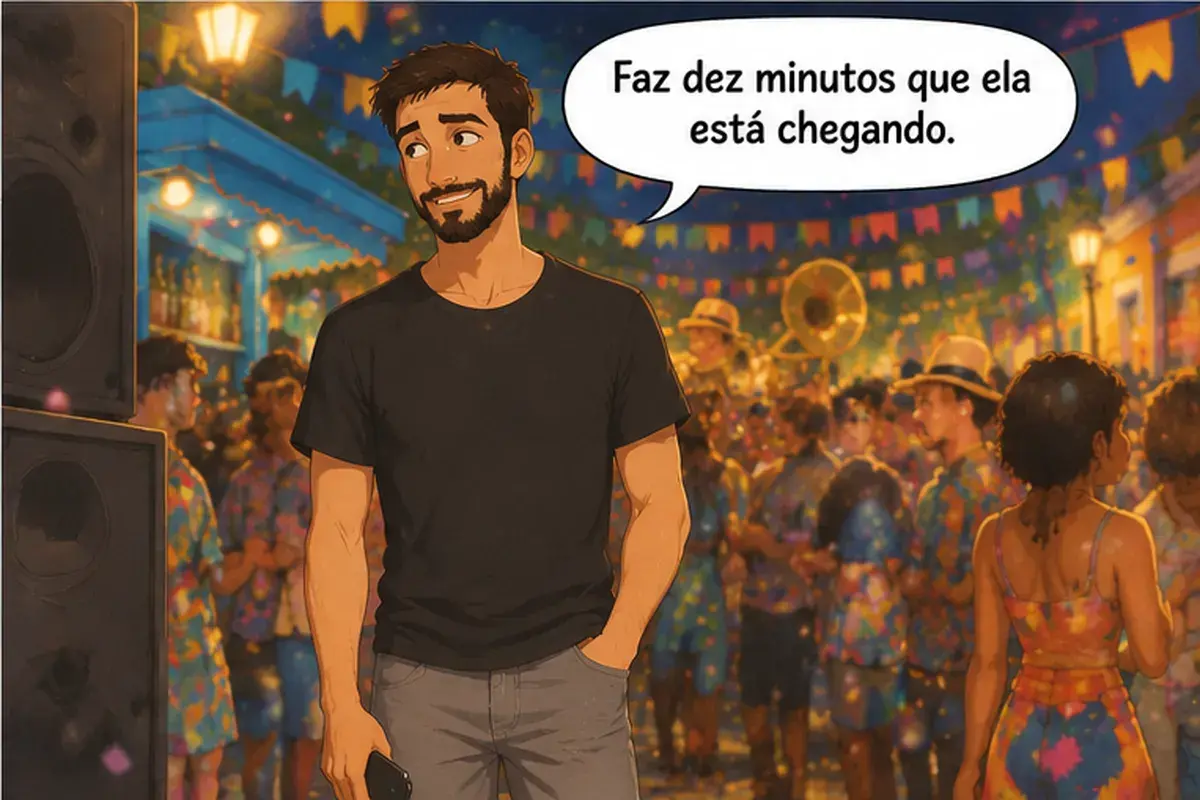
- Léo
Faz dez minutos que ela está chegando.
She's been "almost there" for ten minutes.
Grammar for this text
- Tava com você — tava is casual for estava, the imperfect "was (somewhere)" of estar (unit 11). The es- at the start falls off, just like está → tá. Here tava com você means "I was with you".
- a gente se perdeu — perdeu is the preterite ele / ela form of perder (unit 3); se perder — to get lost, with se before the verb, as in me perdi (unit 5). a gente — we.
- Faz duas horas que eu toco sem parar — faz + length of time + que + present tense: "I've been playing for two hours". English uses the present perfect here, Portuguese the plain present. sem parar — nonstop.
- Todo mundo pro quiosque azul — pro is para and o merged into one word: "everyone to the blue kiosk", with no verb at all. Before a feminine noun it's pra.
- "Partiu" é "bora" — partiu is the preterite ele / ela form of partir (to leave), literally "he left". Among friends it means "let's go!"; Nina takes the word literally and asks: "Did someone leave?"
- Fechou? — fechou is the preterite ele / ela form of fechar (to close), literally "closed". Among friends it means "deal?": the deal is closed.
- Caraca, maneiro and de boa — Rio slang: "wow!", "cool" and "no problem". Only with friends; don't say them to a salesperson or a doctor (see the unit grammar).
Words and grammar of the unit: Don't get lost at Carnival.
Learn the words from the texts with flashcards
In the app, you can tap any word in a text to see its translation, forms and examples, and new words stick with flashcards. 15 minutes a day.
Start for freeEverything is open for free. No card needed to sign up.