

Portuguese dialogue with translation · A1 · 12 lines
Que horas são? What time is it?
Comic · 12 panels
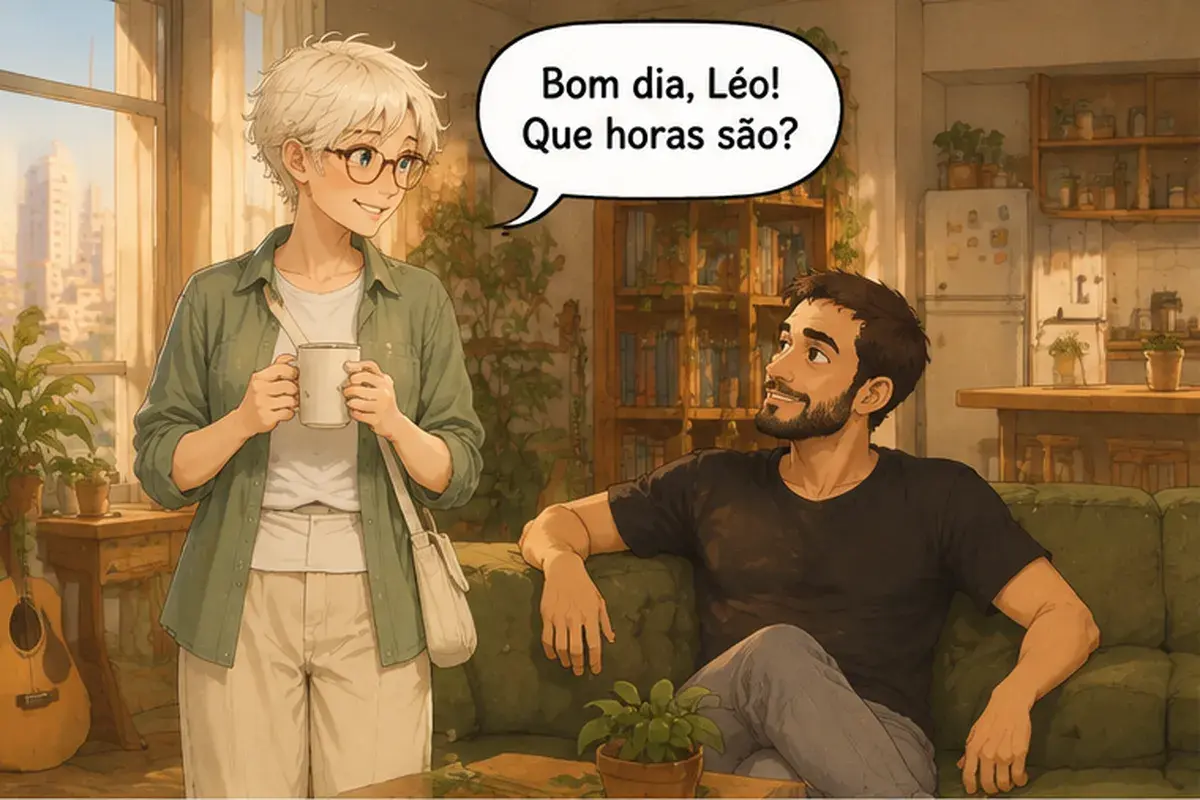
- Nina
Bom dia, Léo! Que horas são?
Good morning, Léo! What time is it?
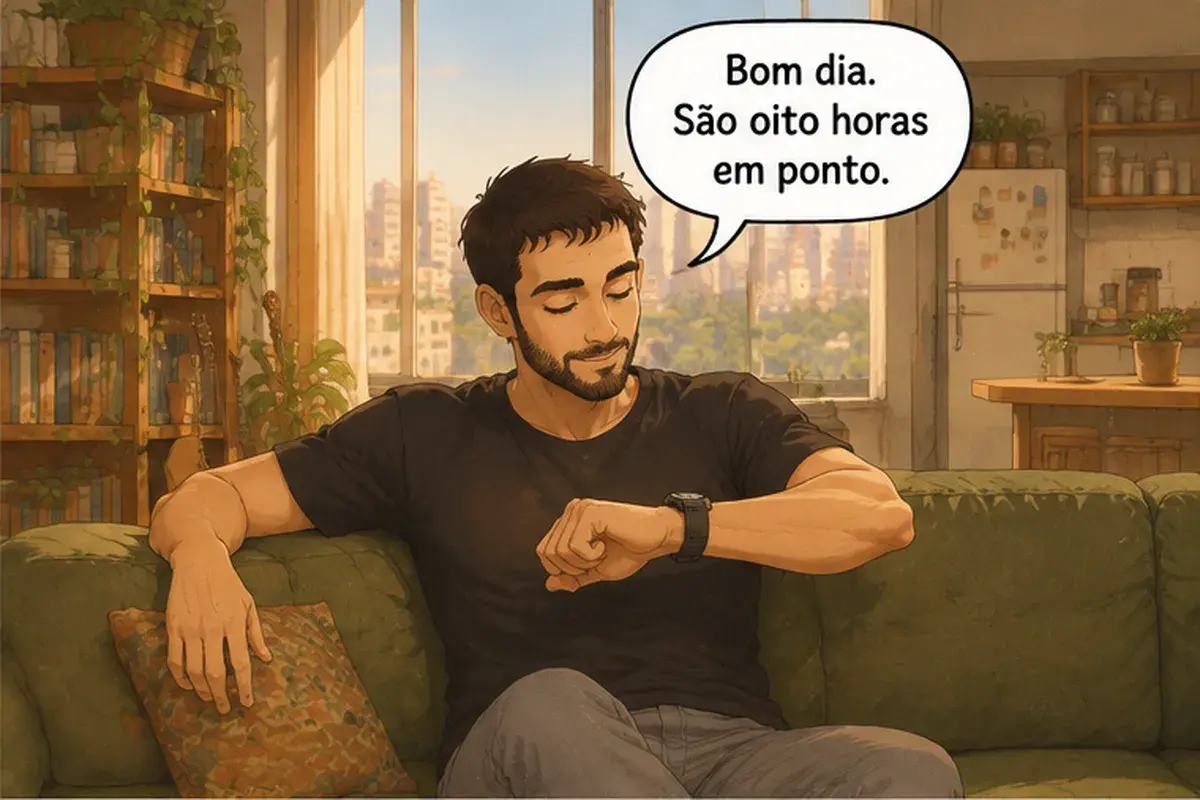
- Léo
Bom dia. São oito horas em ponto.
Good morning. It's eight o'clock sharp.
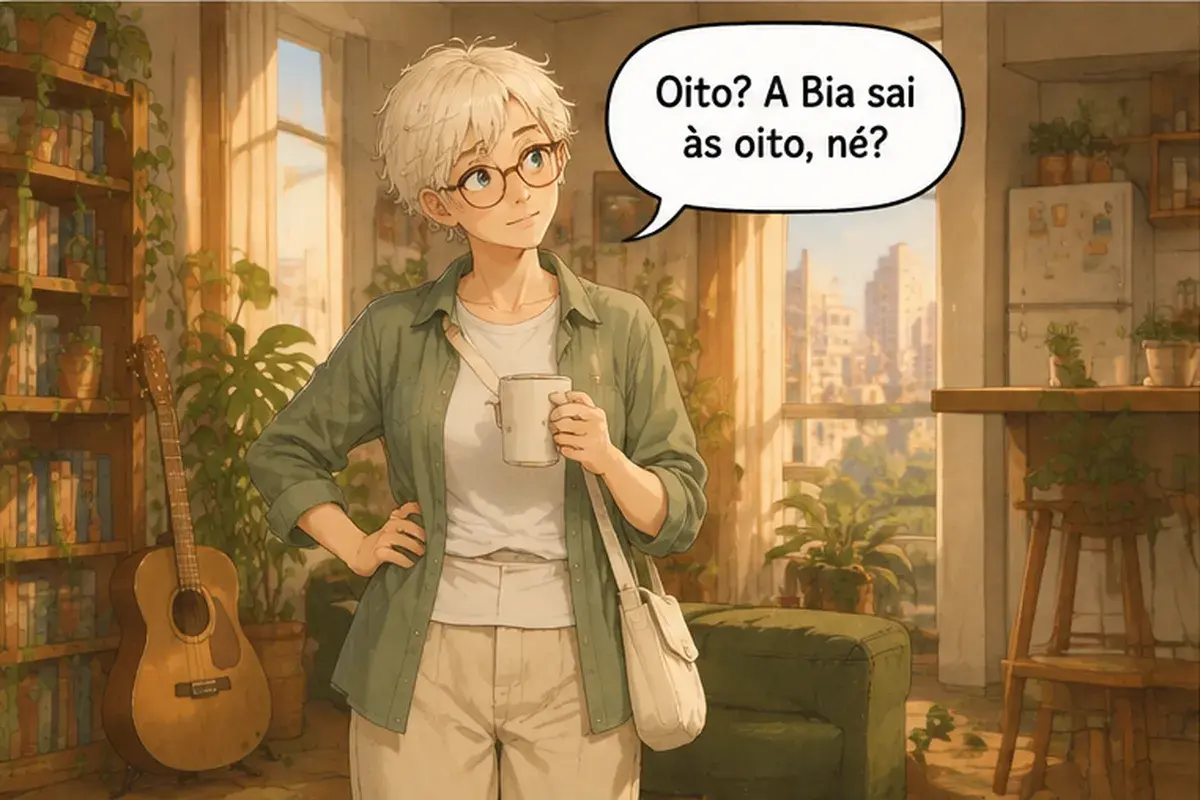
- Nina
Oito? A Bia sai às oito, né?
Eight? Bia leaves at eight, right?
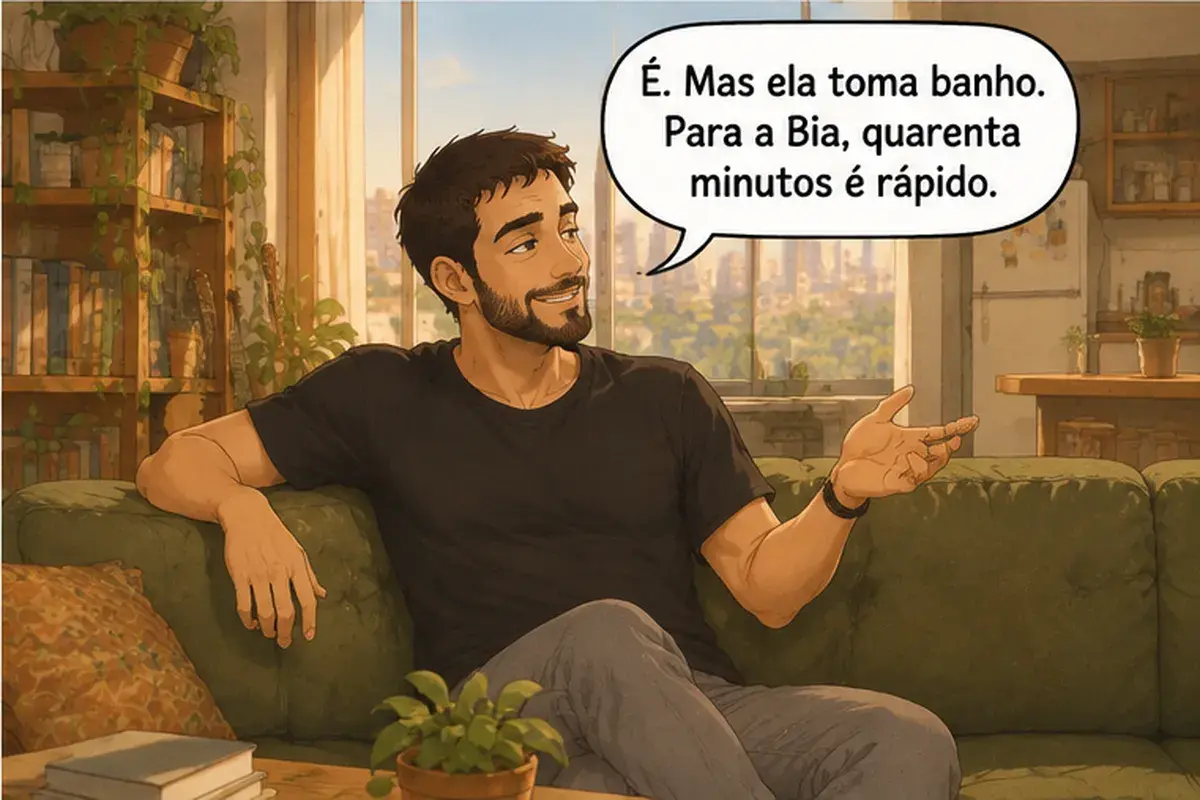
- Léo
É. Mas ela toma banho. Para a Bia, quarenta minutos é rápido.
Yeah. But she's taking a shower. For Bia, forty minutes is quick.
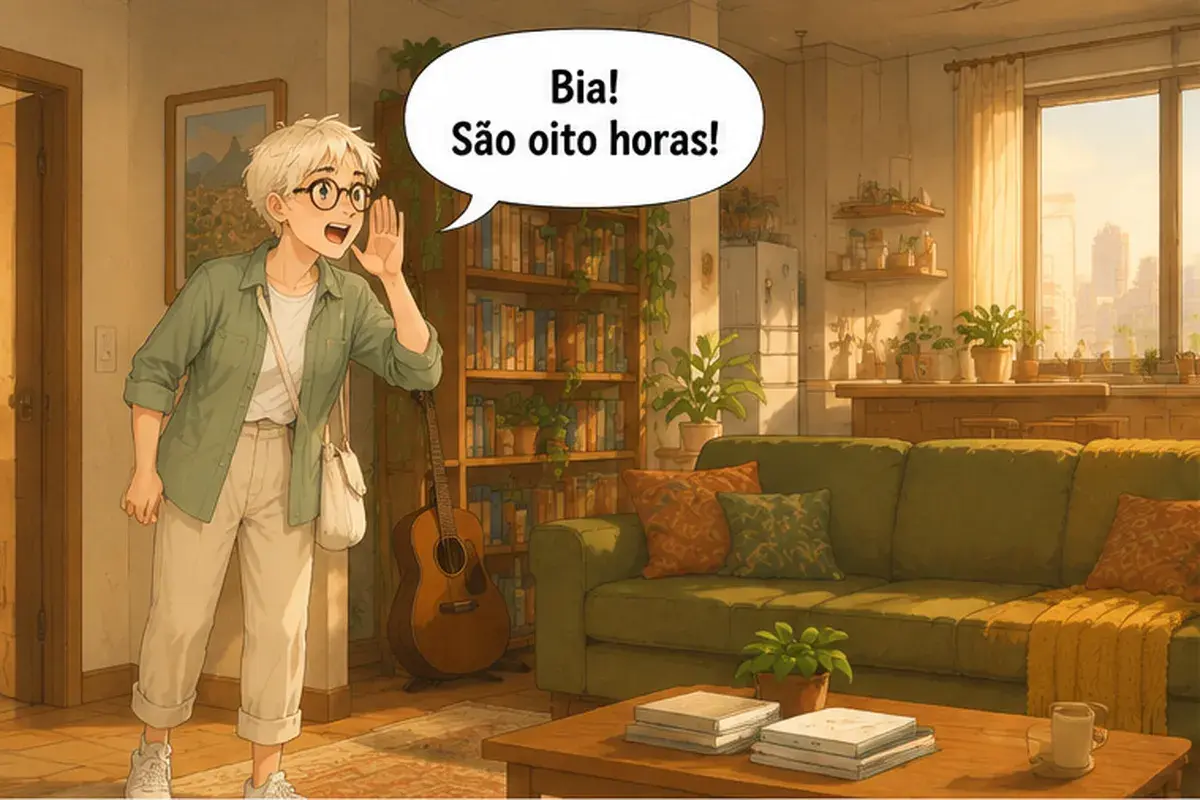
- Nina
Bia! São oito horas!
Bia! It's eight o'clock!
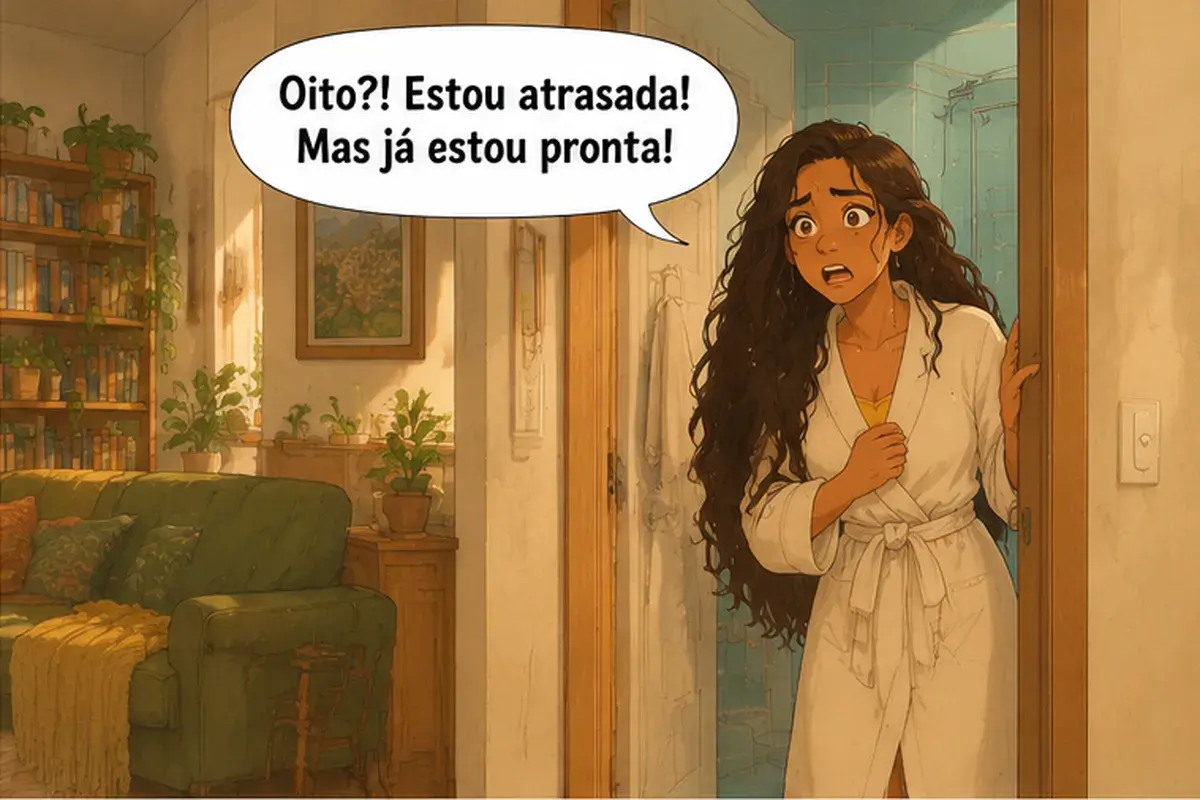
- Bia
Oito?! Estou atrasada! Mas já estou pronta!
Eight?! I'm late! But I'm already ready! (woman speaking)
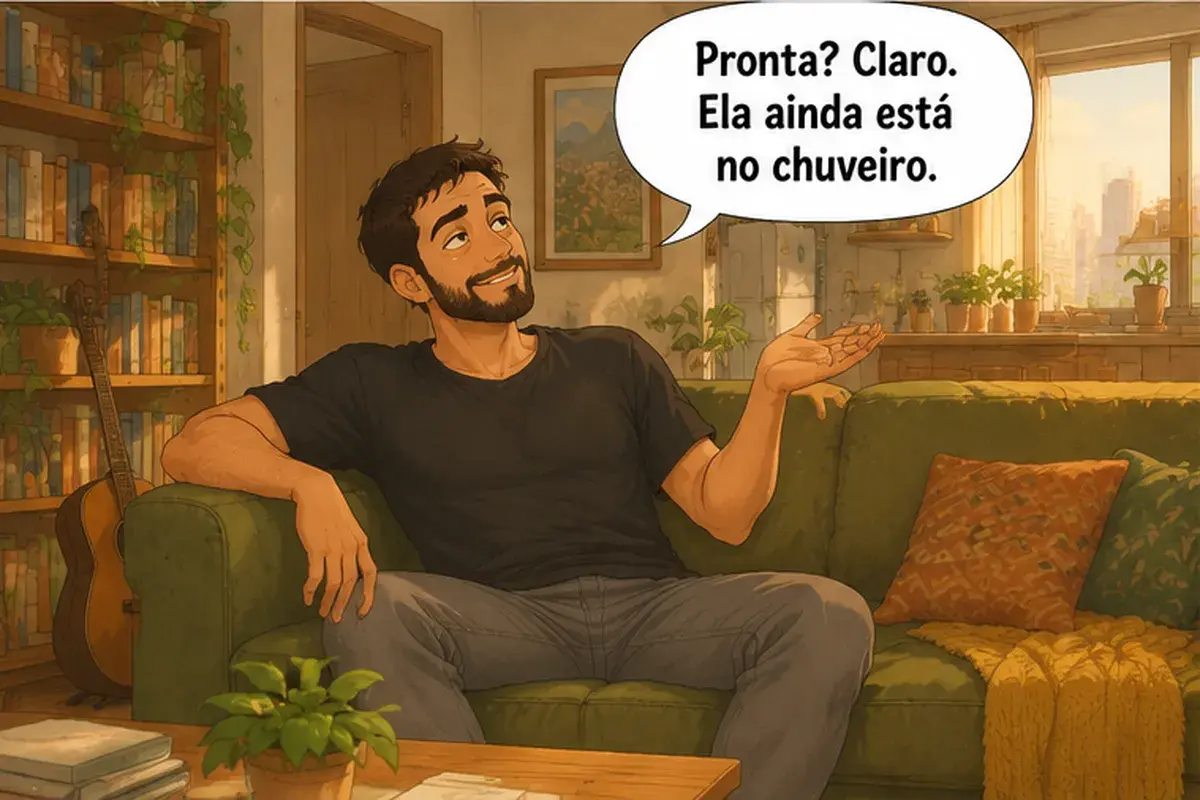
- Léo
Pronta? Claro. Ela ainda está no chuveiro.
Ready? Sure. She's still in the shower.
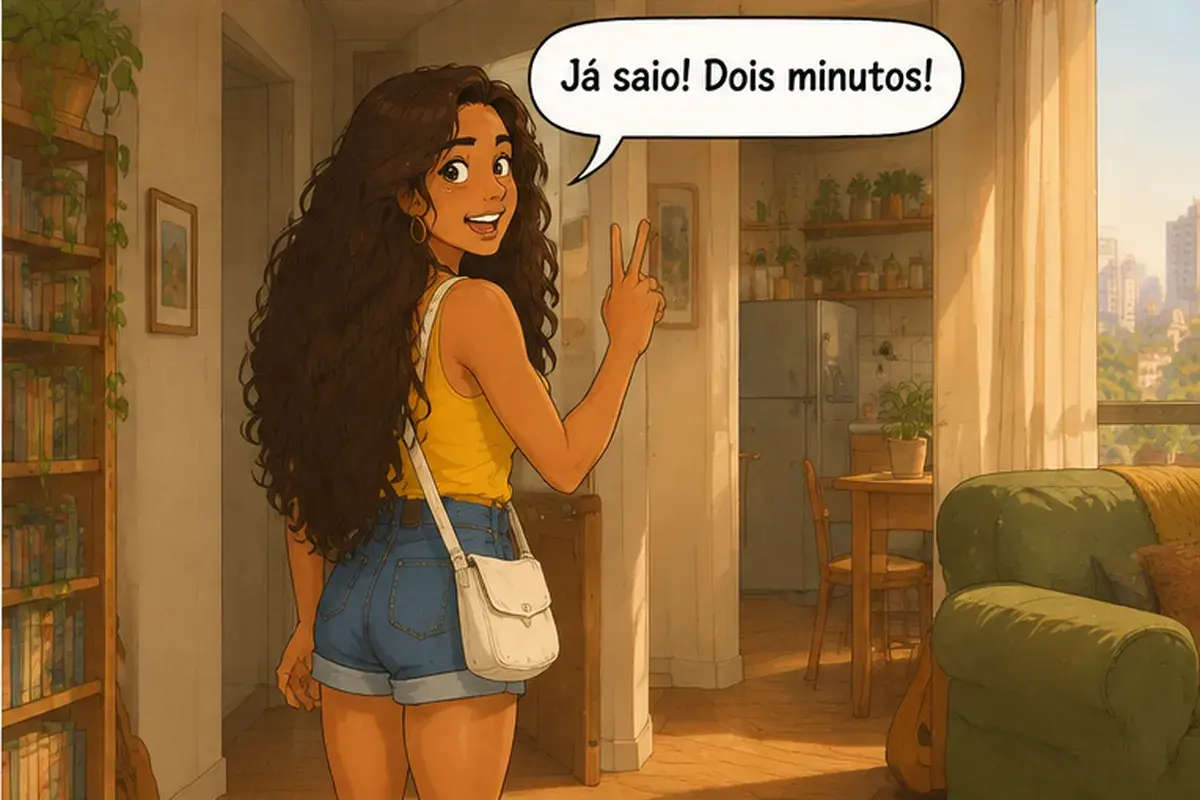
- Bia
Já saio! Dois minutos!
I'm coming out right now! Two minutes!
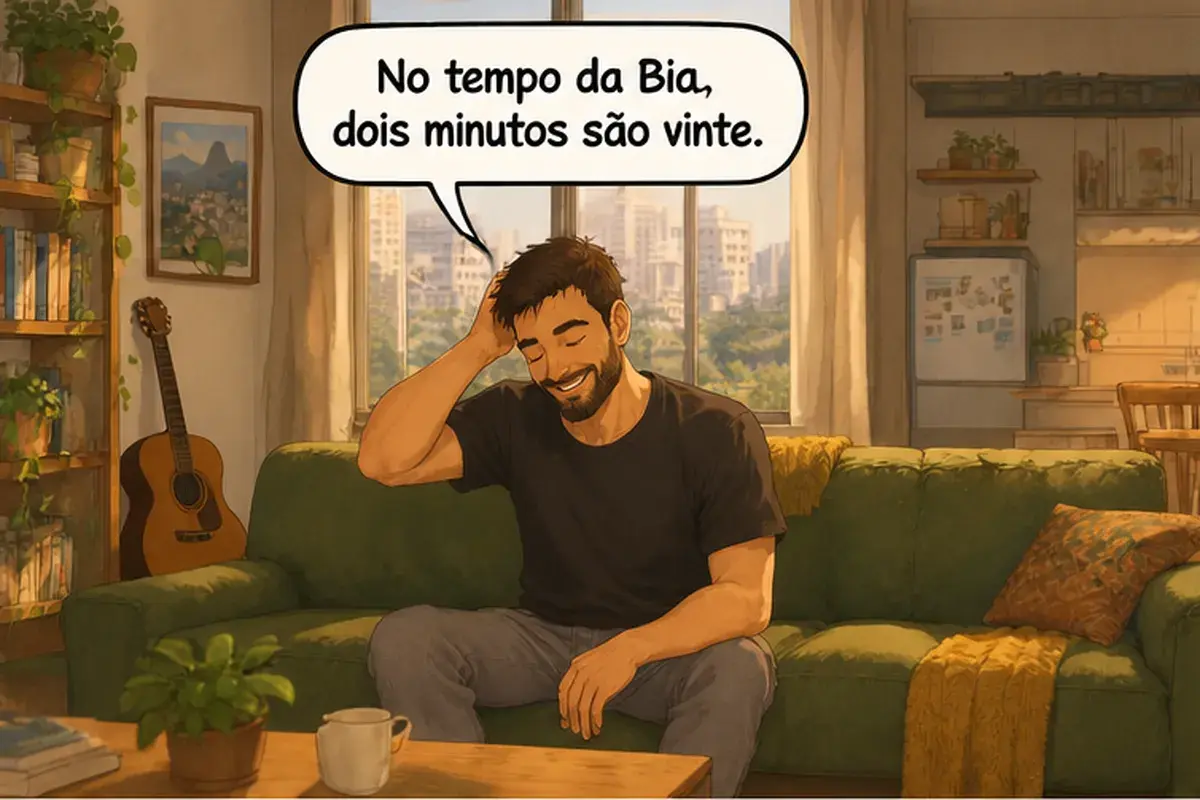
- Léo
No tempo da Bia, dois minutos são vinte.
On Bia time, two minutes are twenty.
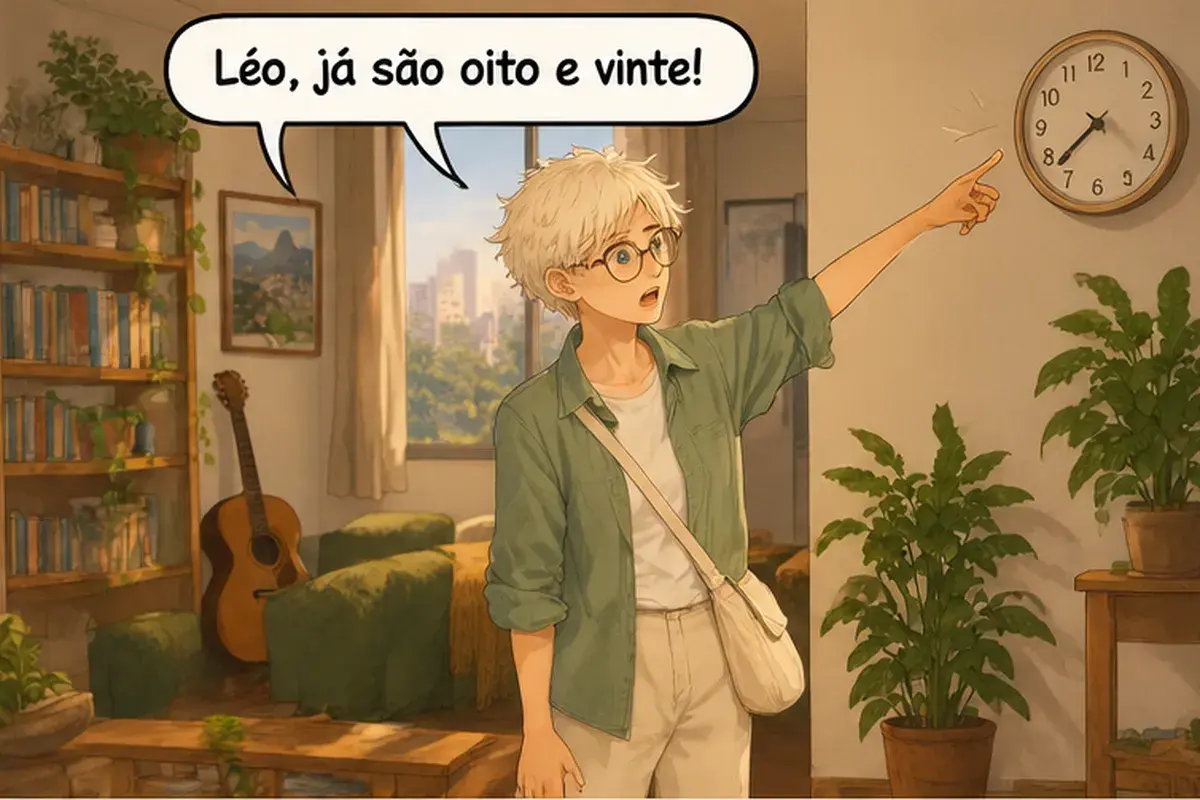
- Nina
Léo, já são oito e vinte!
Léo, it's already eight twenty!
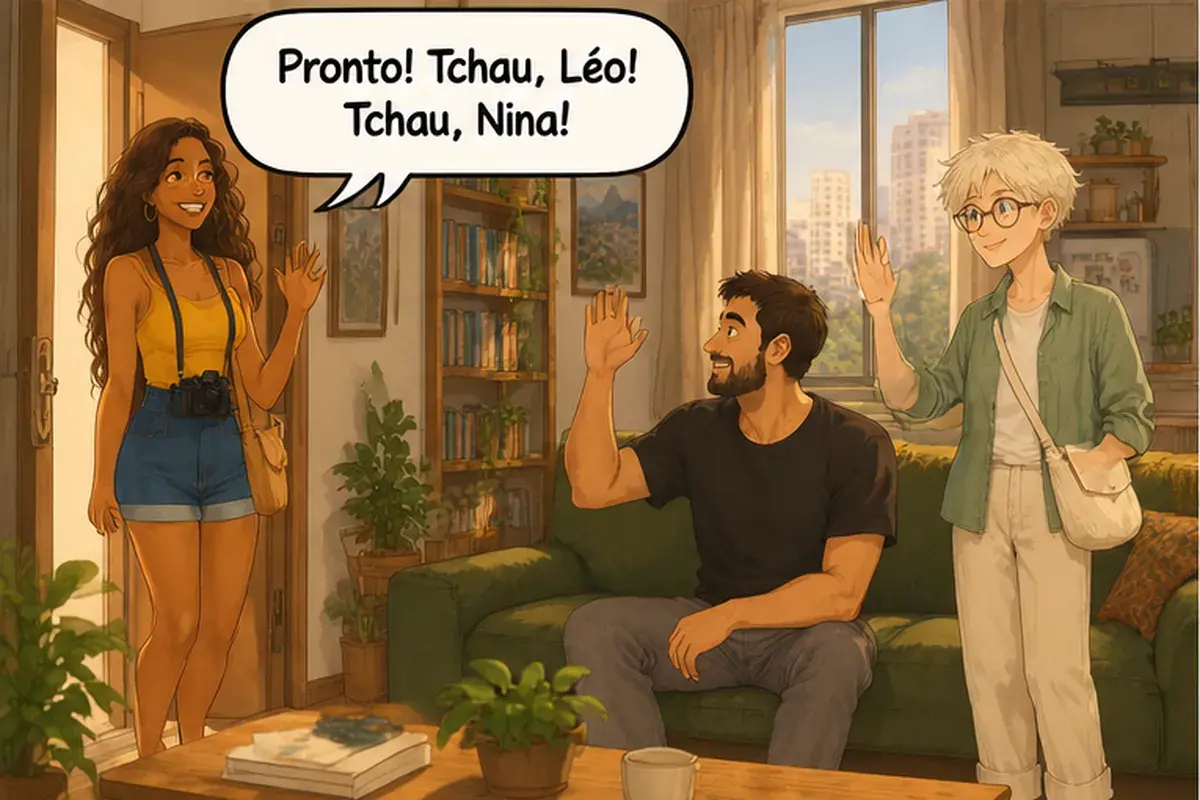
- Bia
Pronto! Tchau, Léo! Tchau, Nina!
Done! Bye, Léo! Bye, Nina!
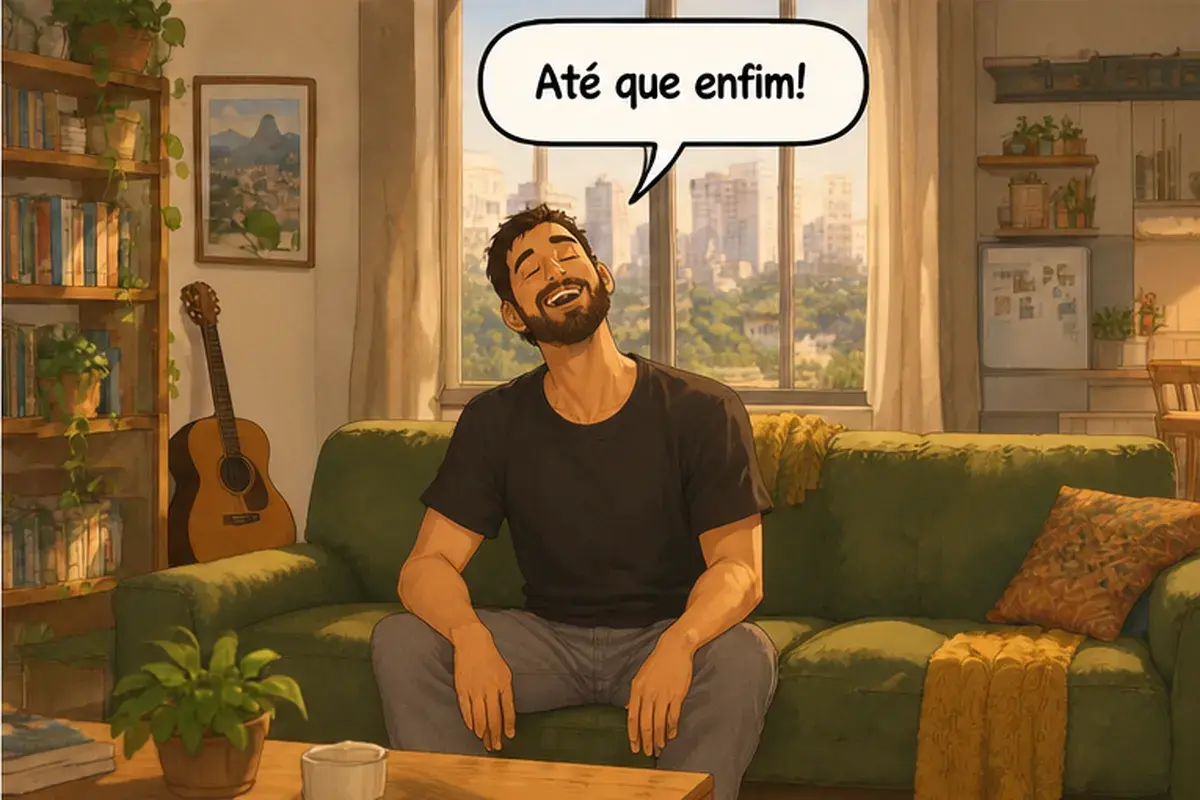
- Léo
Até que enfim!
Finally!
Grammar for this text
- Que horas são? — literally "what hours are (they)?". horas is plural, so the verb is plural too: são (from ser). For one o'clock it's singular: é uma hora (see the unit grammar). São oito horas em ponto — em ponto means "sharp" (literally "on the point").
- A Bia sai às oito — sai is the você / ele / ela form of sair (to leave). às = a + as: "at" with a time (às oito — at eight; for one o'clock the form is different, see the unit grammar).
- Já saio — saio is the eu form of the irregular verb sair. The simple present here means "I'm coming out right now"; já — "right away".
- quarenta minutos é rápido — "forty minutes" is one amount of time, so the verb is singular: é, not são. English does the same: "forty minutes is quick".
- No tempo da Bia — da = de + a. Here tempo is time in general ("by Bia's clock"), not hora. And dois minutos são vinte — "two minutes are twenty".
- Pronto! — "Done!": the masculine form, because it's just an exclamation. When Bia talks about herself, the form is feminine: pronta.
- Até que enfim! — a set phrase, "Finally!", when you've waited a long time.
Words and grammar of the unit: Ask the time and describe your day.
Learn the words from the texts with flashcards
In the app, you can tap any word in a text to see its translation, forms and examples, and new words stick with flashcards. 15 minutes a day.
Start for freeEverything is open for free. No card needed to sign up.