
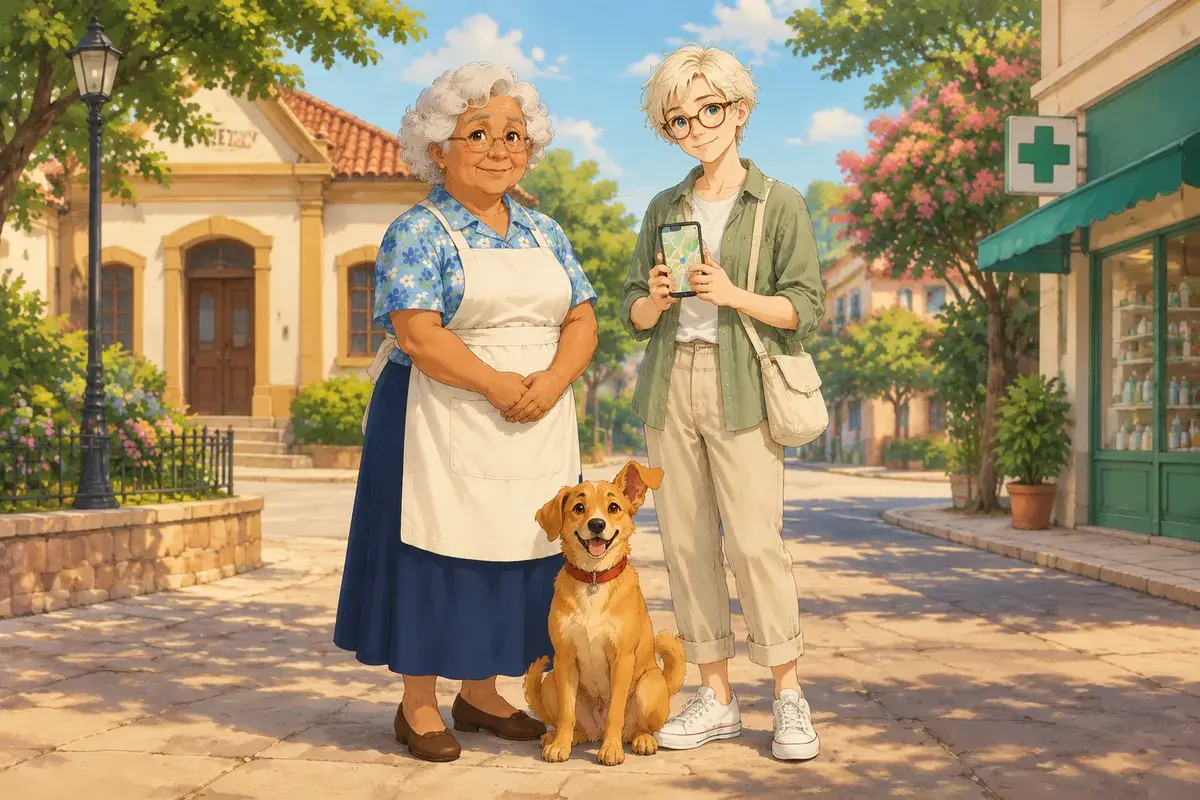
Portuguese dialogue with translation · A1 · 10 lines
Eu vou ao centro I'm going downtown
Comic · 7 panels
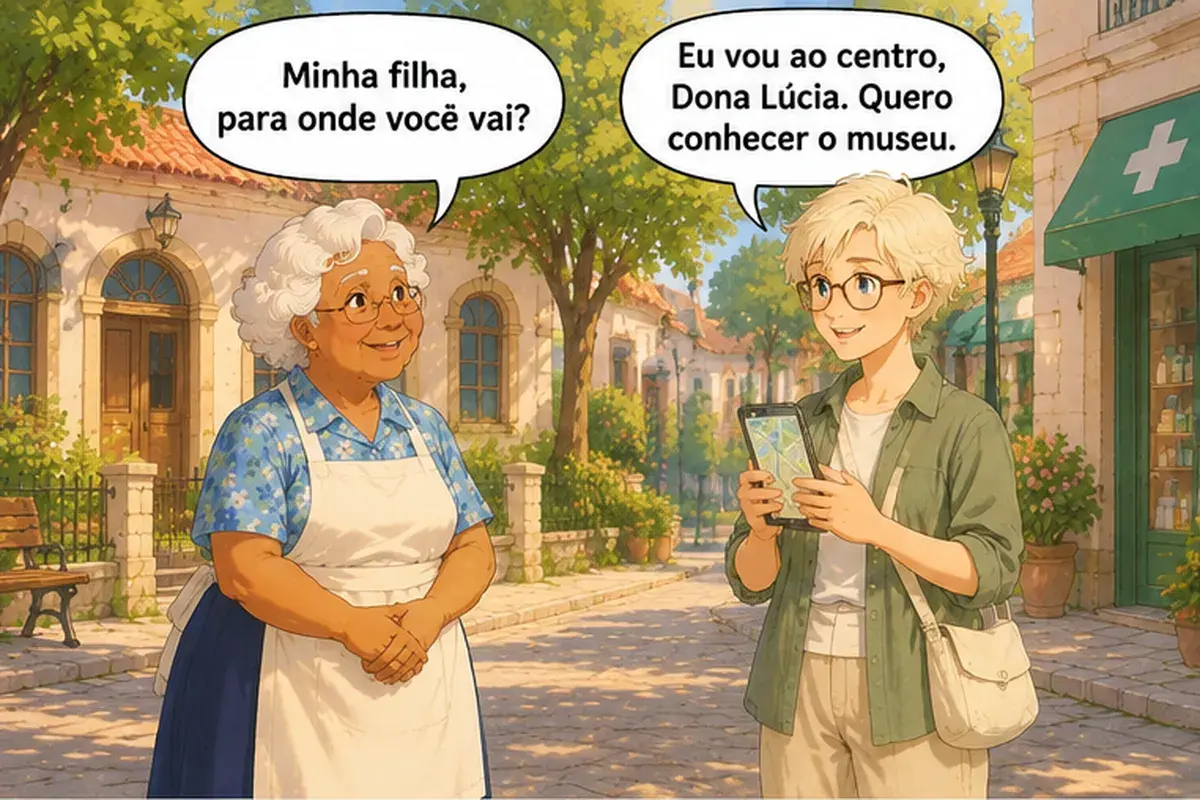
- Dona Lúcia
Minha filha, para onde você vai?
Dear, where are you going?
- Nina
Eu vou ao centro, Dona Lúcia. Quero conhecer o museu.
I'm going downtown, Dona Lúcia. I want to visit the museum.
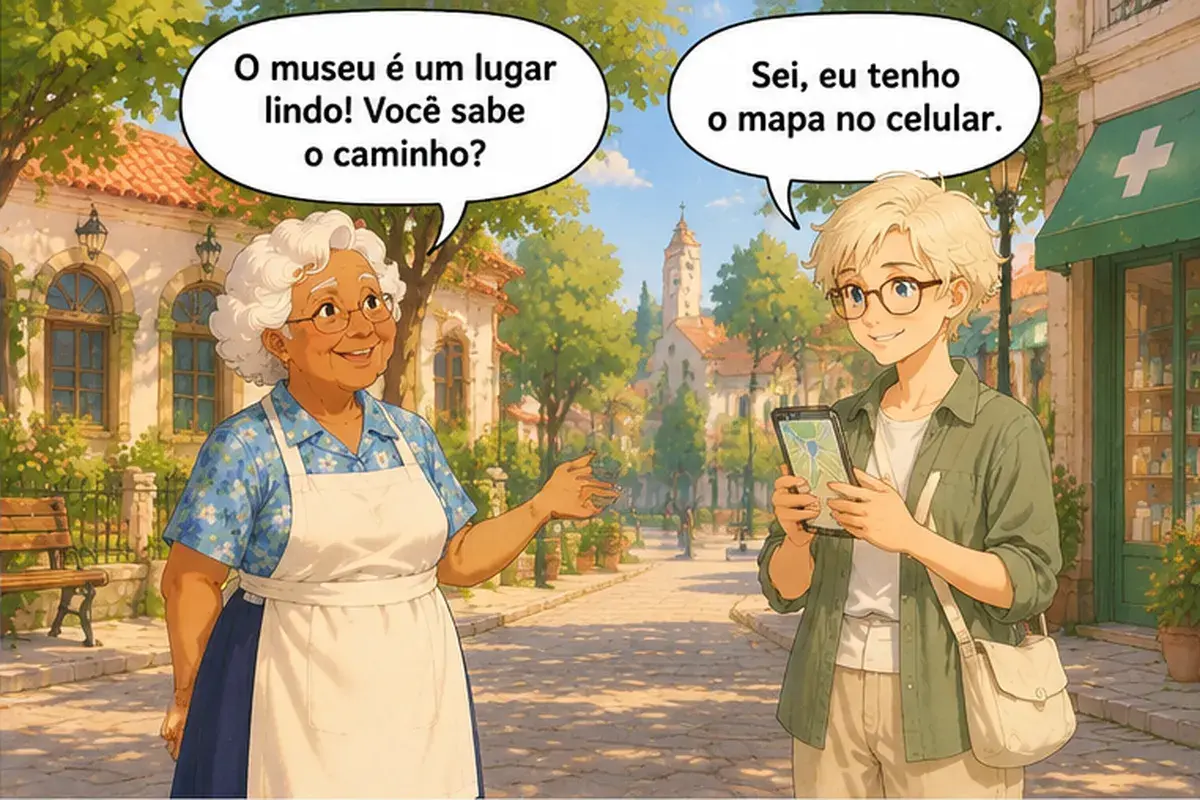
- Dona Lúcia
O museu é um lugar lindo! Você sabe o caminho?
The museum is a beautiful place! Do you know the way?
- Nina
Sei, eu tenho o mapa no celular.
I do, I have the map on my phone.
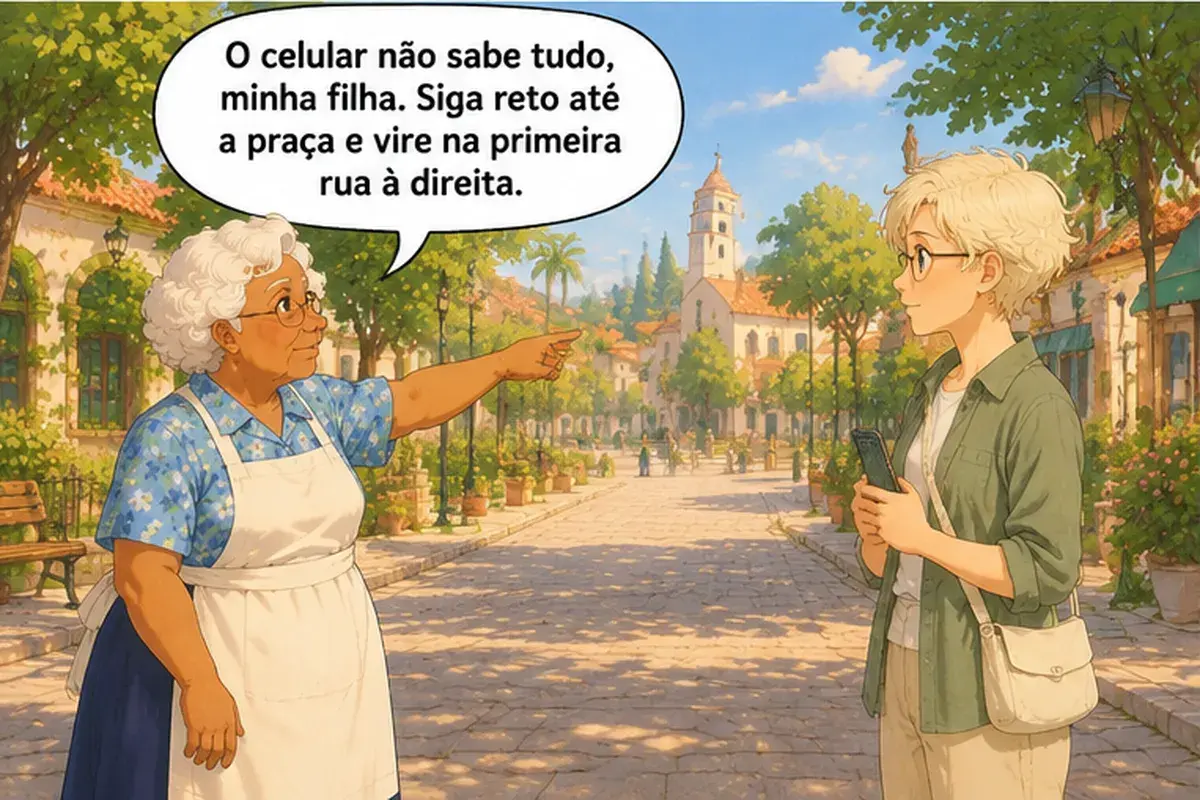
- Dona Lúcia
O celular não sabe tudo, minha filha. Siga reto até a praça e vire na primeira rua à direita.
The phone doesn't know everything, dear. Go straight ahead to the square and turn right at the first street.
- Nina
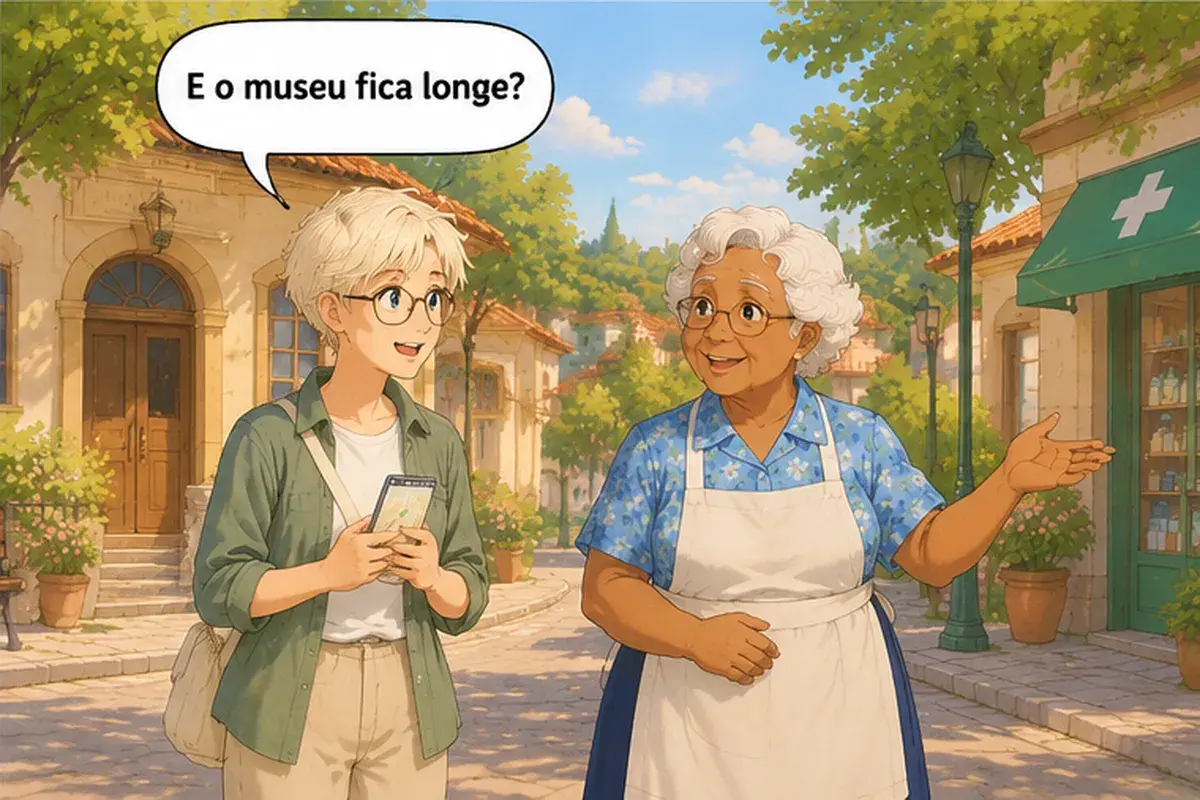
E o museu fica longe?
And is the museum far?
- Dona Lúcia
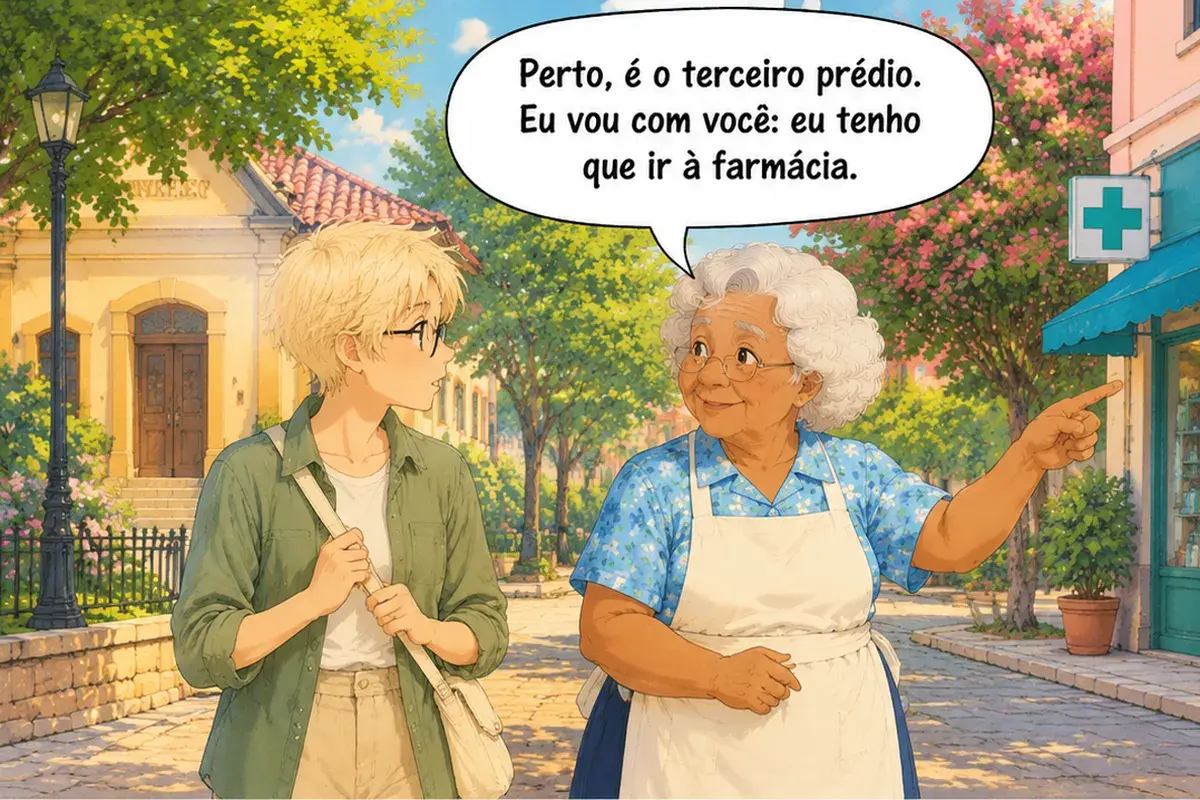
Perto, é o terceiro prédio. Eu vou com você: eu tenho que ir à farmácia.
It's close, it's the third building. I'll go with you: I have to go to the pharmacy.
- Nina
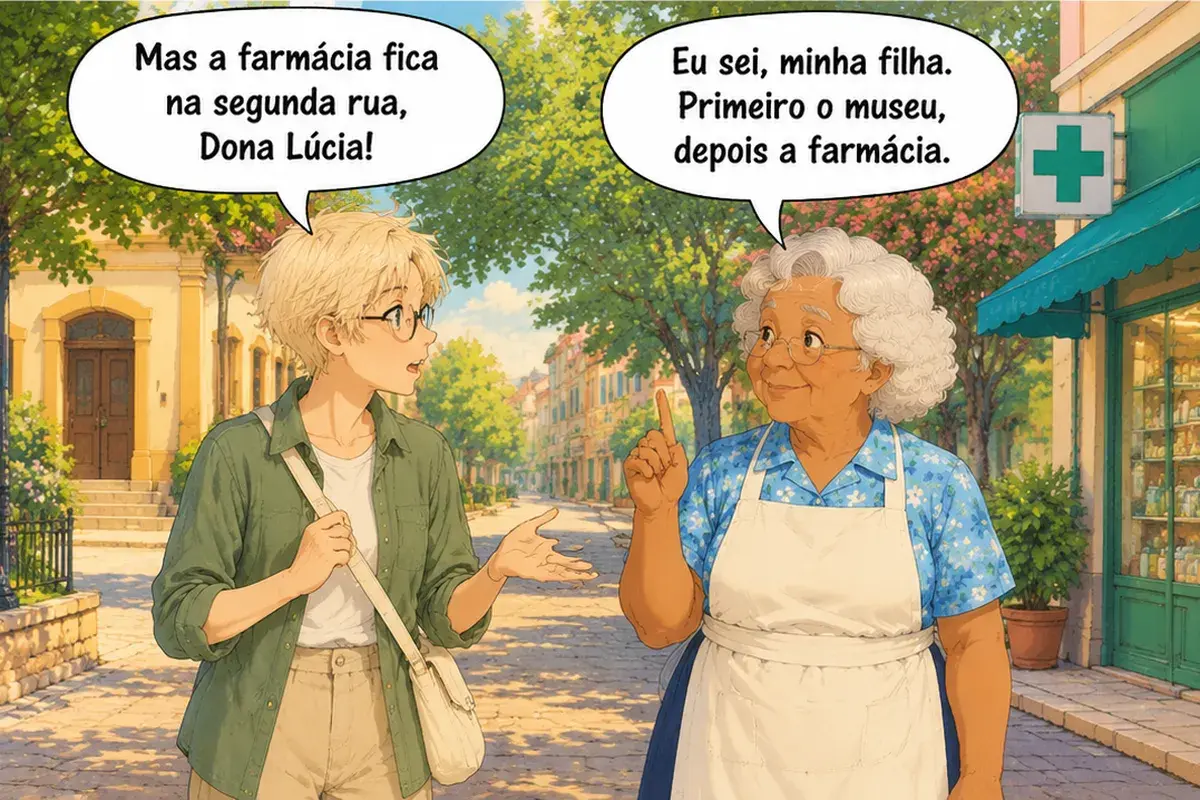
Mas a farmácia fica na segunda rua, Dona Lúcia!
But the pharmacy is on the second street, Dona Lúcia!
- Dona Lúcia
Eu sei, minha filha. Primeiro o museu, depois a farmácia.
I know, dear. First the museum, then the pharmacy.
- Nina
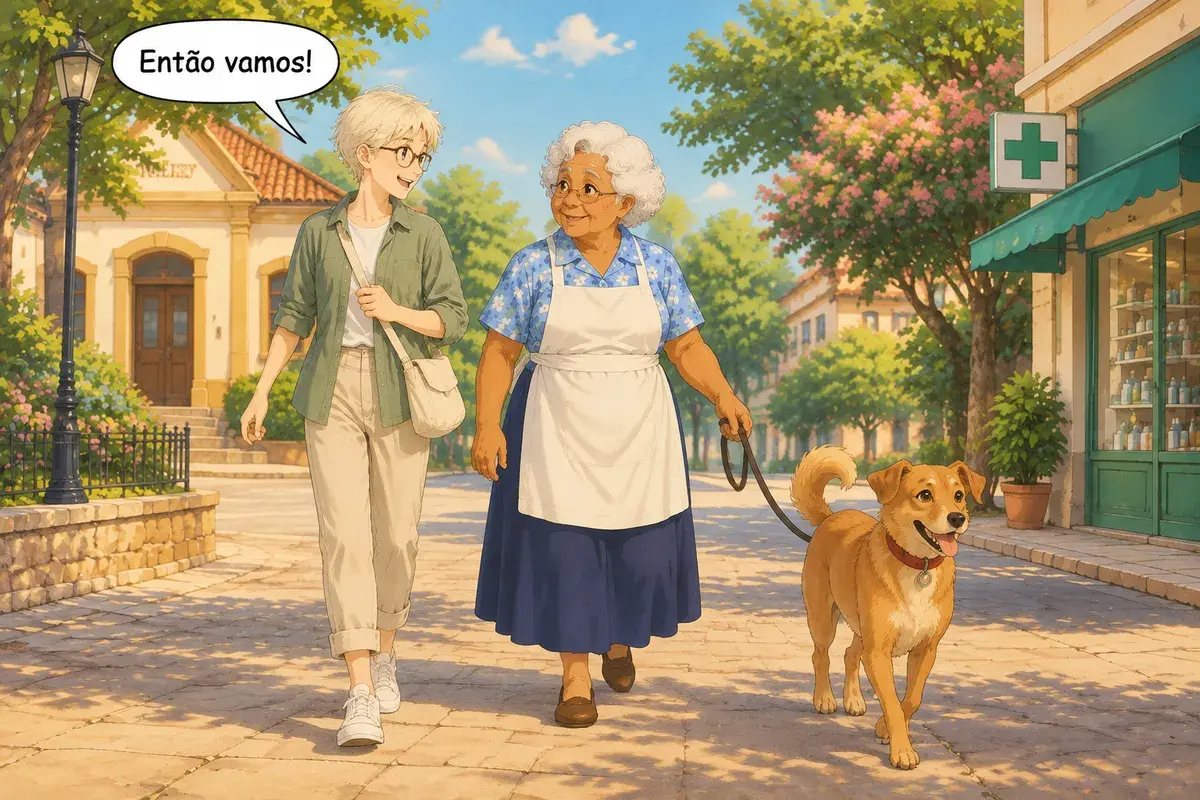
Então vamos!
Let's go, then!
Grammar for this text
- Minha filha, para onde você vai? — vai is the você / ele / ela form of ir: irregular. para onde — where to (literally "to where"). minha filha — literally "my daughter": a warm way older people talk to a young woman, like "dear".
- Eu vou ao centro — vou is the eu form of ir. ao = a + o: after ir comes a preposition meaning "to"; no answers "where?".
- Sei, eu tenho o mapa no celular. — sei is the eu form of saber: irregular. A short answer is just the verb: "I do" (literally "I know").
- O celular não sabe tudo, minha filha. Siga reto até a praça e vire na primeira rua à direita. — sabe is the você / ele / ela form of saber; siga and vire are commands from seguir and virar: in the eu form (sigo, viro) the final -o became -a and -e. Dona Lúcia talks to Nina as você and still uses this polite command (the full topic comes at A2). primeira is feminine, like rua; na = em + a.
- Eu vou com você: eu tenho que ir à farmácia. — vou com você — I'll go with you. tenho que ir — I have to go; à = a + a: "to the pharmacy".
- Quero conhecer o museu. — conhecer with a place means to see it for the first time, to visit it.
- Então vamos! — vamos is the nós form of ir. On its own it's often an invitation: "let's go!".
Words and grammar of the unit: Ask for directions and take the subway.
Learn the words from the texts with flashcards
In the app, you can tap any word in a text to see its translation, forms and examples, and new words stick with flashcards. 15 minutes a day.
Start for freeEverything is open for free. No card needed to sign up.