

Portuguese dialogue with translation · A1 · 14 lines
O que a gente come hoje? What are we eating today?
Comic · 8 panels

- Léo
Pessoal, estou com muita fome! O que a gente come hoje?
Guys, I'm really hungry! What are we eating today?
- Bia
Eu também! Olha na geladeira.
Me too! Look in the fridge.
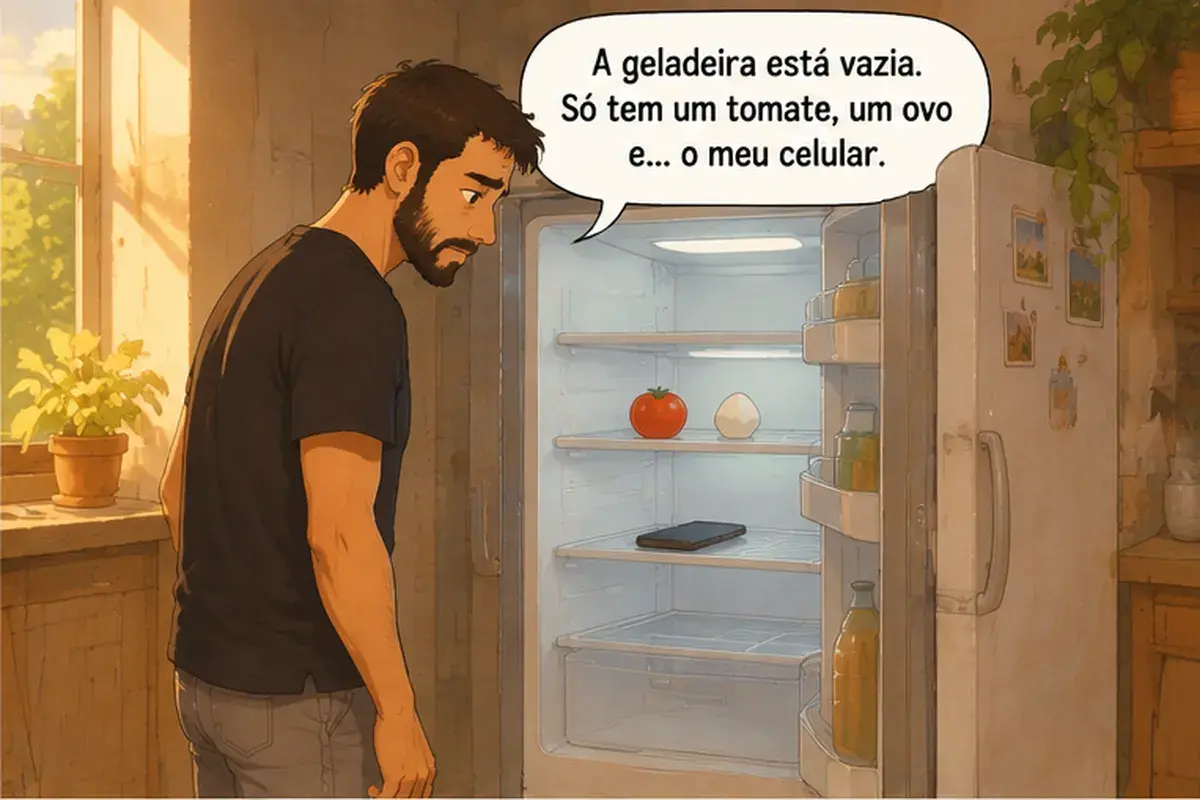
- Léo
A geladeira está vazia. Só tem um tomate, um ovo e... o meu celular.
The fridge is empty. There's only a tomato, an egg and... my phone.
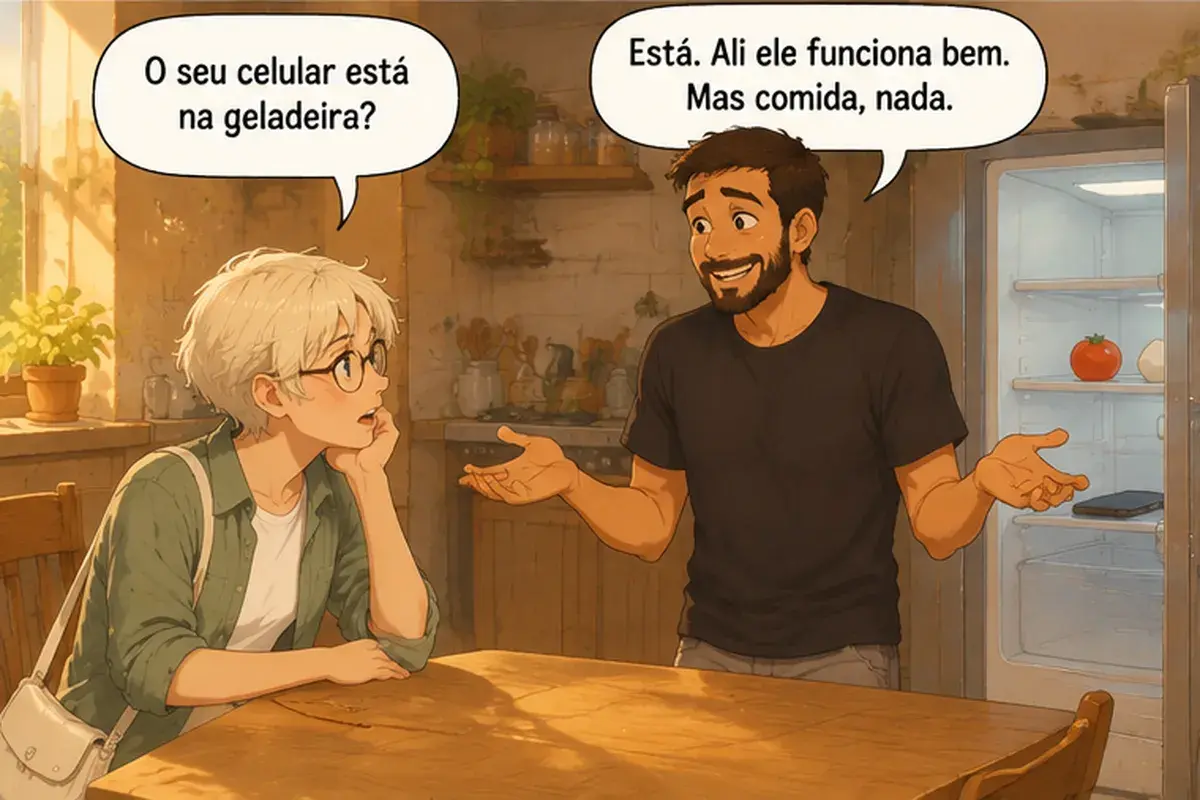
- Nina
O seu celular está na geladeira?
Your phone is in the fridge?
- Léo
Está. Ali ele funciona bem. Mas comida, nada.
Yes, it is. It works well in there. But food? Nothing.

- Bia
No armário tem arroz e feijão. Com ovo e salada, é comida de brasileiro!
There's rice and beans in the cupboard. With egg and salad, it's Brazilian food!

- Léo
Eu adoro carne! Cadê o frango?
I love meat! Where's the chicken?
- Bia
Aqui não tem frango. E eu não como carne, sou vegetariana!
There's no chicken here. And I don't eat meat, I'm a vegetarian! (woman speaking)

- Nina
Para mim, está bom. Eu gosto de arroz e feijão.
For me, that's fine. I like rice and beans.
- Léo
Quem cozinha? Eu não cozinho. Eu como.
Who's cooking? I don't cook. I eat.

- Bia
Eu também não cozinho hoje! Nina, você cozinha?
I'm not cooking today either! Nina, are you cooking?
- Nina
Tá bom! Eu cozinho. Eu coloco sal na salada.
OK! I'll cook. I'm putting salt on the salad.

- Bia
Nina, isso não é sal, é açúcar!
Nina, that's not salt, it's sugar!
- Léo
Eu gosto da salada doce. Amanhã a Nina cozinha também!
I like the sweet salad. Tomorrow Nina's cooking too!
Grammar for this text
- estou com muita fome — literally "I'm with a lot of hunger". Portuguese has no verb "to be hungry": you say estar com fome. Estou is the eu form of estar (unit 4). It's muita, not muito, because fome is feminine. More in unit 12.
- O que a gente come hoje? — a gente means "we", but the verb is in the ele / ela form: come, not comemos.
- Olha na geladeira — olha here means "look!": the casual command is the same as the você / ele / ela form of olhar (to look). The same goes for come, entra, espera. The rule comes at A2. na = em + a.
- eu não como carne — here como means "I eat" (from comer), not "how". Não goes before the verb.
- Eu gosto da salada doce — after gostar there's always de, and de + a = da: Léo likes this particular salad. Rice and beans are liked in general, so there's no article: Eu gosto de arroz e feijão.
- Eu também não cozinho hoje — também não means "not... either": first também, then não, then the verb.
- Para mim, está bom — after a preposition, eu becomes mim: para mim, just as English says "for me", not "for I".
Words and grammar of the unit: Decide what to cook for dinner.
Learn the words from the texts with flashcards
In the app, you can tap any word in a text to see its translation, forms and examples, and new words stick with flashcards. 15 minutes a day.
Start for freeEverything is open for free. No card needed to sign up.