
Portuguese story with translation · A1 · 14 lines
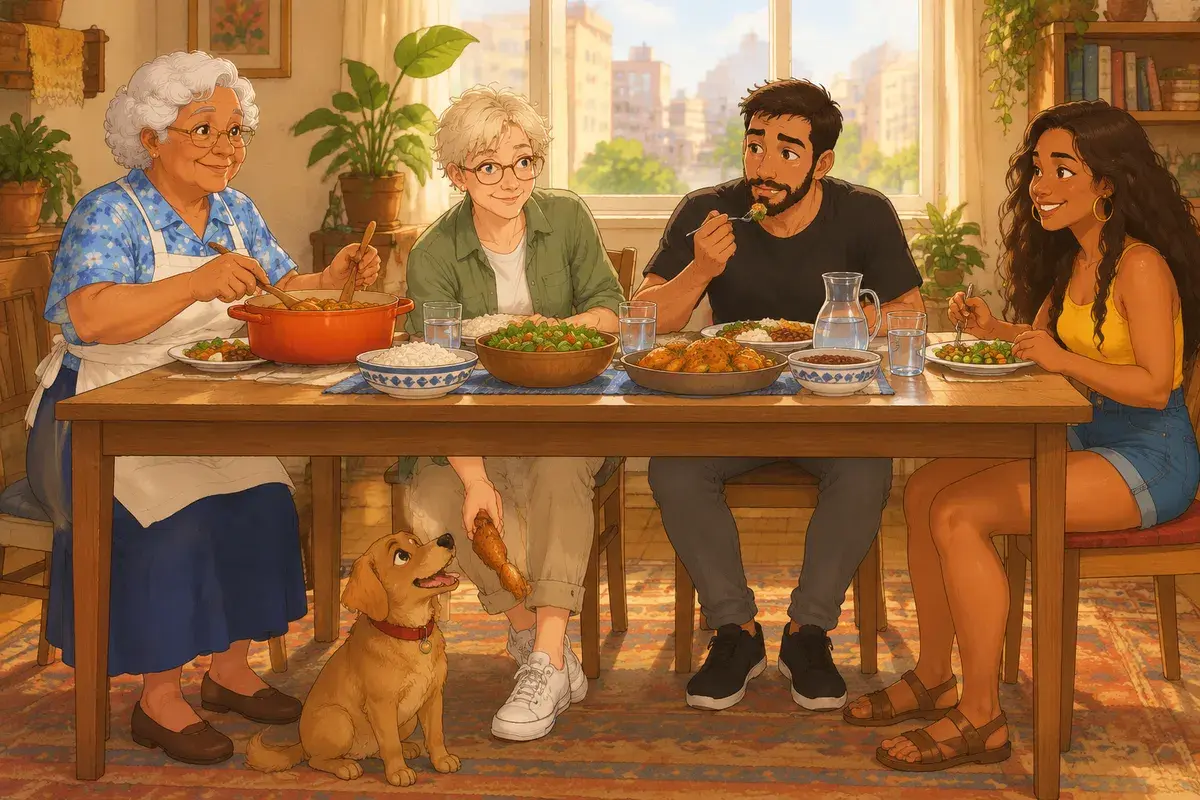
Come mais, minha filha! Eat some more, dear!
Comic · 9 panels
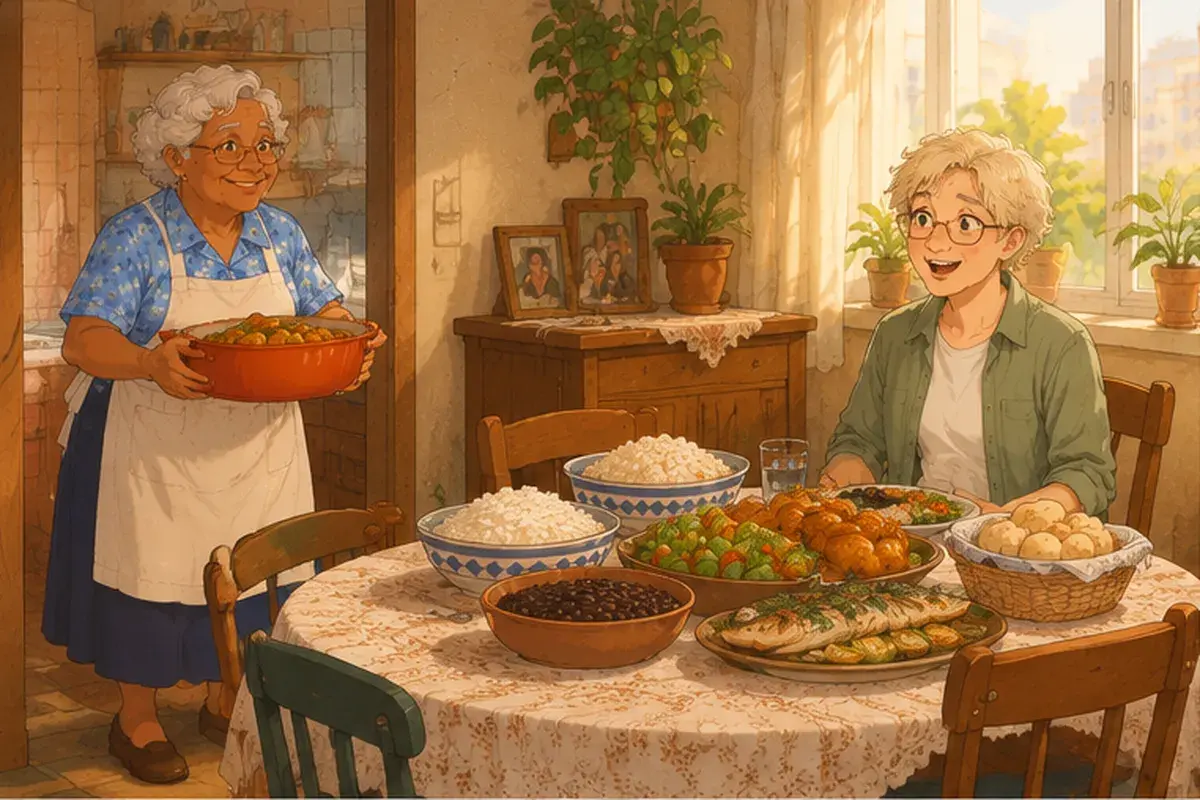
Hoje tem almoço na casa da Dona Lúcia, no apartamento 22.
Today there's lunch at Dona Lúcia's place, in apartment 22.
Na mesa tem tudo: arroz, feijão, frango, peixe, salada e pão de queijo.
There's everything on the table: rice, beans, chicken, fish, salad and pão de queijo.
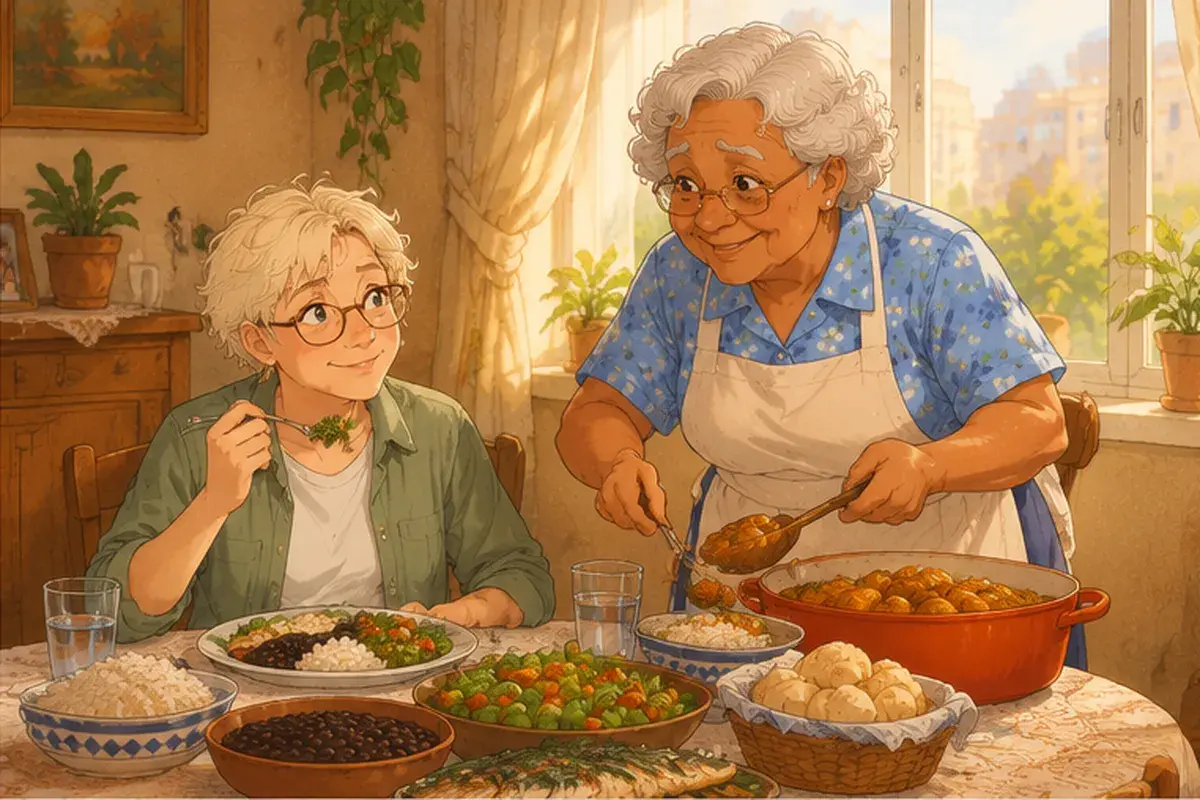
Eu como arroz, feijão e salada. A Dona Lúcia olha para mim: «Isso é tudo? Come mais, minha filha!»
I eat rice, beans and salad. Dona Lúcia looks at me: "Is that all? Eat some more, dear!"
Eu como um pouco de frango. «Come mais!», ela fala.
I eat a little chicken. "Eat more!" she says.
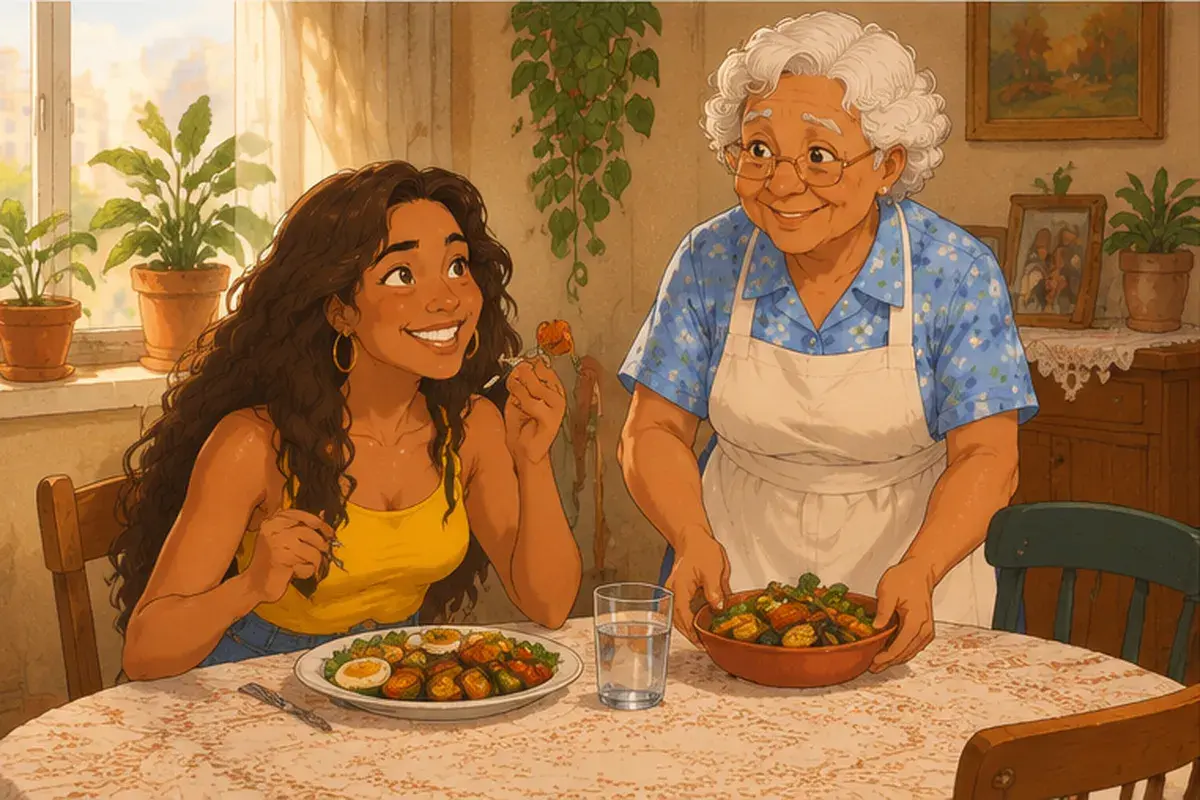
A Bia é vegetariana. Para ela, a Dona Lúcia cozinha legumes e ovo.
Bia is a vegetarian. For her, Dona Lúcia cooks vegetables and eggs.
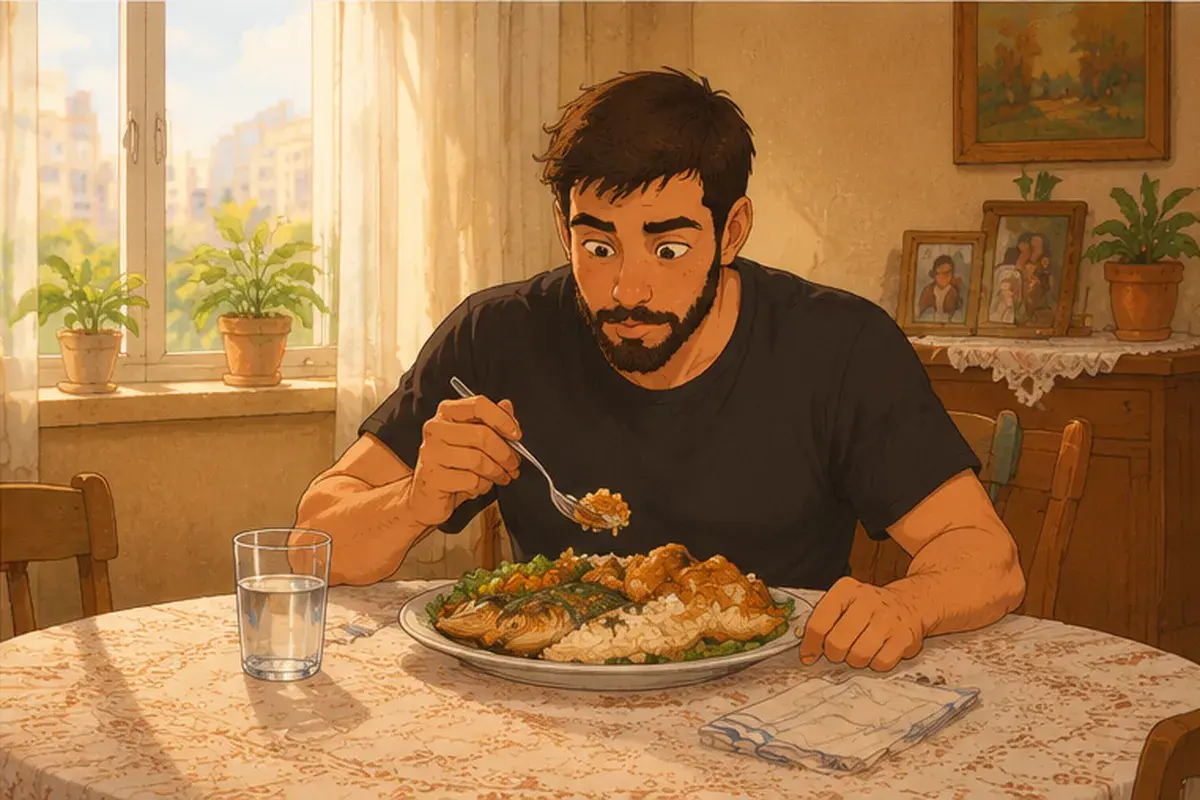
O Léo come frango, peixe e mais frango. Ele não fala nada, só come.
Léo eats chicken, fish and more chicken. He doesn't say anything, he just eats.
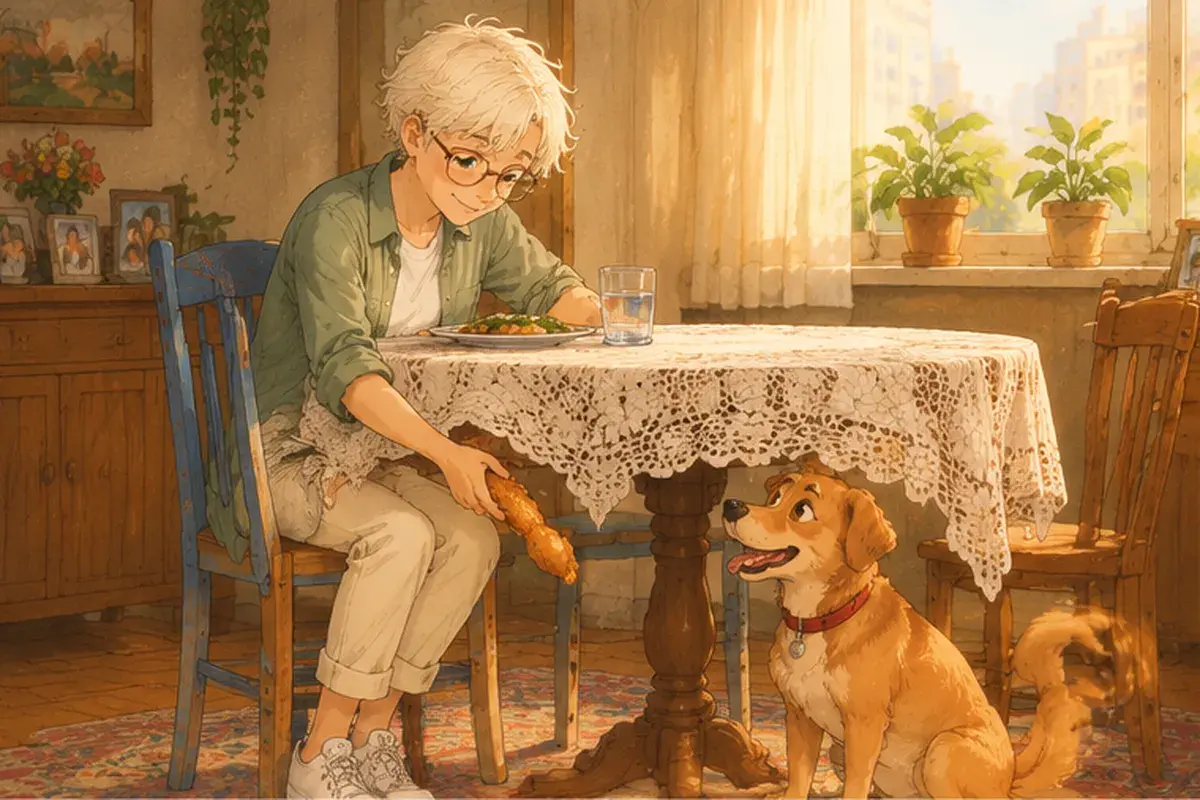
Embaixo da mesa, a Pipoca olha para mim. Ela também gosta de frango.
Under the table, Pipoca looks at me. She likes chicken too.
Eu coloco um pouco de frango embaixo da mesa.
I put a little chicken under the table.
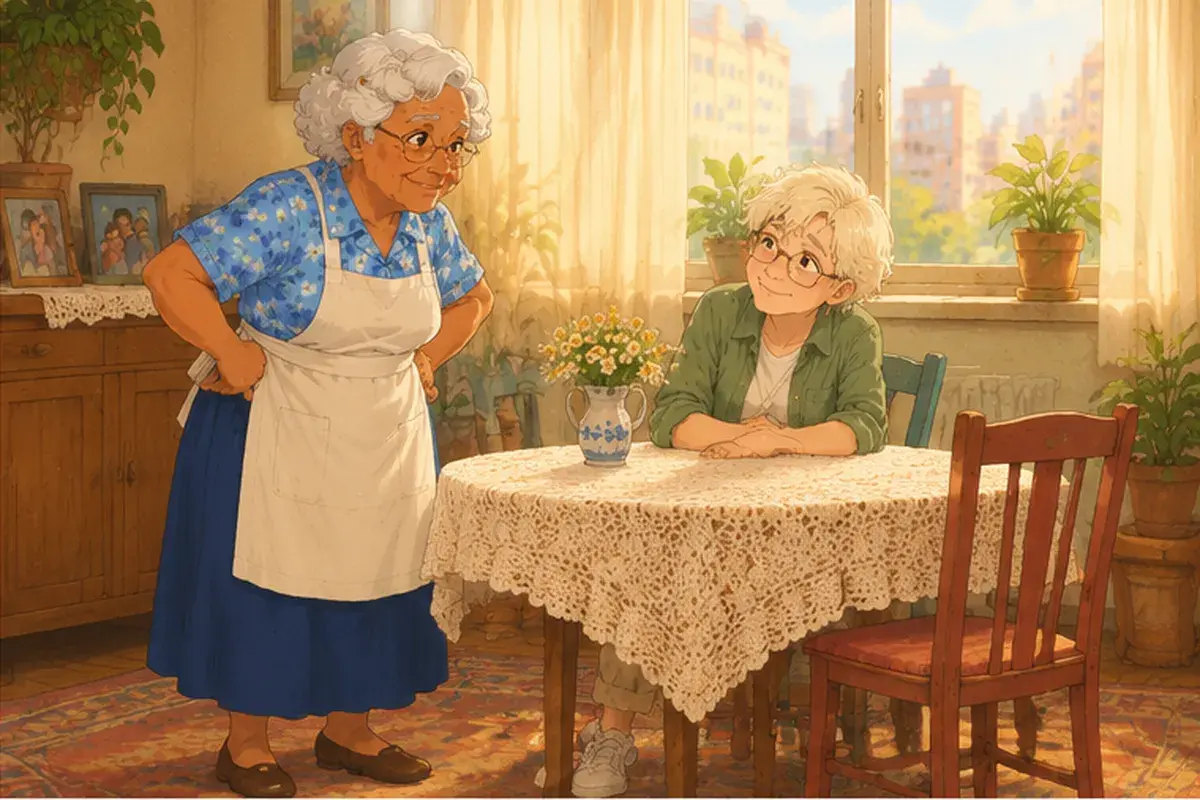
A Dona Lúcia fala: «Nina, o frango é para você, não é para a Pipoca!»
Dona Lúcia says: "Nina, the chicken is for you, not for Pipoca!"

E tem bolo, doce e gostoso.
And there's cake, sweet and tasty.
Eu gosto do pão de queijo da Dona Lúcia. É uma delícia!
I like Dona Lúcia's pão de queijo. It's delicious!
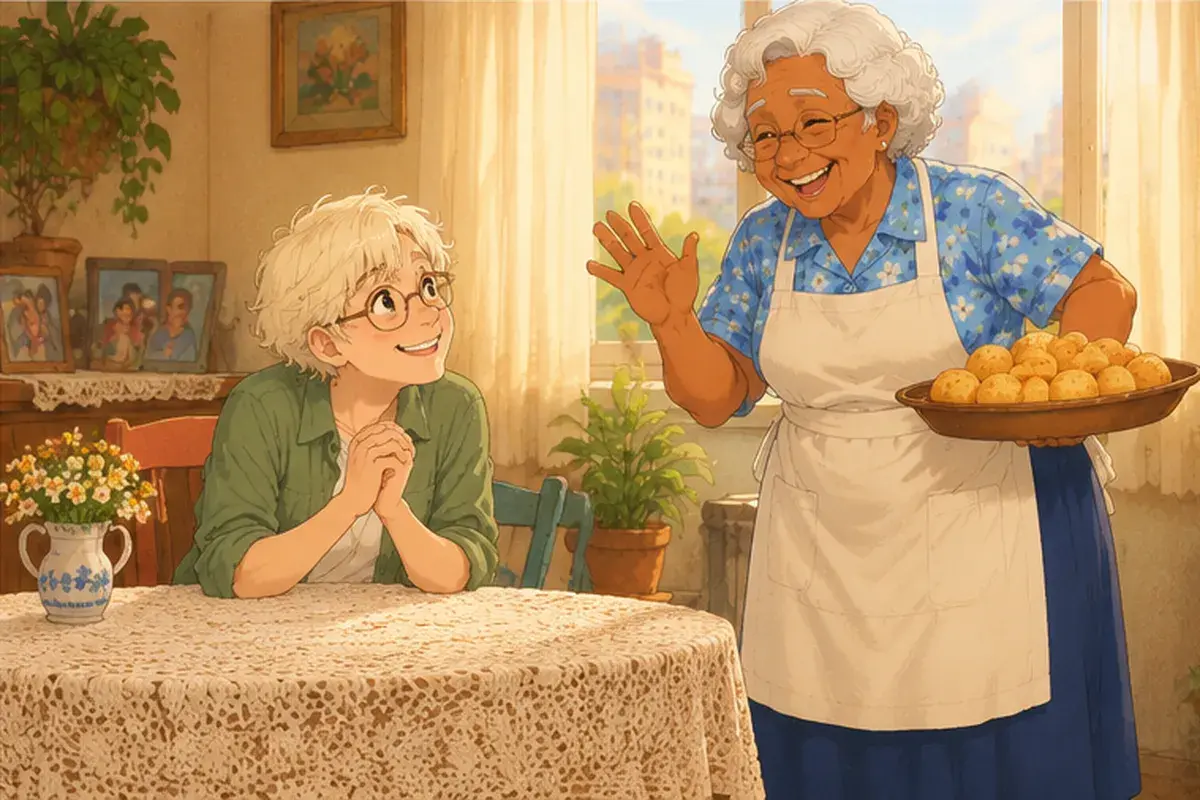
Eu falo: «Dona Lúcia, a receita, por favor?»
I say: "Dona Lúcia, the recipe, please?"
«A receita? Amanhã eu cozinho, e você come mais!»
"The recipe? Tomorrow I'll cook, and you'll eat more!"

Hoje eu como muito. Amanhã eu não como nada!
Today I'm eating a lot. Tomorrow I'm not eating anything!
Grammar for this text
- Come mais, minha filha! — here come means "eat!": the casual command is the same as the você / ele / ela form of comer (the rule comes at A2). Minha filha is literally "my daughter": an older woman's warm way to talk to a young woman, like "dear" or "honey". Minha is the feminine of meu, and filha is the feminine of filho.
- tem almoço na casa da Dona Lúcia — tem means "there is" (here, "there's going to be"); da = de + a. Na casa da Dona Lúcia means "at Dona Lúcia's place".
- olha para mim — "to look at someone" is olhar para. After a preposition, eu becomes mim: para mim.
- Eu gosto do pão de queijo da Dona Lúcia — gostar de + o = do; da = de + a. Nina likes these particular cheese rolls.
- o frango é para você, não é para a Pipoca — é is the ele / ela form of ser (is); não é means "is not"; para means "for".
- Ele não fala nada, só come — a double negative, literally "he doesn't say nothing". In Portuguese it's correct. Só here means "only, just".
- Amanhã eu cozinho, e você come mais! — the future is often said with the present tense plus amanhã (tomorrow). The form vou cozinhar (I'm going to cook) comes in unit 13.
Words and grammar of the unit: Decide what to cook for dinner.
Learn the words from the texts with flashcards
In the app, you can tap any word in a text to see its translation, forms and examples, and new words stick with flashcards. 15 minutes a day.
Start for freeEverything is open for free. No card needed to sign up.