

Chinese dialogue with translation · B2 · 29 lines
乙方应按时支付租金 Party B shall pay the rent on time
Comic · 29 panels
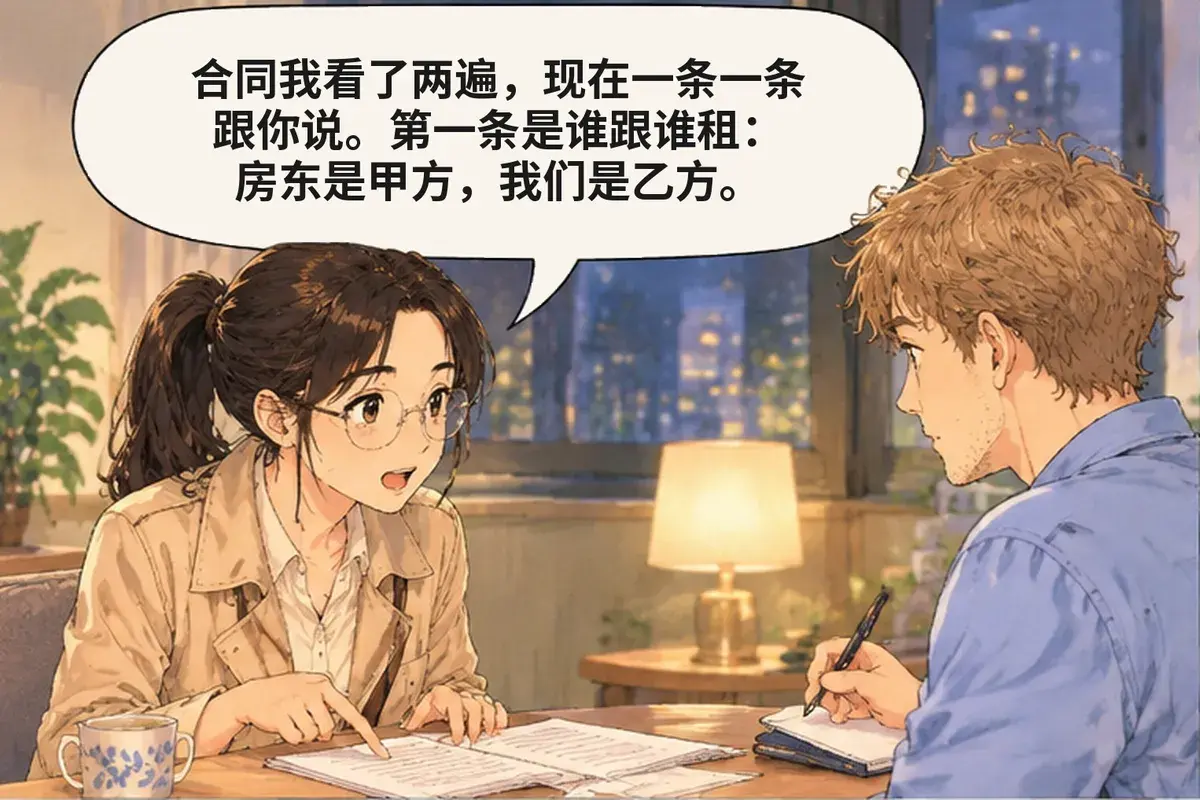
- 晓雨
合同我看了两遍,现在一条一条跟你说。第一条是谁跟谁租:房东是甲方,我们是乙方。
I've read the contract twice, and now I'll go through it with you one clause at a time. Clause one is who rents from whom: the landlord is Party A, and we are Party B.

- 伊利亚
甲方是房东,乙方是我们。记住了。
Party A is the landlord, Party B is us. Got it.
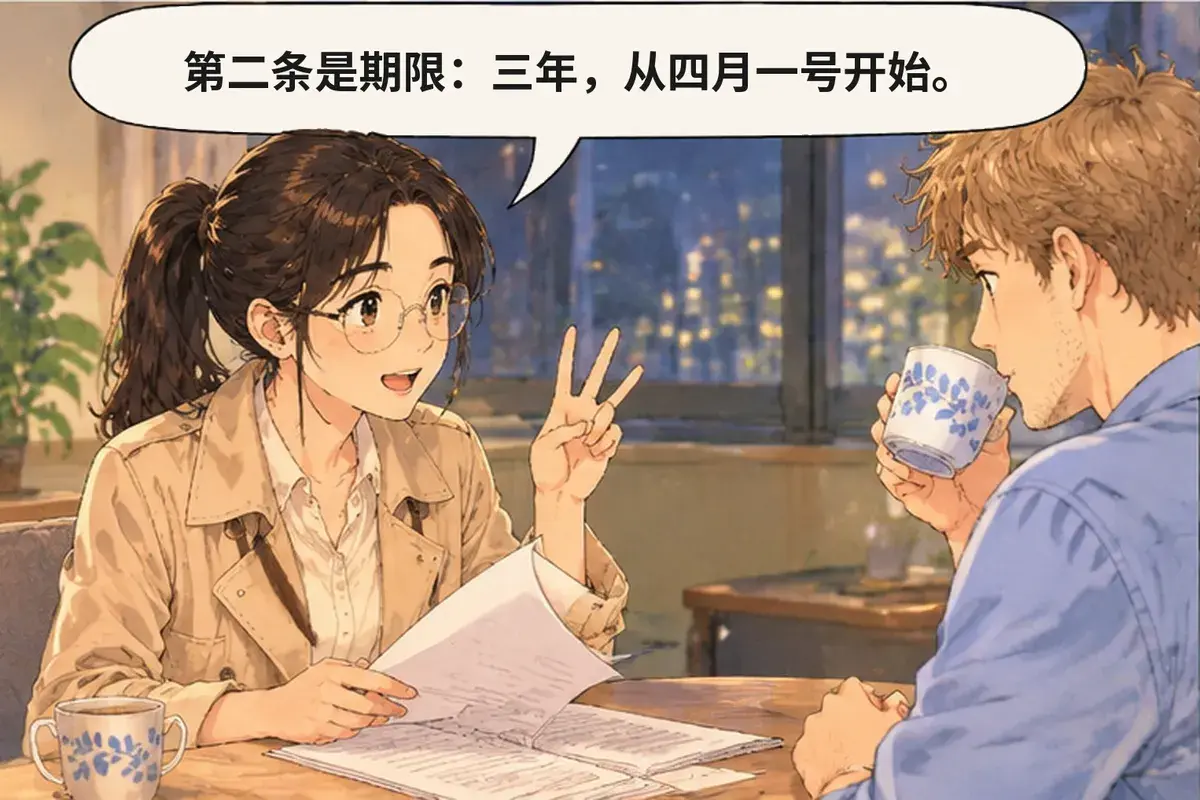
- 晓雨
第二条是期限:三年,从四月一号开始。
Clause two is the term: three years, starting April 1.

- 伊利亚
最后还是租三年,对吧?每个月一万块。
So in the end we're renting for three years after all, right? 10,000 yuan a month.
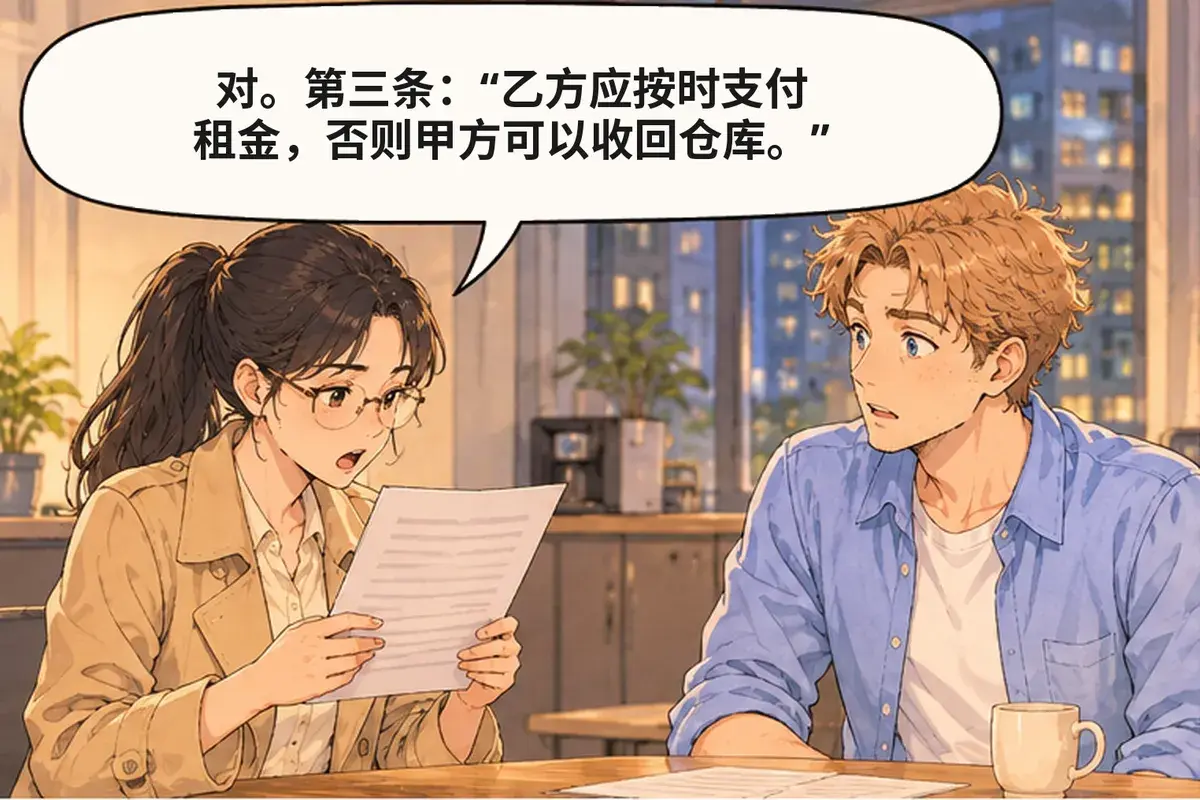
- 晓雨
对。第三条:“乙方应按时支付租金,否则甲方可以收回仓库。”
Right. Clause three: "Party B shall pay the rent on time; otherwise Party A may take back the warehouse."
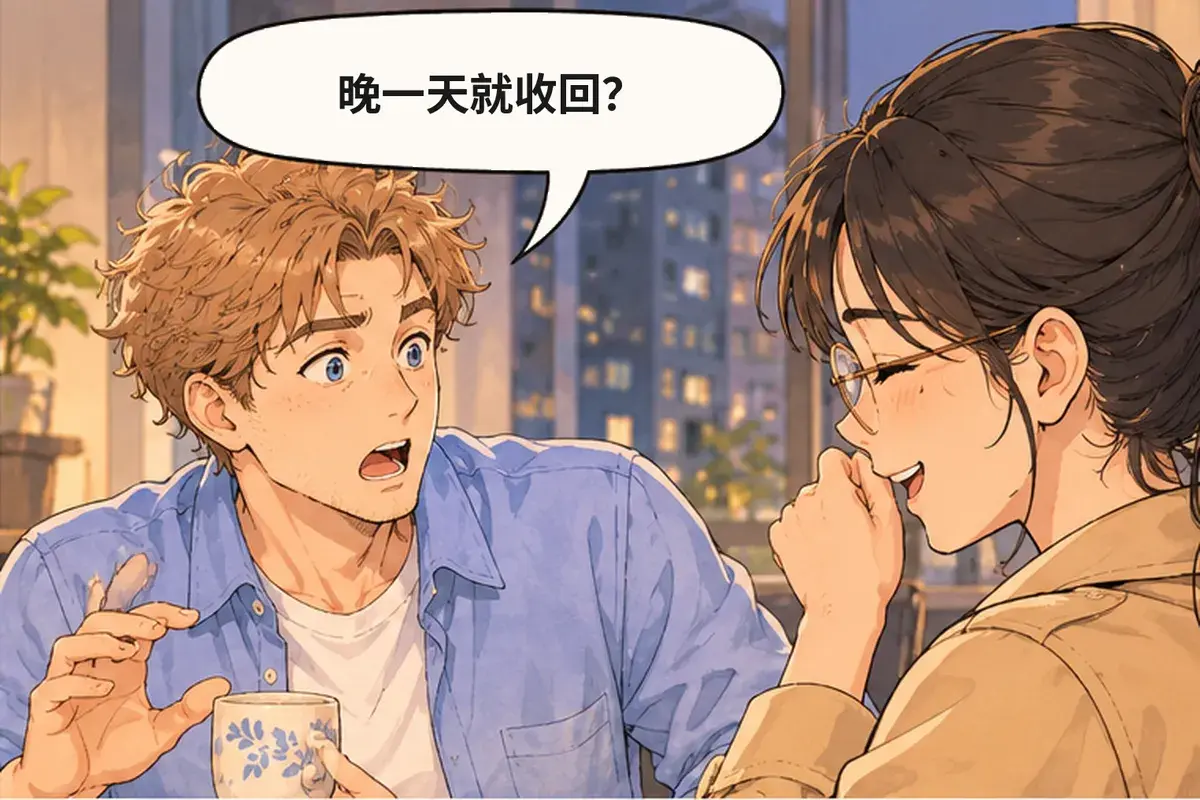
- 伊利亚
晚一天就收回?
They take it back if we're one day late?
- 晓雨
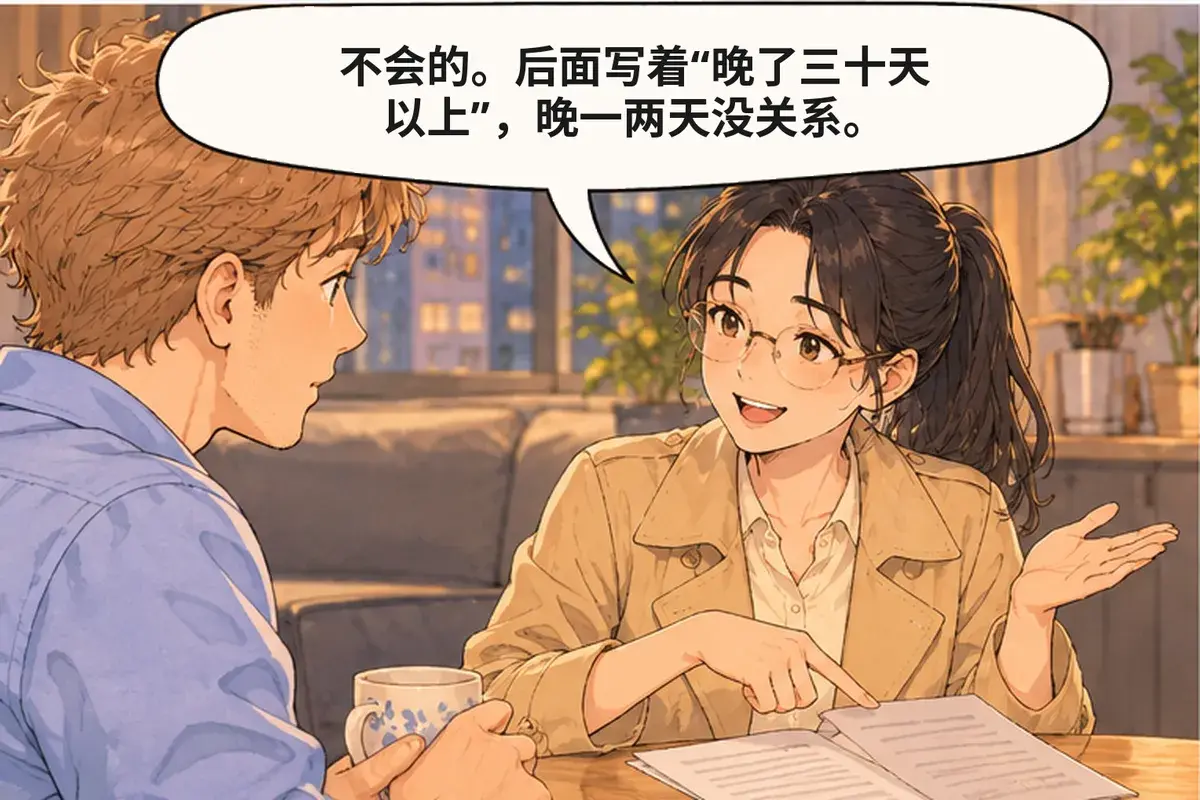
不会的。后面写着“晚了三十天以上”,晚一两天没关系。
No. Further down it says "more than thirty days late," so being a day or two late is fine.

- 伊利亚
那我们每次早几天交,就不会有问题了。
Then if we pay a few days early every time, there won't be any problem.
- 晓雨
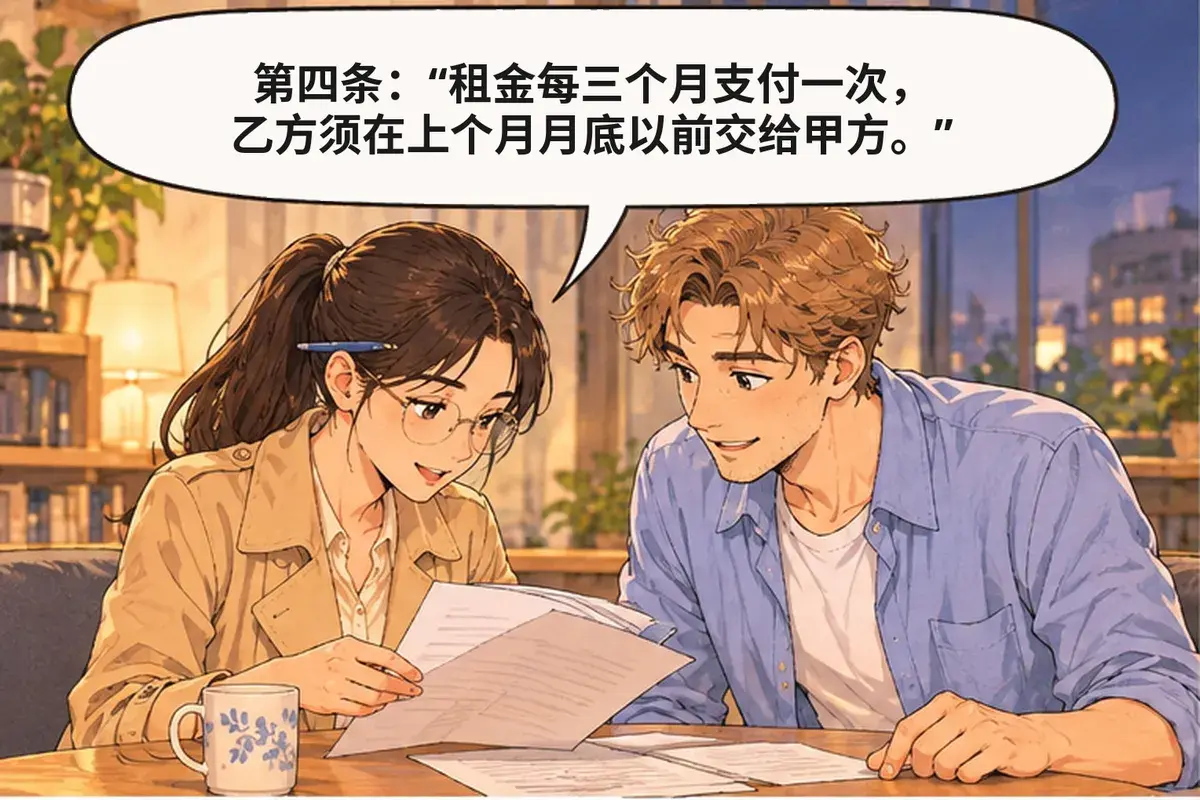
第四条:“租金每三个月支付一次,乙方须在上个月月底以前交给甲方。”
Clause four: "The rent shall be paid once every three months; Party B must hand it over to Party A before the end of the previous month."
- 伊利亚
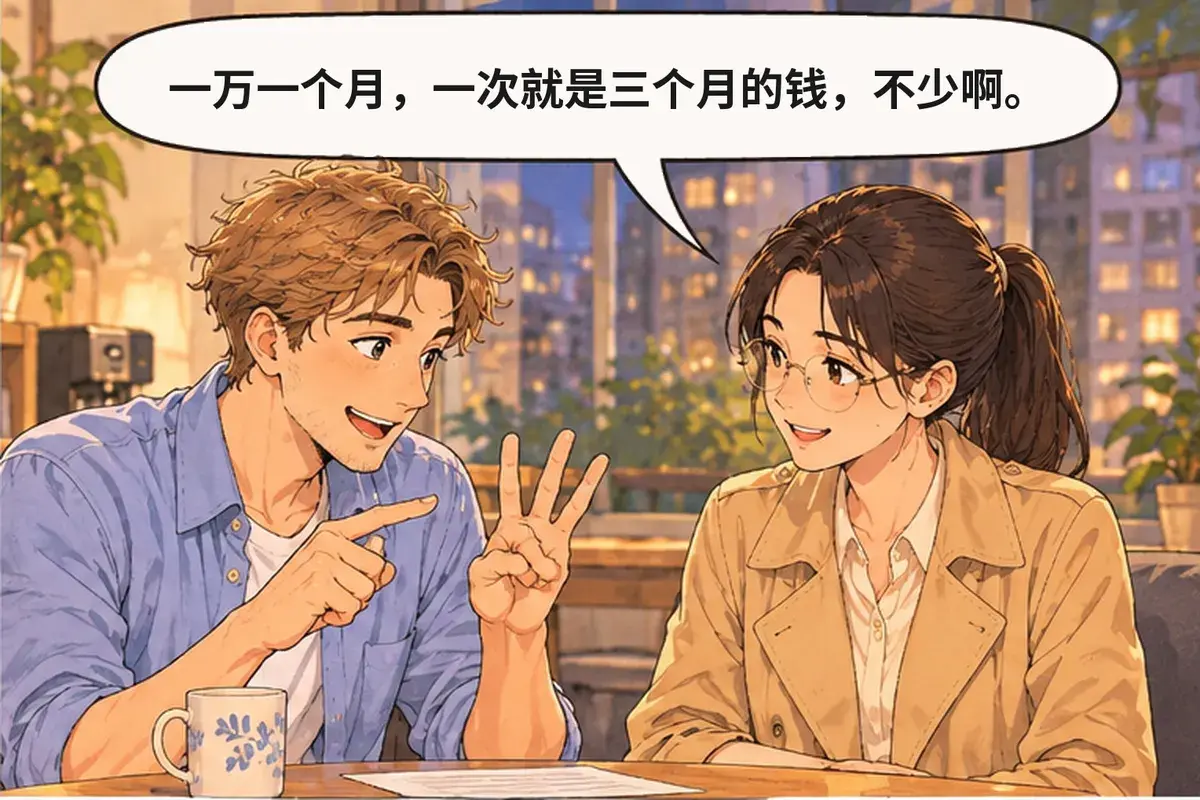
一万一个月,一次就是三个月的钱,不少啊。
10,000 yuan a month, so each payment is three months' money. That's not small.
- 晓雨
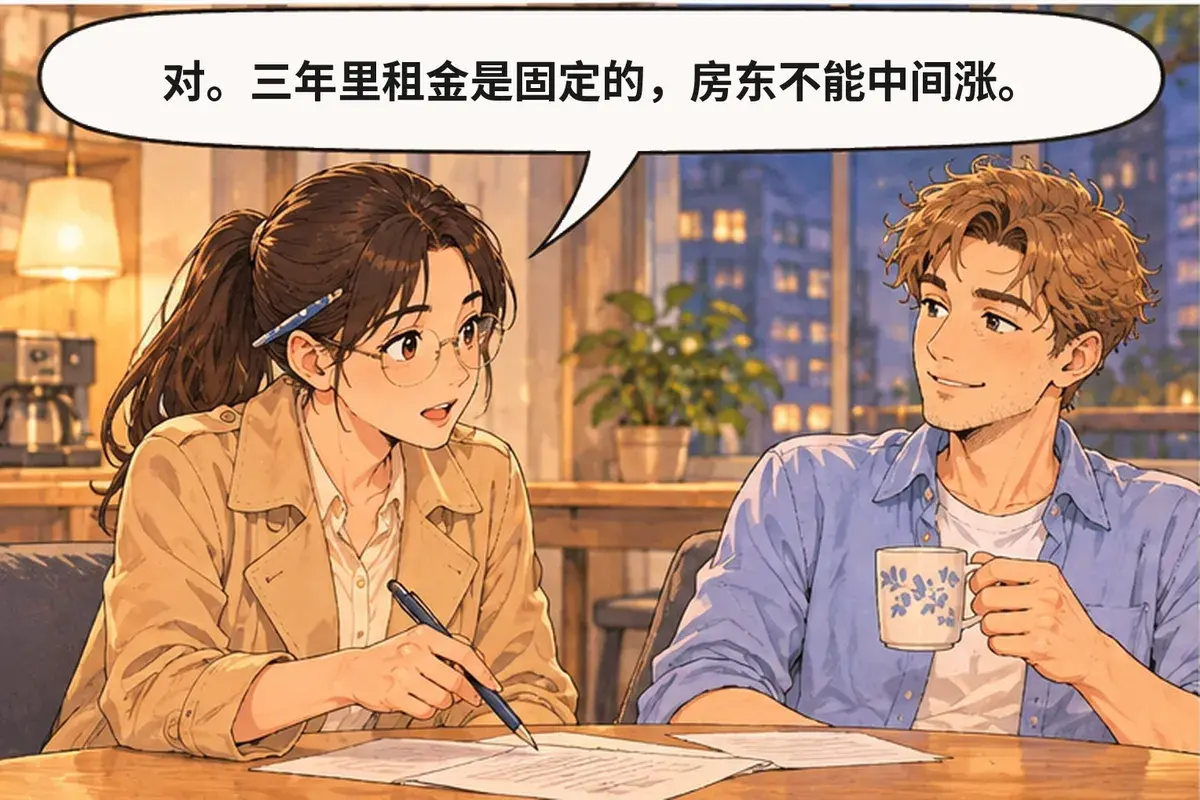
对。三年里租金是固定的,房东不能中间涨。
Right. For the three years the rent is fixed, and the landlord can't raise it in the middle.
- 晓雨
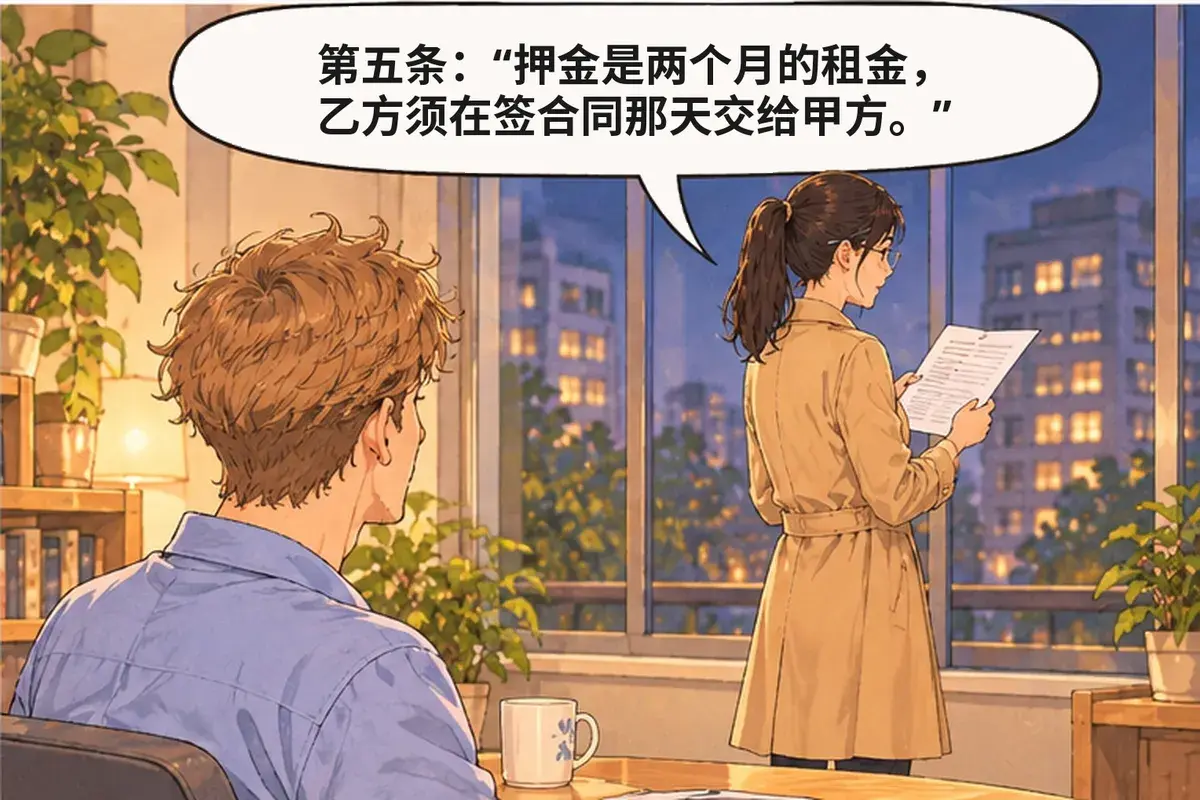
第五条:“押金是两个月的租金,乙方须在签合同那天交给甲方。”
Clause five: "The deposit is two months' rent; Party B must pay it to Party A on the day the contract is signed."

- 伊利亚
两个月?我租房子的时候,押金只要一个月。
Two months? When I rented a place, the deposit was only one month.

- 晓雨
那是住的房子。仓库里东西多,房东怕出问题,押金就多一点。
That was a place to live. There's a lot of stuff in a warehouse and the landlord is afraid of trouble, so the deposit is a bit more.

- 伊利亚
好吧,押金一共两万块。什么时候退给我们?
OK, so the deposit is 20,000 yuan in all. When do we get it back?
- 晓雨
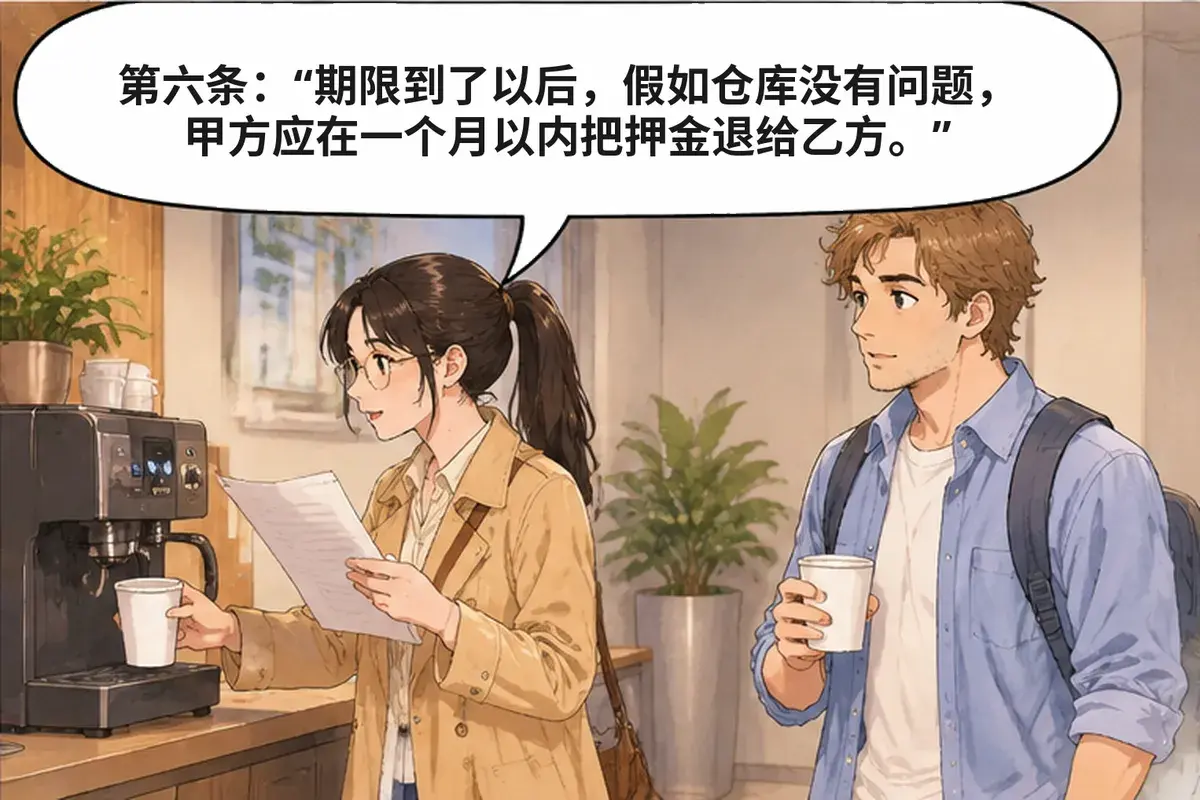
第六条:“期限到了以后,假如仓库没有问题,甲方应在一个月以内把押金退给乙方。”
Clause six: "After the term ends, if there's no problem with the warehouse, Party A shall return the deposit to Party B within one month."

- 伊利亚
假如仓库有问题呢?
And what if there's a problem with the warehouse?

- 晓雨
那要看是谁弄坏的。第七条是用途:“仓库只能作为检查和维修充电桩的地方,不能住人。”
Then it depends on who broke it. Clause seven is the use: "The warehouse may only be used as a place to check and repair charging stations; no one may live in it."

- 伊利亚
我们就是检查和修充电桩,没问题。
We only check and repair charging stations, so no problem.
- 晓雨
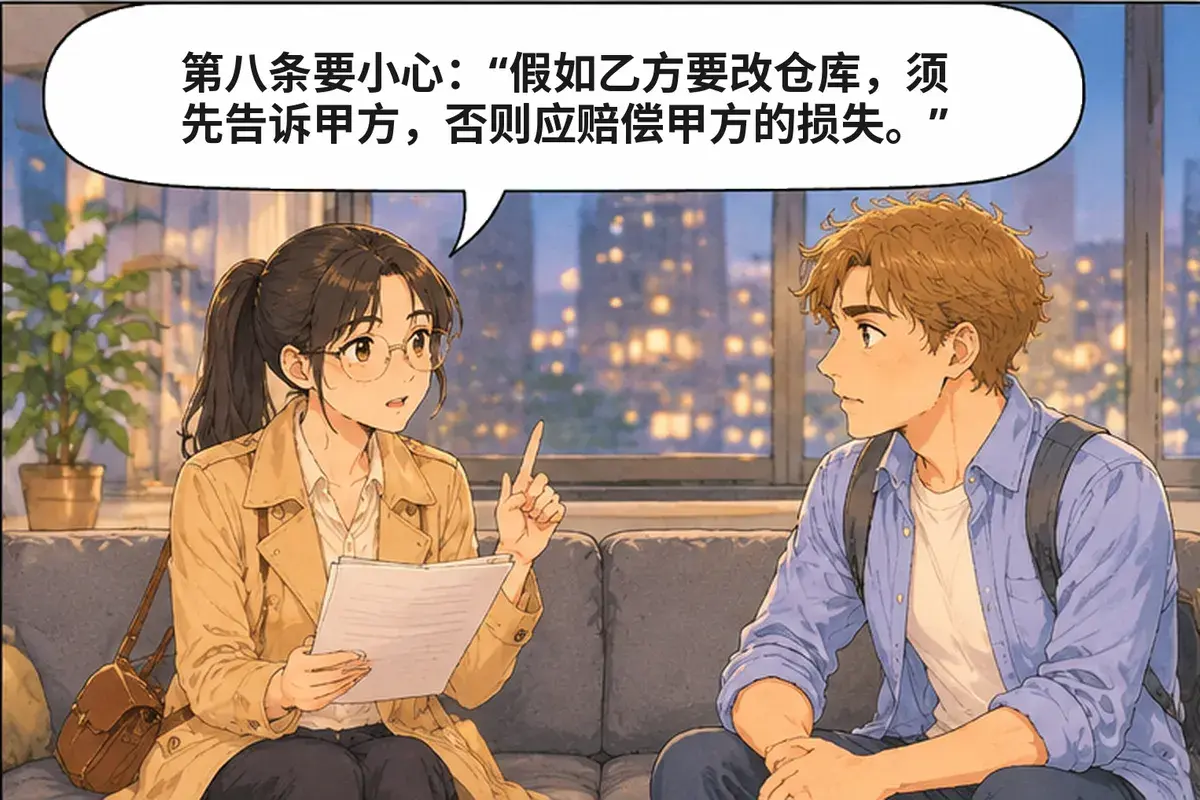
第八条要小心:“假如乙方要改仓库,须先告诉甲方,否则应赔偿甲方的损失。”
Clause eight needs care: "If Party B wants to alter the warehouse, it must inform Party A first; otherwise it shall compensate Party A for the loss."
- 伊利亚
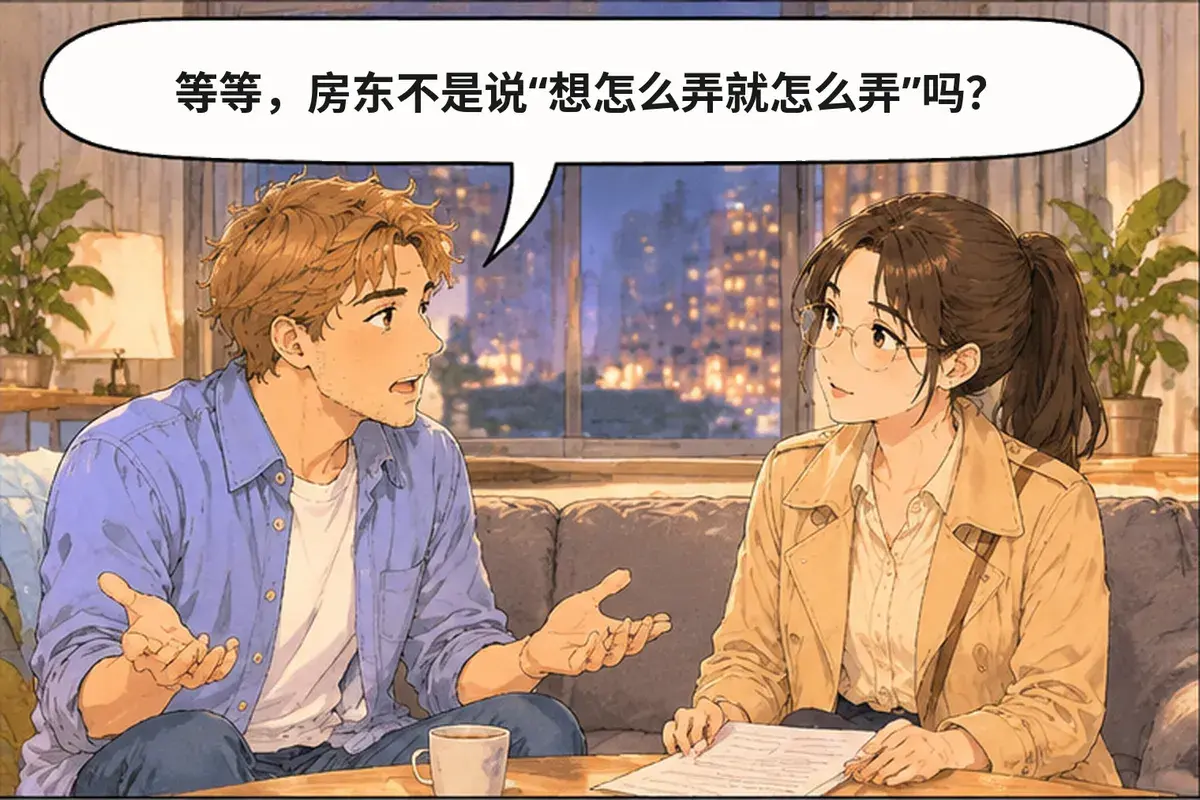
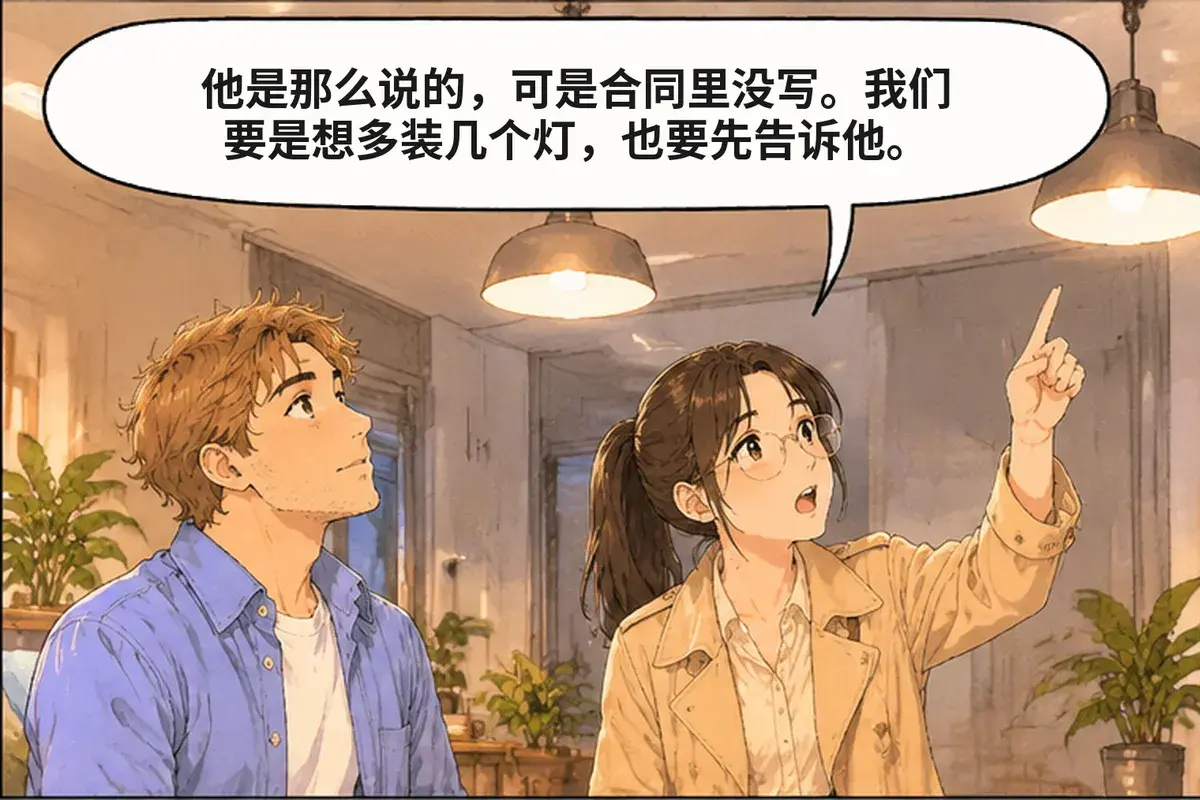
等等,房东不是说“想怎么弄就怎么弄”吗?
Wait, didn't the landlord say, "You can set it up however you like"?
- 晓雨
他是那么说的,可是合同里没写。我们要是想多装几个灯,也要先告诉他。
He did say that, but it's not in the contract. If we want to put in a few more lights, we have to tell him first too.
- 晓雨
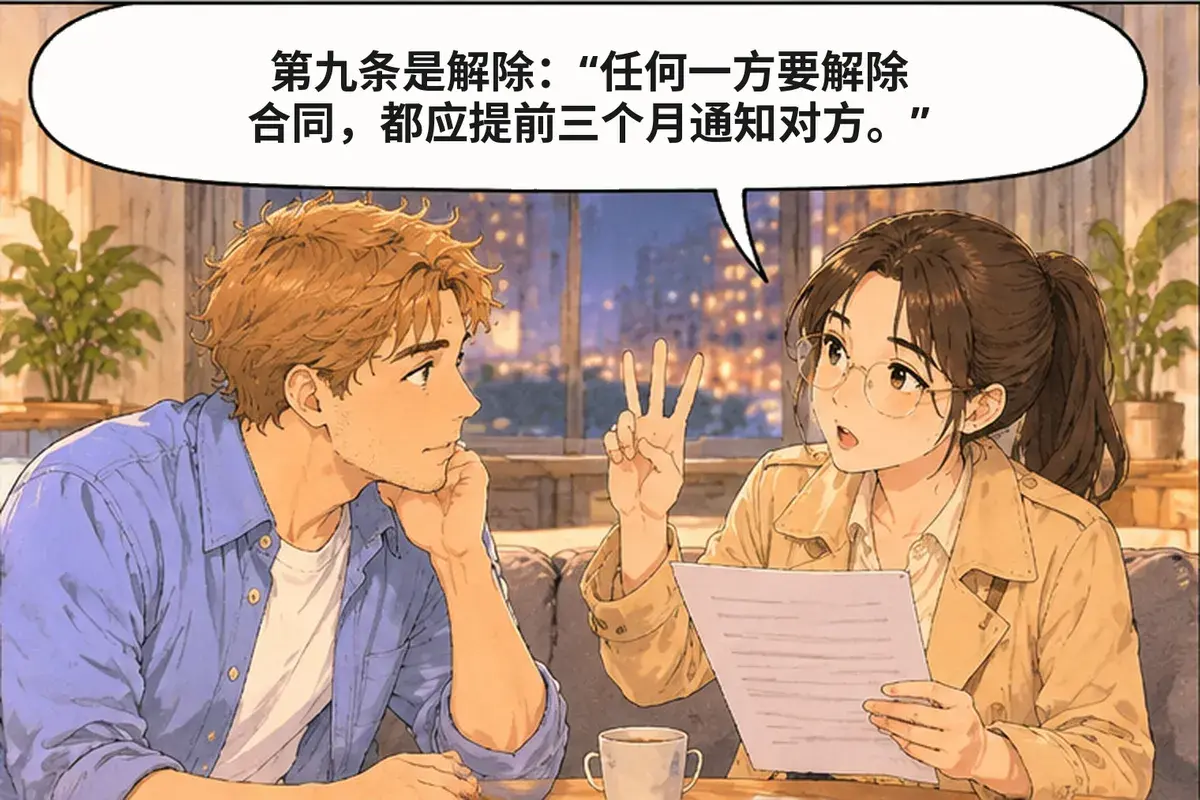
第九条是解除:“任何一方要解除合同,都应提前三个月通知对方。”
Clause nine is termination: "Any party that wants to terminate the contract shall notify the other party three months ahead."

- 伊利亚
这一条公平,两边都一样。
This clause is fair. It's the same for both sides.
- 晓雨
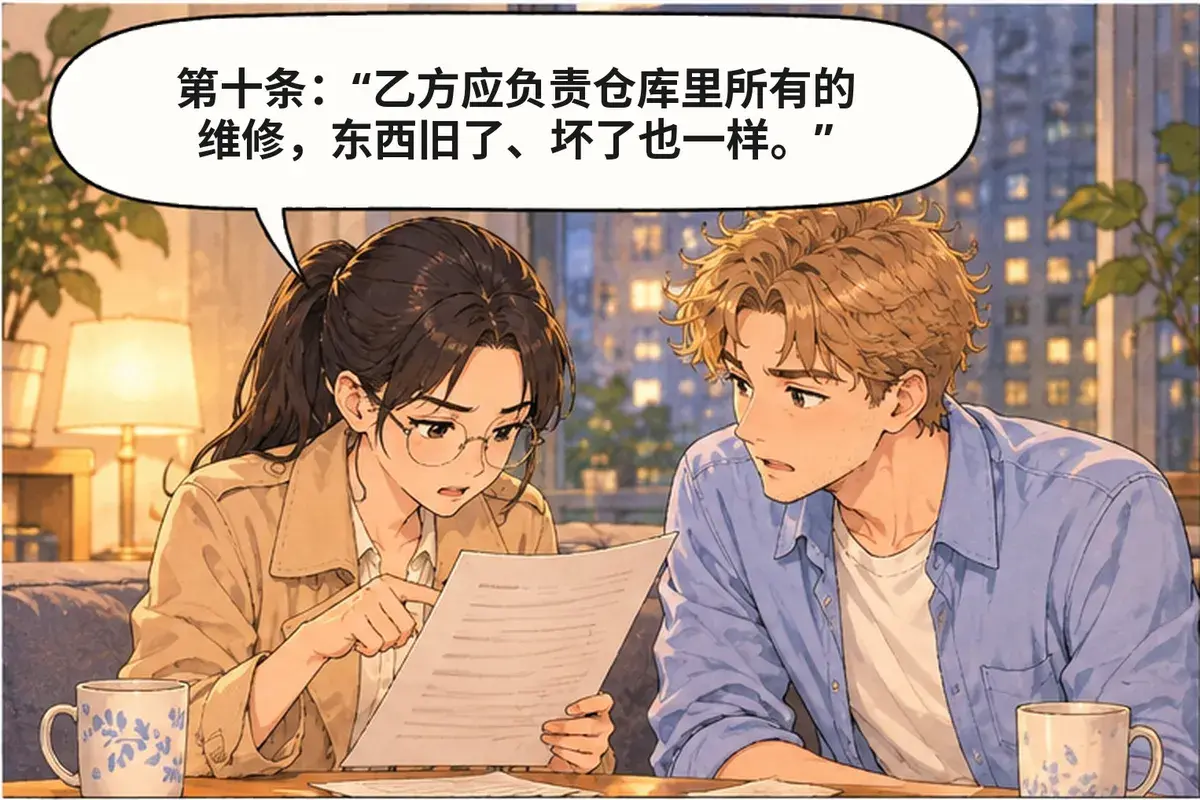
第十条:“乙方应负责仓库里所有的维修,东西旧了、坏了也一样。”
Clause ten: "Party B shall be responsible for all repairs in the warehouse, including things that have worn out or broken down."
- 伊利亚
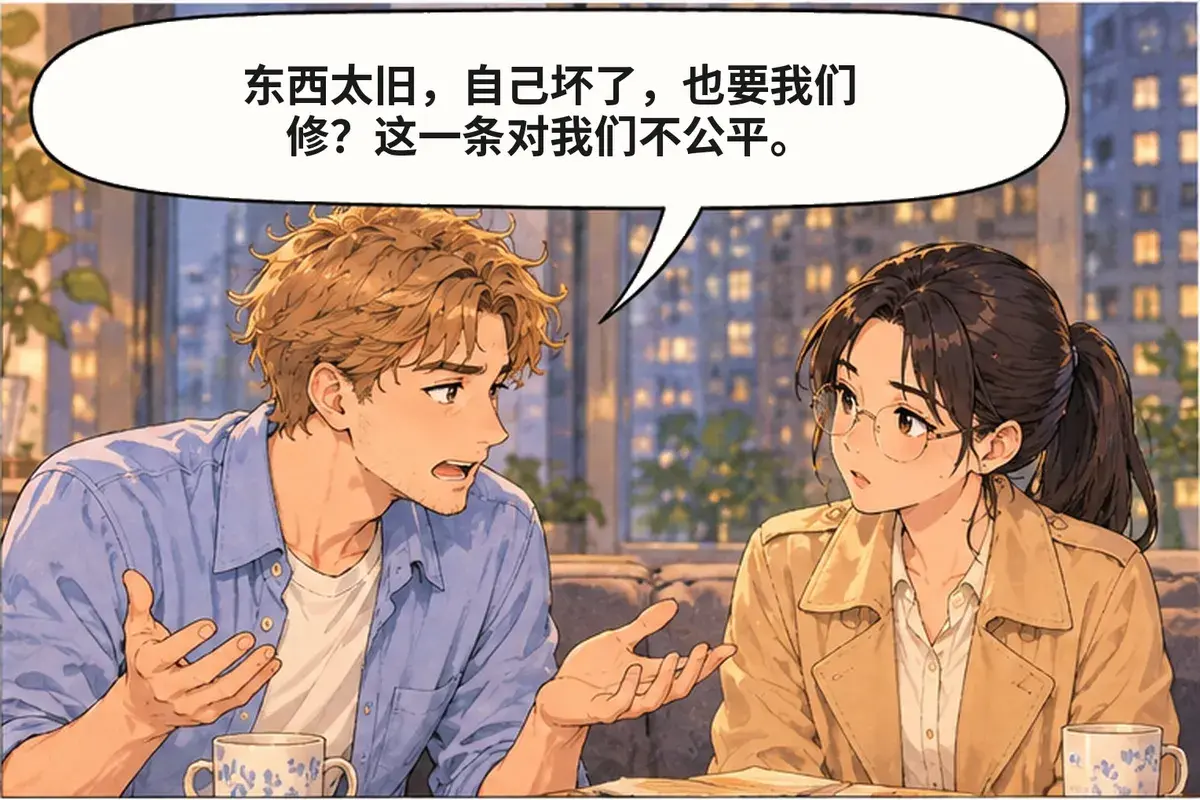
东西太旧,自己坏了,也要我们修?这一条对我们不公平。
Even if something is too old and breaks by itself, we have to fix it? This clause isn't fair to us.
- 晓雨
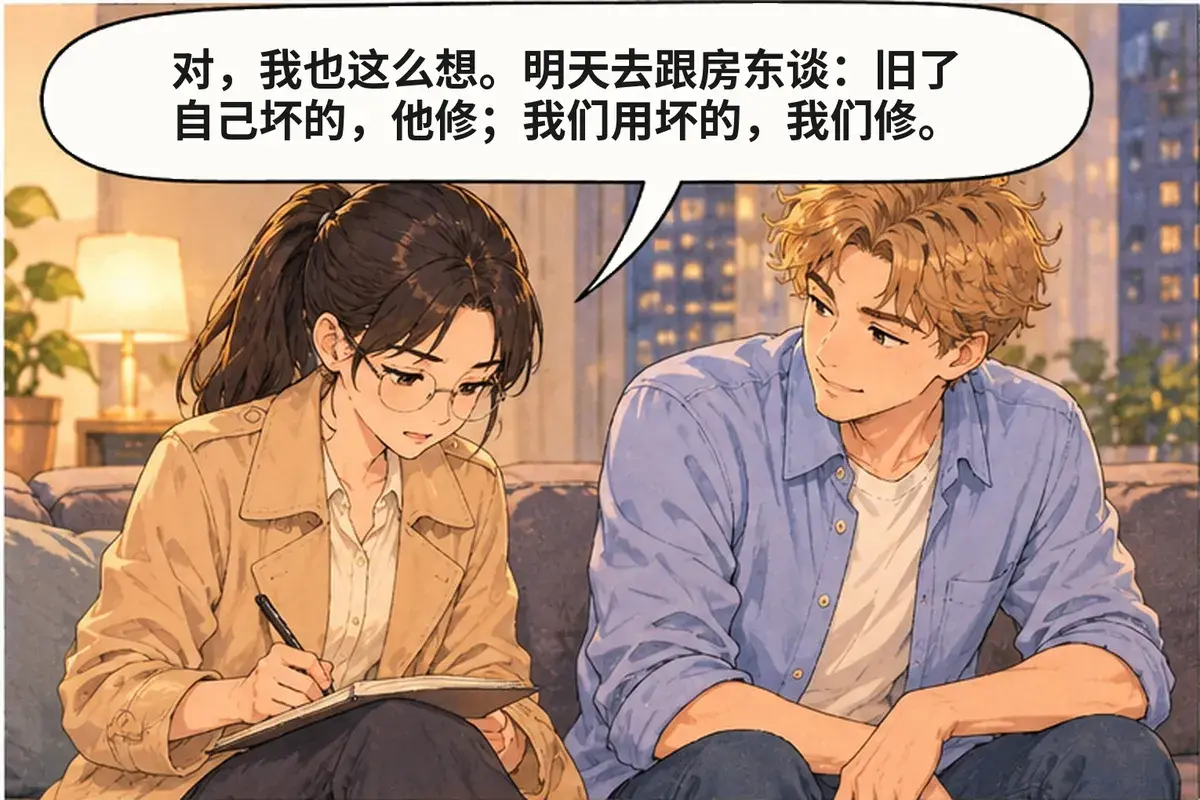
对,我也这么想。明天去跟房东谈:旧了自己坏的,他修;我们用坏的,我们修。
Right, I think so too. Tomorrow let's go talk to the landlord: if it breaks by itself from age, he fixes it; if we break it by using it, we fix it.
- 晓雨
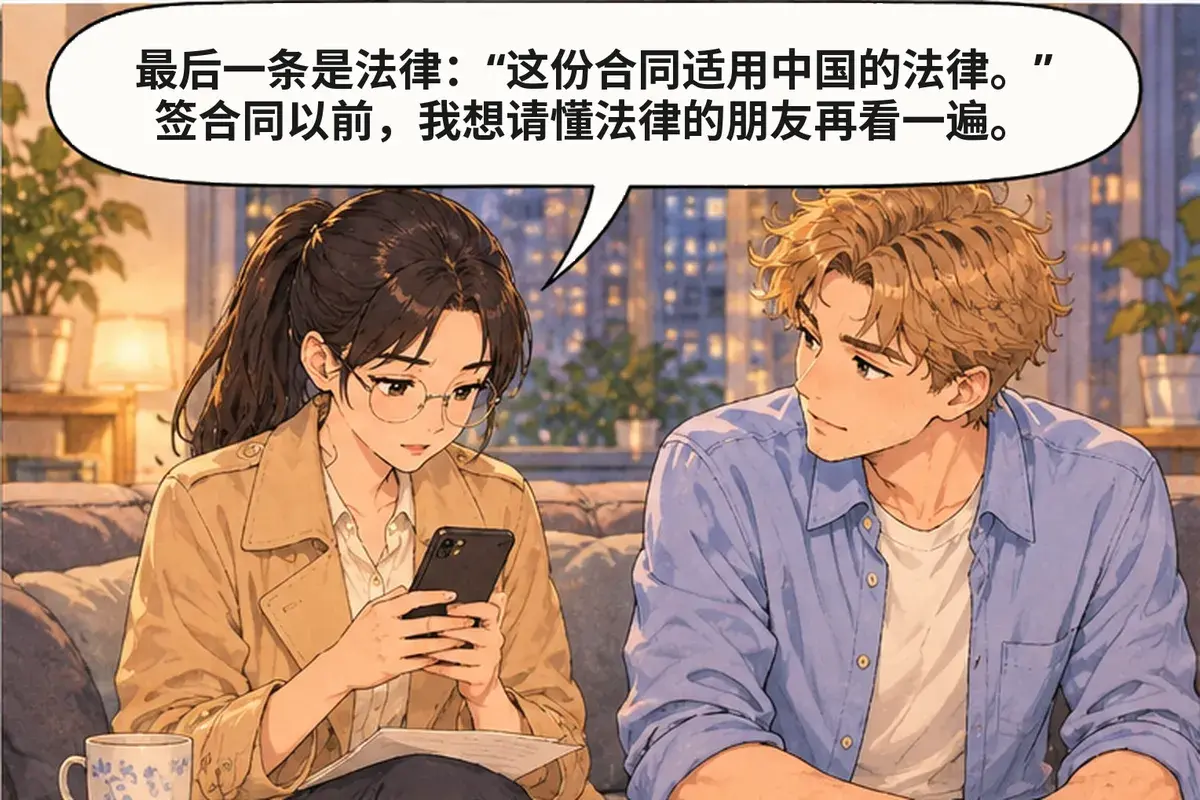
最后一条是法律:“这份合同适用中国的法律。”签合同以前,我想请懂法律的朋友再看一遍。
The last clause is the law: "The laws of China apply to this contract." Before we sign, I want a friend who knows the law to look at it once more.

- 伊利亚
好。第十条没改好以前,我们先别答应。
OK. Until clause ten is fixed, let's not agree yet.
Grammar for this text
- 乙方 应 按时 支付 租金, 否则 甲方 可以 收回 仓库 — the language of a contract:
应"shall",按时"on time",否则"otherwise". First the duty, then after a comma否则and what happens if it isn't done. - 房东 是 甲方, 我们 是 乙方 —
甲方and乙方mean "Party A" and "Party B": a contract uses these instead of names. - 乙方 须 在 签 合同 那 天 交 给 甲方 —
须is even stricter than应: "must, is required". In conversation people say要or得(děi) instead of应 / 须. - 甲方 应 在 一 个 月 以内 把 押金 退 给 乙方 —
以内goes after the time: "within a month". - 任何 一 方 要 解除 合同, 都 应 提前 三 个 月 通知 对方 —
任何 … 都means "any …";解除 合同means "terminate the contract", and对方means "the other party". - 等等, 房东 不 是 说 —
不是 … 吗(B1) means "didn't … say?". Ilya catches the landlord on his word: the spoken promise never made it into the contract. - 这 份 合同 适用 中国 的 法律 —
适用means "applies": the last clause names the law the contract falls under.
The deposit here is two months, not one as usual for apartments, which are often rented on the terms 押一付三 (yā yī fù sān): a deposit of one month and rent for three.
Words and grammar of the unit: Understand a rental contract.
Learn the words from the texts with flashcards
In the app, you can tap any word in a text to see its translation, forms and examples, and new words stick with flashcards. 15 minutes a day.
Start for freeEverything is open for free. No card needed to sign up.