

Chinese dialogue with translation · B2 · 23 lines
新闻标题跟说话不一样 News headlines are different from how people talk
Comic · 23 panels

- 陈老师
大家好。今天我们不练对话,来读新闻。新闻标题跟说话不一样,你们先看这三个标题。
Hello, everyone. Today we're not practicing dialogues, we're reading the news. News headlines are written differently from how people talk. First, look at these three headlines. (to several people)

- 同学
老师,第一个标题里的字我都认识,可是放在一起就看不懂了。
Teacher, I know all the characters in the first headline, but put together I can't understand it.

- 伊利亚
我也是。这里的“将”就是“要”的意思吗?
Me too. Does "jiāng" here mean the same as "yào"?

- 陈老师
对,在新闻里“将”就是“要”,说的是以后会发生的事。比如“明天将放假”,平时我们说“明天要放假”。
Yes. In the news, "jiāng" is "yào": it's about something that will happen later. For example, "míngtiān jiāng fàngjià"; in everyday speech we say "míngtiān yào fàngjià".

- 伊利亚
那“我要一杯咖啡”也能说成“我将一杯咖啡”吗?
Then can "wǒ yào yì bēi kāfēi" also be said as "wǒ jiāng yì bēi kāfēi"?

- 陈老师
哈哈,不行!“将”只能换“以后会怎么样”的“要”。“想要”的“要”和“应该”的“要”都不能换。
Ha-ha, no! "Jiāng" can only replace the "yào" that means "what will happen later". The "yào" of "want" and the "yào" of "should" can't be replaced.

- 同学
那为什么新闻不直接用“要”呢?那样多简单!
Then why doesn't the news just use "yào"? That would be so much simpler!
- 陈老师
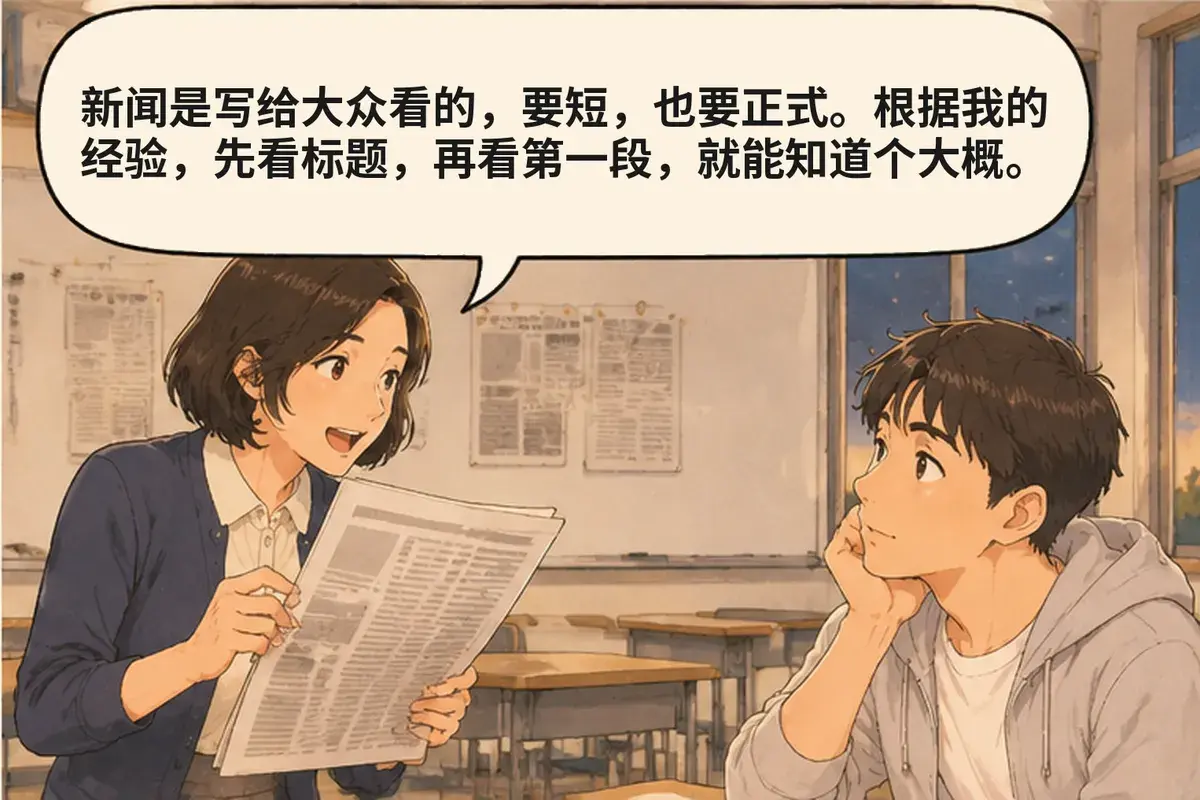
新闻是写给大众看的,要短,也要正式。根据我的经验,先看标题,再看第一段,就能知道个大概。
The news is written for the general public, so it has to be short and formal. In my experience, if you read the headline first and then the first paragraph, you can get the general idea.

- 伊利亚
可是我一看到标题就紧张。十一月我要参加汉语考试五级,阅读题里全是这样的句子。
But as soon as I see a headline, I get nervous. In November I'm taking the Chinese exam, level 5, and the reading questions are full of sentences like this.

- 陈老师
别每个词都查。先猜,再去第一段里找答案。记者常常把最重要的事放在最前面。
Don't look up every word. Guess first, then look for the answer in the first paragraph. Reporters often put the most important thing right at the front.
- 同学
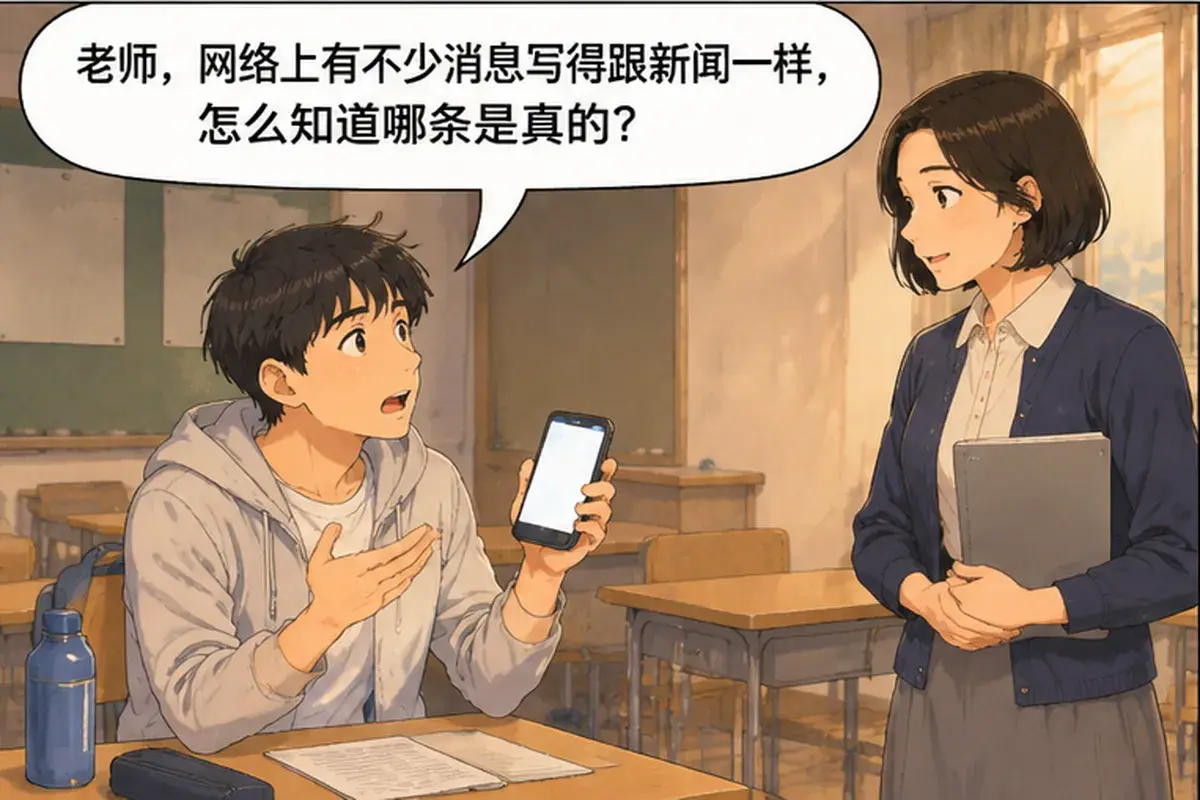
老师,网络上有不少消息写得跟新闻一样,怎么知道哪条是真的?
Teacher, there are quite a few items online written just like the news. How can you tell which one is true?
- 陈老师
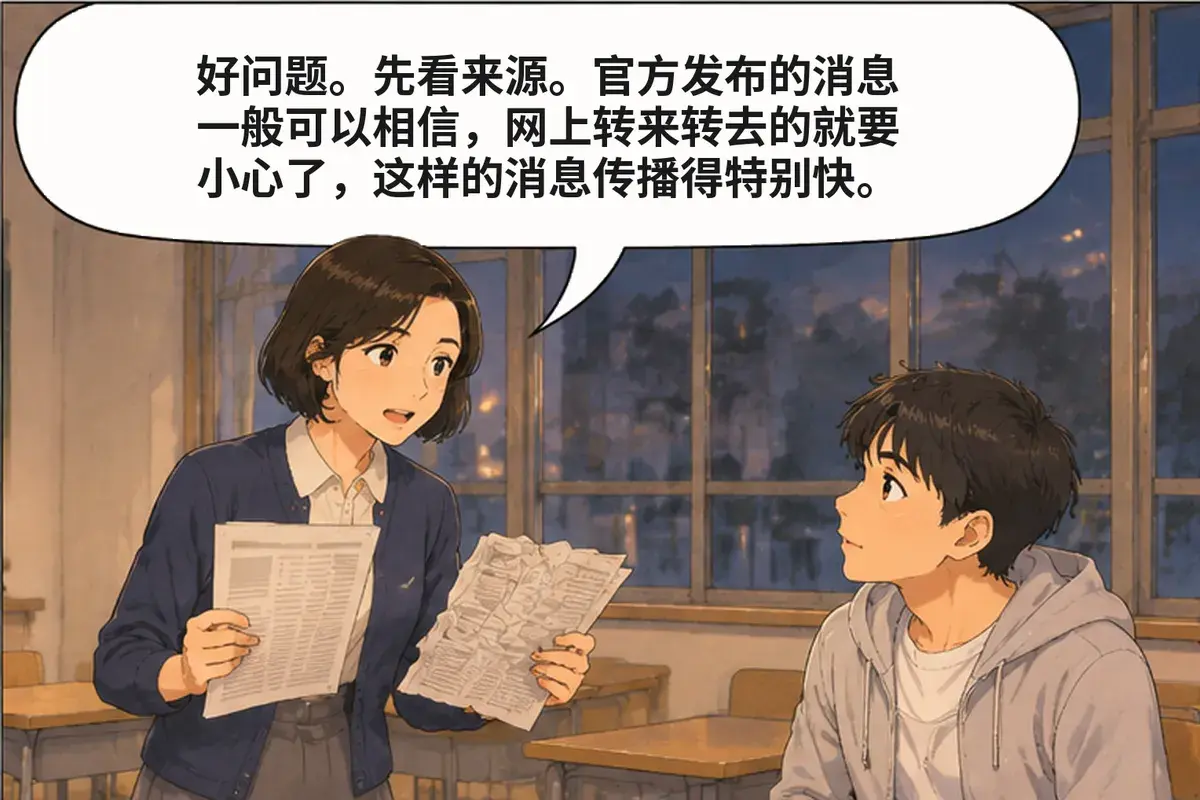
好问题。先看来源。官方发布的消息一般可以相信,网上转来转去的就要小心了,这样的消息传播得特别快。
Good question. Look at the source first. Information released officially can generally be trusted, but items that get forwarded around online call for caution. Items like that spread especially fast.
- 陈老师
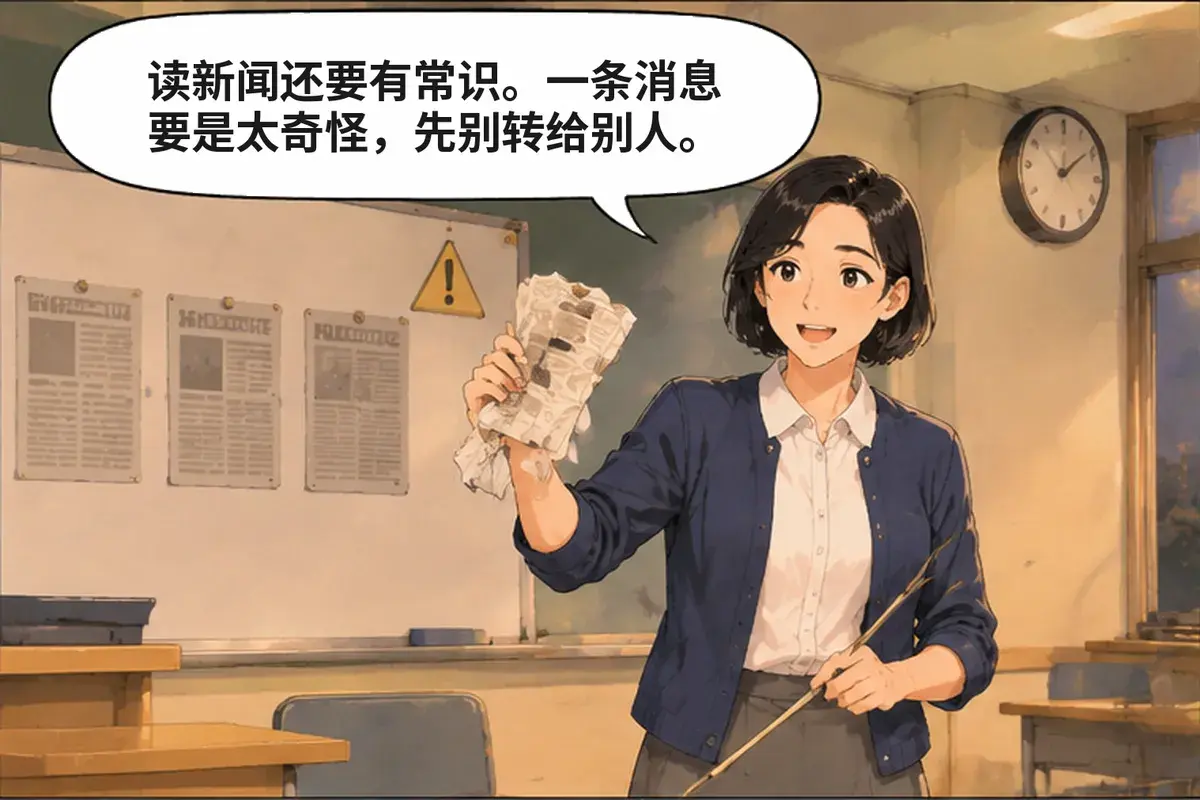
读新闻还要有常识。一条消息要是太奇怪,先别转给别人。
Reading the news also takes common sense. If a story is too strange, don't pass it on to anyone right away.

- 伊利亚
可见,光看标题是不够的,还要看是谁说的。
So looking at the headline alone isn't enough. You also have to check who said it.

- 陈老师
没错!伊利亚连“可见”都会用了,说话已经像新闻了。
Exactly! Ilya can even use "kějiàn" now. He already sounds like the news.

- 同学
伊利亚真聪明,下次考试我坐他旁边!
Ilya is so smart. At the next exam I'll sit next to him!
- 陈老师
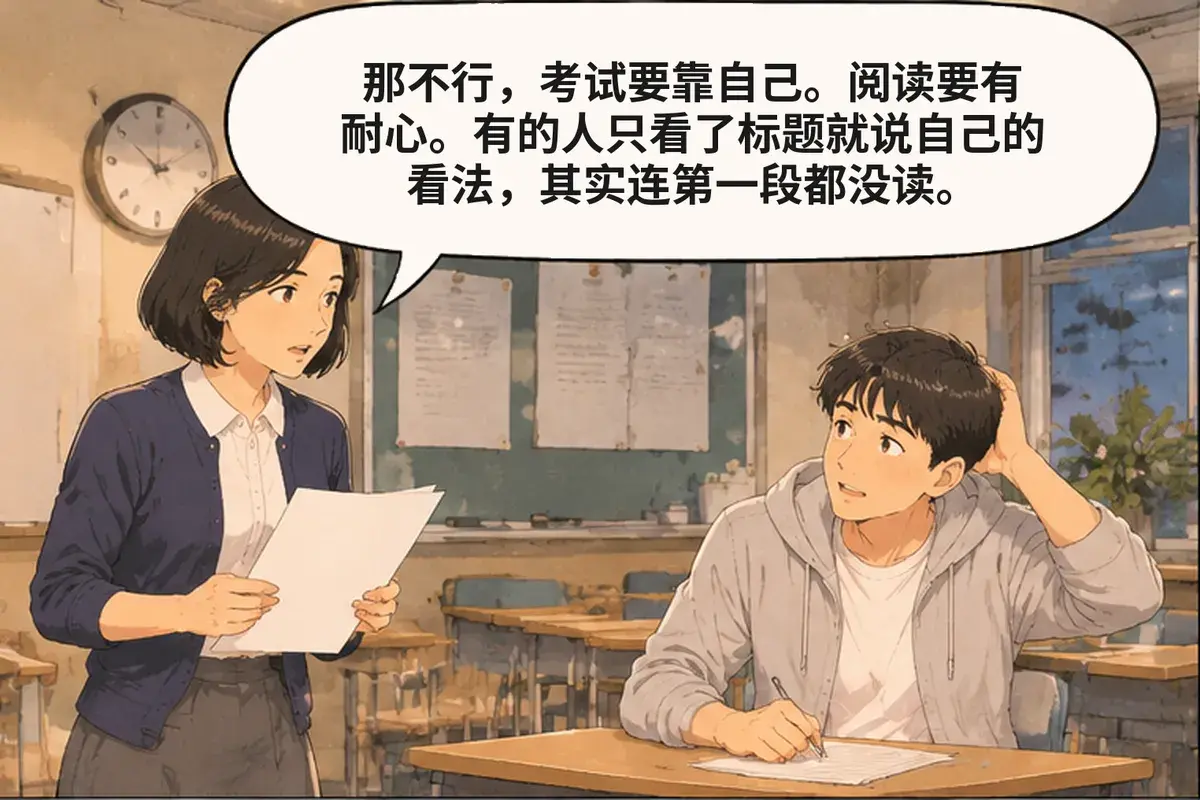
那不行,考试要靠自己。阅读要有耐心。有的人只看了标题就说自己的看法,其实连第一段都没读。
That won't work, on an exam you have to rely on yourself. Reading takes patience. Some people read only the headline and then give their opinion, when they haven't even read the first paragraph.

- 同学
这样的人就是不懂装懂!
People like that are just pretending to understand!

- 陈老师
可以这么说。不明白就问,千万别装。好,现在我们一问一答:我问,你们回答。新闻的第一段一般会写什么?
You could say that. If you don't understand, ask. Never pretend. OK, now let's do question and answer: I ask, you answer (to several people). What does the first paragraph of a news story usually say?

- 伊利亚
什么时候、在哪里、发生了什么,有时候还有原因。
When, where, what happened, and sometimes the reason too.

- 同学
总的来说,先看标题,再看第一段,最后才看细节,对吗?
All in all, first the headline, then the first paragraph, and only at the end the details, right?

- 陈老师
对。今天的作业:每人找一条新闻,只读标题和第一段,下次上课告诉大家它说了什么。
Right. Today's homework: each person finds one news story, reads only the headline and the first paragraph, and next class tells everyone what it said.

- 伊利亚
好的,我回去就找一条关于充电桩的。
OK, I'll go home and find one about charging stations right away.
Grammar for this text
- 这里 的 “将” 就是 “要” 的 意思 吗? — the key question of the lesson.
将(jiāng) is the written-style "will": news and documents use it instead of要. But it only replaces要when要means "will happen later".要"want" and要"need to" can't be swapped, which is why the teacher laughs at我 将 一 杯 咖啡. - 根据 我 的 经验 —
根据(gēnjù) means "according to, based on": after it comes what you rely on (experience, a plan, a forecast). It usually starts the sentence and is followed by a comma. - 就 能 知道 个 大概 —
个before大概turns it into "the general picture": "get the general idea". Casual. - 官方 发布 的 消息 —
官方is "official" and发布is "to announce officially". The opposite is 网上 转 来 转 去 的: the pattern "verb +来+ verb +去" means "back and forth, over and over". - 可见, 光 看 标题 是 不 够 的 —
可见(kějiàn) means "so, this shows": a conclusion from what was just said. It's a written-style word; in conversation you would say所以. The teacher praises Ilya for working it into his speech.光means "just, only". - 汉语 考试 五 级 — the Chinese exam is divided into levels (
级), not letter grades. - 不懂装懂 — "doesn't understand but acts as if they do":
装means "to pretend". - 一问一答 — "question and answer".
- 总的来说 — "in general, all in all": it's how you sum things up.
Words and grammar of the unit: Read the news.
Learn the words from the texts with flashcards
In the app, you can tap any word in a text to see its translation, forms and examples, and new words stick with flashcards. 15 minutes a day.
Start for freeEverything is open for free. No card needed to sign up.