

Chinese dialogue with translation · B2 · 24 lines
我将采访我的外国哥哥 I will interview my foreign big brother
Comic · 23 panels
- 豆豆
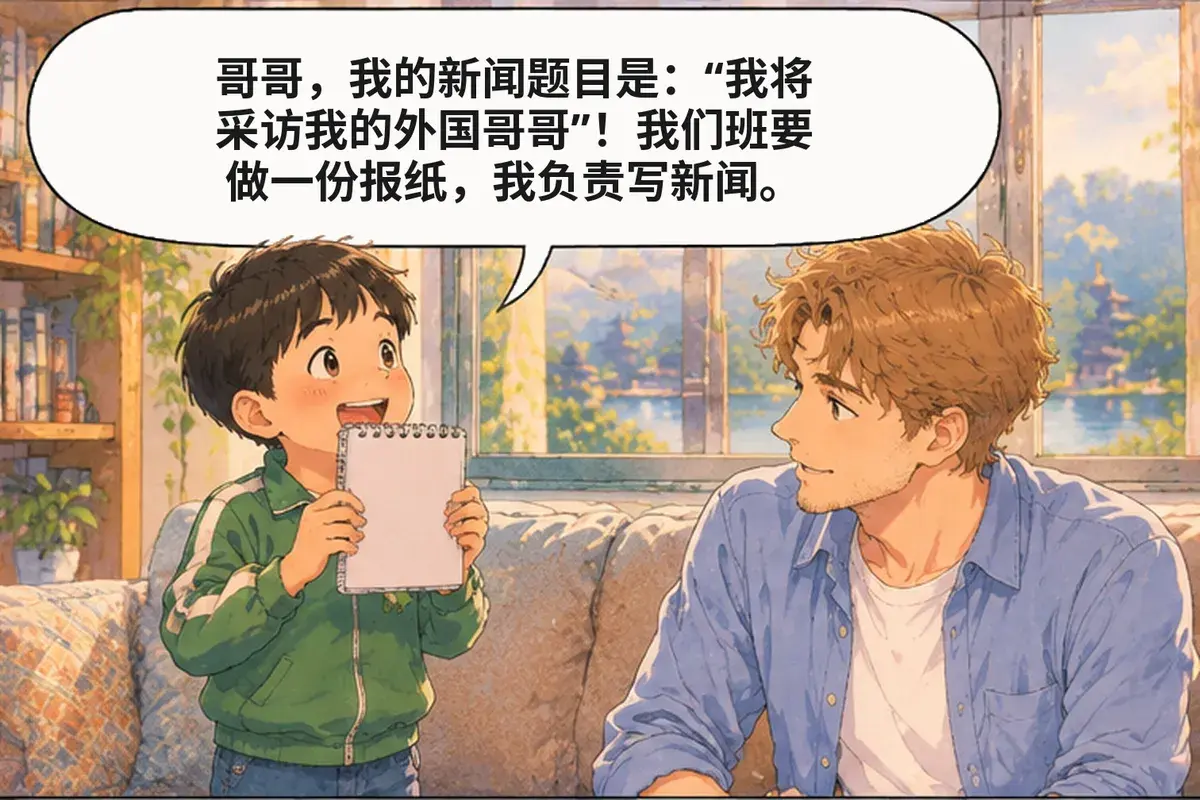
哥哥,我的新闻题目是:“我将采访我的外国哥哥”!我们班要做一份报纸,我负责写新闻。
Big brother, the title of my news story is: "I Will Interview My Foreign Big Brother"! Our class is making a newspaper, and I'm in charge of writing the news.

- 伊利亚
“将采访”?你今天说话怎么跟新闻一样?
"Will interview"? Why are you talking like the news today?
- 豆豆
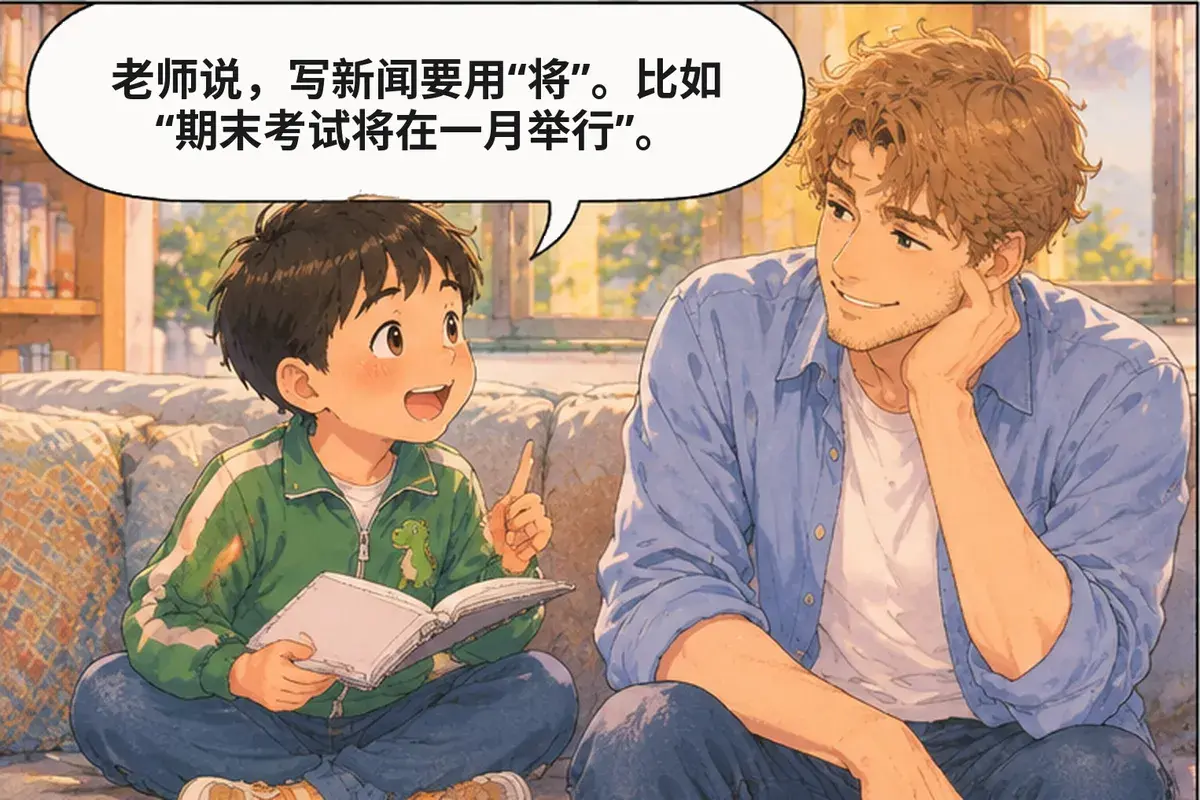
老师说,写新闻要用“将”。比如“期末考试将在一月举行”。
Our teacher said we have to use "jiāng" when writing news. For example: "The final exams will be held in January."

- 伊利亚
据说你现在是班里的小记者?
I hear you're the class reporter now?
- 豆豆
对!你怎么知道的?
Yes! How did you know?
- 伊利亚
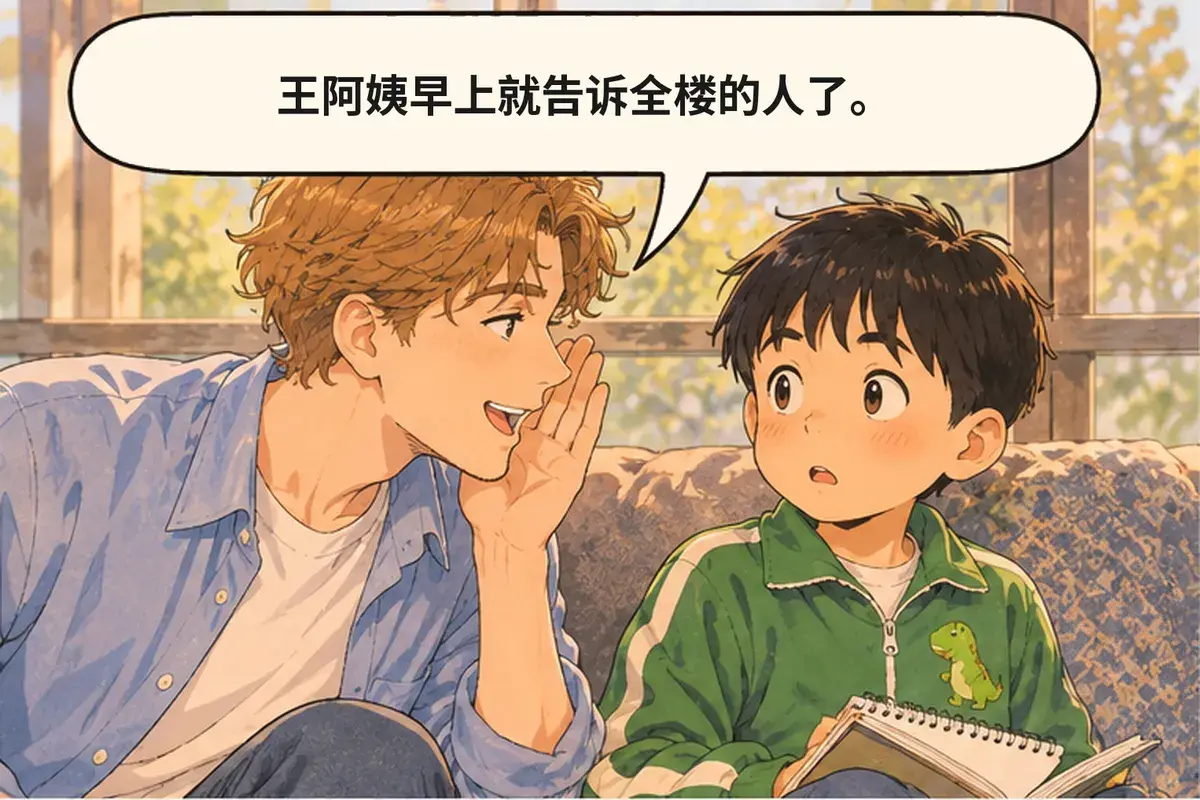
王阿姨早上就告诉全楼的人了。
Auntie Wang told everyone in the building this morning.
- 豆豆
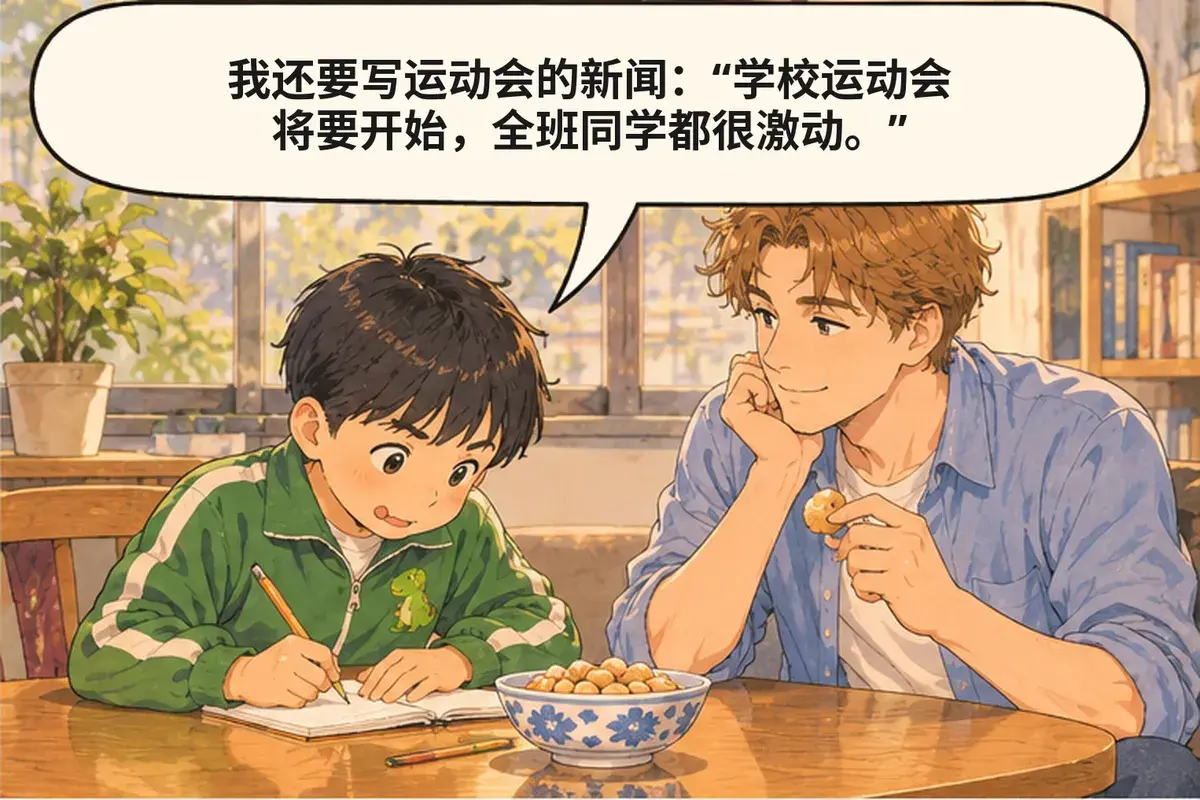
我还要写运动会的新闻:“学校运动会将要开始,全班同学都很激动。”
I'm also going to write a story about the sports day: "The school sports day is about to begin, and everyone in the class is very excited."
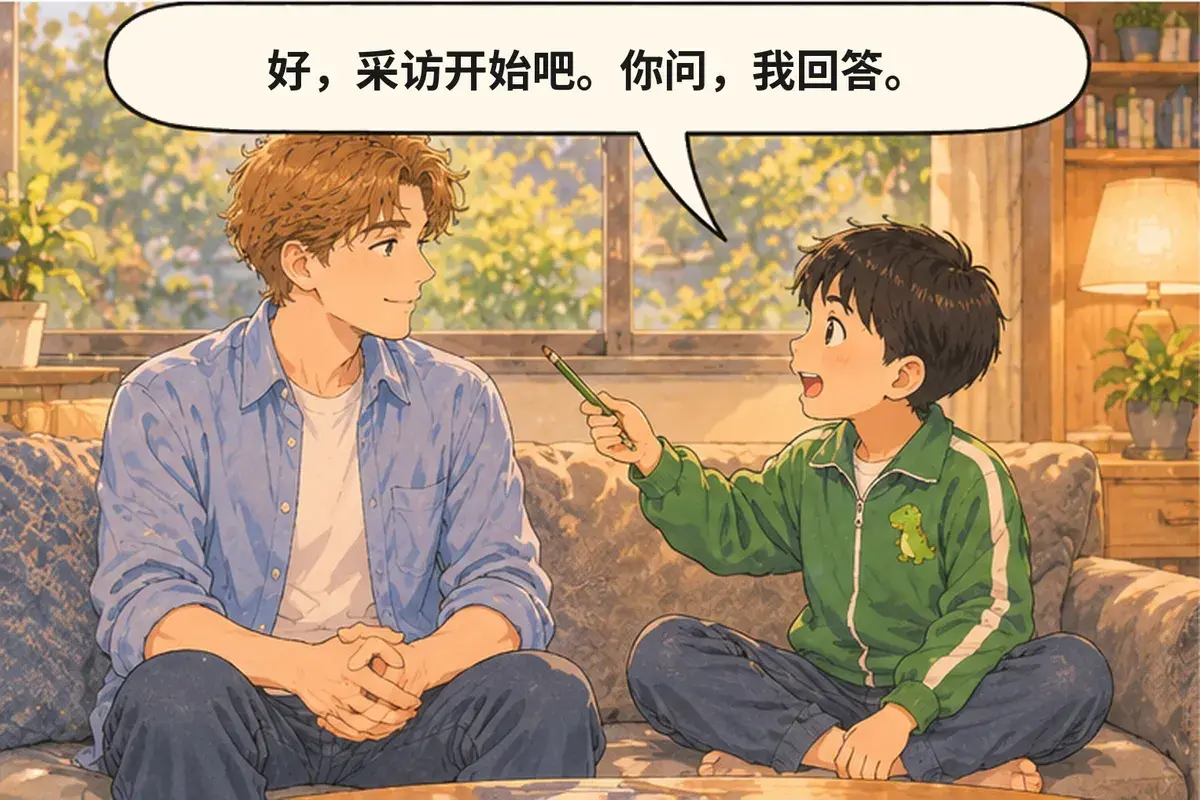
- 伊利亚
好,采访开始吧。你问,我回答。
OK, let's start the interview. You ask, I'll answer.
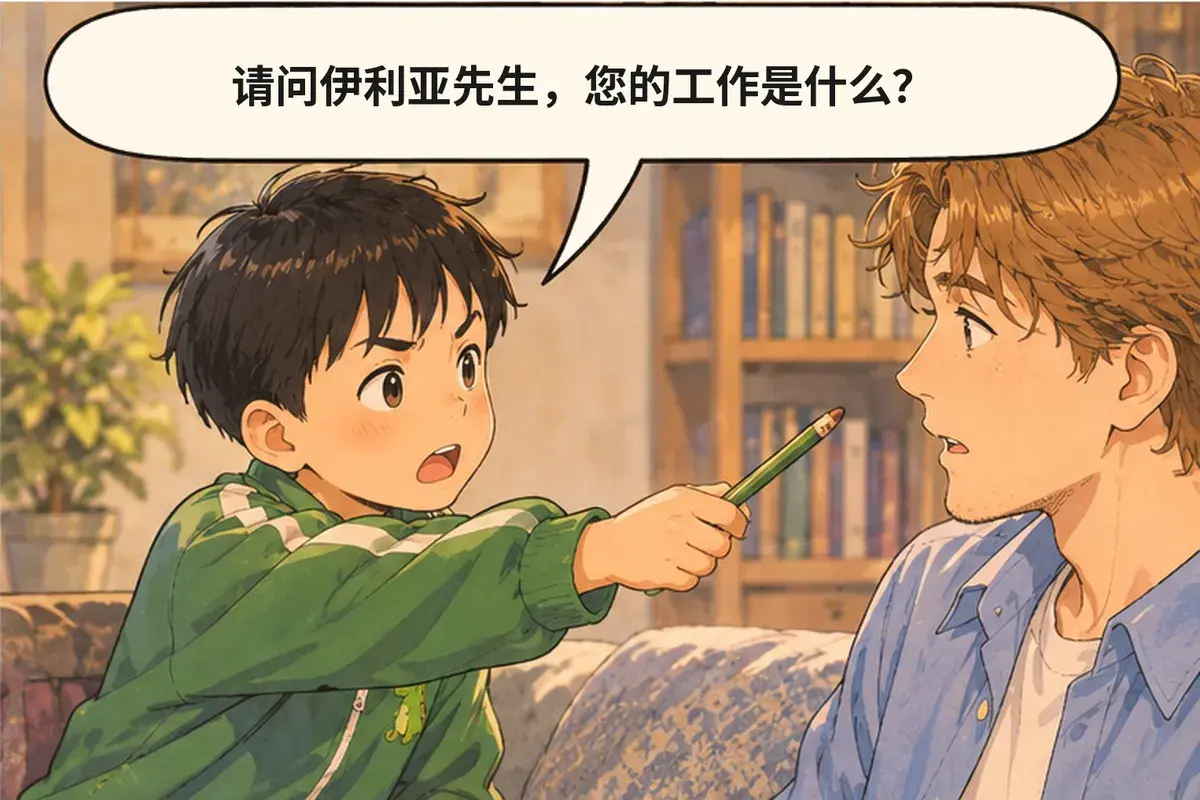
- 豆豆
请问伊利亚先生,您的工作是什么?
Excuse me, Mr. Ilya, what is your job? (polite)
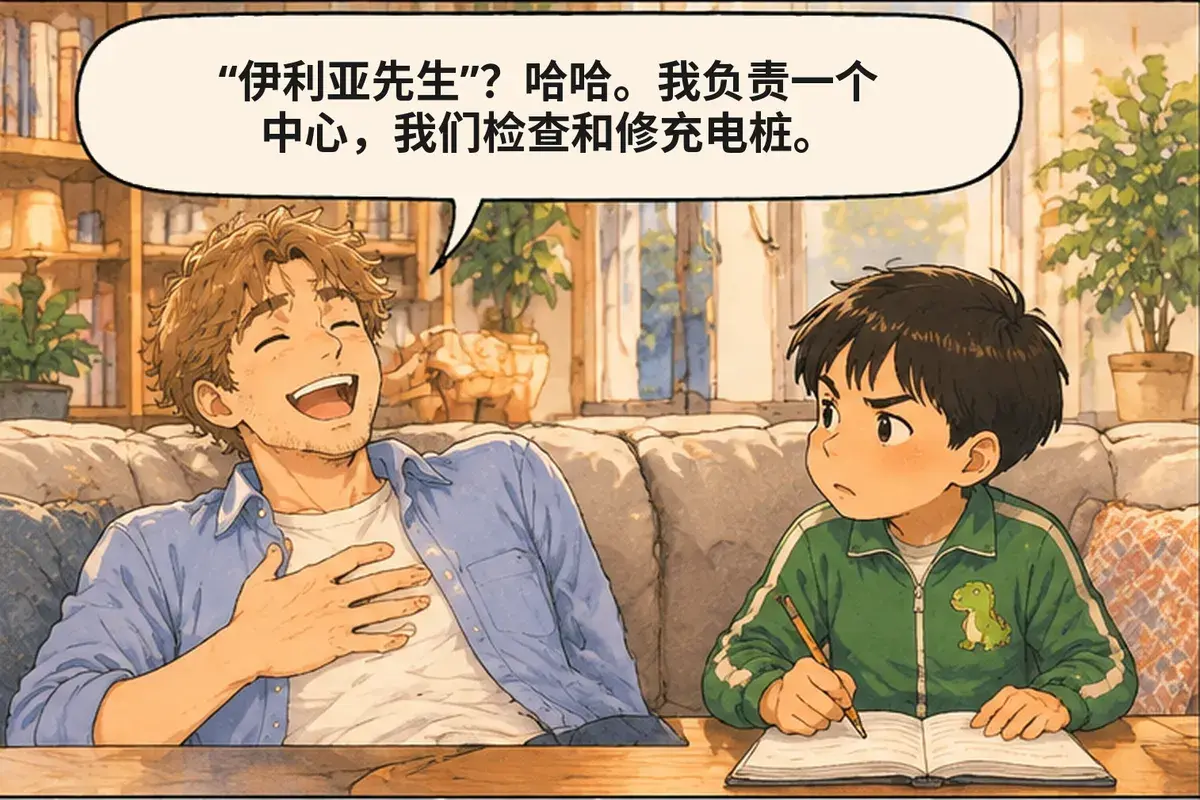
- 伊利亚
“伊利亚先生”?哈哈。我负责一个中心,我们检查和修充电桩。
"Mr. Ilya"? Ha-ha. I'm in charge of a center, and we check and repair charging stations.

- 豆豆
这个回答太短了!新闻里的回答要有板有眼,时间、地点都要说清楚。
That answer is too short! In the news, answers have to be orderly and precise, and you have to state the time and place clearly.
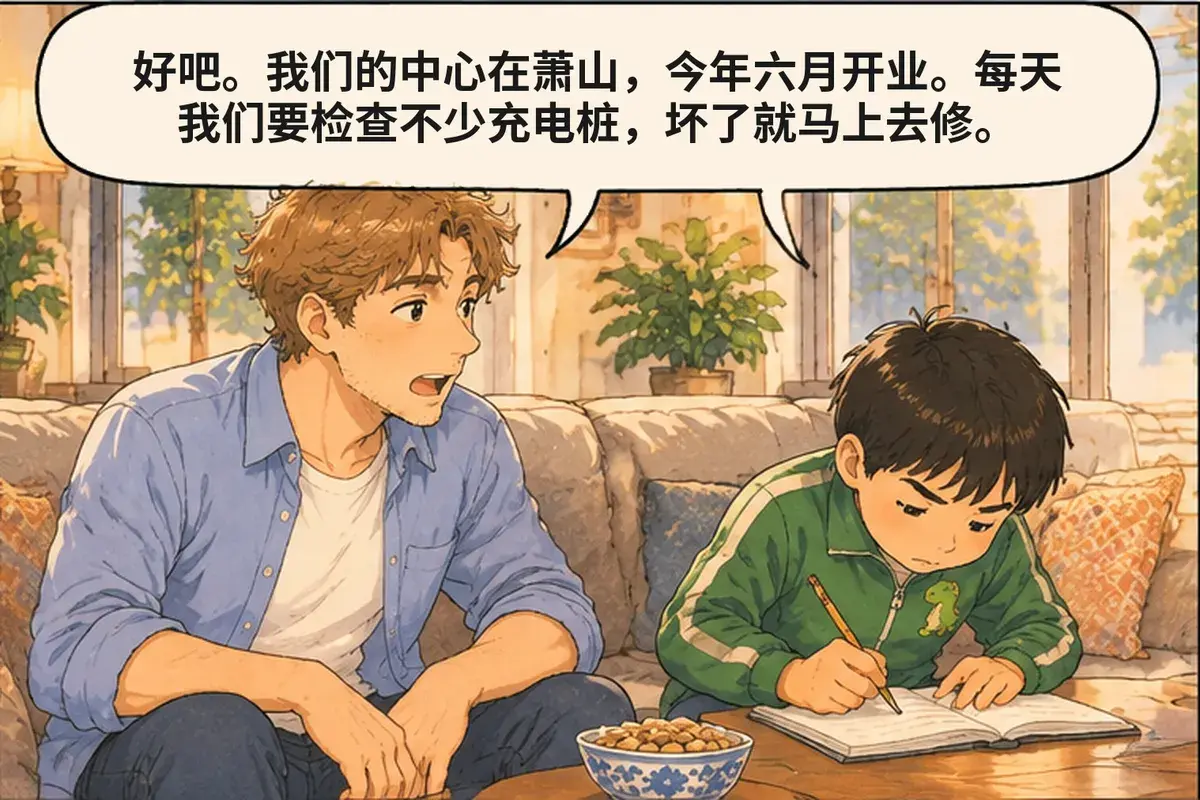
- 伊利亚
好吧。我们的中心在萧山,今年六月开业。每天我们要检查不少充电桩,坏了就马上去修。
Fine. Our center is in Xiaoshan and opened in June this year. Every day we check quite a few charging stations, and if one is broken, we go fix it right away.
- 豆豆
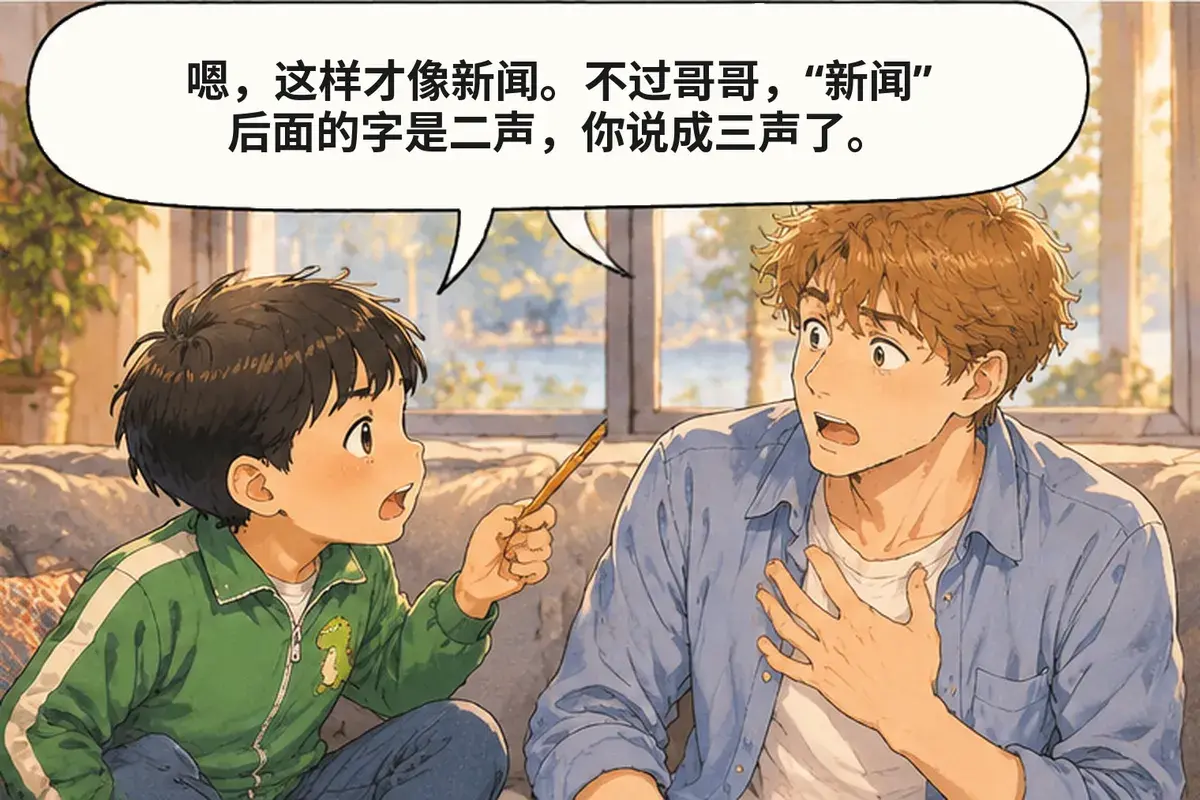
嗯,这样才像新闻。不过哥哥,“新闻”后面的字是二声,你说成三声了。
Mm-hmm, now that sounds like the news. But, big brother, the second syllable of "xīnwén" is in the 2nd tone, and you said it in the 3rd tone.

- 伊利亚
你连我的声调都要管啊?
You're even going to police my tones?
- 豆豆
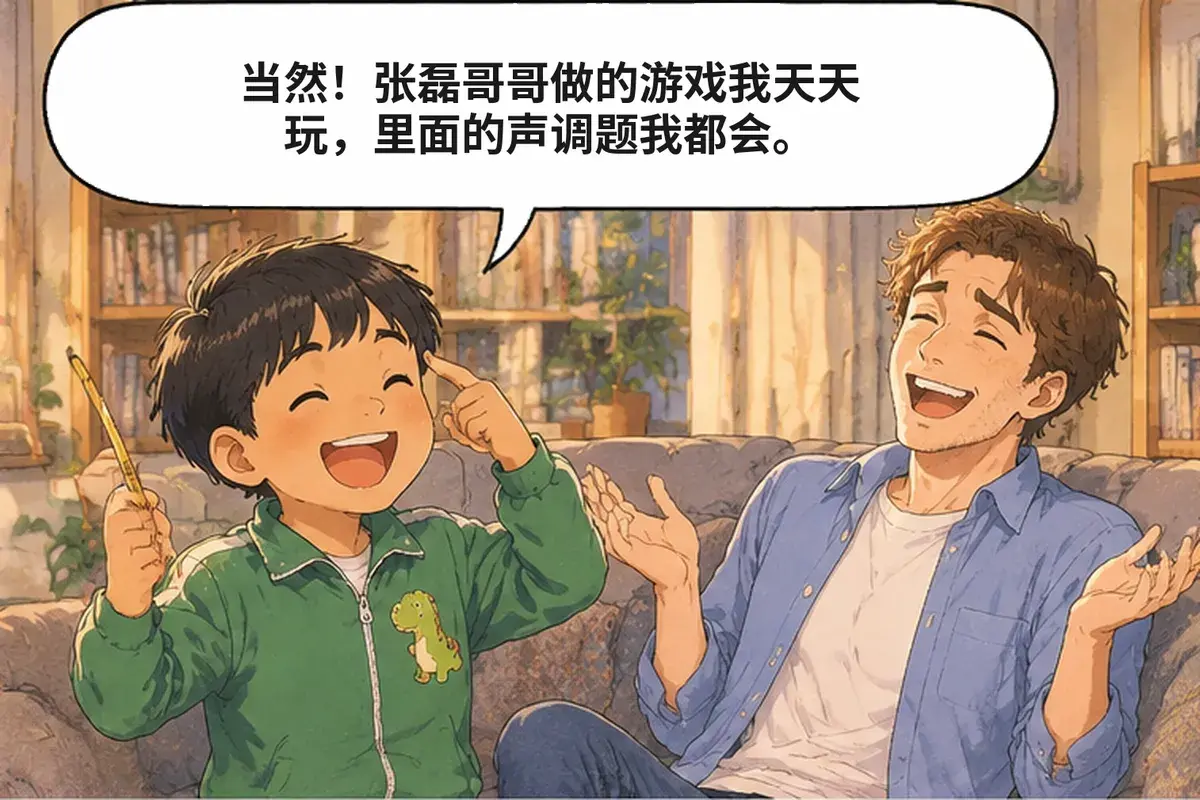
当然!张磊哥哥做的游戏我天天玩,里面的声调题我都会。
Of course! I play the game Big Brother Zhang Lei made every day, and I can do all the tone questions in it.
- 豆豆
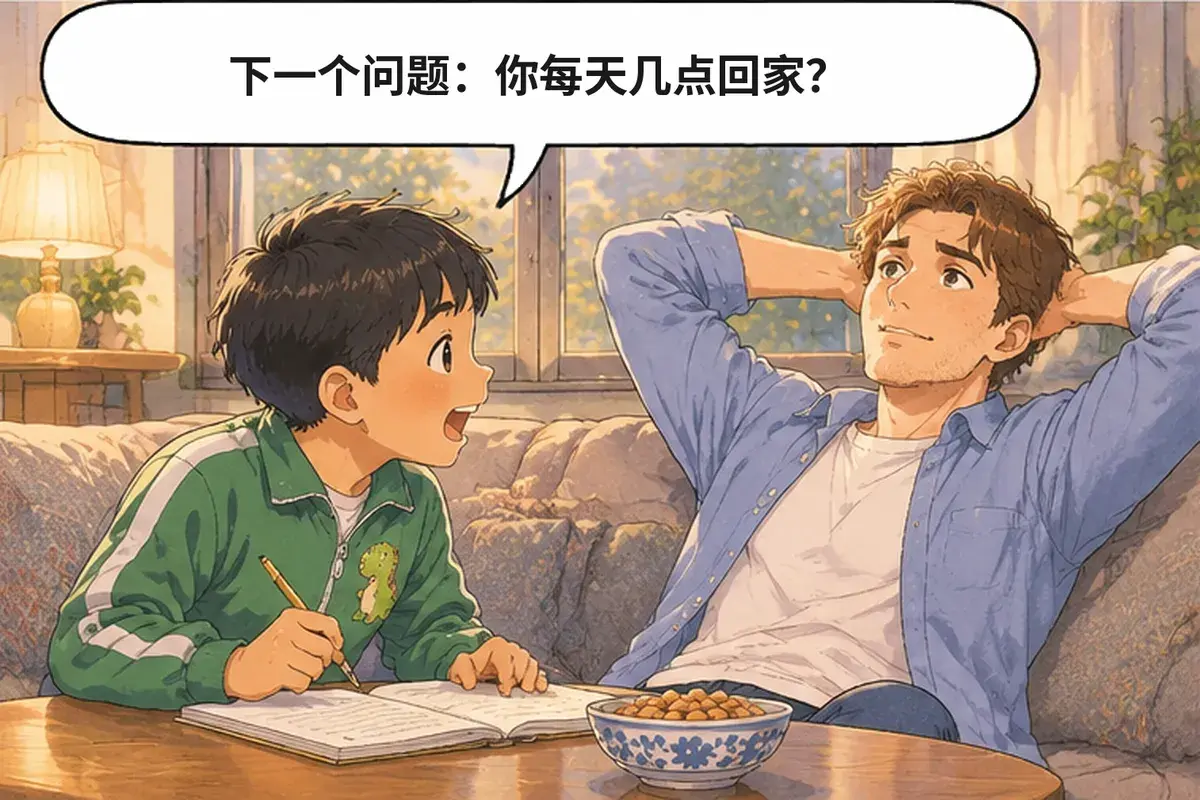
下一个问题:你每天几点回家?
Next question: what time do you get home every day?

- 伊利亚
有时候九点,有时候更晚。你可以写:“他很忙,可是很开心。”
Sometimes at nine, sometimes later. You can write: "He's very busy, but happy."
- 豆豆
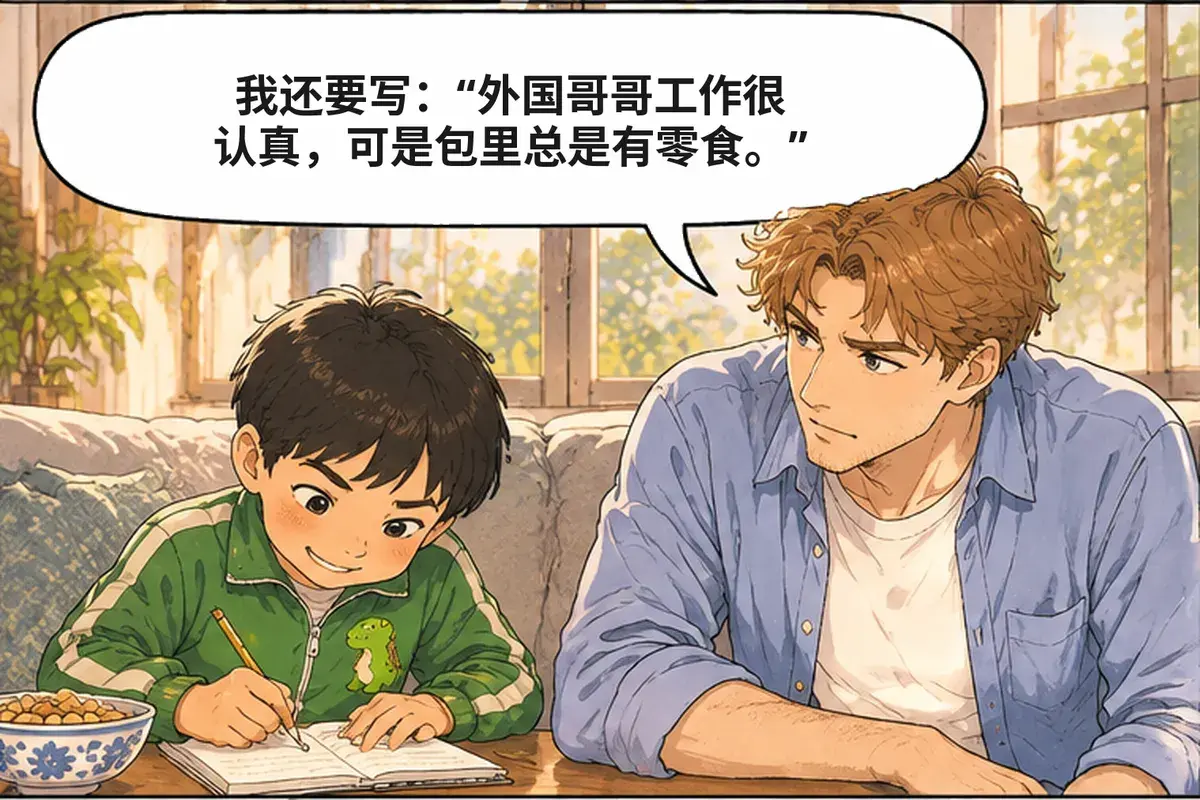
我还要写:“外国哥哥工作很认真,可是包里总是有零食。”
I'm also going to write: "My foreign big brother works very seriously, but there are always snacks in his bag."
- 伊利亚
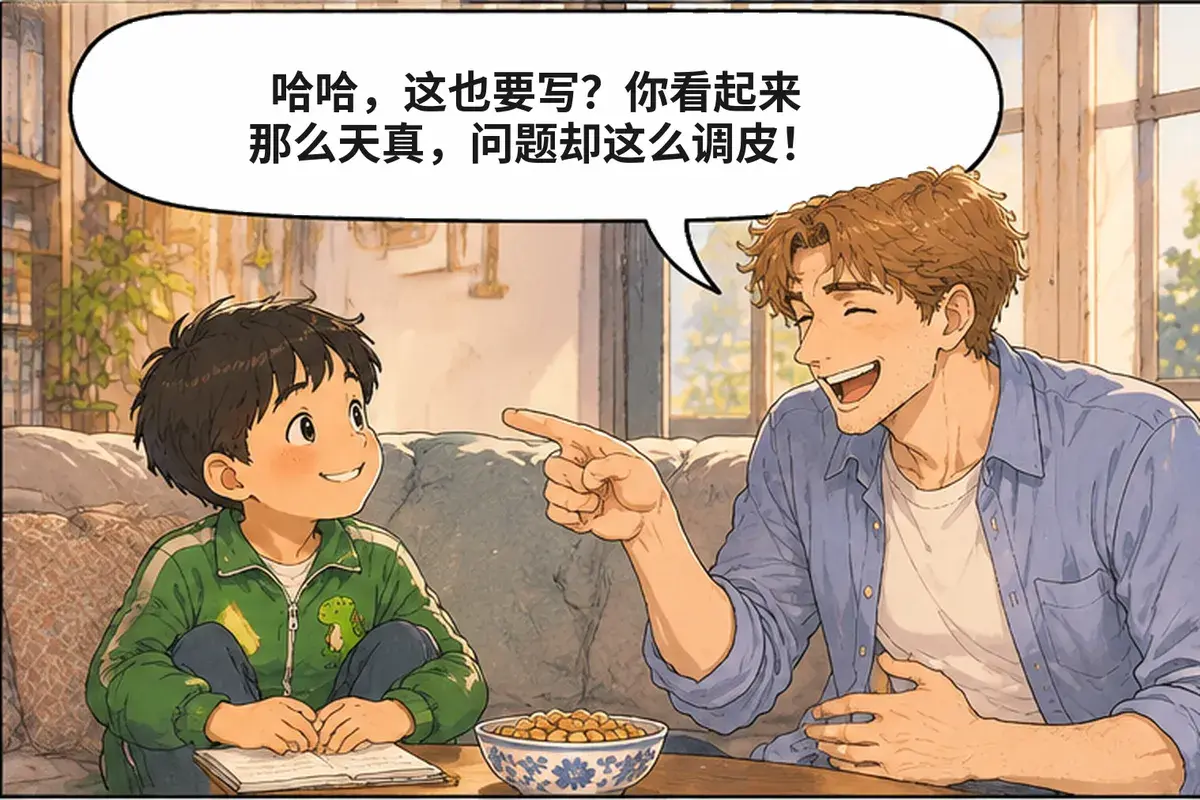
哈哈,这也要写?你看起来那么天真,问题却这么调皮!
Ha-ha, you're going to write that too? You look so innocent, but your questions are so cheeky!
- 豆豆
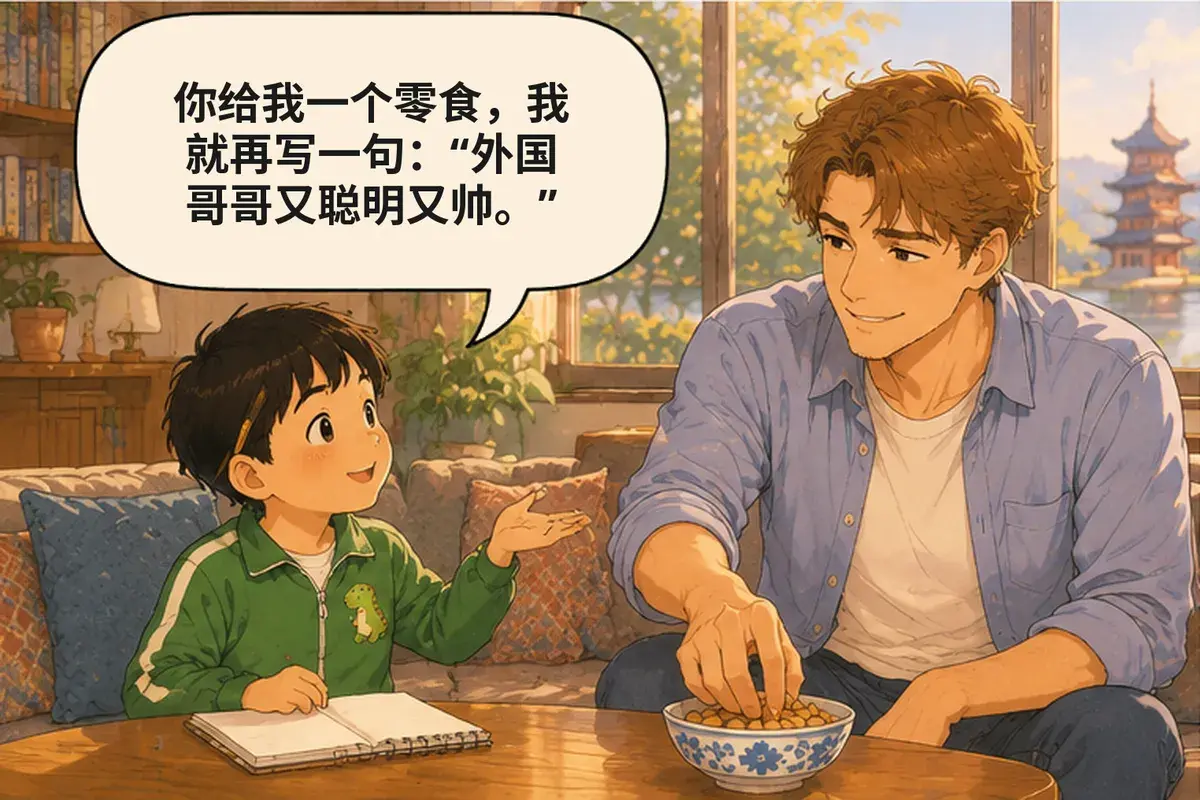
你给我一个零食,我就再写一句:“外国哥哥又聪明又帅。”
Give me a snack and I'll write one more line: "My foreign big brother is both smart and handsome."

- 伊利亚
你这张小嘴巴真会说!好,给你。
That little mouth of yours sure can talk! OK, here you go.
- 豆豆
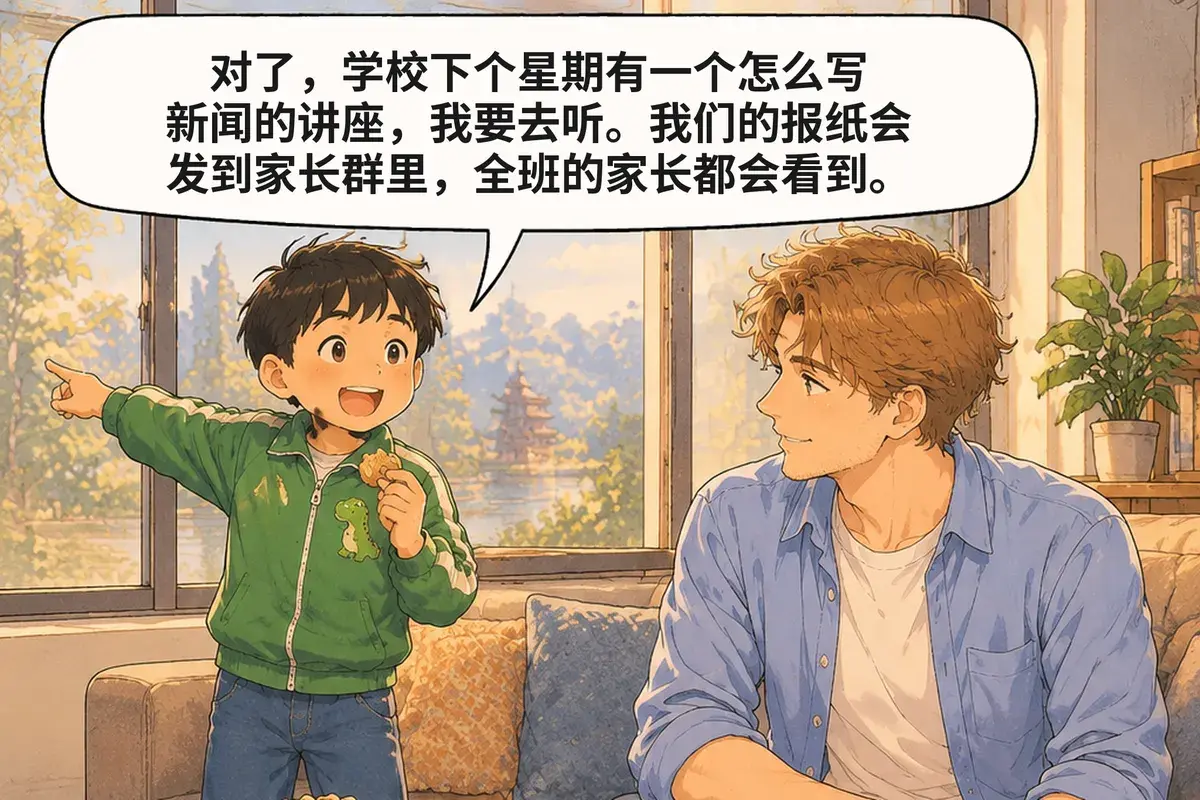
对了,学校下个星期有一个怎么写新闻的讲座,我要去听。我们的报纸会发到家长群里,全班的家长都会看到。
Oh, by the way, next week the school has a lecture on how to write news, and I'm going to attend. Our newspaper will be sent to the parents' group chat, and all the parents in the class will see it.
- 伊利亚
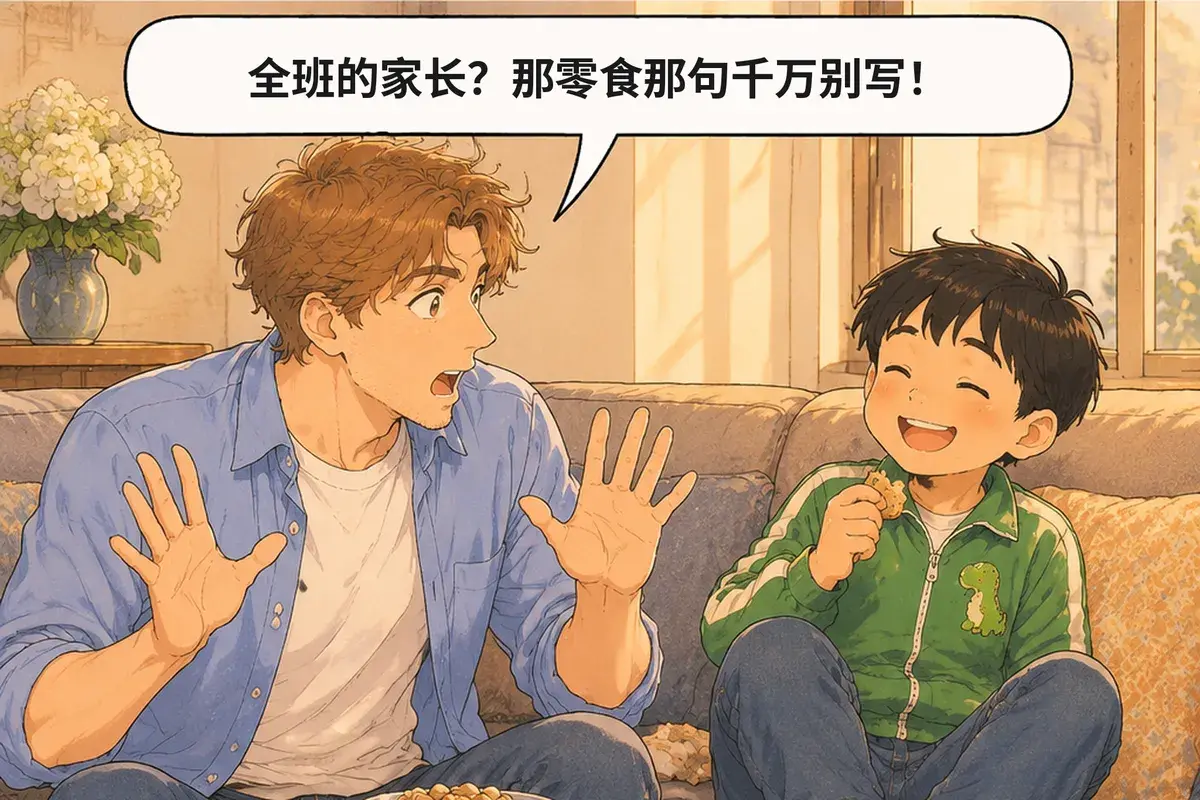
全班的家长?那零食那句千万别写!
All the parents in the class? Then don't you dare write that line about snacks!
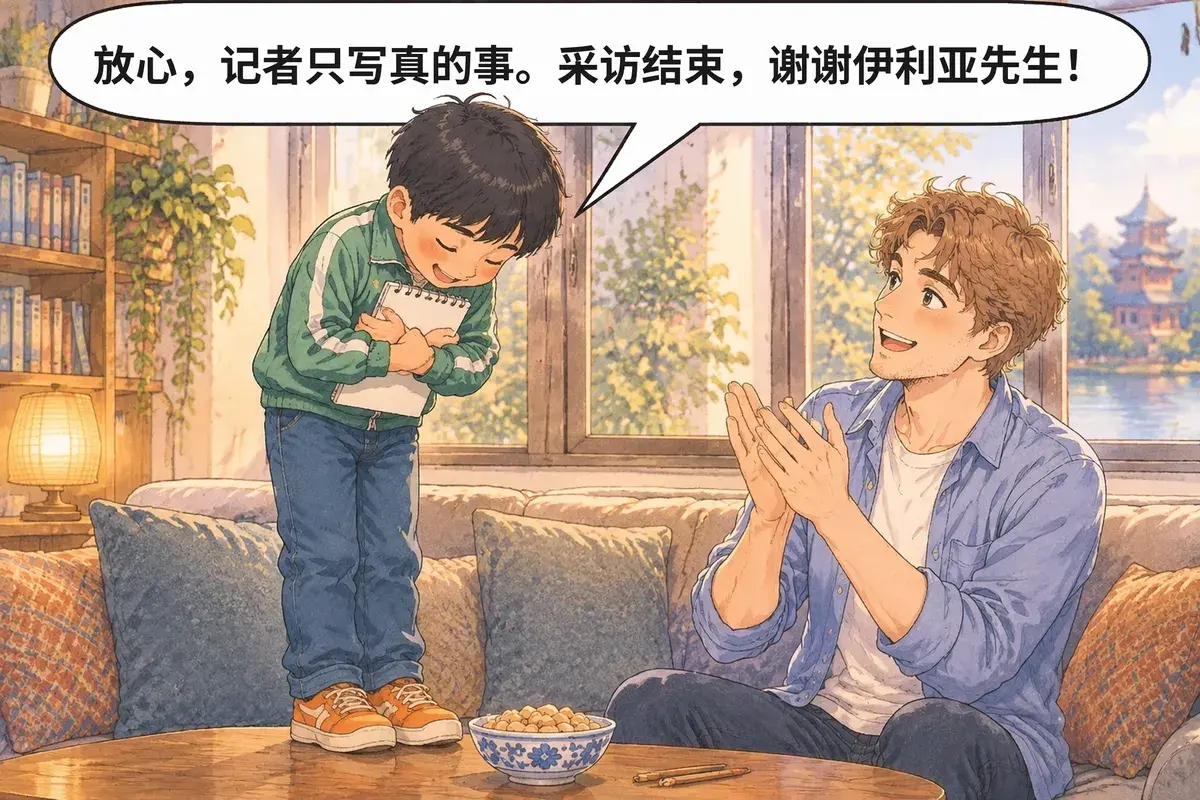
- 豆豆
放心,记者只写真的事。采访结束,谢谢伊利亚先生!
Don't worry, a reporter only writes true things. The interview is over, thank you, Mr. Ilya!
Grammar for this text
- 我 将 采访 我 的 外国 哥哥 — Doudou is playing newspaper: in everyday talk
将sounds like a news anchor, which is why it's funny. - “将 采访”? — Ilya imitates the style.
- 据说 你 现在 是 班 里 的 小 记者? —
据说(jùshuō) means "they say": who said it isn't named.听说means "I heard", and我can stand before it;据说never has a subject. Ilya is also playing along with the "newspaper" style. - 请问 伊利亚 先生, 您 的 工作 是 什么? — the "reporter" switches to
您and先生, like a journalist talking to an adult guest. That's why Ilya laughs. - 将要 开始 — the written-style "is about to begin", like
快要 … 了. - 要 有板有眼 — "thorough, everything in order".
- “新闻” 后面 的 字 是 二 声, 你 说 成 三 声 了 — in conversation people name tones briefly:
二 声is the "2nd tone" and三 声the "3rd tone".说 成means "to say it as". Ilya still mixes up tones: instead of xīnwén he says xīnwěn. - 问题 却 这么 调皮 —
却means "but, yet": against expectation (he looks innocent, but the questions are cheeky). - 你 这 张 小 嘴巴 真 会 说! —
会 说means "can really talk": it's said to someone who flatters or wheedles cleverly. A mouth is counted with张. - 千万 别 写! —
千万 别means "don't ever, whatever you do".
Words and grammar of the unit: Read the news.
Learn the words from the texts with flashcards
In the app, you can tap any word in a text to see its translation, forms and examples, and new words stick with flashcards. 15 minutes a day.
Start for freeEverything is open for free. No card needed to sign up.