

Chinese dialogue with translation · B2 · 20 lines
我们需要的是愿意学习的人 What we need is people who are willing to learn
Comic · 19 panels
- 伊利亚
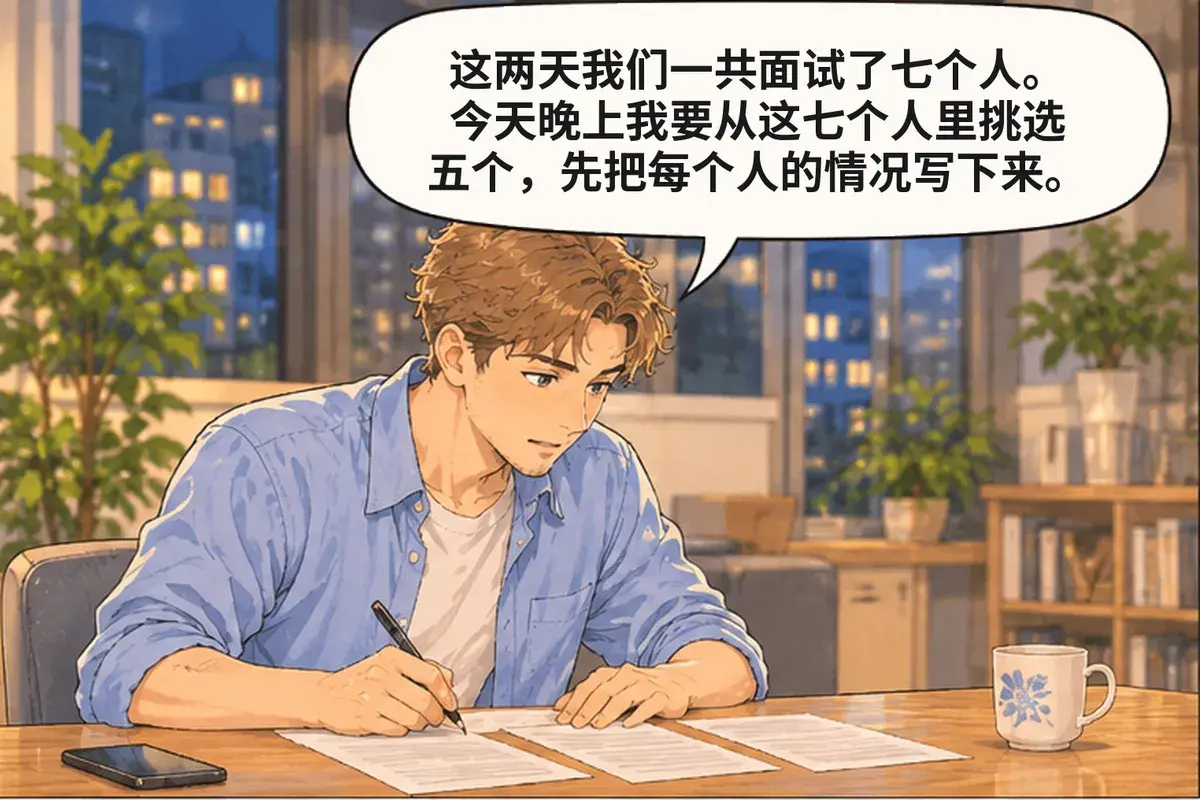
这两天我们一共面试了七个人。今天晚上我要从这七个人里挑选五个,先把每个人的情况写下来。
We interviewed seven people in total these past two days. Tonight I have to pick five out of the seven, and first I'm writing down each person's situation.
- 伊利亚
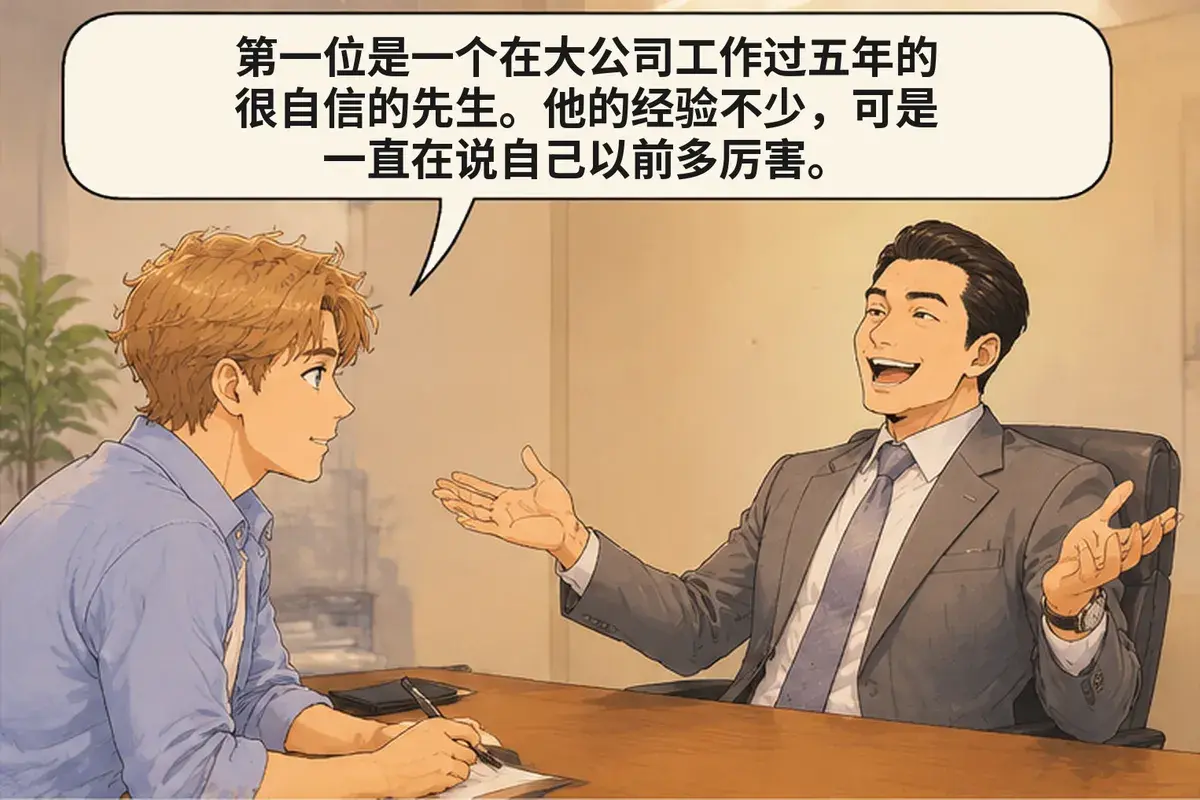
第一位是一个在大公司工作过五年的很自信的先生。他的经验不少,可是一直在说自己以前多厉害。
The first is a very confident man who worked at a big company for five years. He has quite a bit of experience, but he kept talking about how great he used to be.

- 伊利亚
我问他为什么想来,他只说我们工资高。动机不对,不录取。
I asked him why he wanted to come here, and he only said that our salaries are high. The motivation isn't right, so we won't hire him.

- 伊利亚
第二位是那位说话很快的广告公司经理。他很善于说话,自己讲了二十分钟,却没有问我们任何问题。
The second is that advertising company manager who talks very fast. He's very good at talking. He spoke for twenty minutes himself, but didn't ask us a single question.

- 伊利亚
他很有才能,这样会说话的人百里挑一。可是我们是修设备的,不是做广告的。
He's very talented. People who can talk like that are one in a hundred. But we repair equipment, we don't make ads.
- 伊利亚
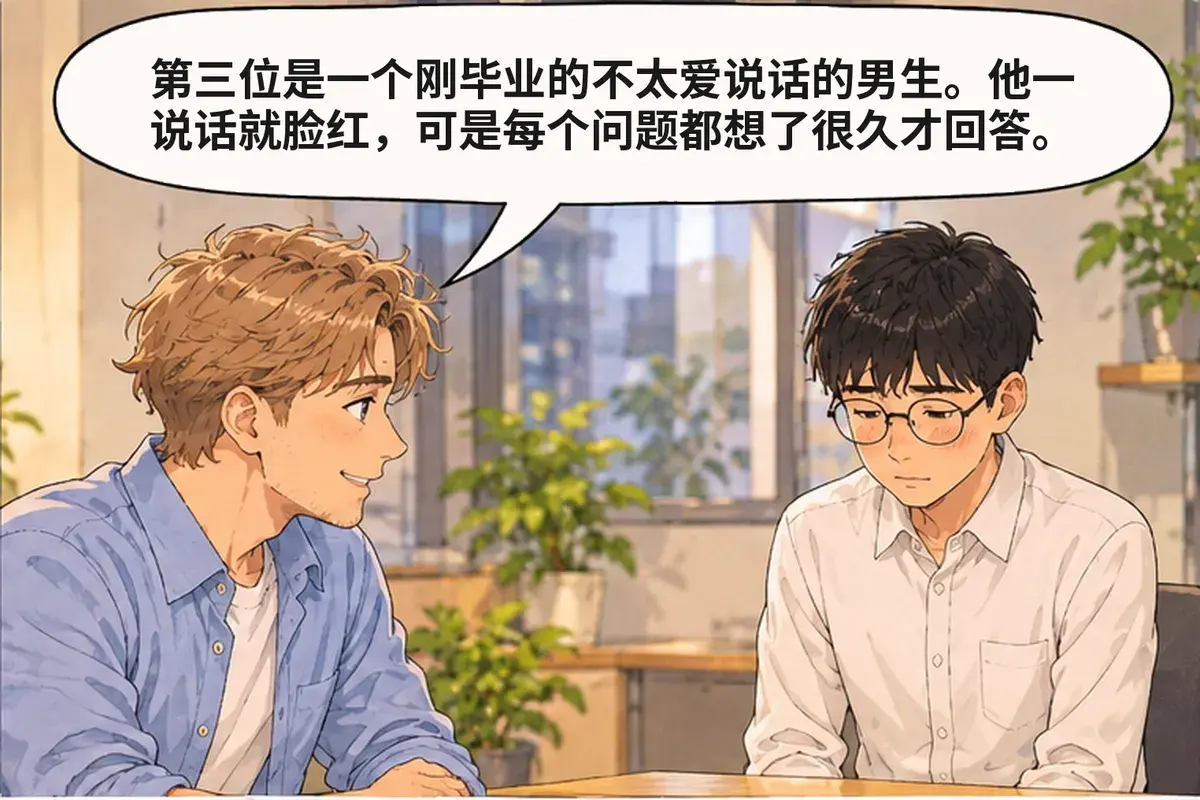
第三位是一个刚毕业的不太爱说话的男生。他一说话就脸红,可是每个问题都想了很久才回答。
The third is a quiet guy who just graduated. He blushes as soon as he starts talking, but he thought for a long time before answering every question.
- 伊利亚
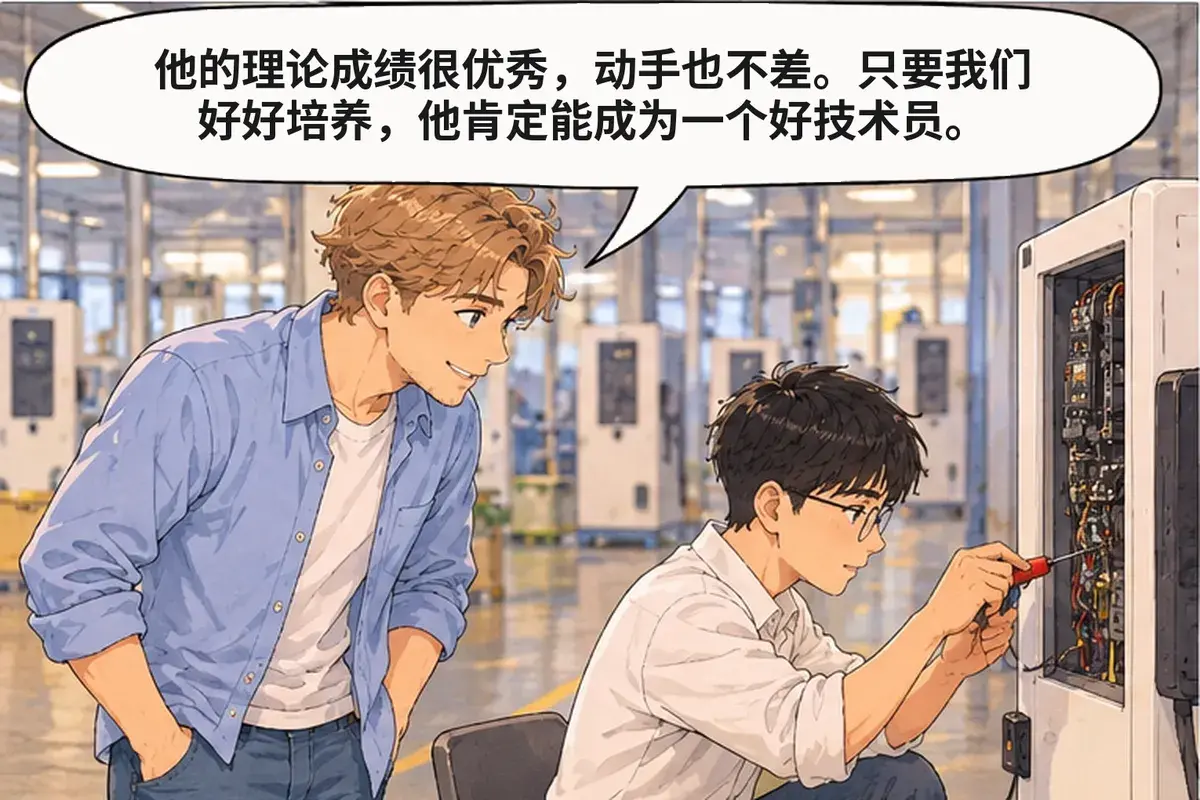
他的理论成绩很优秀,动手也不差。只要我们好好培养,他肯定能成为一个好技术员。
His grades in theory are excellent, and he's not bad at hands-on work either. As long as we train him well, he'll surely become a good technician.
- 伊利亚
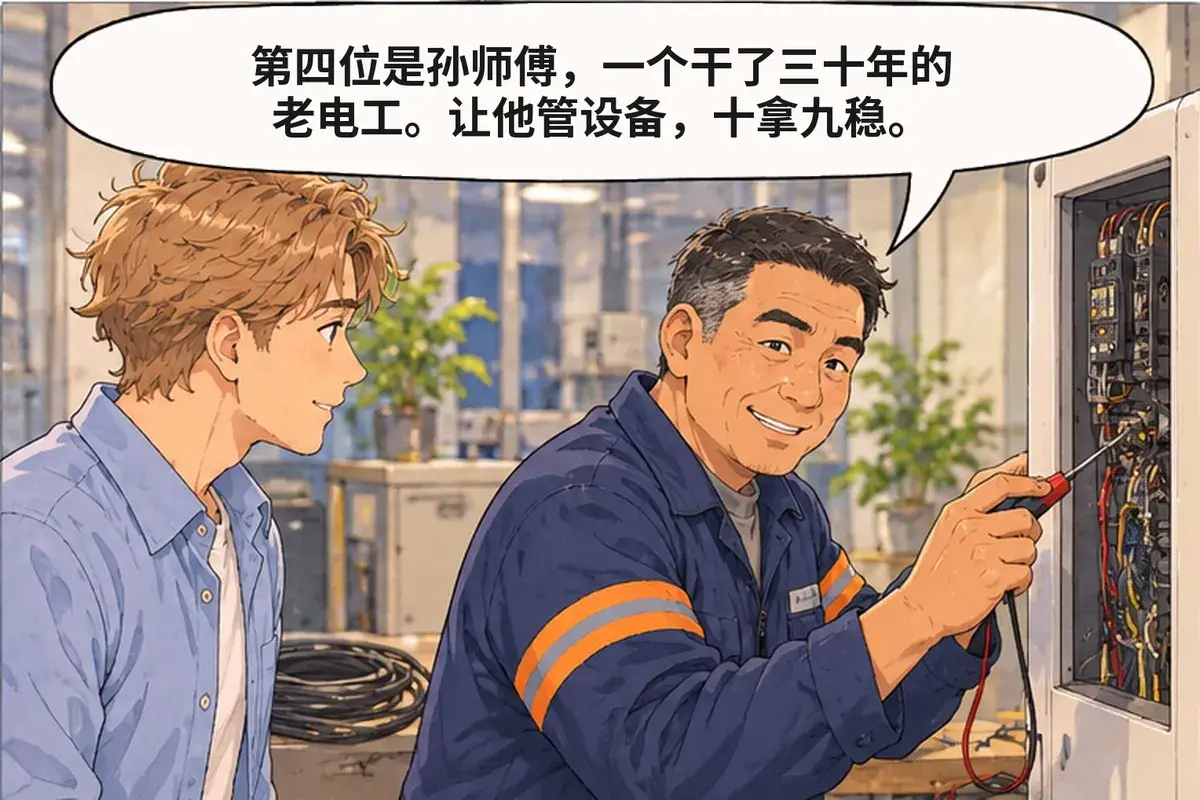
第四位是孙师傅,一个干了三十年的老电工。让他管设备,十拿九稳。
The fourth is Mr. Sun, an old electrician who worked for thirty years. Put him in charge of the equipment and it's a sure thing.
- 伊利亚
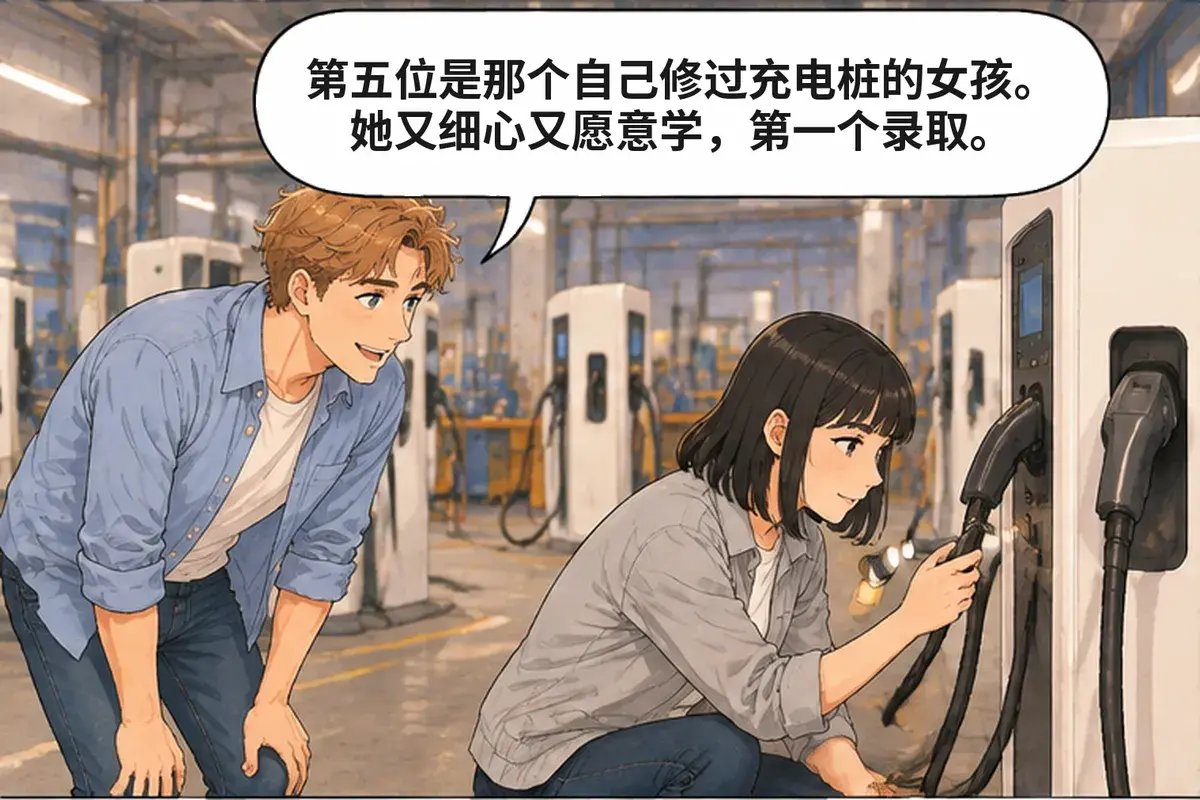
第五位是那个自己修过充电桩的女孩。她又细心又愿意学,第一个录取。
The fifth is the girl who repaired a charging station herself. She's careful and also willing to learn. Hire her first.
- 伊利亚
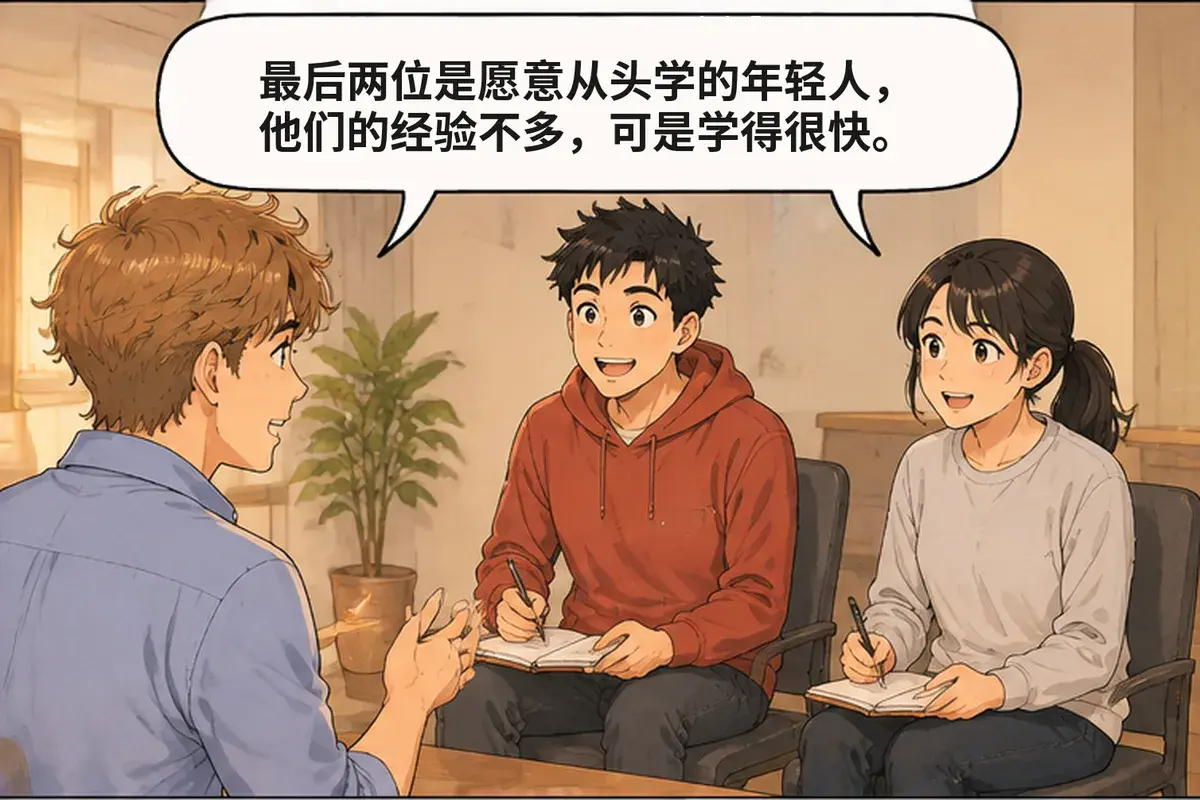
最后两位是愿意从头学的年轻人,他们的经验不多,可是学得很快。
The last two are young people who are willing to learn from scratch. They don't have much experience, but they learn very fast.

- 伊利亚
五个人,我打算分成两组:一组管设备,一组联系客户。
Of the five, I plan to split them into two groups: one handles equipment, the other contacts customers.

- 晓雨
你这么晚还在写?我看看。哇,每个人都写得这么清楚。
You're still writing this late? Let me see. Wow, everyone's written up so clearly.

- 晓雨
不过我有个问题,你选人的标准是什么?
But I have a question: what are your criteria for choosing people?

- 伊利亚
我们需要的是愿意学习的人。经验可以慢慢学,但是态度不能差。
What we need is people who are willing to learn. Experience can be picked up gradually, but attitude can't be bad.
- 晓雨
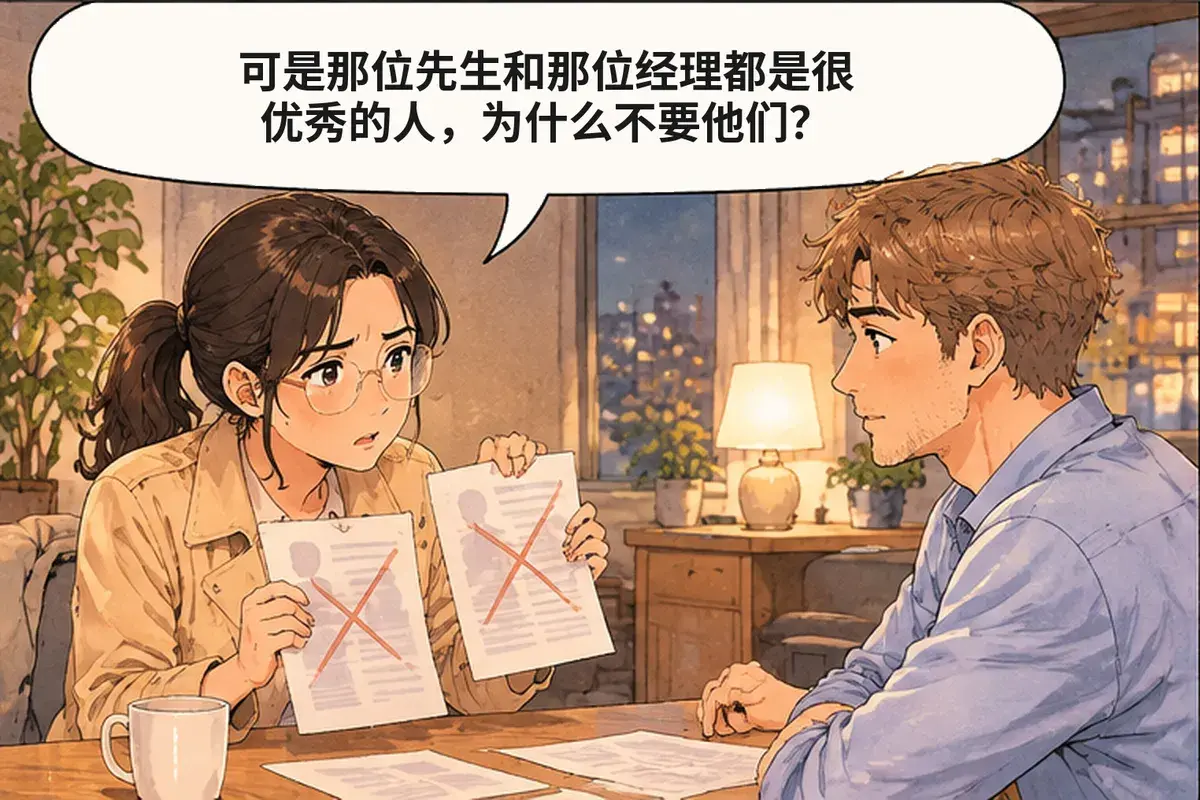
可是那位先生和那位经理都是很优秀的人,为什么不要他们?
But that man and that manager are both very outstanding people. Why don't you want them?

- 伊利亚
优秀的人不一定合适。我们要的是能一起干事的人。
Outstanding people aren't necessarily a good fit. We want people who can work together.

- 晓雨
有道理。那下一轮就请这五个人来公司,跟大家一起干一天吧。
Makes sense. Then for the next round, let's invite these five to the company to work with everyone for a day.
- 伊利亚
好主意。一起干一天,谁和谁合得来,就都清楚了。
Good idea. After working together for a day, it'll be clear who gets along with whom.

- 晓雨
那你呢?当初你是怎么被录取的?
And you? How were you hired back then?

- 伊利亚
我?我就是那种愿意学习的人啊。
Me? I'm exactly the kind of person who's willing to learn.
Grammar for this text
我们 需要 的 是 愿意 学习 的 人 — "what we need is people who are willing to learn". Two chains with 的: 我们 需要 的 with no noun ("what we need") and 愿意 学习 的 人.
一 个 在 大 公司 工作 过 五 年 的 很 自信 的 先生 — "a very confident man who worked at a big company for five years". Two phrases with 的: farther from the noun, what the person did (在 大 公司 工作 过 五 年); closer, what the person is like (很 自信). Two 的 is the limit; a third feature goes into a separate sentence.
那 位 说话 很 快 的 广告 公司 经理 — "that advertising company manager who talks very fast". 那 位 stands before the whole description: "the one we already mentioned".
那 个 自己 修 过 充电桩 的 女孩 — "the girl who repaired a charging station herself"; this is how Ilya refers to Xiao Song.
百里挑一 — "one in a hundred" (bǎilǐtiāoyī), a chengyu (four-character idiom) that praises a rare person.
十拿九稳 — "a sure thing" (shínájiǔwěn), a chengyu, literally "nine out of ten sure".
动机 不 对, 不 录取 — "wrong motivation, not hiring". 录取 means "to admit, to hire" (for a job or school). In notes to yourself you write short, without subjects and objects.
却 没有 问 我们 任何 问题 — "but didn't ask us any questions". 却 ("but, however", B1) goes after the subject, before the verb; 任何 + 没有 means "no … at all".
当初 你 是 怎么 被 录取 的? — "how were you hired back then?". 被 goes with 录取; 是 … 的 is used to ask how something that already happened came about.
Words and grammar of the unit: Choose people for your team.
Learn the words from the texts with flashcards
In the app, you can tap any word in a text to see its translation, forms and examples, and new words stick with flashcards. 15 minutes a day.
Start for freeEverything is open for free. No card needed to sign up.