

Chinese dialogue with translation · B2 · 22 lines
你怎么说话像新闻一样? Why do you talk like the news?
Comic · 22 panels

- 张磊
伊利亚,你怎么说话像新闻一样?
Ilya, why do you talk like the news?
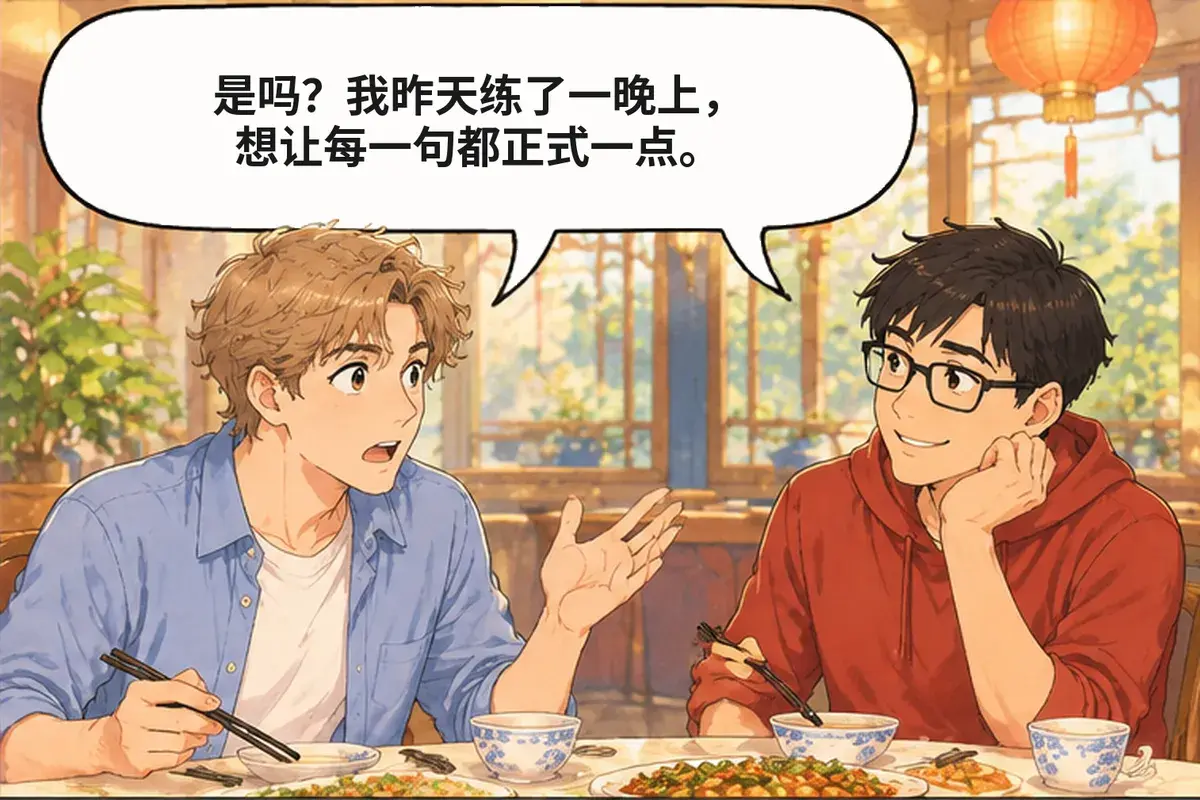
- 伊利亚
是吗?我昨天练了一晚上,想让每一句都正式一点。
Really? I practiced all evening yesterday. I wanted every sentence to sound a bit more formal.

- 张磊
你一本正经地说“其主要工作是检查和维修充电桩”,我在下面都想笑了。
You said "its main work is inspecting and repairing charging stations" with such a straight face that I wanted to laugh down in the audience.

- 张磊
“其主要工作”是什么?说简单一点,就是“我们修充电桩”!
What's "its main work"? Put simply, it's "we fix charging stations"!

- 伊利亚
那我在台上也不能说“我们修充电桩”啊,下面坐的都是领导和客户。
But I can't say "we fix charging stations" on stage. The people sitting in the audience were all leaders and clients.

- 晓雨
我觉得你在台上讲话的样子很帅,一点也不紧张。
I think you looked great speaking on stage, and not nervous at all.

- 萨拉
我听到一半才明白:“位于”就是“在”,“之一”就是“其中一个”,对吗?
I only understood halfway through: "wèiyú" just means "zài", and "zhīyī" just means "qízhōng yí gè", right?

- 张磊
对。还有“各位的到来令我们十分感动”,翻译一下就是“谢谢你们来”。
Right. And there's also "your coming here has deeply touched us", which translates to "thank you all for coming".

- 伊利亚
这叫正式!众所周知,领导讲话都是这样的。
That's called formal! As everyone knows, leaders always talk like this.

- 张磊
还“众所周知”!你听一下,你吃饭的时候也这么说话!
"As everyone knows," really! Listen to yourself, you talk like that even when you eat!

- 伊利亚
哈哈,是啊!这些话在台上说很正式,吃饭的时候说,大家都会笑。
Ha-ha, you're right! These words sound formal on stage, but if you say them while eating, everyone will laugh.

- 张磊
还有“两家公司有着同样的目标”,这句话说了等于没说。台上你的一举一动都像新闻里的领导!
And also "the two companies have the same goal" — saying that is the same as saying nothing. On stage your every move was like a leader on the news!
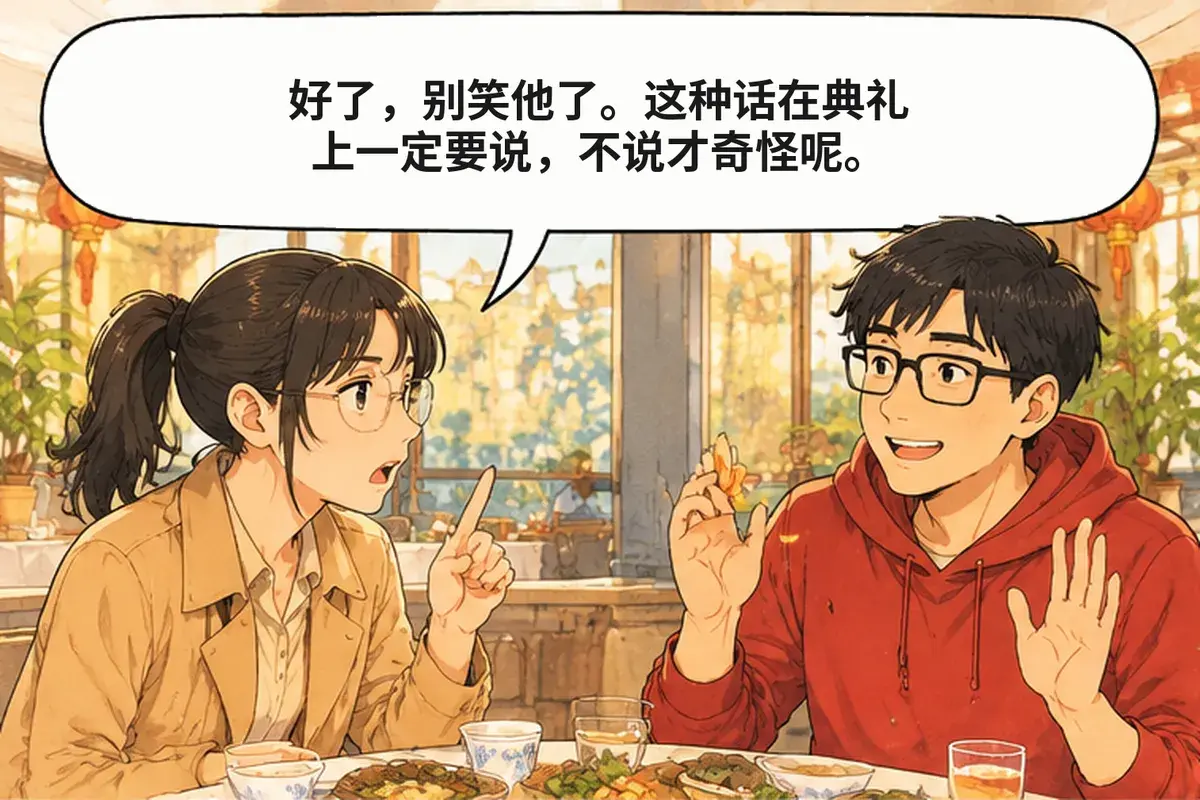
- 晓雨
好了,别笑他了。这种话在典礼上一定要说,不说才奇怪呢。
Okay, stop laughing at him. You have to say this kind of thing at a ceremony. It'd be strange not to.
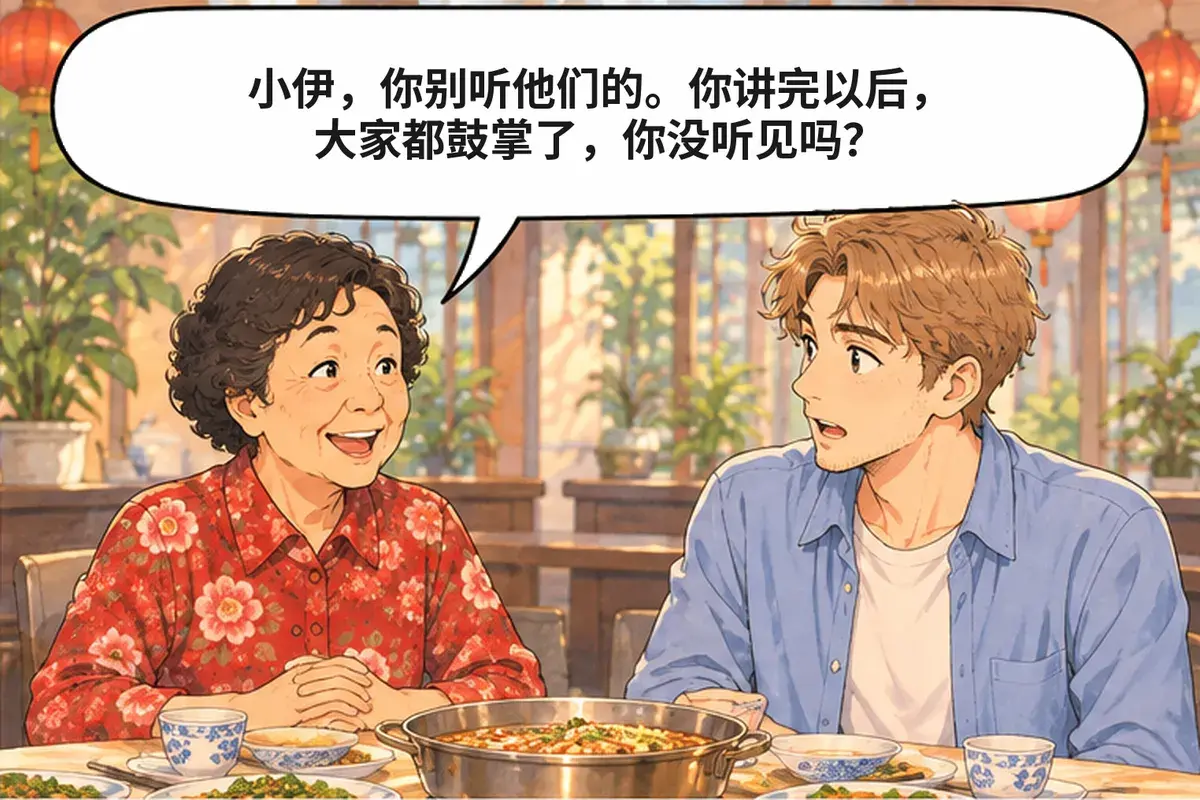
- 王阿姨
小伊,你别听他们的。你讲完以后,大家都鼓掌了,你没听见吗?
Xiao Yi, don't listen to them. After you finished, everyone applauded. Didn't you hear?

- 王阿姨
你们说的那些我不太懂。我只知道,我们的舞是今天最好的节目之一!
I don't really understand what you all are talking about. All I know is that our dance was one of the best acts today!
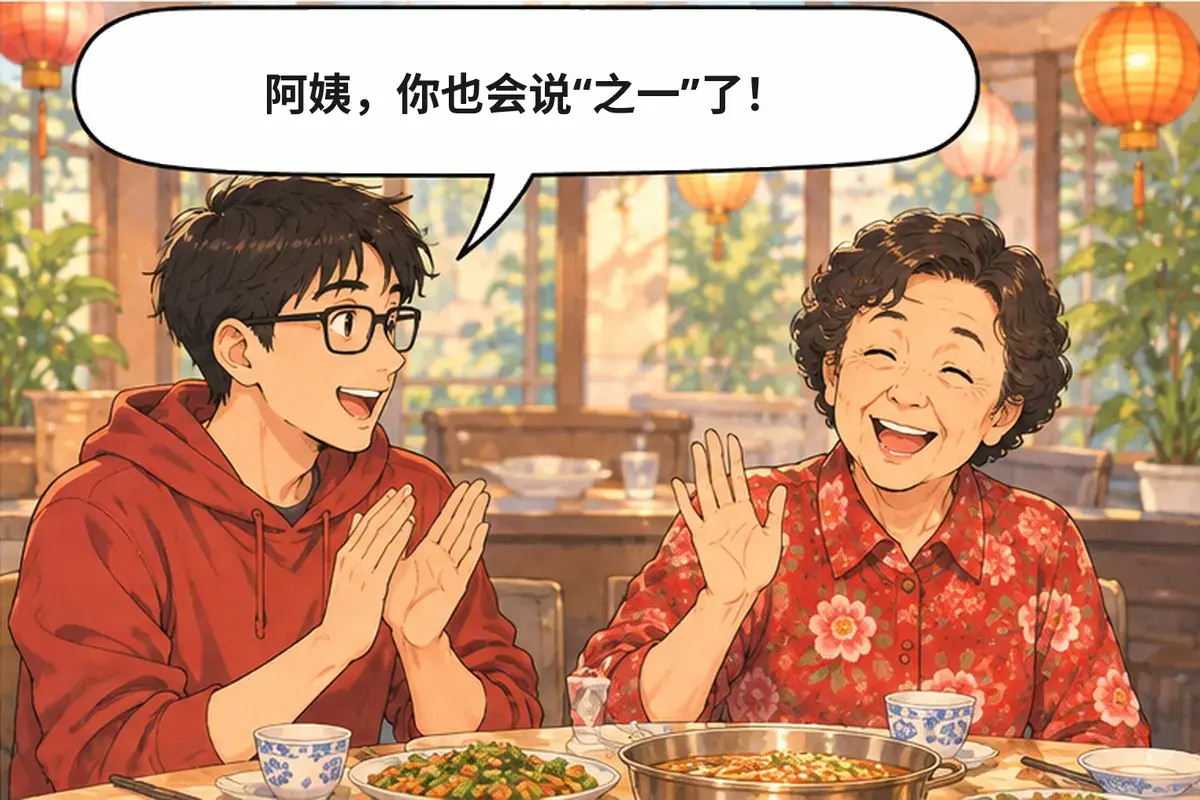
- 张磊
阿姨,你也会说“之一”了!
Auntie, you can say "zhīyī" now too!

- 王阿姨
那当然!我天天在小区群里看新闻。我们练了半个月,红衣服也是新买的!
Of course! I read the news in our compound's group chat every day. We rehearsed for half a month, and the red outfits are brand new too!

- 晓雨
今天的节目都不错,你们的舞尤其精彩,大楼门口的人都停下来看。
All the acts today were pretty good, and your dance was especially wonderful. People at the entrance of the building stopped to watch.

- 萨拉
我最高兴的是,大楼门口的标志是我画的。来宾都在那里拍了照片!
What makes me happiest is that I drew the sign at the entrance of the building. All the guests took photos there!

- 伊利亚
不管怎么说,典礼圆满结束了。我终于可以好好吃一顿饭了。
Anyway, the ceremony ended successfully. I can finally have a proper meal.

- 张磊
下次开会,我们热烈欢迎你说大家听得懂的话!
At the next meeting, we'll warmly welcome you to speak in words everyone can understand!

- 伊利亚
好,我用最简单的话说:谢谢大家,吃饭!
Okay, I'll put it in the simplest words: thank you, everyone — let's eat!
Grammar for this text
你 怎么 说话 像 新闻 一样? — 像 … 一样 means "like…"; here 怎么 isn't "how?" but surprise: "why on earth do you…?".
你 一本正经 地 说 — 一本正经 means "with a straight face", often said jokingly; 地 puts the phrase before the verb, like English -ly.
“其 主要 工作” 是 什么? 说 简单 一点, 就是 “我们 修 充电桩”! — Zhang Lei "translates" written style into everyday speech. That's the lesson of the unit: one idea can be said in two styles, and each fits its own place.
还 “众所周知”! — 还 …! is a mocking "and even…!": you repeat the other person's word.
这 句 话 说 了 等于 没 说 — "saying it is the same as saying nothing": this is how people describe an empty sentence.
台上 你 的 一举一动 都 像 新闻 里 的 领导 — 一举一动 means "every move"; 台上 means "on the stage".
我们 的 舞 是 今天 最 好 的 节目 之一! — Auntie Wang immediately picks up the written-style 之一, and Zhang Lei laughs.
典礼 圆满 结束 了 — 圆满 means "successfully, without a hitch": used for events.
我们 热烈欢迎 你 说 大家 听 得 懂 的 话 — 热烈欢迎 is a slogan from banners; here it's used as a joke.
Words and grammar of the unit: Understand a formal speech and a news report.
Learn the words from the texts with flashcards
In the app, you can tap any word in a text to see its translation, forms and examples, and new words stick with flashcards. 15 minutes a day.
Start for freeEverything is open for free. No card needed to sign up.