

Chinese dialogue with translation · B2 · 23 lines
先道歉,再进行说明 Apologize first, then give an explanation
Comic · 23 panels
- 伊利亚
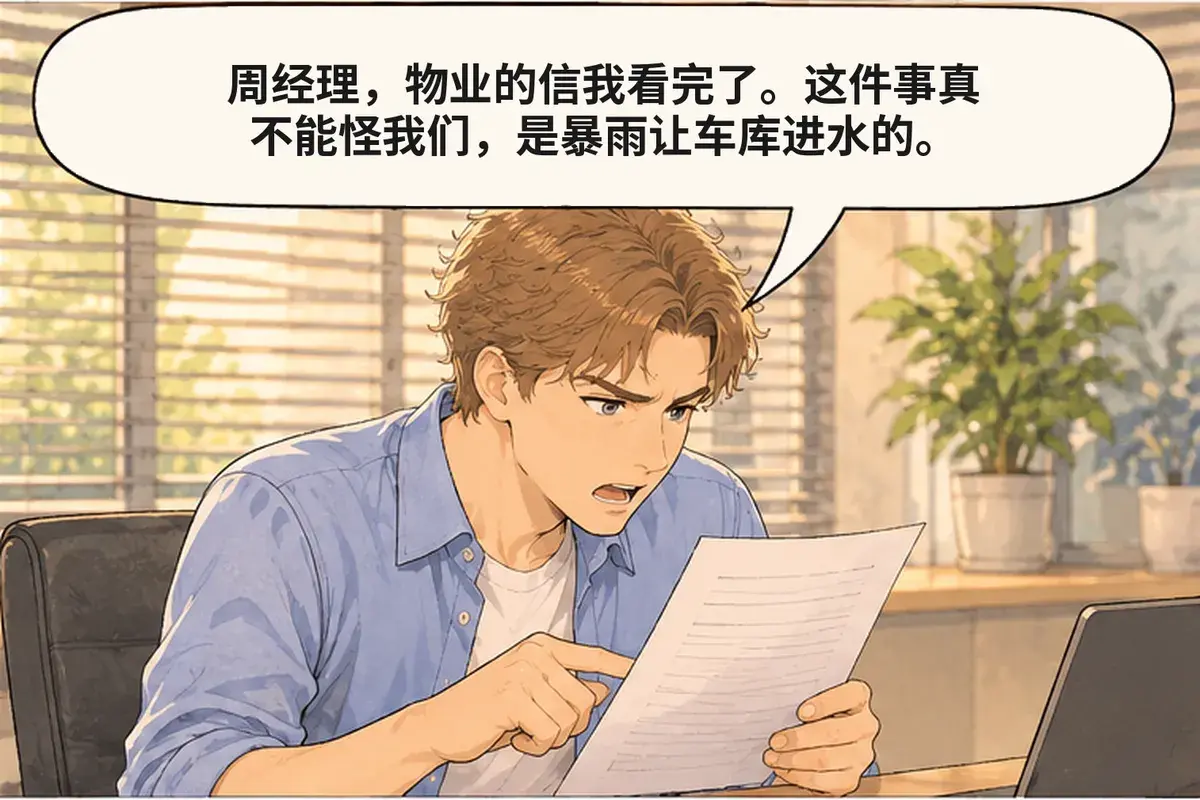
周经理,物业的信我看完了。这件事真不能怪我们,是暴雨让车库进水的。
Manager Zhou, I've finished reading the property management company's letter. We really can't be blamed for this; it was the rainstorm that flooded the garage.

- 周经理
暴雨是原因,这没错。可是你想一想,写信的人现在最想要什么?
The rainstorm was the cause, that's true. But think about it: what does the person who wrote the letter want most right now?
- 伊利亚
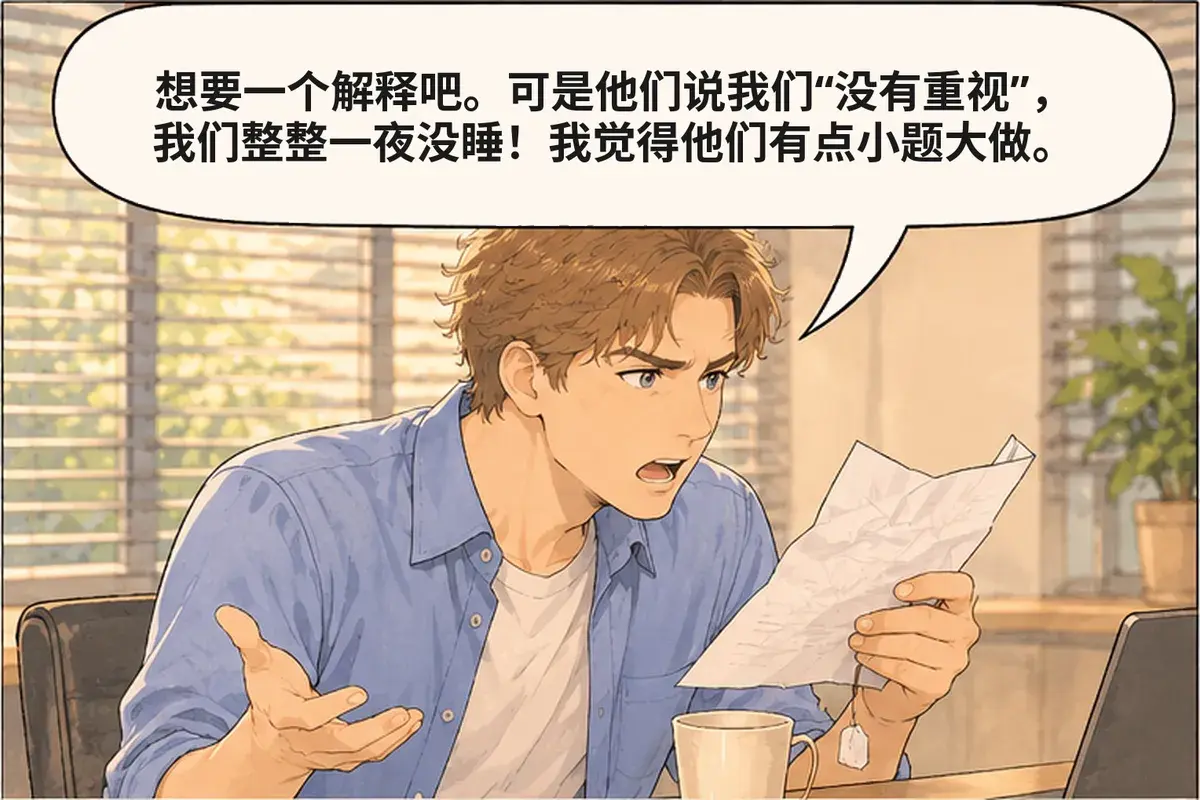
想要一个解释吧。可是他们说我们“没有重视”,我们整整一夜没睡!我觉得他们有点小题大做。
An explanation, I guess. But they say we "didn't take it seriously," and we didn't sleep the whole night! I think they're making a bit of a mountain out of a molehill.

- 晓雨
别生气,人家是对事不对人,不是说你不努力。
Don't get angry. They're talking about the matter, not about you; nobody is saying you didn't work hard.
- 伊利亚
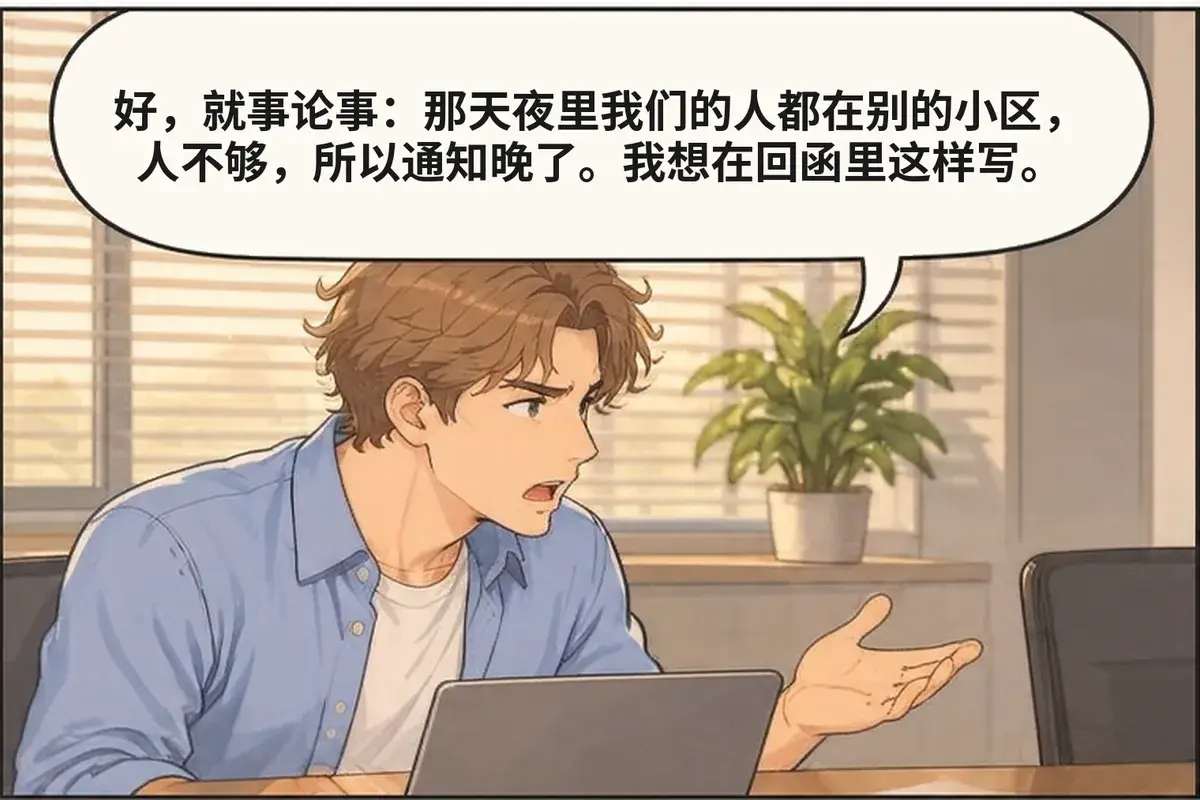
好,就事论事:那天夜里我们的人都在别的小区,人不够,所以通知晚了。我想在回函里这样写。
OK, sticking to the point: that night all our people were at another compound, we were short on people, so the notice went out late. I want to write it that way in the reply letter.
- 周经理
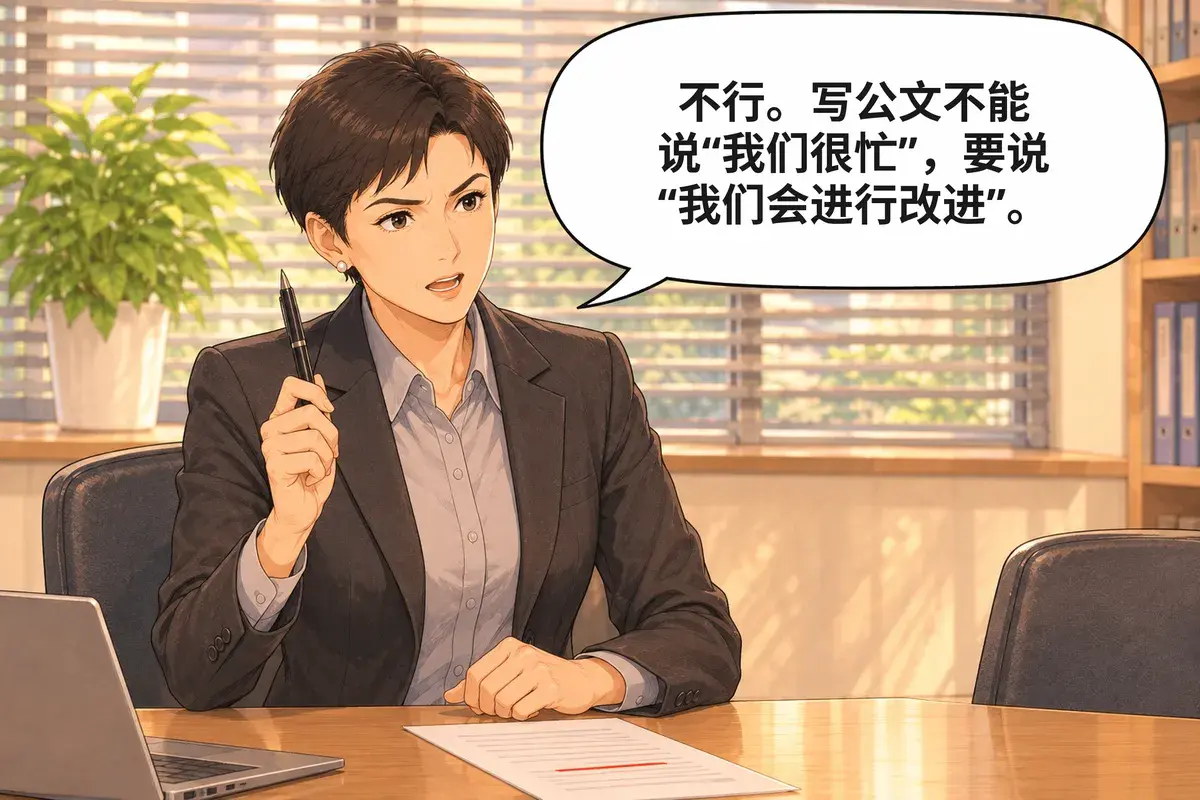
不行。写公文不能说“我们很忙”,要说“我们会进行改进”。
No. In an official letter you can't say "We were very busy"; you have to say "We will make improvements."
- 伊利亚
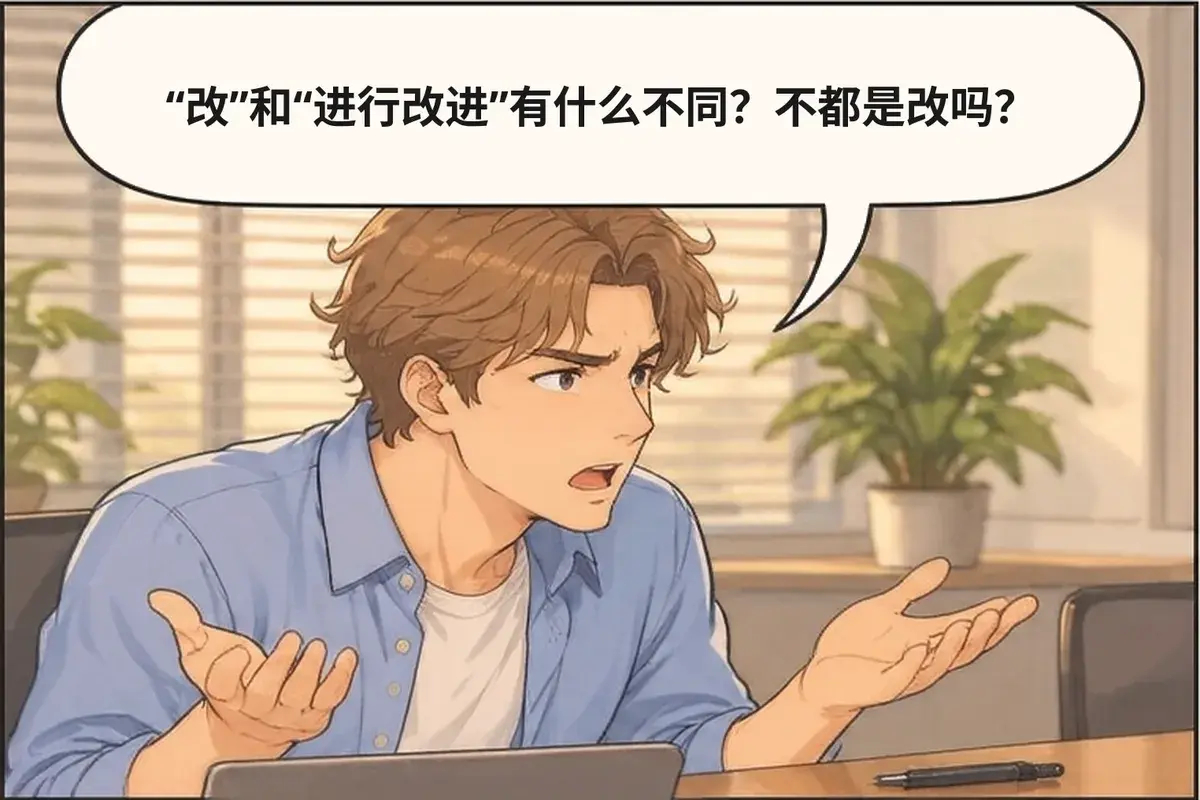
“改”和“进行改进”有什么不同?不都是改吗?
What's the difference between "gǎi" and "jìnxíng gǎijìn"? Aren't they both just "gǎi"?
- 周经理
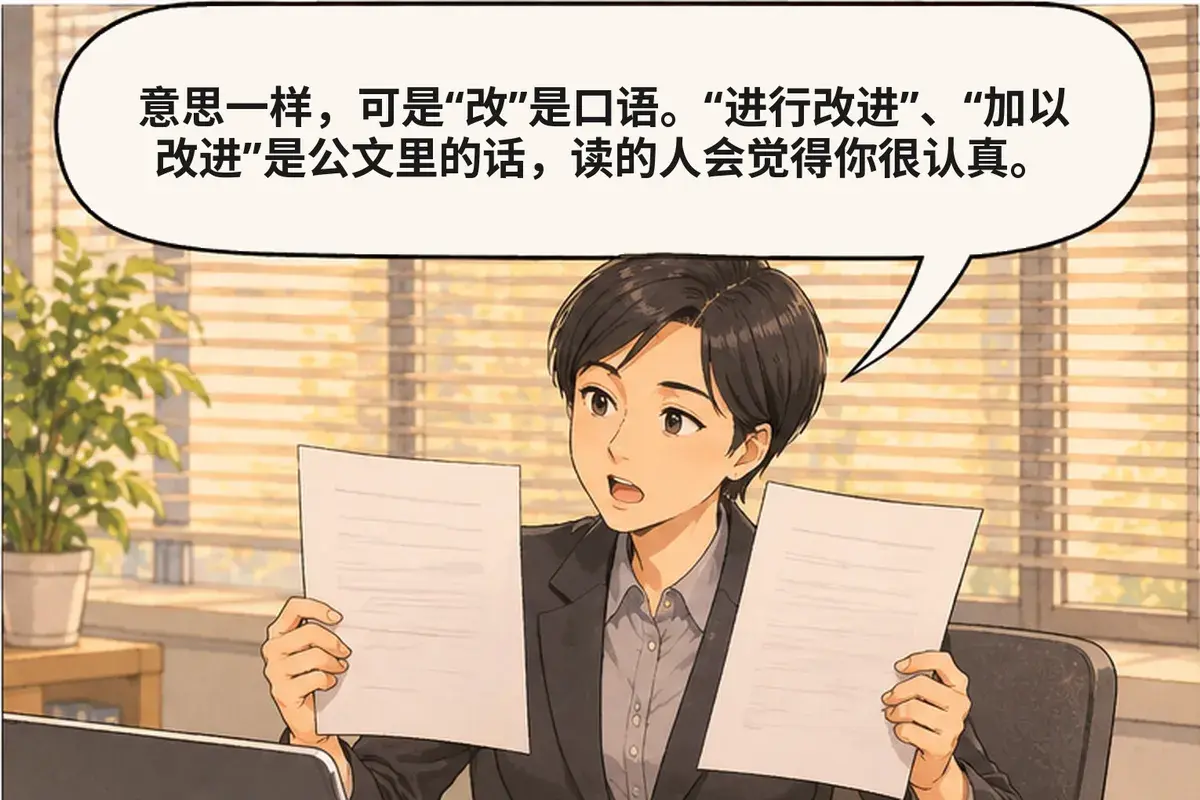
意思一样,可是“改”是口语。“进行改进”、“加以改进”是公文里的话,读的人会觉得你很认真。
The meaning is the same, but "gǎi" is spoken style. "Jìnxíng gǎijìn" and "jiāyǐ gǎijìn" are the language of official documents, and the person reading will feel that you take it seriously.

- 晓雨
我明白了,就像穿衣服:见朋友穿什么都行,去开会就要穿得正式一点。
I get it. It's like clothes: with friends you can wear anything, but for a meeting you have to dress a little more formally.

- 周经理
对。写公文,应当先想到读信的人。所以先道歉,再进行说明。
Right. When you write an official letter, you should think of the person reading it first. So apologize first, then give an explanation.

- 伊利亚
可是我们一道歉,别人会不会觉得真的是我们的错?
But if we apologize, won't other people think it really was our fault?

- 周经理
道歉不等于承认错误。业主的生活受到了影响,这是事实。
Apologizing isn't the same as admitting a mistake. The residents' lives were affected; that's a fact.
- 晓雨
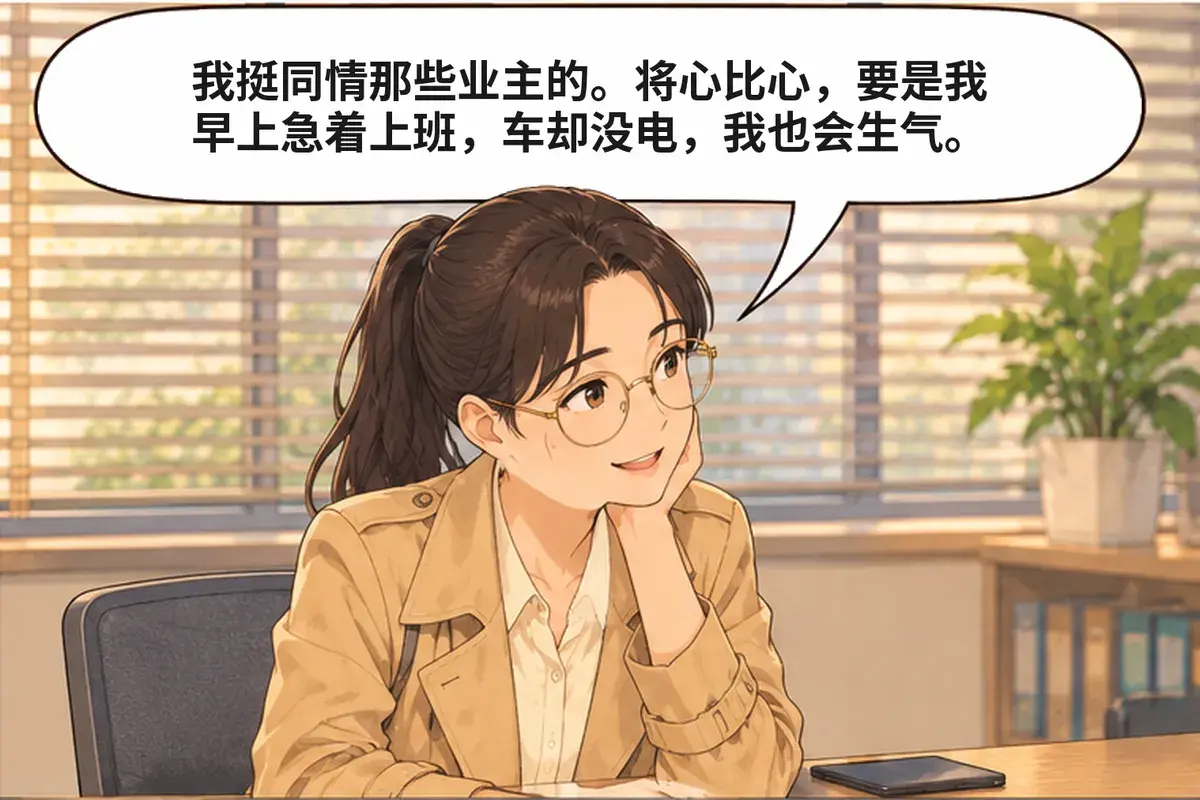
我挺同情那些业主的。将心比心,要是我早上急着上班,车却没电,我也会生气。
I really feel for those residents. Put yourself in their shoes: if I were rushing to work in the morning and my car had no charge, I'd be angry too.

- 伊利亚
好吧,我承认,我有点自以为是了。
All right, I admit it, I was being a bit self-righteous.

- 周经理
知错就改就好。而且我们自己也有问题:通知太晚了。这就是这次的教训。
Admitting a mistake and fixing it is good enough. Besides, we have a problem of our own: we notified people too late. That's the lesson this time.
- 周经理
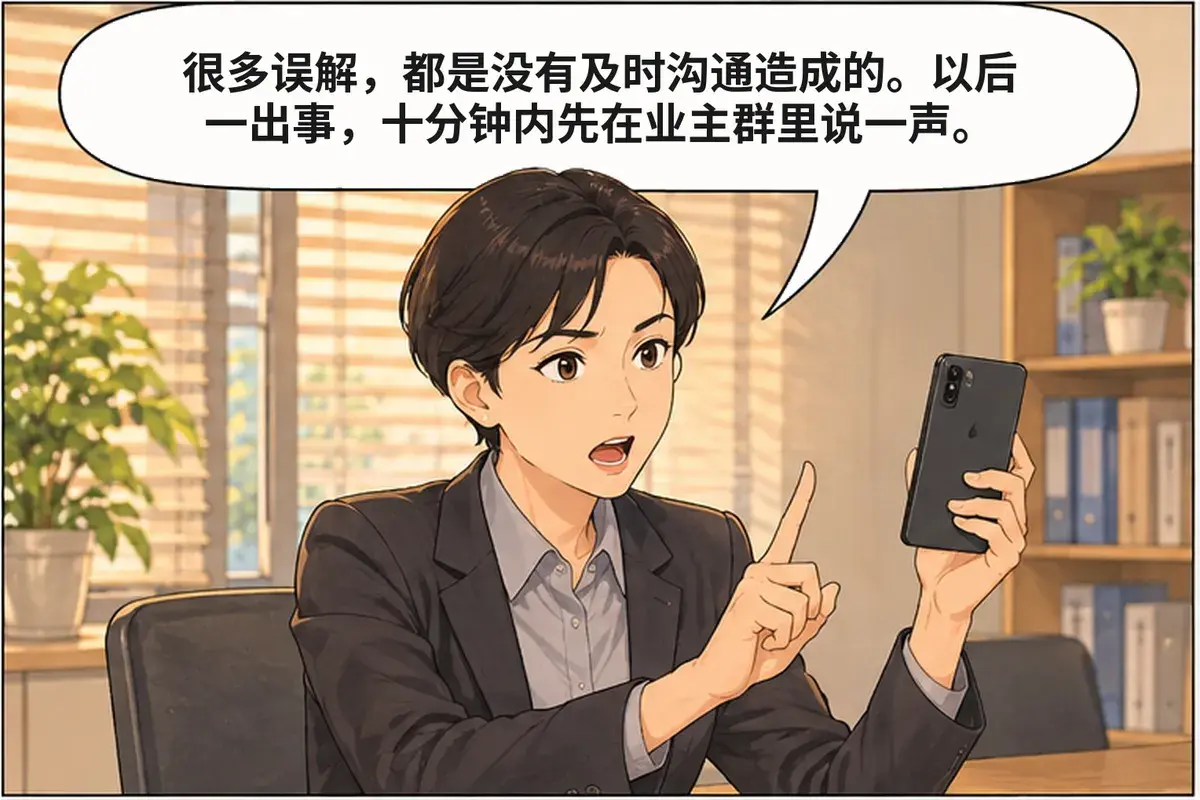
很多误解,都是没有及时沟通造成的。以后一出事,十分钟内先在业主群里说一声。
Many misunderstandings are caused by not communicating in time. From now on, as soon as something happens, first post in the residents' group chat within ten minutes.

- 伊利亚
明白。及时通知,比修得快还重要。
Got it. Letting people know in time is even more important than fixing it fast.
- 周经理
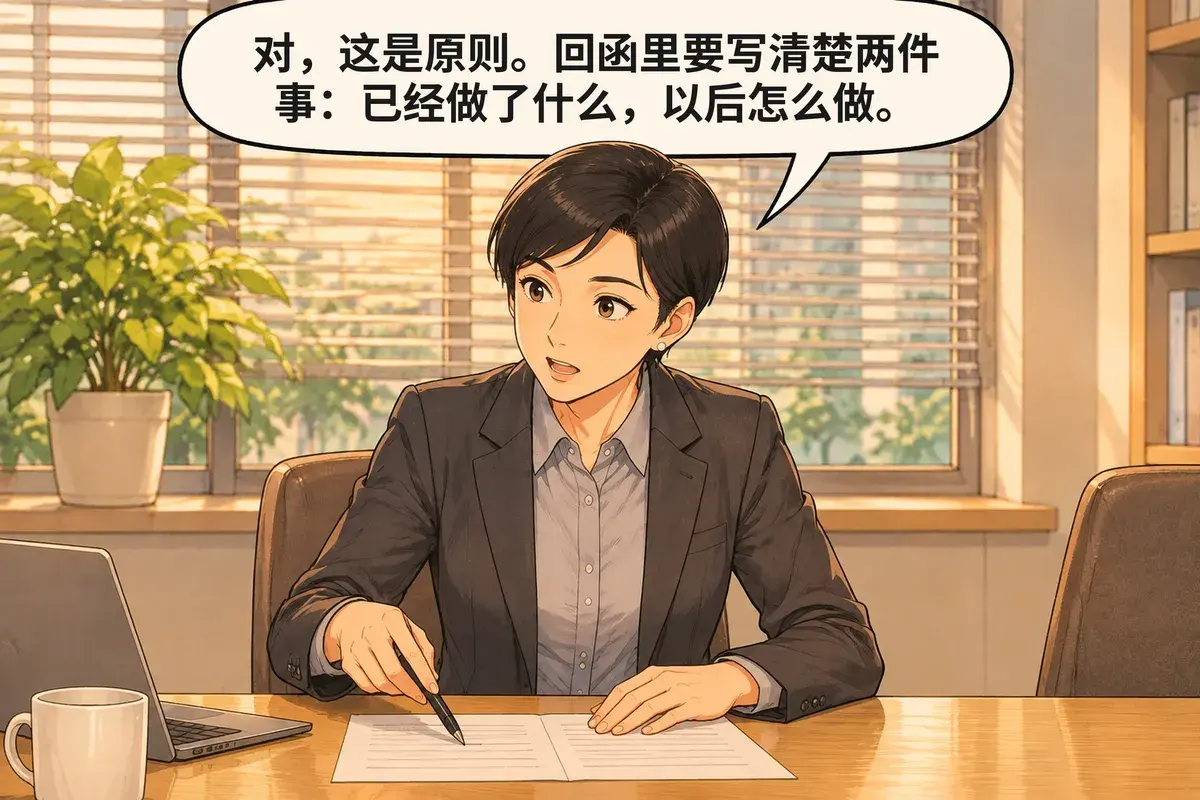
对,这是原则。回函里要写清楚两件事:已经做了什么,以后怎么做。
Yes, that's the principle. The reply letter has to say two things clearly: what we've already done and what we'll do in the future.
- 伊利亚
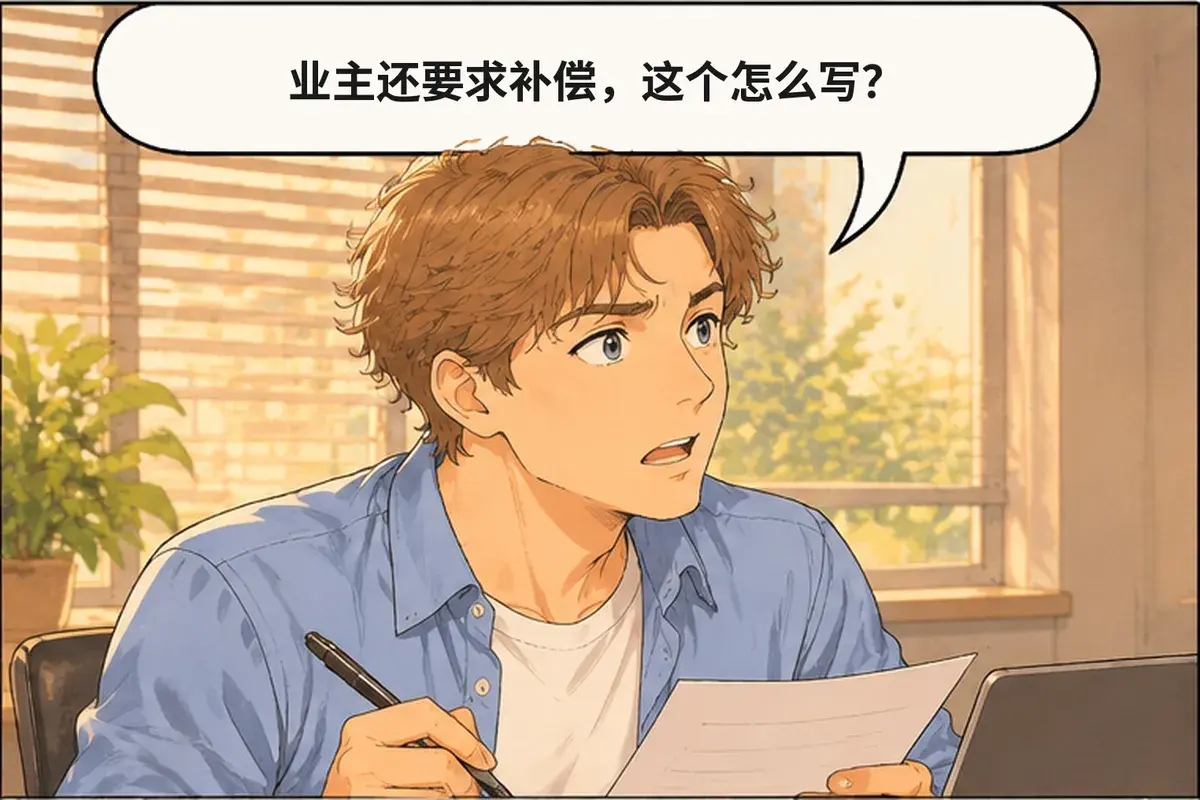
业主还要求补偿,这个怎么写?
The residents are also demanding compensation. How should I write that?
- 周经理
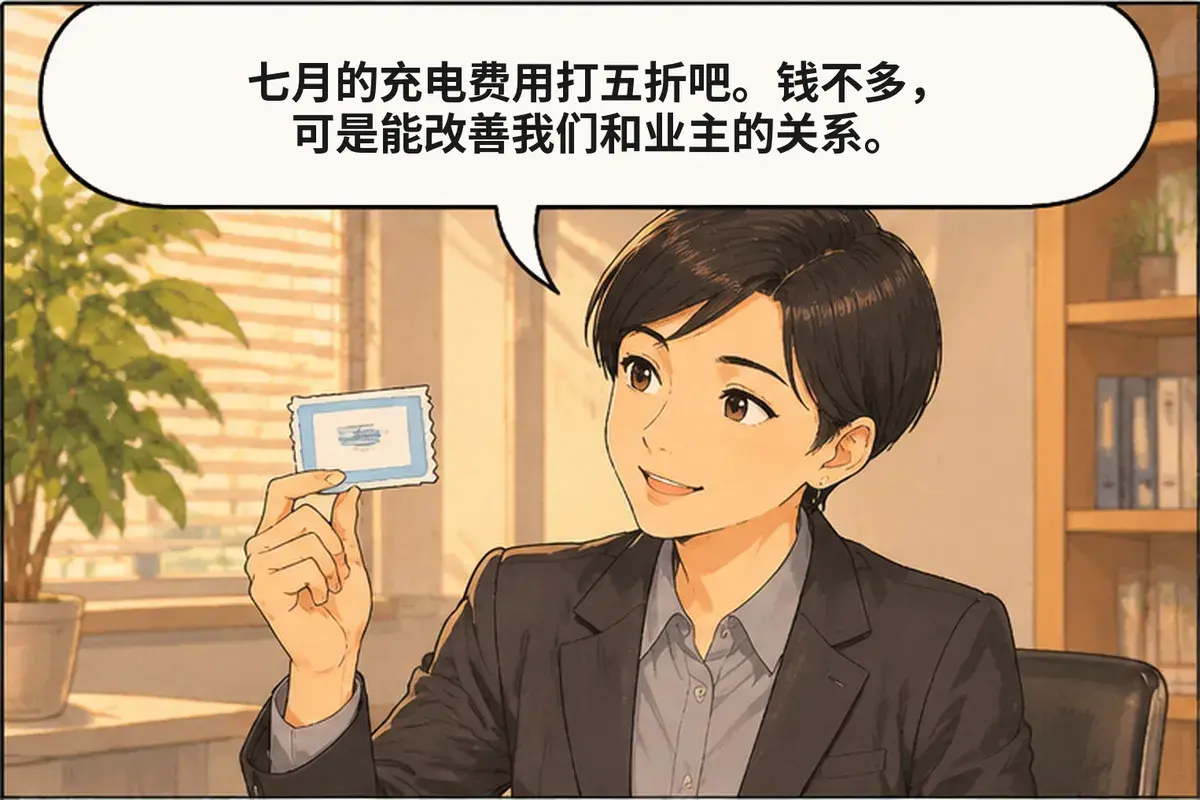
七月的充电费用打五折吧。钱不多,可是能改善我们和业主的关系。
Let's make the July charging fees half price. It's not much money, but it can improve our relationship with the residents.
- 周经理
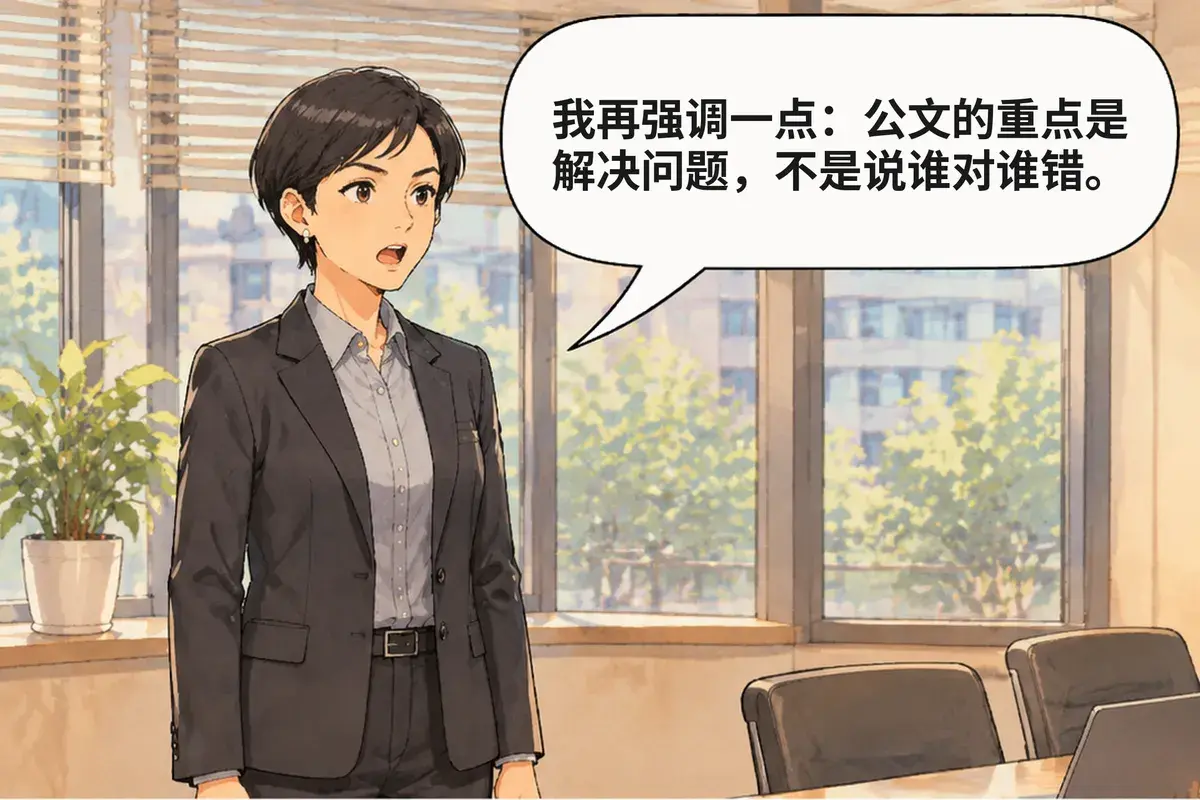
我再强调一点:公文的重点是解决问题,不是说谁对谁错。
Let me stress one more point: the focus of an official letter is solving the problem, not saying who's right and who's wrong.
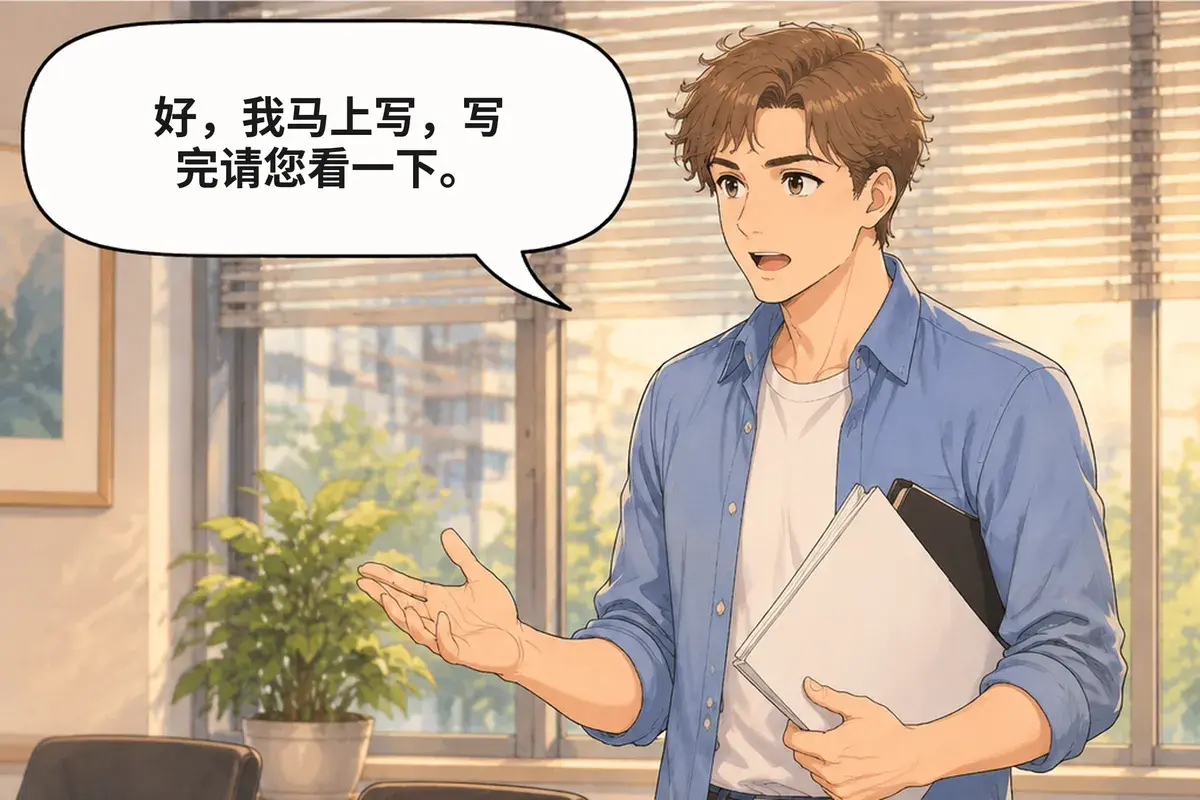
- 伊利亚
好,我马上写,写完请您看一下。
OK, I'll write it right away, and please take a look when I'm done. (polite)
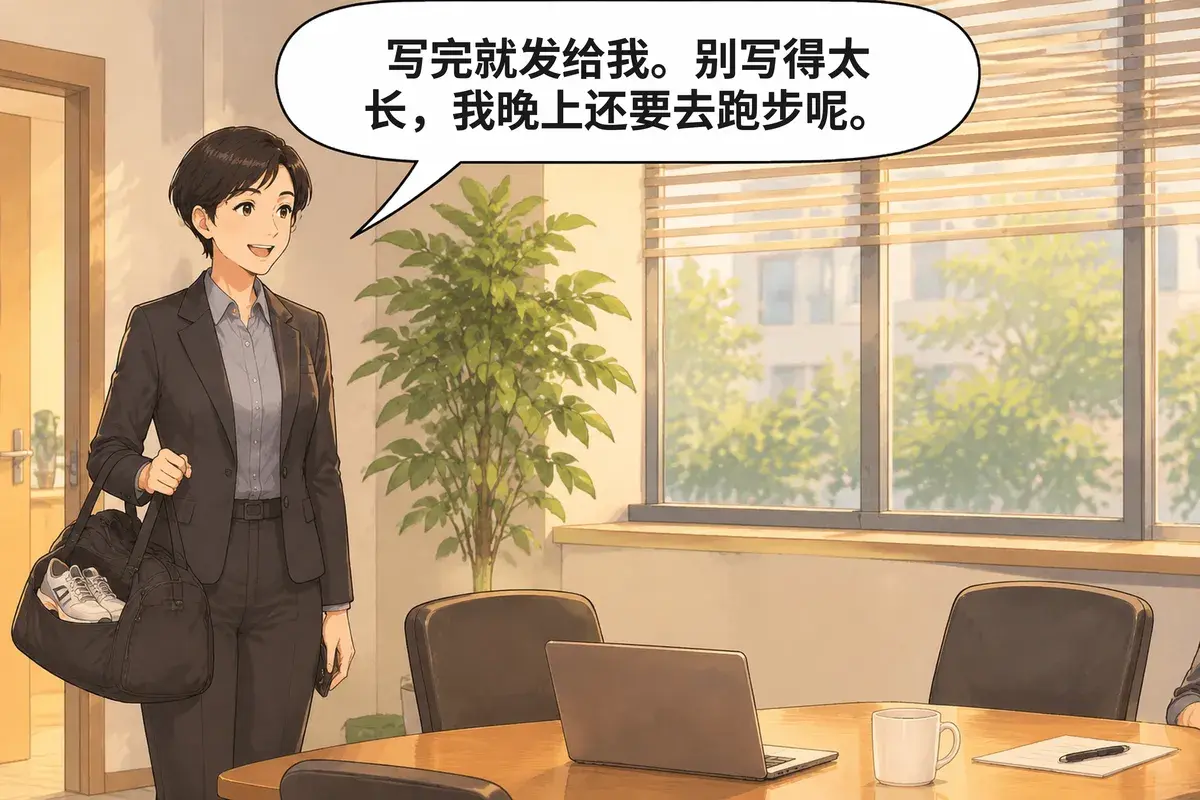
- 周经理
写完就发给我。别写得太长,我晚上还要去跑步呢。
Send it to me as soon as you finish. Don't make it too long; I still have to go running this evening.
Grammar for this text
- 先 道歉, 再 进行 说明 —
先 … 再 …"first …, then …".进行 说明is the document style for "give an explanation"; in speech you'd say解释 一下. - “改” 和 “进行 改进” 有 什么 不同? — the meaning is the same, the difference is style:
改is everyday speech, while进行 改进and加以 改进are the language of official papers. More in the unit grammar. - 人家 是 对事不对人 —
人家here means "they, those people" (unit 14).对事不对人means "about the matter, not the person": the criticism isn't personal. - 好, 就事论事 —
就事论事"stick strictly to the matter itself." Ilya understands it his own way ("to the point means explaining why we were late") and gets a lesson. - 有点 小题大做 — literally "make a big job of a small topic," that is, "make a mountain out of a molehill."
有点softens the reproach. - 将心比心 — literally "compare your heart with theirs": put yourself in someone else's shoes.
- 我 有点 自以为是 了 —
自以为是"think you're always right";有点 … 了"a bit too much." - 知错就改 就 好 —
知错就改"see your mistake and fix it";… 就 好"that's good enough." - 及时 通知, 比 修 得 快 还 重要 — a whole action,
及时 通知, is the subject, with no linking word; English needs "-ing" here. - 我 晚上 还 要 去 跑步 呢 —
还 … 呢"I still have to …": a light joke from the manager.
Words and grammar of the unit: Reply to a complaint formally.
Learn the words from the texts with flashcards
In the app, you can tap any word in a text to see its translation, forms and examples, and new words stick with flashcards. 15 minutes a day.
Start for freeEverything is open for free. No card needed to sign up.