

Chinese dialogue with translation · B2 · 21 lines
你看出来问题在哪里了吗? Did you spot where the problem is?
Comic · 21 panels

- 晓雨
明天上午十点,我们要向两家公司的领导汇报。幻灯片还要再看一遍,大家抓紧时间吧。
Tomorrow at ten a.m. we're reporting to the leaders of both companies. We still need to go over the slides one more time, so let's not waste any time.

- 伊利亚
好。第一部分我来讲,我参考了以前的材料。你们先帮我看看,结构有没有问题?
OK. I'll present the first part, and I used the old materials as a reference. Could you take a look first and tell me if there's any problem with the structure? (to several people)

- 晓雨
结构很清楚:先说为什么要开这个中心,再说中心怎么做。我觉得不用改。
The structure is very clear: first why we're opening this center, then how the center will work. I don't think it needs changing.
- 小宋
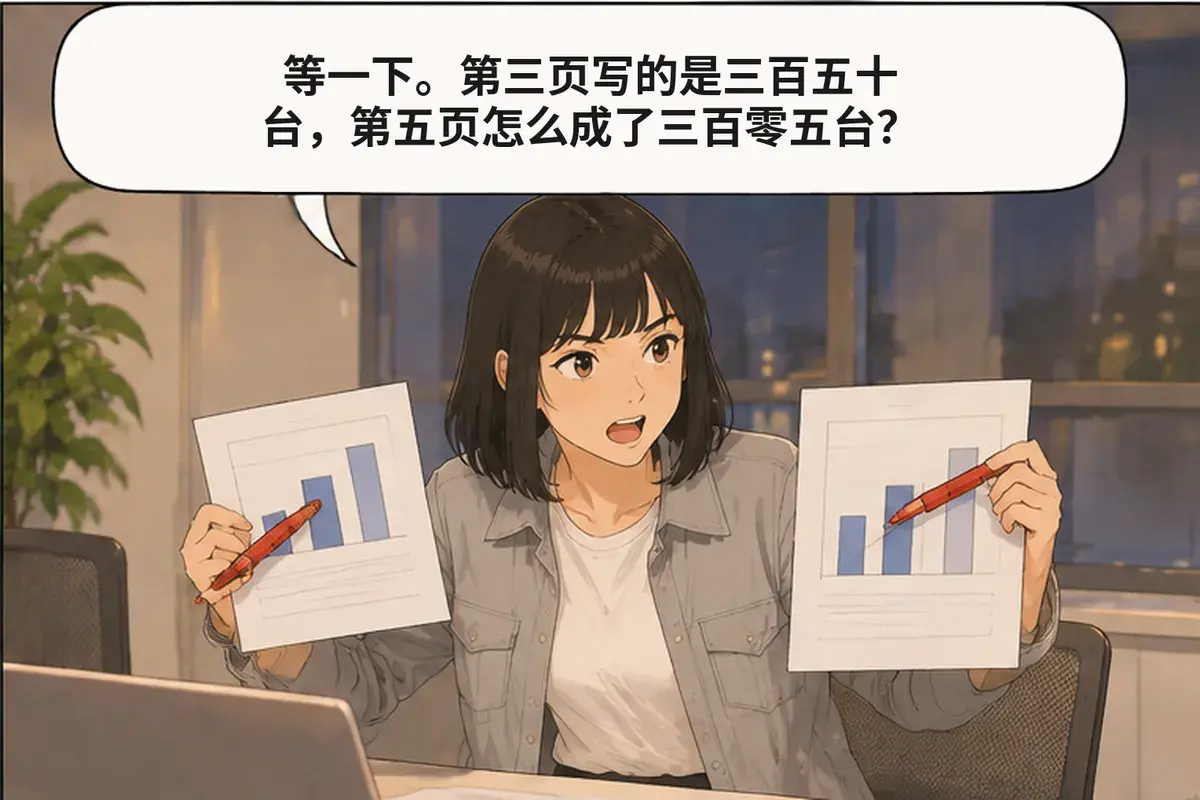
等一下。第三页写的是三百五十台,第五页怎么成了三百零五台?
Wait a moment. Page three says 350 units, so why does page five say 305?

- 伊利亚
真的吗?这两页我看了好几遍,怎么就没看出来?你眼睛真厉害!
Really? I looked at those two pages several times, so how did I not spot it? Your eyes are really sharp!
- 小宋
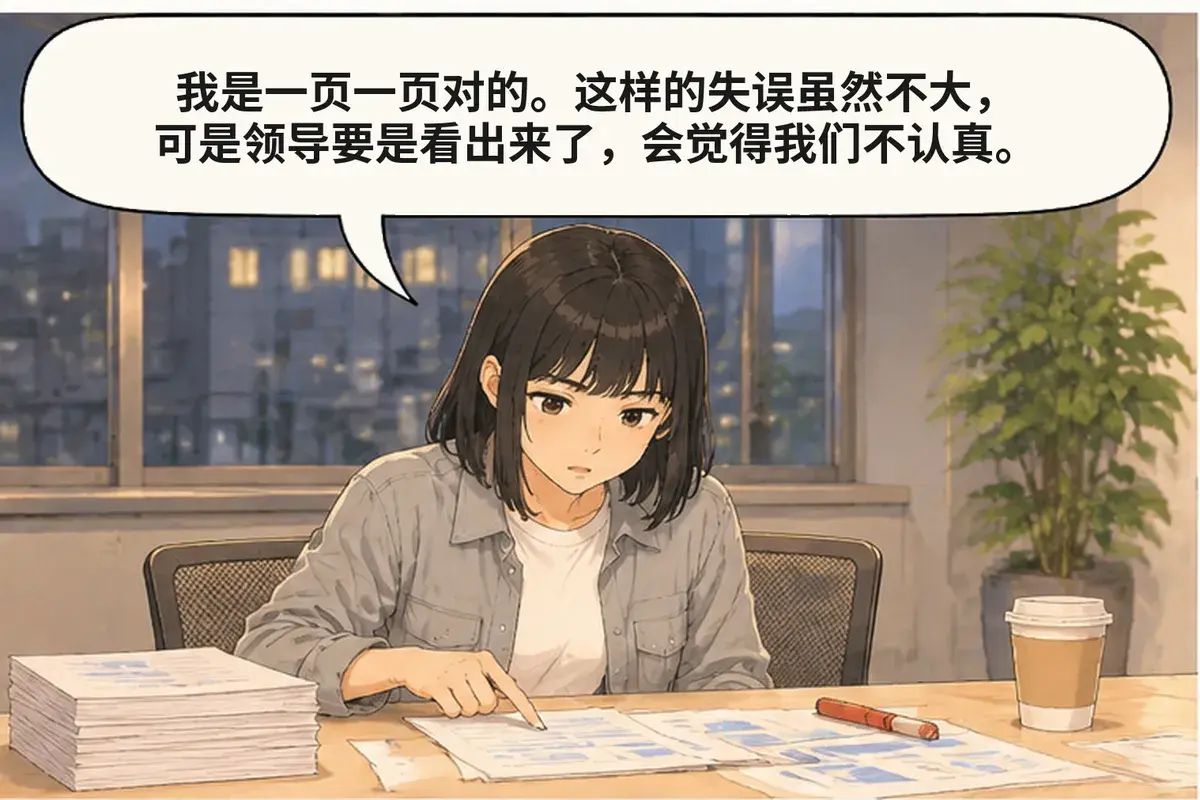
我是一页一页对的。这样的失误虽然不大,可是领导要是看出来了,会觉得我们不认真。
I checked them page by page. Even though a slip like this isn't big, if the leaders spot it, they'll think we're not serious.

- 晓雨
伊利亚,你看出来问题在哪里了吗?哪个数字是对的?
Ilya, did you spot where the problem is? Which number is right?
- 伊利亚
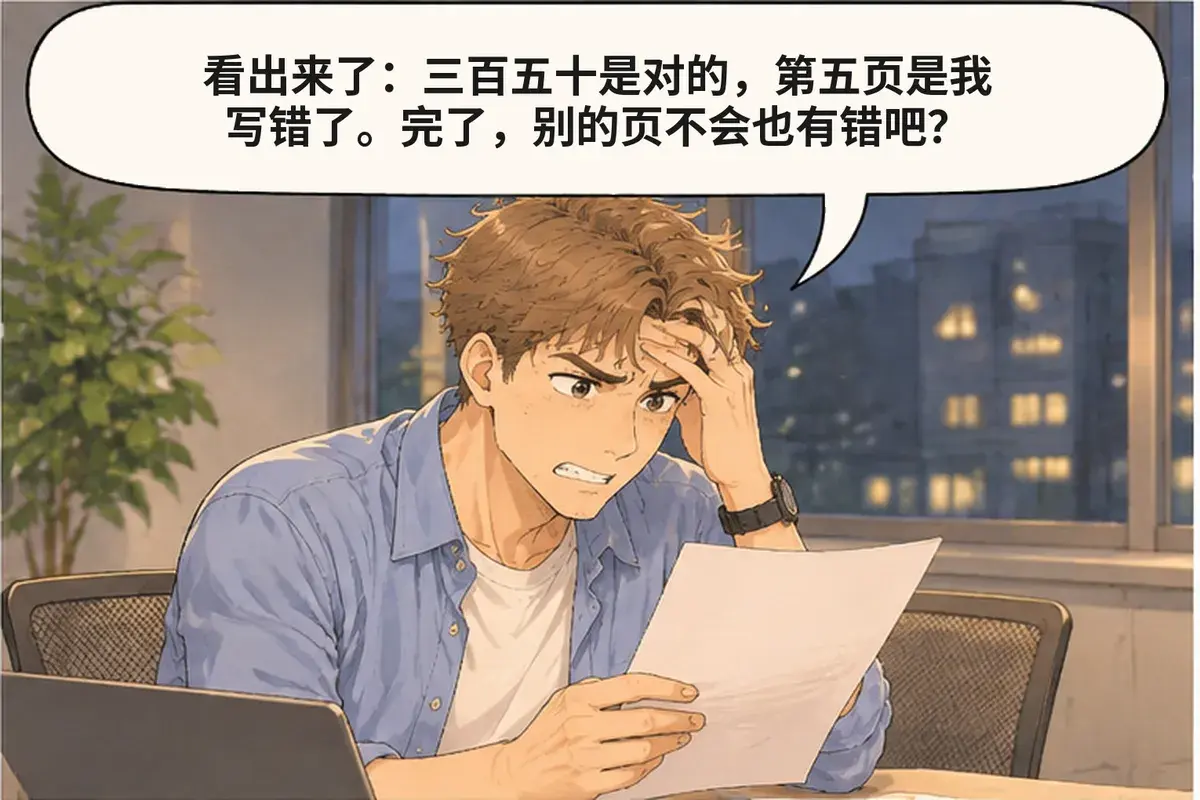
看出来了:三百五十是对的,第五页是我写错了。完了,别的页不会也有错吧?
I see it now: 350 is right, and I wrote it wrong on page five. Oh no, there can't be mistakes on other pages too, can there?

- 小宋
别大惊小怪的,其他页我都检查过了,就这一个失误。你改完再对一遍就行。
Don't make a fuss over nothing. I've checked all the other pages, and this is the only slip. Just fix it and check it once more.

- 伊利亚
好,我对完再发给你们。说真的,我最担心的不是数字,而是我自己:我一紧张,话就说不清楚。
OK, I'll finish checking and then send it to you. (to several people) Honestly, what I'm most worried about isn't the numbers, it's myself: as soon as I get nervous, I can't speak clearly.

- 晓雨
第一次在这么多领导面前汇报,难免会紧张,我第一次的时候也一样。
Reporting in front of so many leaders for the first time, it's hard to avoid being nervous. I was the same the first time.

- 伊利亚
还有,总部的人今天晚上才到,明天一定很累。我怕讲到一半,大家都走神了。
Also, the people from headquarters don't arrive until tonight, so they'll surely be tired tomorrow. I'm afraid that halfway through, everyone will zone out.

- 晓雨
我想出一个办法:你先讲一个小故事,大家就听进去了,你自己也不会那么紧张。
I've come up with a way: tell a little story first, and then everyone will take it in, and you won't be so nervous yourself.

- 伊利亚
故事我有:去年冬天那座一到零下三十度就不工作的充电站。
I have a story: the charging station last winter that stopped working whenever it hit thirty degrees below zero.

- 小宋
这个故事好,因为它是真的。讲完以后,你可以引导大家思考:要是充电站半夜坏了,谁来修?多久能到?这就是中心要解决的难题。
That's a good story, because it's true. After you tell it, you can guide everyone to think: if a charging station breaks down in the middle of the night, who comes to fix it? How long will it take to get there? That's exactly the hard problem the center has to solve.

- 晓雨
对。还有一点:每页的字不要太多,一页讲一个意思。领导不会一个字一个字地读。
Right. One more thing: there shouldn't be too much text on each page, one idea per page. The leaders won't read word by word.

- 小宋
我同意。这几页我来改,每页只留下最重要的几句。
I agree. I'll fix these pages, and I'll leave only the few most important lines on each.

- 伊利亚
谢谢你们。说实话,我现在手都有点冷了。
Thank you. (to several people) Honestly, my hands are a bit cold now.

- 晓雨
谁第一次汇报都这样。先回家早一点睡吧,睡够了,明天脑子才清醒。
Everyone's like this the first time. Go home and go to bed a little early; only if you get enough sleep will your head be clear tomorrow.

- 伊利亚
好,我把数字改完就走。明天汇报完,我请你们吃饭。
OK, I'll leave as soon as I finish fixing the numbers. After the report tomorrow, I'll treat you to a meal. (to several people)

- 晓雨
一言为定!
It's a deal!
Grammar for this text
- 你 看出来 问题 在 哪里 了 吗? —
看出来(kànchūlái) means "to spot, to see through": something hidden "comes out" into view. A whole thought follows it:问题 在 哪里.了 吗asks "have you got it yet?" The answer is看出来 了. - 怎么 就 没 看出来? —
没 看出来means "didn't spot it" (that time);怎么 就adds annoyance: "how could I?" If it's impossible to spot at all, you say看不出来. - 我 想出 一 个 办法 —
想出(xiǎngchū) means "to come up with": the idea "comes out". The object一 个 办法comes right after出. - 大家 就 听 进去 了 —
听 进去(tīng jìnqù): what you said "went in", so people listen and remember instead of tuning out. - 别 大惊小怪 的 — colloquial for "don't make a fuss over nothing".
的at the end softens the request. You say it to calm down someone close to you. - 不 是 数字, 而是 我 自己 — the pattern
不是 … 而是means "not …, but …", known from B1. - 明天 脑子 才 清醒 —
才here means "only then": your head will be clear only if you get enough sleep. - 幻灯片 (huàndēngpiàn) — slides. People don't write the English abbreviation in a Chinese line.
Words and grammar of the unit: Give a project presentation.
Learn the words from the texts with flashcards
In the app, you can tap any word in a text to see its translation, forms and examples, and new words stick with flashcards. 15 minutes a day.
Start for freeEverything is open for free. No card needed to sign up.