Skip to content
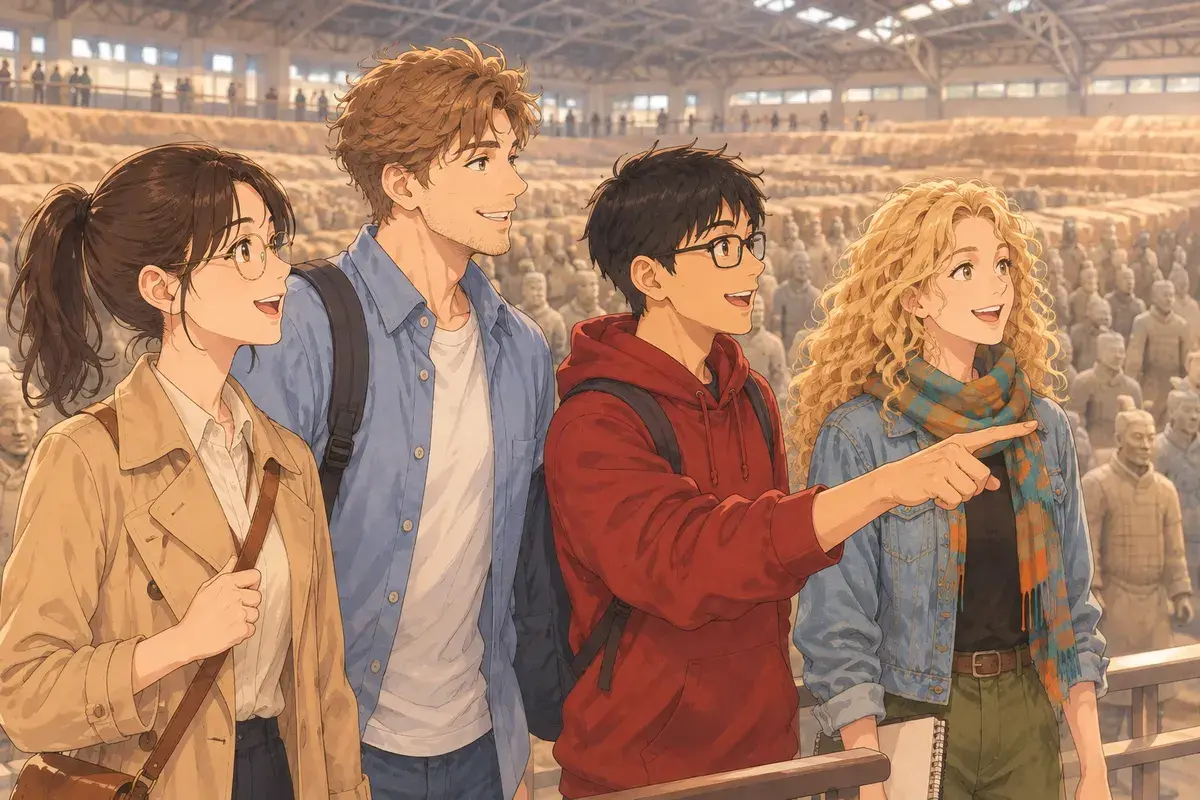
Illustration for “Every Terracotta Warrior's face turns out to be different”

Chinese dialogue with translation · B2 · 26 lines

每个兵马俑的脸竟然都不一样 Every Terracotta Warrior's face turns out to be different

Comic · 26 panels
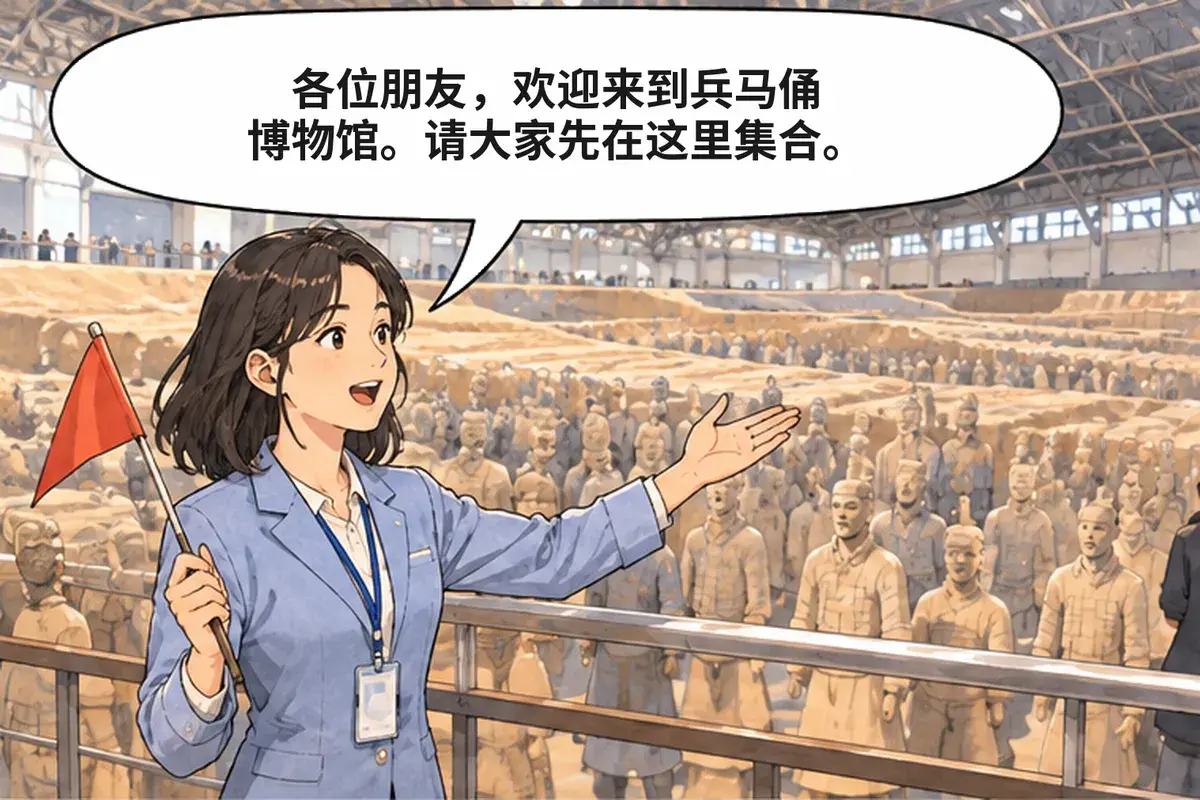
Panel 1 of 26 for “Every Terracotta Warrior's face turns out to be different”: “Dear friends, welcome to the Terracotta Warriors Museum. Everyone, please gather here first.”
  1. 导游

    各位朋友,欢迎来到兵马俑博物馆。请大家先在这里集合。

    Dear friends, welcome to the Terracotta Warriors Museum. Everyone, please gather here first.
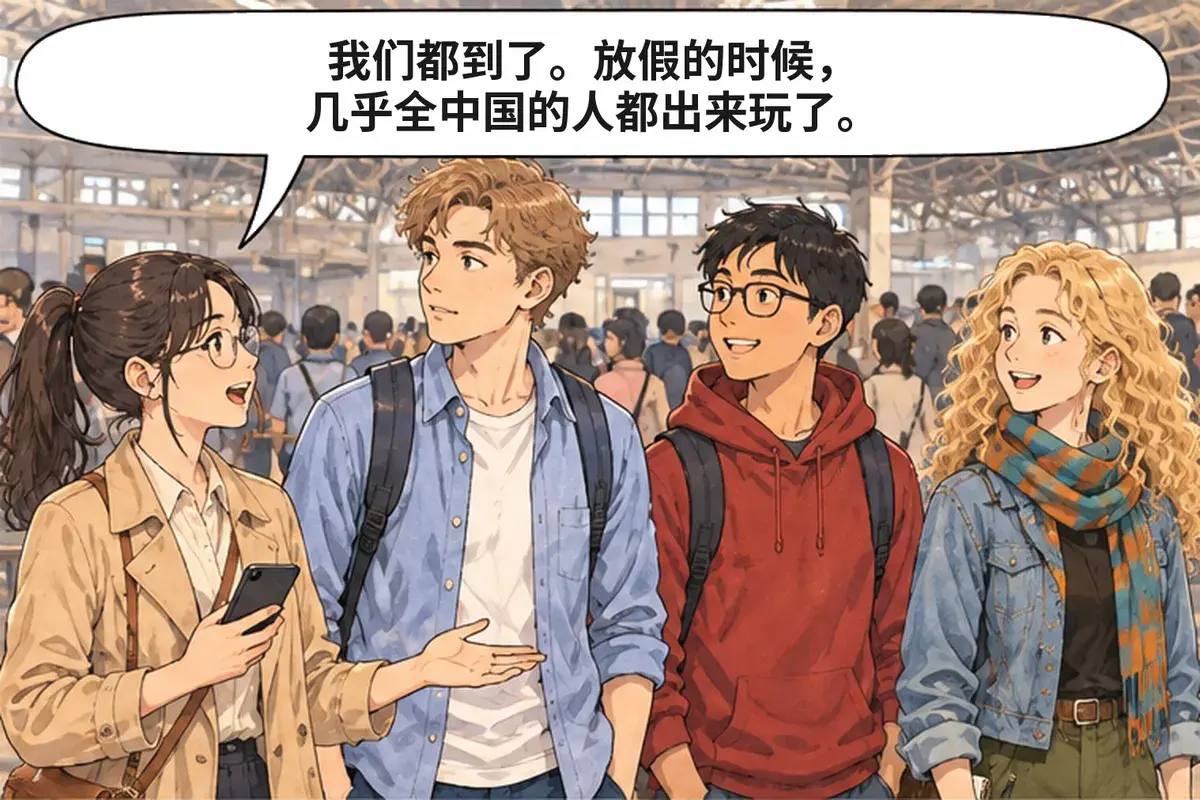
Panel 2 of 26 for “Every Terracotta Warrior's face turns out to be different”: “We're all here. During the holidays, almost everyone in China has come out to have fun.”
  1. 晓雨

    我们都到了。放假的时候,几乎全中国的人都出来玩了。

    We're all here. During the holidays, almost everyone in China has come out to have fun.
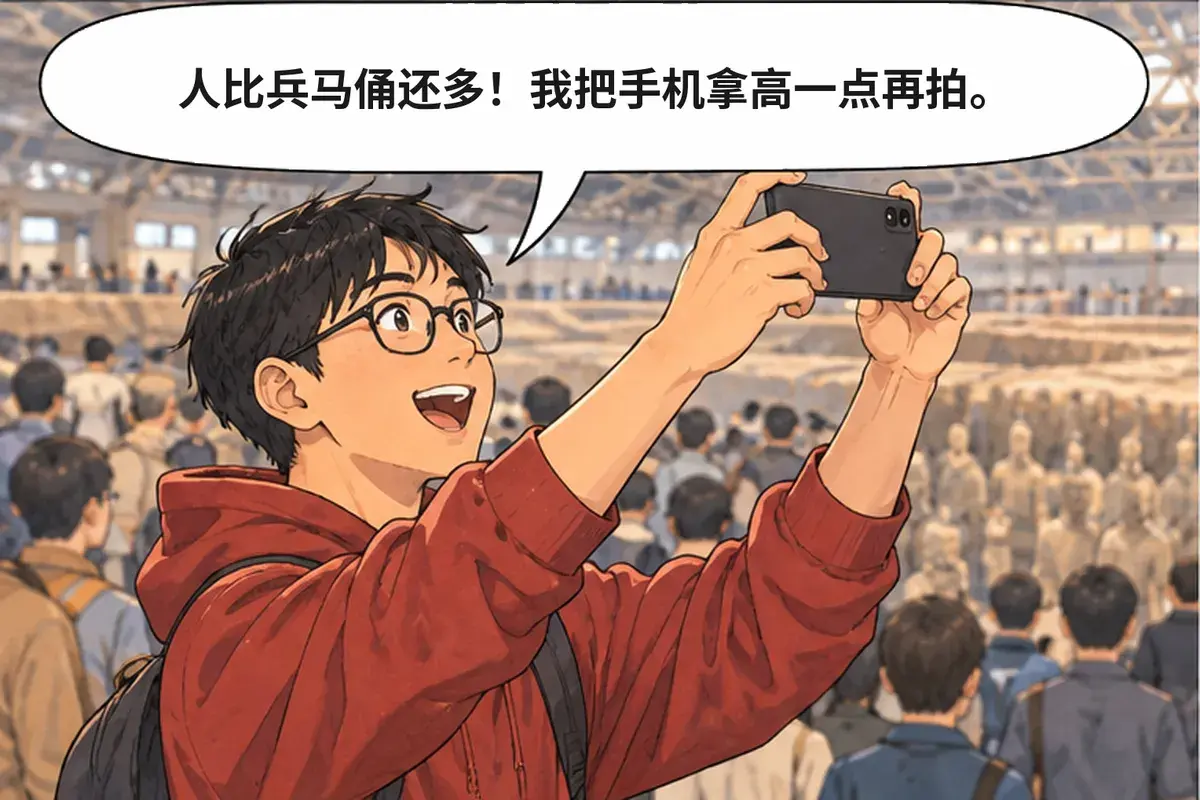
Panel 3 of 26 for “Every Terracotta Warrior's face turns out to be different”: “There are more people than warriors! I'll hold my phone up a little higher before I take the picture.”
  1. 张磊

    人比兵马俑还多!我把手机拿高一点再拍。

    There are more people than warriors! I'll hold my phone up a little higher before I take the picture.
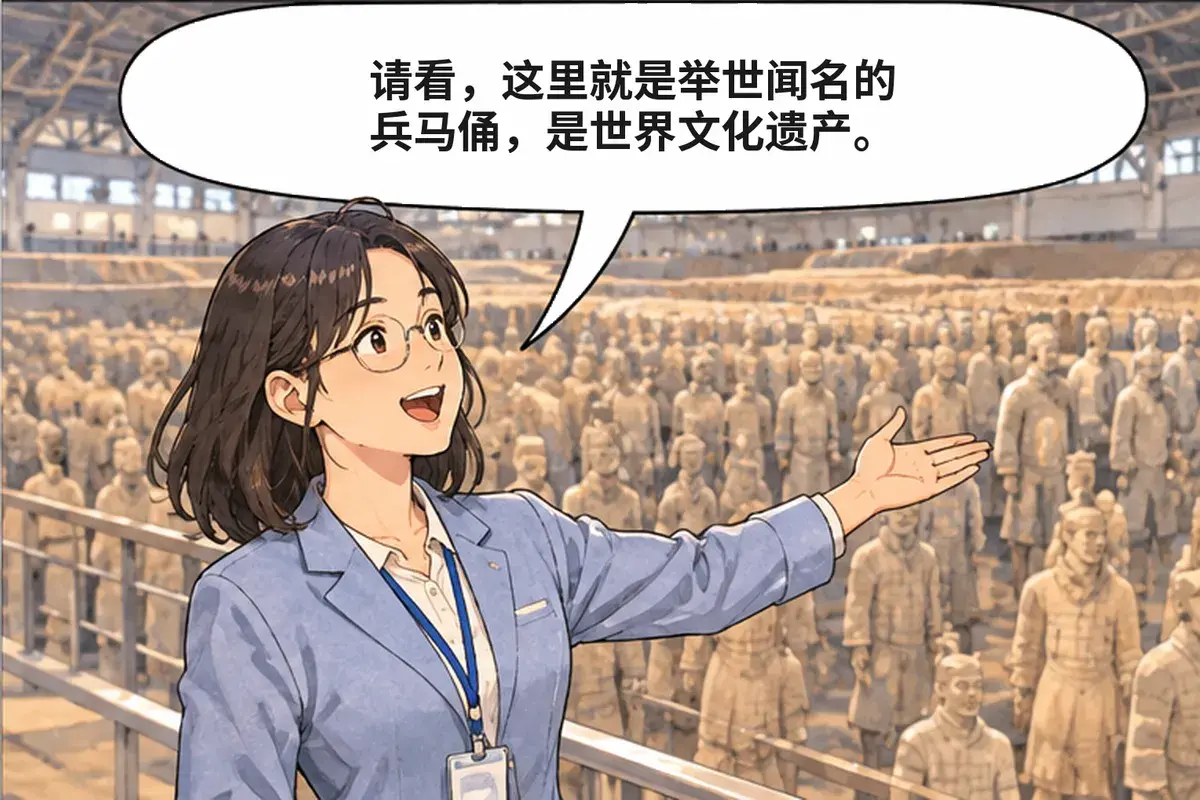
Panel 4 of 26 for “Every Terracotta Warrior's face turns out to be different”: “Please look. These are the world-famous Terracotta Warriors, a World Cultural Heritage site.”
  1. 导游

    请看,这里就是举世闻名的兵马俑,是世界文化遗产。

    Please look. These are the world-famous Terracotta Warriors, a World Cultural Heritage site.
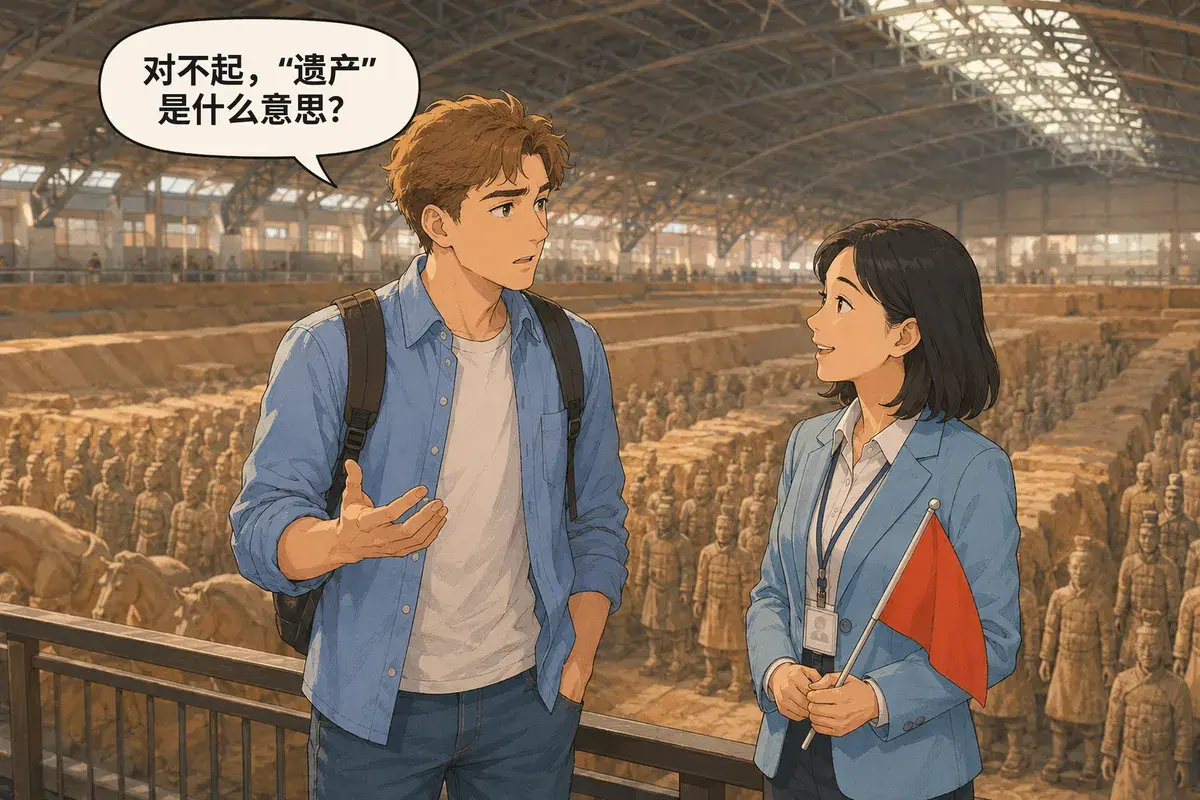
Panel 5 of 26 for “Every Terracotta Warrior's face turns out to be different”: “Sorry, what does "yíchǎn" mean?”
  1. 伊利亚

    对不起,“遗产”是什么意思?

    Sorry, what does "yíchǎn" mean?
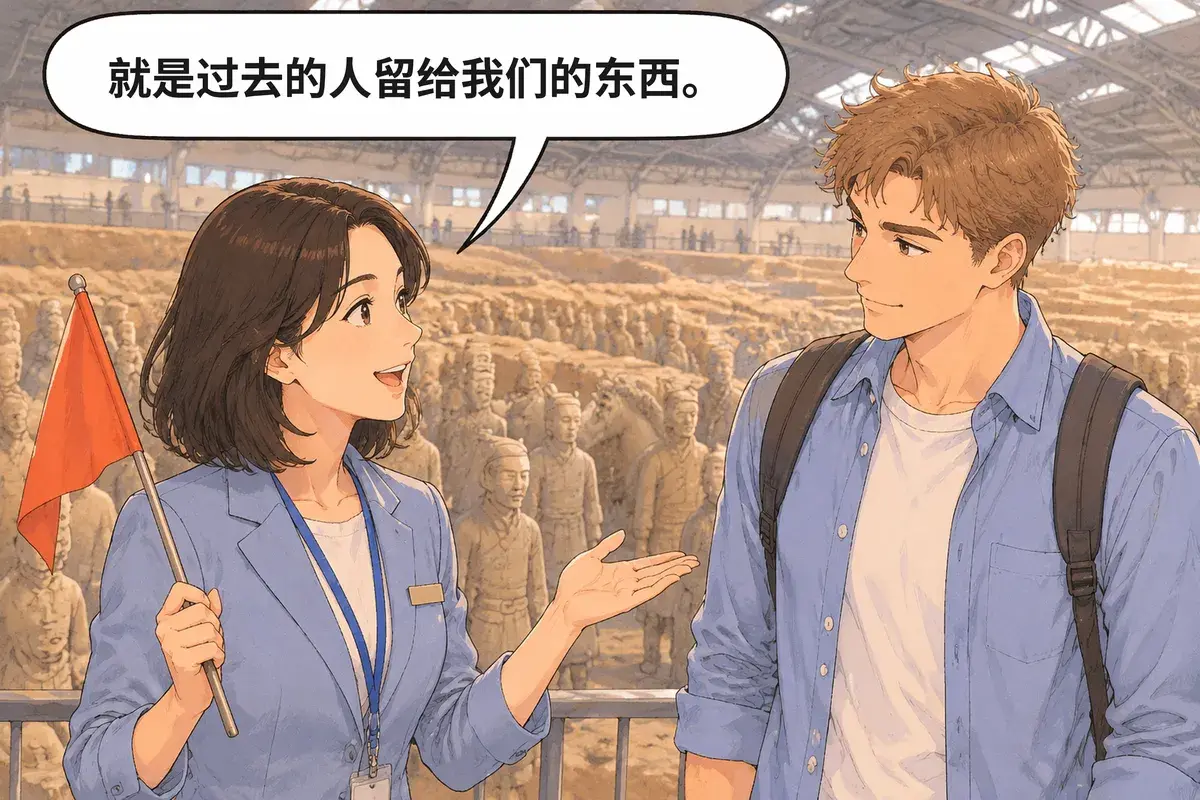
Panel 6 of 26 for “Every Terracotta Warrior's face turns out to be different”: “It's what people of the past left to us.”
  1. 导游

    就是过去的人留给我们的东西。

    It's what people of the past left to us.
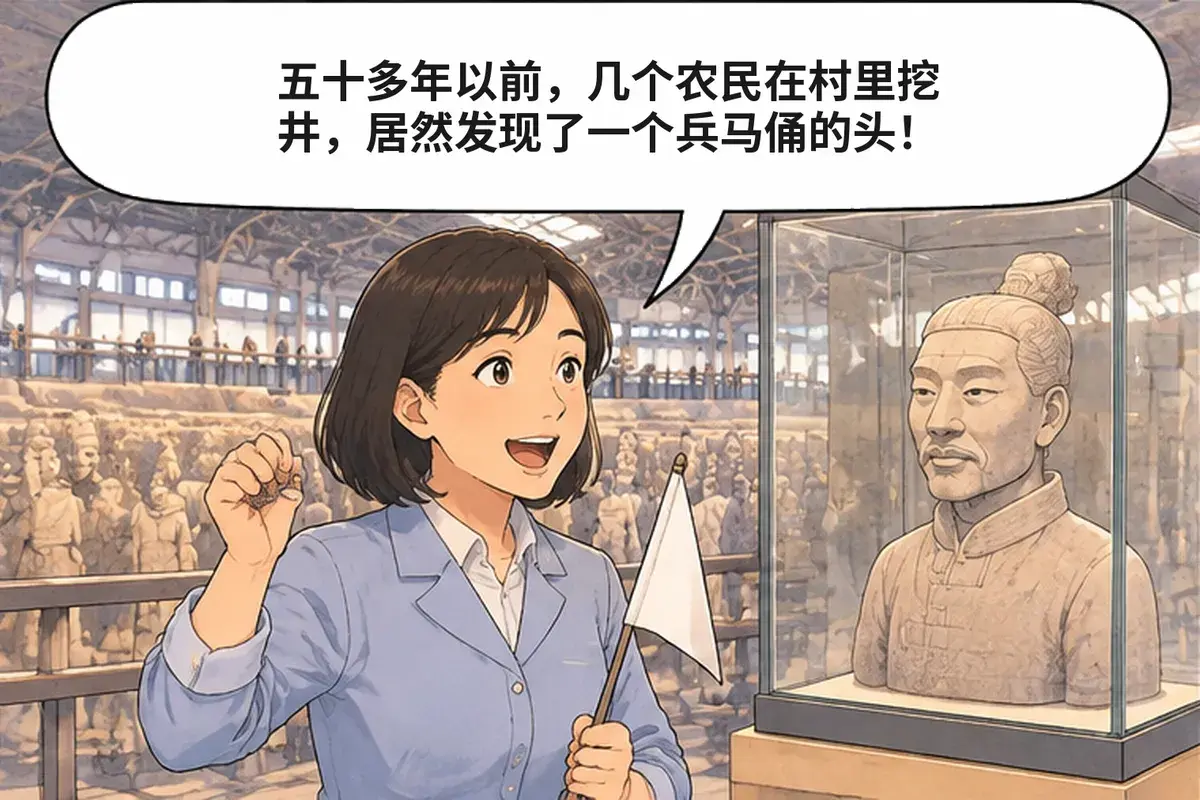
Panel 7 of 26 for “Every Terracotta Warrior's face turns out to be different”: “More than fifty years ago, a few farmers were digging a well in the village and, would you believe it, found the head of a Terracotta…
  1. 导游

    五十多年以前,几个农民在村里挖井,居然发现了一个兵马俑的头!

    More than fifty years ago, a few farmers were digging a well in the village and, would you believe it, found the head of a Terracotta Warrior!
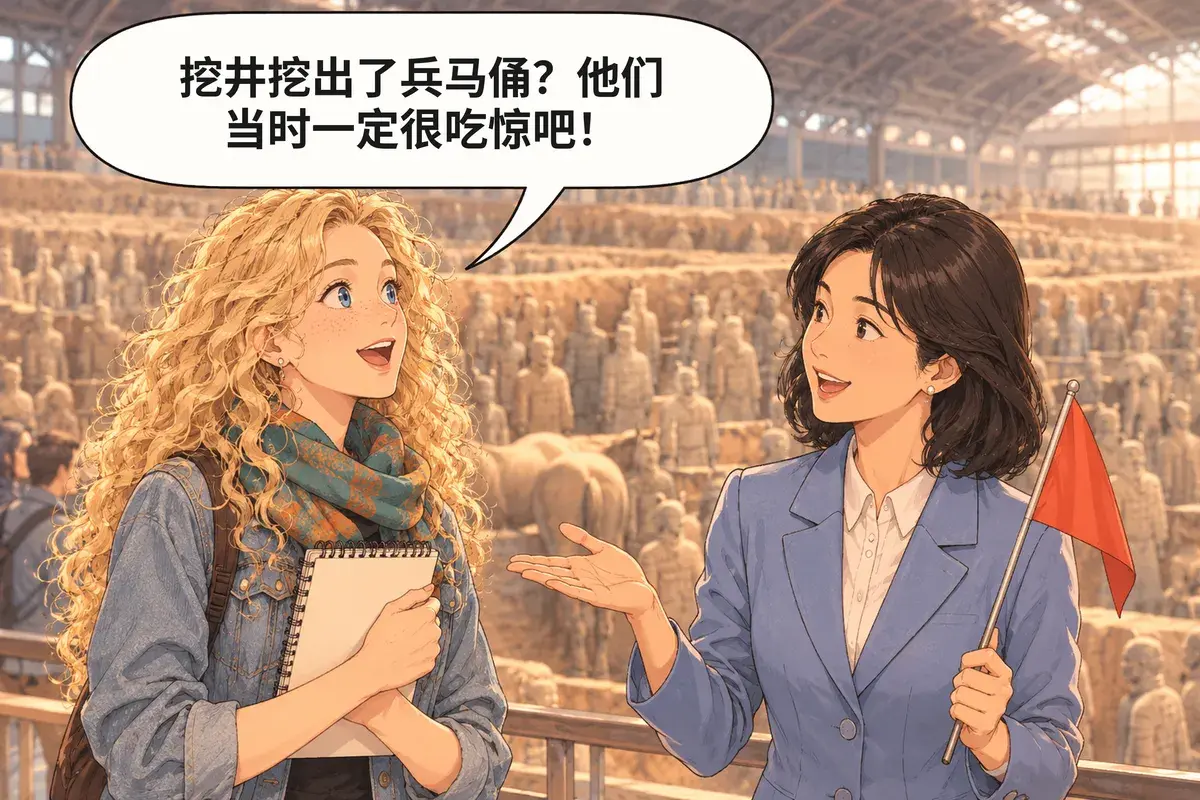
Panel 8 of 26 for “Every Terracotta Warrior's face turns out to be different”: “They were digging a well and dug up warriors? They must have been really shocked back then!”
  1. 萨拉

    挖井挖出了兵马俑?他们当时一定很吃惊吧!

    They were digging a well and dug up warriors? They must have been really shocked back then!
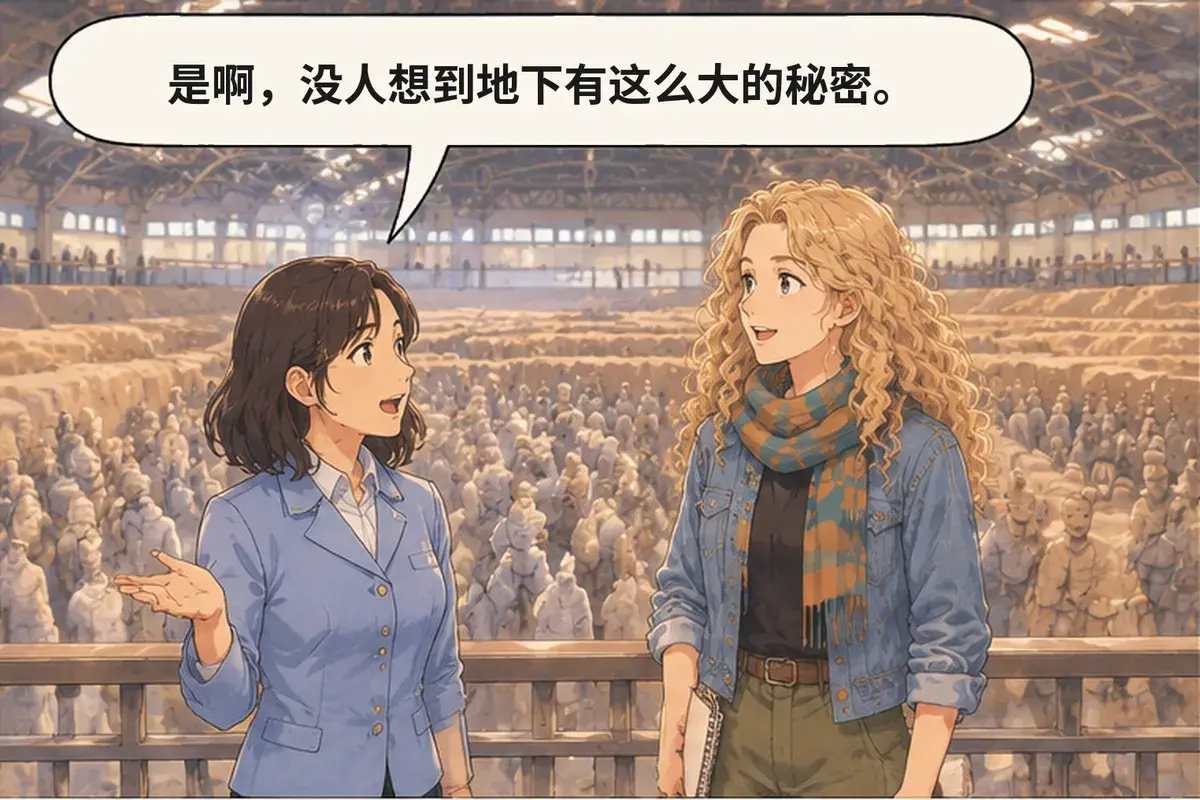
Panel 9 of 26 for “Every Terracotta Warrior's face turns out to be different”: “Yes. No one expected there was such a big secret underground.”
  1. 导游

    是啊,没人想到地下有这么大的秘密。

    Yes. No one expected there was such a big secret underground.
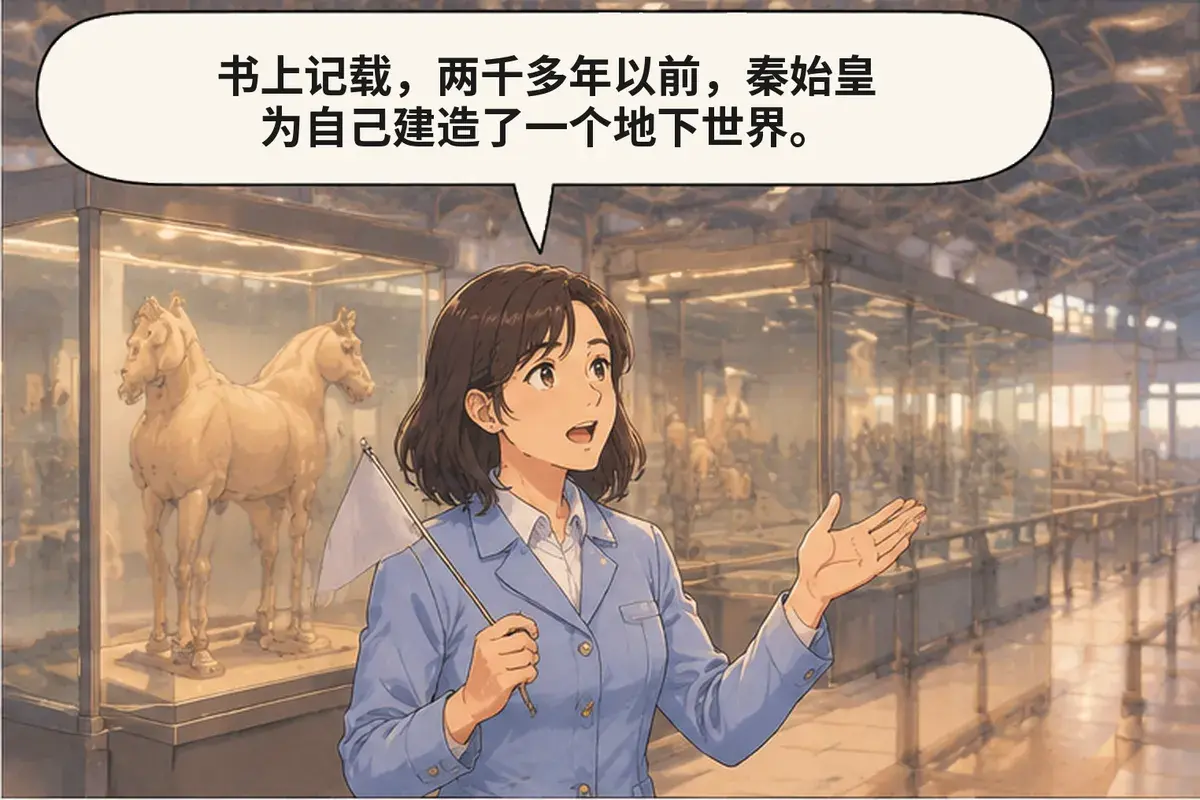
Panel 10 of 26 for “Every Terracotta Warrior's face turns out to be different”: “The books record that more than 2,000 years ago, Qin Shi Huang built an underground world for himself.”
  1. 导游

    书上记载,两千多年以前,秦始皇为自己建造了一个地下世界。

    The books record that more than 2,000 years ago, Qin Shi Huang built an underground world for himself.
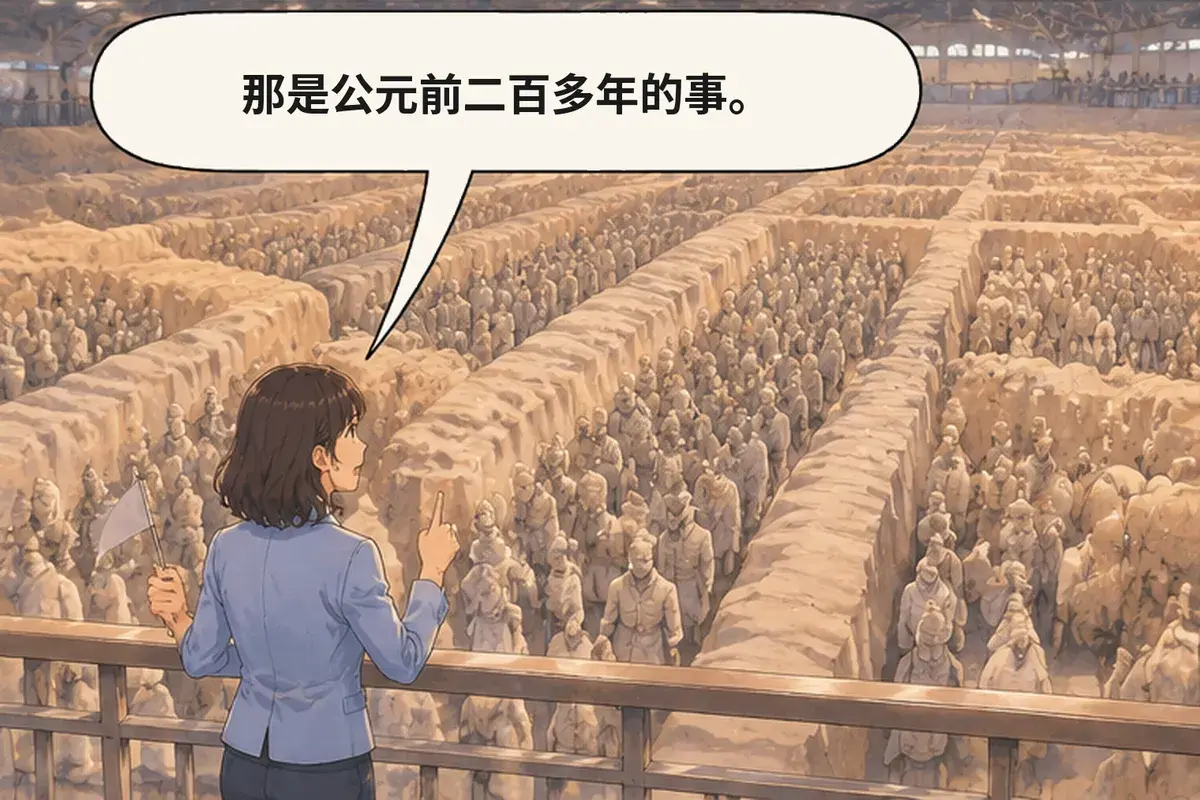
Panel 11 of 26 for “Every Terracotta Warrior's face turns out to be different”: “That was in the 200s B.C.”
  1. 导游

    那是公元前二百多年的事。

    That was in the 200s B.C.
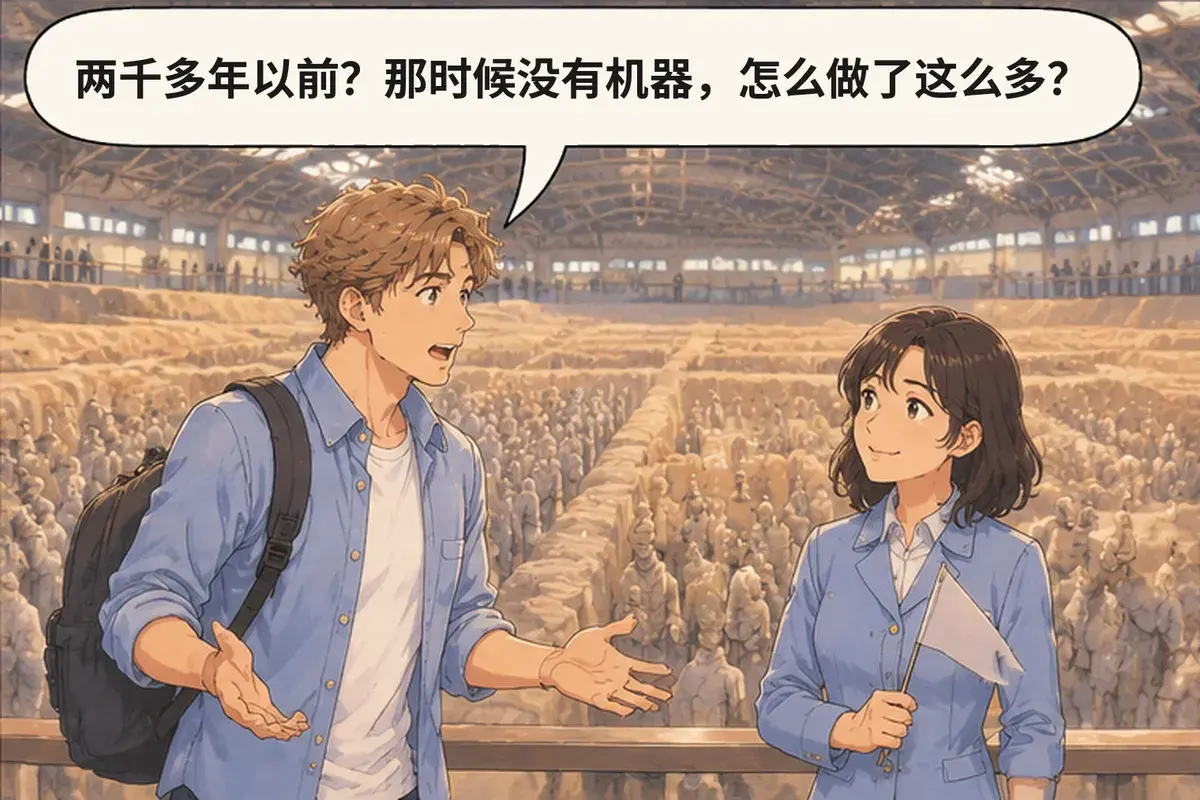
Panel 12 of 26 for “Every Terracotta Warrior's face turns out to be different”: “More than 2,000 years ago? There were no machines then, so how did they make so many?”
  1. 伊利亚

    两千多年以前?那时候没有机器,怎么做了这么多?

    More than 2,000 years ago? There were no machines then, so how did they make so many?
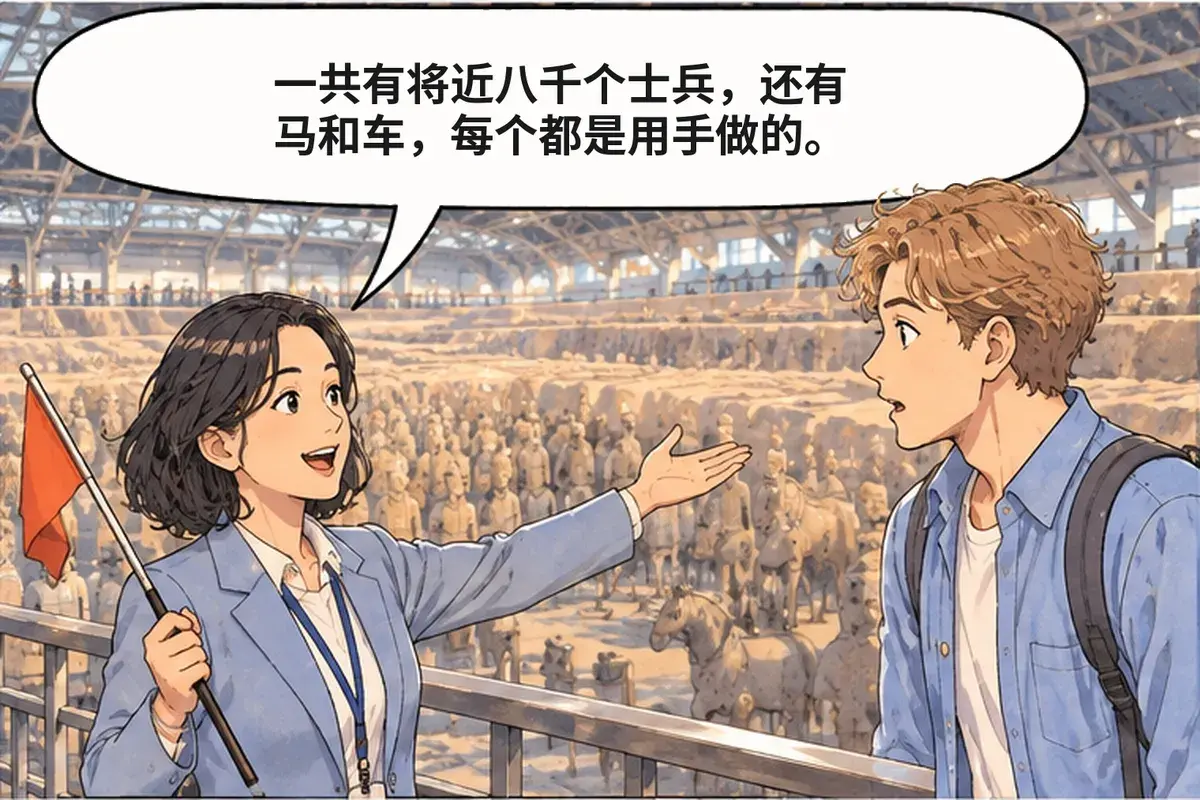
Panel 13 of 26 for “Every Terracotta Warrior's face turns out to be different”: “There are nearly 8,000 soldiers in all, plus horses and chariots, and each one was made by hand.”
  1. 导游

    一共有将近八千个士兵,还有马和车,每个都是用手做的。

    There are nearly 8,000 soldiers in all, plus horses and chariots, and each one was made by hand.
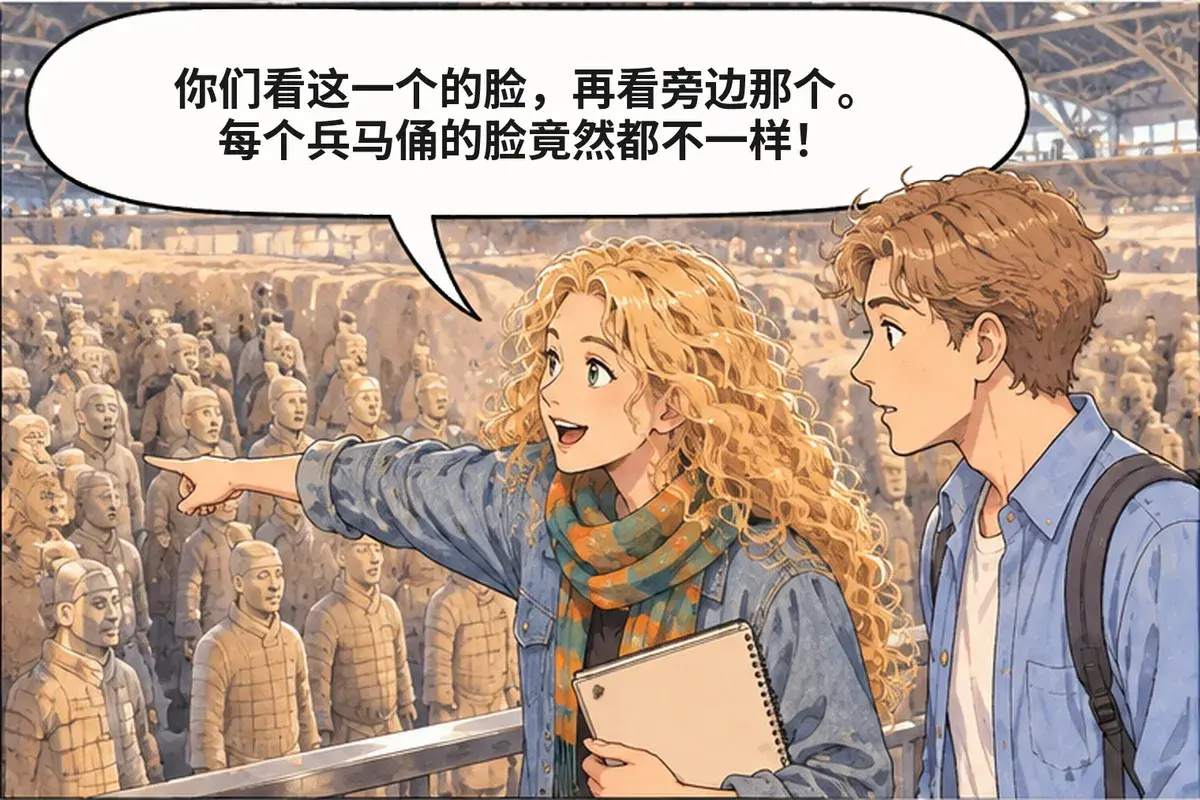
Panel 14 of 26 for “Every Terracotta Warrior's face turns out to be different”: “Look at this one's face, then look at the one next to it. Every Terracotta Warrior's face turns out to be different! (to several people)”
  1. 萨拉

    你们看这一个的脸,再看旁边那个。每个兵马俑的脸竟然都不一样!

    Look at this one's face, then look at the one next to it. Every Terracotta Warrior's face turns out to be different! (to several people)
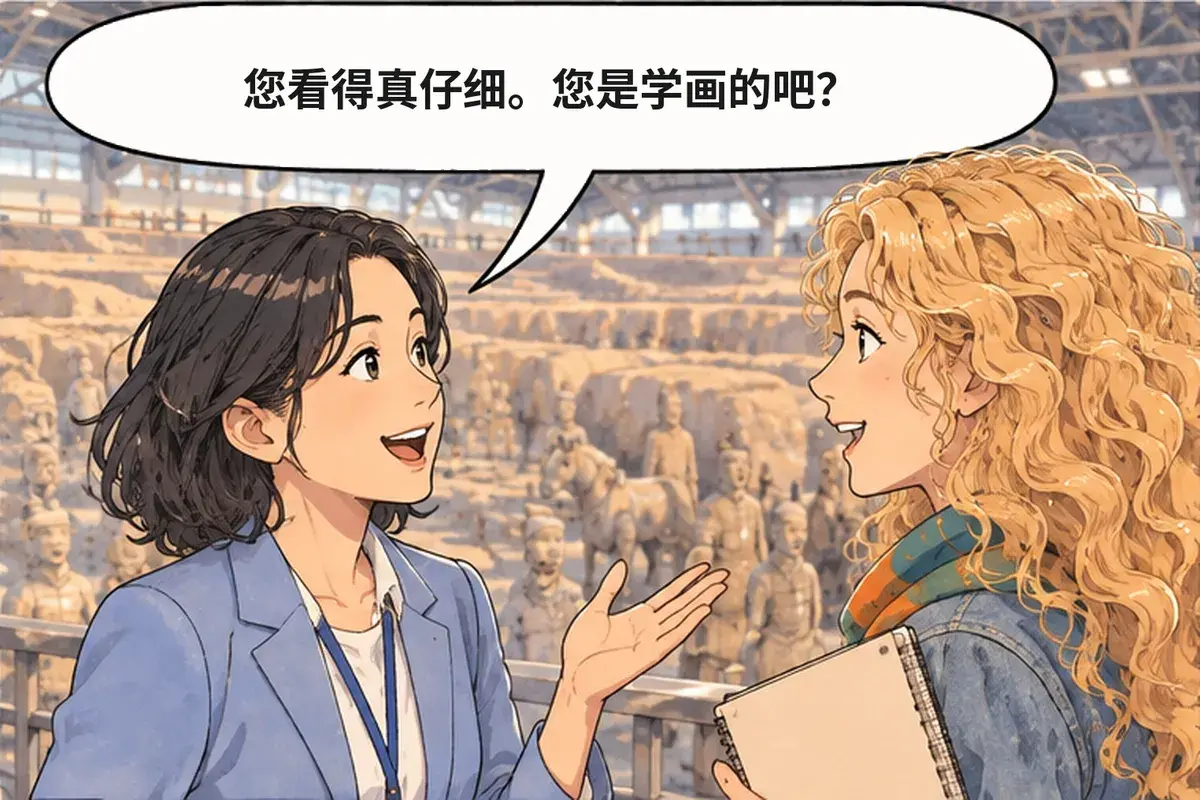
Panel 15 of 26 for “Every Terracotta Warrior's face turns out to be different”: “You're looking very carefully. You're studying art, I guess? (polite)”
  1. 导游

    您看得真仔细。您是学画的吧?

    You're looking very carefully. You're studying art, I guess? (polite)
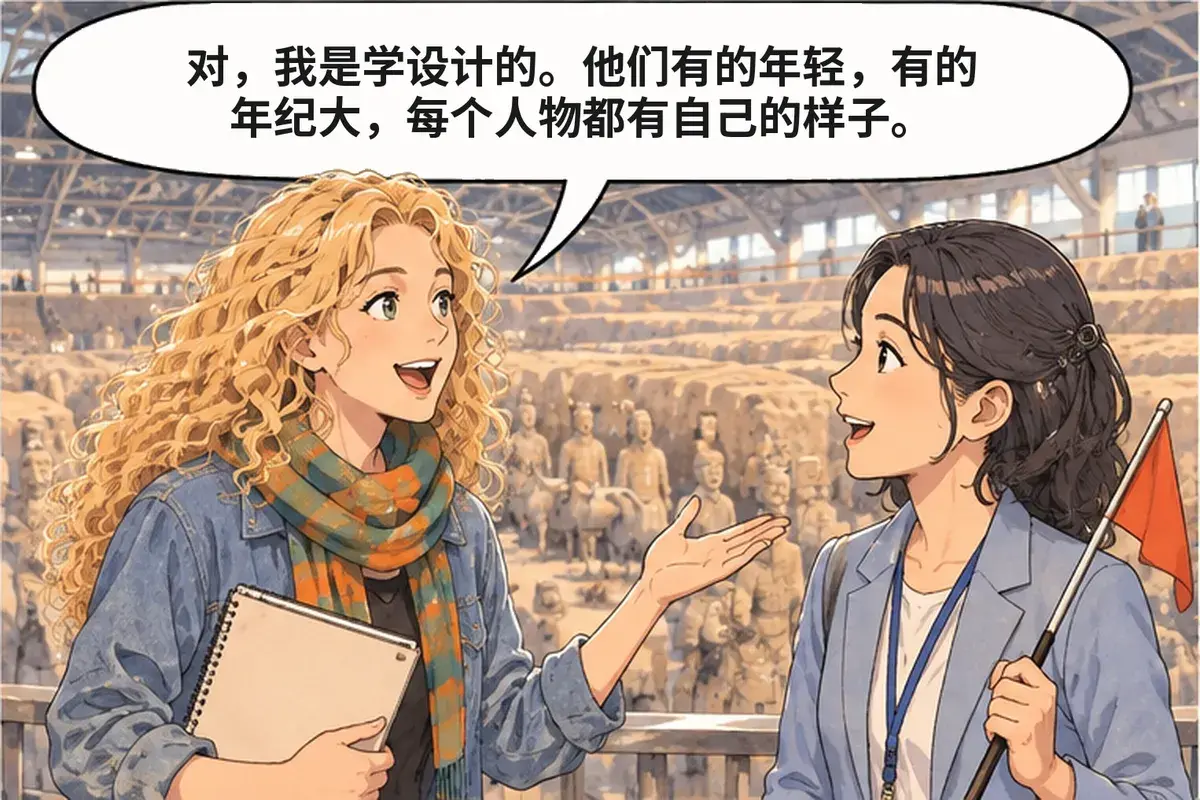
Panel 16 of 26 for “Every Terracotta Warrior's face turns out to be different”: “Yes, I study design. Some of them are young, some are older, and every figure has its own look.”
  1. 萨拉

    对,我是学设计的。他们有的年轻,有的年纪大,每个人物都有自己的样子。

    Yes, I study design. Some of them are young, some are older, and every figure has its own look.
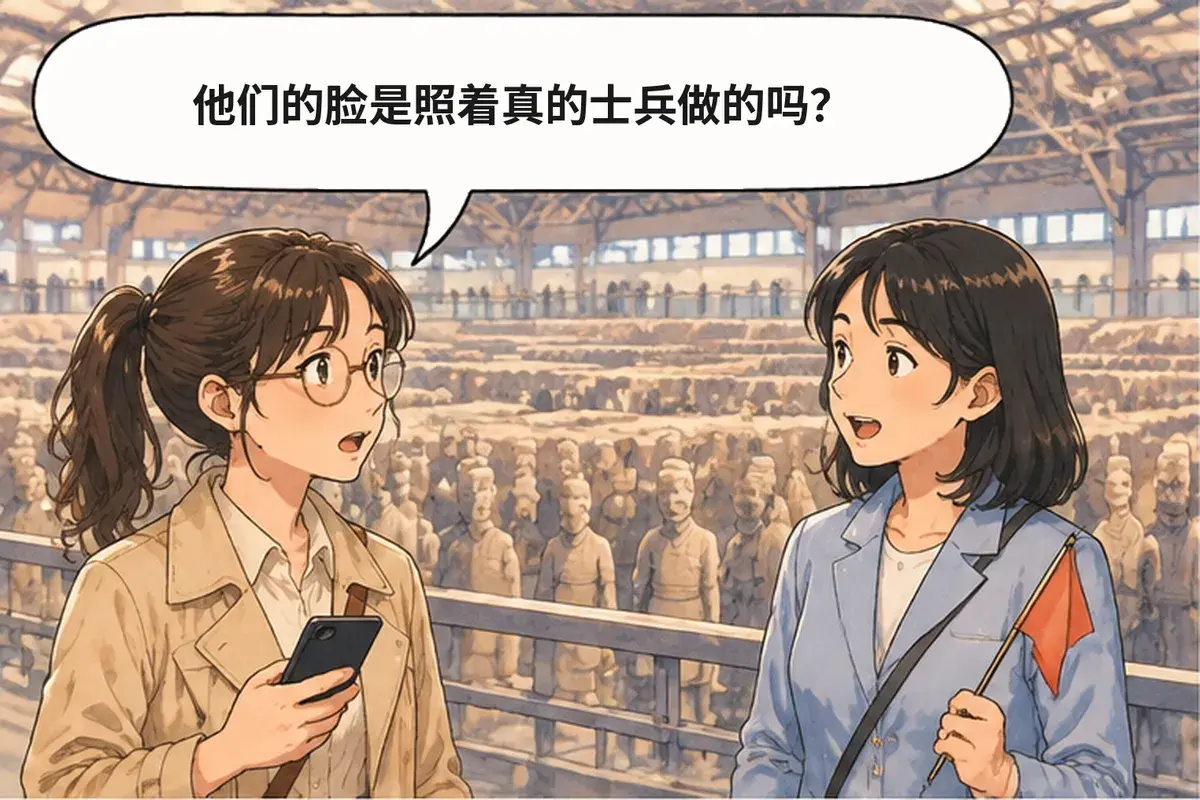
Panel 17 of 26 for “Every Terracotta Warrior's face turns out to be different”: “Were their faces modeled on real soldiers?”
  1. 晓雨

    他们的脸是照着真的士兵做的吗?

    Were their faces modeled on real soldiers?
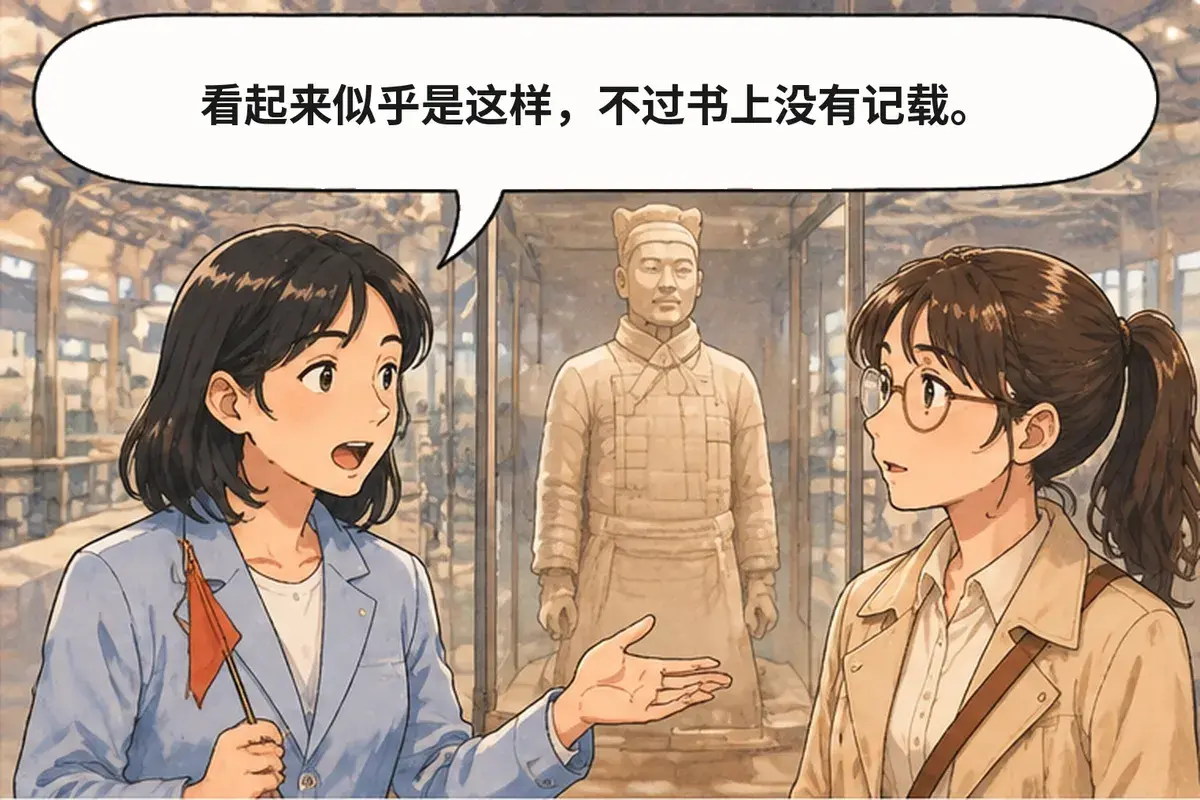
Panel 18 of 26 for “Every Terracotta Warrior's face turns out to be different”: “It seems that way, but the books don't record it.”
  1. 导游

    看起来似乎是这样,不过书上没有记载。

    It seems that way, but the books don't record it.
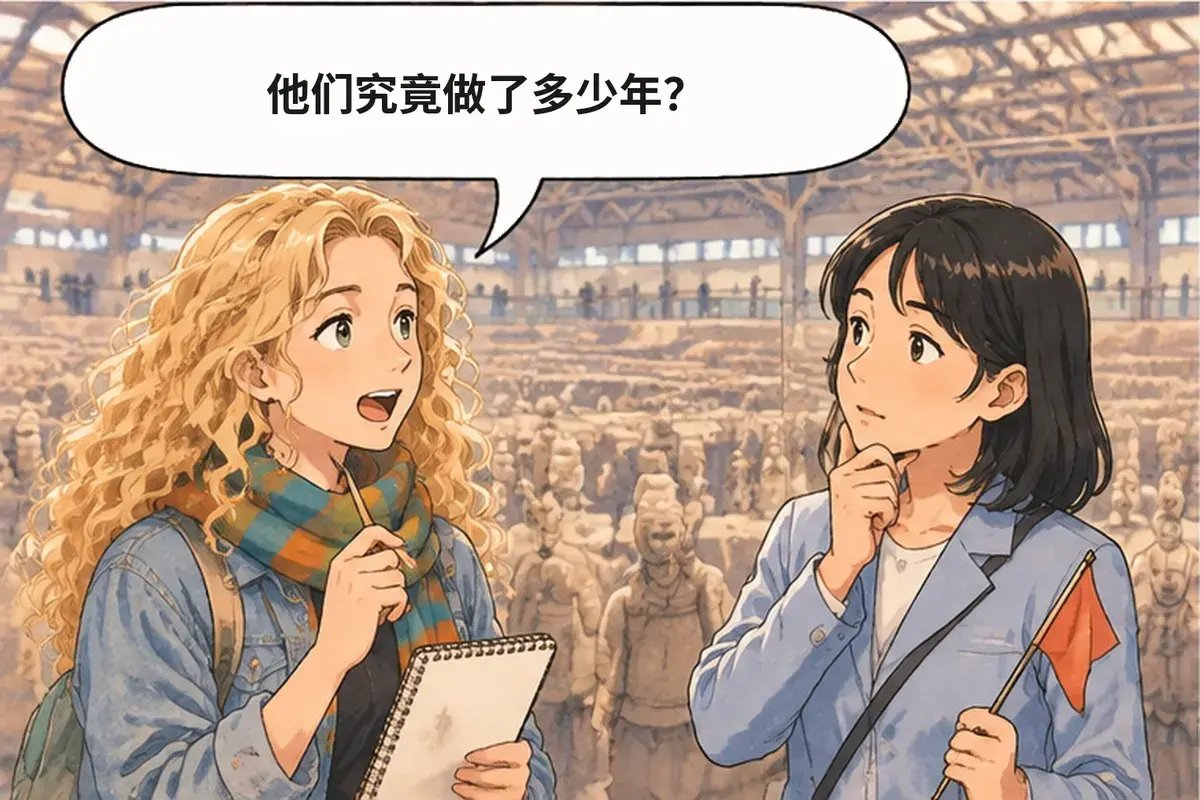
Panel 19 of 26 for “Every Terracotta Warrior's face turns out to be different”: “So how many years did it actually take them?”
  1. 萨拉

    他们究竟做了多少年?

    So how many years did it actually take them?
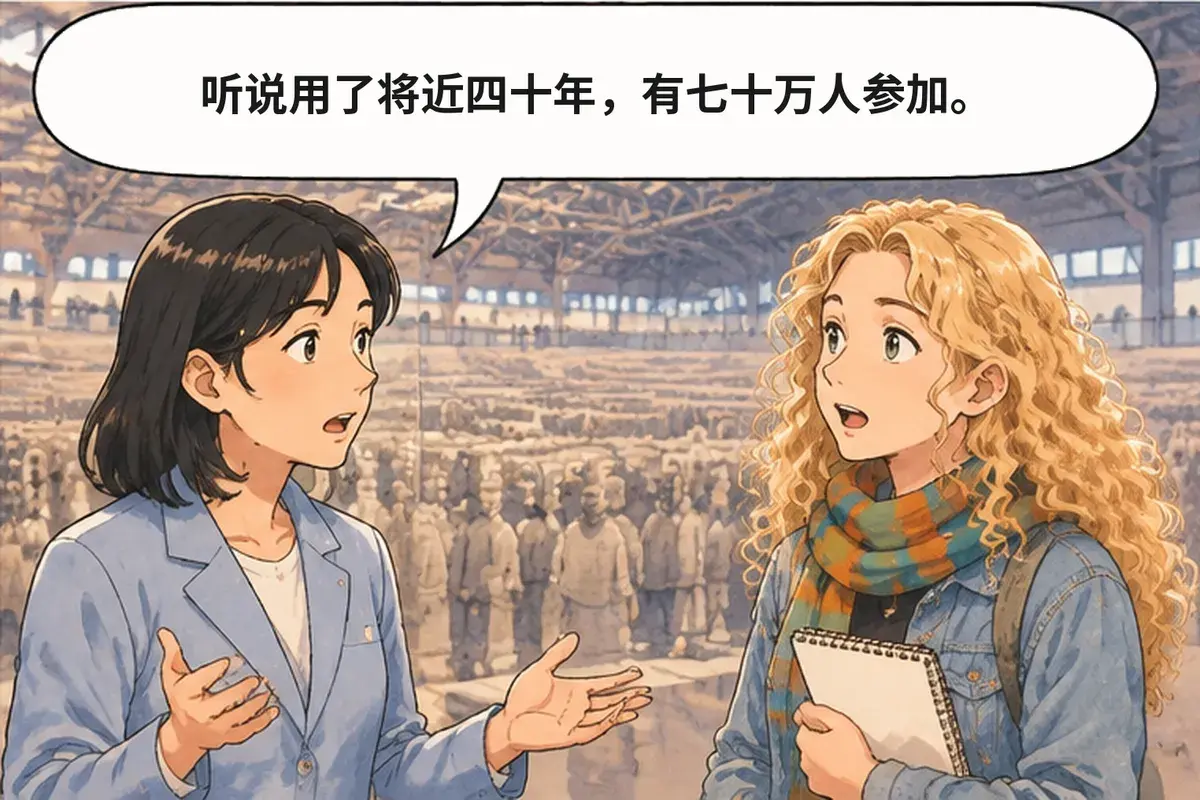
Panel 20 of 26 for “Every Terracotta Warrior's face turns out to be different”: “I hear it took nearly forty years, and 700,000 people took part.”
  1. 导游

    听说用了将近四十年,有七十万人参加。

    I hear it took nearly forty years, and 700,000 people took part.
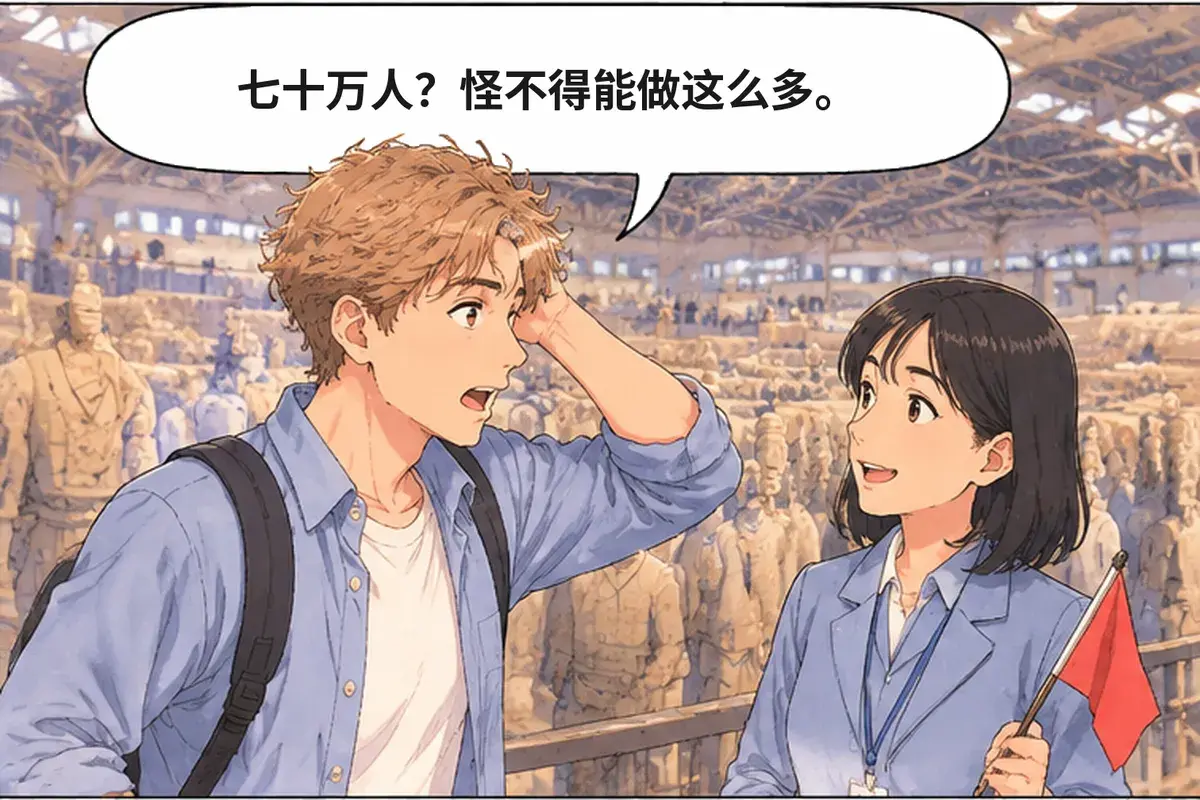
Panel 21 of 26 for “Every Terracotta Warrior's face turns out to be different”: “700,000 people? No wonder they could make so many.”
  1. 伊利亚

    七十万人?怪不得能做这么多。

    700,000 people? No wonder they could make so many.
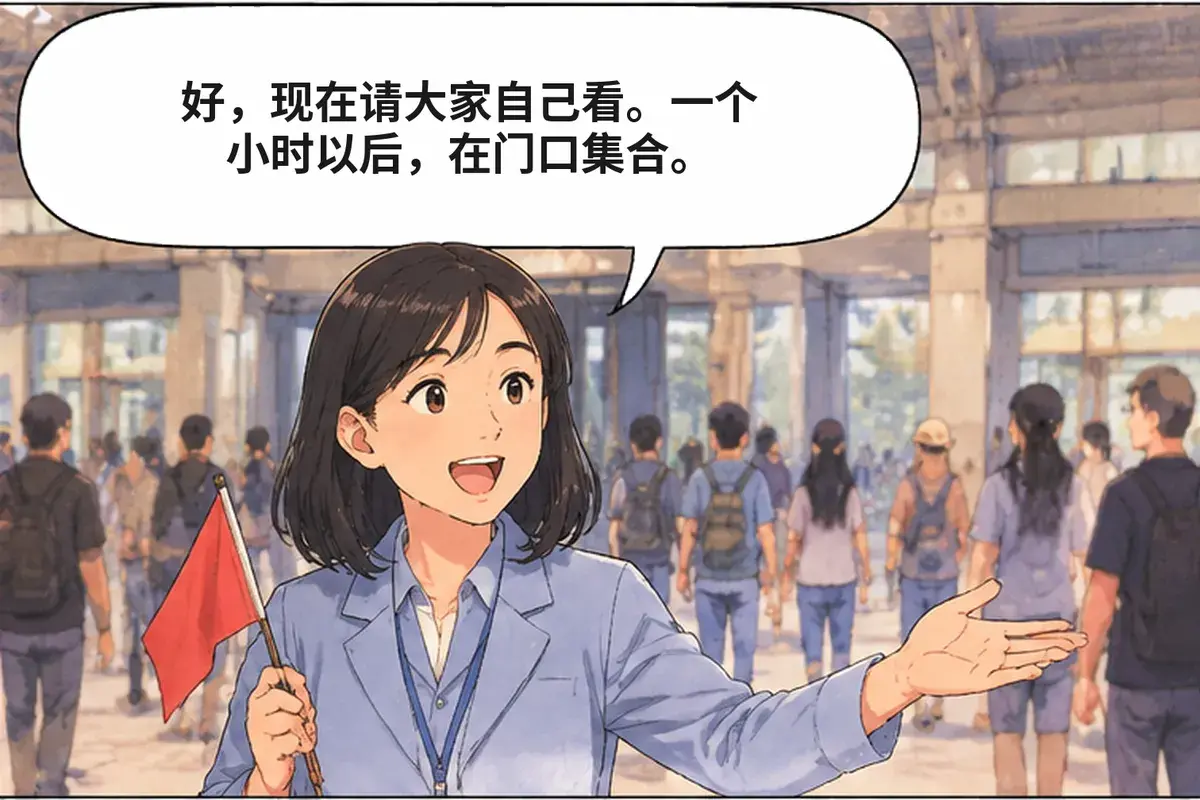
Panel 22 of 26 for “Every Terracotta Warrior's face turns out to be different”: “OK, now please look around on your own. In an hour, meet at the entrance.”
  1. 导游

    好,现在请大家自己看。一个小时以后,在门口集合。

    OK, now please look around on your own. In an hour, meet at the entrance.
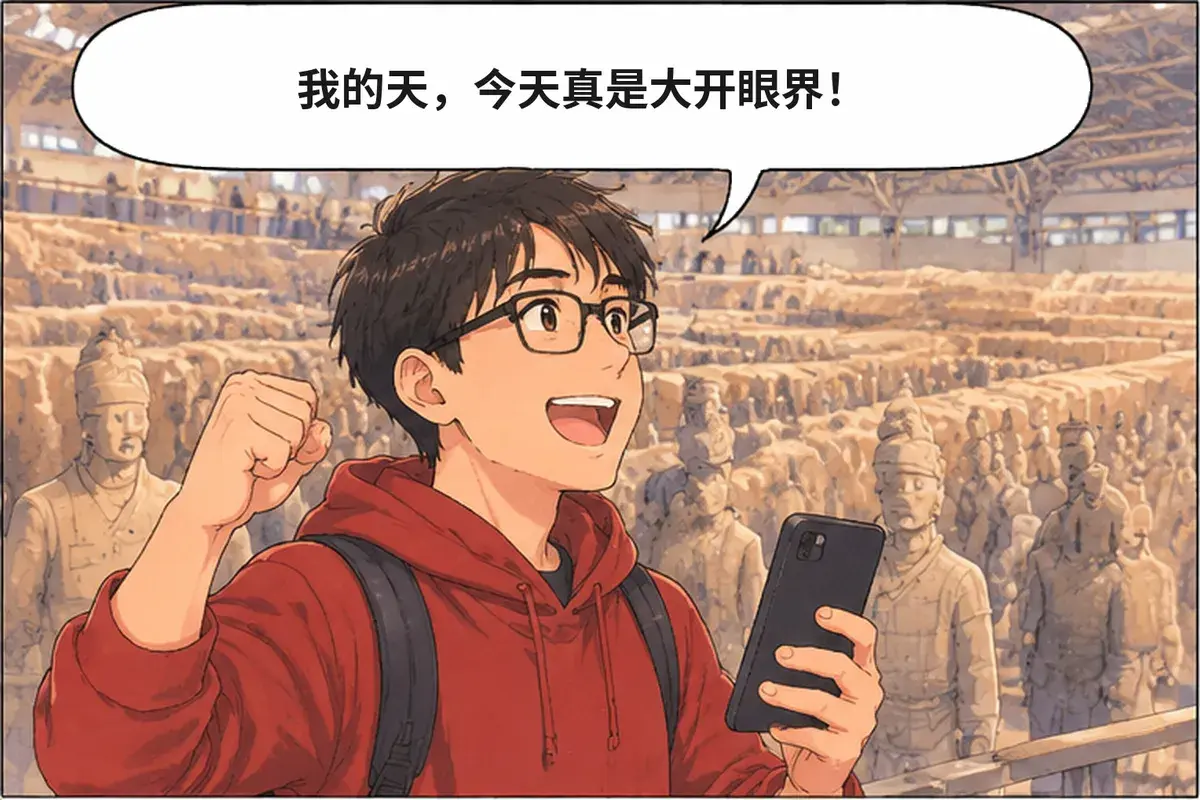
Panel 23 of 26 for “Every Terracotta Warrior's face turns out to be different”: “Wow, today was a real eye-opener!”
  1. 张磊

    我的天,今天真是大开眼界!

    Wow, today was a real eye-opener!
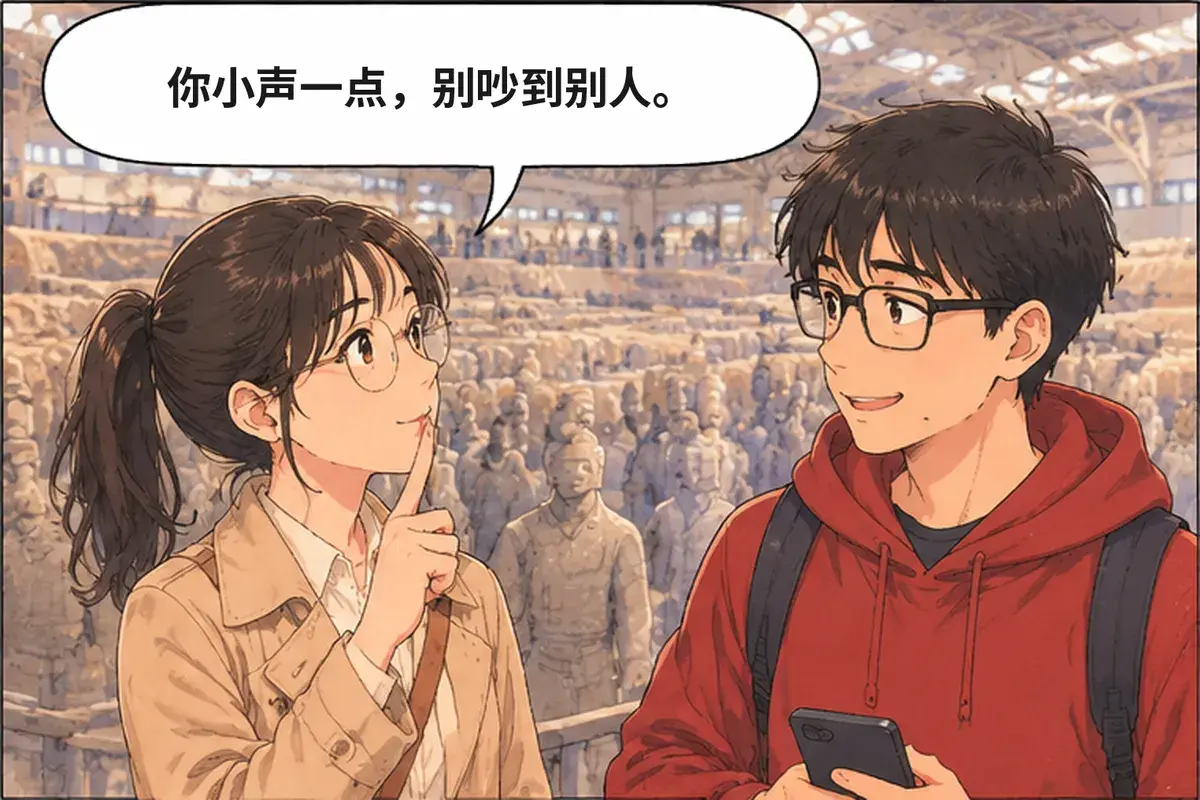
Panel 24 of 26 for “Every Terracotta Warrior's face turns out to be different”: “Keep it down a little, don't bother other people.”
  1. 晓雨

    你小声一点,别吵到别人。

    Keep it down a little, don't bother other people.
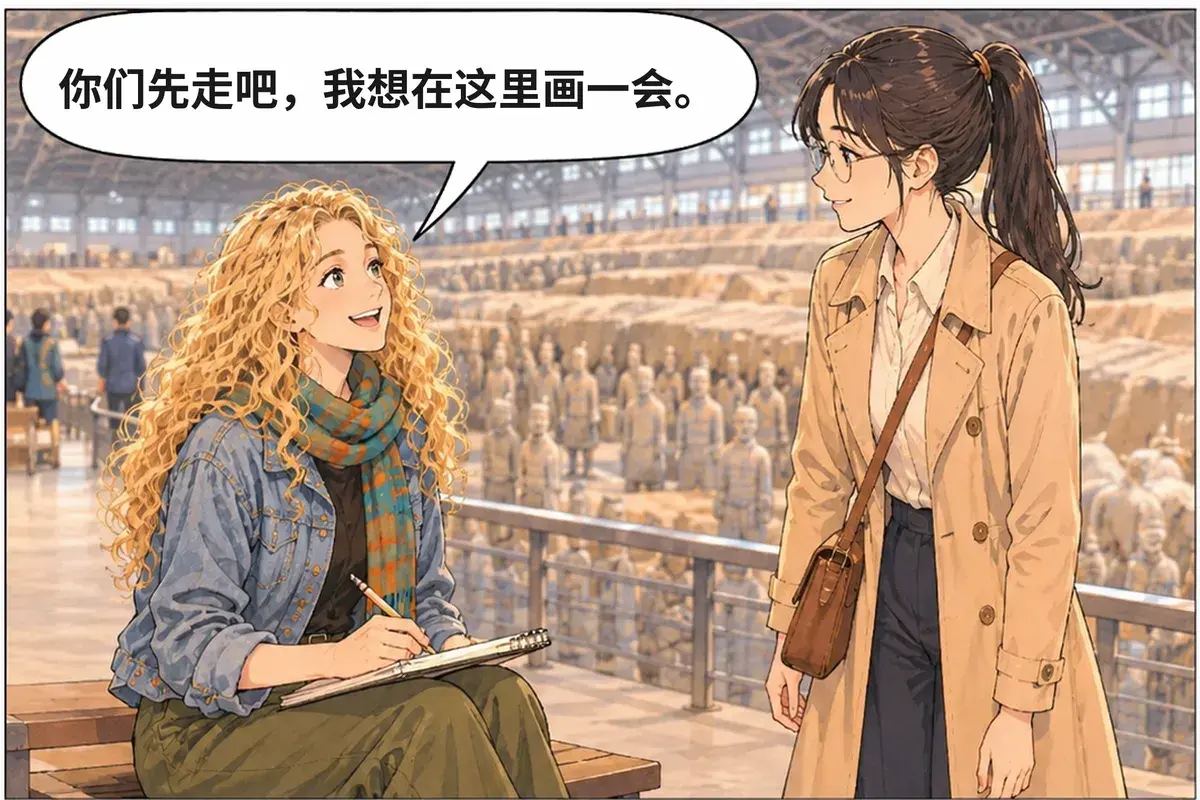
Panel 25 of 26 for “Every Terracotta Warrior's face turns out to be different”: “You go ahead, I want to draw here for a bit. (to several people)”
  1. 萨拉

    你们先走吧,我想在这里画一会。

    You go ahead, I want to draw here for a bit. (to several people)
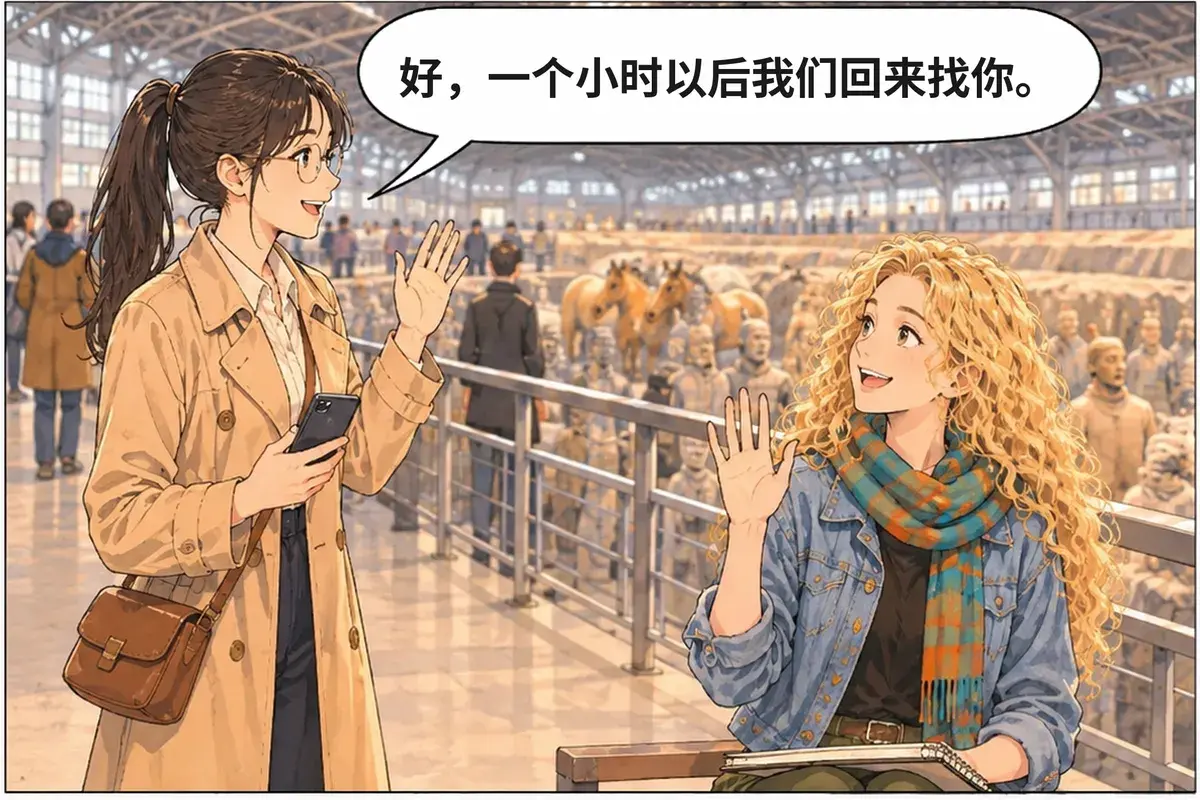
Panel 26 of 26 for “Every Terracotta Warrior's face turns out to be different”: “OK, we'll come back to find you in an hour.”
  1. 晓雨

    好,一个小时以后我们回来找你。

    OK, we'll come back to find you in an hour.

Grammar for this text

每 个 兵马俑 的 脸 竟然 都 不 一样! — Here 竟然 means "it turns out": Sara expected identical faces and saw different ones. 竟然 comes after the subject, before 都 and the verb.

居然 发现 了 一 个 兵马俑 的 头! — Here 居然 is the same "would you believe it", a little more casual. The guide tells the story as if he were surprised himself.

挖 井 挖 出 了 兵马俑? — The verb is repeated: "they were digging a well, and dug up warriors". 挖 出 means "dig up, take out of the ground".

几乎 全 中国 的 人 都 出来 玩 了。 — With 几乎 … 都 you say "almost everyone". Over the May holidays (May 1–5) hundreds of millions of people travel in China, which explains the crowds.

公元 前 二百 多 年 — In 公元 前 ("B.C.") the word 前 comes after 公元. 秦始皇 (Qín Shǐhuáng) was the first emperor of China.

看起来 似乎 是 这样 — Here 似乎 means "it seems": it is the written-style partner of 好像, and it suits a guide telling a story.

他们 究竟 做 了 多少 年? — 究竟 makes the question stronger: "so how many years, exactly?" You know 到底; it means the same, only plainer.

今天 真 是 大开眼界! — "What an eye-opener!" You say this when you have seen something you never imagined.

Words and grammar of the unit: Tell the story of an ancient capital.

Learn the words from the texts with flashcards

In the app, you can tap any word in a text to see its translation, forms and examples, and new words stick with flashcards. 15 minutes a day.

Start for free

Everything is open for free. No card needed to sign up.