

Chinese dialogue with translation · B1 · 14 lines
万一后面的车撞上来呢? What if a car behind us crashes into us?
Comic · 14 panels
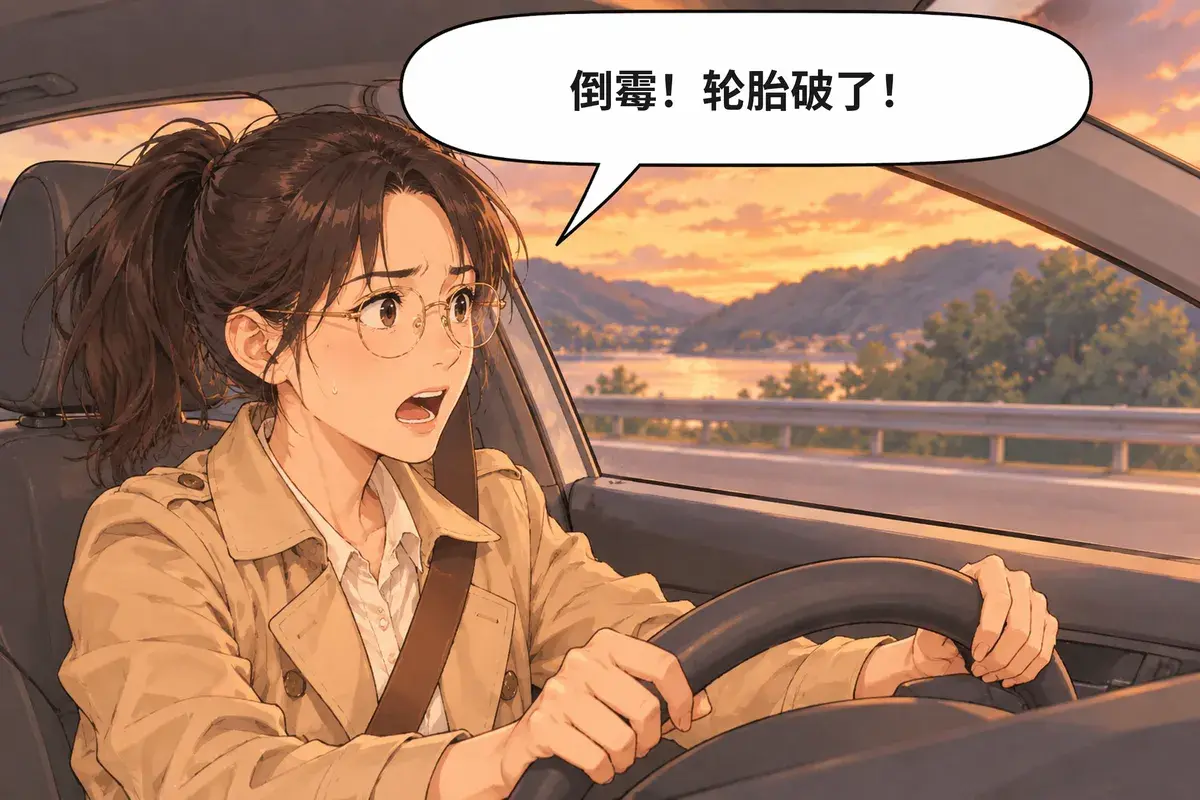
- 晓雨
倒霉!轮胎破了!
Bad luck! The tire's punctured!
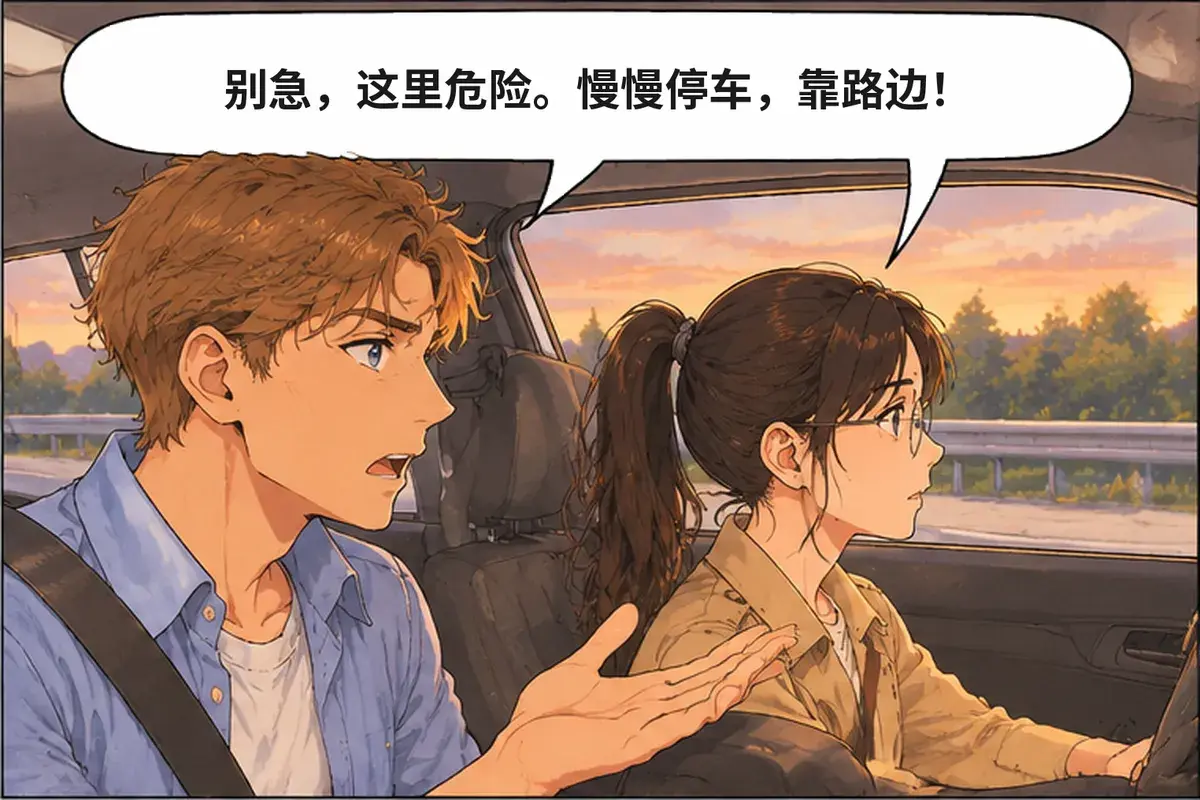
- 伊利亚
别急,这里危险。慢慢停车,靠路边!
Don't panic, it's dangerous here. Stop slowly, pull over to the side!
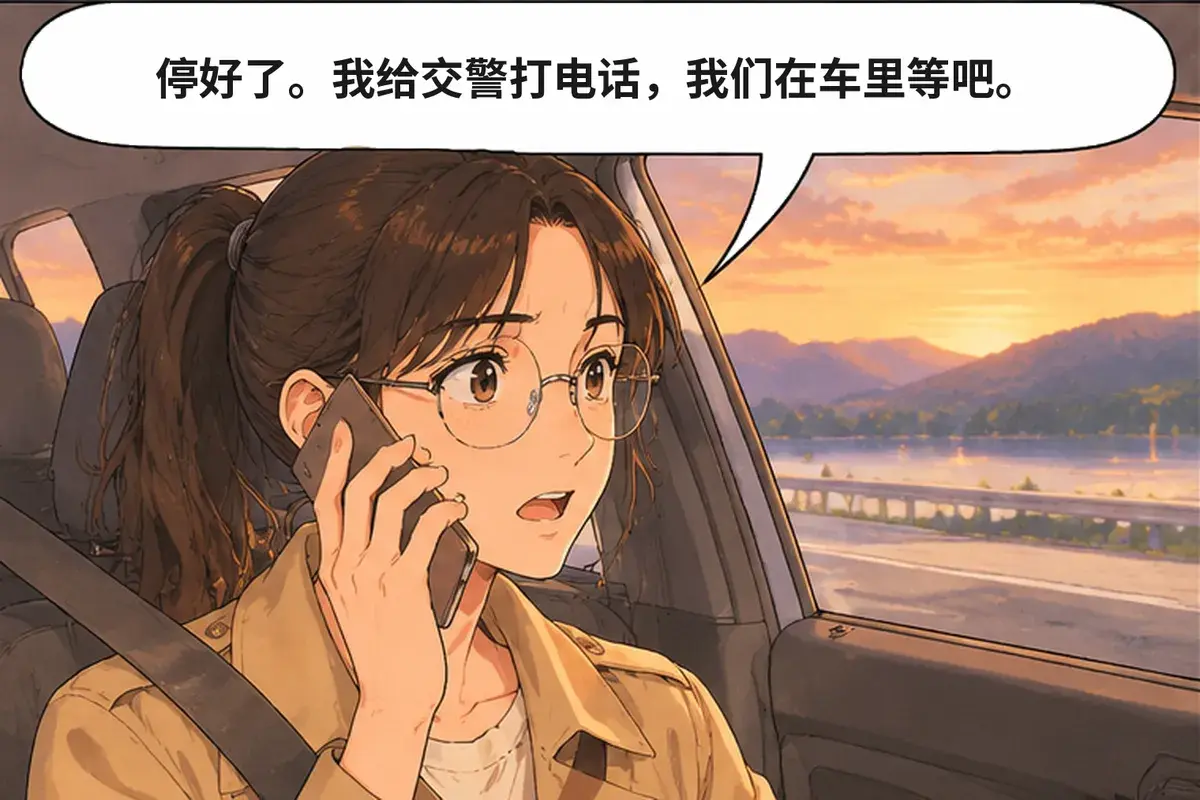
- 晓雨
停好了。我给交警打电话,我们在车里等吧。
I've stopped. I'll call the traffic police, let's wait in the car.
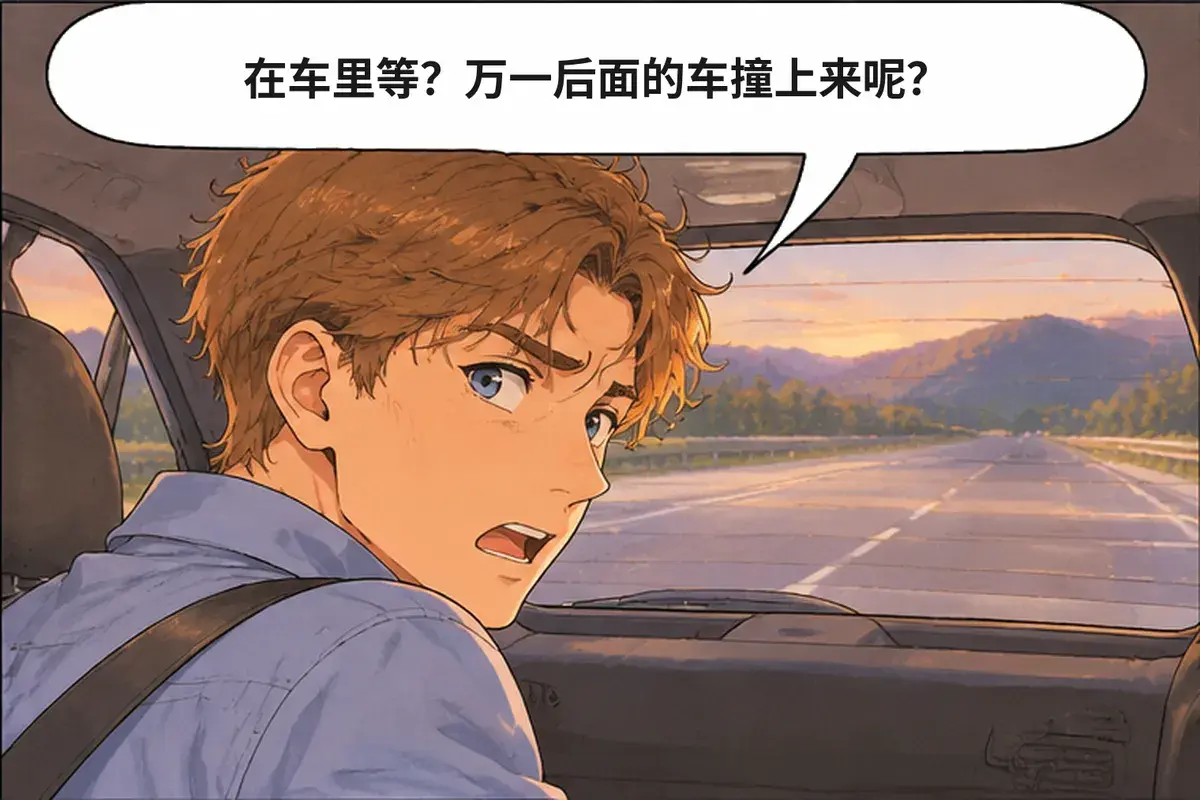
- 伊利亚
在车里等?万一后面的车撞上来呢?
Wait in the car? What if a car behind us crashes into us?
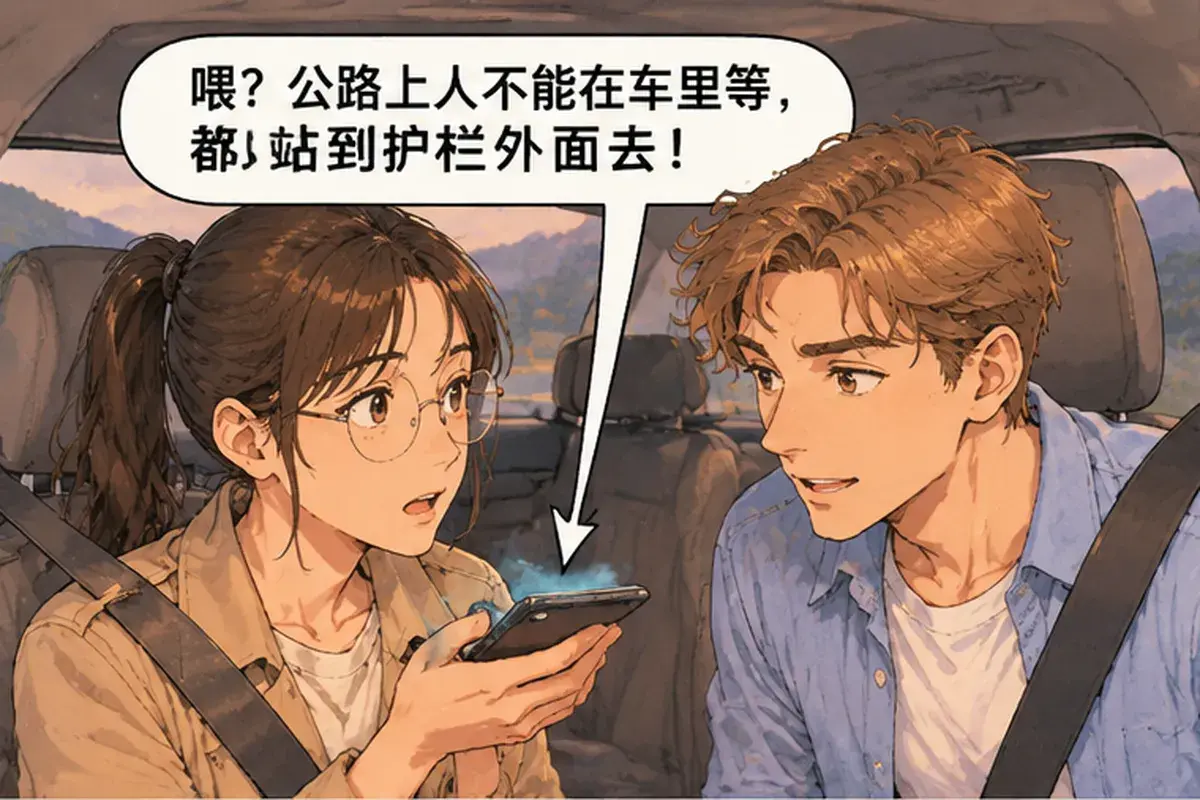
- 警察
喂?公路上人不能在车里等,都站到护栏外面去!
Hello? You can't wait in the car on the highway, everyone stand outside the guardrail!
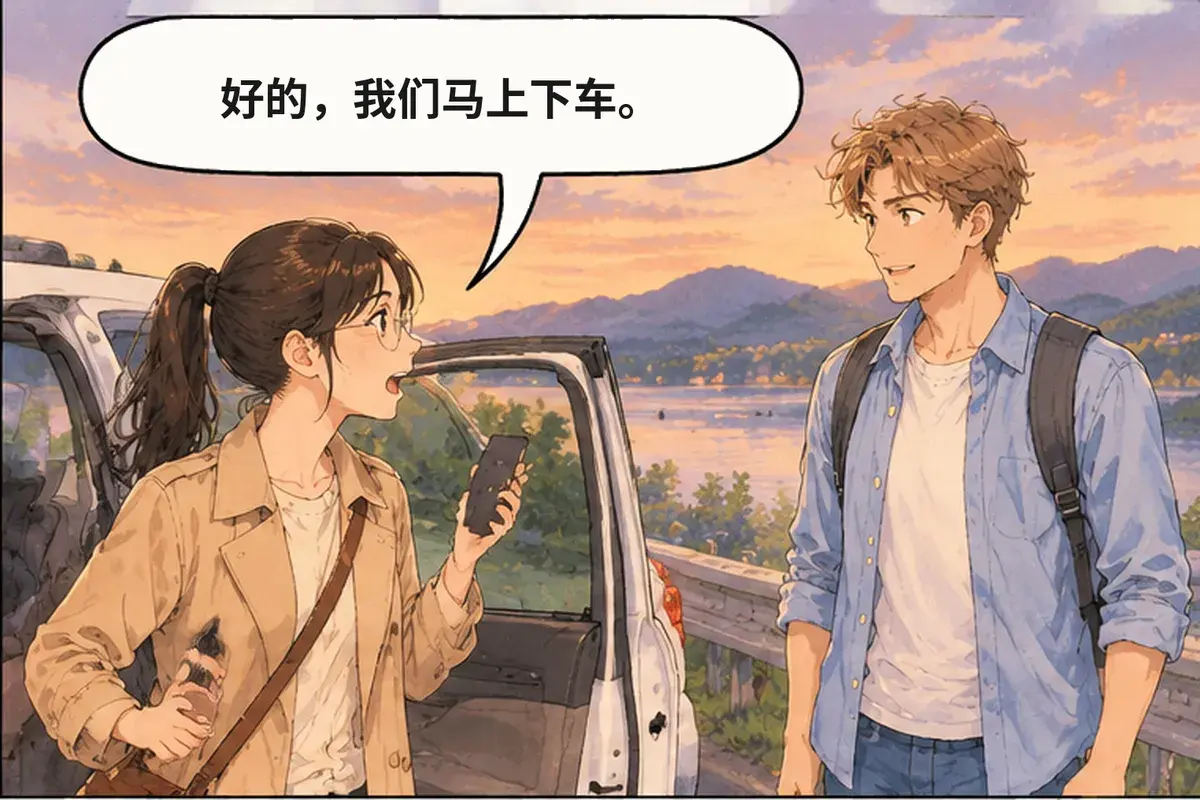
- 晓雨
好的,我们马上下车。
OK, we're getting out right now.
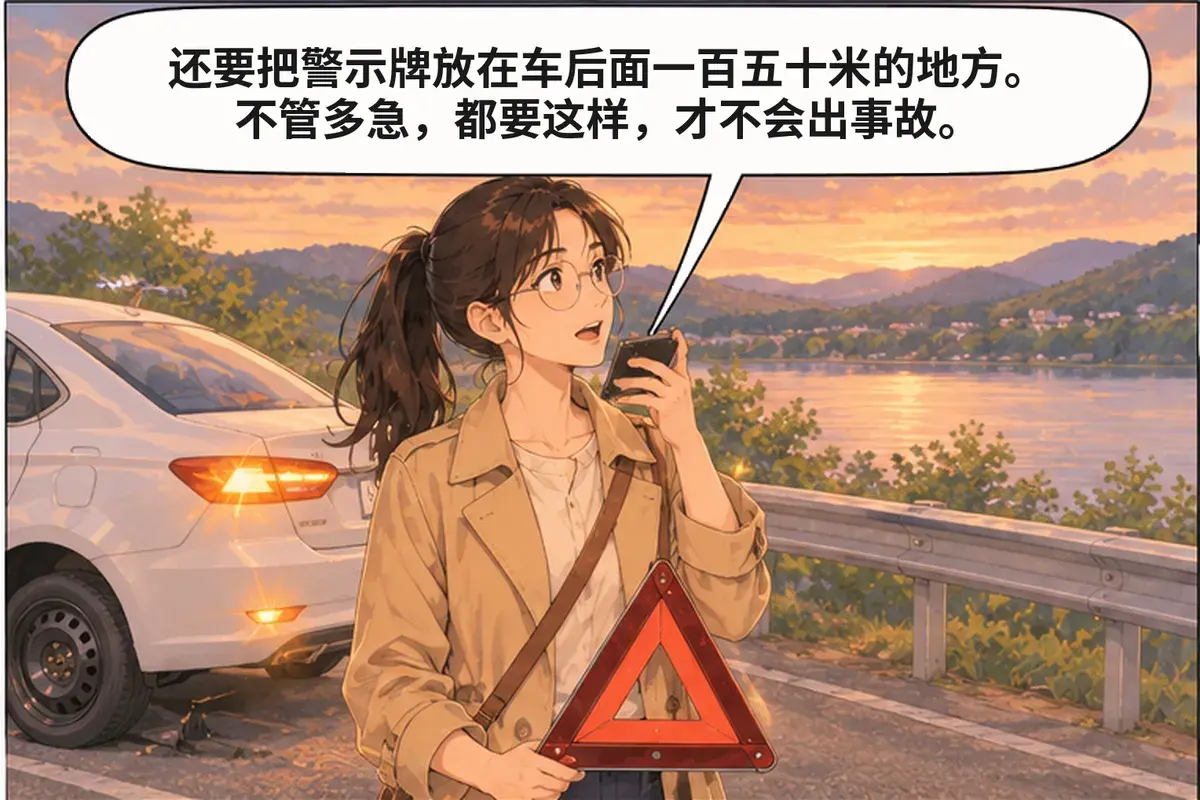
- 警察
还要把警示牌放在车后面一百五十米的地方。不管多急,都要这样,才不会出事故。
You also need to put the warning triangle 150 meters behind the car. No matter how much of a hurry you're in, it has to be done this way, so that there's no accident.
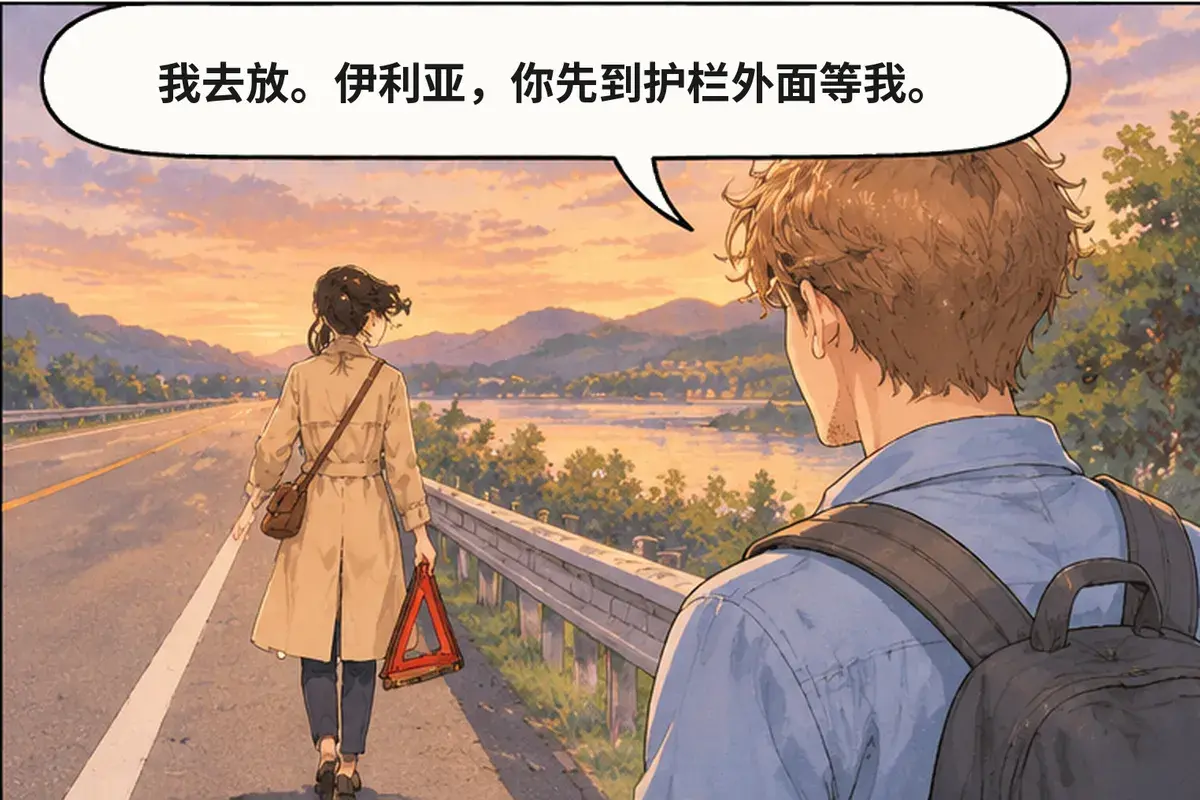
- 晓雨
我去放。伊利亚,你先到护栏外面等我。
I'll go put it out. Ilya, wait for me outside the guardrail first.
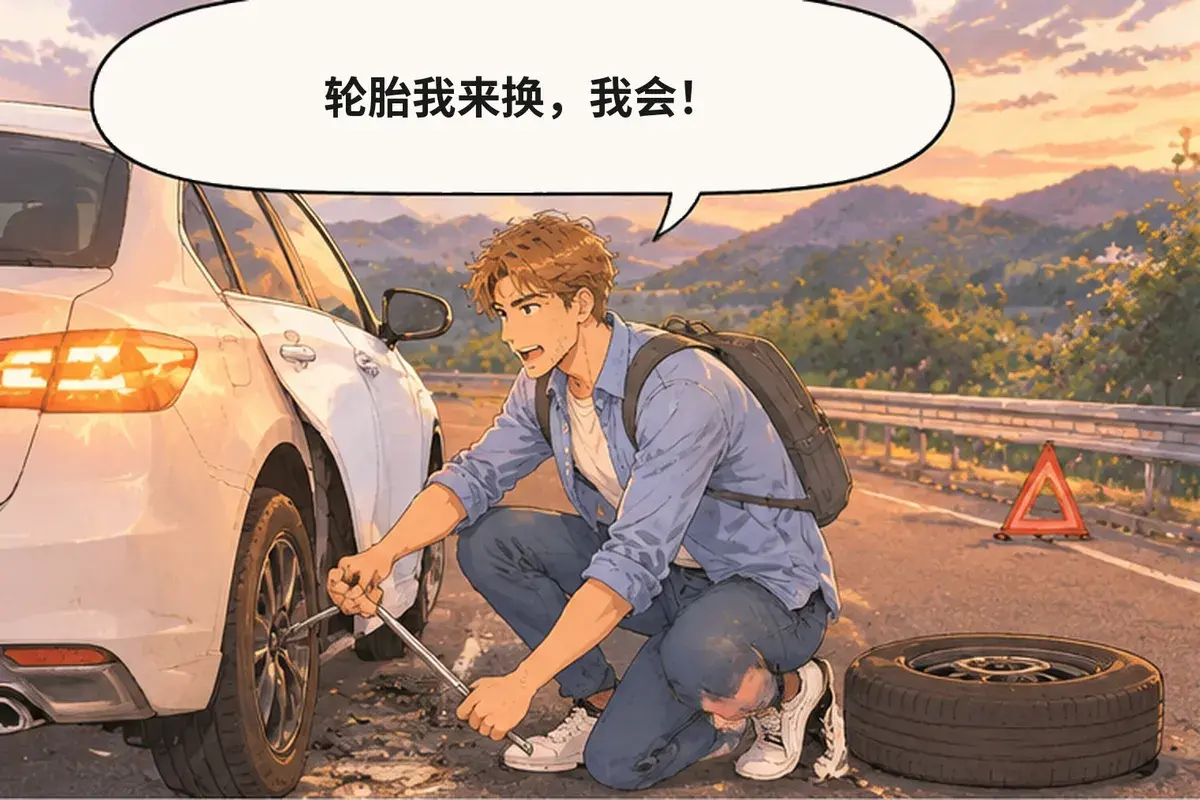
- 伊利亚
轮胎我来换,我会!
I'll change the tire, I know how!
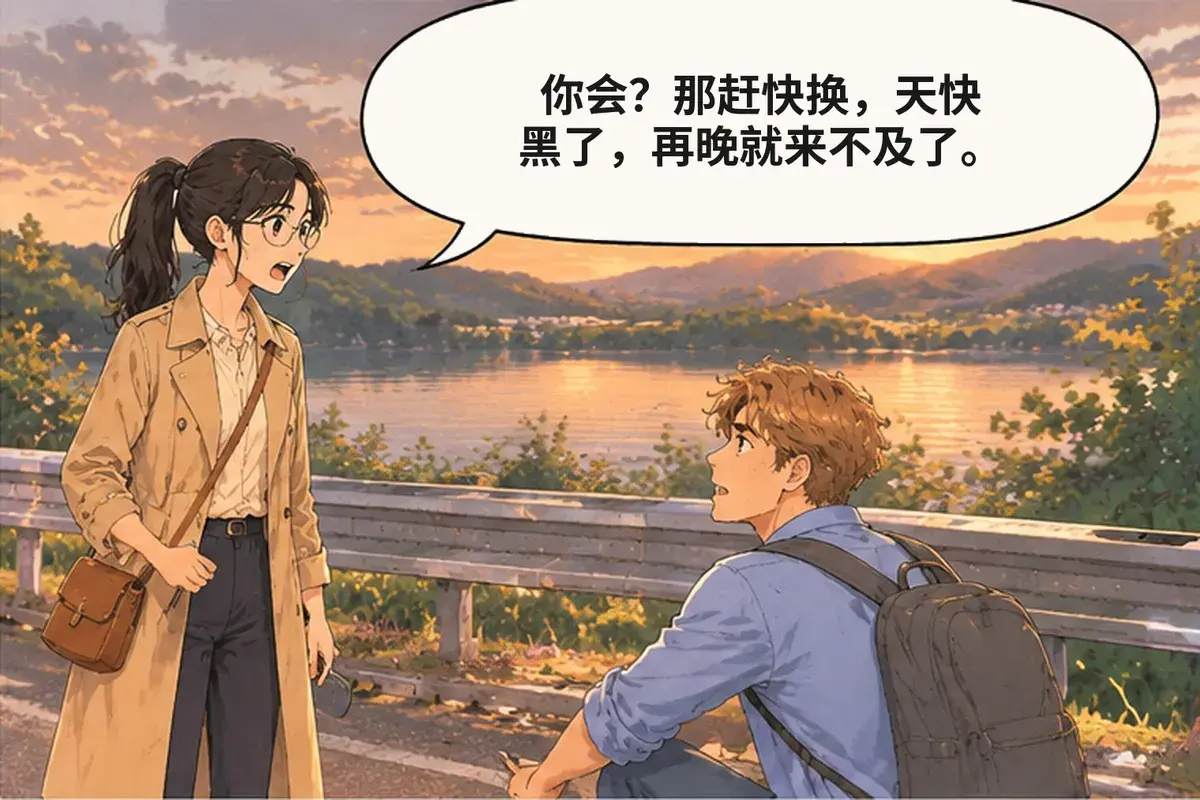
- 晓雨
你会?那赶快换,天快黑了,再晚就来不及了。
You know how? Then change it quickly, it's getting dark soon, and any later and we won't make it.
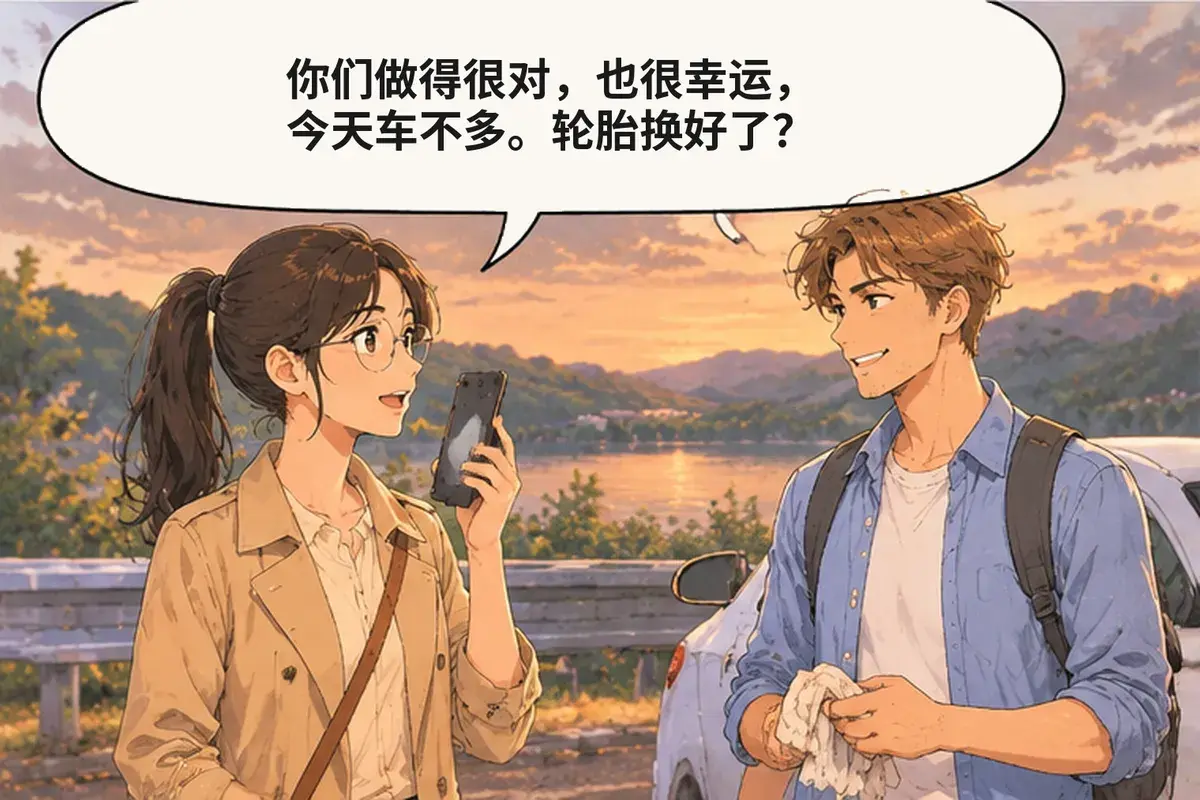
- 警察
你们做得很对,也很幸运,今天车不多。轮胎换好了?
You did the right thing (to several people), and you were lucky too: there aren't many cars today. Is the tire changed?
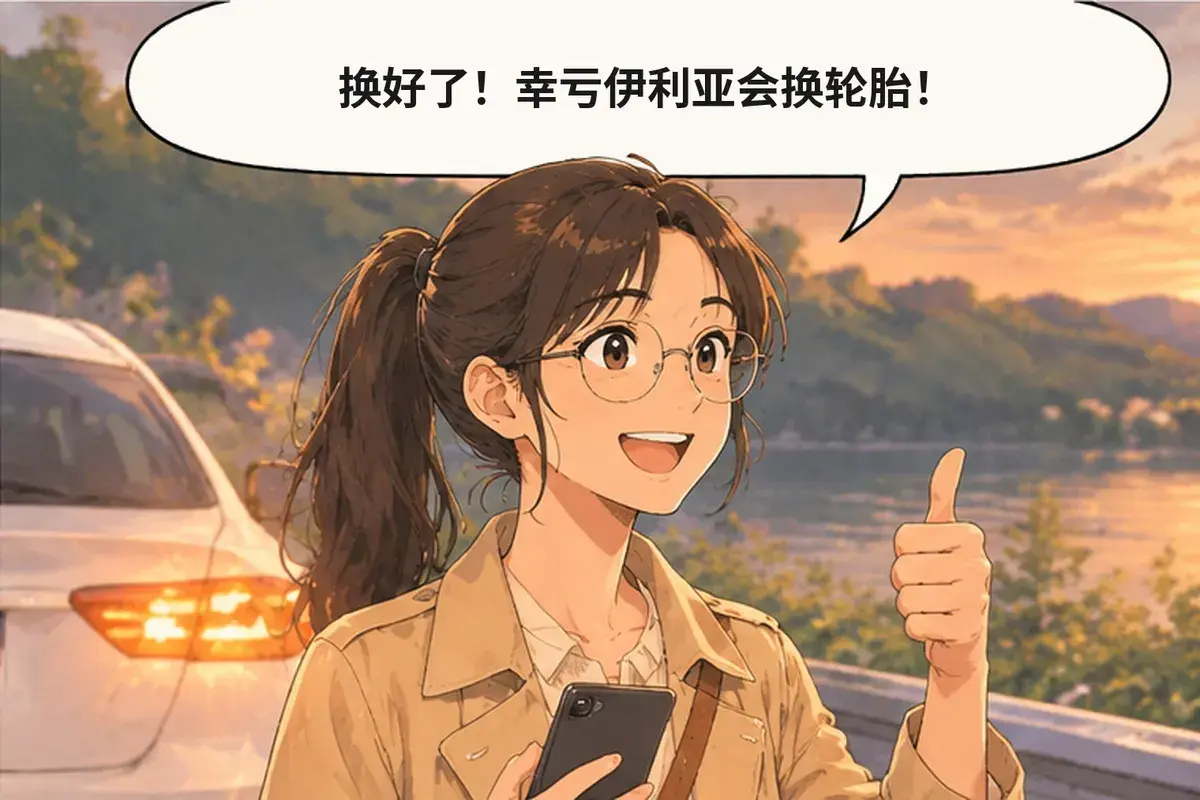
- 晓雨
换好了!幸亏伊利亚会换轮胎!
It's changed! Luckily Ilya knows how to change a tire!
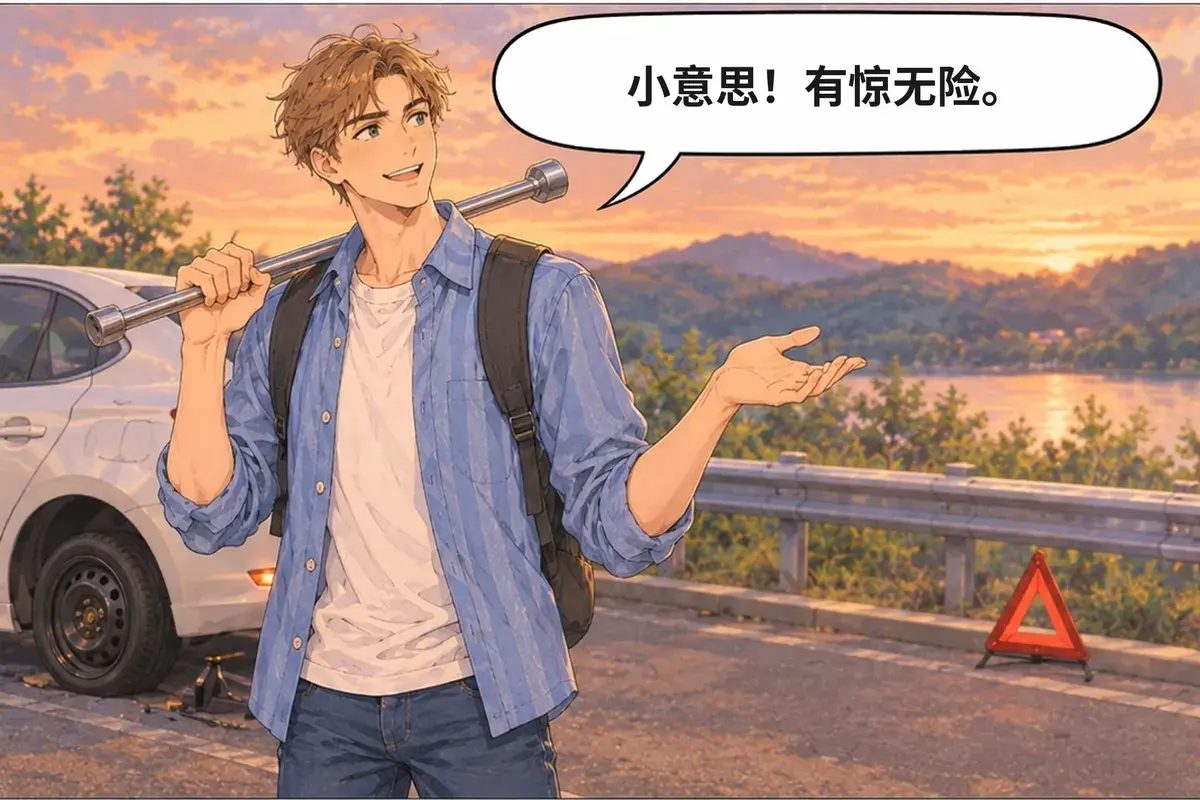
- 伊利亚
小意思!有惊无险。
No big deal! A scare, but no harm done.

- 晓雨
走!晚上还能赶到千岛湖。那里的鱼头太香了,值得!
Let's go! We can still make it to Qiandao Lake tonight. The fish head there is so delicious, it's worth it!
Grammar for this text
- 万一 后面 的 车 撞 上来 呢? — "What if a car behind us crashes into us?"
万一 … 呢?is a short "what if …?".撞 上来(zhuàng shànglái) means "to crash into us":上来shows the direction, toward us. - 不管 多 急, 都 要 这样, 才 不 会 出 事故。 — "No matter how much of a hurry you're in, it has to be done this way, so that there's no accident."
不管 多 …means "no matter how …".才 不 会 …means "only then won't …".出 事故is "to have an accident". - 还 要 把 警示牌 放 在 车 后面 一百 五十 米 的 地方。 — "You also need to put the warning triangle 150 meters behind the car." If a car stops on the highway, the warning triangle goes far behind it and people stand outside the guardrail.
- 再 晚 就 来不及 了。 — "Any later and we won't make it."
来不及(láibují) means "to not have enough time";再 晚means "if it gets even later". - 幸亏 伊利亚 会 换 轮胎! — "Luckily Ilya knows how to change a tire!"
幸亏means "luckily" and goes before the thing that saved the day. 你们 做 得 很 对, 也 很 幸运 —幸运means "lucky": "you were lucky". - 小意思! 有惊无险。 — "No big deal! A scare, but no harm done."
小意思is a modest answer to praise;有惊无险is a chengyu, a four-character idiom: literally "a scare but no danger". - 倒霉! — "Bad luck!", casual.
- 那里 的 鱼 头 太 香 了, 值得! — "The fish head there is so delicious, it's worth it!" Fish head in a pot is a famous dish of Qiandao Lake.
Words and grammar of the unit: Rent a car.
Learn the words from the texts with flashcards
In the app, you can tap any word in a text to see its translation, forms and examples, and new words stick with flashcards. 15 minutes a day.
Start for freeEverything is open for free. No card needed to sign up.