

Chinese dialogue with translation · B1 · 14 lines
我把闹钟都关了 I even turned off my alarm clock
Comic · 14 panels

- 物业
大家好!七楼的邻居让我跟大家道歉。
Hello, everyone! The neighbor from the seventh floor asked me to apologize to you all.
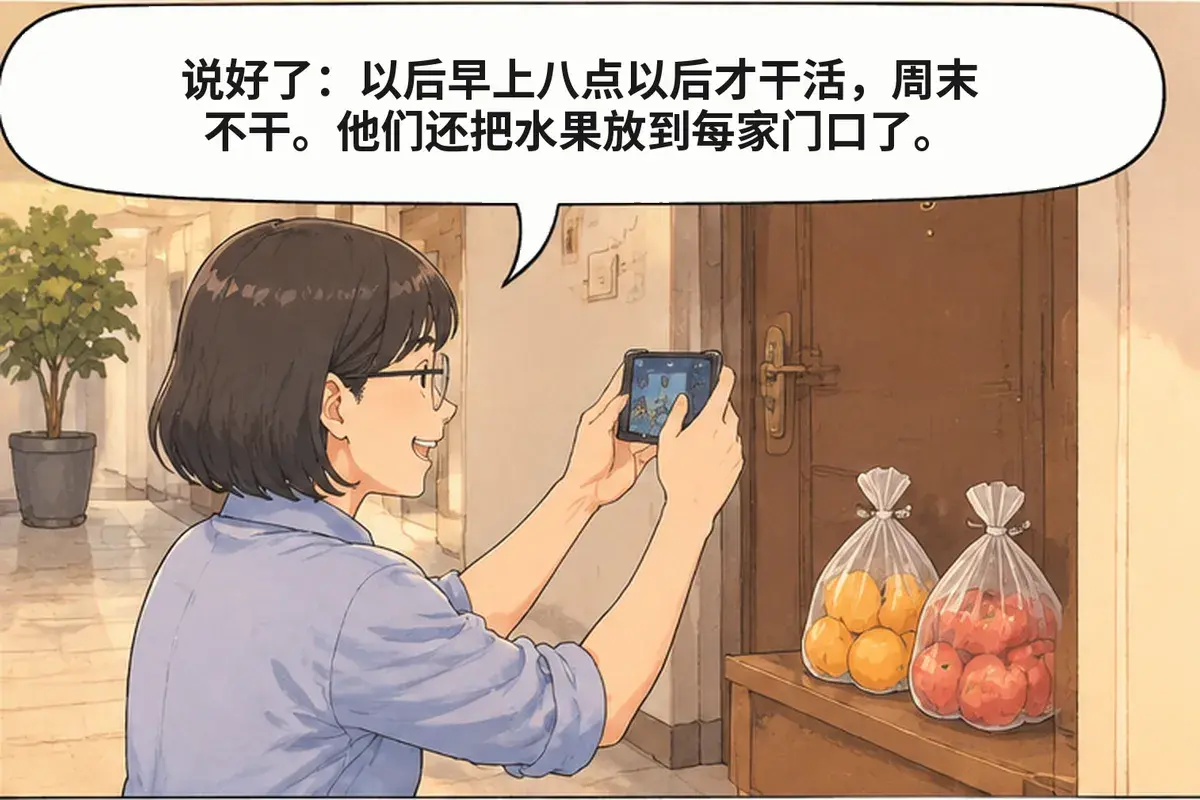
- 物业
说好了:以后早上八点以后才干活,周末不干。他们还把水果放到每家门口了。
It's agreed: from now on they'll only work after eight in the morning, and not on weekends. They even left fruit at every door.

- 张磊
原来可以投诉啊?早说嘛!我住八楼,也被吵醒了好多次。
So you can file a complaint? You should have said so earlier! I live on the eighth floor, and I've been woken up many times too.

- 伊利亚
这一个月,电钻就是我的闹钟,我把闹钟都关了。
For this whole month the drill has been my alarm clock, so I even turned off my alarm clock.

- 张磊
那今天呢?
And today?

- 伊利亚
今天特别静,我一直睡到九点!
It's really quiet today. I slept until nine!

- 张磊
听说他们三间屋子都换了新家具?
I heard they replaced the furniture in all three rooms?

- 王阿姨
对!卫生间也重新装修了,还有一套木头沙发,很漂亮!
Yes! They redid the bathroom too, and there's a wooden sofa set, very pretty!

- 物业
电梯里的东西他们已经整理好了,卫生我们也打扫了。
They've already tidied up the things in the elevator, and we've cleaned up too.

- 张磊
我家门口的水果已经被我吃完了。还有吗?
I've already finished eating the fruit at my door. Is there any more?
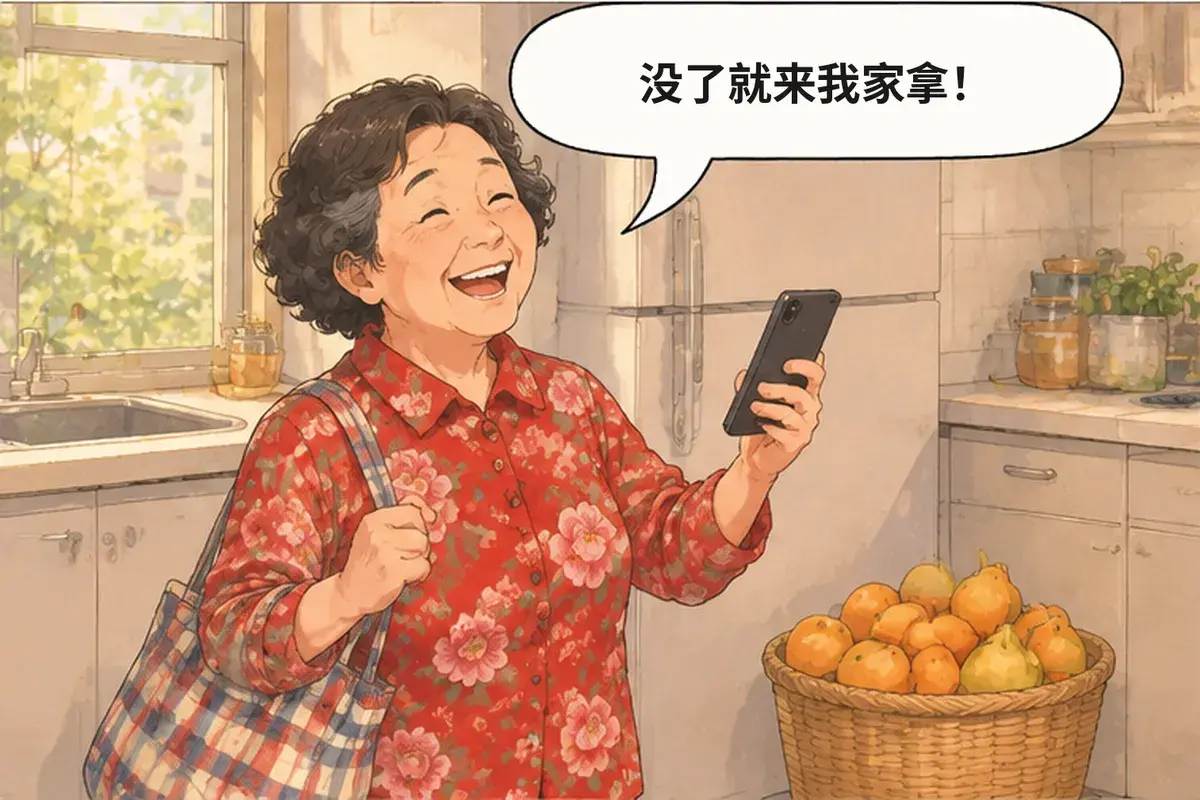
- 王阿姨
没了就来我家拿!
If it's gone, come to my place and get some!

- 张磊
七楼的人也在群里吗?我还想说他们几句。
Are the people from the seventh floor in the group chat too? I still want to give them a piece of my mind.

- 伊利亚
好了好了,他们都道歉了。
OK, OK, they've all apologized.

- 王阿姨
不打不相识,以后都是好邻居!
You get to know each other by fighting! From now on we're all good neighbors!
Grammar for this text
- 我 把 闹钟 都 关 了 — in a
把sentence都goes after the thing, before the verb. Here都means "even": the drill woke him so reliably that the alarm clock wasn't needed. The ending is了. - 他们 还 把 水果 放到 每 家 门口 了 —
放到(fàngdào) means "put somewhere": the place is the ending after the verb. - 电梯 里 的 东西 他们 已经 整理 好 了 — the same meaning can be said with
把:他们 已经 把 电梯 里 的 东西 整理 好 了. When the thing is already known and under discussion, it is often simply put at the start of the sentence. - 我 家 门口 的 水果 已经 被 我 吃 完 了 —
被with a doer: the fruit is the focus, and Zhang Lei jokingly "confesses." With把it would be我 把 水果 吃 完 了, with himself in the focus. - 原来 可以 投诉 啊? 早说嘛! —
原来means "so it turns out";早说嘛means "you should have said so earlier!" and嘛adds a note of reproach. And 说好了 means "it's agreed." And 好 了 好 了 means "OK, OK, that's enough," which is how people calm someone down. - 我 还 想 说 他们 几 句 — the pattern
说 + person + 几 句means "tell them off, give them a piece of your mind." - 不打不相识 — a saying, literally "no fighting, no getting to know each other," about people who quarreled first and then became friends.
Words and grammar of the unit: Complain politely and agree on rules.
Learn the words from the texts with flashcards
In the app, you can tap any word in a text to see its translation, forms and examples, and new words stick with flashcards. 15 minutes a day.
Start for freeEverything is open for free. No card needed to sign up.