

Chinese dialogue with translation · B1 · 15 lines
能不能先把电钻关了? Could you turn off the drill first?
Comic · 13 panels
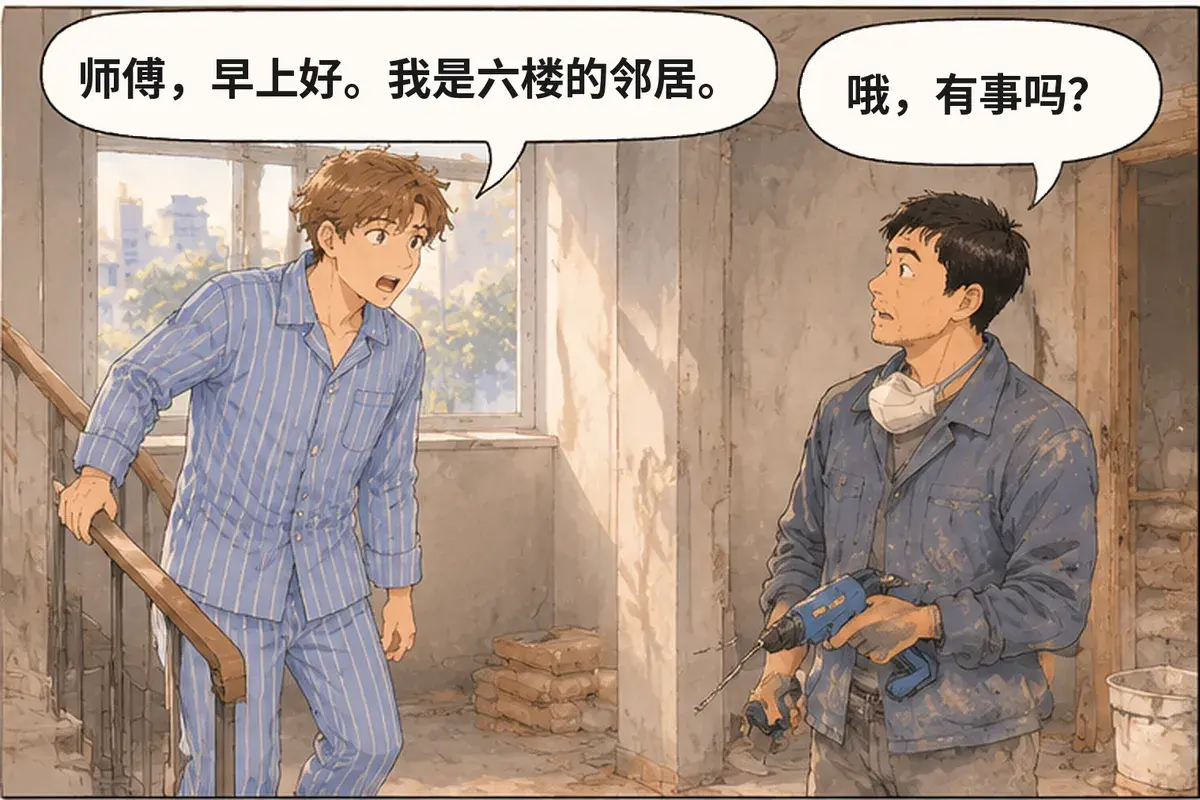
- 伊利亚
师傅,早上好。我是六楼的邻居。
Good morning, sir. I'm your neighbor from the sixth floor.
- 师傅
哦,有事吗?
Oh, is something wrong?
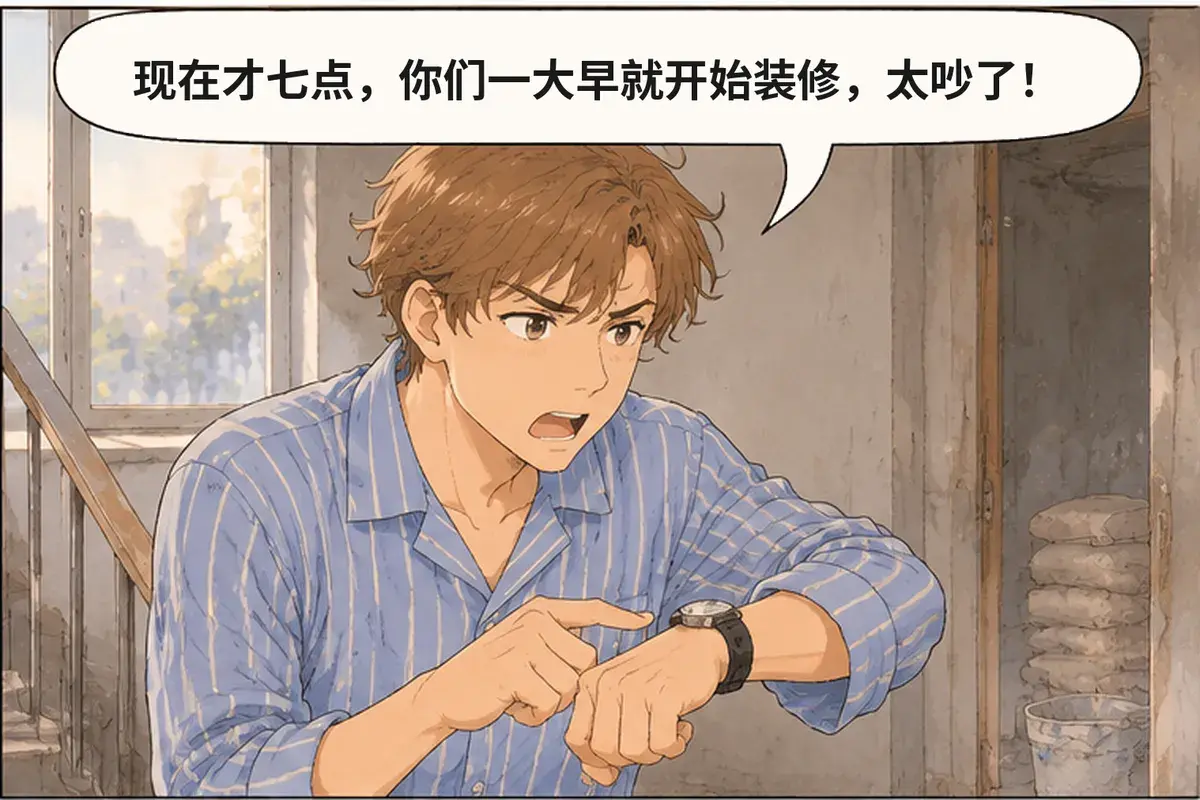
- 伊利亚
现在才七点,你们一大早就开始装修,太吵了!
It's only seven now, and you started the renovation first thing in the morning. It's too loud! (to several people)
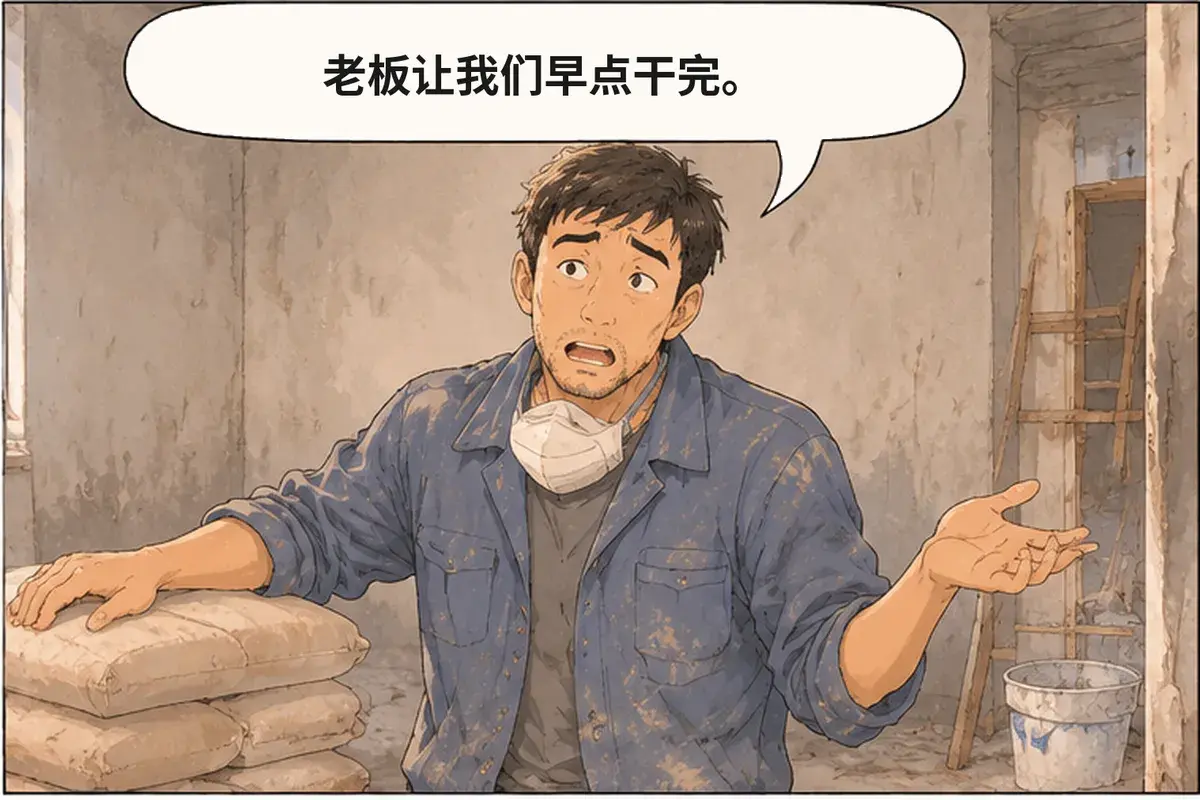
- 师傅
老板让我们早点干完。
The boss told us to finish earlier.
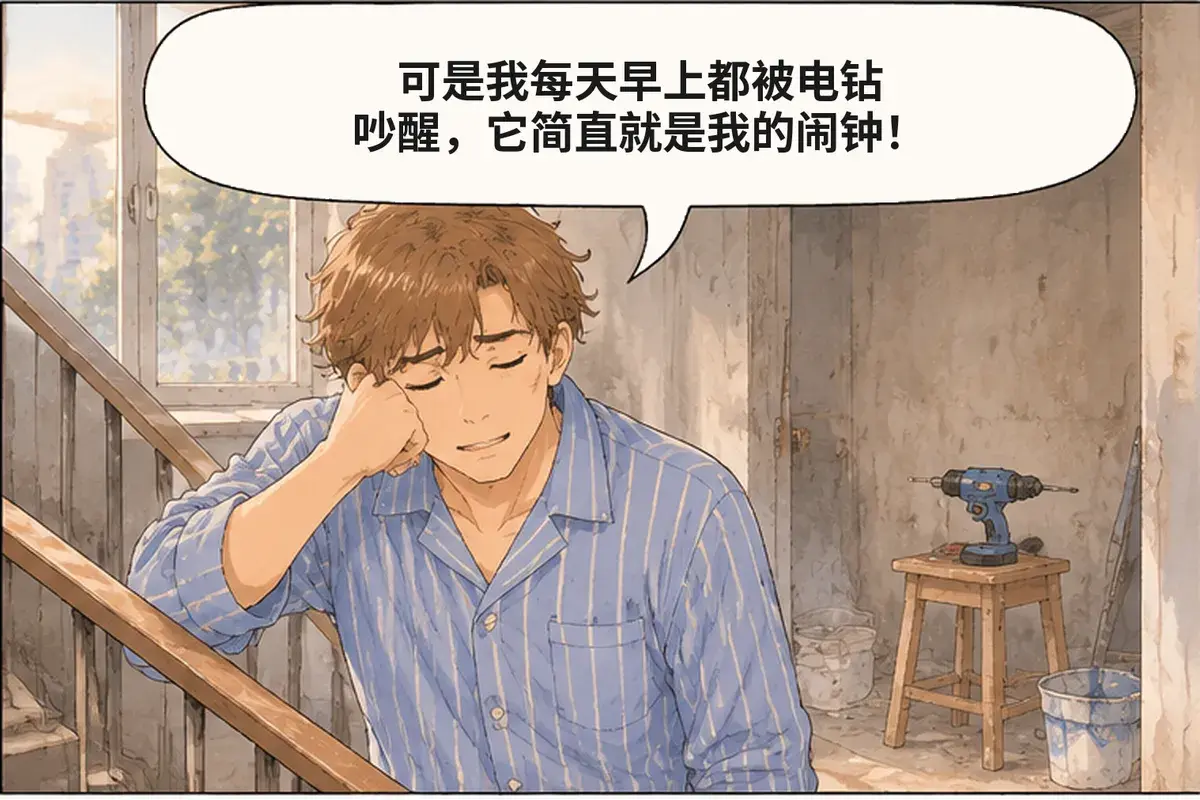
- 伊利亚
可是我每天早上都被电钻吵醒,它简直就是我的闹钟!
But I get woken up by the drill every morning. It's practically my alarm clock!
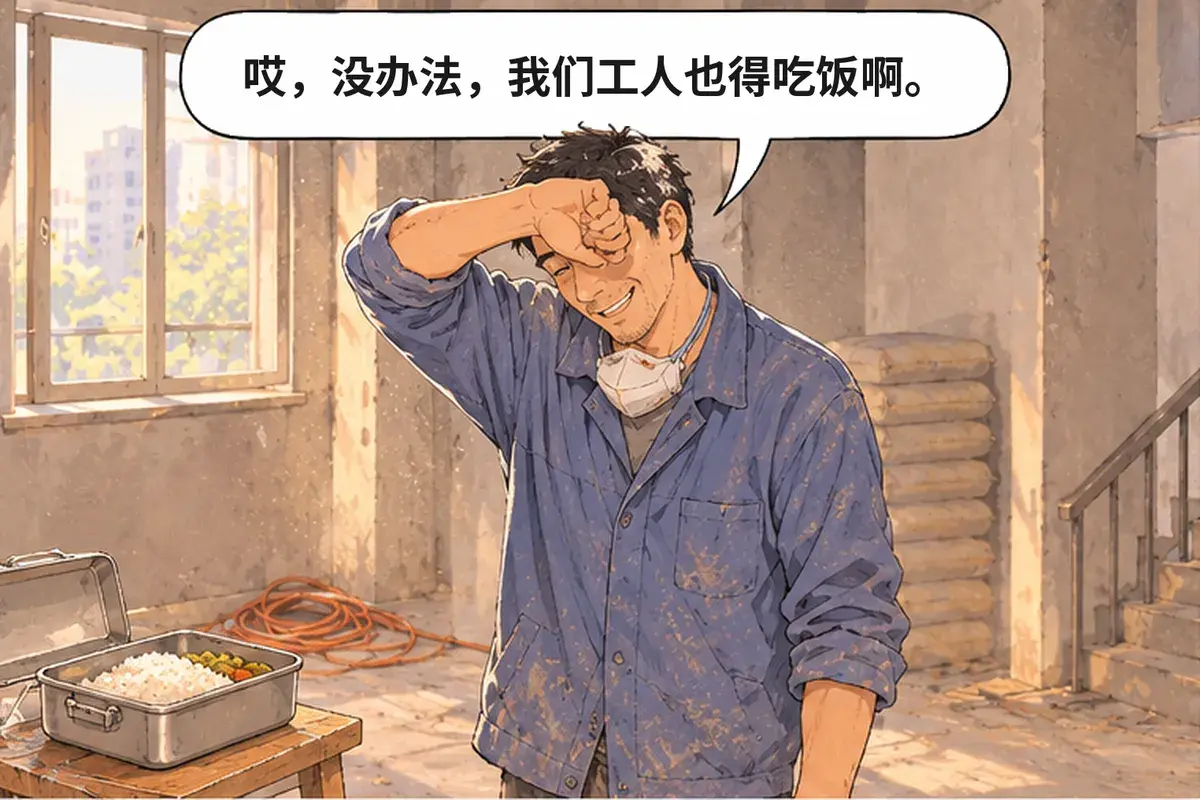
- 师傅
哎,没办法,我们工人也得吃饭啊。
Well, it can't be helped. We workers have to eat too.
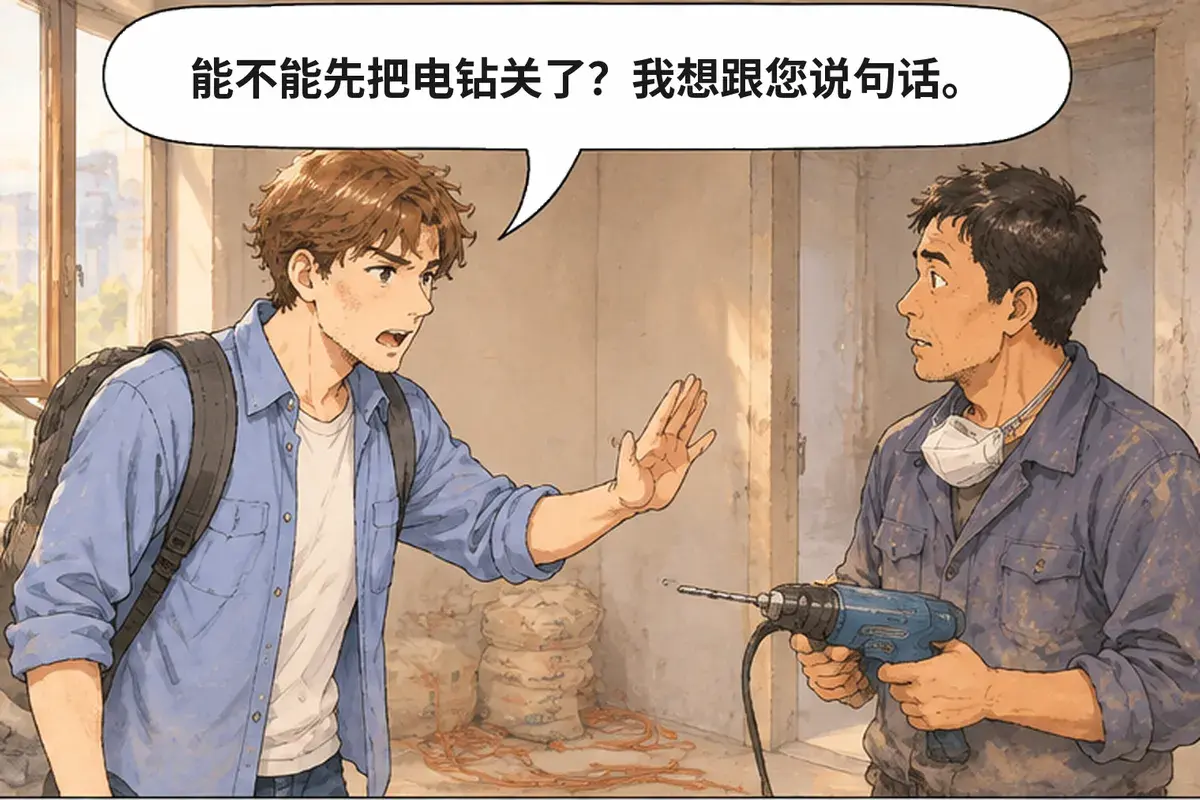
- 伊利亚
能不能先把电钻关了?我想跟您说句话。
Could you turn off the drill first? I'd like to say a word to you. (polite)
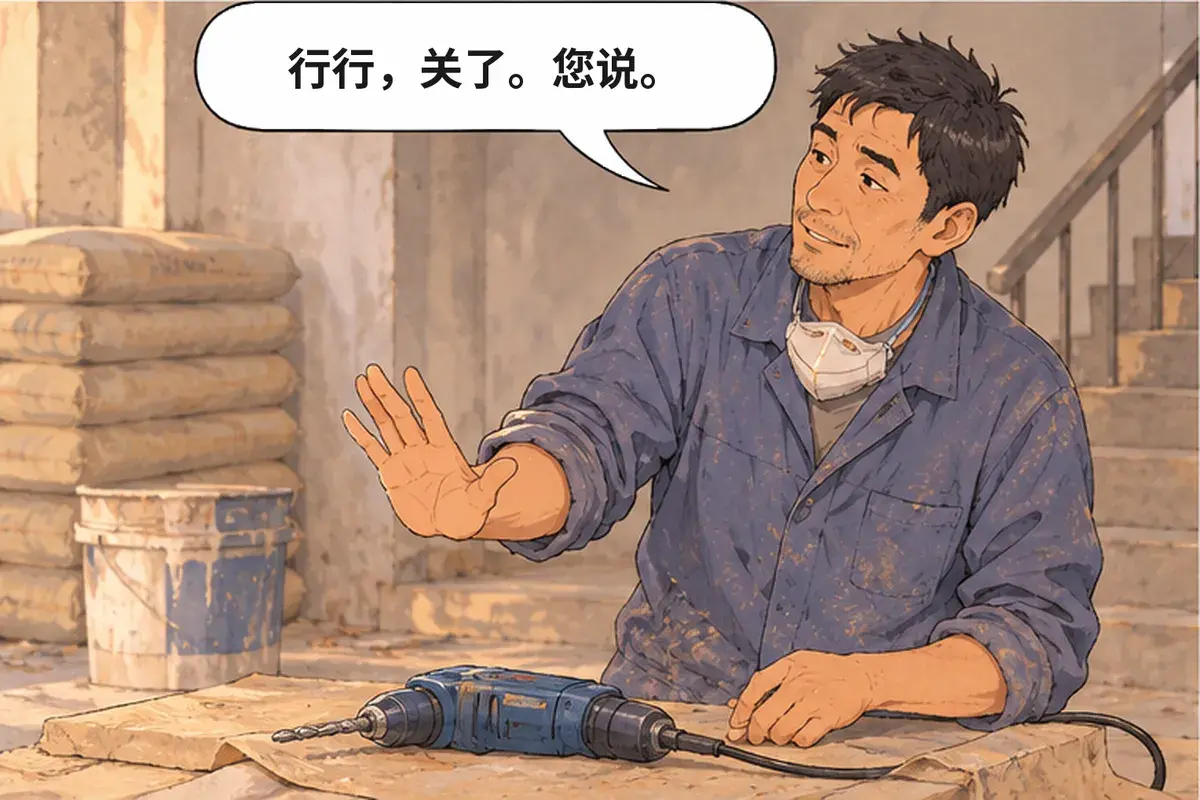
- 师傅
行行,关了。您说。
OK, OK, it's off. Go ahead. (polite)
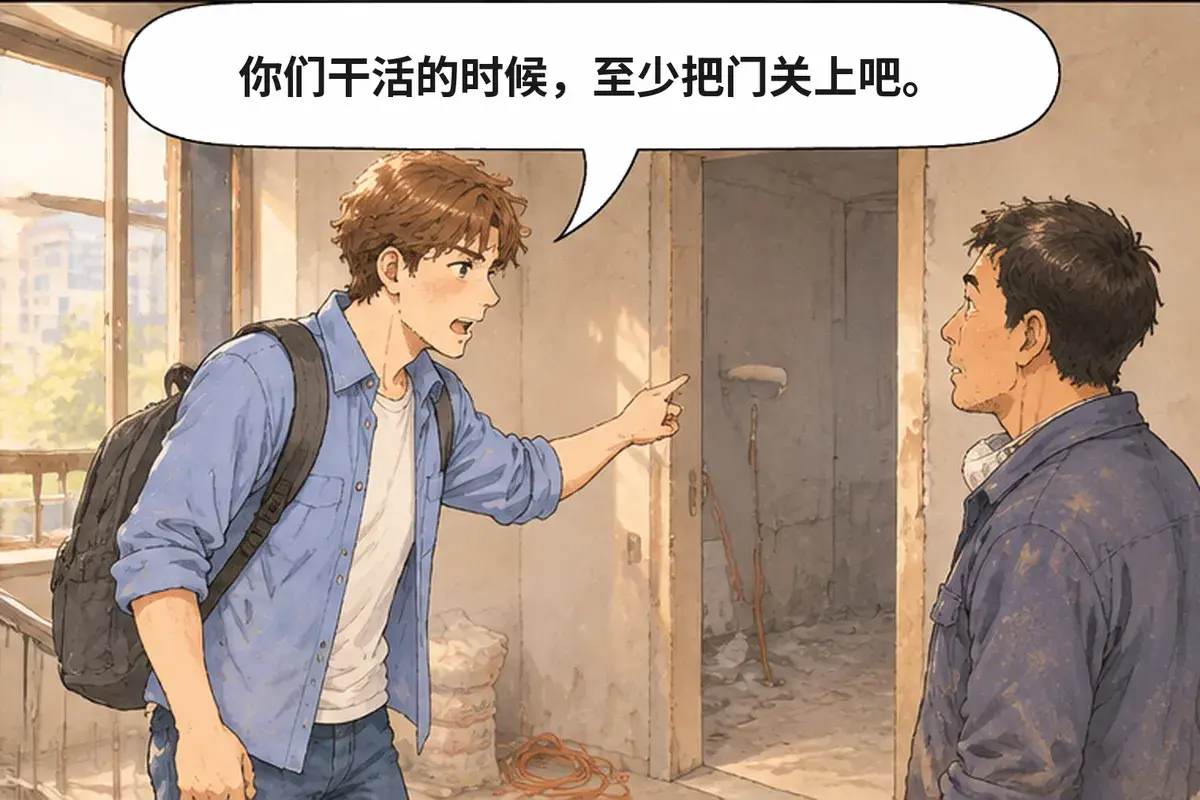
- 伊利亚
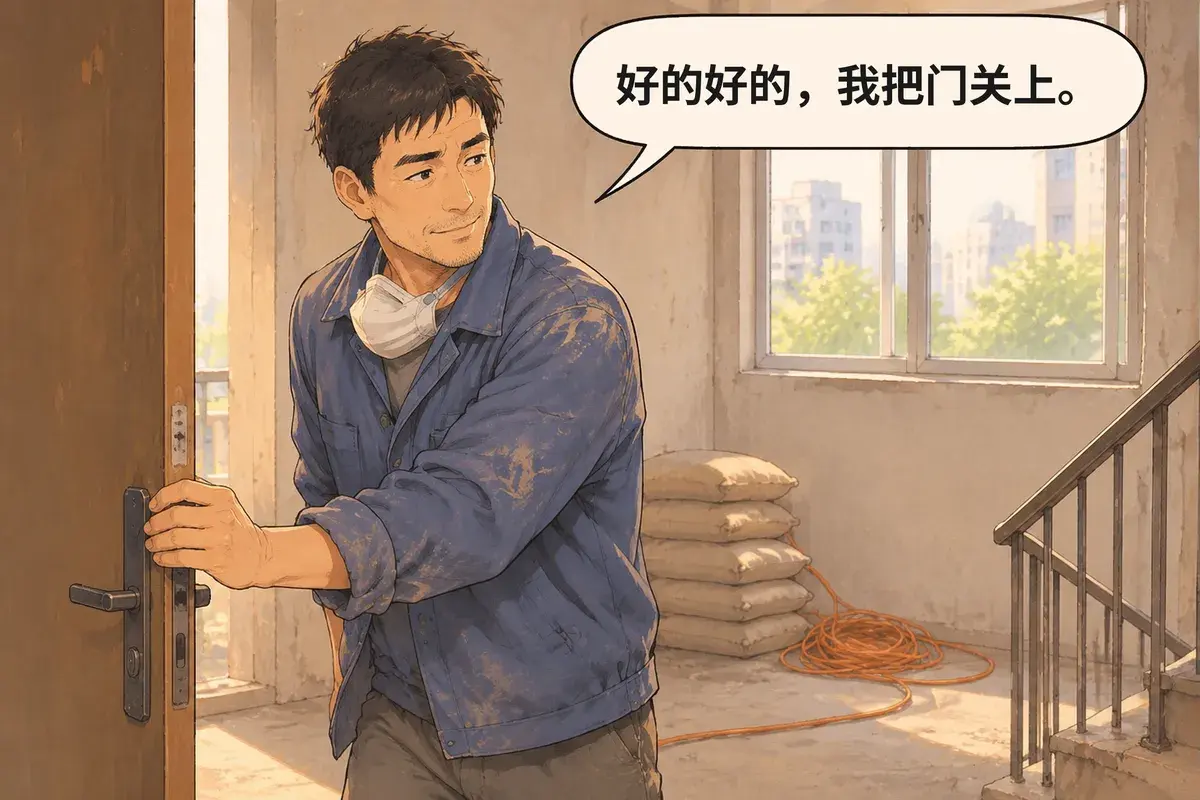
你们干活的时候,至少把门关上吧。
While you're working, at least close the door. (to several people)
- 师傅
好的好的,我把门关上。
OK, OK, I'll close the door.
- 伊利亚
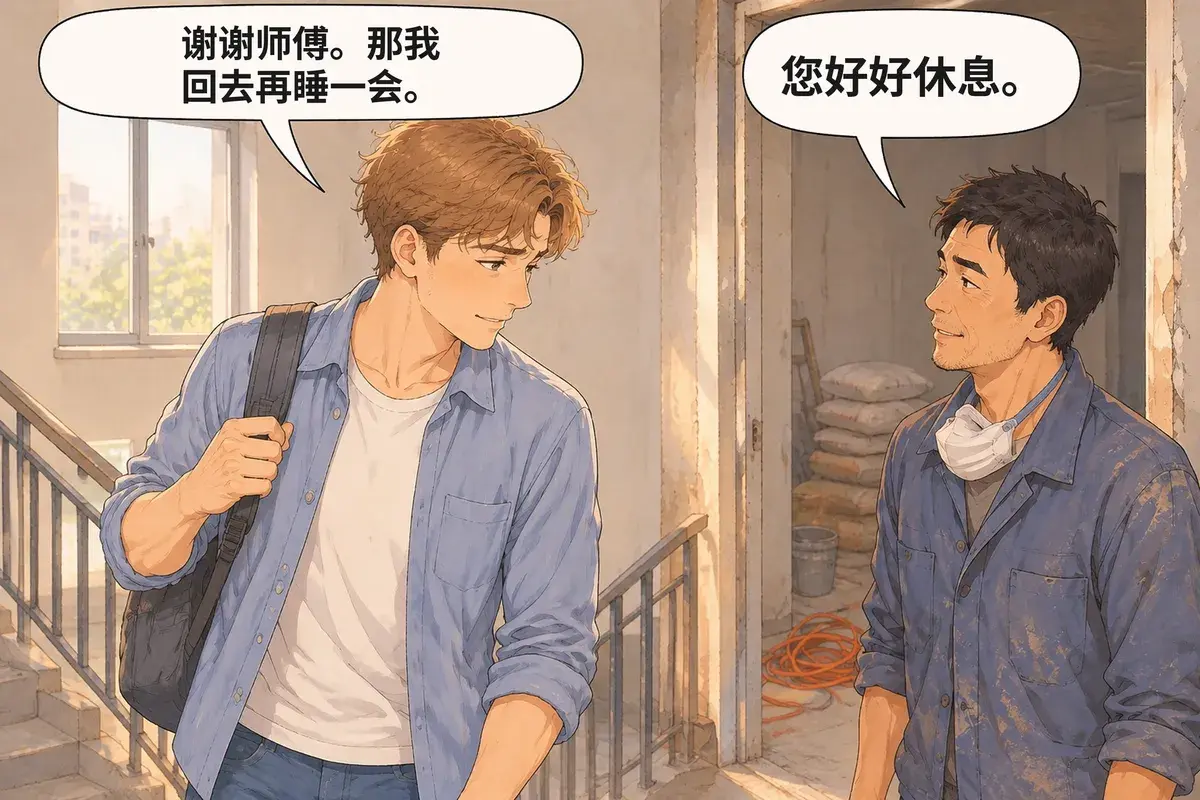
谢谢师傅。那我回去再睡一会。
Thanks, sir. Then I'll go back and sleep a little more.
- 师傅
您好好休息。
Get some good rest. (polite)
- 伊利亚
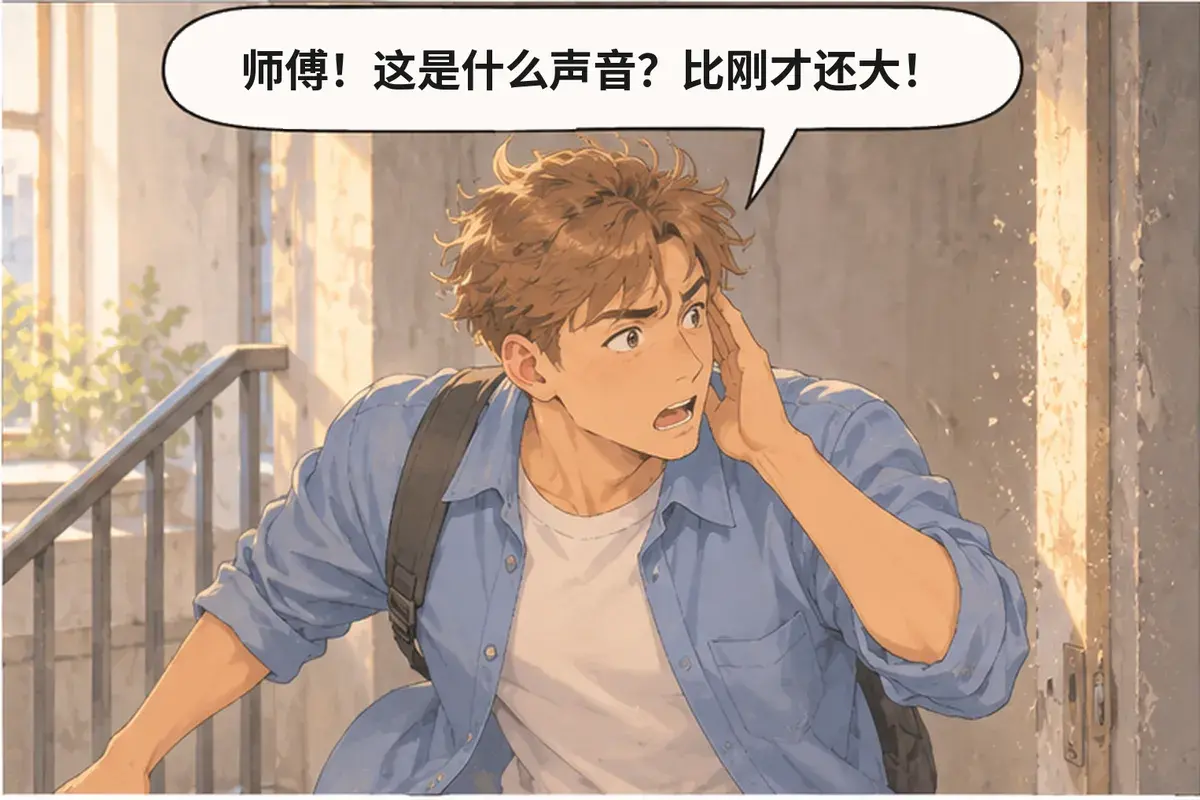
师傅!这是什么声音?比刚才还大!
Sir! What's that noise? It's even louder than before!
- 师傅
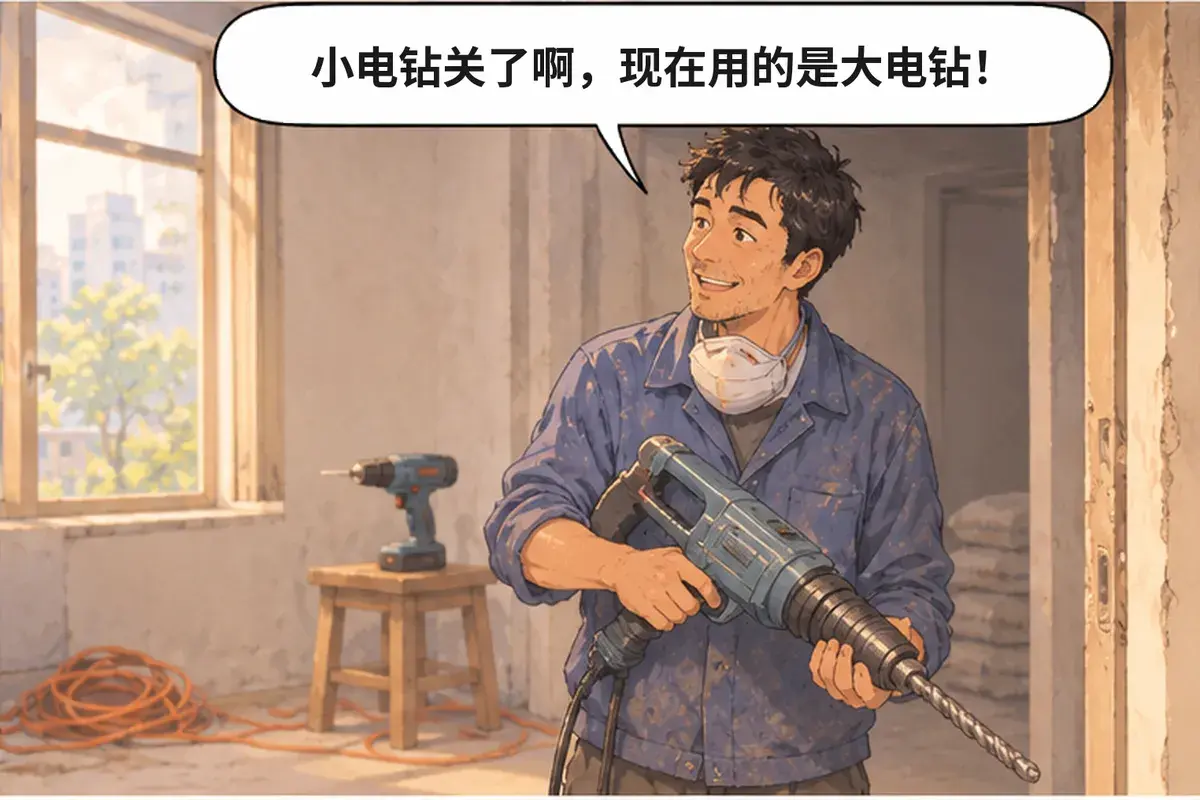
小电钻关了啊,现在用的是大电钻!
We turned off the small drill, but now we're using the big drill!
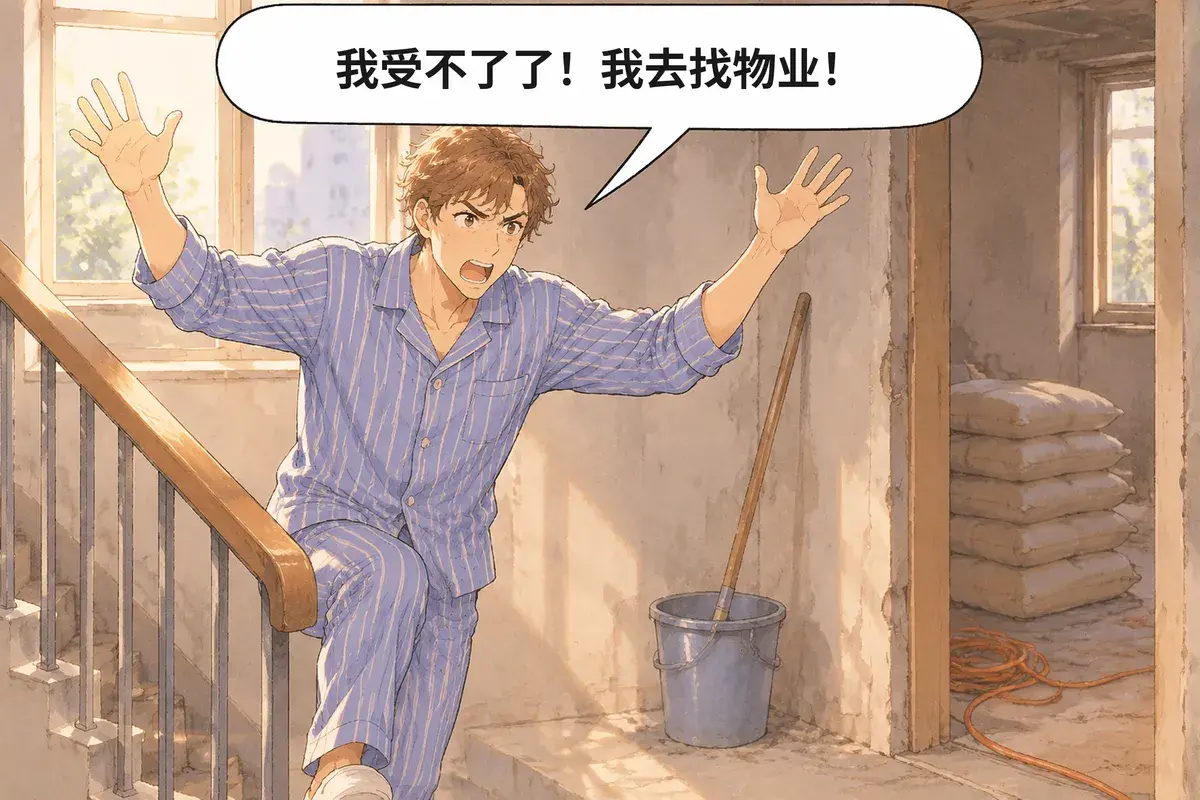
- 伊利亚
我受不了了!我去找物业!
I can't take it anymore! I'm going to the property management office!
Grammar for this text
- 能 不 能 先 把 电钻 关 了? — a request with the full
把sentence: "take the drill and turn it off." After the verb there must always be an ending, here了: the action is carried through. A bare把 电钻 关doesn't sound right in Chinese.能 不 能softens the request and先means "first"; both go before把. - 你们 干活 的 时候, 至少 把 门 关上 吧。 — a second kind of ending: a result.
关上(guānshang) means "close so that it stays closed."至少means "at least" and吧makes the demand softer.干活is casual for "do manual work." - 被 电钻 吵醒 —
被(unit 3) shows who did it: the drill. The ending醒("wake up") is required. Then Ilya makes a joke: 它 简直 就 是 我 的 闹钟! —简直means "simply, practically" and makes the comparison stronger. - 小 电钻 关 了 啊, 现在 用 的 是 大 电钻! — the joke of the scene: the worker did exactly what he was asked, word for word. The pattern
用 的 是 …means "what we're using is …" - 我们 工人 也 得 吃饭 啊 —
得(děi) means "have to": "we have to eat too" is an excuse, work is work. And 没办法 means "it can't be helped." - 我 受不了 了! — in
受不了the first了is read liǎo ("able to stand it"), and the last了(le) means "my patience has run out." And 一大早 means "first thing in the morning," said with annoyance.
Words and grammar of the unit: Complain politely and agree on rules.
Learn the words from the texts with flashcards
In the app, you can tap any word in a text to see its translation, forms and examples, and new words stick with flashcards. 15 minutes a day.
Start for freeEverything is open for free. No card needed to sign up.