

Chinese dialogue with translation · B1 · 16 lines
来就来吧,还带什么东西 Just coming is fine — why bring anything?
Comic · 16 panels
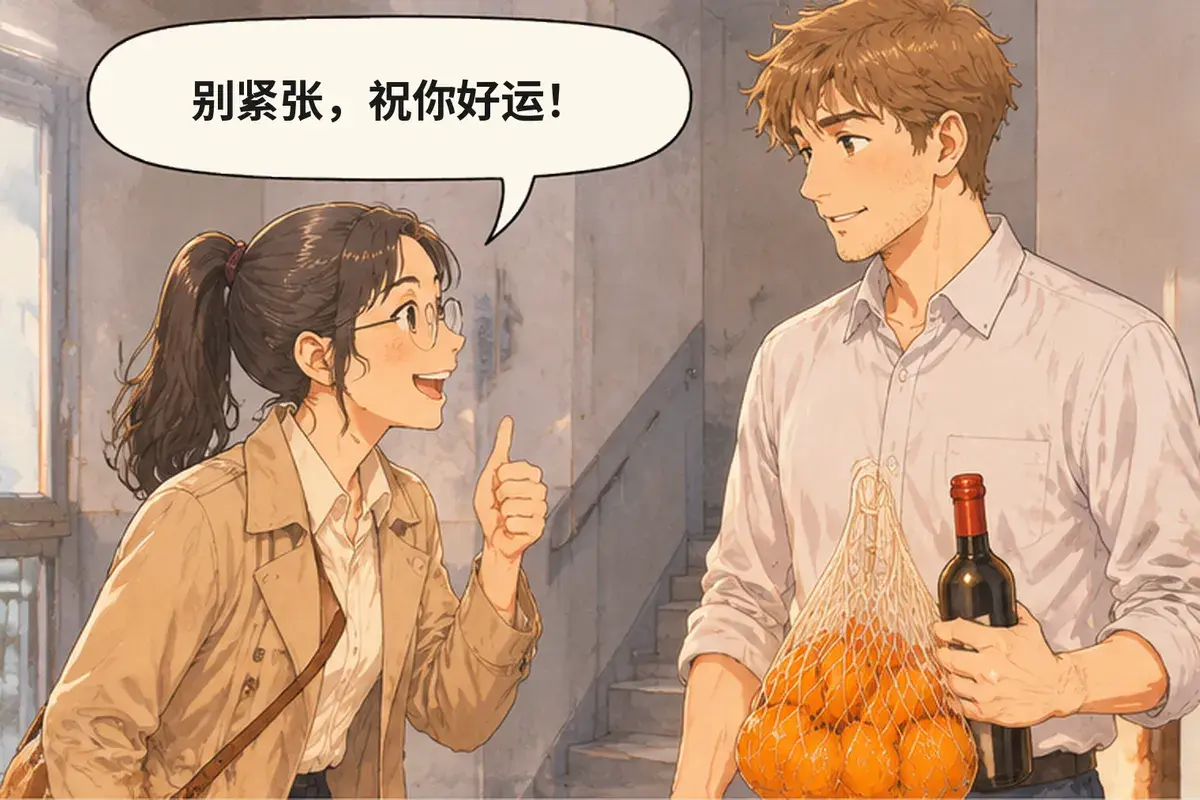
- 晓雨
别紧张,祝你好运!
Don't be nervous, good luck!
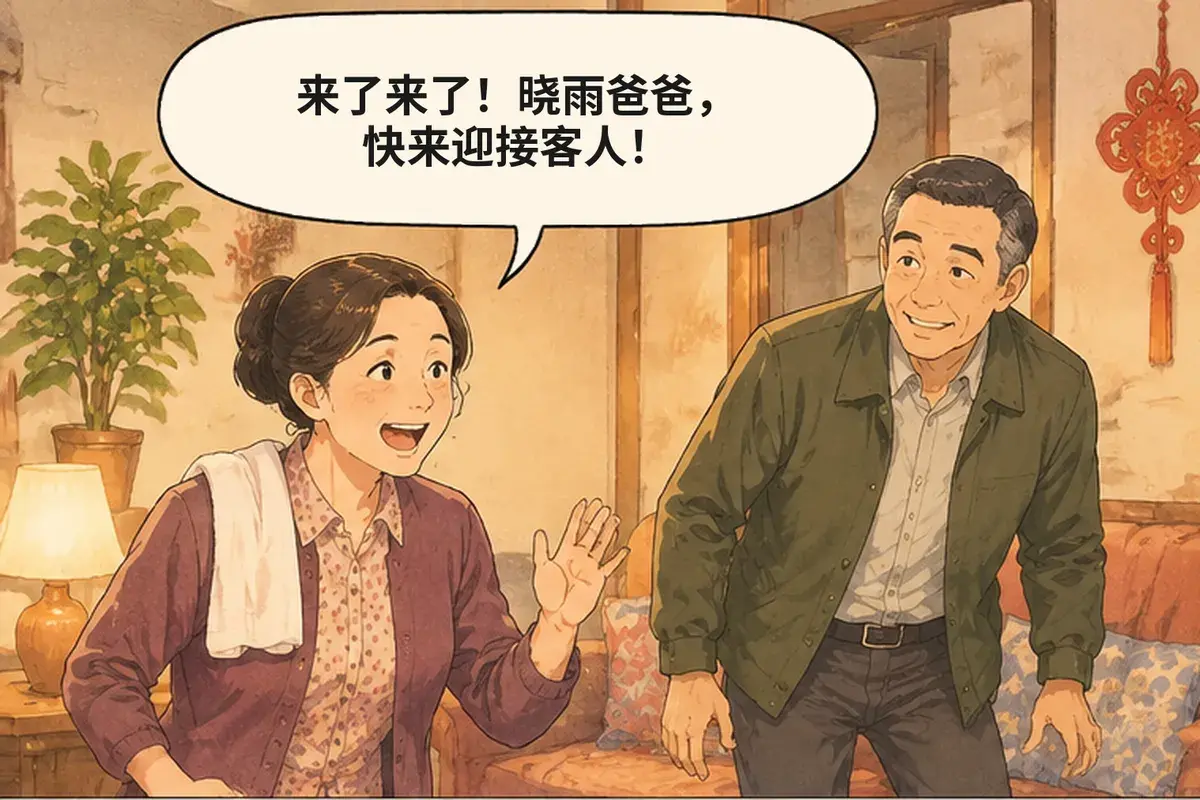
- 林阿姨
来了来了!晓雨爸爸,快来迎接客人!
I'm coming, I'm coming! Xiaoyu's dad, come quick and welcome our guest!
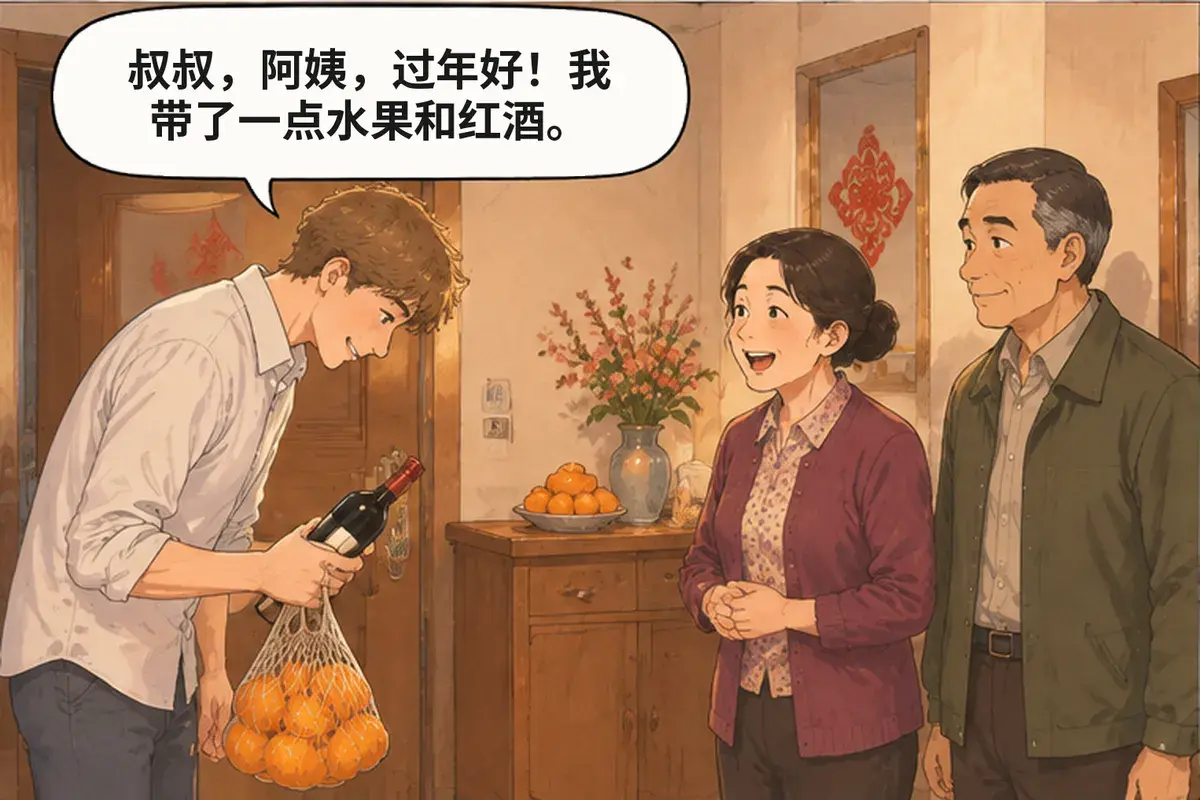
- 伊利亚
叔叔,阿姨,过年好!我带了一点水果和红酒。
Uncle, Auntie, Happy New Year! I brought some fruit and red wine.
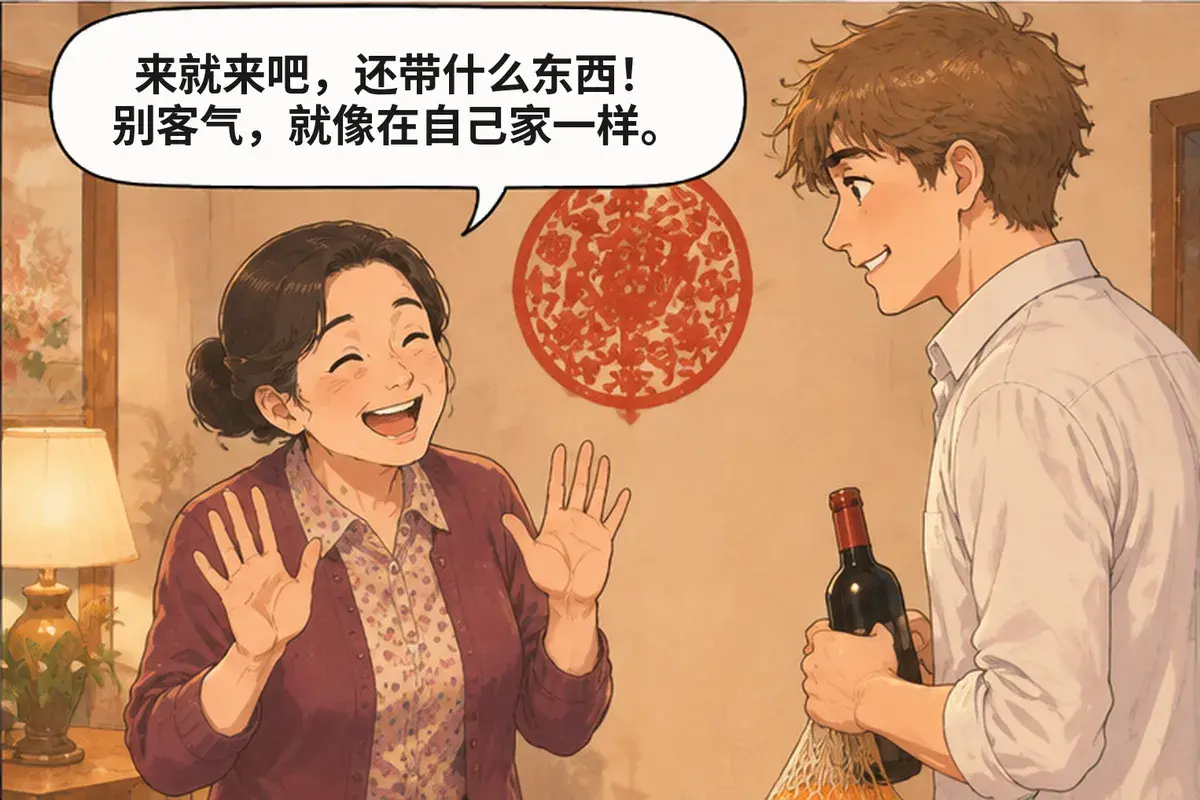
- 林阿姨
来就来吧,还带什么东西!别客气,就像在自己家一样。
Just coming would have been fine, why bring anything! Don't be so formal, make yourself at home.

- 伊利亚
叔叔,这瓶红酒给您。王阿姨让我买白酒,晓雨说您更喜欢红酒。
Uncle, this bottle of red wine is for you. Auntie Wang told me to buy baijiu, but Xiaoyu said you like red wine better. (polite)
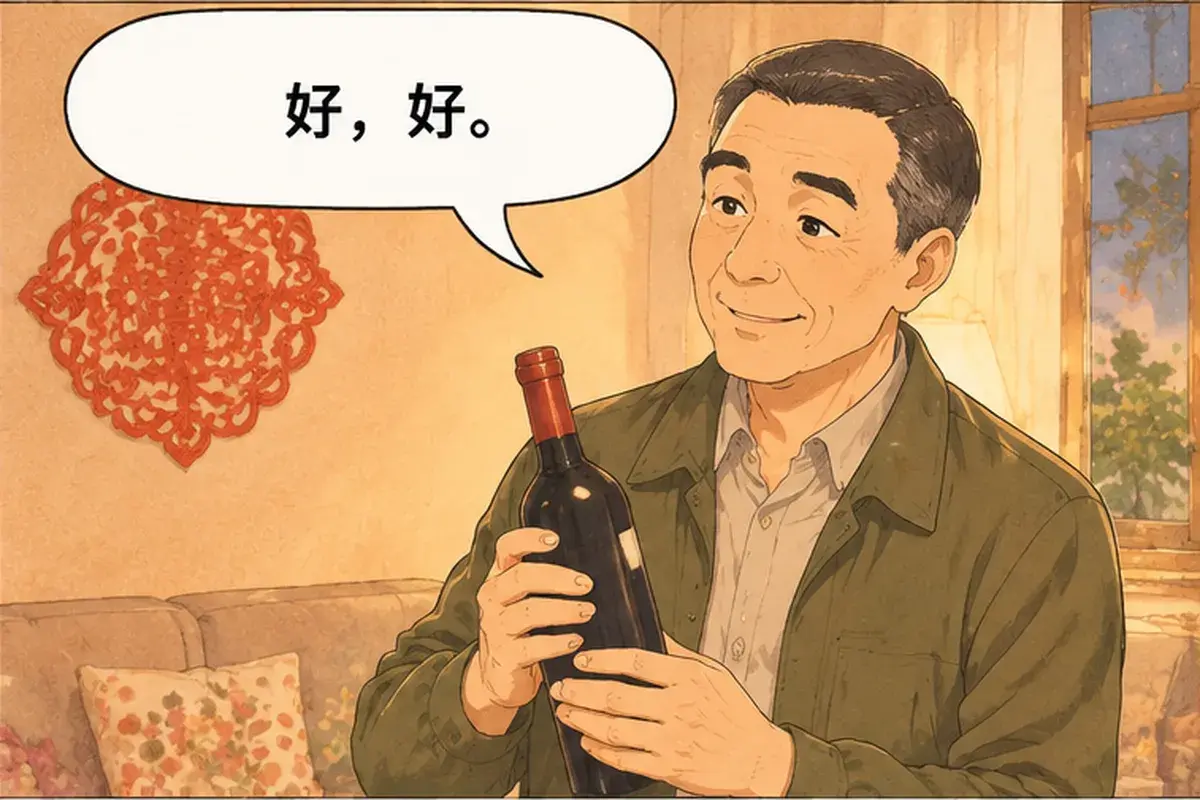
- 林叔叔
好,好。
Good, good.
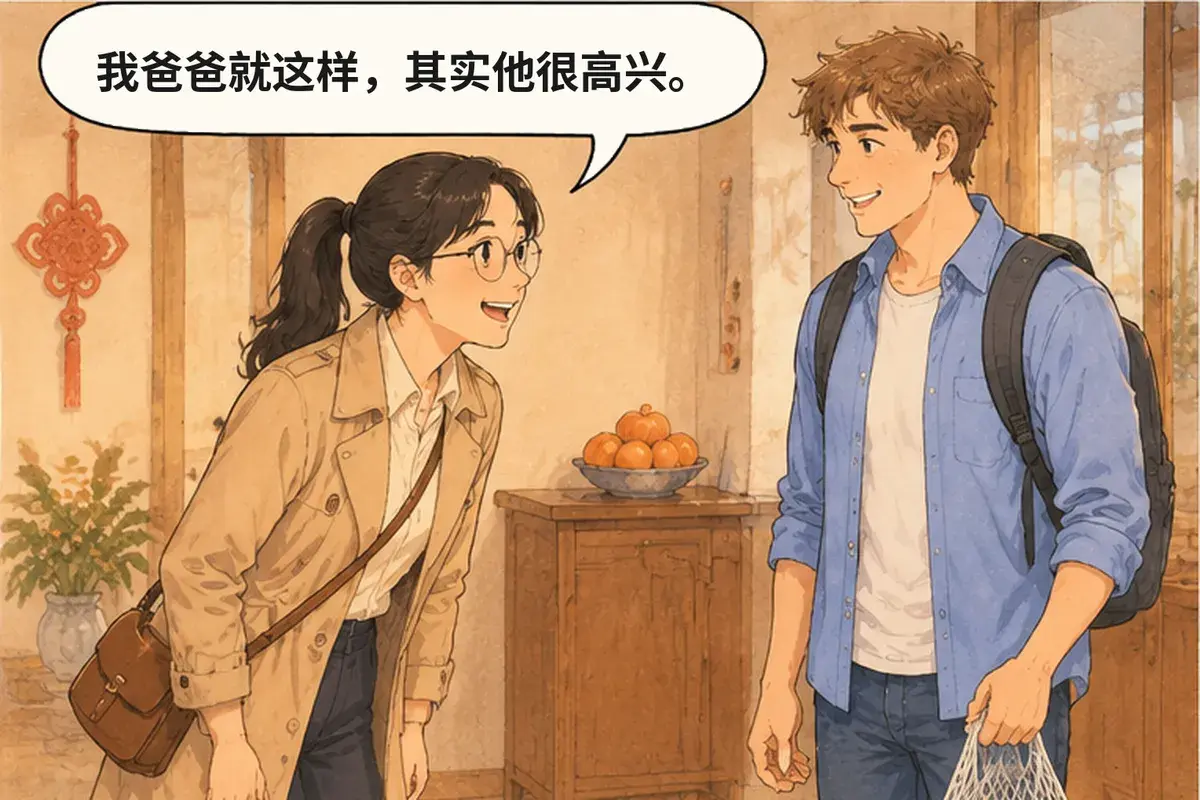
- 晓雨
我爸爸就这样,其实他很高兴。
That's just how my dad is. Actually, he's very happy.
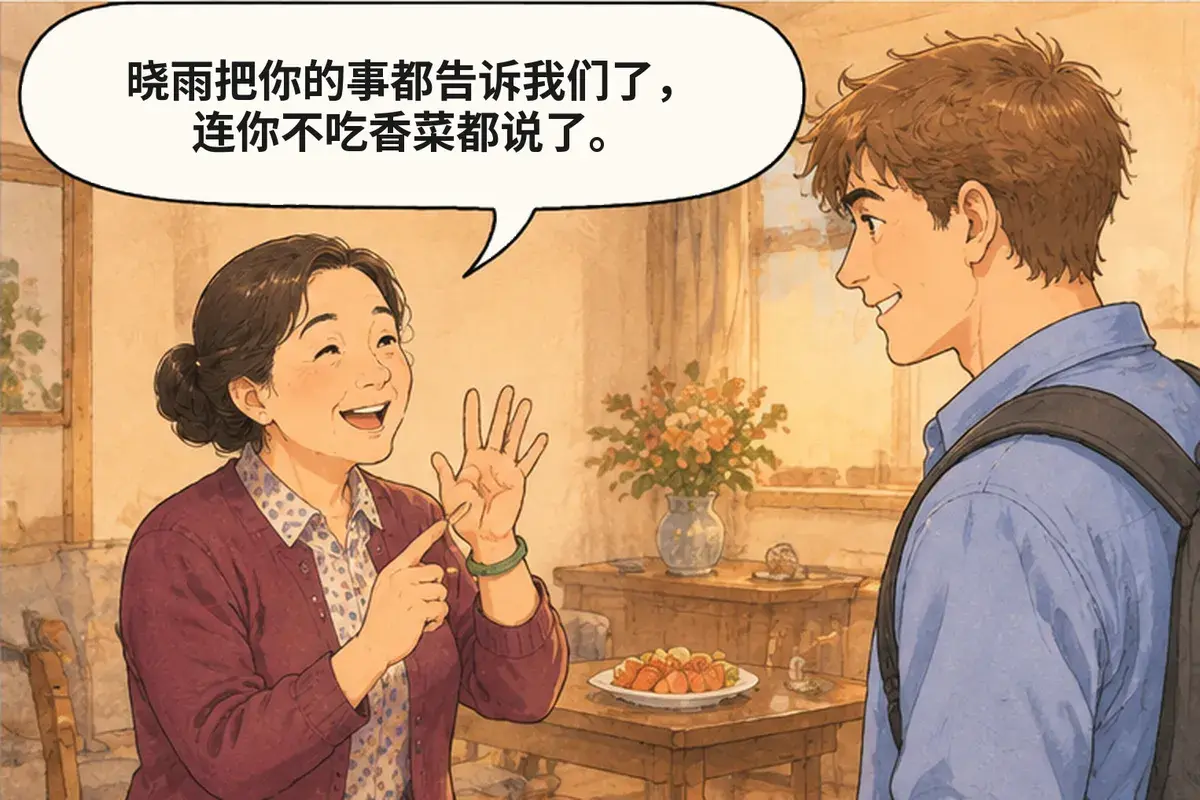
- 林阿姨
晓雨把你的事都告诉我们了,连你不吃香菜都说了。
Xiaoyu told us everything about you. She even told us you don't eat cilantro.

- 伊利亚
连这个都说了?晓雨,你怎么什么都说啊!
She even told you that? Xiaoyu, why do you tell them everything!
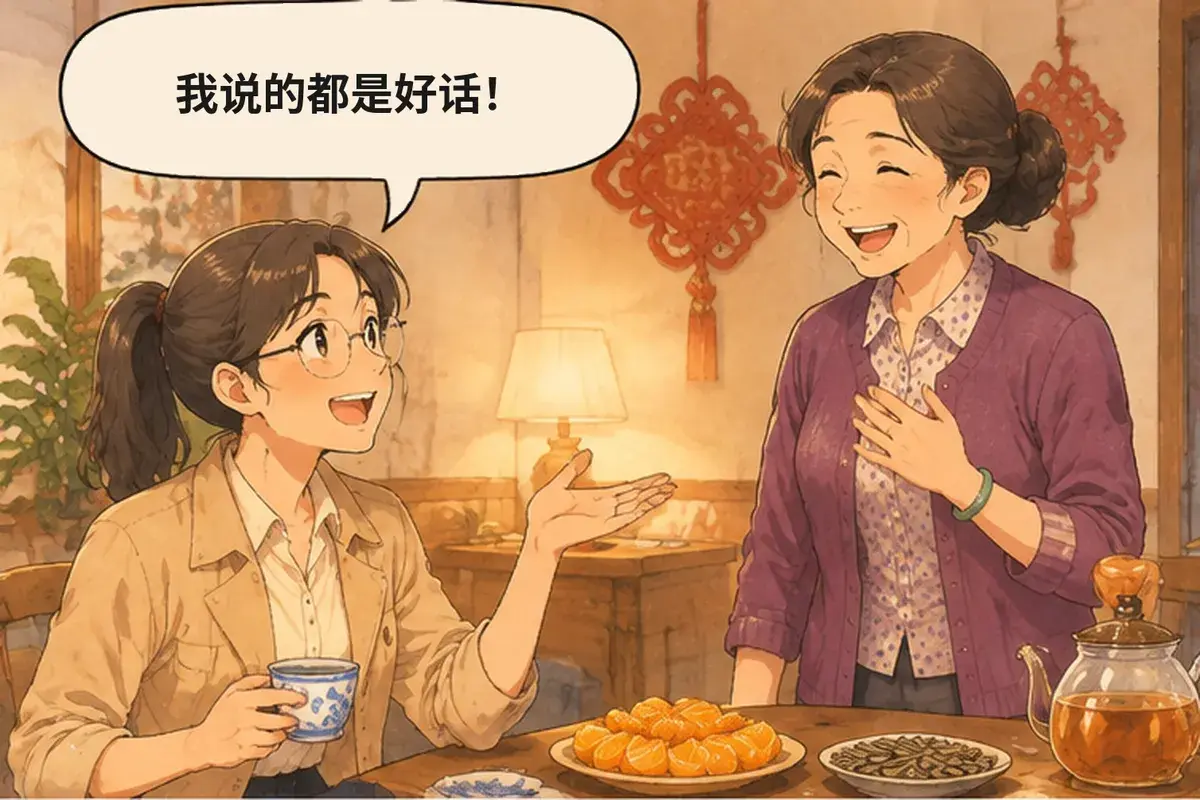
- 晓雨
我说的都是好话!
Everything I said was good!
- 林阿姨
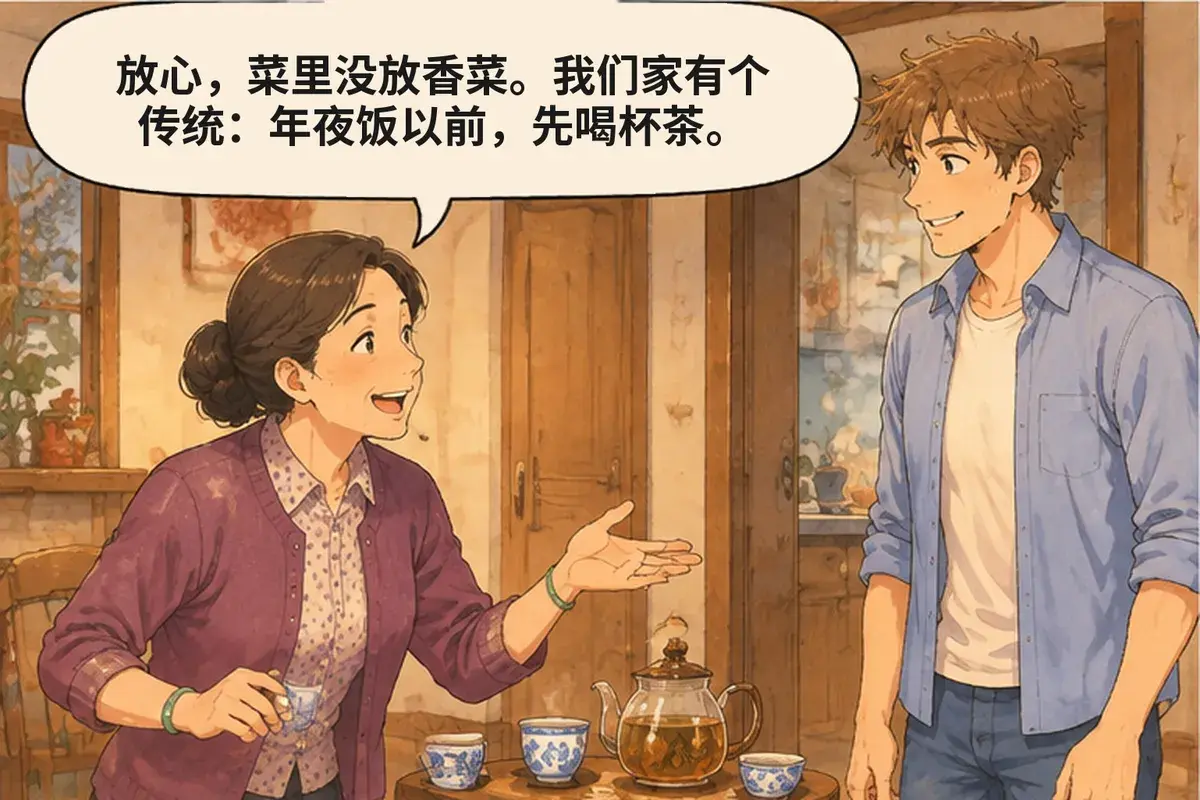
放心,菜里没放香菜。我们家有个传统:年夜饭以前,先喝杯茶。
Don't worry, there's no cilantro in the dishes. Our family has a tradition: before the New Year's Eve dinner, we first have a cup of tea.

- 伊利亚
是龙井吧?王阿姨说,杭州人家里的龙井最好!
It's Longjing, right? Auntie Wang says the Longjing in Hangzhou people's homes is the best!
- 林阿姨
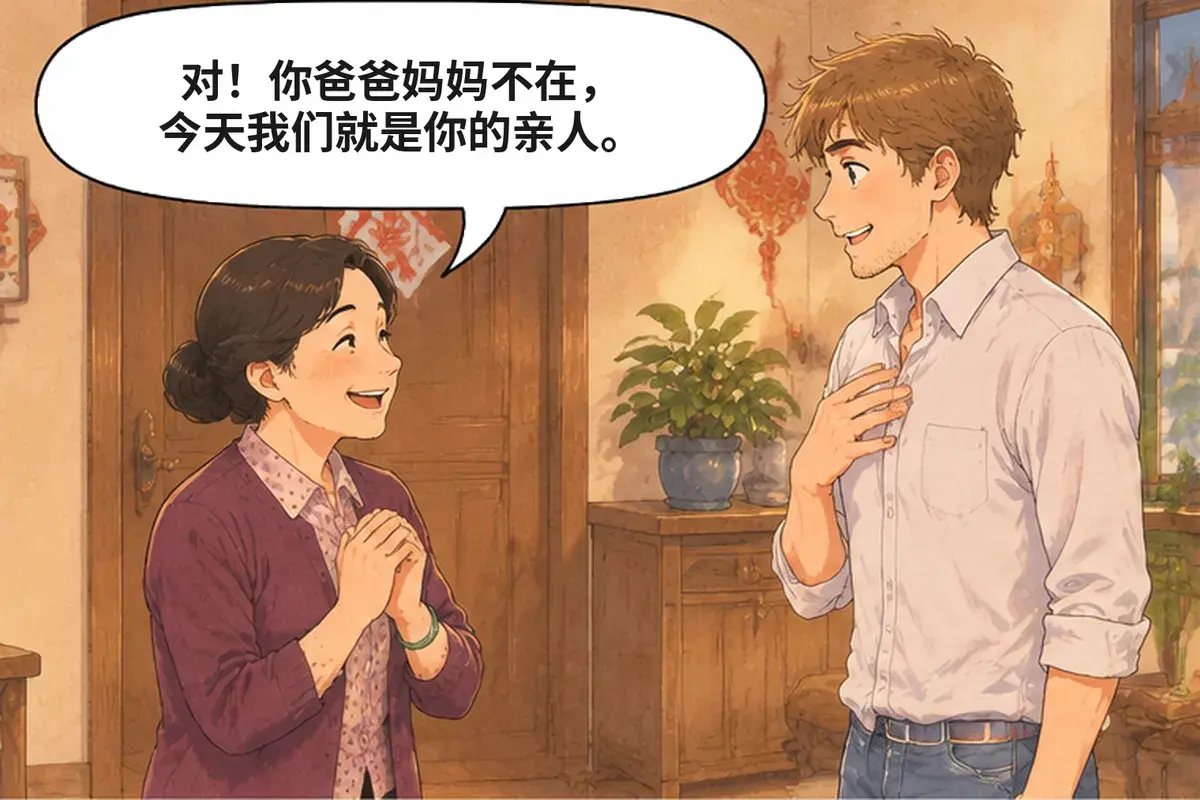
对!你爸爸妈妈不在,今天我们就是你的亲人。
Right! Your mom and dad aren't here, so today we're your family.
- 晓雨
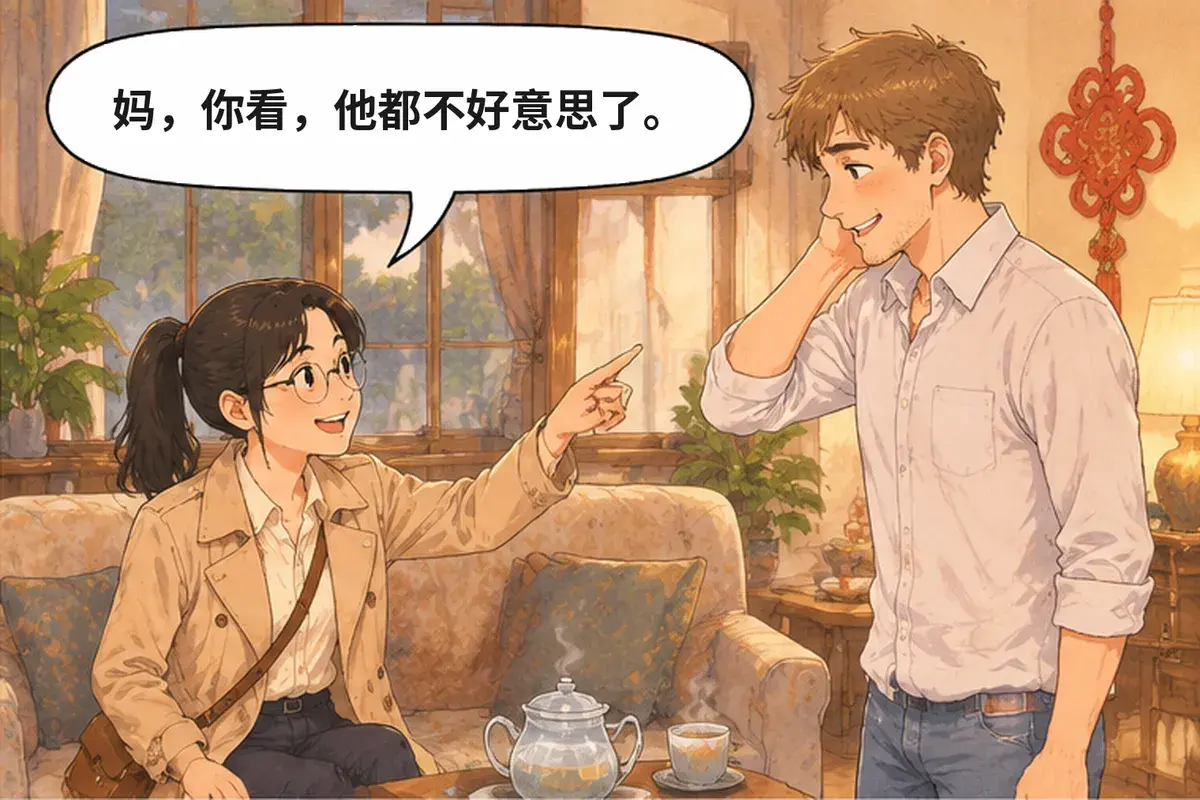
妈,你看,他都不好意思了。
Mom, look, he's embarrassed.

- 林阿姨
让我看看你。百闻不如一见!比照片上的帅!
Let me take a look at you. Seeing is better than hearing a hundred times! You're more handsome than in the photos!

- 伊利亚
哪里哪里!明天初一,我再来给您拜年!
Oh, not at all! Tomorrow is the first day of the New Year, and I'll come again to wish you a happy New Year! (polite)
Grammar for this text
来 就 来 吧, 还 带 什么 东西! — the hostess's set phrase: 来 就 来 吧 means "just coming is fine" (literally "come, then come"), and 还 带 什么 东西 means "why bring anything else?". It isn't a reproach, just politeness: people always say it, and the guest brings gifts anyway.
晓雨 爸爸, 快 来 迎接 客人! — the wife calls her husband "Xiaoyu's dad", after their child; people often do this in front of guests. 迎接 means "to welcome" a guest or a holiday.
叔叔, 阿姨, 过年 好! — the usual greeting during the holiday days. To his girlfriend's parents Ilya says 叔叔 and 阿姨 without a surname, and uses 您, the polite "you".
就 像 在 自己 家 一样 — "make yourself at home": 像 … 一样 means "like …".
晓雨 把 你 的 事 都 告诉 我们 了, 连 你 不 吃 香菜 都 说 了。 — a full 把 sentence and 连 … 都 in one line. In Ilya's answer there is 什么 都 from Unit 27: 你 怎么 什么 都 说 啊! — "why do you tell them everything!"
百闻不如一见! — a saying: "seeing once is better than hearing a hundred times". 哪里 哪里! — a modest reply to a compliment, like "oh, not at all".
明天 初一 — the first day of the lunar New Year: on that day people go to wish others a happy New Year (拜年).
Words and grammar of the unit: Celebrate the New Year with your partner's family.
Learn the words from the texts with flashcards
In the app, you can tap any word in a text to see its translation, forms and examples, and new words stick with flashcards. 15 minutes a day.
Start for freeEverything is open for free. No card needed to sign up.