

Chinese dialogue with translation · B1 · 13 lines
你们一天都干什么了? What did you guys do all day?
Comic · 12 panels
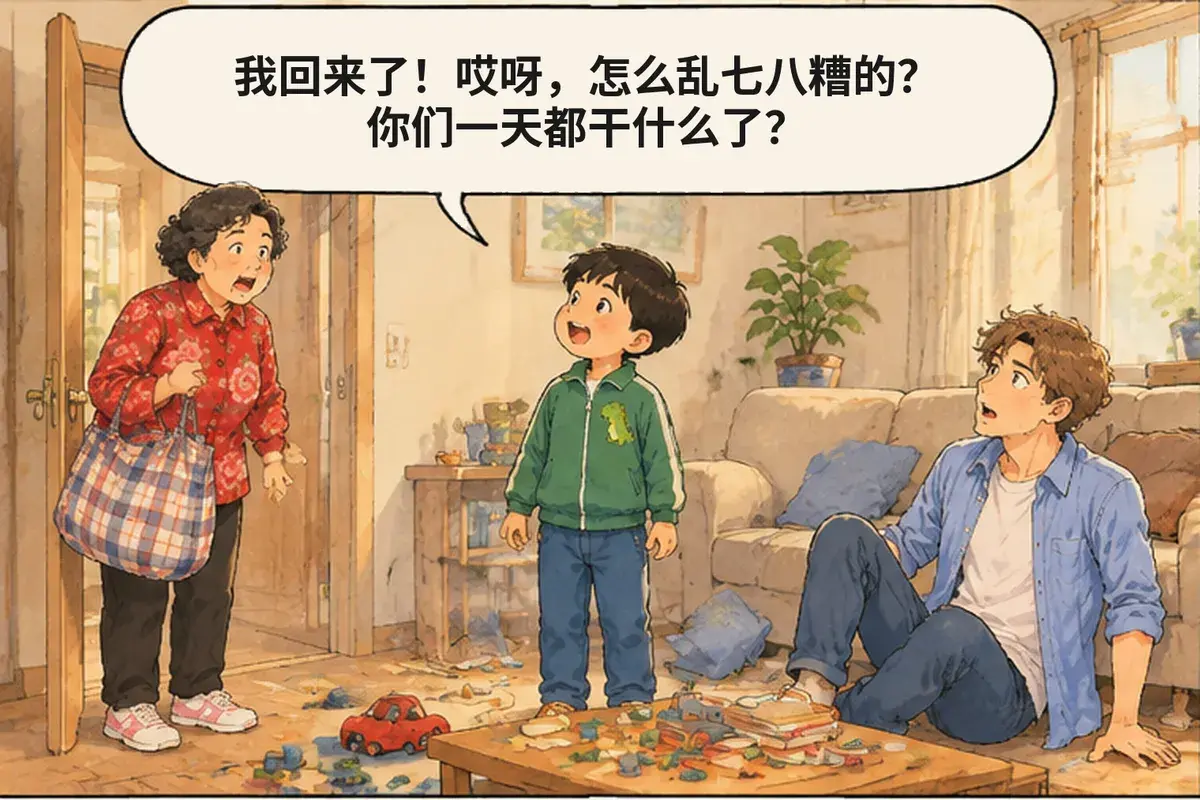
- 王阿姨
我回来了!哎呀,怎么乱七八糟的?你们一天都干什么了?
I'm back! Oh my, why is it such a mess? What did you guys do all day?
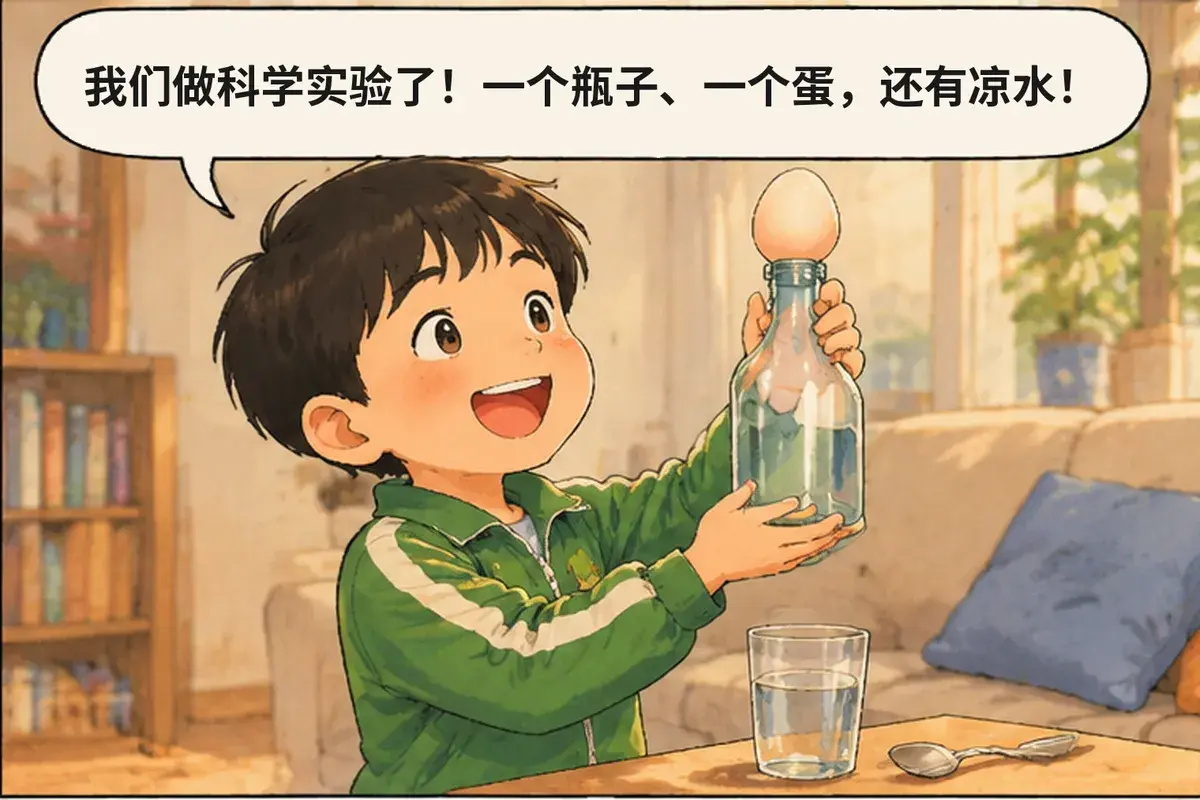
- 豆豆
我们做科学实验了!一个瓶子、一个蛋,还有凉水!
We did a science experiment! A bottle, an egg, and cold water!
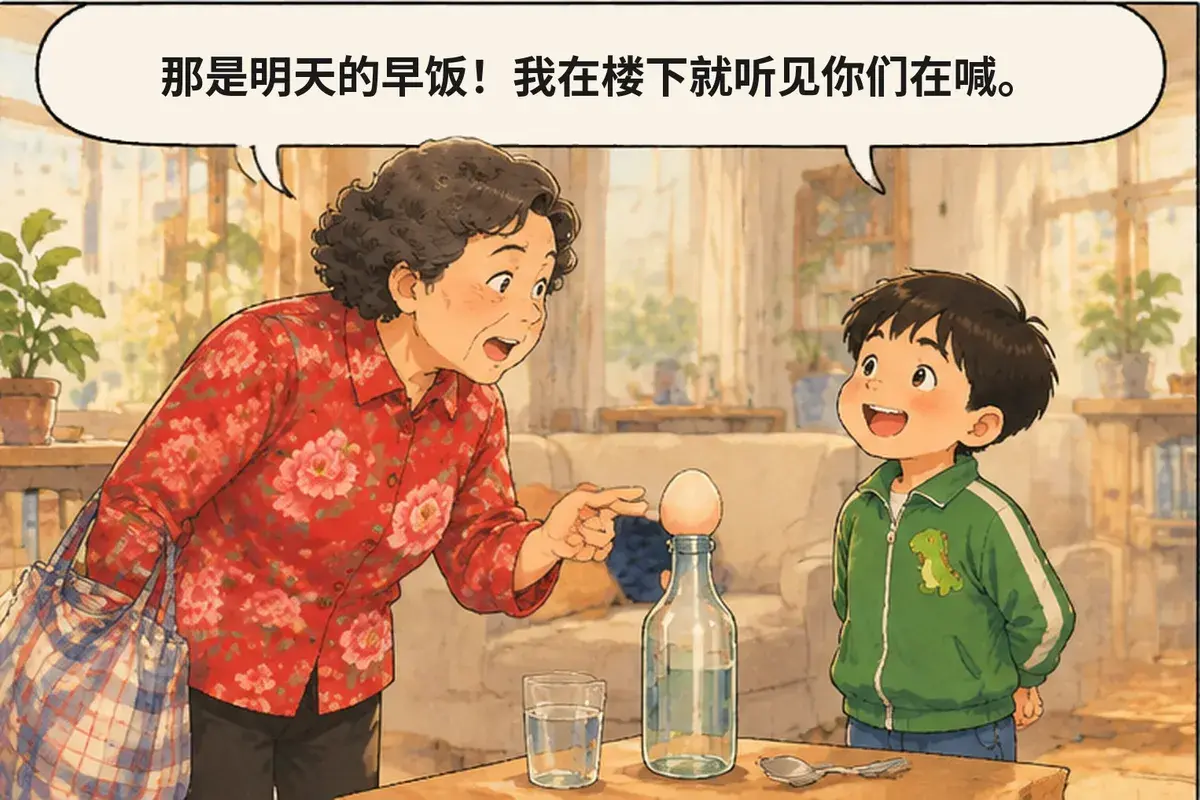
- 王阿姨
那是明天的早饭!我在楼下就听见你们在喊。
That's tomorrow's breakfast! I heard you two shouting from downstairs.
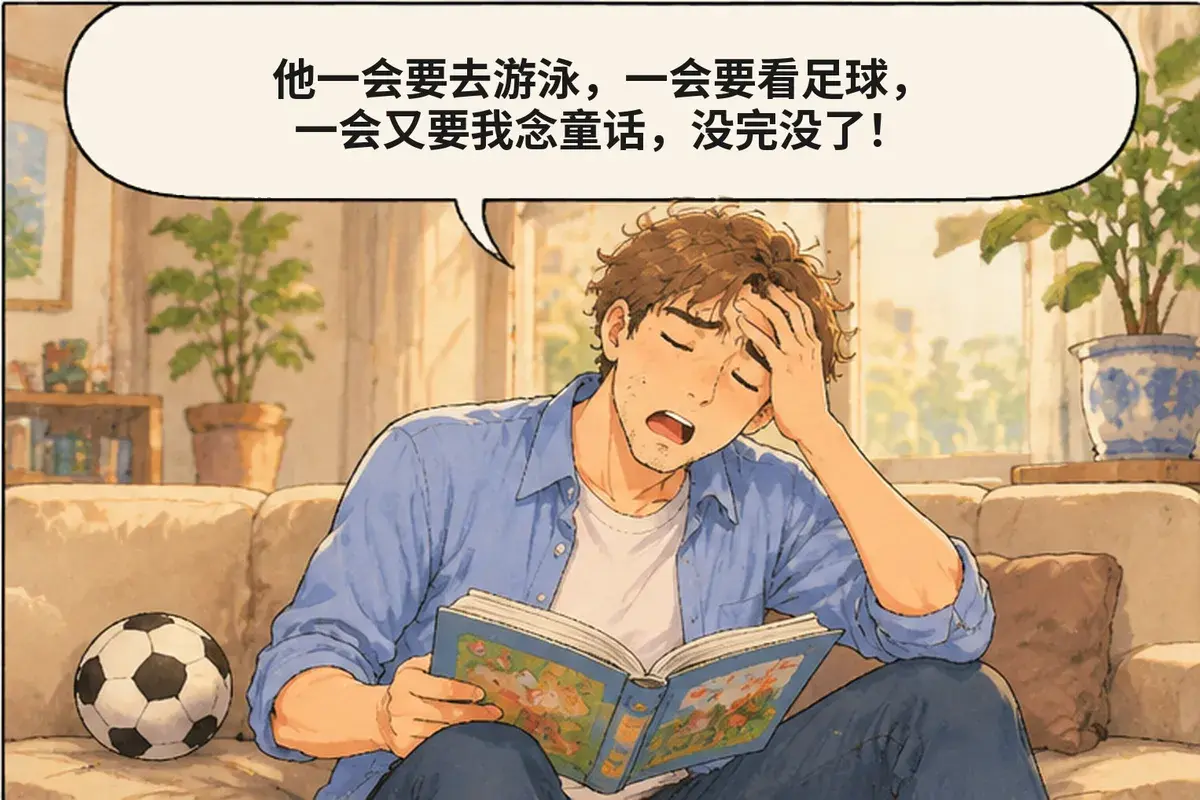
- 伊利亚
他一会要去游泳,一会要看足球,一会又要我念童话,没完没了!
One minute he wants to go swimming, the next he wants to watch soccer, then he wants me to read him fairy tales again. It never ends!
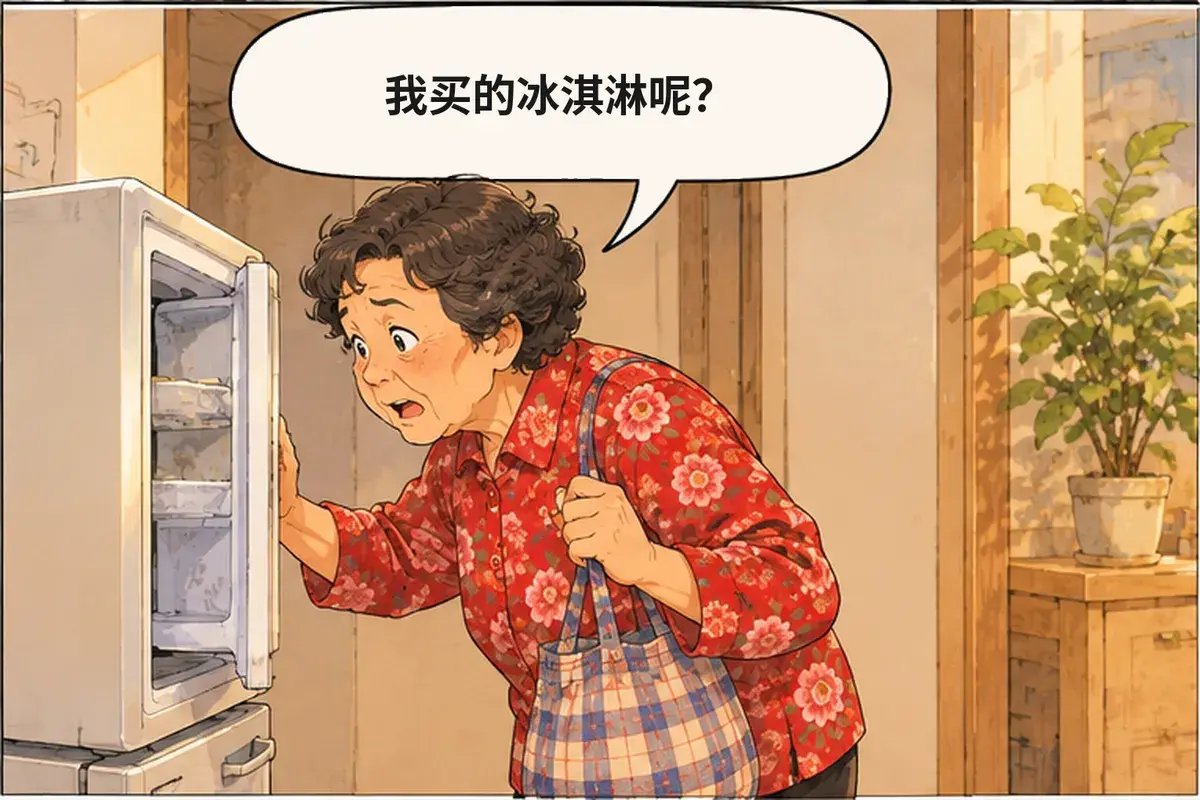
- 王阿姨
我买的冰淇淋呢?
Where's the ice cream I bought?
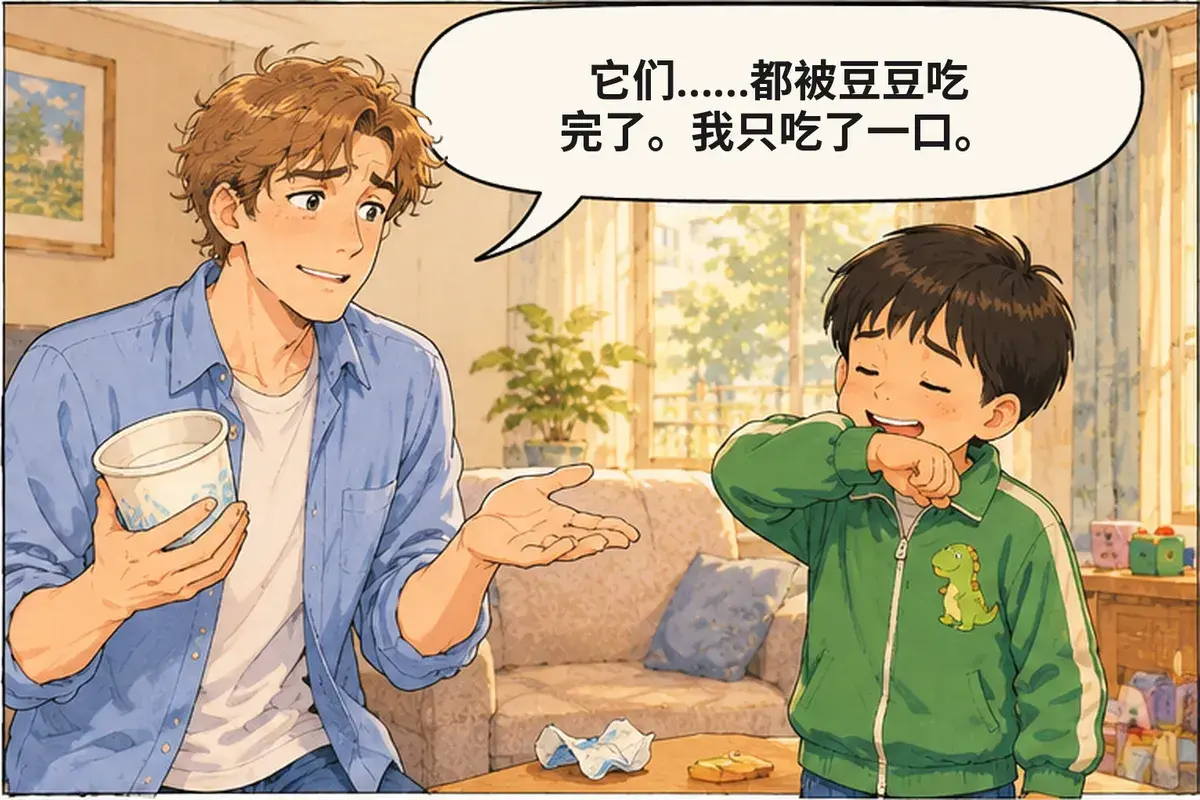
- 伊利亚
它们……都被豆豆吃完了。我只吃了一口。
They… were all eaten by Doudou. I only had one bite.
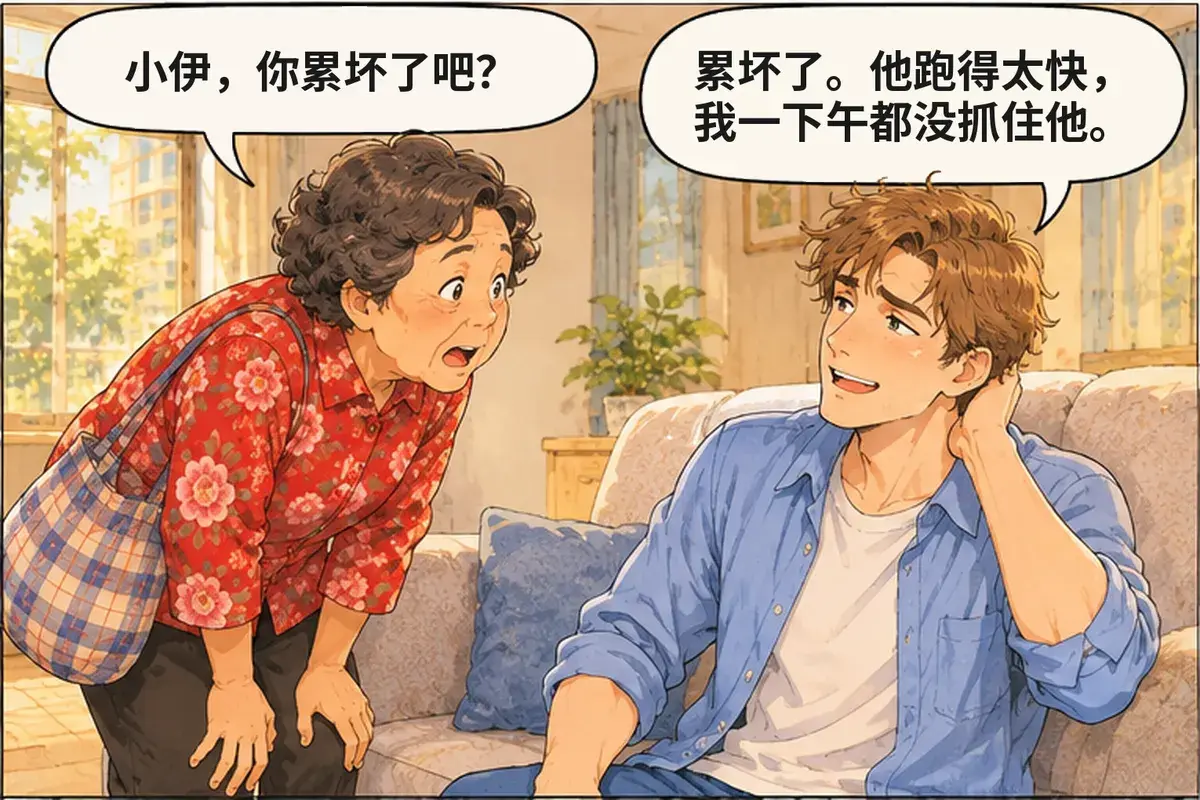
- 王阿姨
小伊,你累坏了吧?
Xiao Yi, you must be worn out, right?
- 伊利亚
累坏了。他跑得太快,我一下午都没抓住他。
Totally worn out. He runs so fast that I didn't catch him once all afternoon.
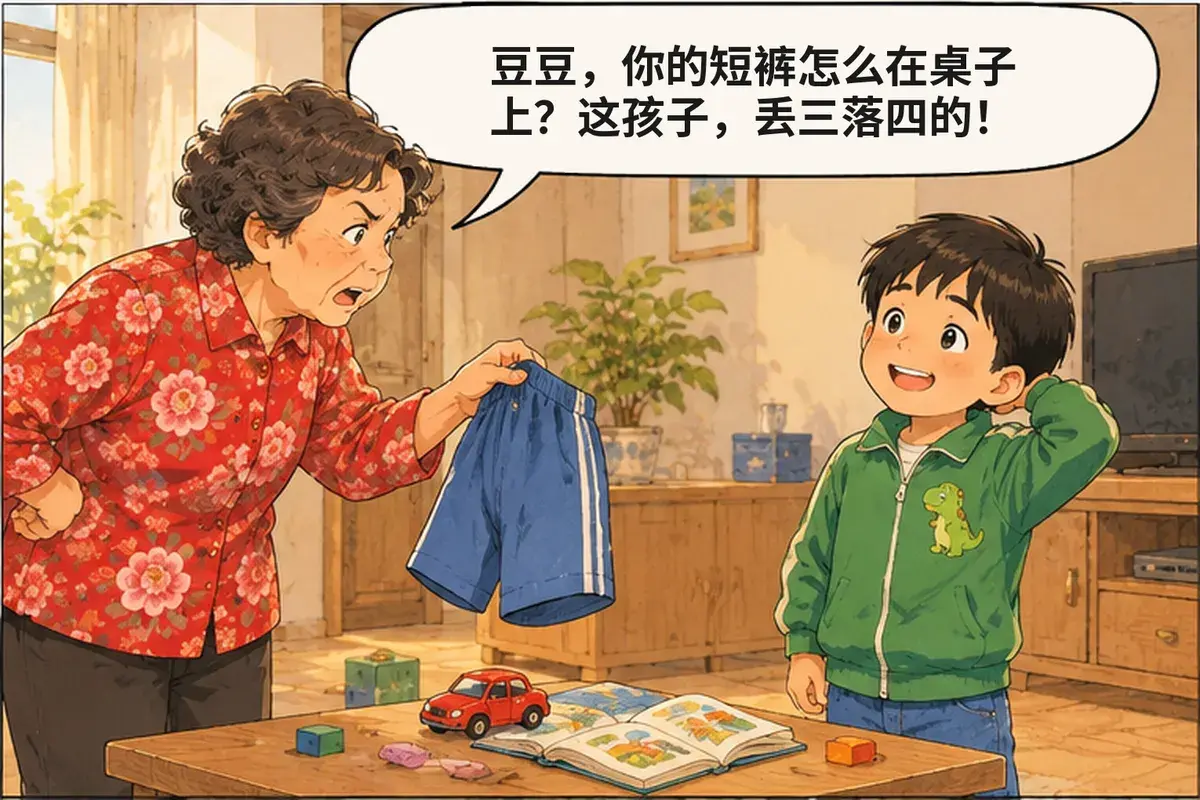
- 王阿姨
豆豆,你的短裤怎么在桌子上?这孩子,丢三落四的!
Doudou, why are your shorts on the table? Honestly, this kid, always losing things and leaving them behind!
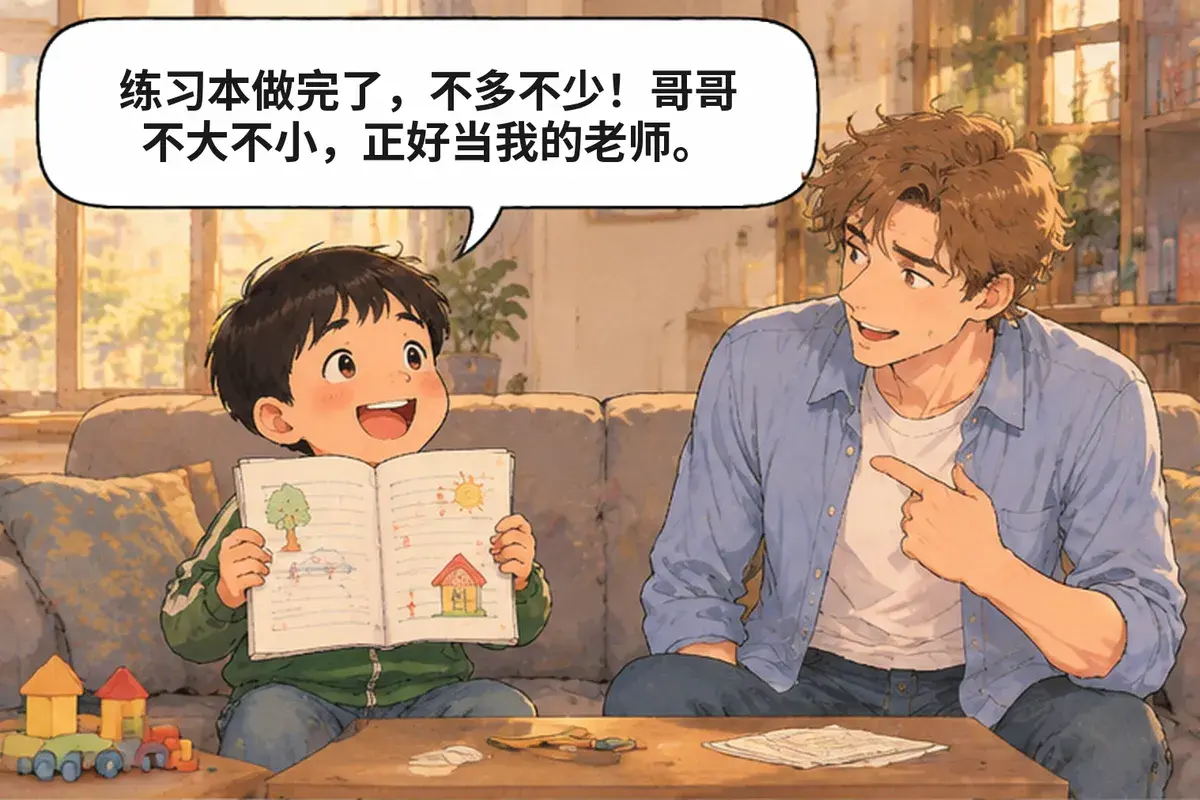
- 豆豆
练习本做完了,不多不少!哥哥不大不小,正好当我的老师。
I finished the workbook, no more, no less! Big brother is not too old and not too young, just right to be my teacher.
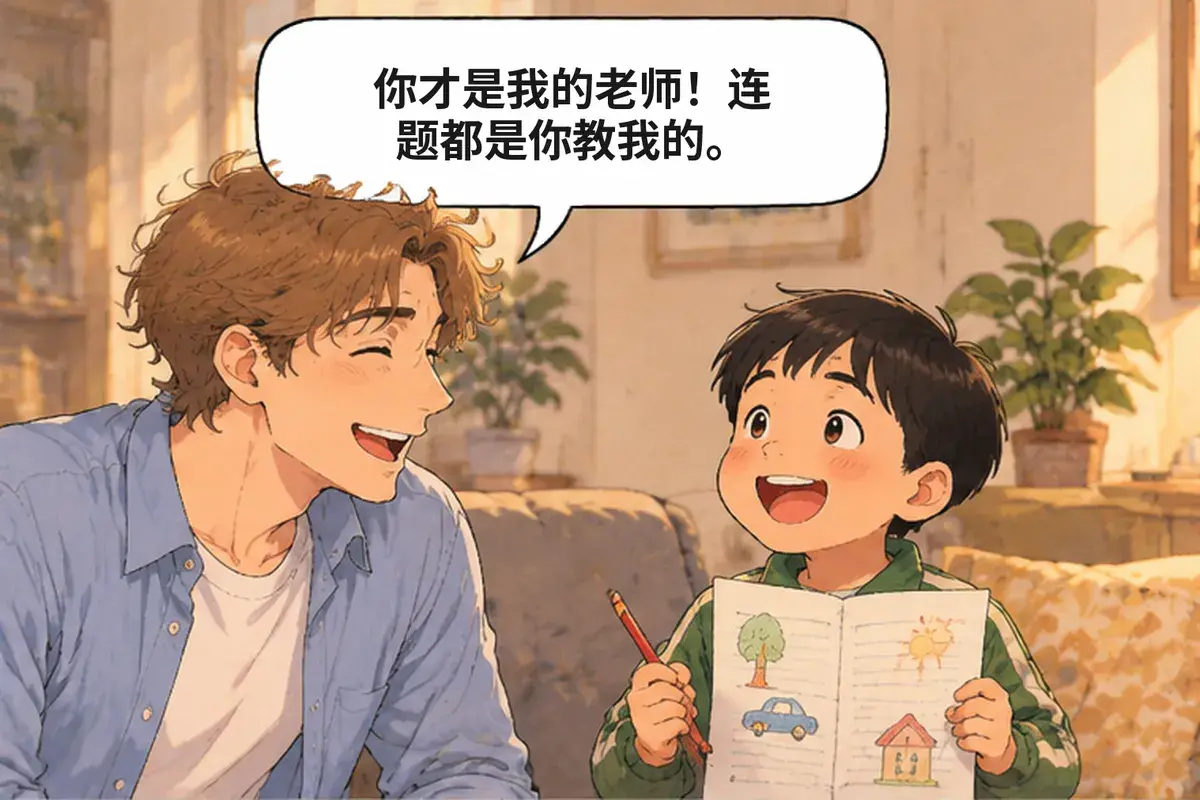
- 伊利亚
你才是我的老师!连题都是你教我的。
You're the one who's my teacher! You even taught me the problems.
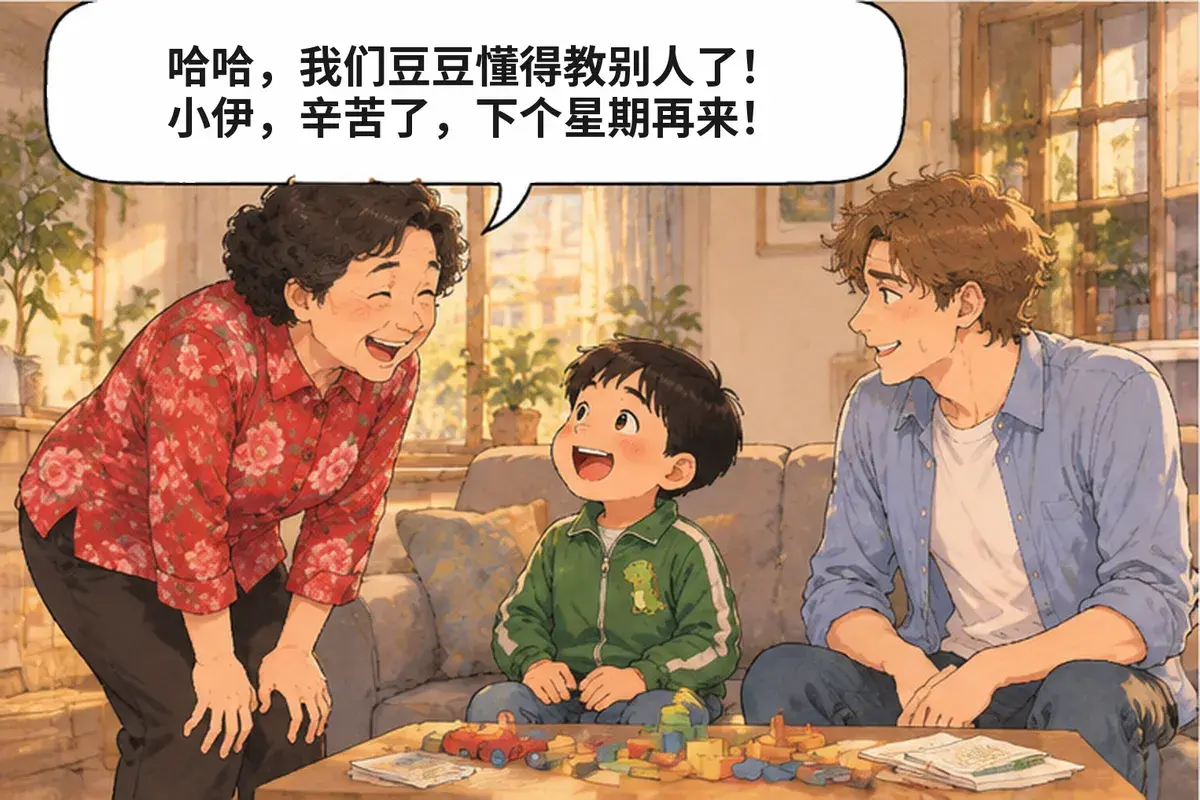
- 王阿姨
哈哈,我们豆豆懂得教别人了!小伊,辛苦了,下个星期再来!
Ha-ha, our Doudou knows how to teach others now! Xiao Yi, thank you for your hard work. Come again next week!
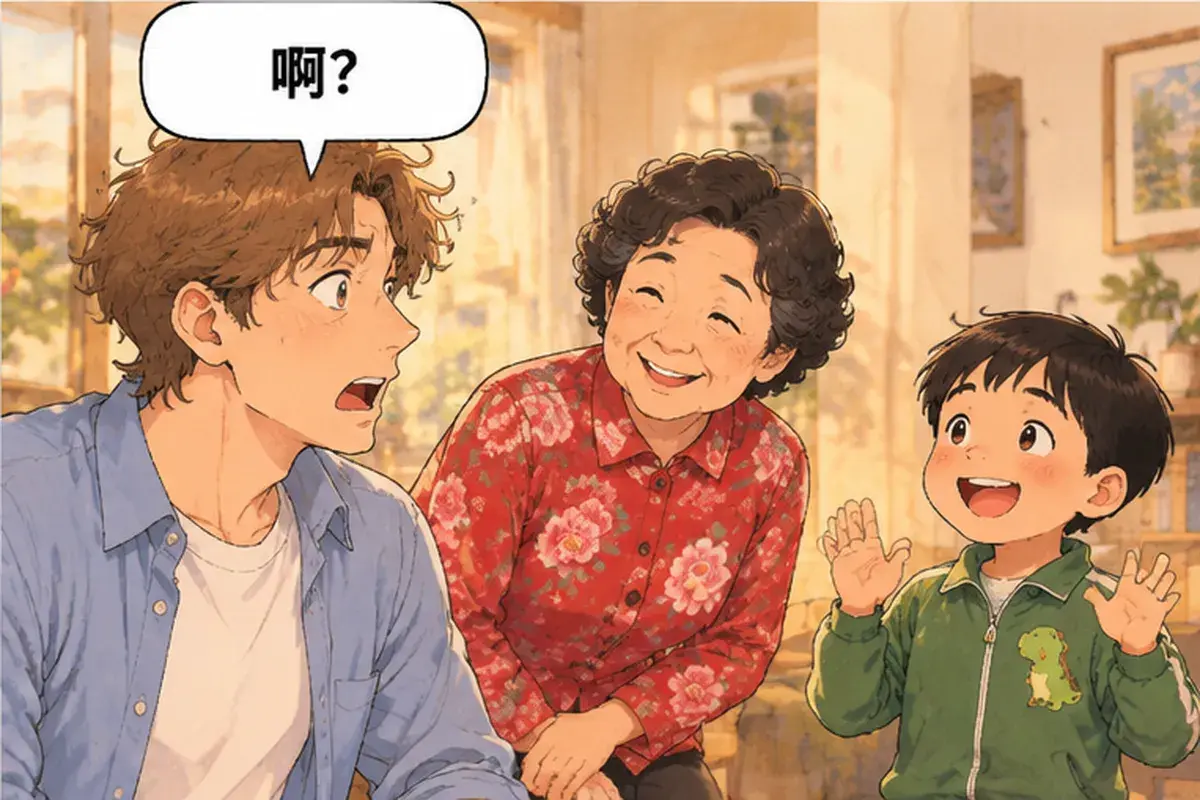
- 伊利亚
啊?
Huh?
Grammar for this text
- 它们…… 都 被 豆豆 吃 完 了。 —
被+ the person who did it +吃 完 了: "they were eaten by Doudou".它们means "they" for things and animals (here, the ice creams). The ending完 了is required. - 我 只 吃 了 一 口。 — I only had one bite.
一 口is a measure word for actions: "one bite, one sip". - 他 一会 要 去 游泳, 一会 要 看 足球, 一会 又 要 我 念 童话, 没完没了! — three
一会in a row, with又"again" before the last one.没完没了is a casual "it never ends, enough already". - 我 一 下午 都 没 抓住 他。 —
抓住means "catch and hold":抓"grab" +住"firmly".没 抓住means "didn't catch". - 这 孩子, 丢三落四 的! —
丢三落四(diūsānlàsì) means "loses things and leaves them everywhere", literally "lose three, leave four behind". - 累 坏 了 —
坏 了after累means "completely, to the point of exhaustion", not "broken". 辛苦 了 means "thank you for your hard work". - 哥哥 不 大 不 小, 正好 当 我 的 老师。 —
不 大 不 小means "just the right age". 懂得 教 别人 —懂得+ an action: "already understands how (and that one should) teach others".
Words and grammar of the unit: Babysit a child.
Learn the words from the texts with flashcards
In the app, you can tap any word in a text to see its translation, forms and examples, and new words stick with flashcards. 15 minutes a day.
Start for freeEverything is open for free. No card needed to sign up.