

Chinese dialogue with translation · B1 · 14 lines
他们不是来旅游,而是来看我 They didn't come to travel, they came to see me
Comic · 14 panels

- 伊利亚
今天是十月八号,我爸爸妈妈坐飞机回家了。
Today is October 8, and my mom and dad flew home.

- 伊利亚
他们不是来旅游,而是来看我过得好不好。
They didn't come to travel, they came to see how I'm doing.

- 伊利亚
说实话,本来我没什么把握:他们一句中文也不会,大家怎么聊天呢?
To be honest, at first I wasn't very confident: they don't speak a word of Chinese, so how would everyone chat?
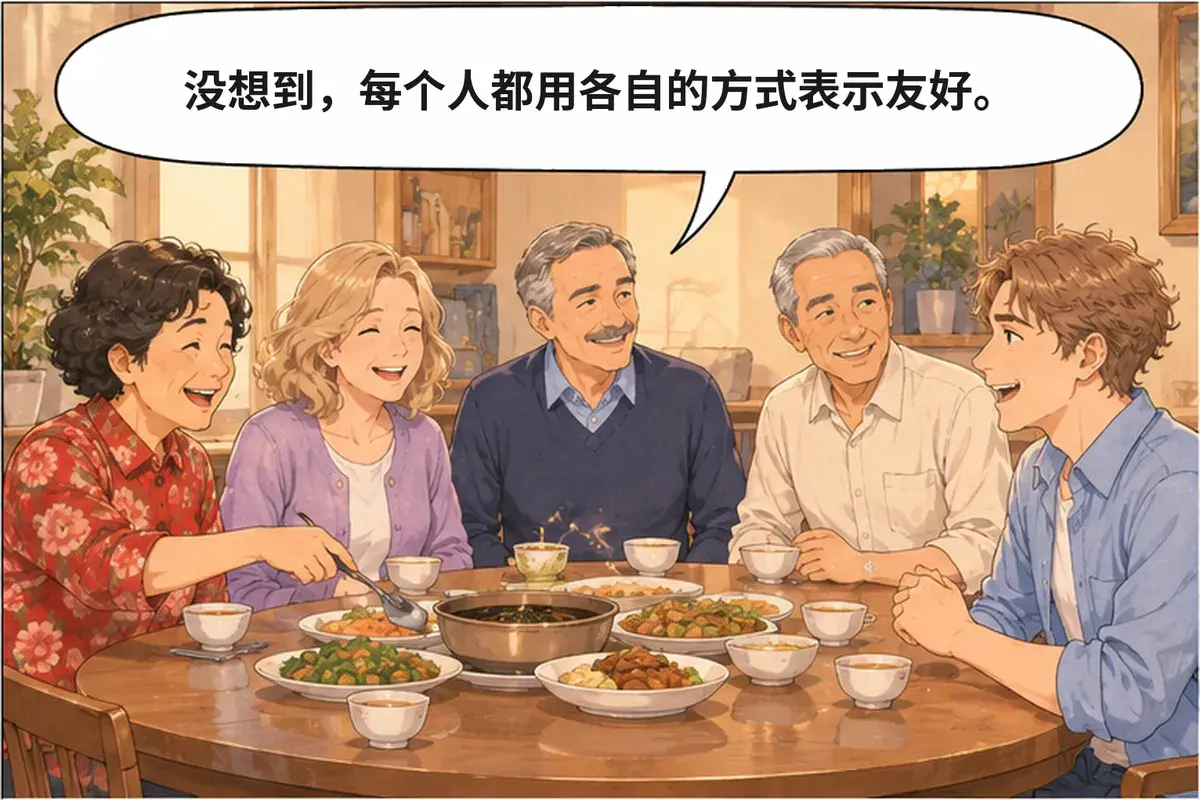
- 伊利亚
没想到,每个人都用各自的方式表示友好。
I didn't expect that everyone would show friendliness in their own way.

- 伊利亚
我妈妈学了三句中文:“你好、谢谢、好吃”。
My mom learned three phrases in Chinese: "hello, thanks, delicious."

- 伊利亚
她就用这三句话跟王阿姨对话:王阿姨说十句,她回答一句“好吃”。
She used just these three phrases to talk with Auntie Wang: Auntie Wang says ten sentences, and she answers with one "delicious."
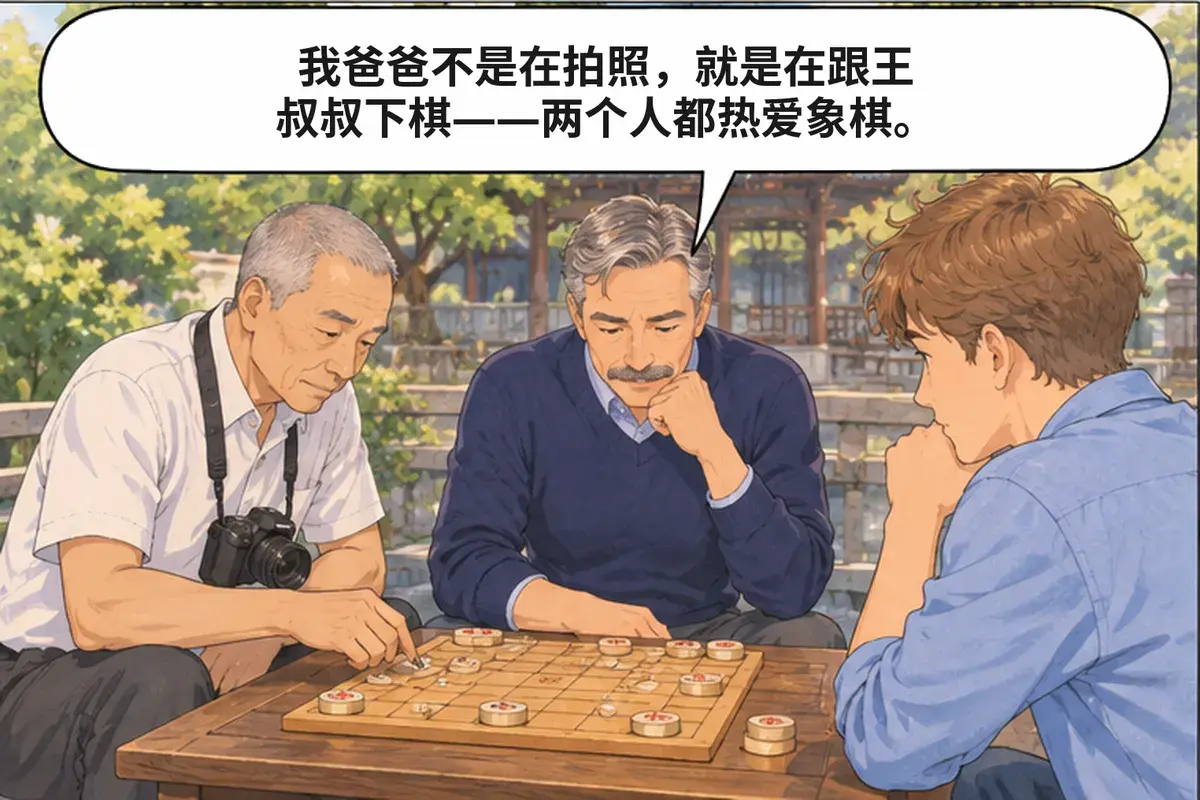
- 伊利亚
我爸爸不是在拍照,就是在跟王叔叔下棋——两个人都热爱象棋。
My dad was either taking photos or playing chess with Uncle Wang. They both love Chinese chess.

- 伊利亚
他们不光去了西湖,还去了河坊街,每天都很开心。
They went not only to West Lake but also to Hefang Street, and they were happy every day.

- 伊利亚
刚见面那会儿,我爸爸话很少,跟晓雨的谈话只有几句。
When they first met, my dad didn't talk much. His conversation with Xiaoyu was only a few sentences.

- 伊利亚
后来他们的话越来越多,慢慢建立了信任。
Later they talked more and more, and little by little they built trust.

- 伊利亚
我妈妈对待晓雨就像对待我一样,还让我多听她的话。
My mom treated Xiaoyu just like she treats me, and she even told me to listen to her more.

- 伊利亚
我爸爸说,晓雨热情而有礼貌,很尊重他们,这种态度最重要。
My dad said that Xiaoyu is warm and polite, and respects them a lot, and that this kind of attitude matters most.

- 伊利亚
在机场,我妈妈依依不舍,说她还是放心不下我。
At the airport, my mom could hardly bear to part, and said she still can't stop worrying about me.

- 伊利亚
最后我爸爸说:“春节你不是回家,而是去晓雨家——好好表现!”
In the end my dad said: "For Spring Festival you're not going home, you're going to Xiaoyu's. Make a good impression!"
Grammar for this text
- 他们 不 是 来 旅游, 而是 来 看 我 过 得 好 不 好。 — This is the main pattern
不 是 …, 而是 …: "travel" is thrown out, "see me" stays. 过 得 好 不 好— "how am I doing";过here means "to live, to spend time" and is read guò.- 我 爸爸 不 是 在 拍照, 就是 在 跟 王 叔叔 下棋 —
不 是 在 …, 就是 在 …means "either … or …": two activities taking turns, so就是is used. - 最后 我 爸爸 说: “春节 你 不 是 回家, 而是 去 晓雨 家 —— 好好 表现!” — Dad throws out the wrong place and names the right one.
好好 表现means "show your best side": people say it before an exam, an interview or meeting the parents. - 他们 不光 去 了 西湖, 还 去 了 河坊街, —
不光 …, 还 …is a casual "not only … but also …". - 刚 见面 那会儿, —
那会儿means "back then": you use it when you tell a story about the recent past. The form with儿is northern; in Hangzhou people say it less. - 晓雨 热情 而 有 礼貌, — A single
而joins two good qualities: "warm and at the same time polite." It is not而是: nothing is corrected here. - 在 机场, 我 妈妈 依依不舍, —
依依不舍is a chengyu, a four-character idiom: "can't bear to part." - 说 她 还是 放心不下 我。 —
放心不下means "can't stop worrying";还是here means "still."
Words and grammar of the unit: Introduce your parents to your friends.
Learn the words from the texts with flashcards
In the app, you can tap any word in a text to see its translation, forms and examples, and new words stick with flashcards. 15 minutes a day.
Start for freeEverything is open for free. No card needed to sign up.