

Chinese dialogue with translation · B1 · 18 lines
首先,只采一芽一叶 First, we pick only one bud and one leaf
Comic · 18 panels

- 老板娘
来,伊利亚,先看我怎么采茶。
Come here, Ilya, first watch how I pick tea.
- 老板娘
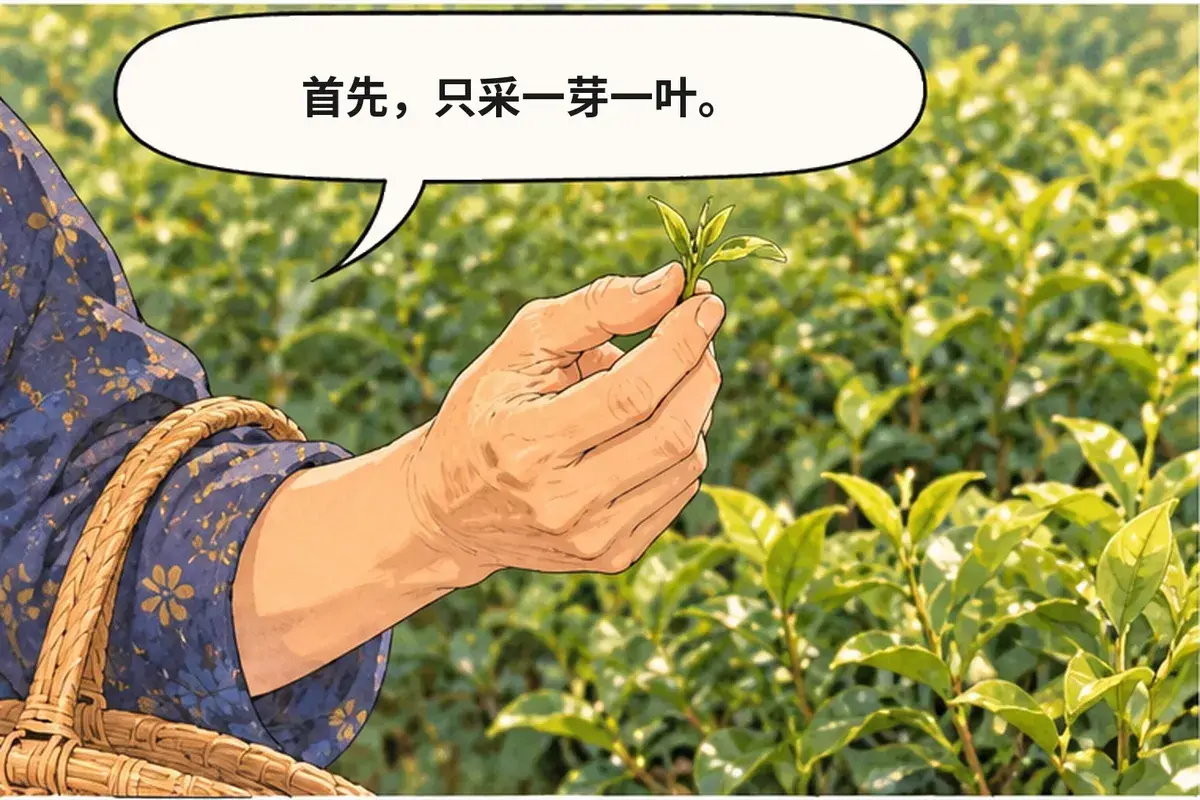
首先,只采一芽一叶。
First, we pick only one bud and one leaf.

- 伊利亚
“芽”是什么意思?
What does "yá" mean?

- 老板娘
就是最上边这一点,很小很绿。下边再带一片叶。
It's this very top part, small and green. And one leaf below it.
- 老板娘
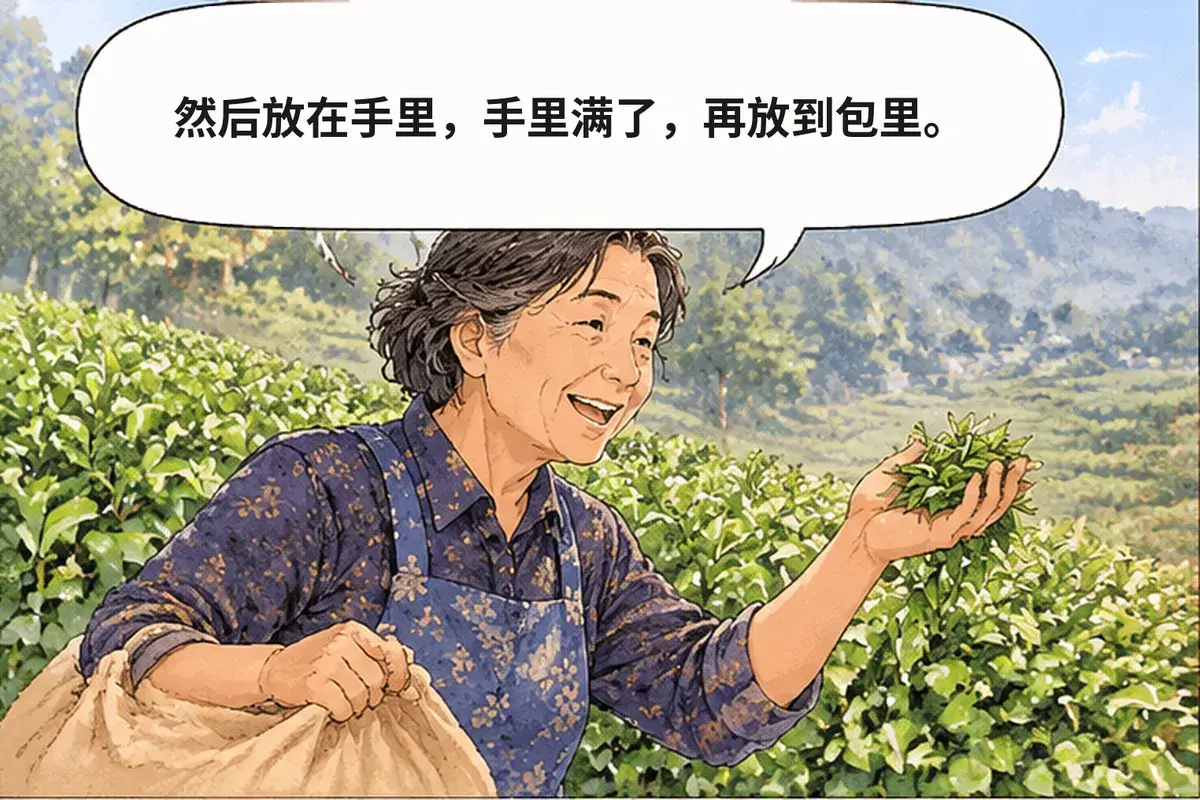
然后放在手里,手里满了,再放到包里。
Then you put them in your hand, and when your hand is full, you put them in the bag.

- 晓雨
最后呢?
And at the end?
- 老板娘
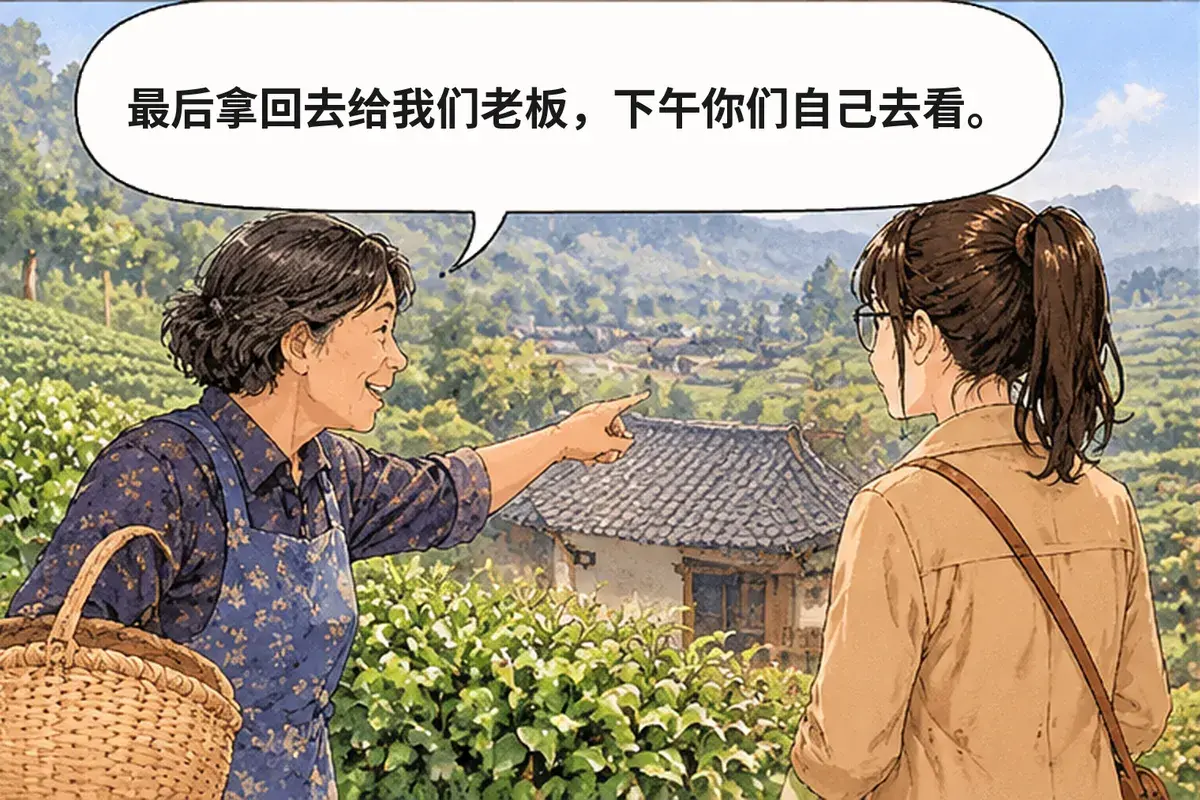
最后拿回去给我们老板,下午你们自己去看。
At the end we take them back to our boss, and this afternoon you'll go see for yourselves.
- 晓雨
采茶还要注意什么?
What else do you have to watch out for when picking tea?

- 老板娘
其次是时间。我们村的人往往早上五点就上山了。
Second is the time. People in our village usually go up the mountain as early as five in the morning.

- 伊利亚
五点?我平时七点才起床!
Five? I usually don't get up until seven!

- 晓雨
那你今天来晚了,快采吧!
Then you're late today. Pick faster!

- 伊利亚
你们看,我已经采了这么多!
Look, I've already picked this many! (to several people)

- 老板娘
哎,不对不对!这么大的不要。一片一片地采,别急。
Hey, no, no! We don't want big ones like that. Pick them leaf by leaf, don't rush.

- 晓雨
别动!我给你拍一张。采茶的样子真认真!
Don't move! I'll take a picture of you. You look so focused picking tea!

- 伊利亚
别拍了!你看,这个对不对?
Stop taking pictures! Look, is this one right?

- 晓雨
这次对了!你看,阳光照在茶叶上,真漂亮。
This time it's right! Look, the sunlight is shining on the tea leaves. It's so pretty.

- 老板娘
风景好看,采茶很累:一斤茶要采几万个芽。
The view is beautiful, but picking tea is hard work: one jin of tea takes tens of thousands of buds.

- 伊利亚
几万个?那我要采到明年了!
Tens of thousands? Then I'll be picking until next year!
Grammar for this text
- 首先, 只 采 一 芽 一 叶。 —
首先means "first, first of all": it opens an explanation in order. Then she leads the steps with然后("then") and最后("finally"), and starts the second rule with其次("second").一 芽 一 叶is "one bud and one leaf", the most valuable pick. - 一 片 一 片 地 采 — "leaf by leaf": the number and measure word repeat, and
地goes before the verb. Details are in the unit grammar. - 我们 村 的 人 往往 早上 五 点 就 上 山 了。 —
往往means "as a rule": that's how it's done here, not a plan for tomorrow.就stresses that it's early: "already at five". In Ilya's answer 七 点 才 起床,才is the opposite: "not until seven", which is late. - 手 里 满 了, 再 放 到 包 里 —
再here means "and only then": one thing first, the other after. - 那 我 要 采 到 明年 了! — a joke: "then I'll be picking until next year".
到after the verb tells how long the action lasts. - 别 急 — "don't rush", what you say to calm a beginner. 风景 好看, 采 茶 很 累 — two halves with no "but"; the contrast is clear anyway.
Words and grammar of the unit: Explain how something is done.
Learn the words from the texts with flashcards
In the app, you can tap any word in a text to see its translation, forms and examples, and new words stick with flashcards. 15 minutes a day.
Start for freeEverything is open for free. No card needed to sign up.