

Chinese dialogue with translation · A2 · 16 lines
一点也不疼? Doesn't hurt at all?
Comic · 16 panels
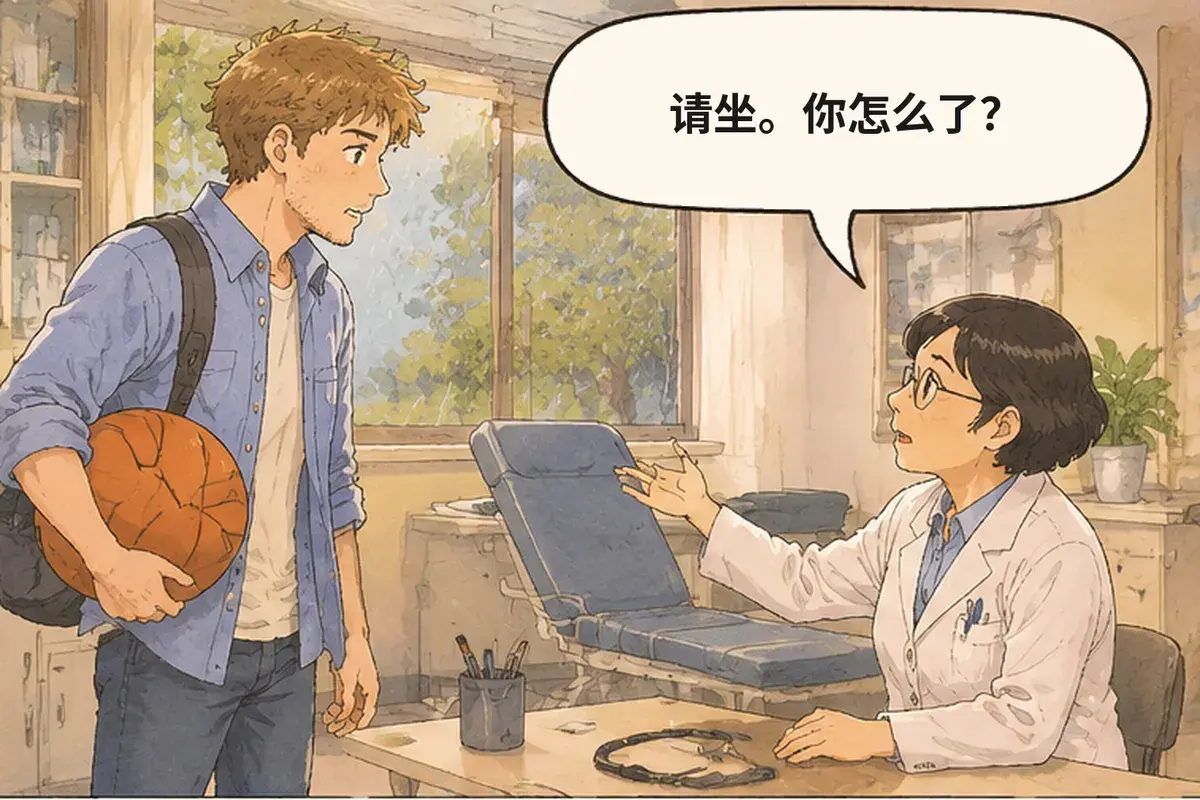
- 医生
请坐。你怎么了?
Please have a seat. What's wrong?

- 伊利亚
医生,我的脚受伤了。刚才打篮球的时候……
Doctor, I've hurt my foot. Just now, when I was playing basketball…
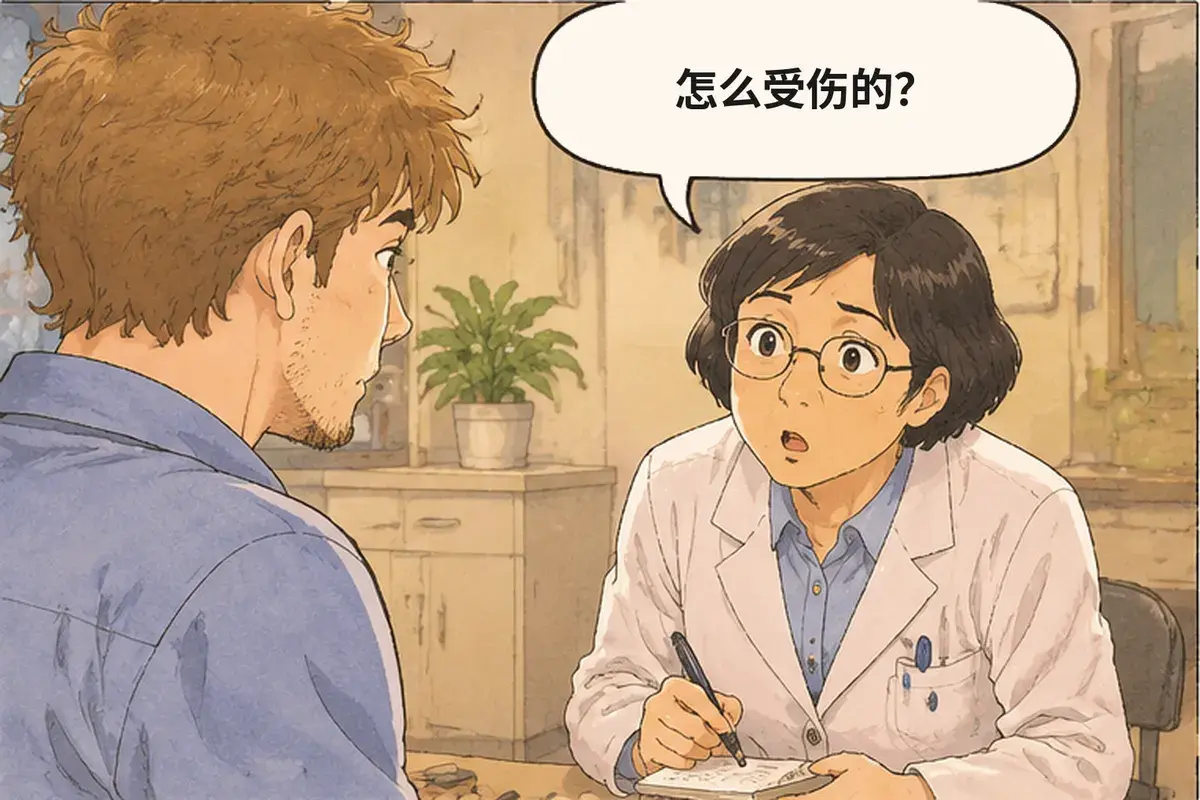
- 医生
怎么受伤的?
How did you hurt it?
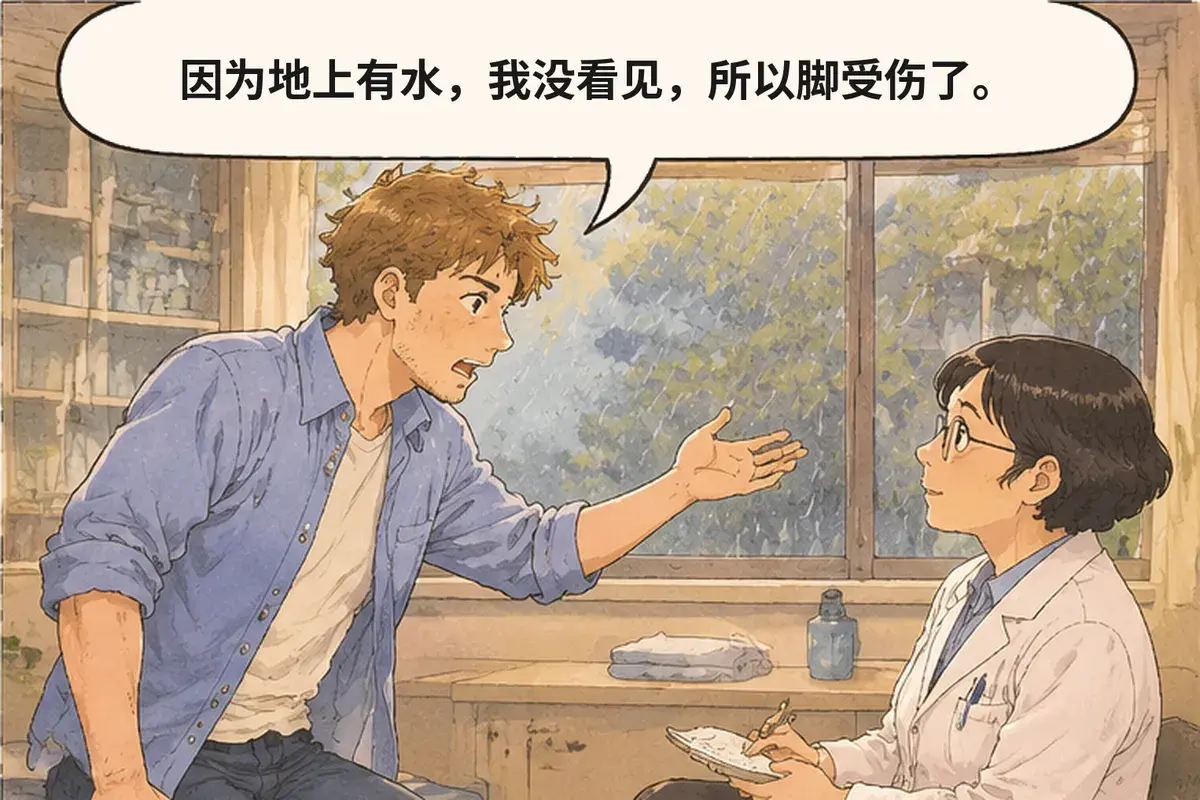
- 伊利亚
因为地上有水,我没看见,所以脚受伤了。
There was water on the ground and I didn't see it, so I hurt my foot.
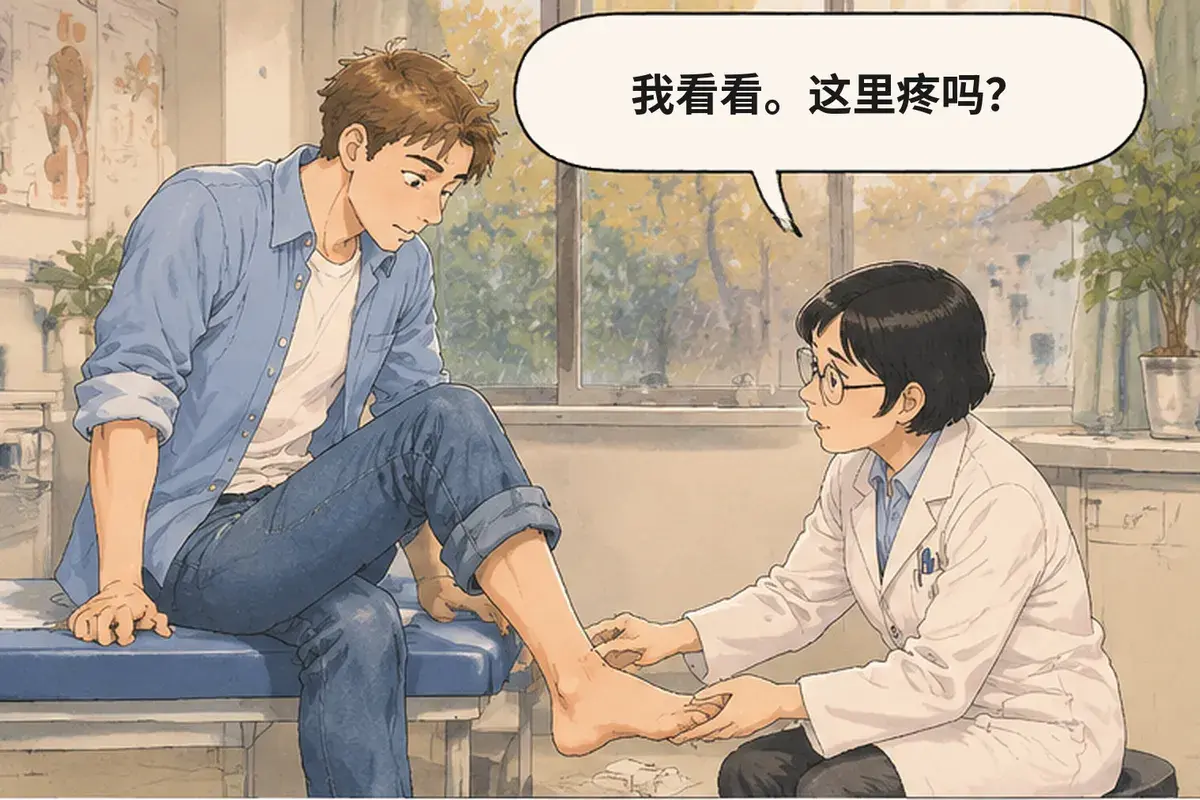
- 医生
我看看。这里疼吗?
Let me take a look. Does it hurt here?

- 伊利亚
不疼,一点也不疼。
It doesn't hurt, it doesn't hurt at all.
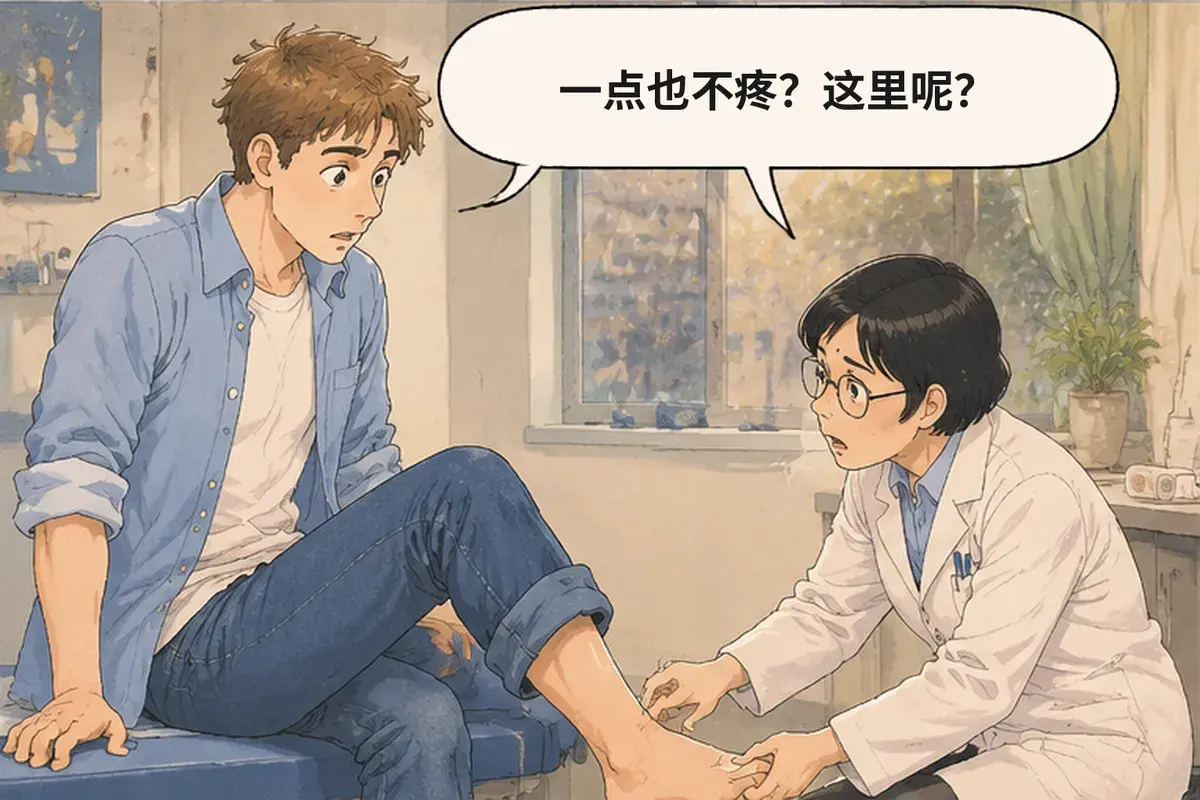
- 医生
一点也不疼?这里呢?
Doesn't hurt at all? What about here?
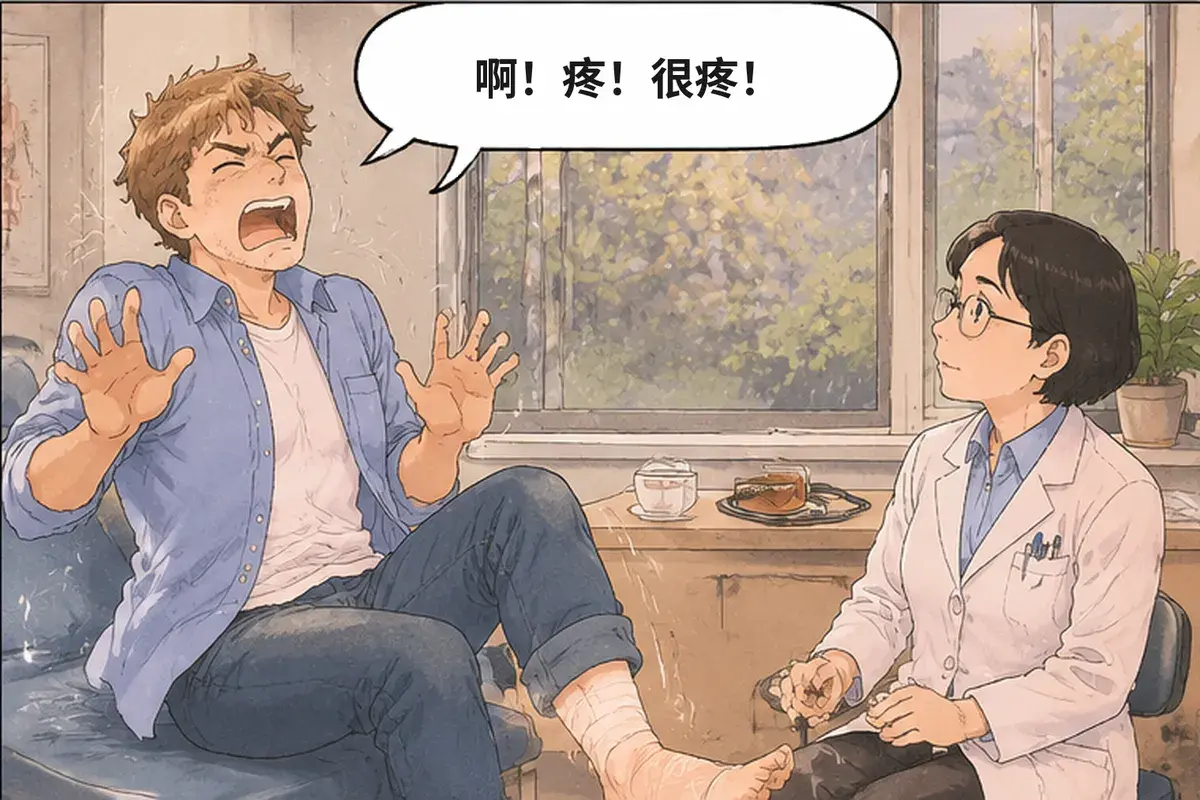
- 伊利亚
啊!疼!很疼!
Ow! It hurts! It really hurts!

- 医生
好。脚慢慢地动一下。这个动作疼不疼?
OK. Move your foot slowly. Does this movement hurt?
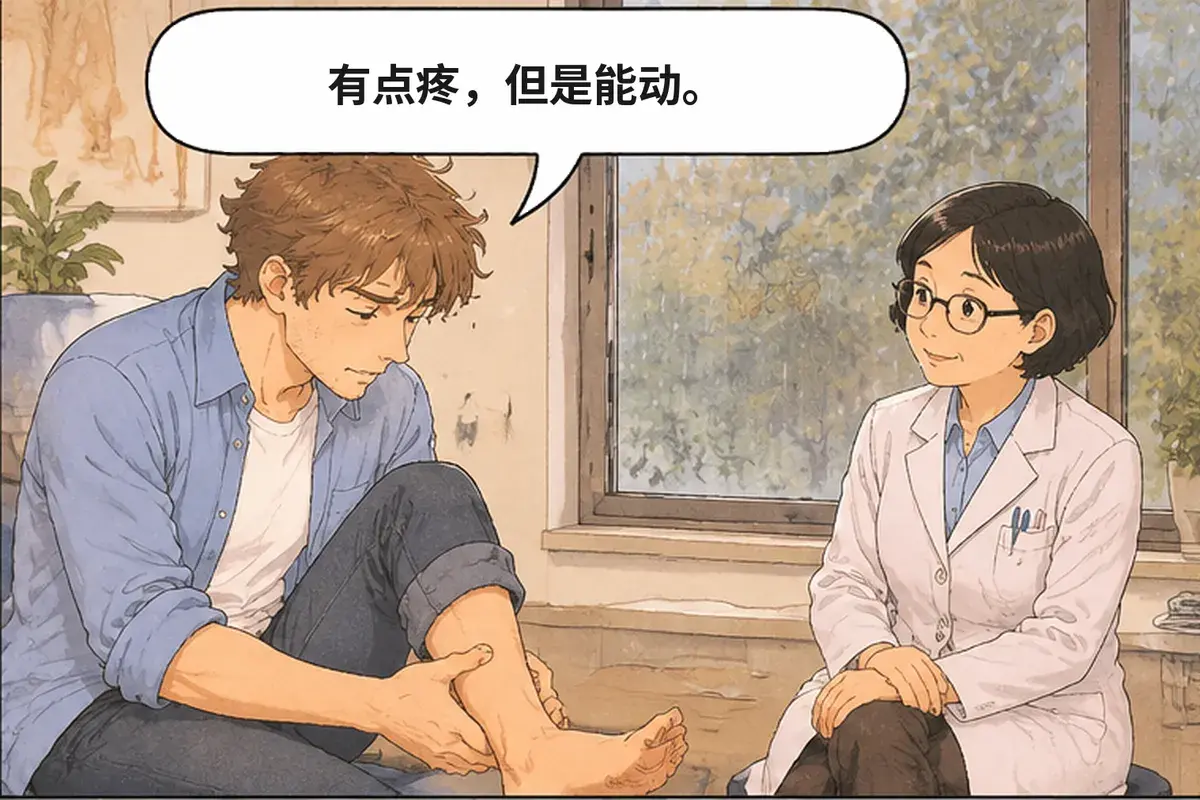
- 伊利亚
有点疼,但是能动。
It hurts a bit, but I can move it.

- 医生
没什么大问题。有点疼很正常。不用住院。
There's no big problem. It's normal for it to hurt a bit. You don't need to stay in the hospital.
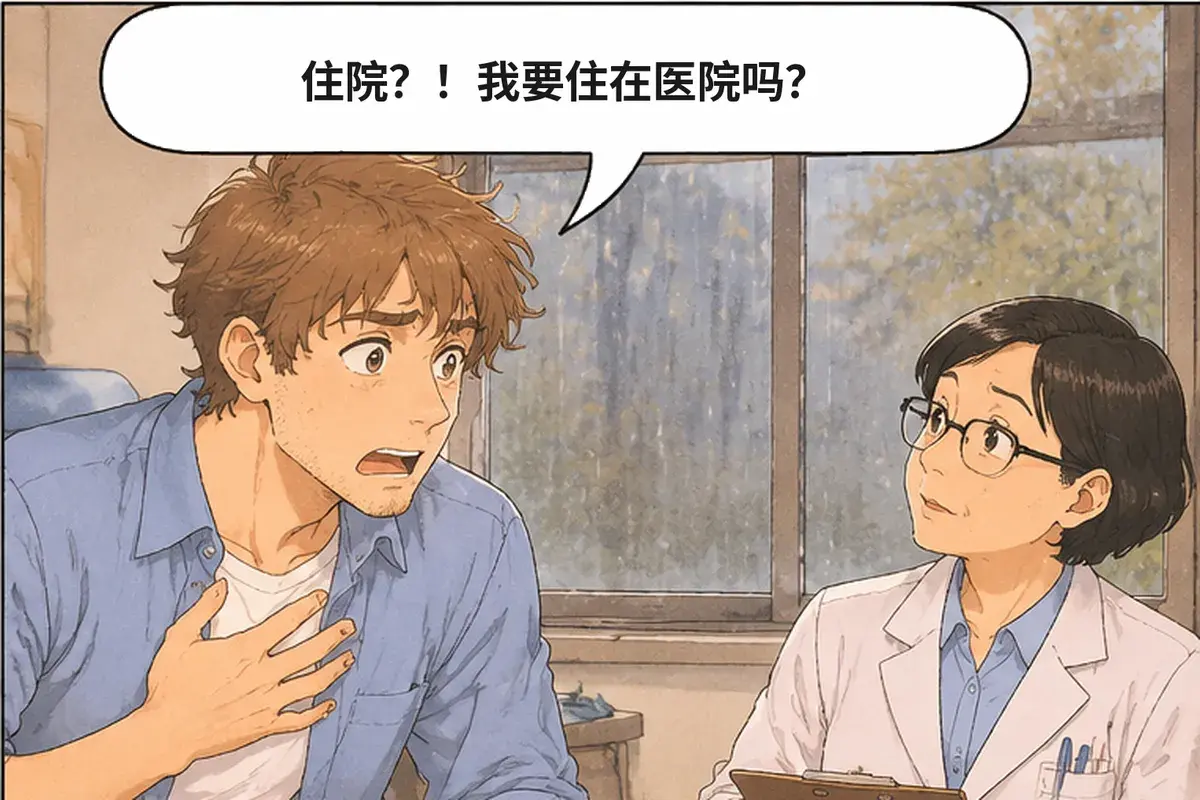
- 伊利亚
住院?!我要住在医院吗?
Stay in the hospital?! Do I have to live in the hospital?

- 医生
不是!我说“不用住院”。你今天可以回家。
No! I said, "You don't need to stay in the hospital." You can go home today.

- 医生
但是一个星期别跑步、别打球,走路也要注意。
But for a week, don't go running or play ball, and be careful when you walk, too.

- 伊利亚
好的。医生,看中医好还是看西医好?
OK. Doctor, is it better to see a Chinese medicine doctor or a Western doctor?
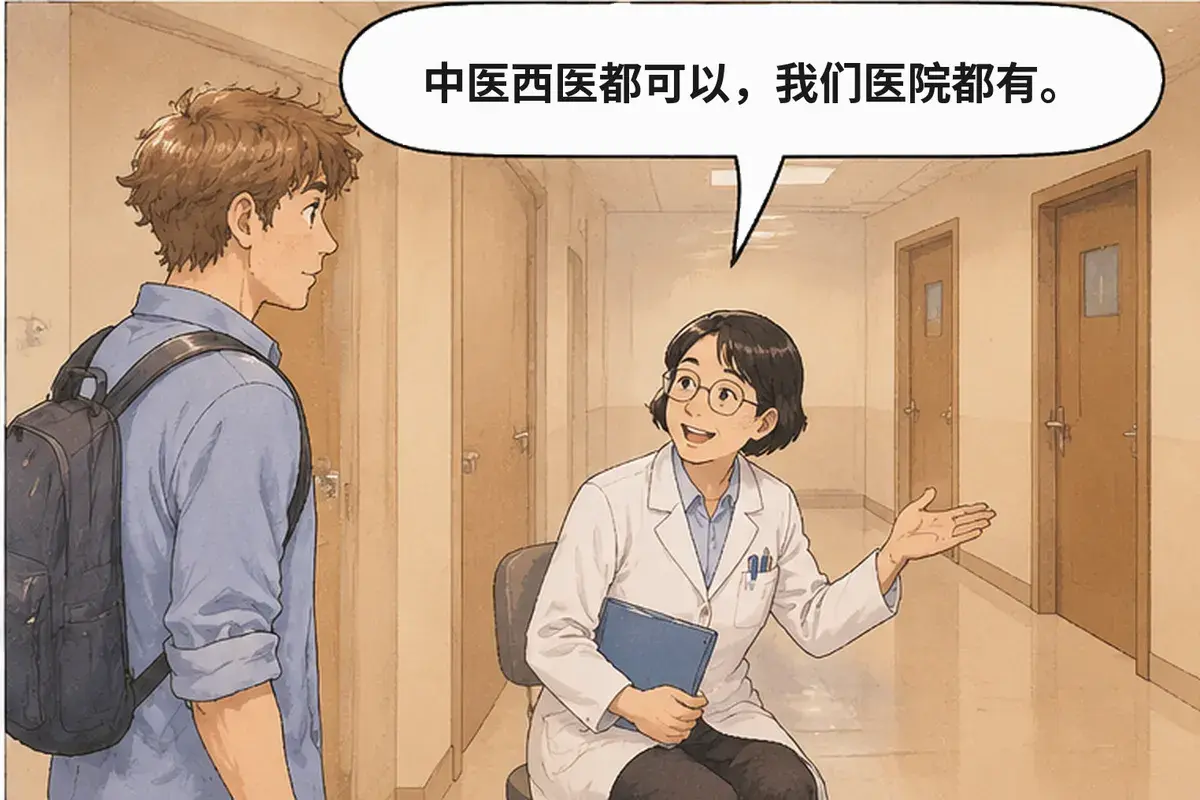
- 医生
中医西医都可以,我们医院都有。
Chinese or Western medicine, either is fine; our hospital has both.
Grammar for this text
一点 也 不 疼? — the doctor repeats Ilya's words as a question, "doesn't hurt at all?", and presses somewhere else.
不用 住院 — Ilya only caught 住院 and got scared: 住院 (zhùyuàn) is literally "to live in the hospital", that is, to stay in the hospital as a patient. He asks again, and the doctor repeats the whole sentence. Not sure you understood? Ask again: that's normal.
因为 地上 有 水, 我 没 看见, 所以 脚 受伤 了 — this is how people in China tell what happened: first the reason, with 因为, and at the end the result, with 所以.
怎么 受伤 的? — this is 是 … 的 (unit 3) without 是: about something that already happened, you ask how it happened.
脚 慢慢 地 动 一下 — 地 stands between "how?" and the action; 一下 softens the request: "move it a little".
这 个 动作 疼 不 疼? — a yes-no question by repeating, "hurts, doesn't hurt" (A1, unit 7); no 吗 needed.
有点 疼 很 正常 — "hurting a bit is normal": a whole phrase stands at the start, and the rest of the sentence talks about it.
一 个 星期 别 跑步、 别 打球 — the time period goes before the "don't": "for a week, no running". 、 is the Chinese comma for lists.
看 中医 好 还是 看 西医 好? — 看 + a doctor means "to see a doctor". 中医 is traditional Chinese medicine, 西医 is Western medicine. Big hospitals in China often have both.
Words and grammar of the unit: Explain to a doctor what happened.
Learn the words from the texts with flashcards
In the app, you can tap any word in a text to see its translation, forms and examples, and new words stick with flashcards. 15 minutes a day.
Start for freeEverything is open for free. No card needed to sign up.