

Chinese dialogue with translation · A2 · 16 lines
你千万别说! Whatever you do, don't tell!
Comic · 10 panels
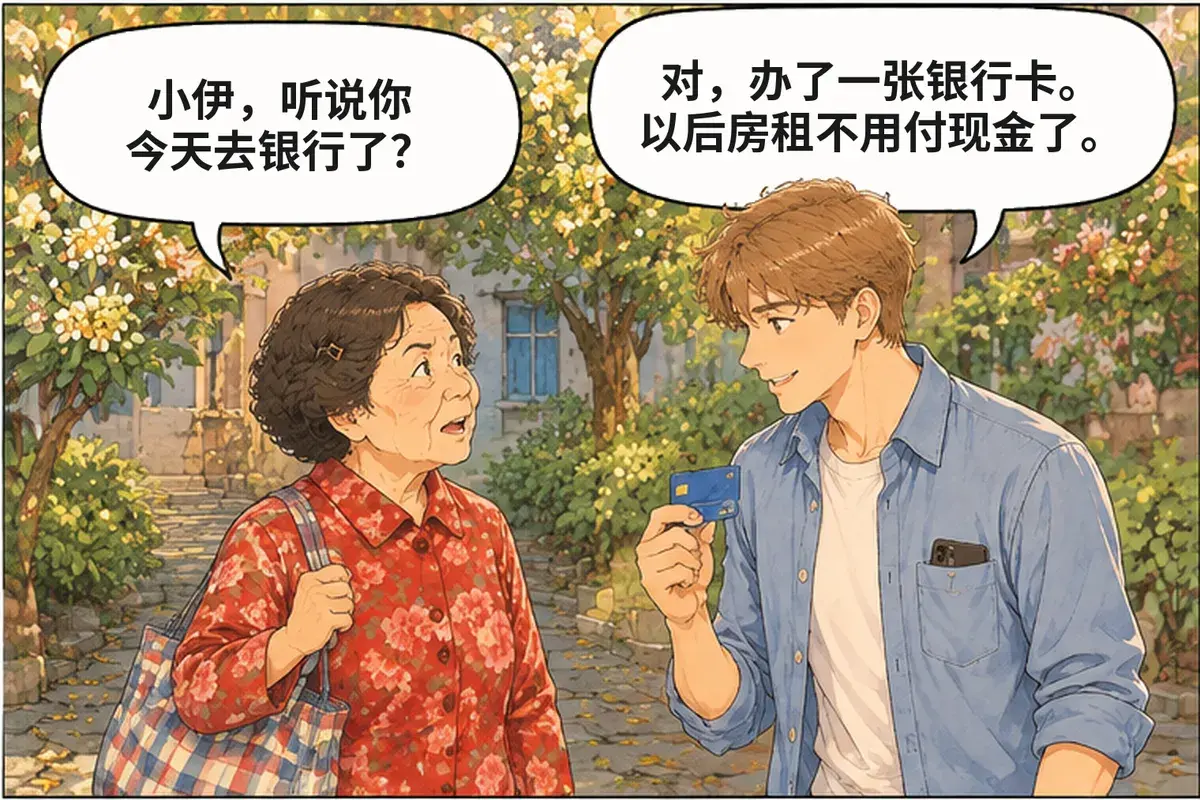
- 王阿姨
小伊,听说你今天去银行了?
Xiao Yi, I hear you went to the bank today?
- 伊利亚
对,办了一张银行卡。以后房租不用付现金了。
Yes, I got a bank card. From now on I don't have to pay the rent in cash.
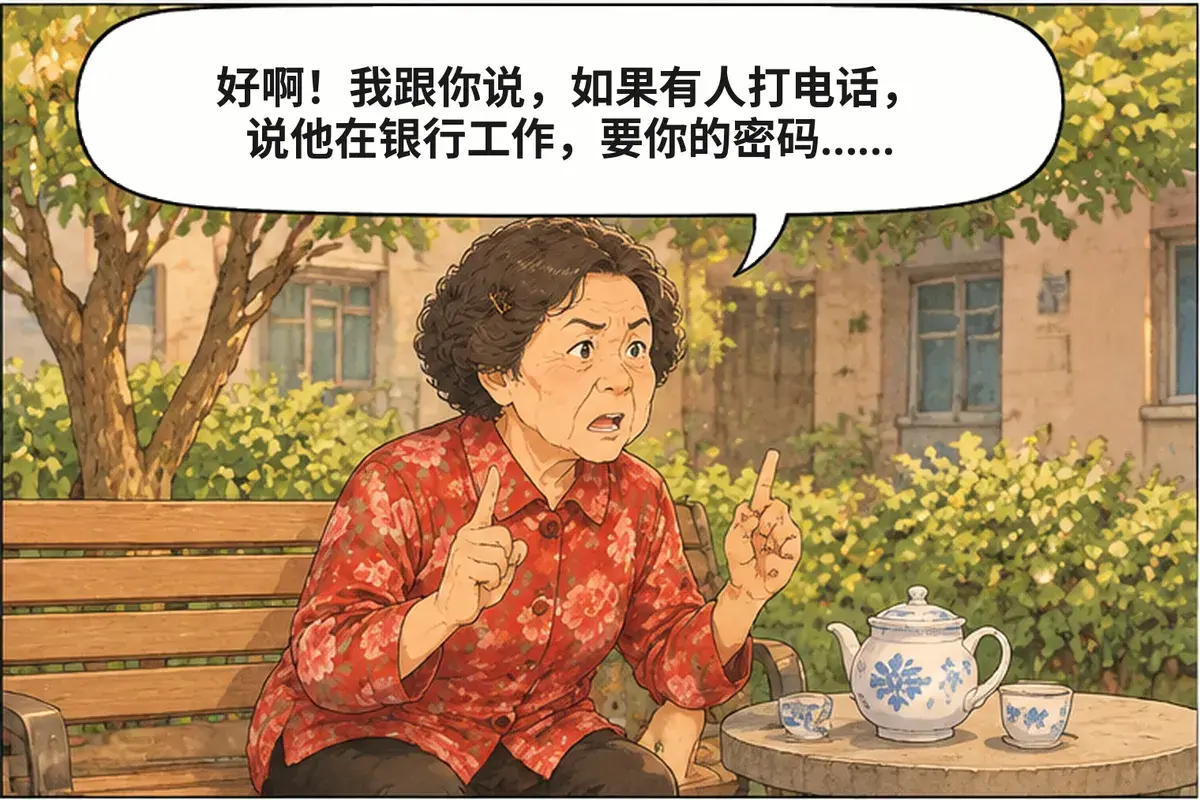
- 王阿姨
好啊!我跟你说,如果有人打电话,说他在银行工作,要你的密码……
Good! Let me tell you something: if someone calls, says he works at a bank and asks for your password…
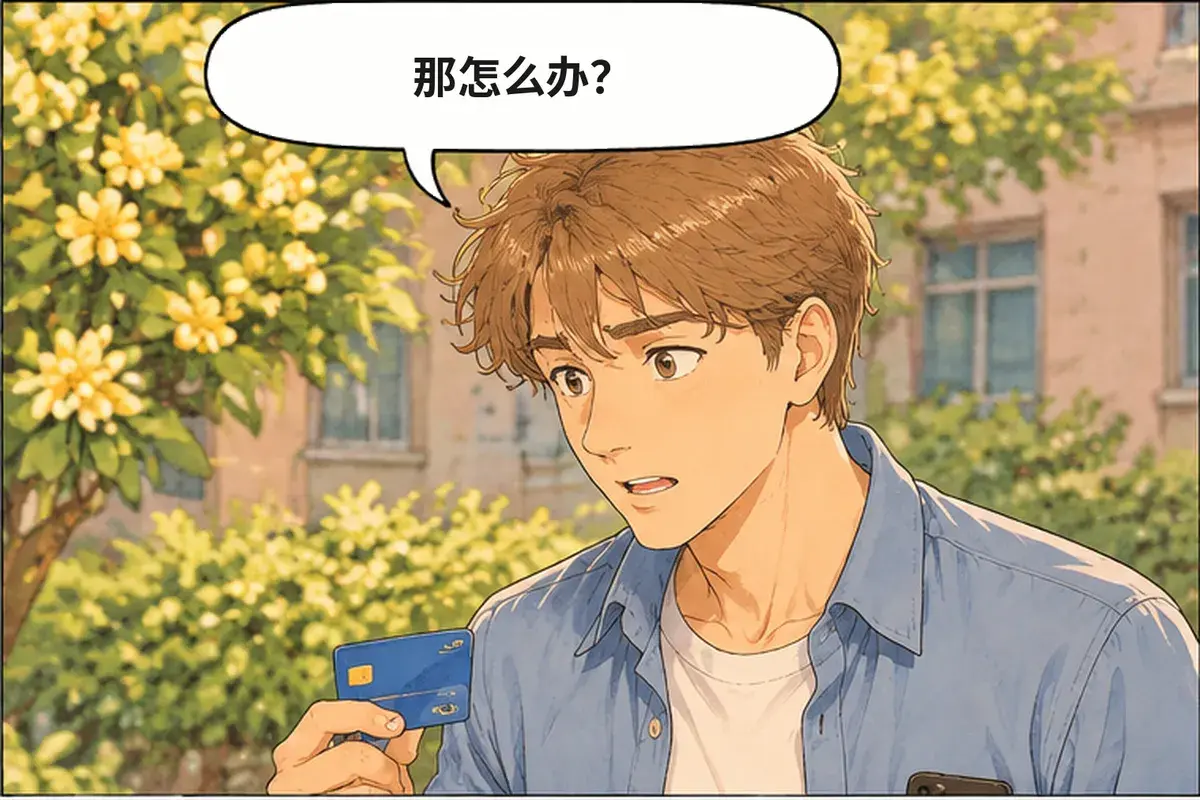
- 伊利亚
那怎么办?
Then what do I do?
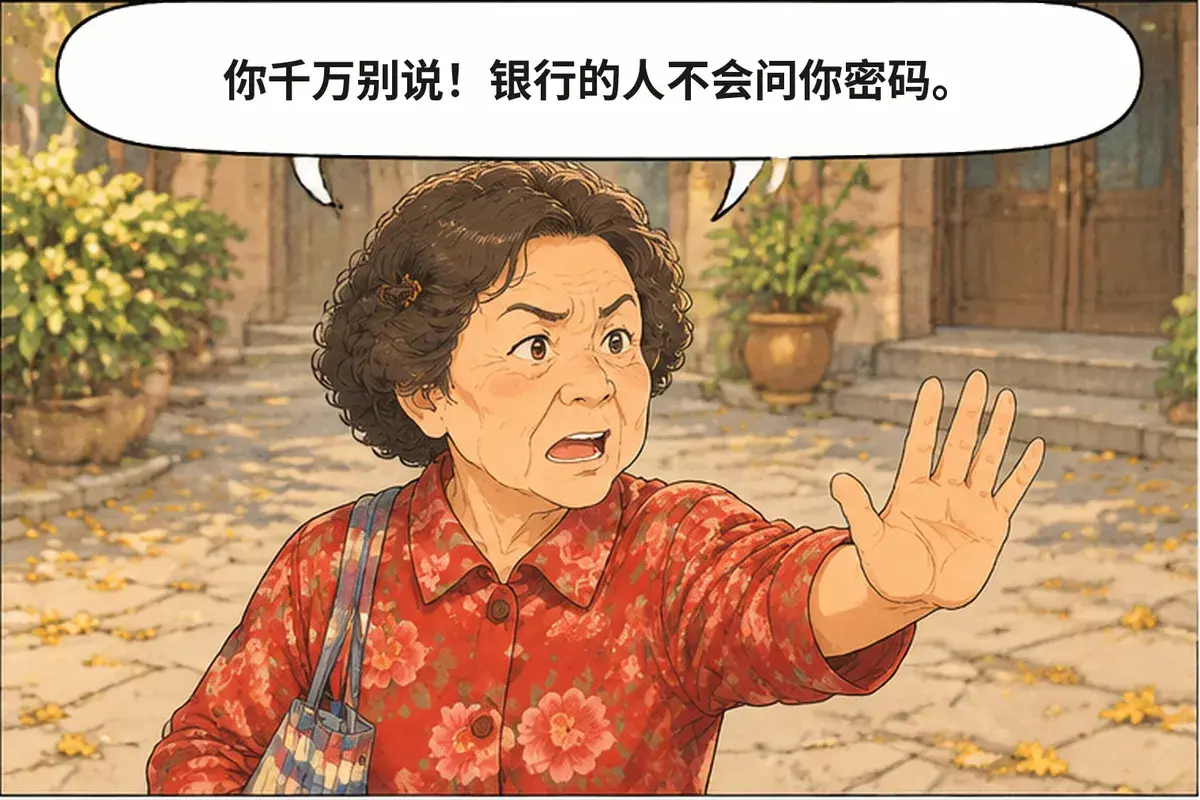
- 王阿姨
你千万别说!银行的人不会问你密码。
Whatever you do, don't tell him! People from the bank won't ask you for your password.
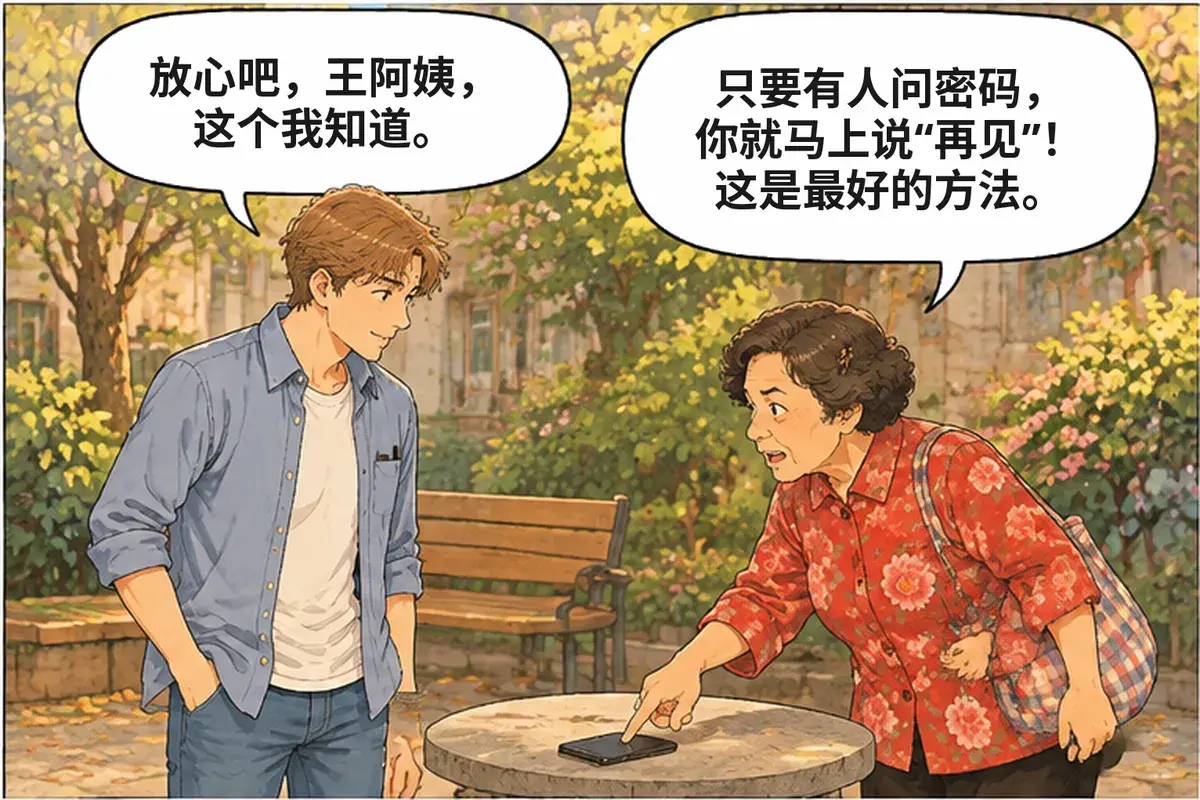
- 伊利亚
放心吧,王阿姨,这个我知道。
Don't worry, Auntie Wang, I know that.
- 王阿姨
只要有人问密码,你就马上说“再见”!这是最好的方法。
Whenever someone asks for your password, say "goodbye" right away! That's the best way.

- 伊利亚
好的,记住了。我保证不说!
OK, got it. I promise I won't tell!
- 王阿姨
大多数老人都接过这样的电话!自己的钱,要自己保护好。
Most old people have already gotten calls like that! Your own money — you have to take good care of it yourself.
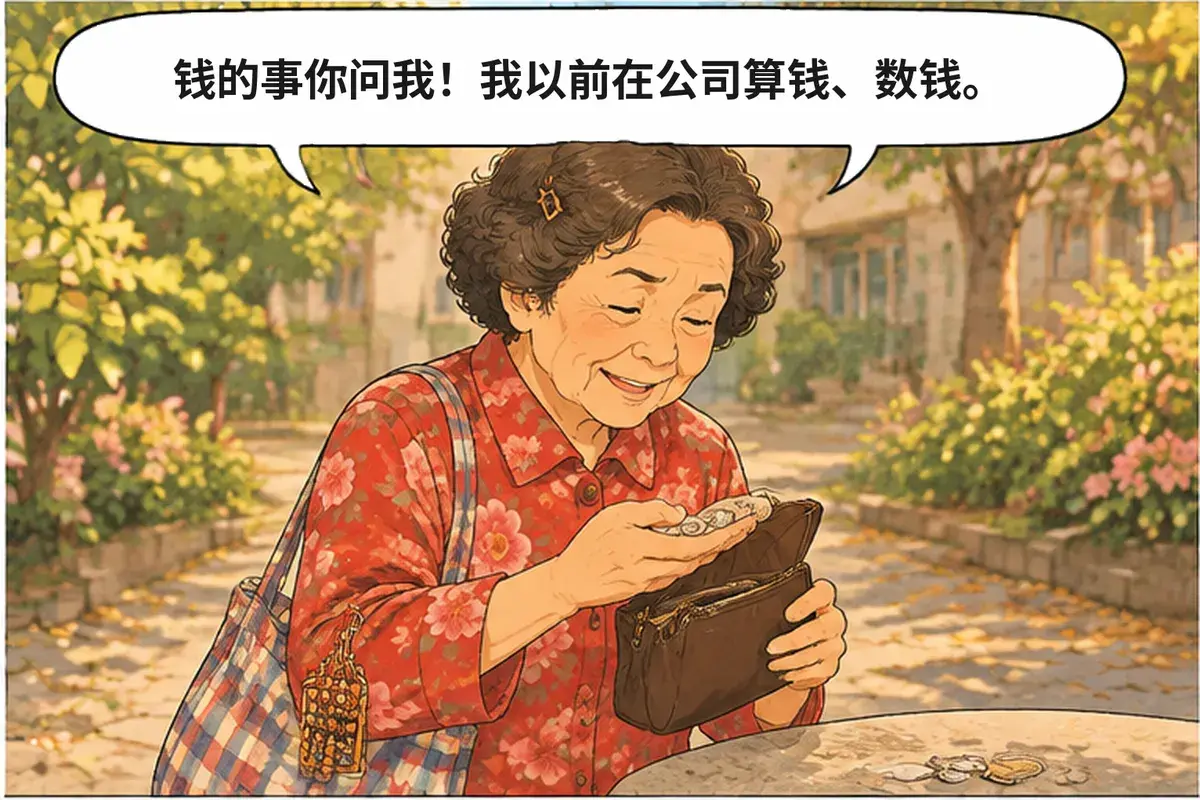
- 王阿姨
钱的事你问我!我以前在公司算钱、数钱。
Ask me about anything to do with money! I used to add up and count money at a company.
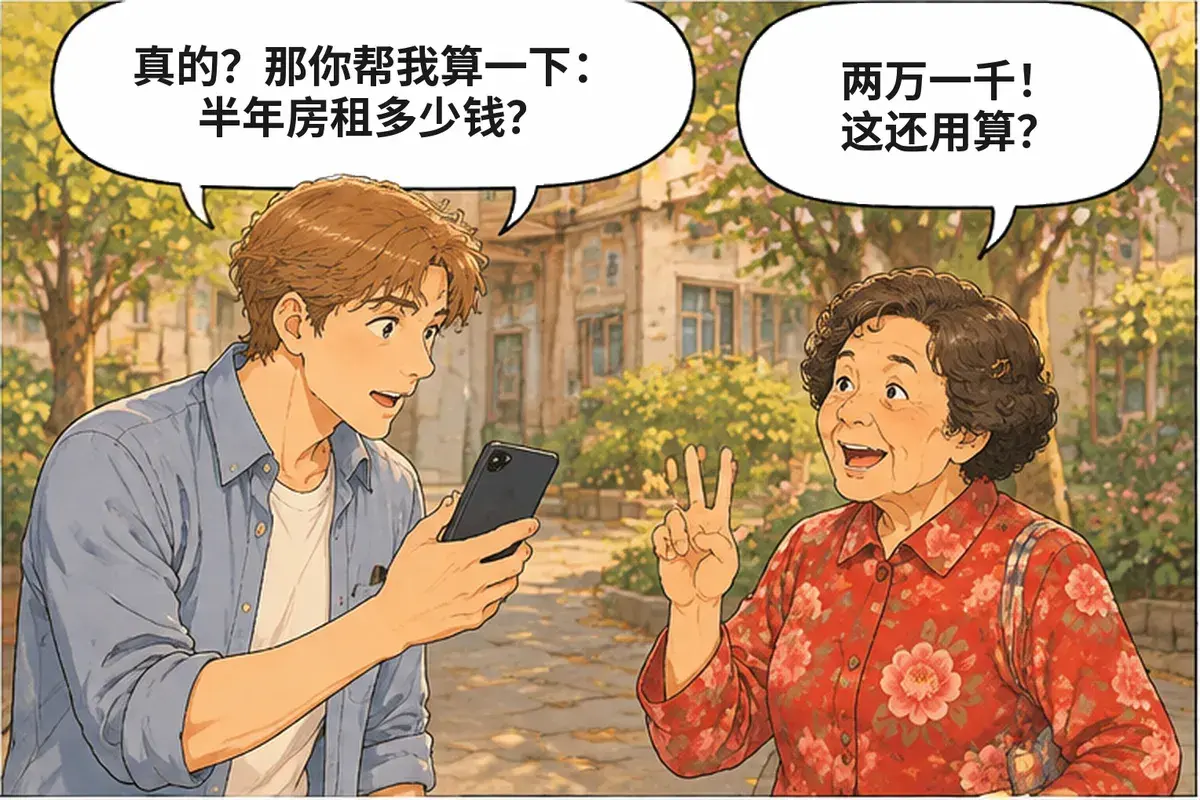
- 伊利亚
真的?那你帮我算一下:半年房租多少钱?
Really? Then work it out for me: how much is half a year's rent?
- 王阿姨
两万一千!这还用算?
21,000! Does that even need working out?

- 伊利亚
你比手机快!
You're faster than a phone!
- 王阿姨
那当然!对了,小伊,你一个月收入多少?
Of course! Oh, by the way, Xiao Yi, what's your income a month?

- 伊利亚
王阿姨,是你说的:千万别说!
Auntie Wang, you said it yourself: whatever you do, don't tell!
- 王阿姨
有道理!小伊,你真不错!
That makes sense! Xiao Yi, you're really something!
Grammar for this text
以后 房租 不用 付 现金 了。 — 付 (fù) is "to pay", 现金 (xiànjīn) is "cash": 付 现金 is "to pay in cash". Ilya used to give Auntie Wang the rent in cash; now he'll pay from his card. 不用 … 了 is "no longer need to".
如果 有人 打 电话, 说 他 在 银行 工作, 要 你 的 密码…… — Auntie Wang warns Ilya about phone scammers: in China banks and neighbors both remind you about them. A real bank never asks for your password. 有人 — "someone" (unit 5); the sentence breaks off because Ilya cuts in.
你 千万 别 说! — 千万 别 — "whatever you do, don't …" (unit 4).
只要 有人 问 密码, 你 就 马上 说 “再见”! — 只要 … 就 — "whenever …, right away …". Advice in Auntie Wang's style: don't argue, just say goodbye at once. 最 好 的 方法 — "the best way": 方法 — "way, method".
我 保证 不 说! — 保证 — "I promise": that's how you give your word. Ilya will keep it, even with Auntie Wang herself.
大多数 老人 都 接 过 这样 的 电话! — 大多数 — "most", usually together with 都. 接 电话 — "to answer a call" (unit 3), 过 — "have already had". Scammers call older people most of all.
自己 的 钱, 要 自己 保护 好。 — 保护 — "to protect, to take care of"; 好 after a verb — "properly, well" (a result word, unit 4).
钱 的 事 你 问 我! — "anything about money, ask me": 事 — "matter, thing" (A1). 我 以前 在 公司 算 钱、 数 钱。 — Auntie Wang is retired, but she used to be an accountant. 算 (suàn) — add up a sum; 数 (shǔ) — count one by one, for example bills.
两万 一千! 这 还 用 算? — half a year at 3,500 yuan a month: Auntie Wang answers at once. 这 还 用 算? — "does that even need working out?", that is, "no need to calculate": 用 here means "need", as in 不用. People say this when the answer is obvious.
你 比 手机 快! — 比 — "faster than" (A1, unit 18).
你 一 个 月 收入 多少? — 收入 — "income". In China older people ask about salary and income openly: it's not rude, just interest. Ilya answers with Auntie Wang's own words: 是 你 说 的: 千万 别 说! — "you said it yourself …".
有 道理! — "that makes sense, fair point": 道理 — "sense, reason". That's how people agree with what someone has said.
Words and grammar of the unit: Open a bank account.
Learn the words from the texts with flashcards
In the app, you can tap any word in a text to see its translation, forms and examples, and new words stick with flashcards. 15 minutes a day.
Start for freeEverything is open for free. No card needed to sign up.