

Chinese dialogue with translation · A2 · 16 lines
晚上比白天凉快 It's cooler in the evening than in the daytime
Comic · 16 panels

- 张磊
你看,白天外边没有人,晚上大家都来夜市了!
Look, in the daytime there's nobody outside, and in the evening everyone has come to the night market!
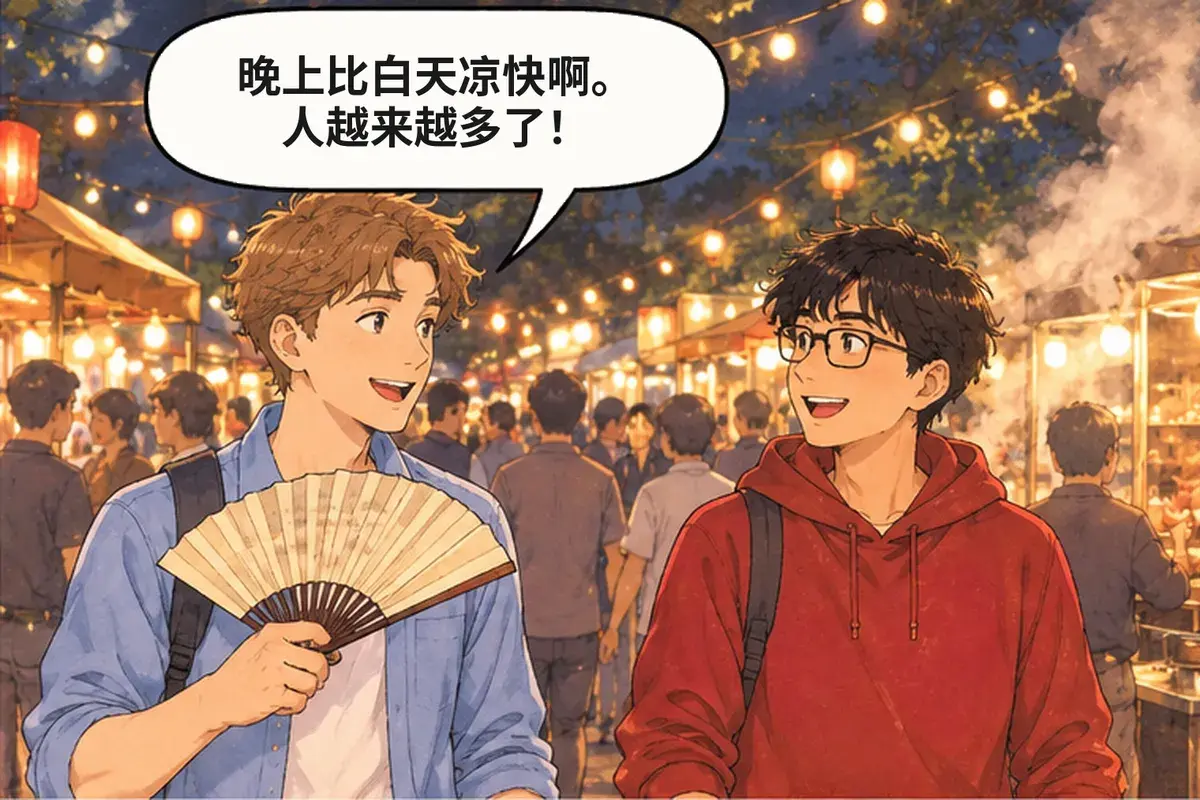
- 伊利亚
晚上比白天凉快啊。人越来越多了!
Well, it's cooler in the evening than in the daytime. There are more and more people!
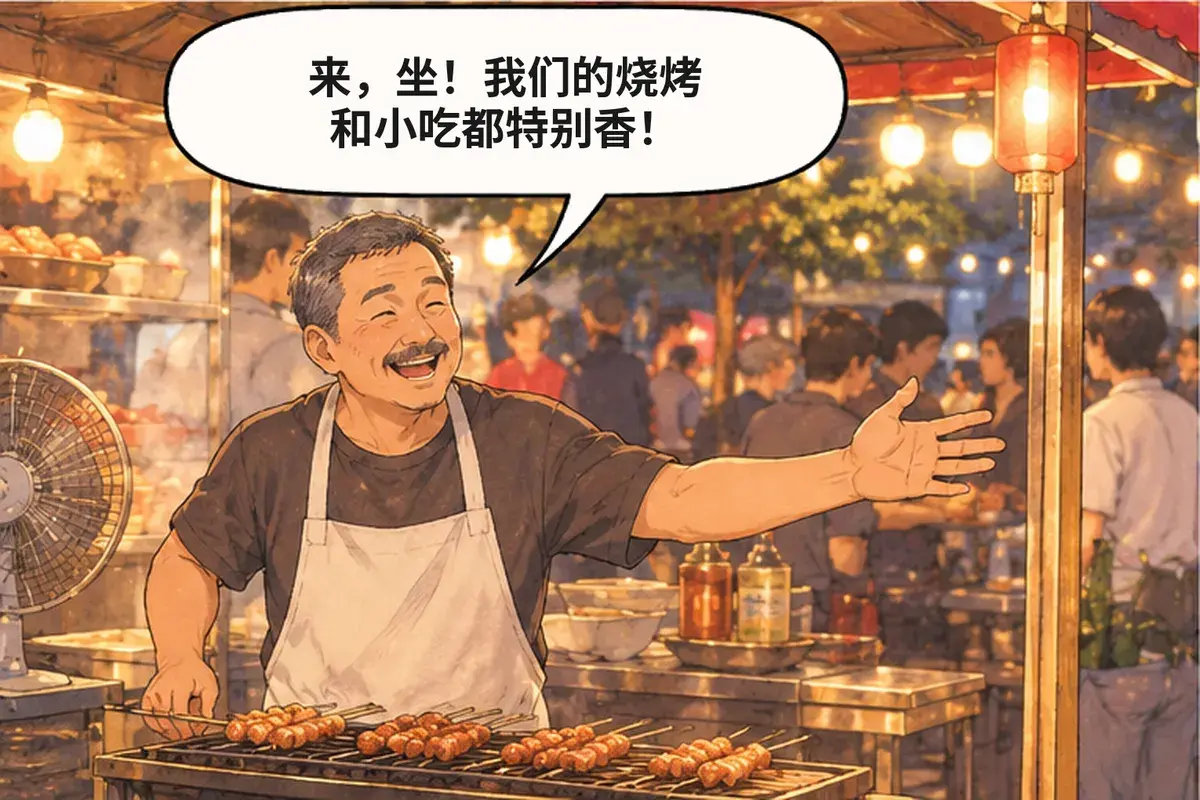
- 老板
来,坐!我们的烧烤和小吃都特别香!
Come, sit down! Our barbecue and our snacks all smell especially good!
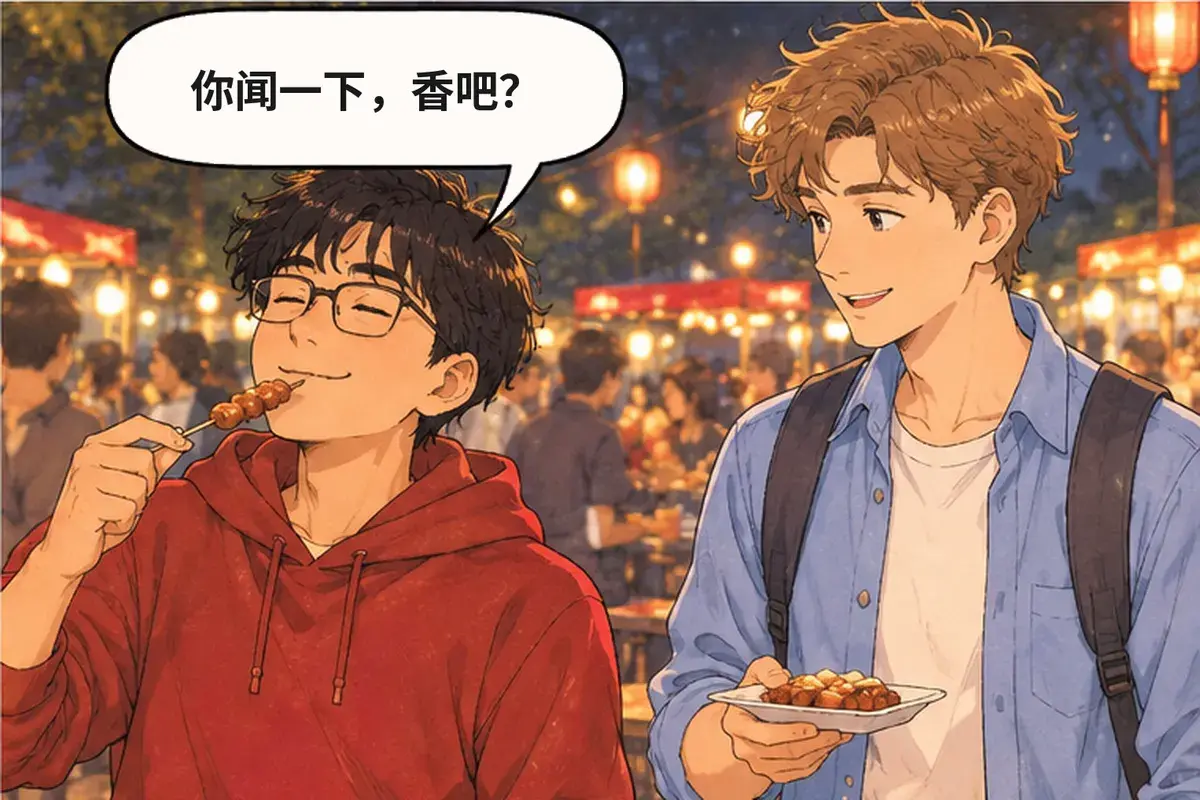
- 张磊
你闻一下,香吧?
Have a sniff — smells good, right?
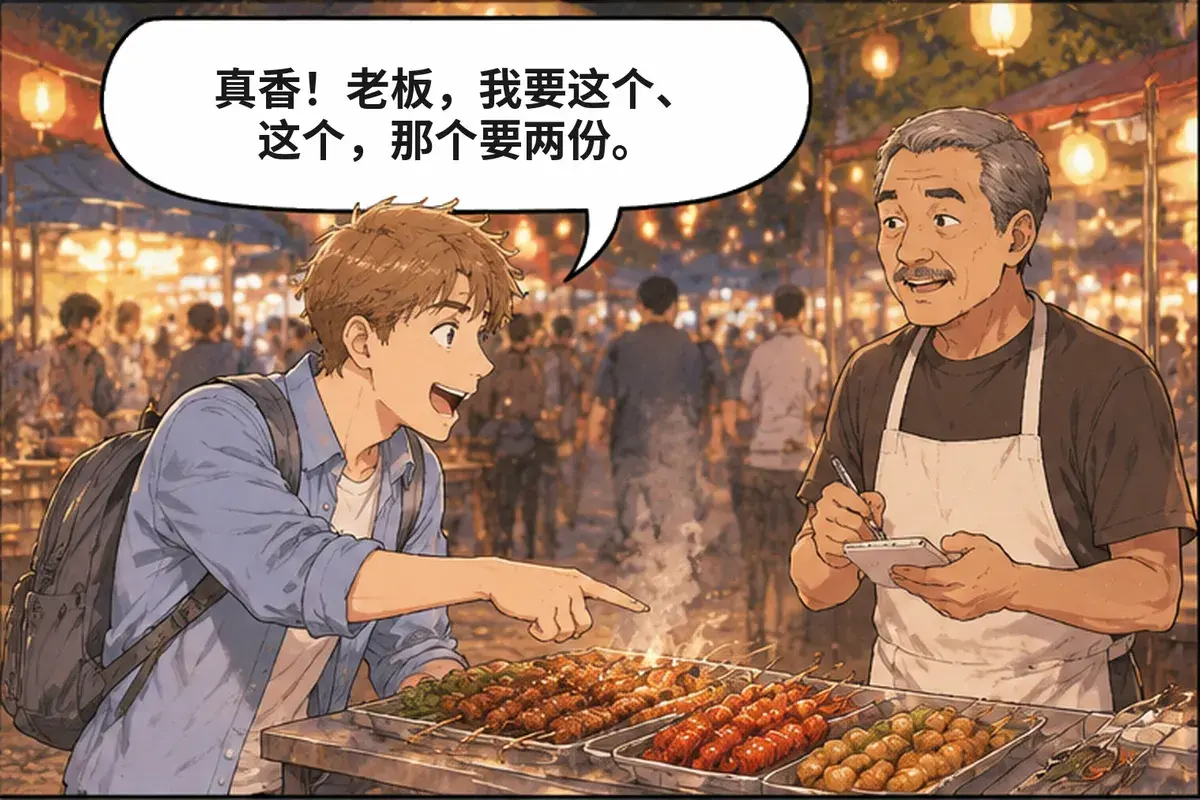
- 伊利亚
真香!老板,我要这个、这个,那个要两份。
It really smells good! Boss, I'll have this, this, and two of that one.
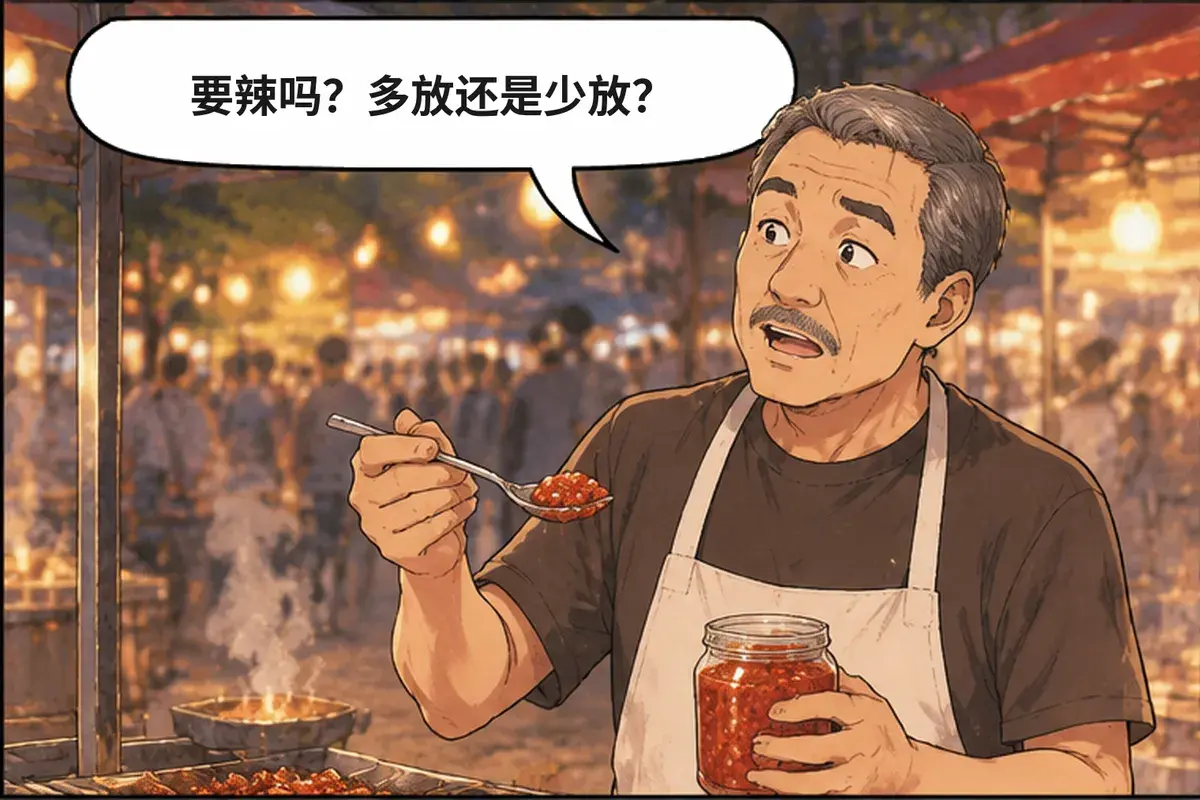
- 老板
要辣吗?多放还是少放?
Do you want it spicy? Should I put in more or less?
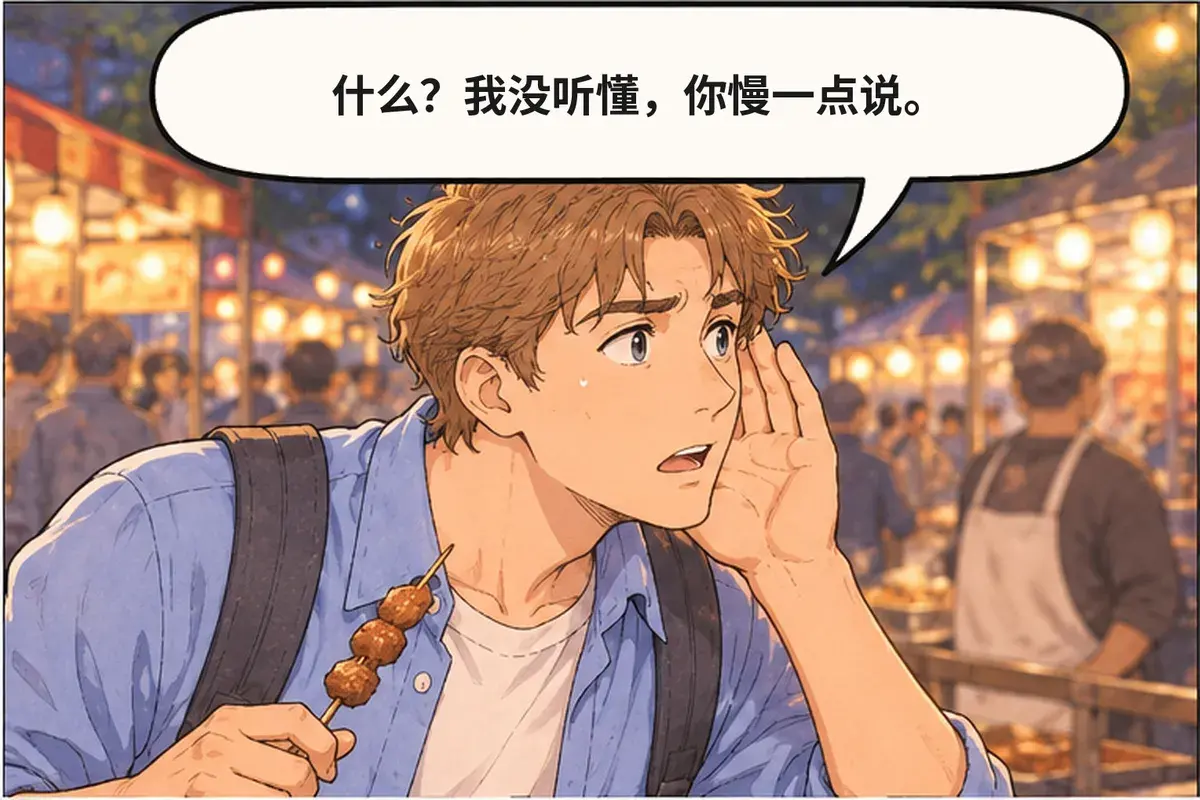
- 伊利亚
什么?我没听懂,你慢一点说。
What? I didn't understand. Speak a bit more slowly.
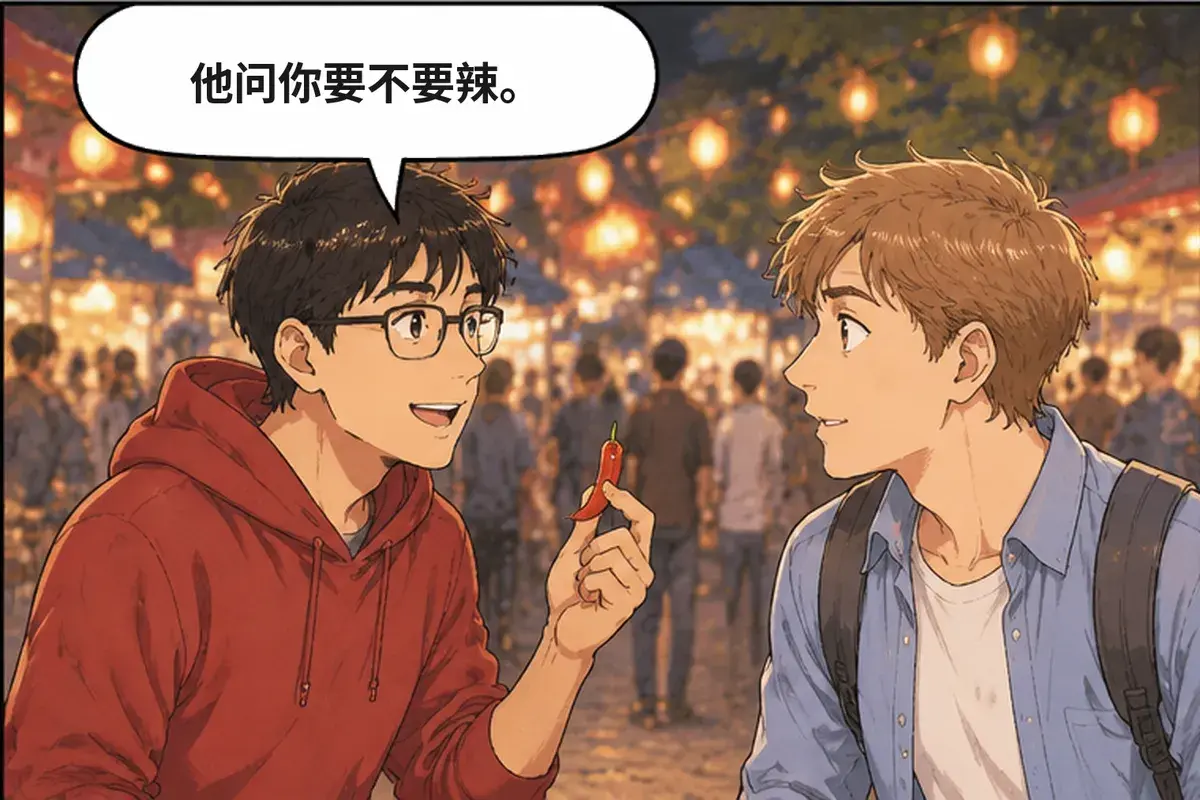
- 张磊
他问你要不要辣。
He's asking if you want it spicy.
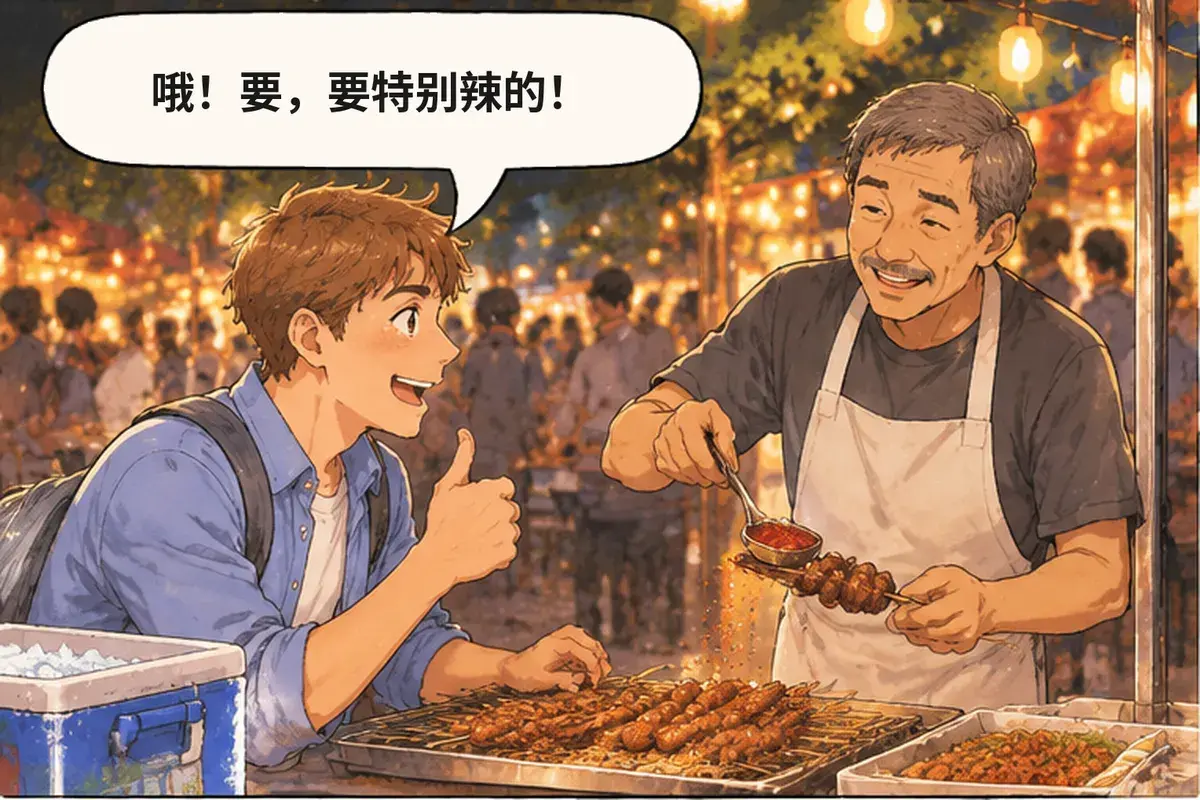
- 伊利亚
哦!要,要特别辣的!
Oh! Yes, I want it really spicy!
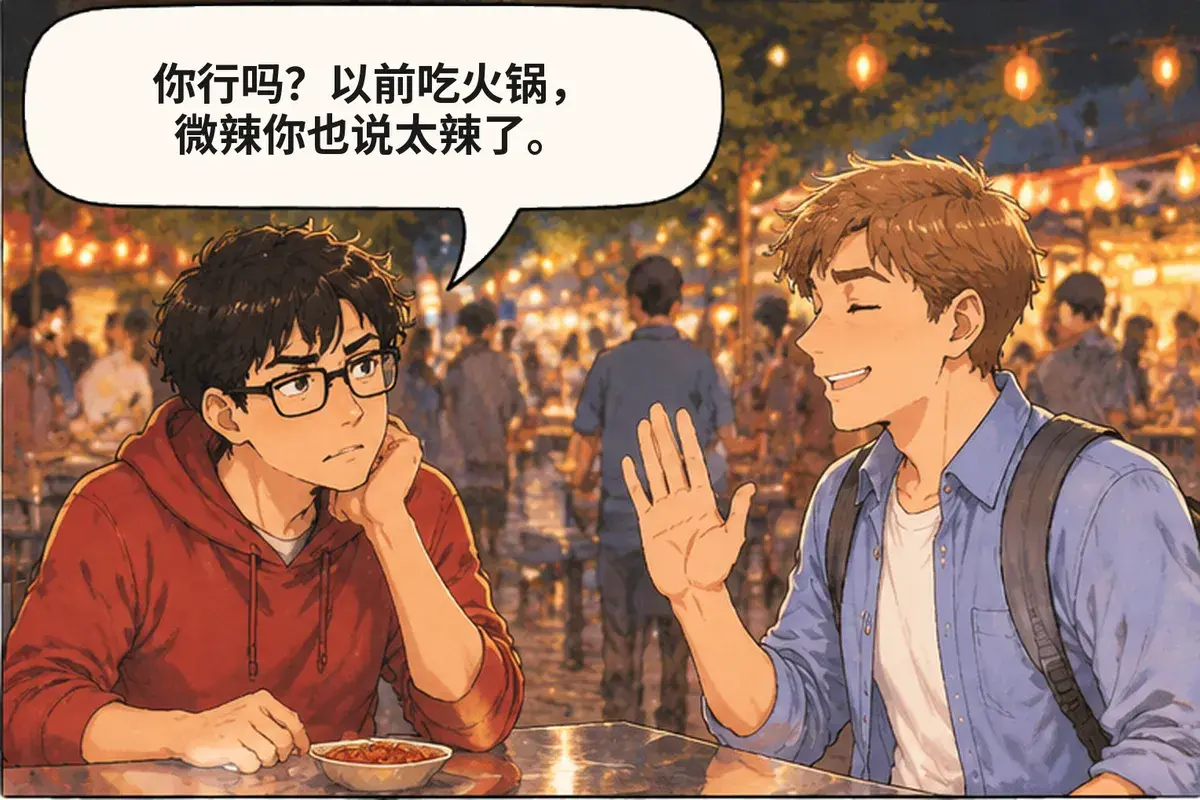
- 张磊
你行吗?以前吃火锅,微辣你也说太辣了。
Can you handle it? When we had hot pot before, you said even mild was too spicy.
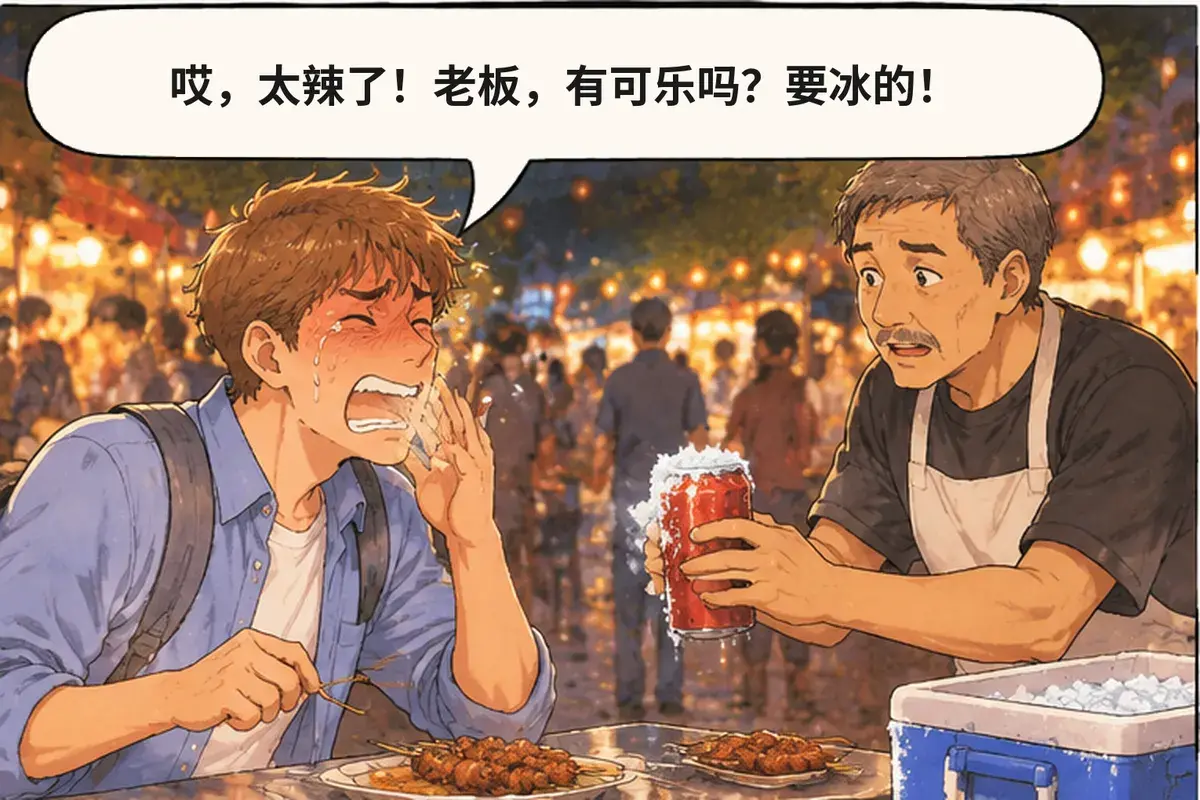
- 伊利亚
哎,太辣了!老板,有可乐吗?要冰的!
Oh, it's too spicy! Boss, do you have cola? An ice-cold one!
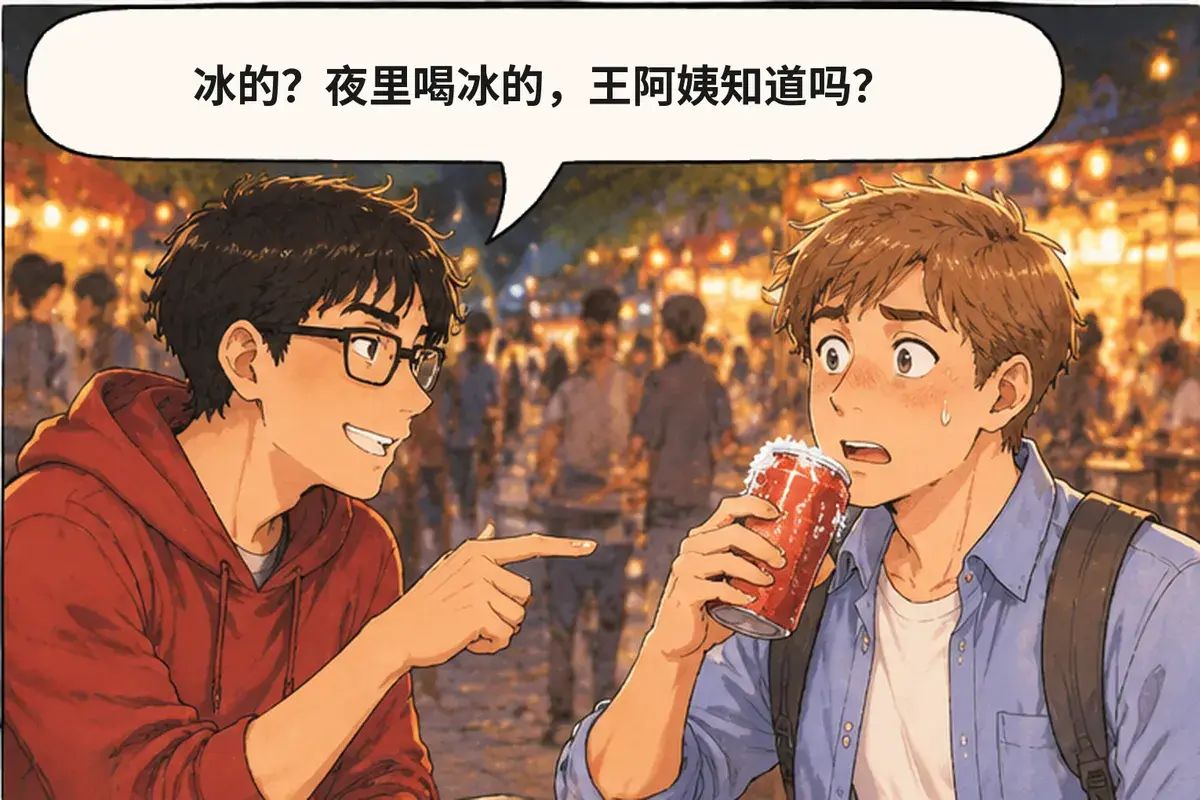
- 张磊
冰的?夜里喝冰的,王阿姨知道吗?
Ice-cold? Drinking ice-cold stuff late at night — does Auntie Wang know?
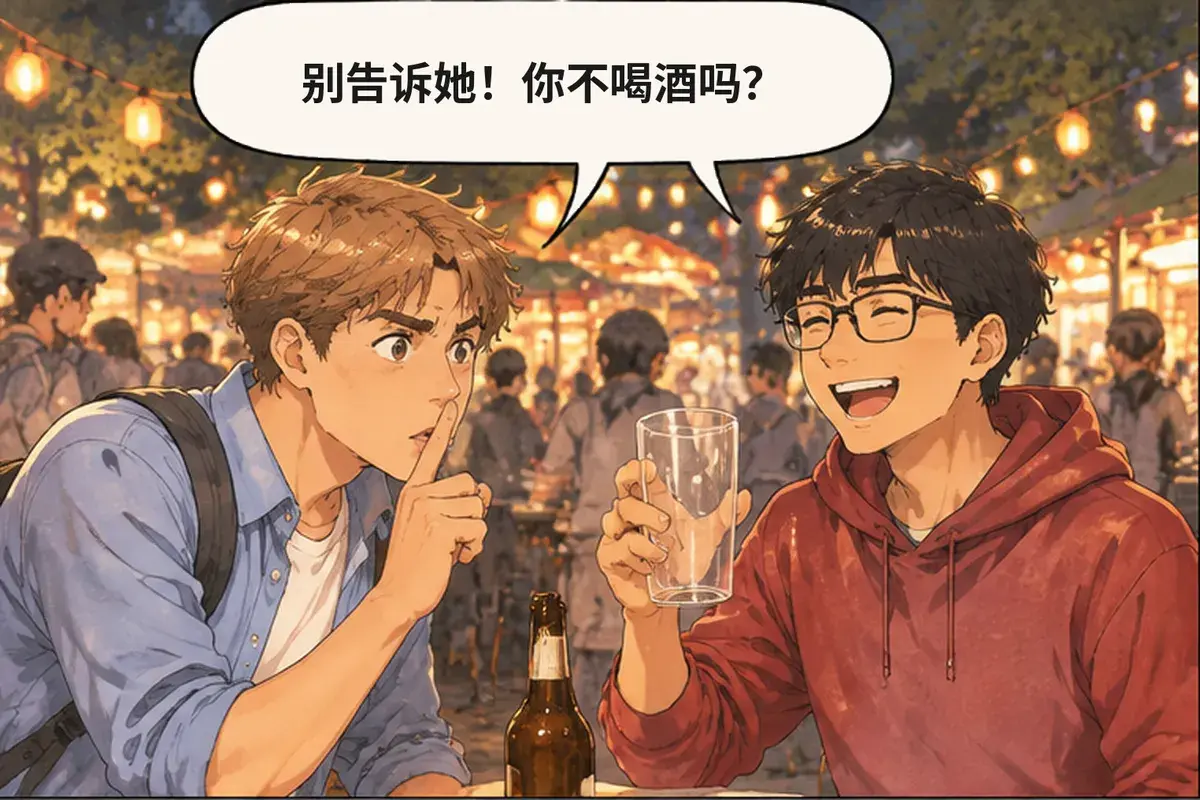
- 伊利亚
别告诉她!你不喝酒吗?
Don't tell her! Don't you drink alcohol?
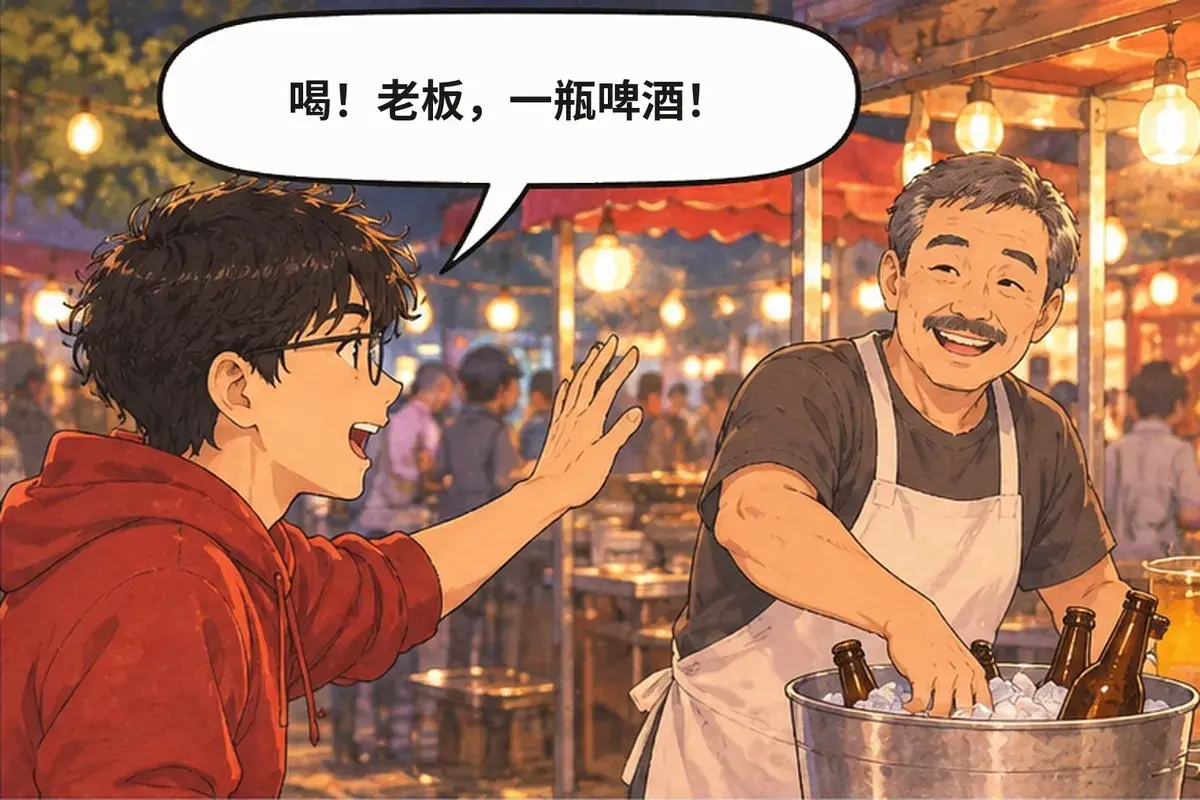
- 张磊
喝!老板,一瓶啤酒!
I do! Boss, a bottle of beer!
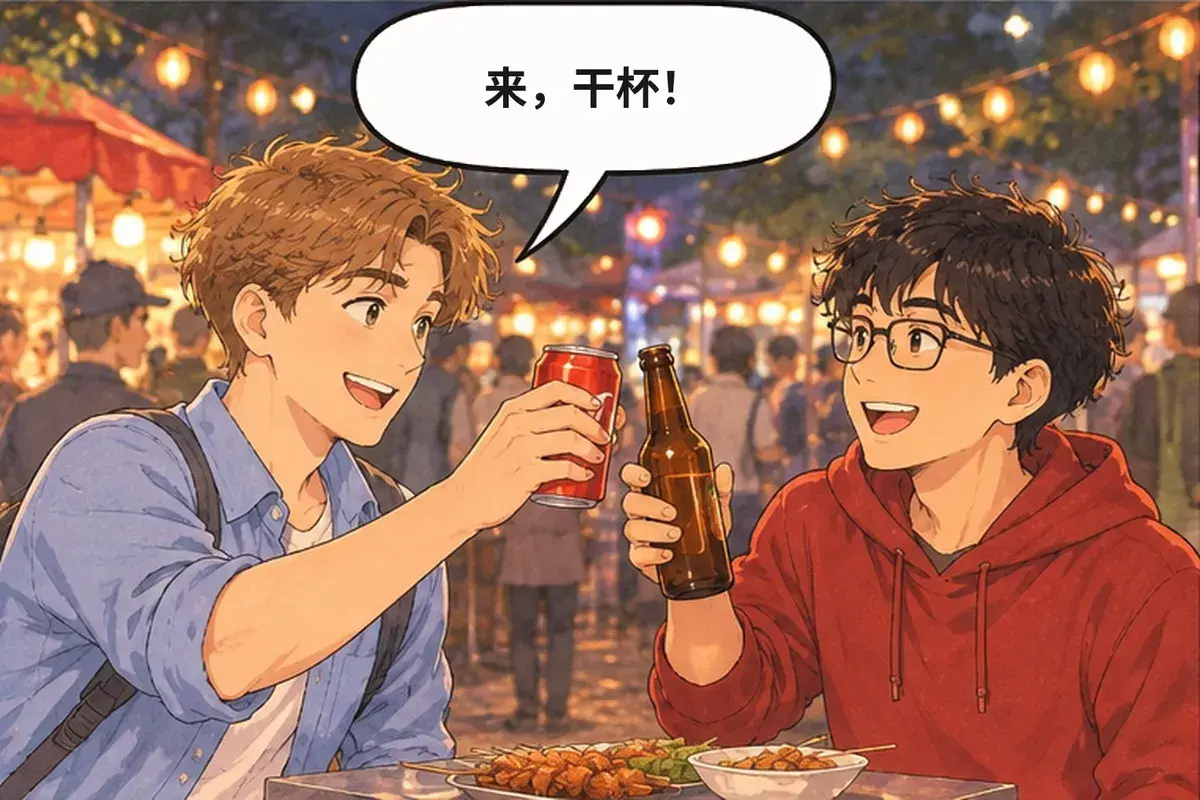
- 伊利亚
来,干杯!
Come on, cheers!
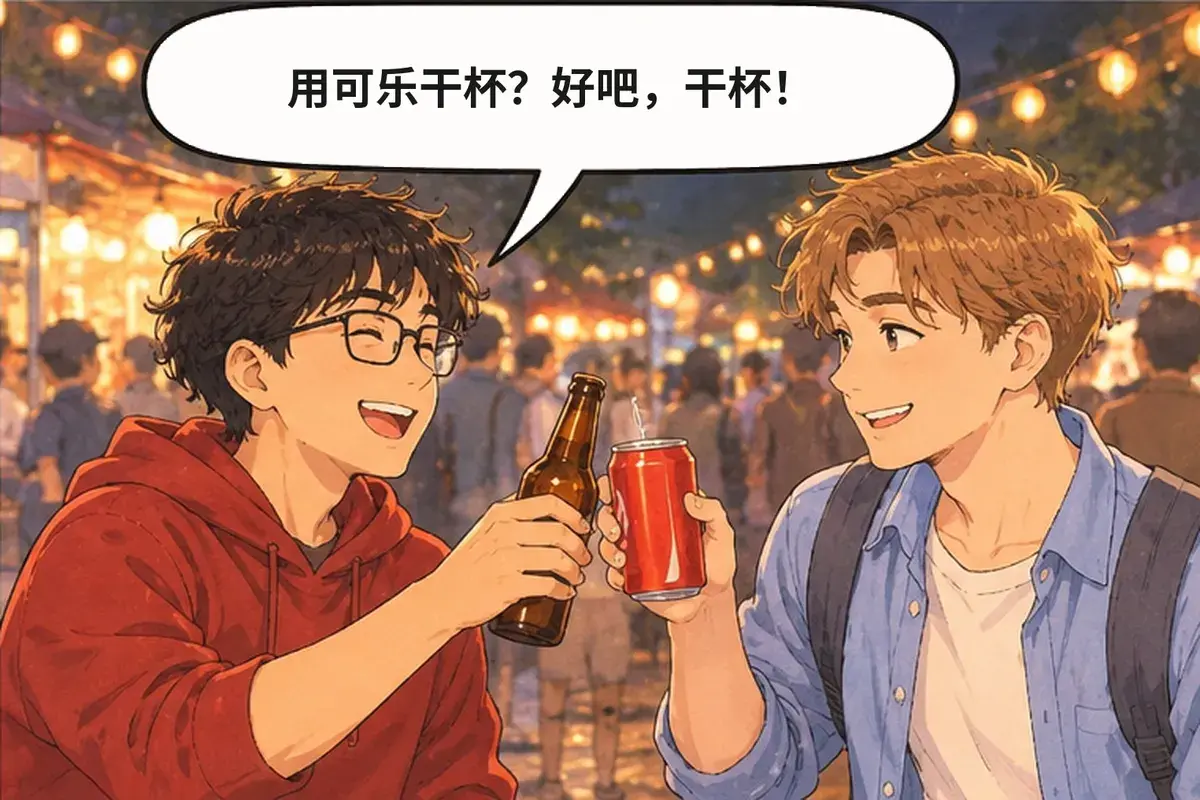
- 张磊
用可乐干杯?好吧,干杯!
Cheers with cola? Oh well, cheers!
Grammar for this text
什么? 我 没 听懂, 你 慢 一点 说。 — 慢 一点 before the verb is "a bit more slowly": "speak more slowly". The owner asked fast: 要 辣 吗? 多 放 还是 少 放? — whether to add chili and how much. 多 放 is "put in more", 少 放 is "put in less" (多 before a verb, A1 unit 16).
他 问 你 要 不 要 辣 — Zhang Lei passes on the question: 问 你 + the question itself. No 吗 is needed: 要 不 要 is already a question.
晚上 比 白天 凉快 啊 — 凉快 (liángkuai) is a pleasant coolness when the heat goes down; unpleasant cold is 冷. 啊 here means "after all, you know".
人 越来越 多 了! — "more and more people": the market is filling up before your eyes.
你 闻 一下, 香 吧? — 闻 (wén) is "to smell", 香 (xiāng) is "smells good": that's how you praise the smell of food. 吧 is "right?".
要 特别 辣 的! — 特别 (tèbié) is "especially, really", stronger than 很.
夜里 喝 冰 的, 王 阿姨 知道 吗? — Zhang Lei is teasing: Auntie Wang tells everyone to drink hot water. 夜里 is "late at night", later than 晚上.
你 不 喝 酒 吗? — 酒 is any alcohol, 啤酒 (píjiǔ) is "beer".
用 可乐 干杯? — 干杯 (gānbēi) is "cheers!", what people say when they clink glasses; 用 is "with": "with cola". You don't have to drink it all.
那 个 要 两 份。 — 份 (fèn) is the measure word for servings of food: 一 份, 两 份. The thing can come first: "that one — two servings".
In summer in Hangzhou the streets are empty in the daytime, and in the evening everyone heads to the night markets for barbecue skewers and street food.
Words and grammar of the unit: Escape the heat at a night market.
Learn the words from the texts with flashcards
In the app, you can tap any word in a text to see its translation, forms and examples, and new words stick with flashcards. 15 minutes a day.
Start for freeEverything is open for free. No card needed to sign up.