

Chinese dialogue with translation · A2 · 15 lines
你怎么才来? Why are you only getting here now?
Comic · 15 panels
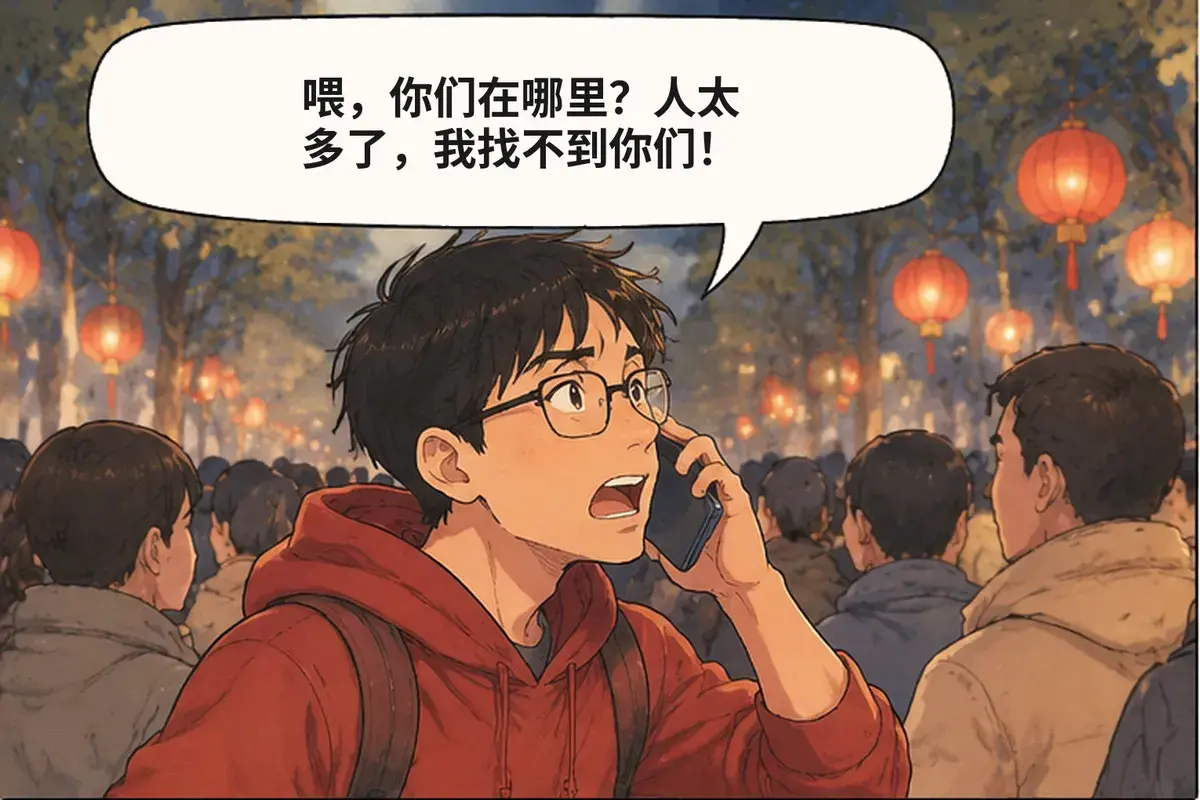
- 张磊
喂,你们在哪里?人太多了,我找不到你们!
Hello? Where are you guys? There are too many people, I can't find you!
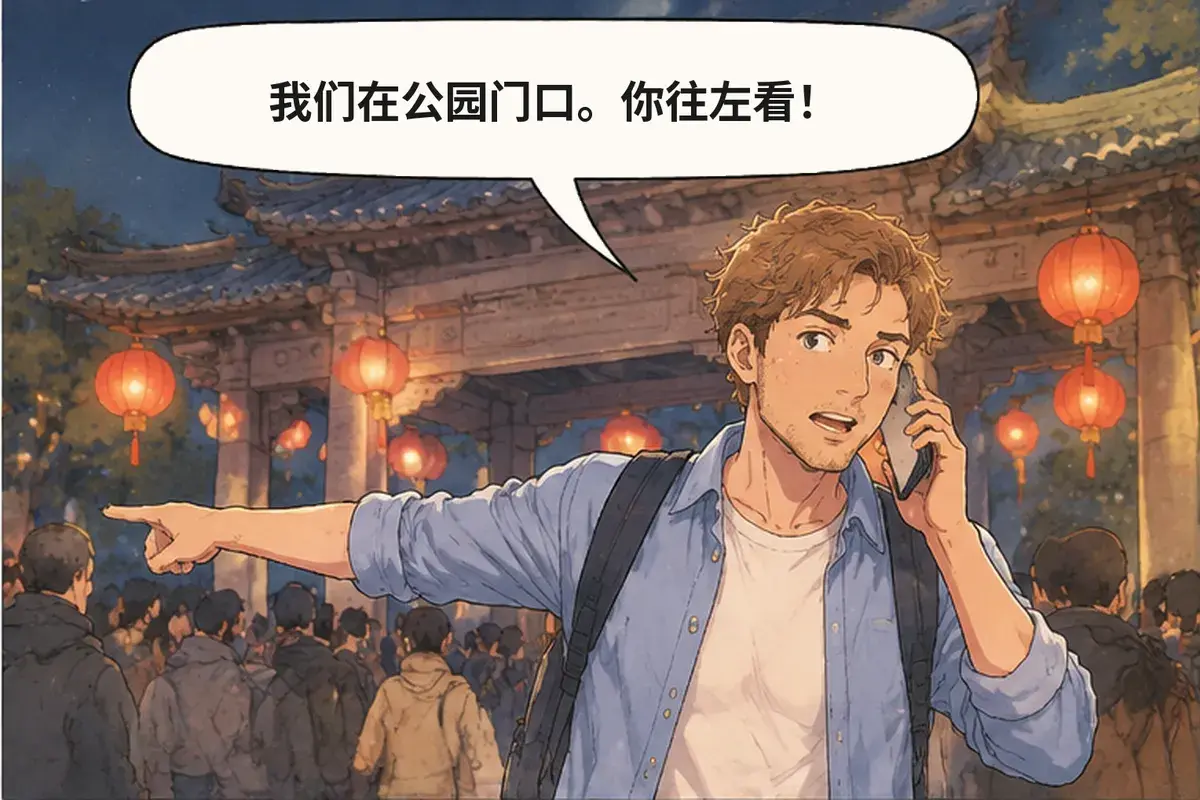
- 伊利亚
我们在公园门口。你往左看!
We're at the park entrance. Look to the left!
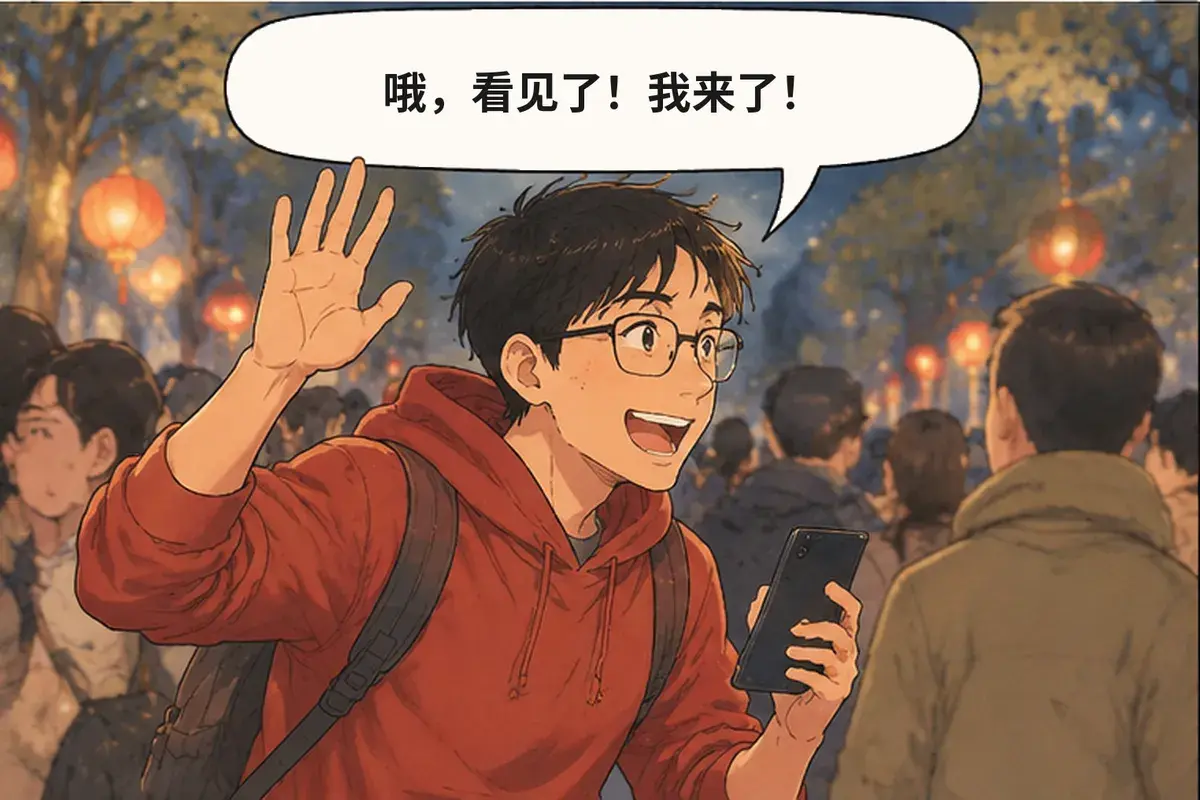
- 张磊
哦,看见了!我来了!
Oh, I see you! I'm coming!
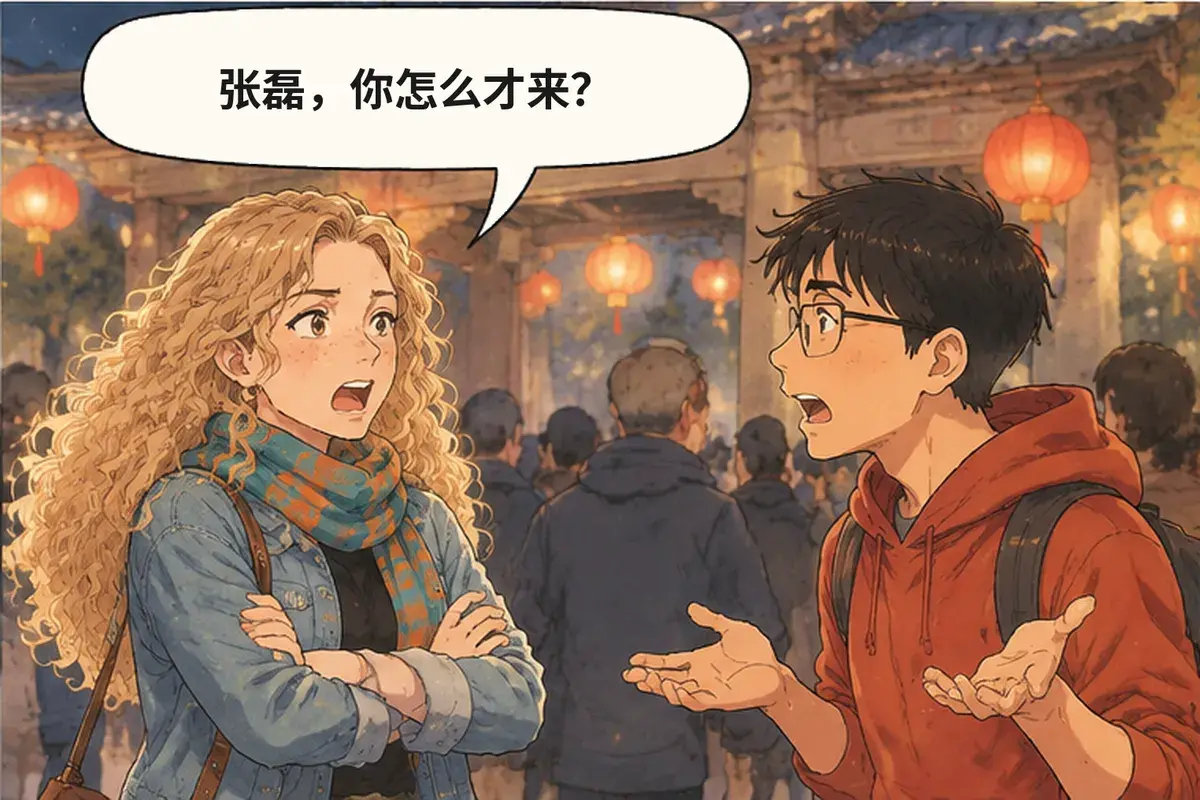
- 萨拉
张磊,你怎么才来?
Zhang Lei, why are you only getting here now?
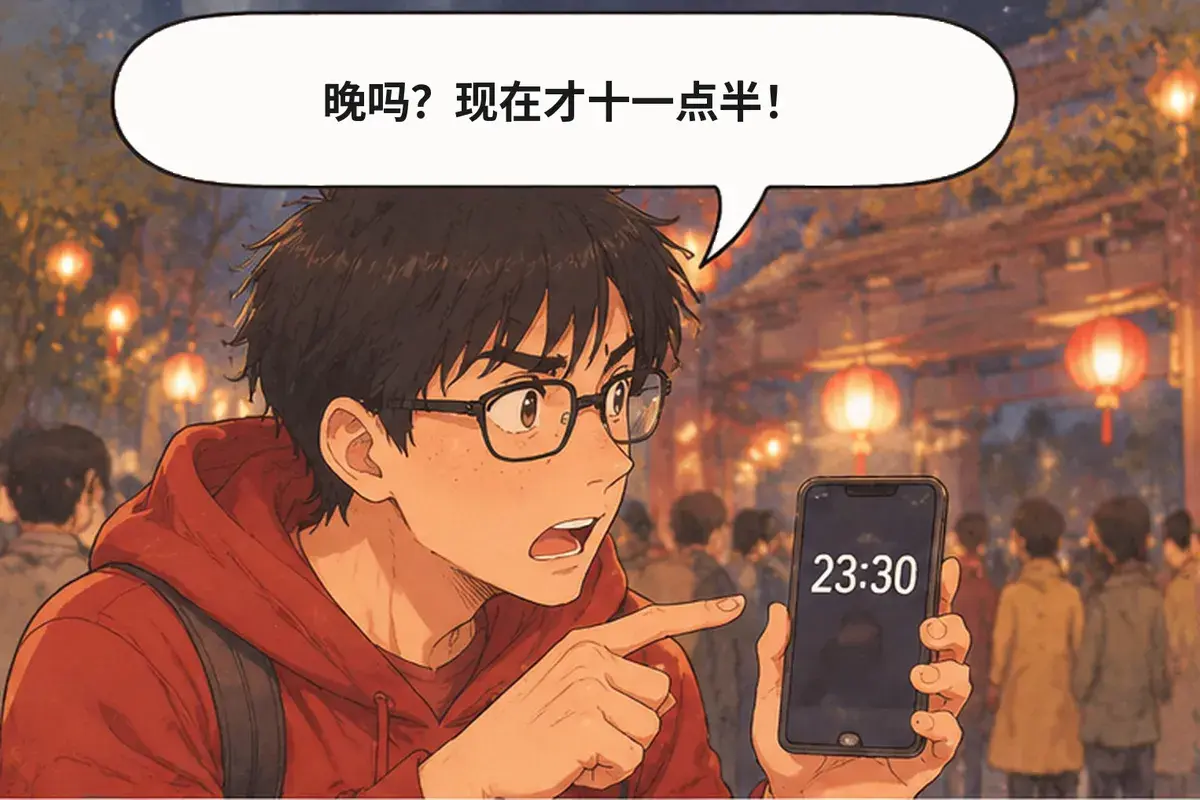
- 张磊
晚吗?现在才十一点半!
Late? It's only eleven thirty!
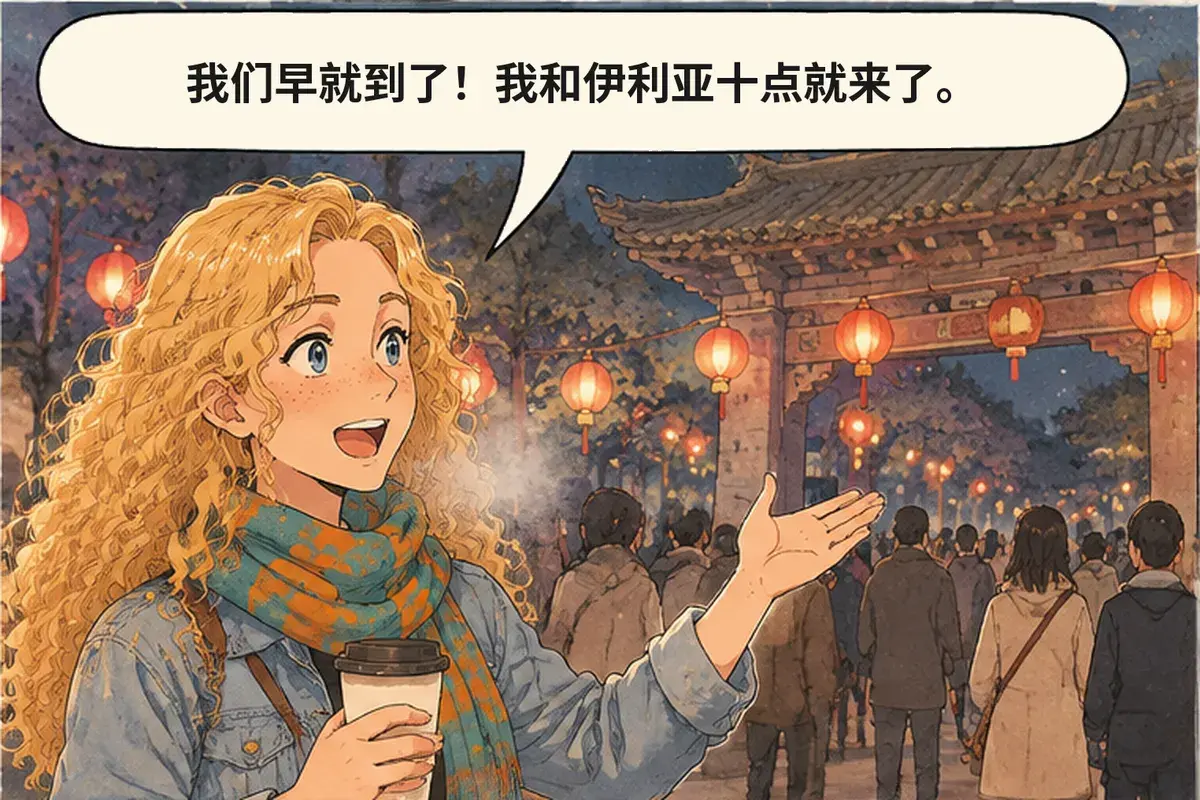
- 萨拉
我们早就到了!我和伊利亚十点就来了。
We got here ages ago! Ilya and I came at ten already.
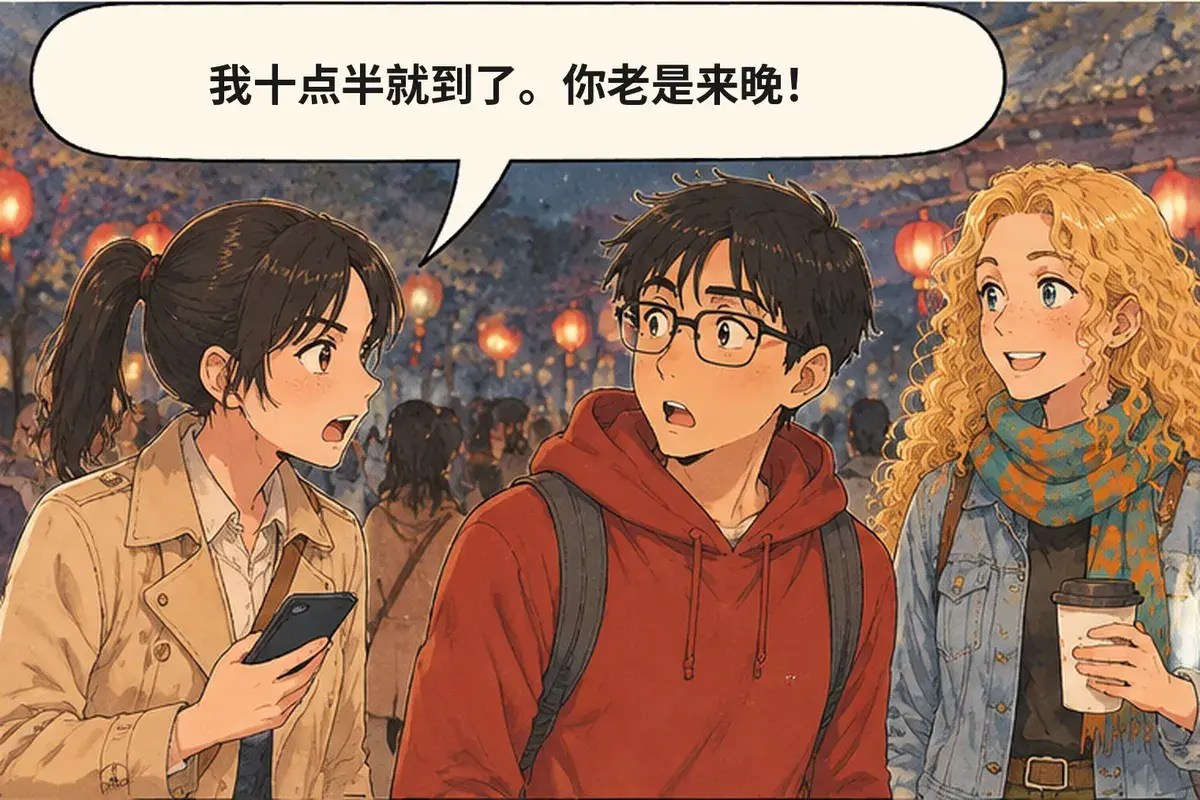
- 晓雨
我十点半就到了。你老是来晚!
I got here at ten thirty already. You're always late!
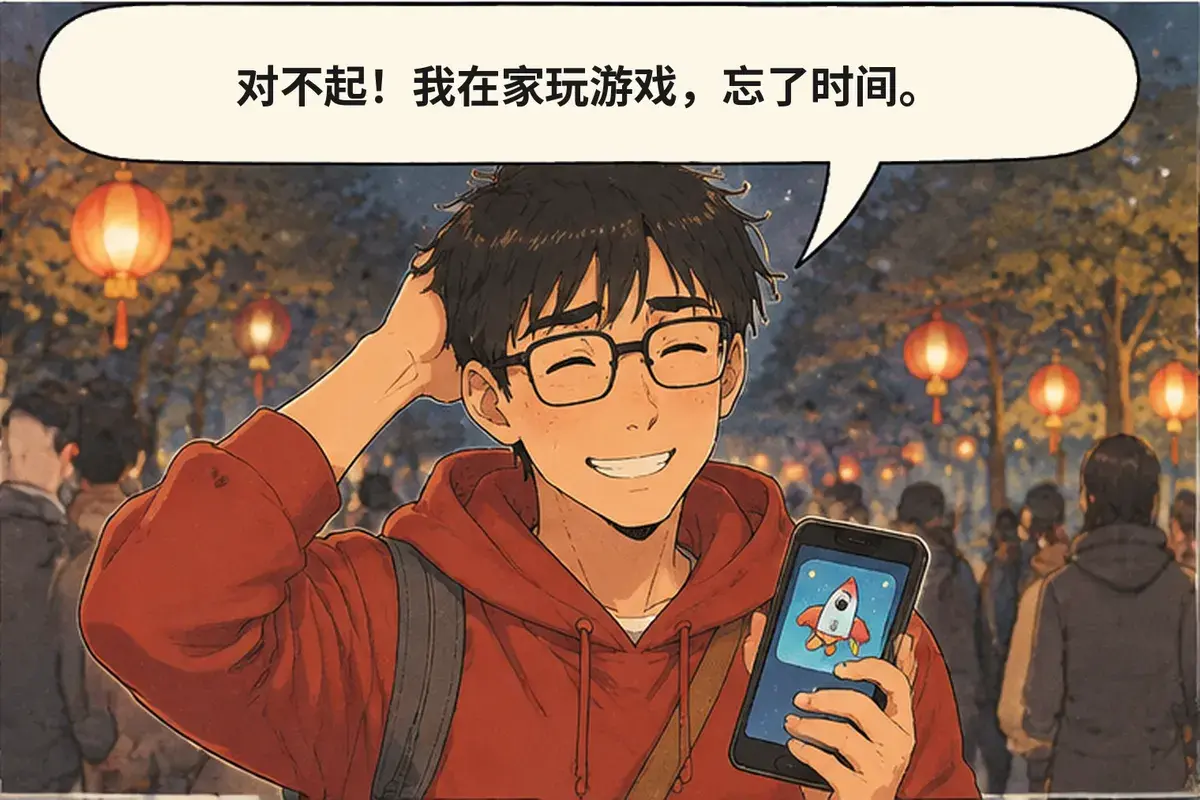
- 张磊
对不起!我在家玩游戏,忘了时间。
Sorry! I was playing games at home and forgot about the time.
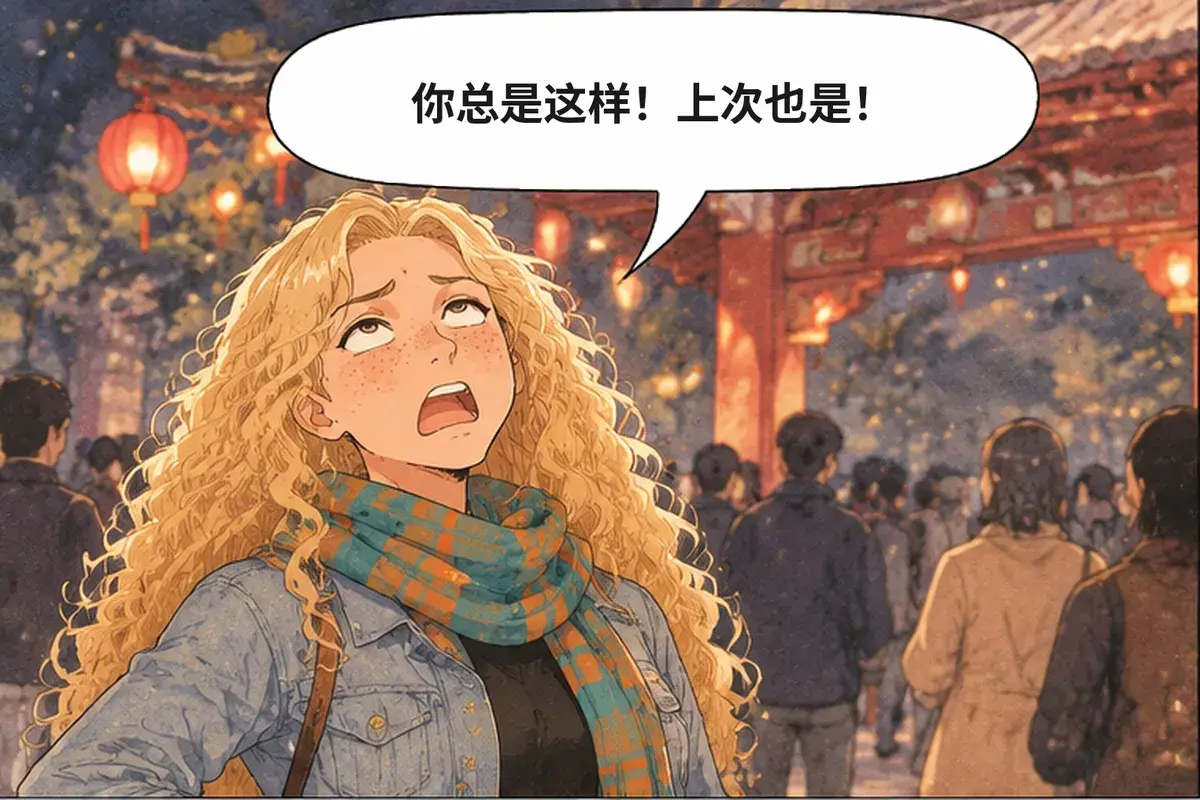
- 萨拉
你总是这样!上次也是!
You're always like this! Last time too!
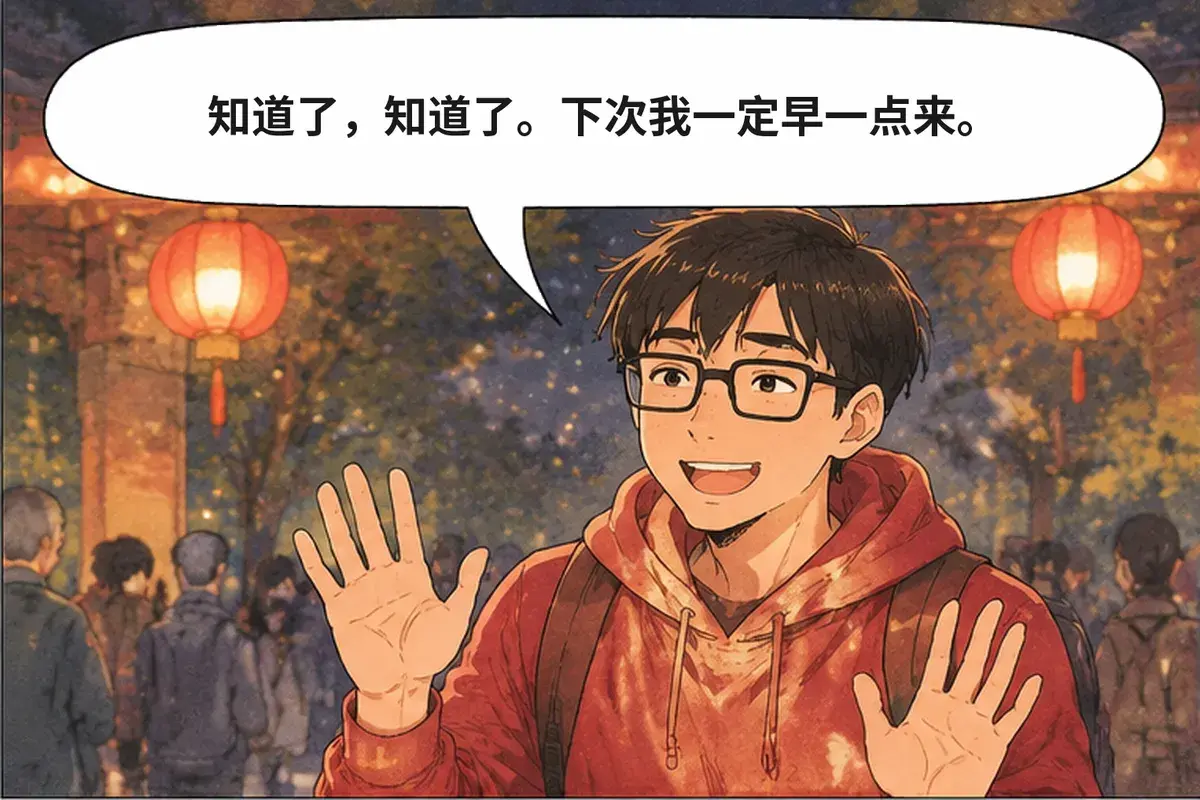
- 张磊
知道了,知道了。下次我一定早一点来。
Got it, got it. Next time I'll definitely come a little earlier.

- 伊利亚
你每次都这么说!
You say that every time!
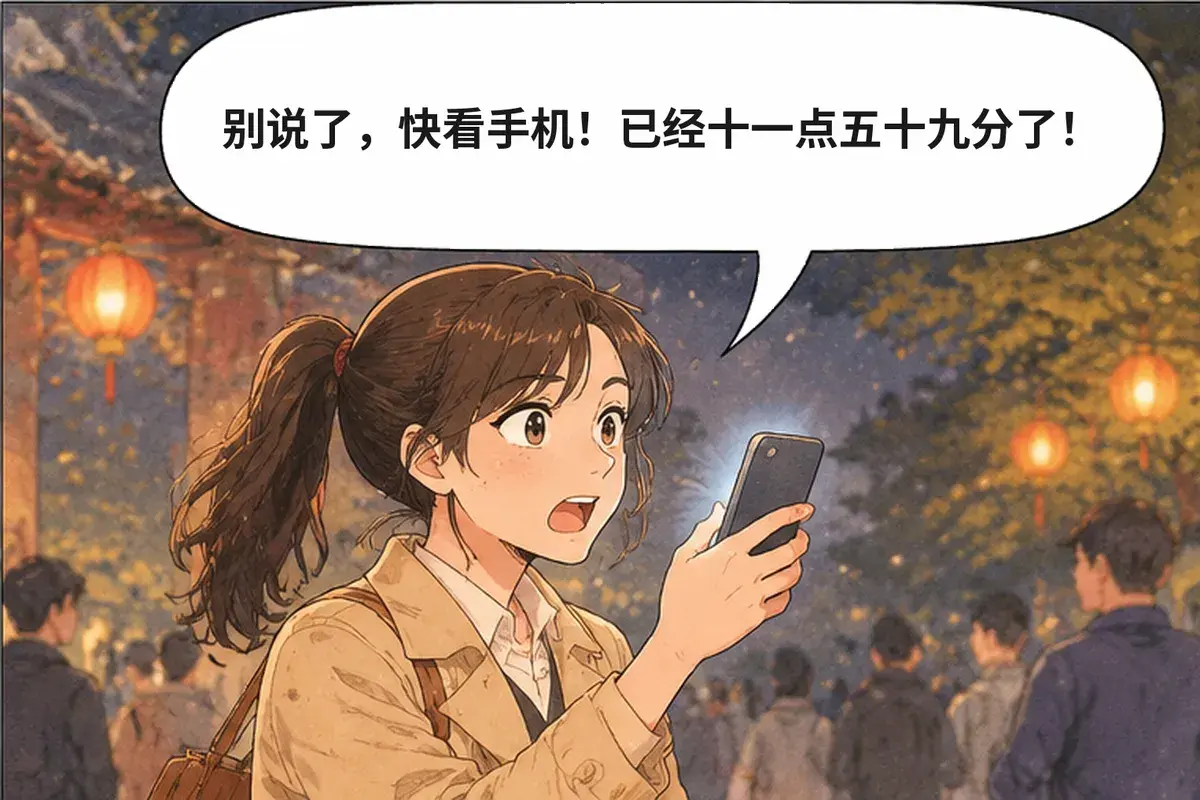
- 晓雨
别说了,快看手机!已经十一点五十九分了!
Stop talking, quick, look at your phone! It's already eleven fifty-nine!
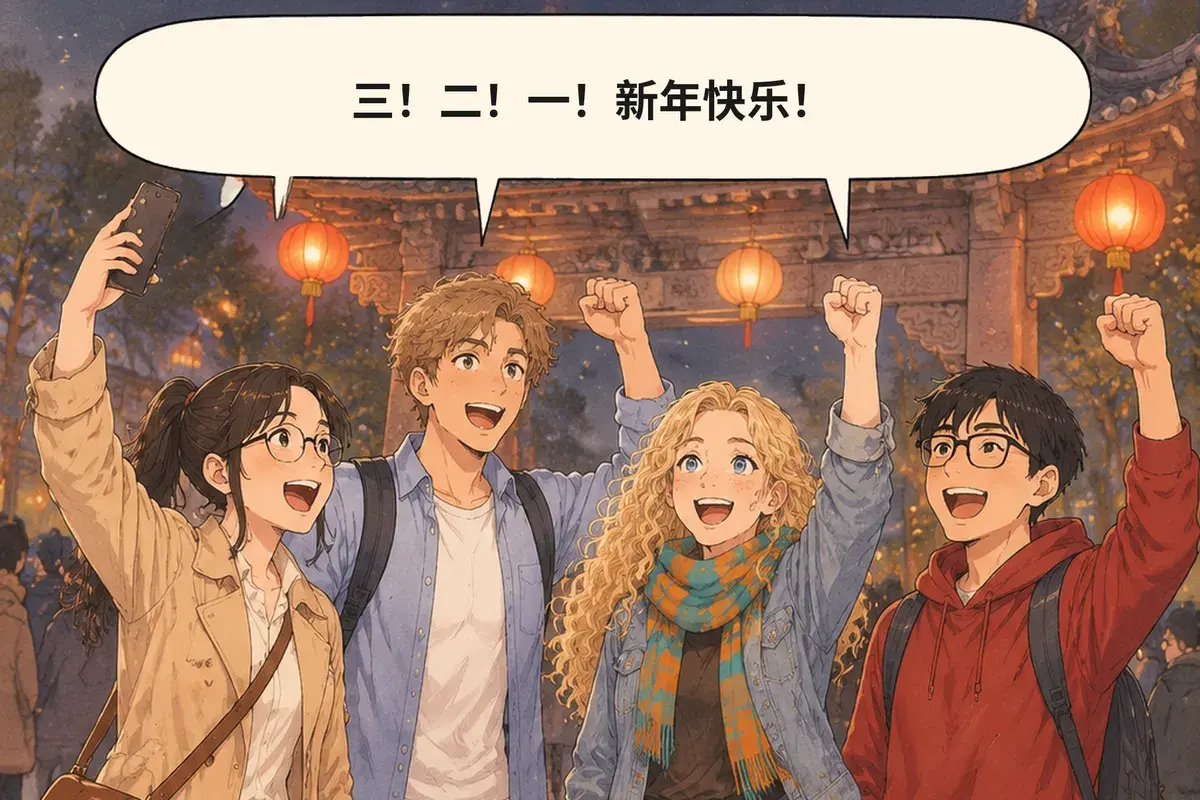
- 晓雨
三!二!一!新年快乐!
Three! Two! One! Happy New Year!
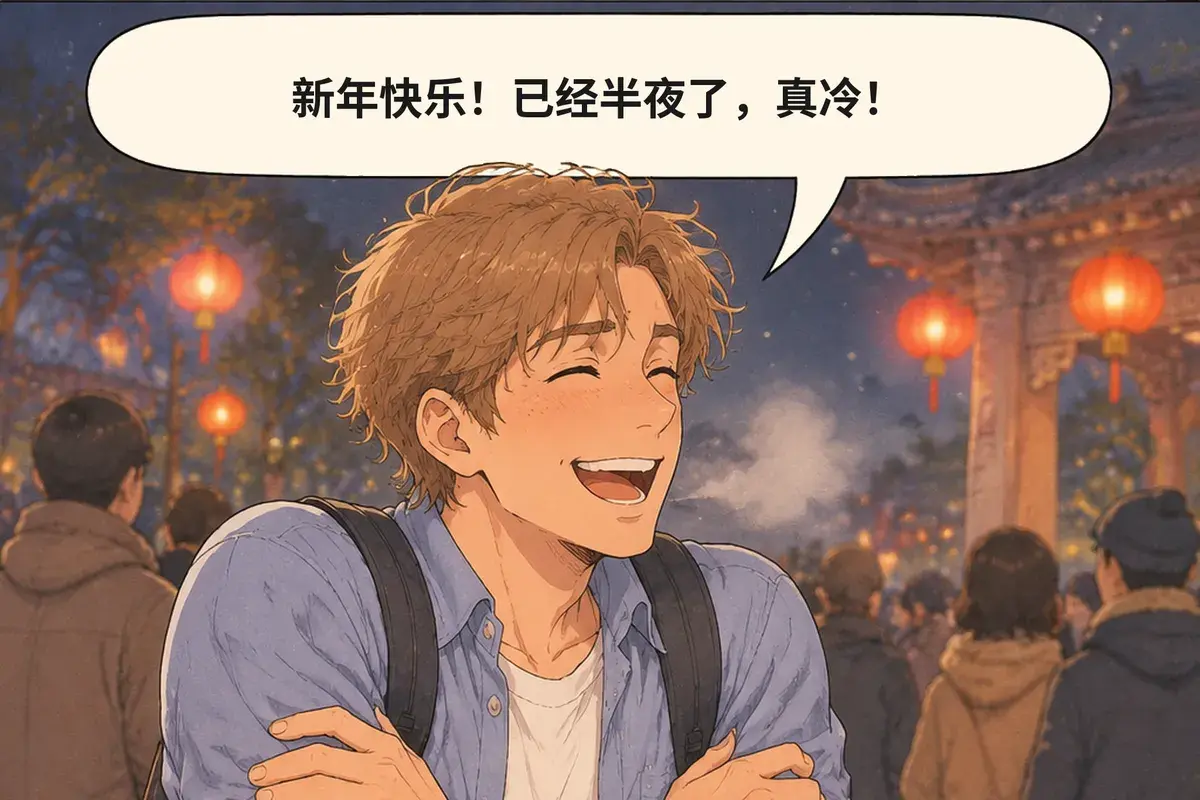
- 伊利亚
新年快乐!已经半夜了,真冷!
Happy New Year! It's already midnight, and it's really cold!
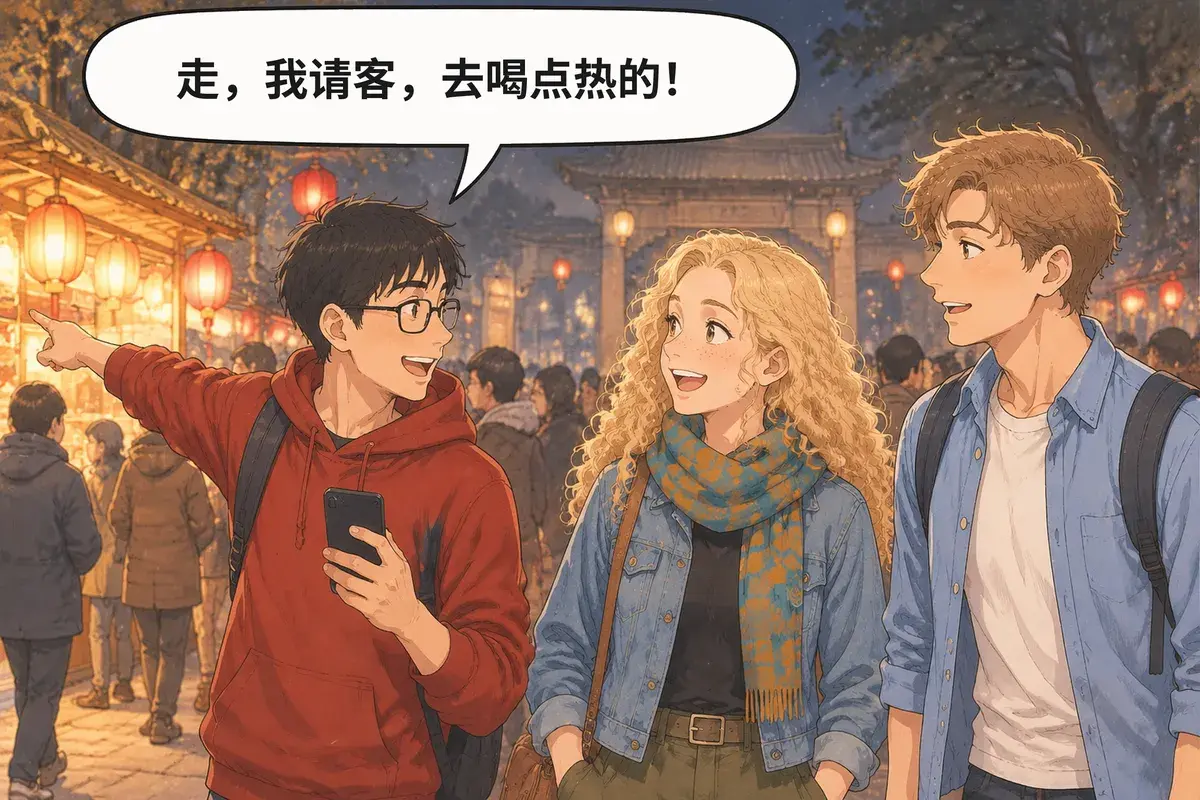
- 张磊
走,我请客,去喝点热的!
Come on, it's my treat — let's go drink something hot!
Grammar for this text
你 怎么 才 来? — "why are you only getting here now?": 才 after a time word means "only then, later than expected" (this unit's grammar). 怎么 here isn't "how" but "why on earth", with a reproach. No 了 after 才.
现在 才 十 一 点 半! — the same 才, now before a number: "only". Zhang Lei thinks it's still early.
我们 早就 到 了! — 早就 means "long ago, ages ago".
我 和 伊利亚 十 点 就 来 了。 — 就 … 了 means "already at ten": earlier than needed. Compare 才: Zhang Lei 十 一 点 半 才 来.
你 老是 来 晚! — 老是 means "always", with annoyance; 来 晚 is "to come later than you should", that is, to be late.
你 总是 这样! 上次 也 是! — 总是 (zǒngshì) means "always": here it's a reproach, like 老是, but 总是 is more neutral and works for good things too. 上次 也 是 means "last time too": 是 stands in for the whole sentence.
已经 十 一 点 五十 九 分 了! — 已经 … 了 with a time, like 已经 八 点 了 (A1).
新年 快乐! — "Happy New Year!". January 1 is a day off in China; its official name is 元旦 (yuándàn). In Hangzhou people see in the New Year on the shore of West Lake, but the biggest holiday of the year is the Spring Festival, and it's still ahead.
已经 半夜 了, 真 冷! — "it's already midnight, and it's really cold!" On New Year's night it's around freezing in Hangzhou, and by the lake it's windy too.
走, 我 请客… — "come on, it's my treat…": 请客 means "to treat someone (to food or drinks)", and that's how Zhang Lei makes peace with his friends for being late.
Words and grammar of the unit: Share your hopes for the new year.
Learn the words from the texts with flashcards
In the app, you can tap any word in a text to see its translation, forms and examples, and new words stick with flashcards. 15 minutes a day.
Start for freeEverything is open for free. No card needed to sign up.