

Chinese dialogue with translation · A2 · 16 lines
原来不是我的! It turned out it wasn't mine!
Comic · 16 panels

- 伊利亚
前天我去小区门口拿快递。
The day before yesterday I went to the gate of our compound to pick up a package.

- 伊利亚
我记得我的取件码是七八一。
I remembered that my pickup code was seven-eight-one.
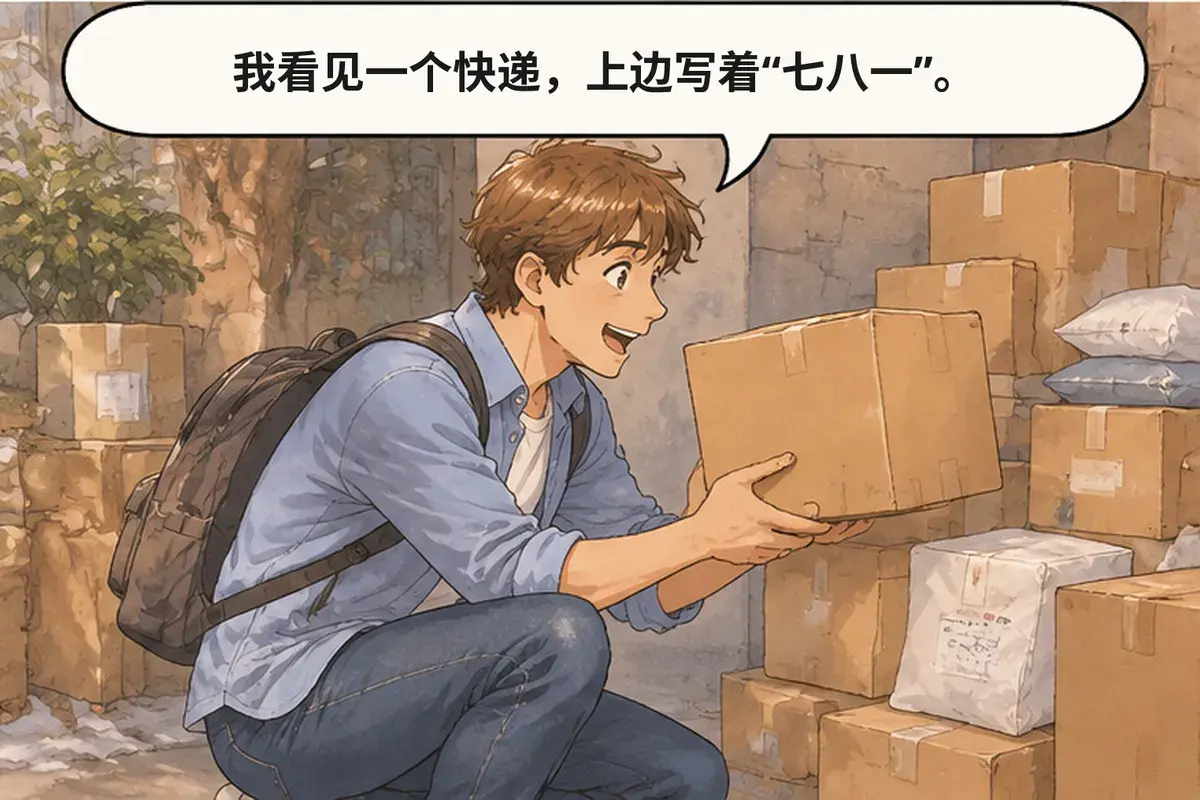
- 伊利亚
我看见一个快递,上边写着“七八一”。
I saw a package with "seven-eight-one" written on it.

- 伊利亚
我以为是我的,就把它拿回家了。
I thought it was mine, so I took it home.
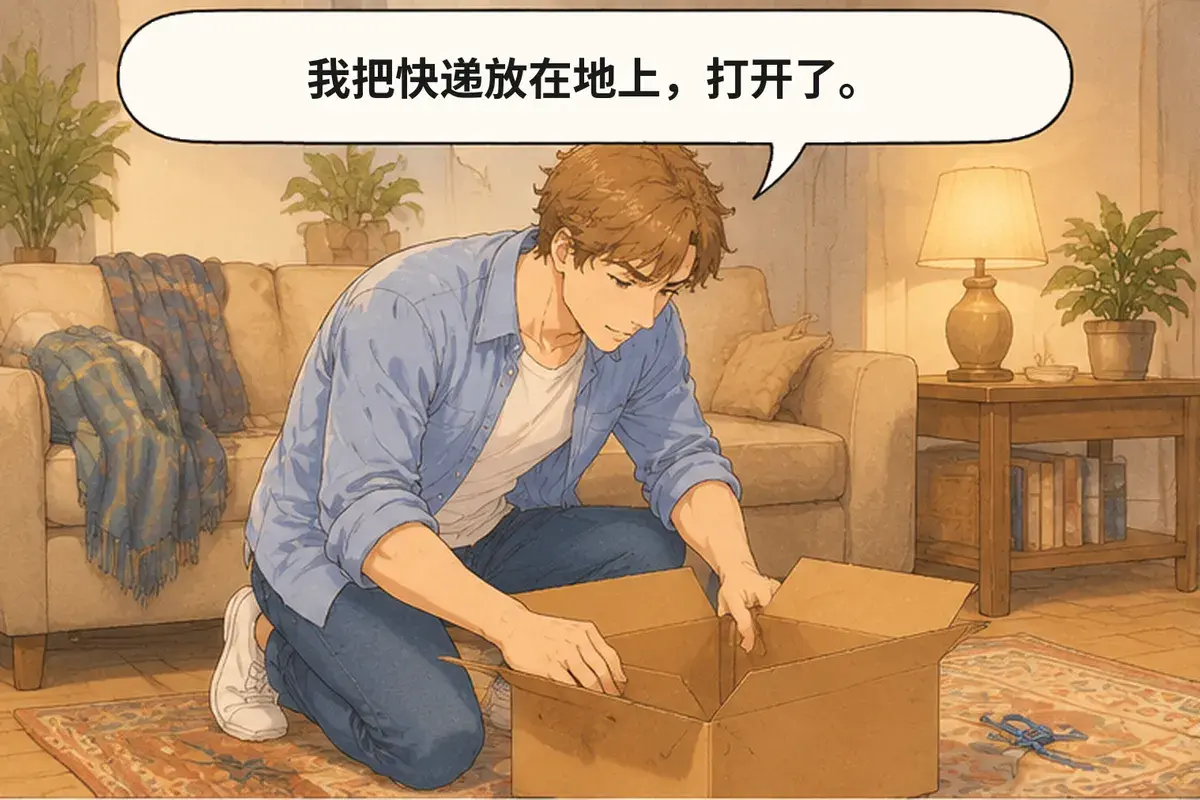
- 伊利亚
我把快递放在地上,打开了。
I put the package on the floor and opened it.
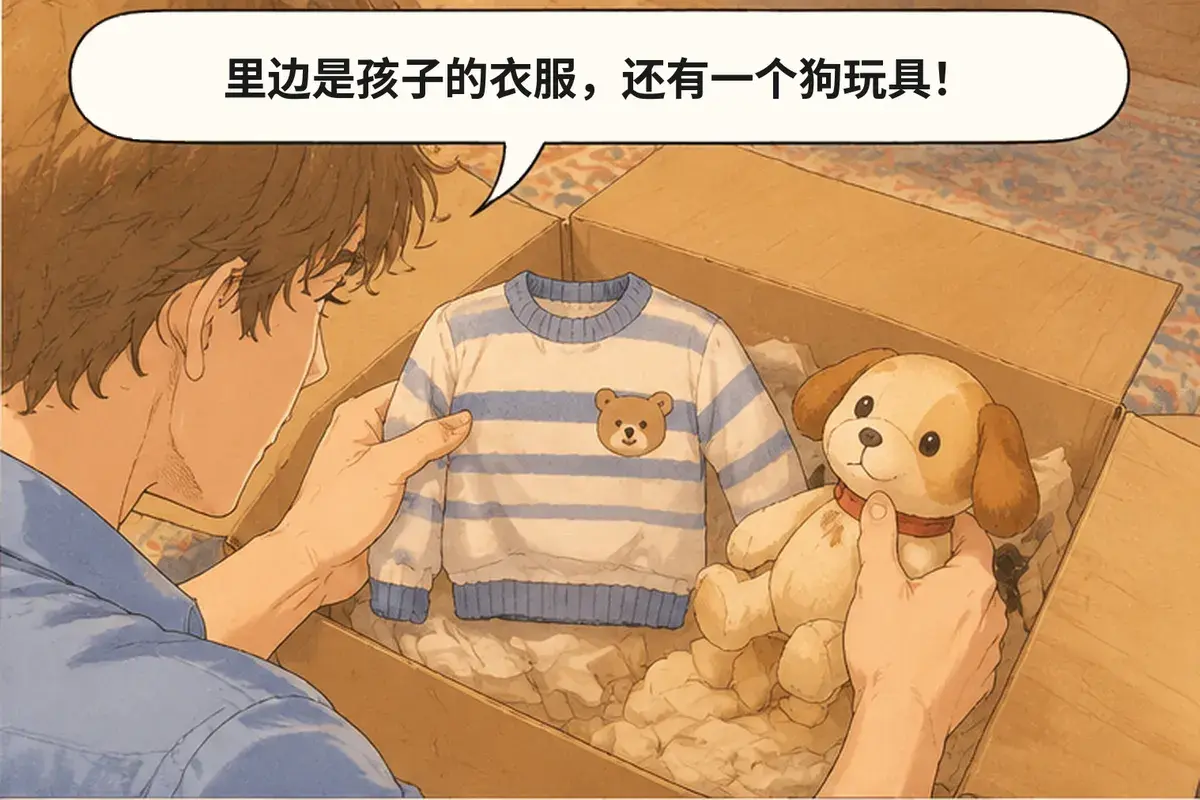
- 伊利亚
里边是孩子的衣服,还有一个狗玩具!
Inside were children's clothes and also a dog toy!

- 伊利亚
我没有孩子,也没有狗!
I don't have kids, and I don't have a dog either!
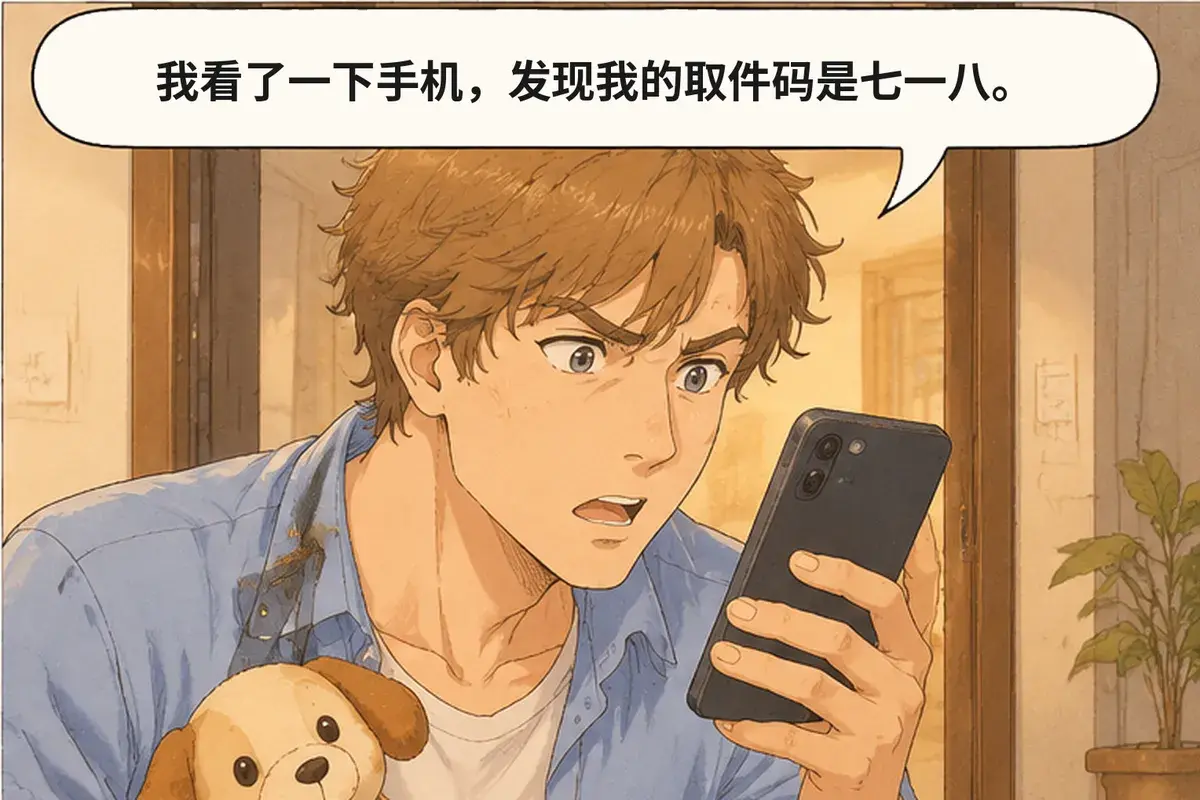
- 伊利亚
我看了一下手机,发现我的取件码是七一八。
I took a look at my phone and discovered that my pickup code was seven-one-eight.

- 伊利亚
原来不是我的!
It turned out it wasn't mine!
- 伊利亚
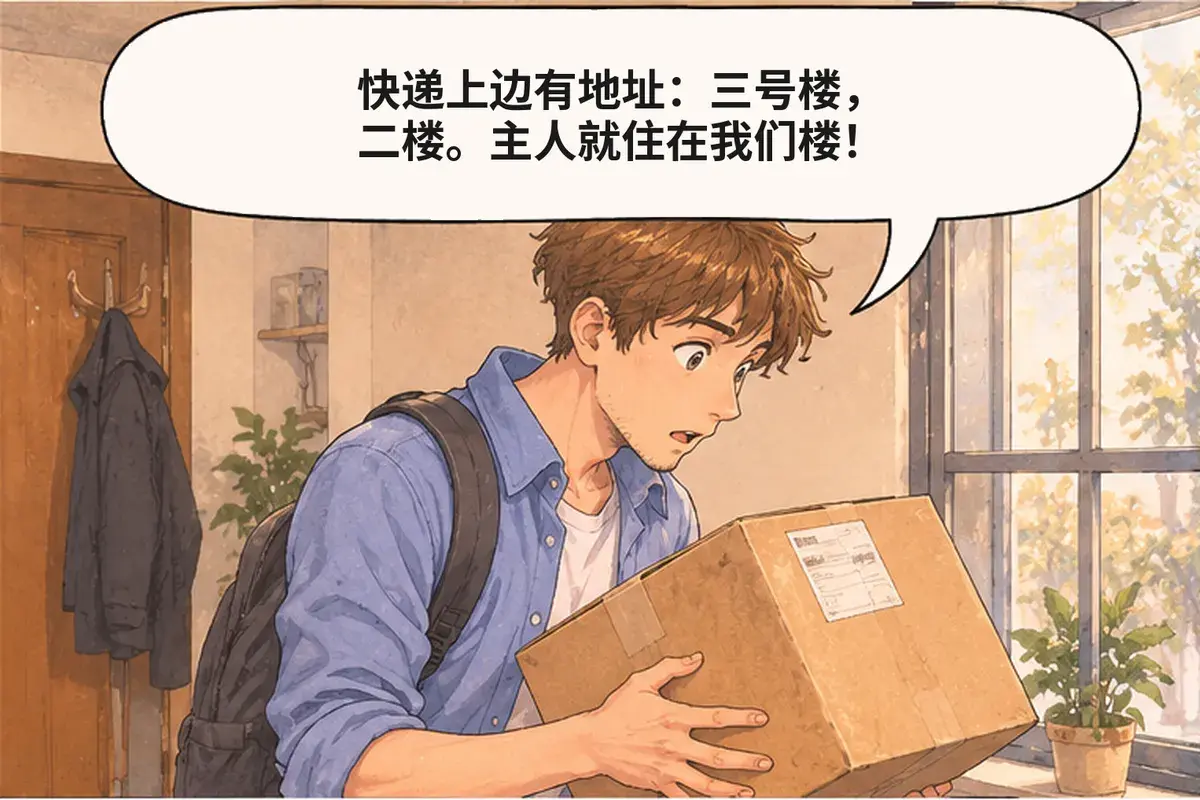
快递上边有地址:三号楼,二楼。主人就住在我们楼!
There was an address on the package: Building 3, second floor. The owner lives right in our building!
- 伊利亚
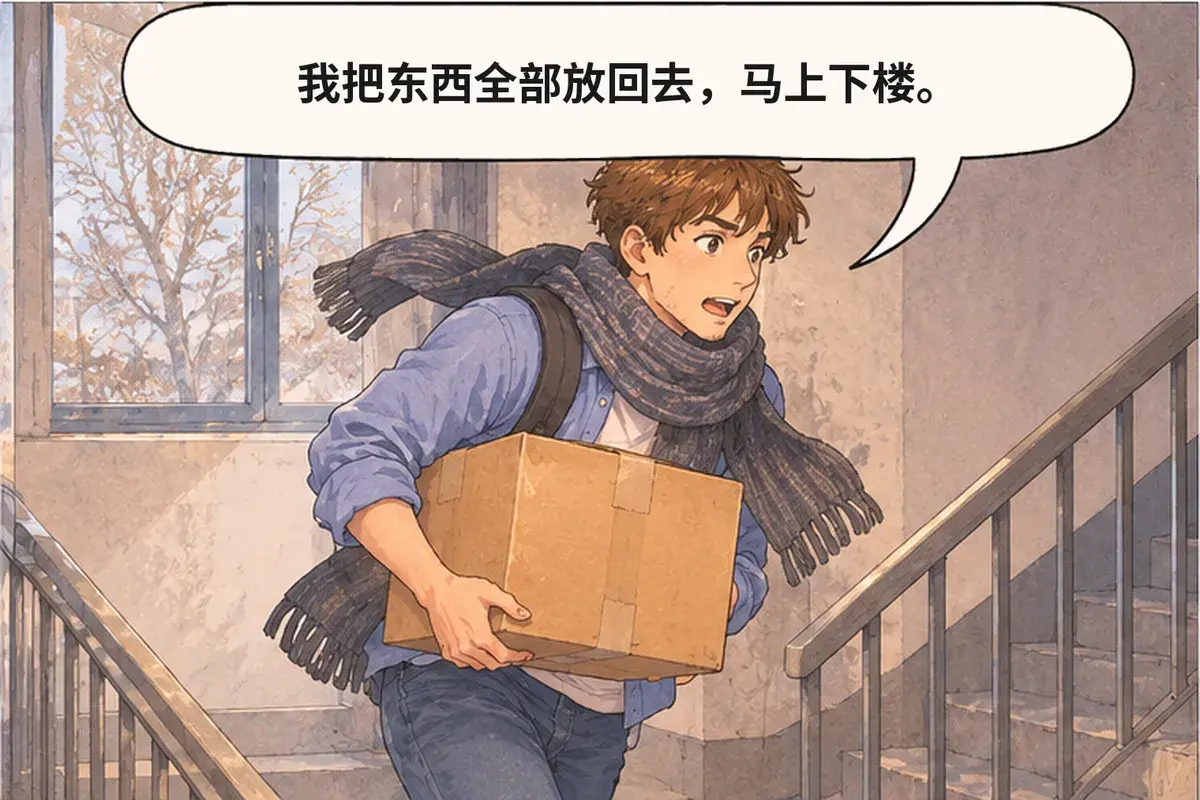
我把东西全部放回去,马上下楼。
I put all the things back and went downstairs right away.
- 伊利亚
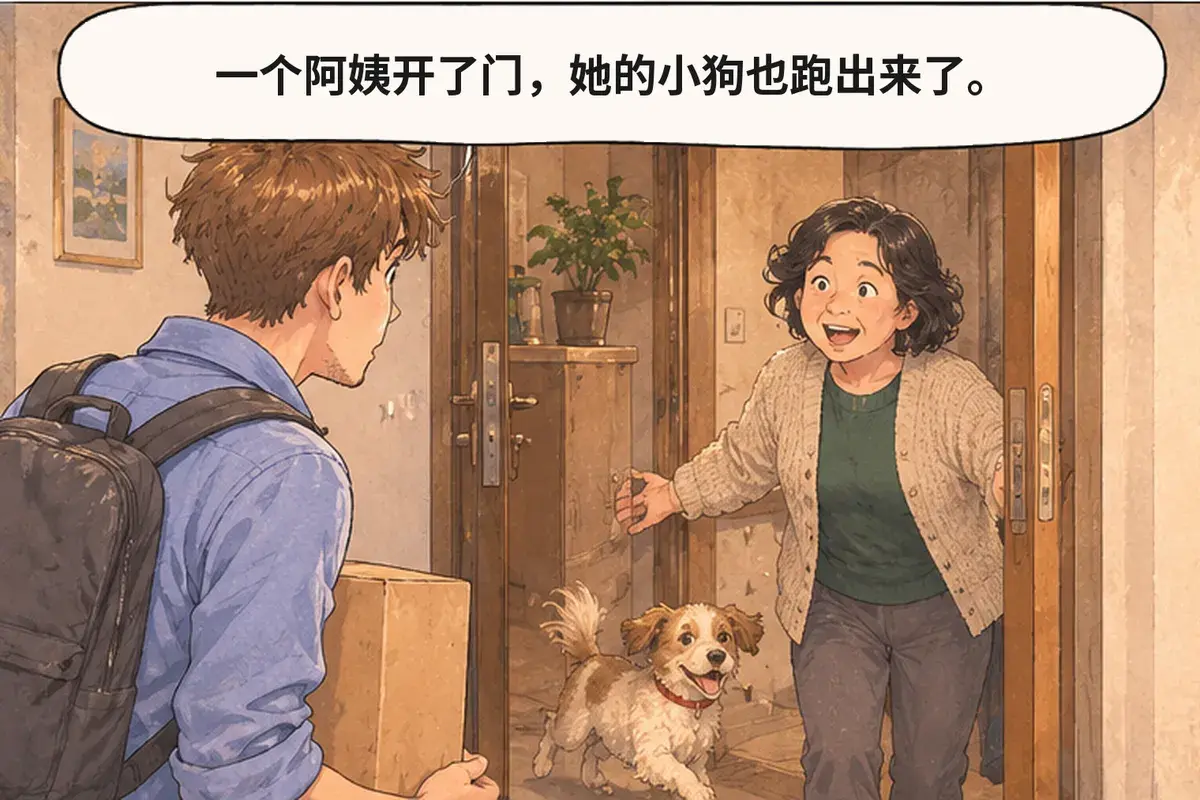
一个阿姨开了门,她的小狗也跑出来了。
An auntie opened the door, and her little dog ran out too.
- 伊利亚
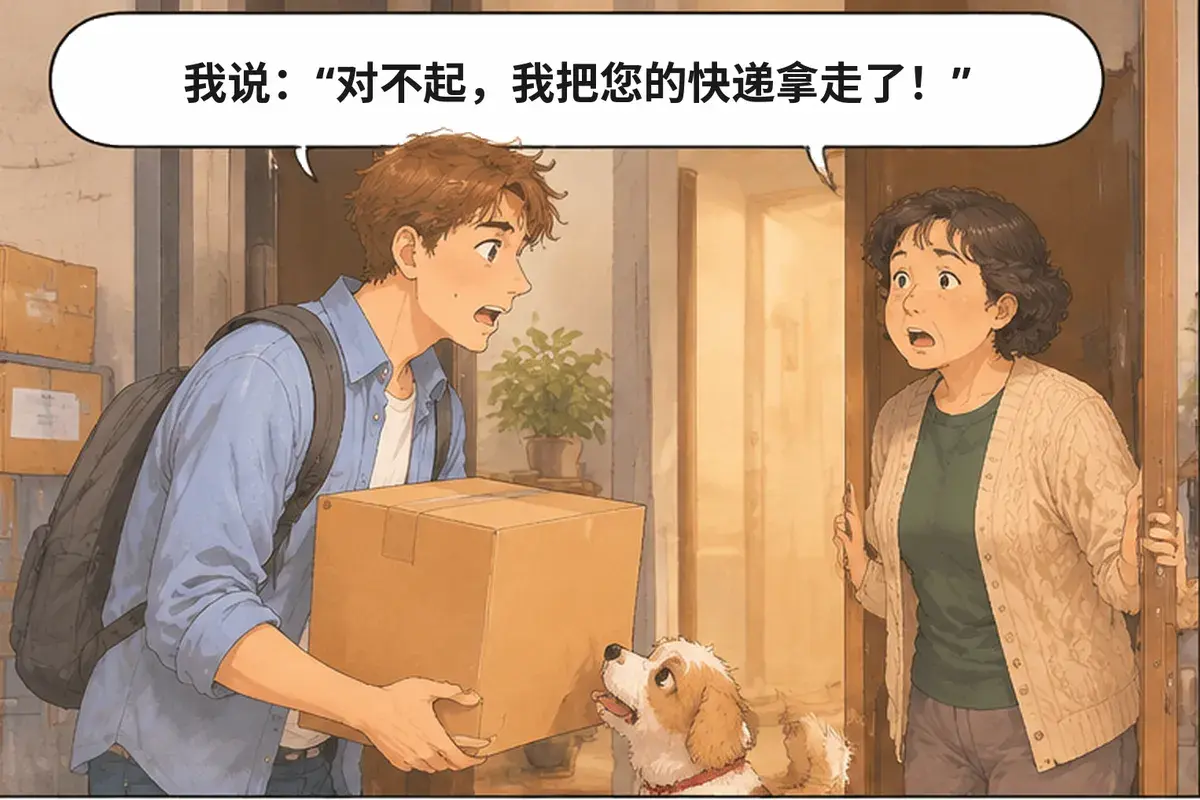
我说:“对不起,我把您的快递拿走了!”
I said, "Sorry, I took your package!" (polite)

- 伊利亚
阿姨笑了:“没事!我还以为它没了呢!”
The auntie laughed: "It's nothing! And here I thought it was gone!"
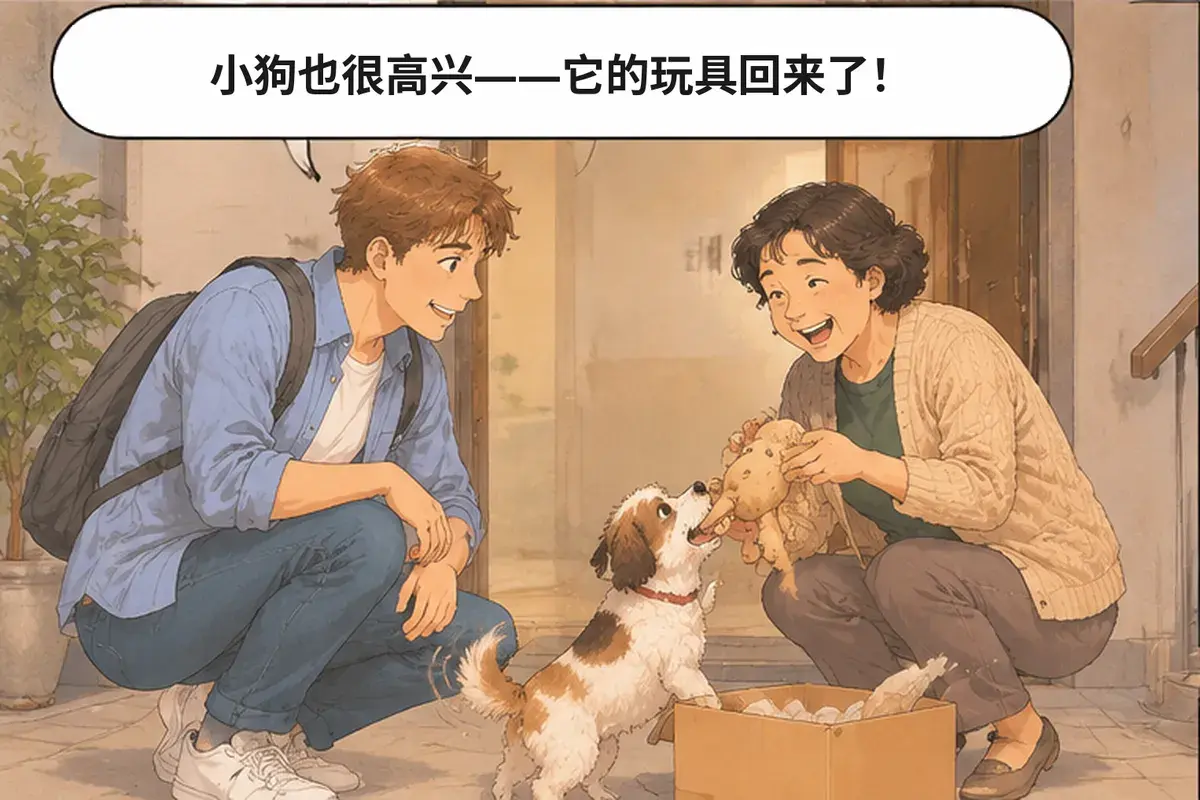
- 伊利亚
小狗也很高兴——它的玩具回来了!
The little dog was very happy too: its toy was back!

- 伊利亚
现在拿快递的时候,我一定把取件码看清楚。
Now, when I pick up a package, I make sure to check the pickup code carefully.
Grammar for this text
我 以为 是 我 的 — 以为 (yǐwéi) means "I thought so, but I was wrong". Plain "I think, I believe" is 觉得. 我 还 以为 它 没 了 呢! — "and here I thought it was gone!": 还 以为 — "and here I thought", 没 了 — "it's gone, it got lost".
原来 不 是 我 的! — 原来 (yuánlái) means "it turns out": you suddenly see how things really are.
就 把 它 拿 回家 了 — 把 + 它 + 拿 回家: "took it and carried it home"; 就 — "so, right away". 了 at the end: it's done.
我 把 快递 放 在 地上 — 把 + what + 放 在 + where.
我 把 东西 全部 放 回去 — 全部 (quánbù) is "all of it, every last bit"; it goes before the verb. 所有 的 goes before a noun (所有 的 东西), while 全部 comes after it.
我 把 您 的 快递 拿走 了! — 拿走 (názǒu) "to take away": 拿 "to take" + 走 "to leave". Ilya says 您 to a neighbor he doesn't know.
上边 写 着 “七 八 一” — "it says … on it": 着 means it stays that way (unit 9).
我 记得 我 的 取件码 是 七 八 一 — 记得 "to remember" (A1, unit 17). Ilya remembered the digits in the wrong order: his real code is 七 一 八. The numbers on the shelves at a pickup point look alike, so people check the code on their phone.
她 的 小 狗 也 跑 出来 了 — 跑 出来 "to run out" (unit 12).
我 一定 把 取件码 看 清楚 — 看 清楚 "to look carefully, to see clearly".
Words and grammar of the unit: Return an online order by courier.
Learn the words from the texts with flashcards
In the app, you can tap any word in a text to see its translation, forms and examples, and new words stick with flashcards. 15 minutes a day.
Start for freeEverything is open for free. No card needed to sign up.