

Chinese dialogue with translation · A2 · 16 lines
怎么又贵了? Why did it get more expensive again?
Comic · 16 panels
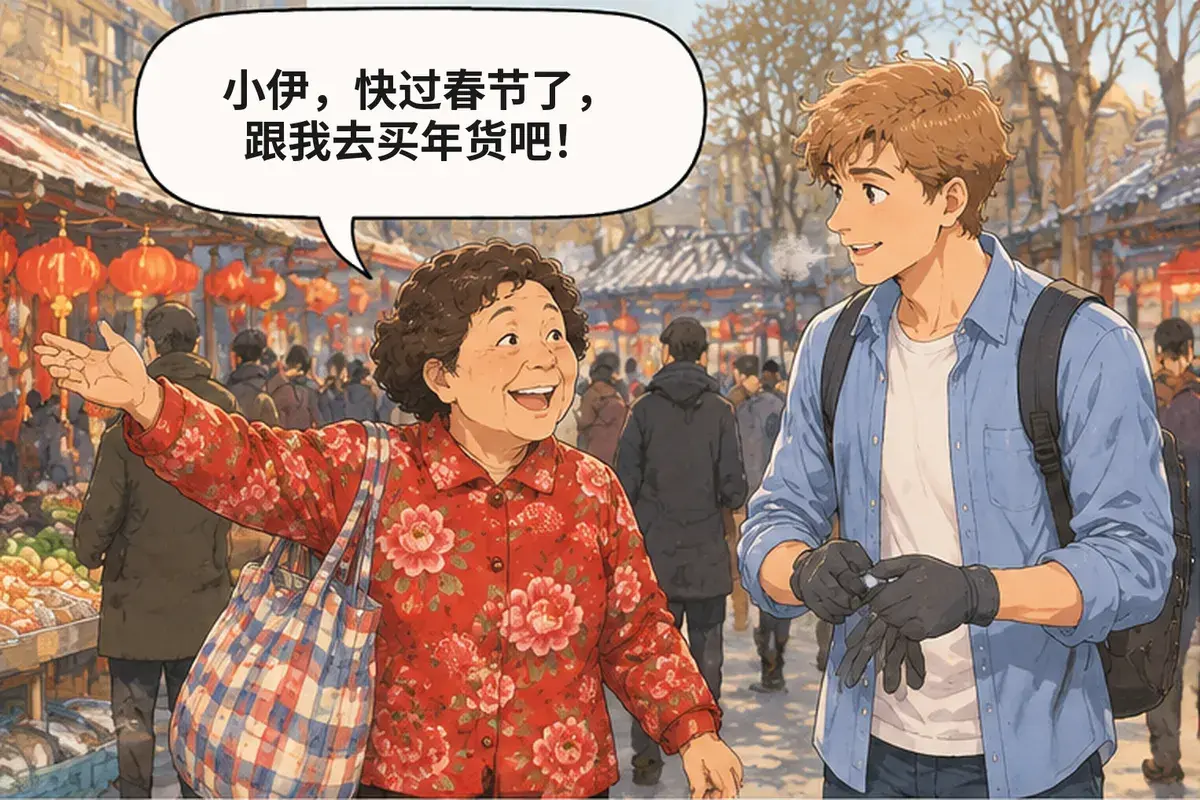
- 王阿姨
小伊,快过春节了,跟我去买年货吧!
Xiao Yi, the Spring Festival is almost here. Come with me to do the New Year shopping!
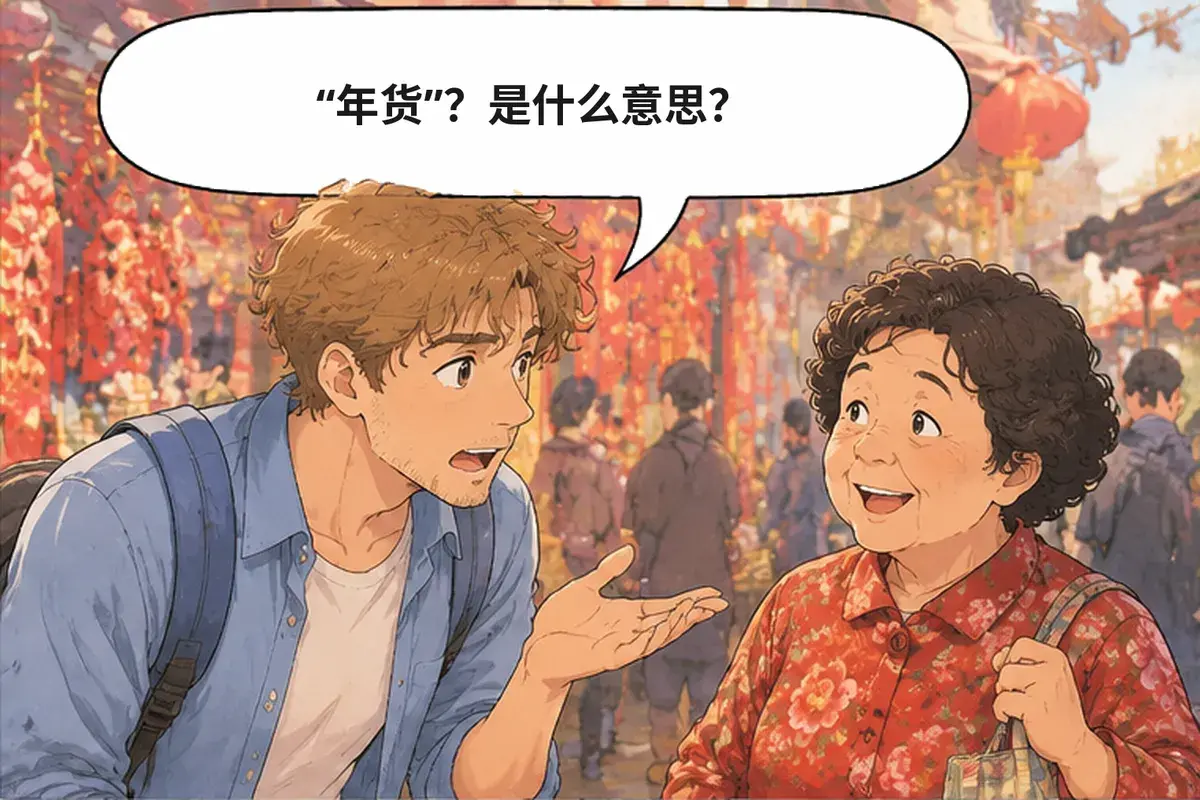
- 伊利亚
“年货”?是什么意思?
"Niánhuò"? What does that mean?
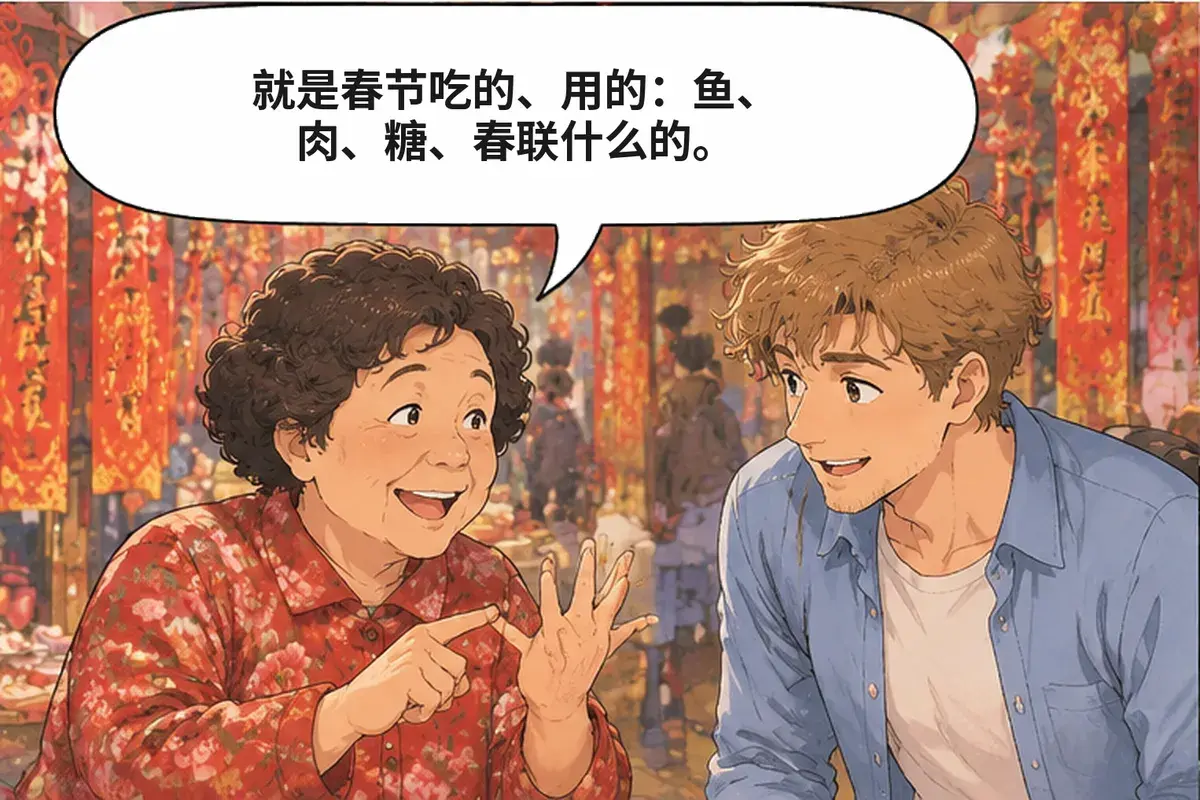
- 王阿姨
就是春节吃的、用的:鱼、肉、糖、春联什么的。
It's what we eat and use for the Spring Festival: fish, meat, candy, New Year couplets and stuff like that.
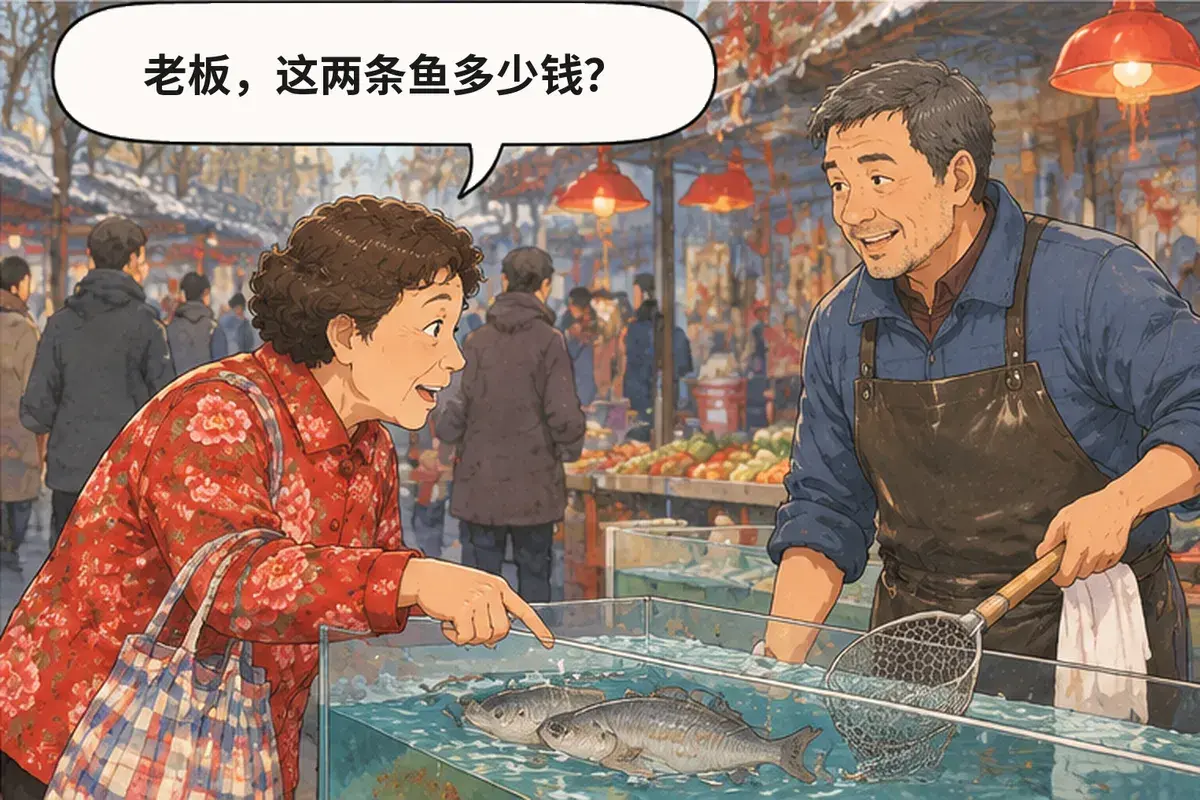
- 王阿姨
老板,这两条鱼多少钱?
Boss, how much are these two fish?
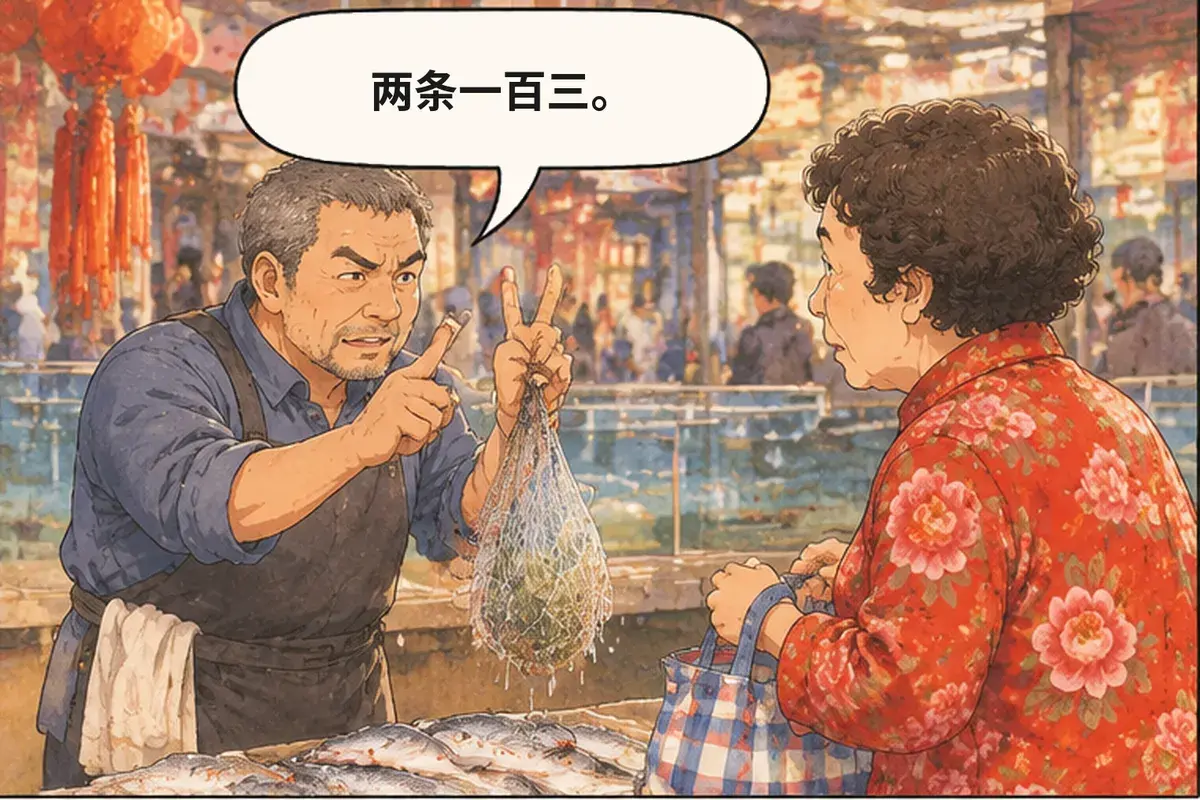
- 老板
两条一百三。
Two for 130.
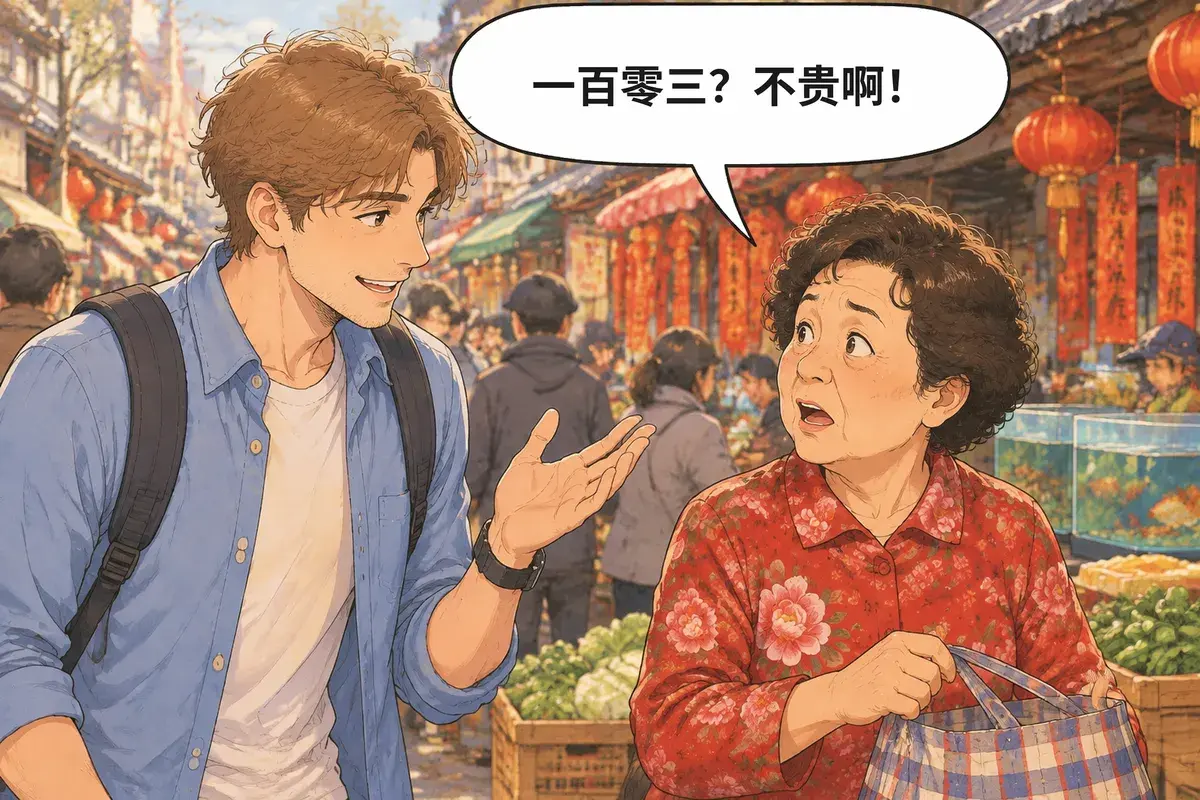
- 伊利亚
一百零三?不贵啊!
103? That's not expensive!
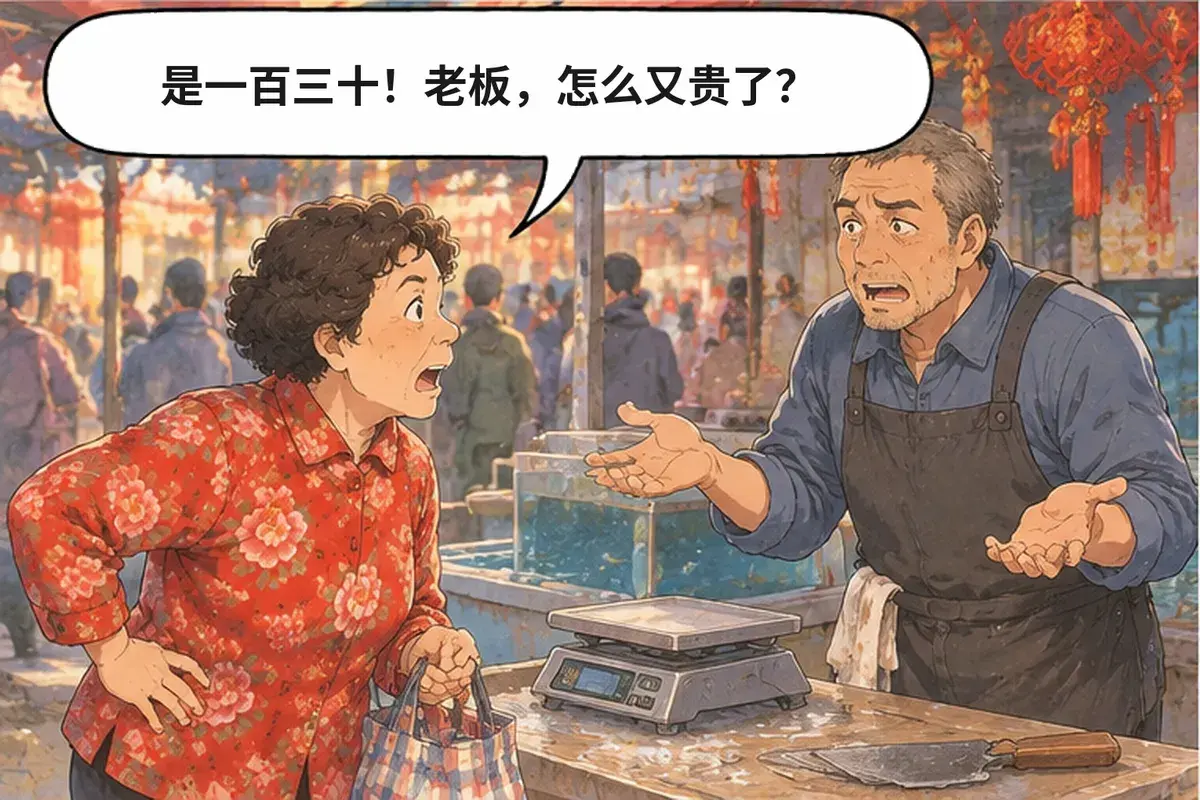
- 王阿姨
是一百三十!老板,怎么又贵了?
It's 130! Boss, why did it get more expensive again?
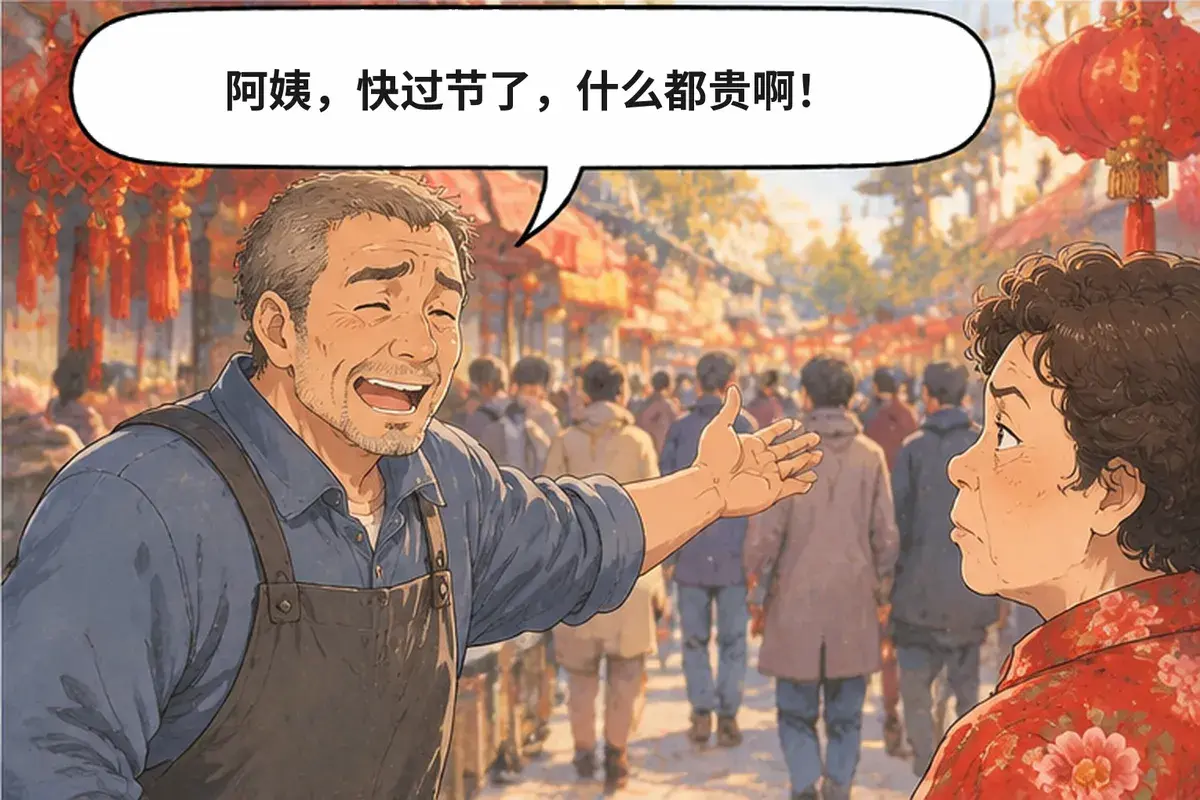
- 老板
阿姨,快过节了,什么都贵啊!
Ma'am, the holiday is almost here, everything is expensive!
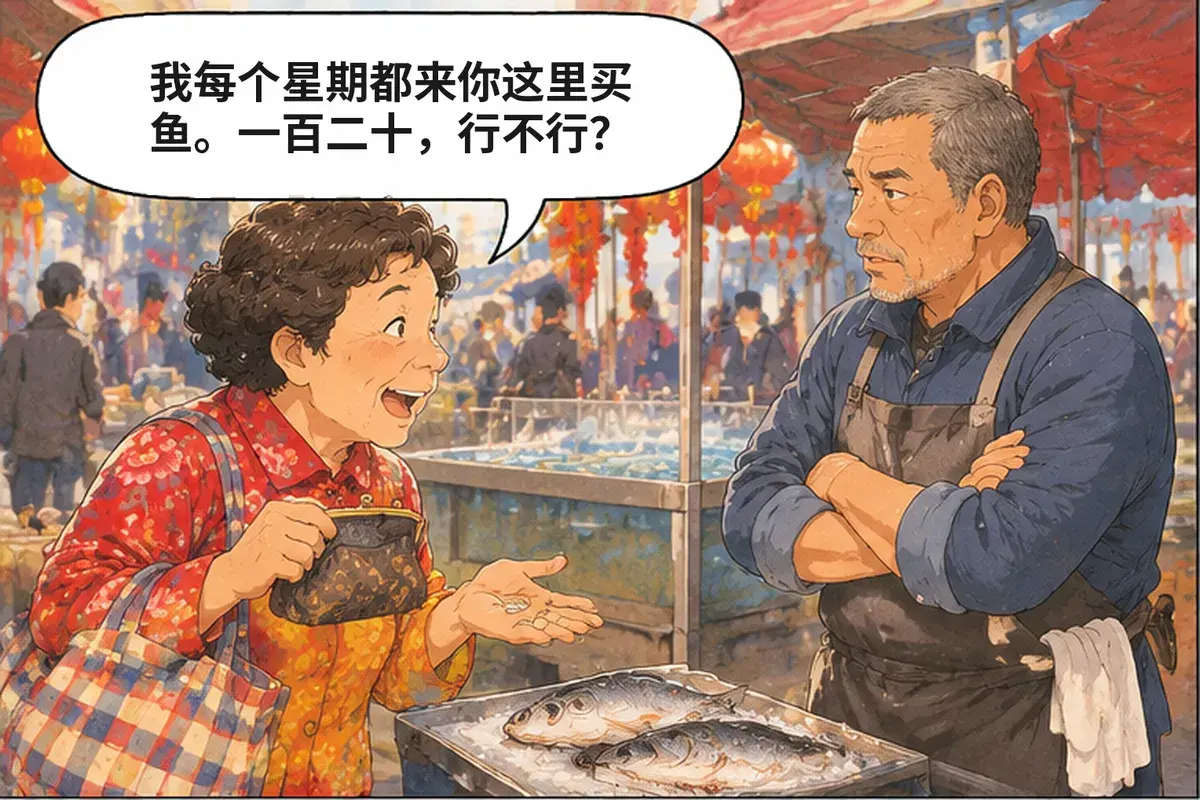
- 王阿姨
我每个星期都来你这里买鱼。一百二十,行不行?
I come to buy fish from you every week. 120, OK?
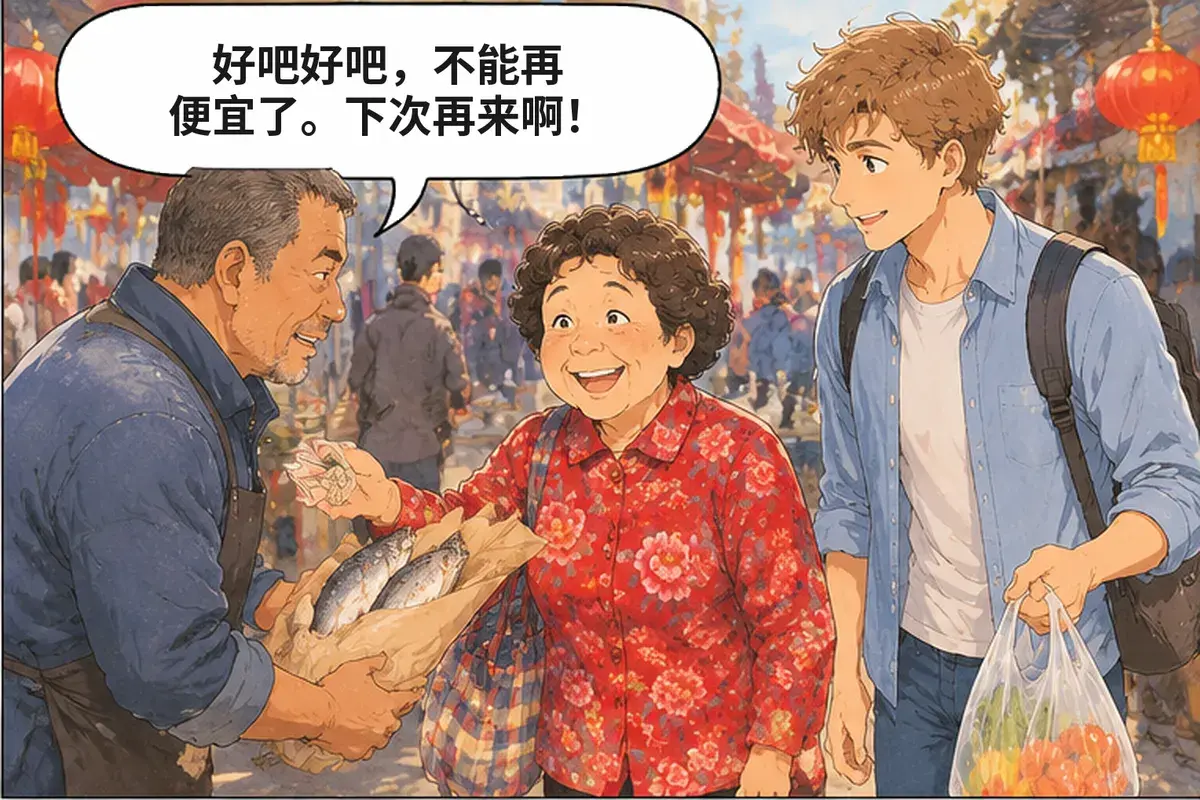
- 老板
好吧好吧,不能再便宜了。下次再来啊!
Fine, fine, I can't go any cheaper. Come again next time!
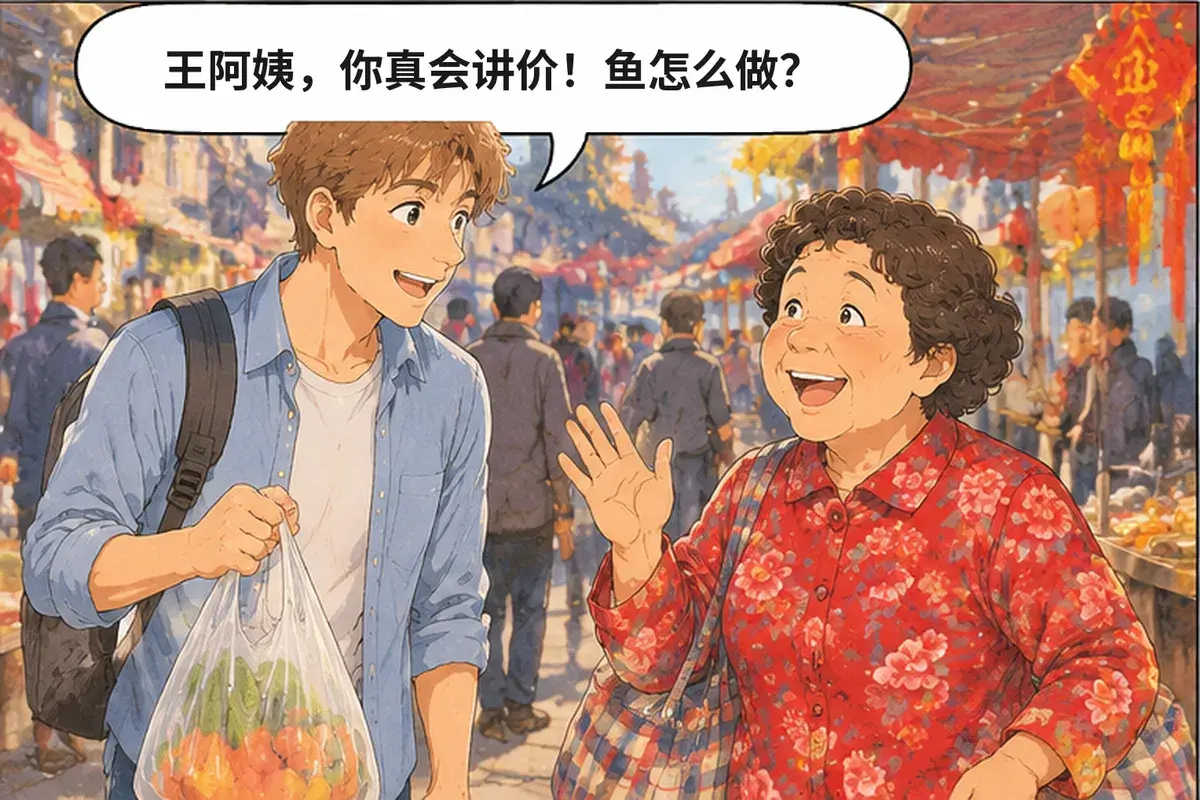
- 伊利亚
王阿姨,你真会讲价!鱼怎么做?
Auntie Wang, you really know how to bargain! How do you cook the fish?
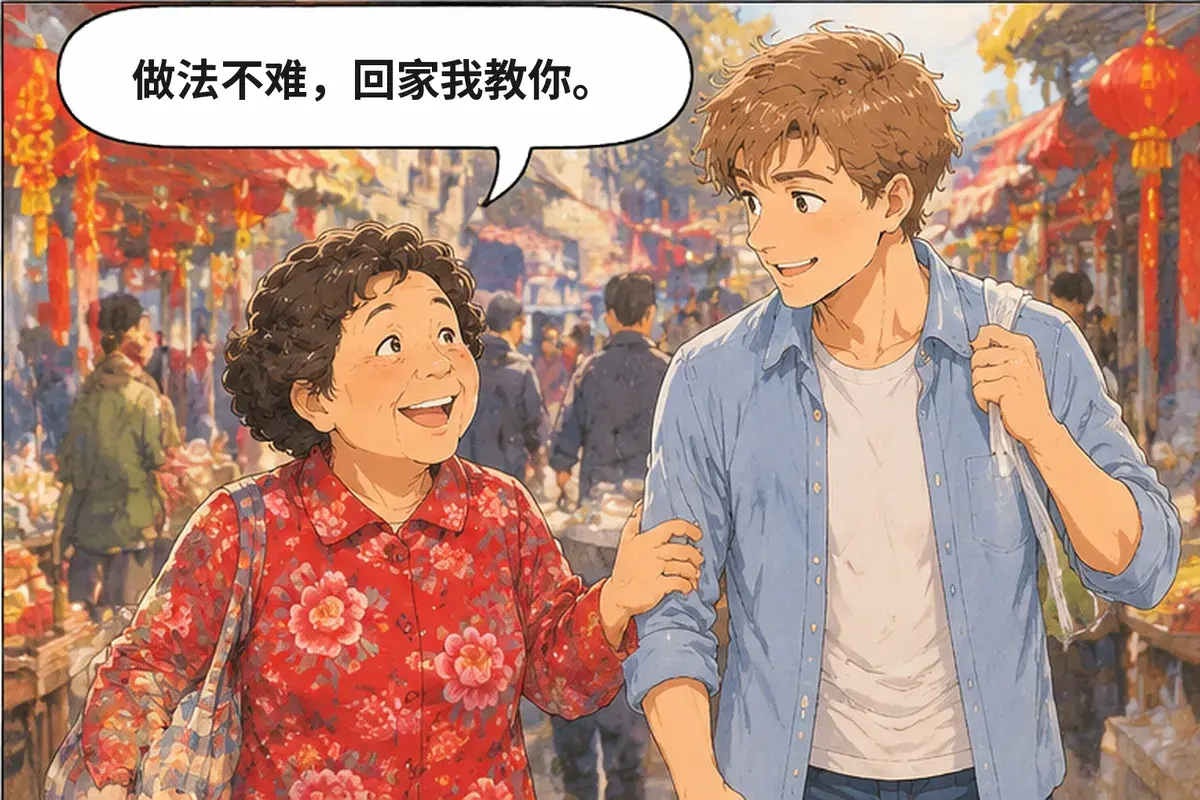
- 王阿姨
做法不难,回家我教你。
The recipe isn't hard. I'll teach you when we get home.
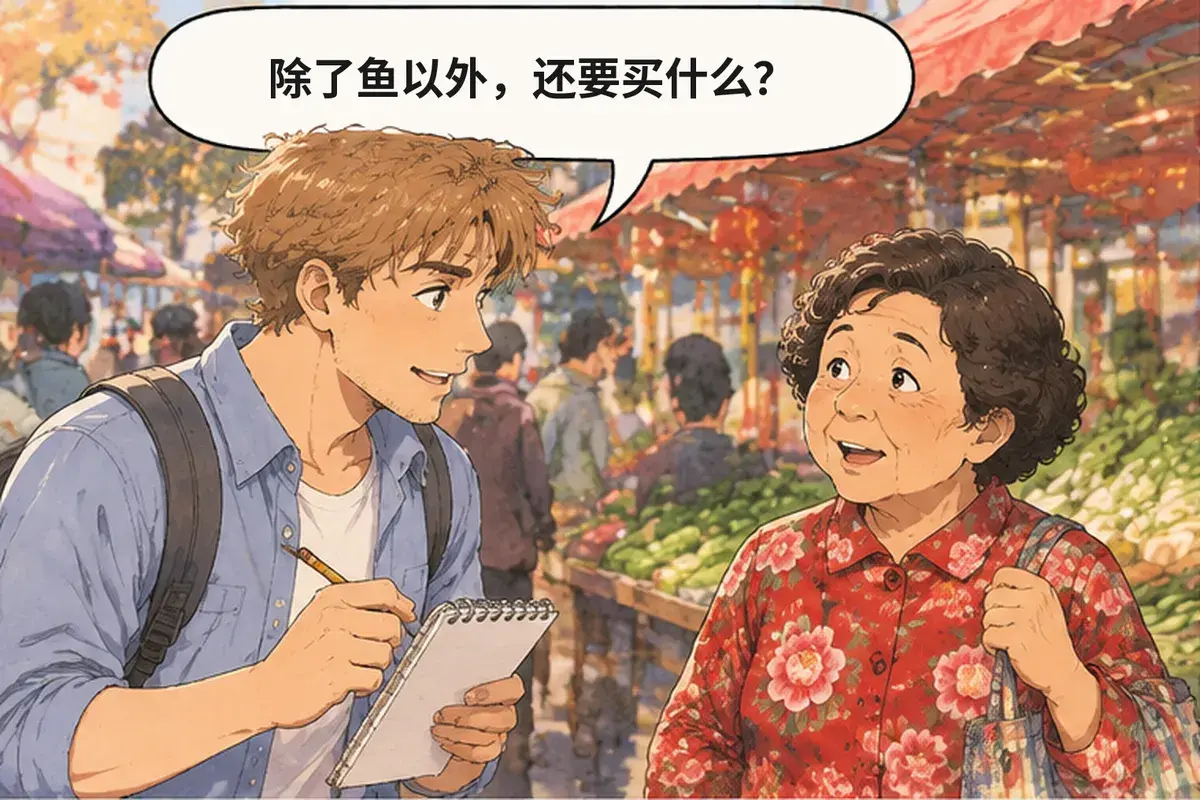
- 伊利亚
除了鱼以外,还要买什么?
Besides fish, what else do we need to buy?
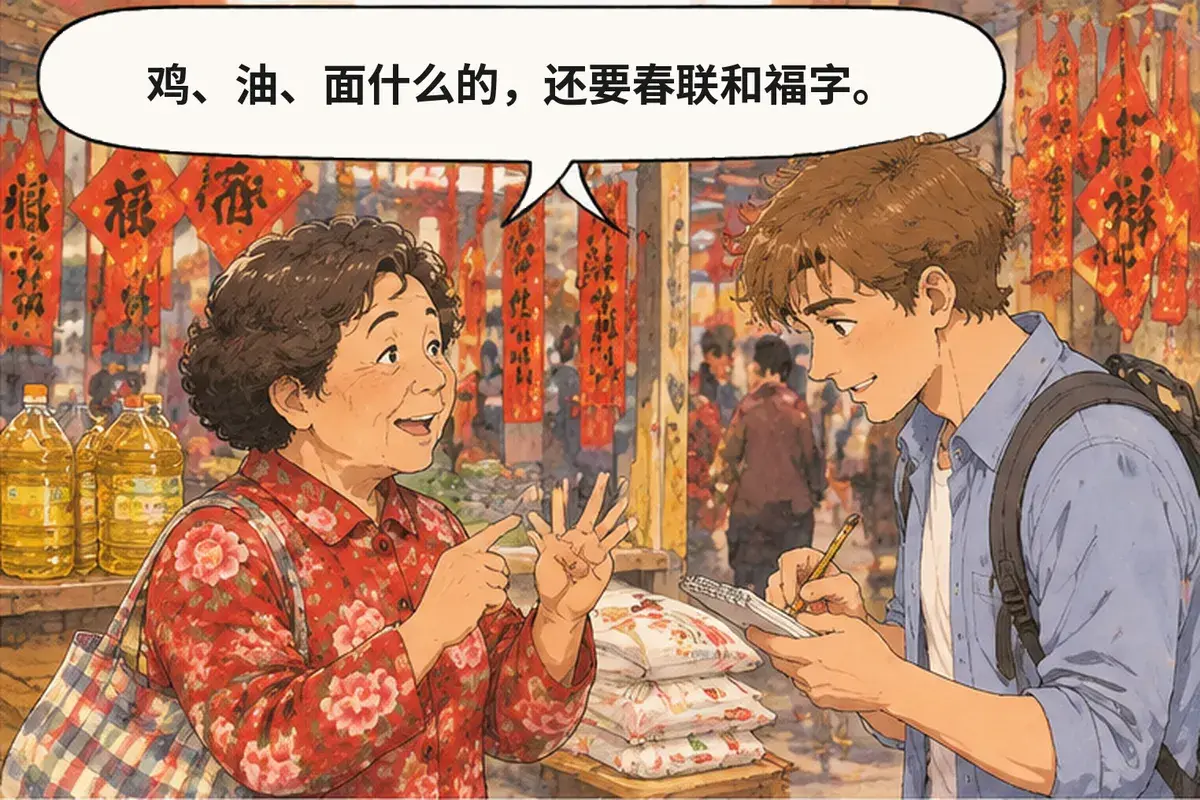
- 王阿姨
鸡、油、面什么的,还要春联和福字。
Chicken, oil, flour and stuff like that, and also New Year couplets and fu characters.
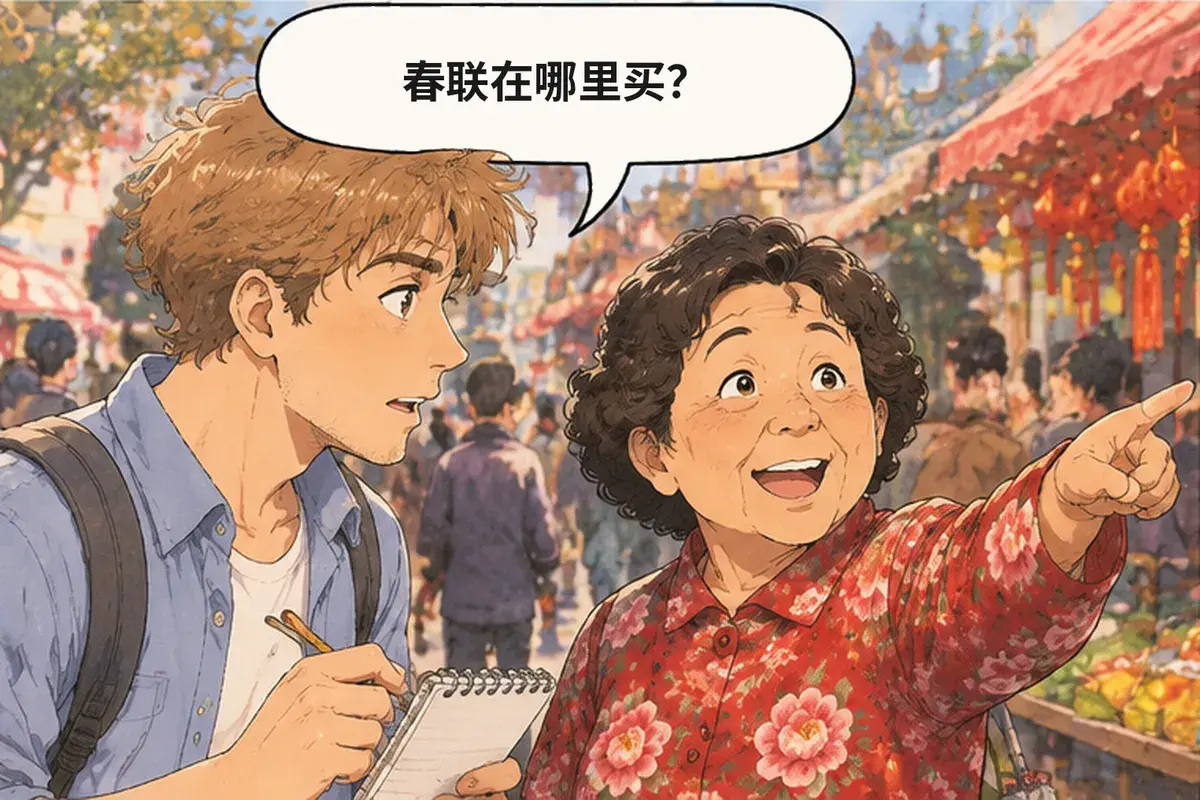
- 伊利亚
春联在哪里买?
Where do we buy New Year couplets?
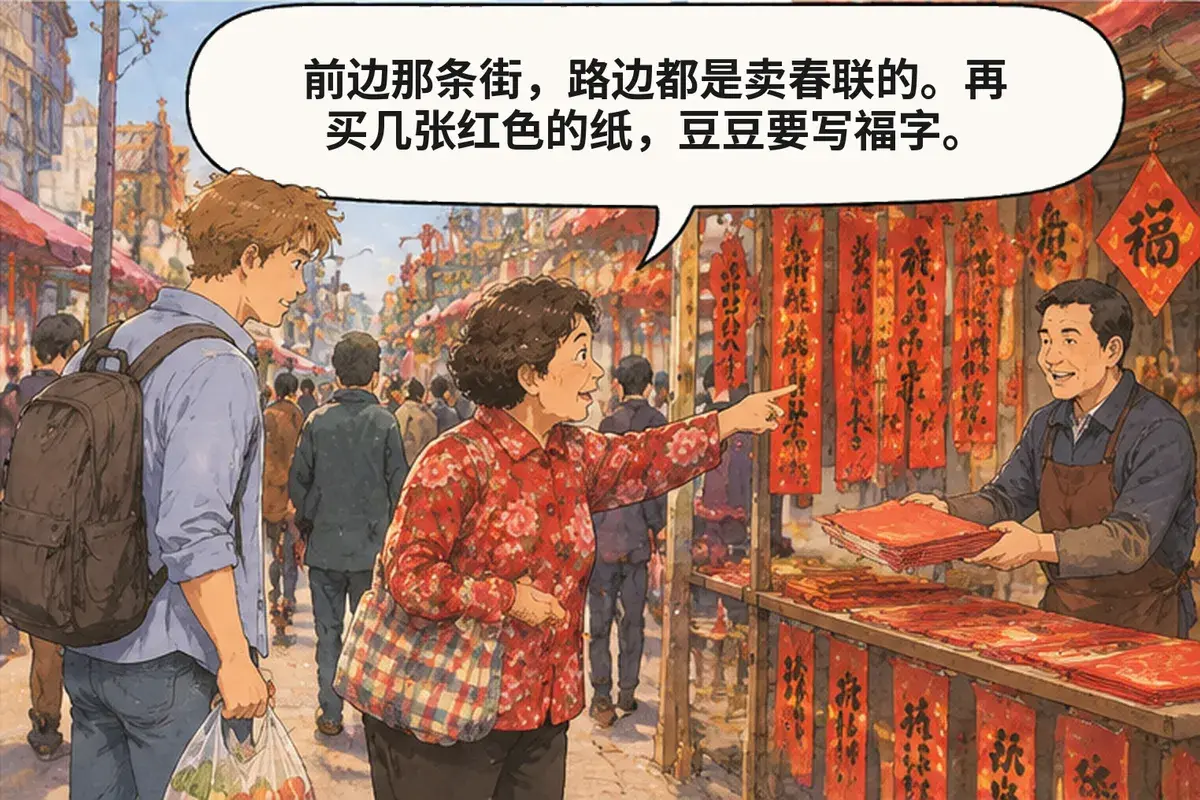
- 王阿姨
前边那条街,路边都是卖春联的。再买几张红色的纸,豆豆要写福字。
On the street up ahead, the roadside is full of people selling couplets. Let's also buy a few sheets of red paper. Doudou wants to write fu characters.
Grammar for this text
怎么 又 贵 了? — Why did it get more expensive again? 又 (yòu) means "again" about something that has already happened once more. Auntie Wang buys fish here every week and sees the price has gone up again. 了 at the end means "it has become so" (it has become expensive). The rule for 又 and 再 is in the unit's grammar.
不 能 再 便宜 了。 下次 再 来 啊! — I can't go any cheaper. Come again next time! 再 (zài) looks ahead: "no cheaper than this", "come again next time". 再 买 几 张 红色 的 纸 — Let's also buy a few sheets of red paper. Here 再 means "also, in addition".
两 条 一百 三。 — Two for 130. In prices people drop the last unit: 一百 三 is 130 (a hundred and three tens), not 103. For 103 you say 一百 零 三: 零 "zero" fills the empty place. Ilya got it wrong, as many learners do. If you aren't sure, ask again.
这 两 条 鱼 — these two fish. 条 (tiáo) is the measure word for long thin things: fish, streets (那 条 街).
鱼、 肉、 糖、 春联 什么的 — fish, meat, candy, New Year couplets and stuff like that. 什么的 at the end of a list means "and stuff like that". 春节 吃 的、 用 的 — what we eat and use for the Spring Festival: 的 with no noun after it (unit 15).
年货 — everything people buy for the Spring Festival. Fish is a must: 鱼 (yú) sounds like the word for "surplus", so the whole year will be full of plenty. 春联 are the red couplets on both sides of the door, and 福 is the fu character for good fortune that goes on the door. Prices go up before the holiday: 什么 都 贵 啊! — Everything is expensive! 什么 都 means "everything" (see unit 6).
路边 都 是 卖 春联 的 — the roadside is all people selling couplets. 卖 春联 的 means "those who sell couplets": 的 with no noun after it (unit 15).
你 真 会 讲价! — You really know how to bargain! Bargaining is fine at a market or a street stall, but not in a store.
Words and grammar of the unit: Shop for the Spring Festival.
Learn the words from the texts with flashcards
In the app, you can tap any word in a text to see its translation, forms and examples, and new words stick with flashcards. 15 minutes a day.
Start for freeEverything is open for free. No card needed to sign up.