

Chinese dialogue with translation · A2 · 16 lines
我抢了三天票了! I've been trying to get a ticket for three days!
Comic · 16 panels

- 伊利亚
张磊,你怎么了?一直看手机。
Zhang Lei, what's wrong? You keep staring at your phone.
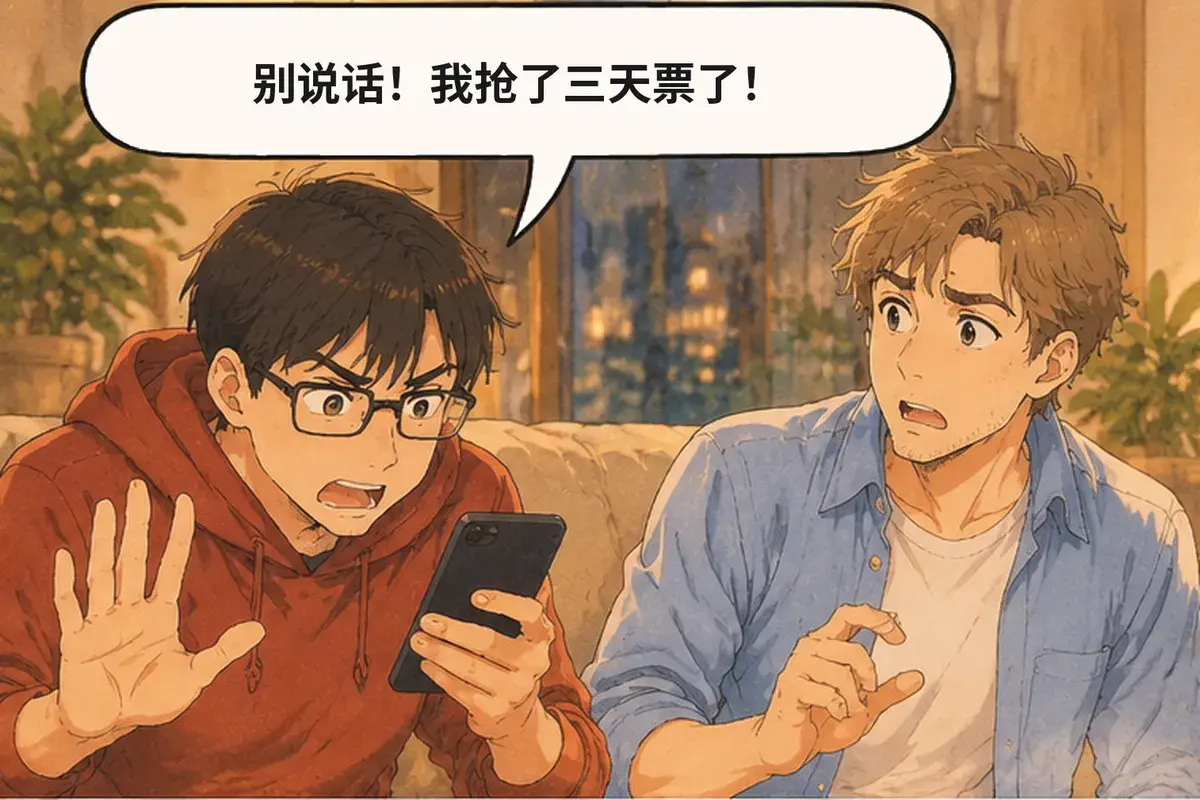
- 张磊
别说话!我抢了三天票了!
Don't talk to me! I've been trying to get a ticket for three days!

- 伊利亚
抢票?票也要抢吗?
Fight for a ticket? You have to fight for tickets too?

- 张磊
当然!现在是春运啊。
Of course! It's the Spring Festival travel rush right now.

- 伊利亚
什么?你说得太快了。
What? You're talking too fast.

- 张磊
春运。春节的时候,全国的人都回老家。
The Spring Festival travel rush. At Spring Festival, people from all over the country go back to their hometowns.

- 张磊
我在外地打工,一年只回去一次。
I work in another city, and I only go home once a year.
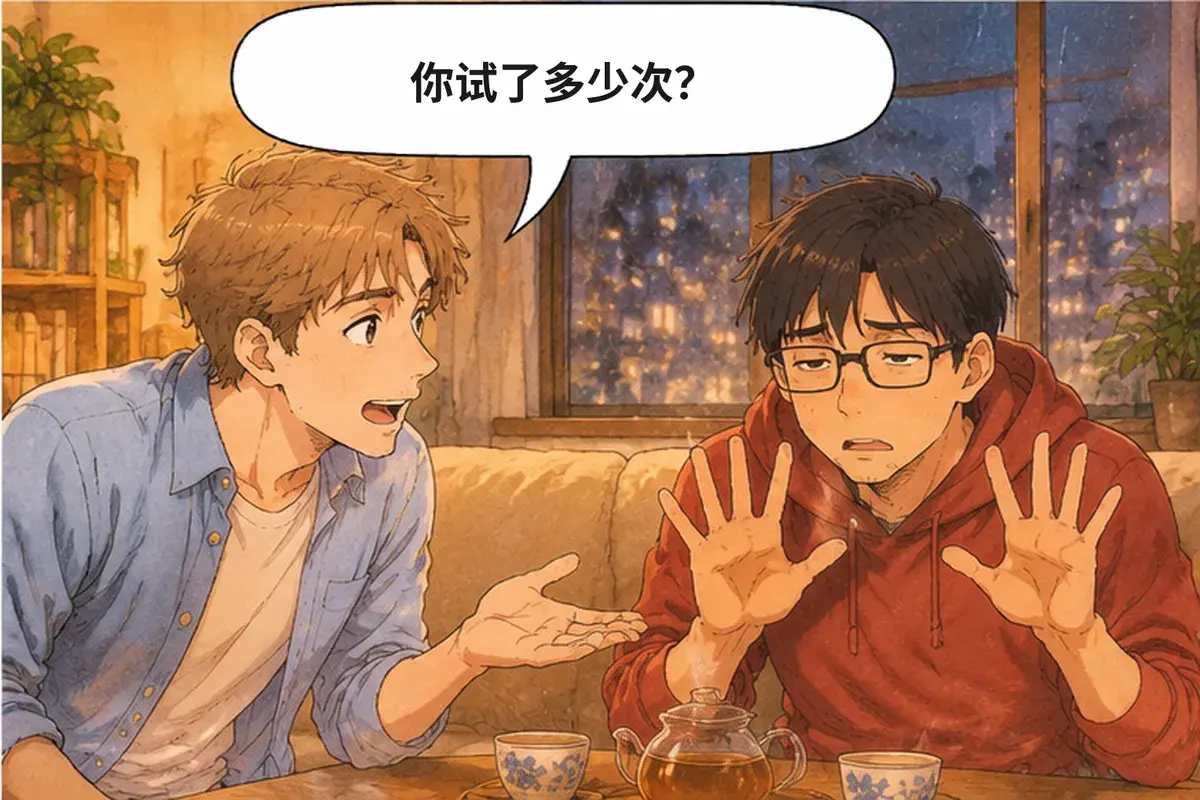
- 伊利亚
你试了多少次?
How many times have you tried?
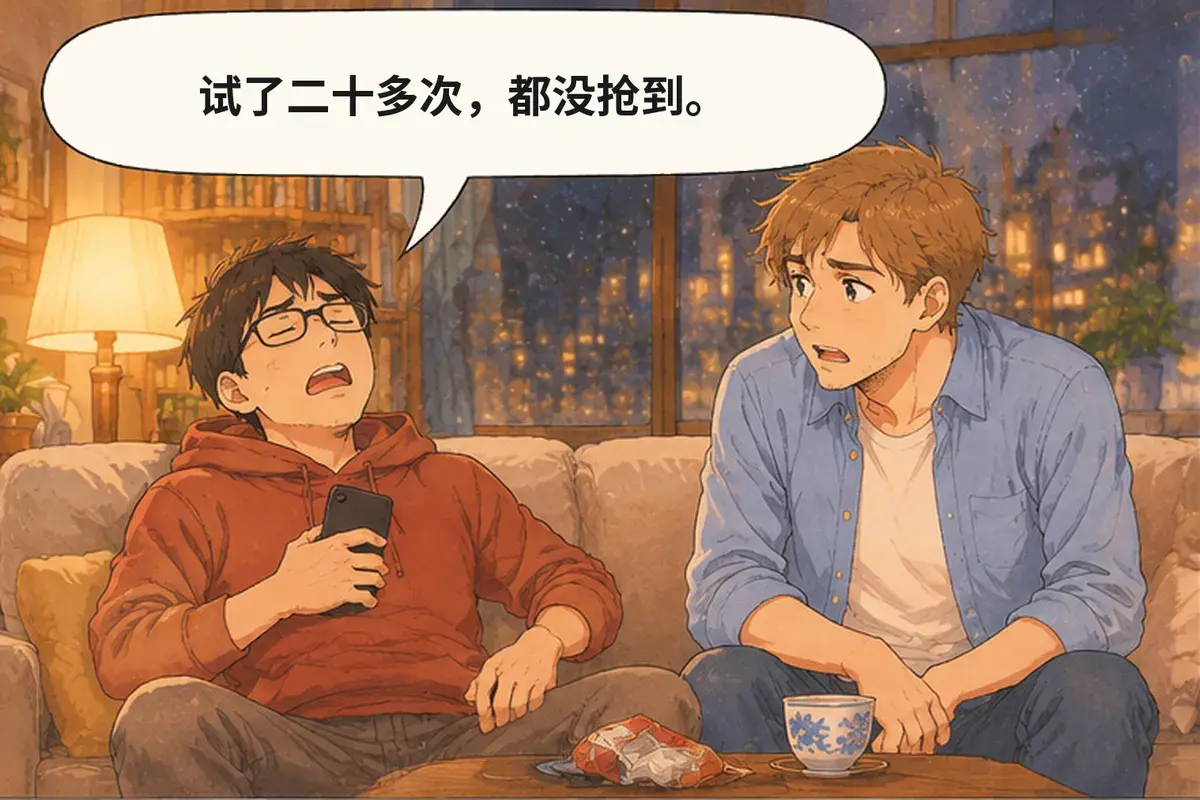
- 张磊
试了二十多次,都没抢到。
I tried more than twenty times and didn't get one.
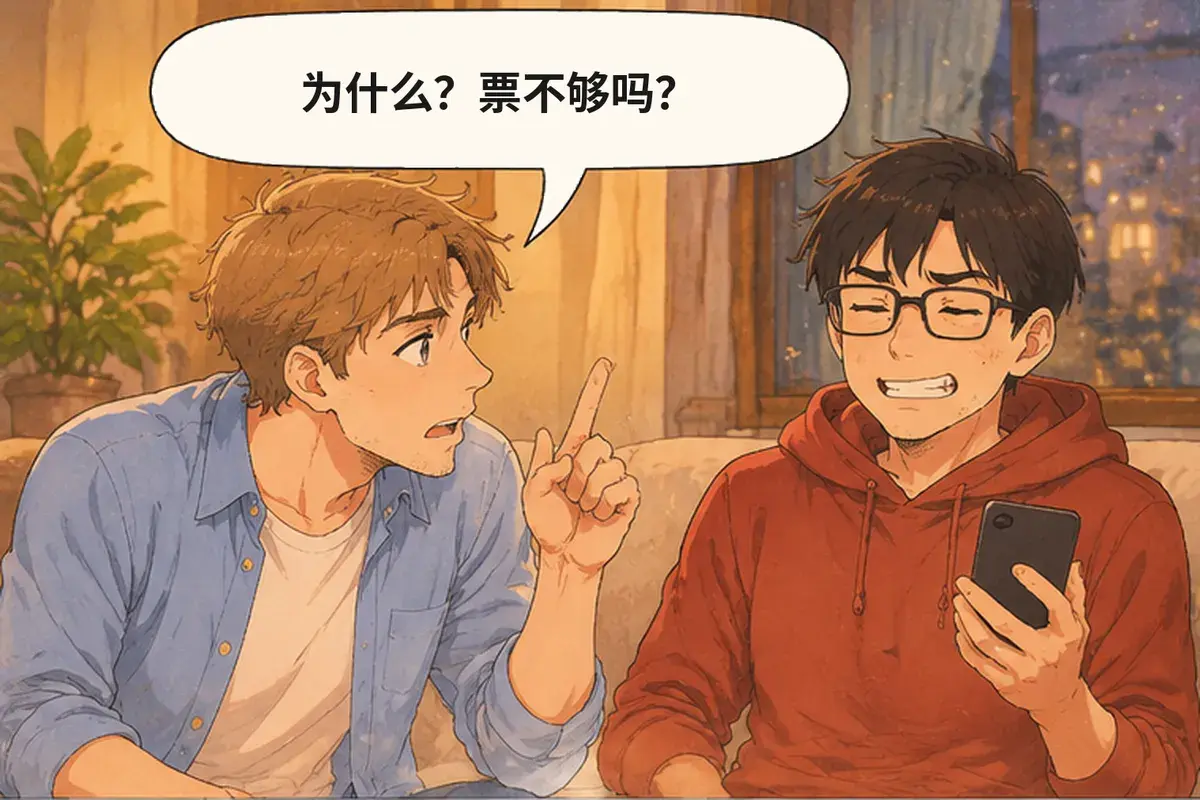
- 伊利亚
为什么?票不够吗?
Why? Aren't there enough tickets?
- 张磊
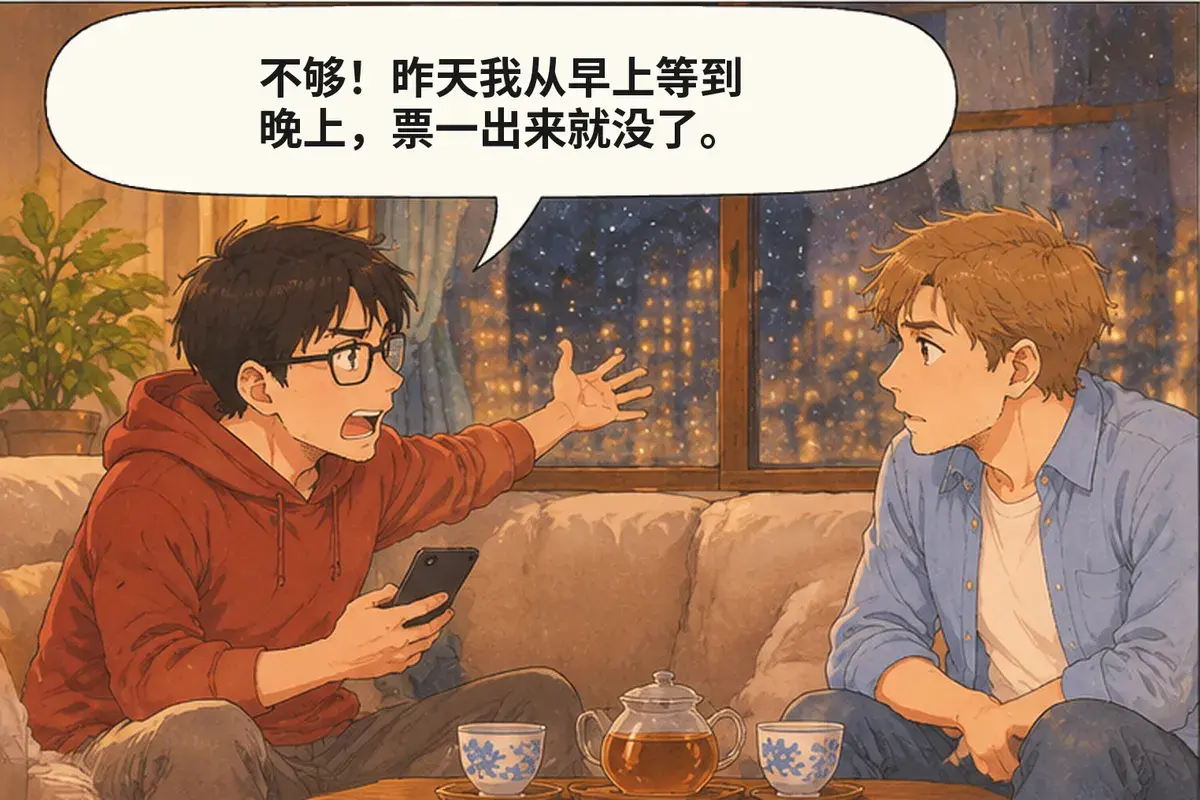
不够!昨天我从早上等到晚上,票一出来就没了。
There aren't! Yesterday I waited from morning until evening, and the tickets were gone as soon as they came out.

- 伊利亚
去年你是怎么回去的?坐了多久?
How did you get home last year? How long did you sit?
- 张磊
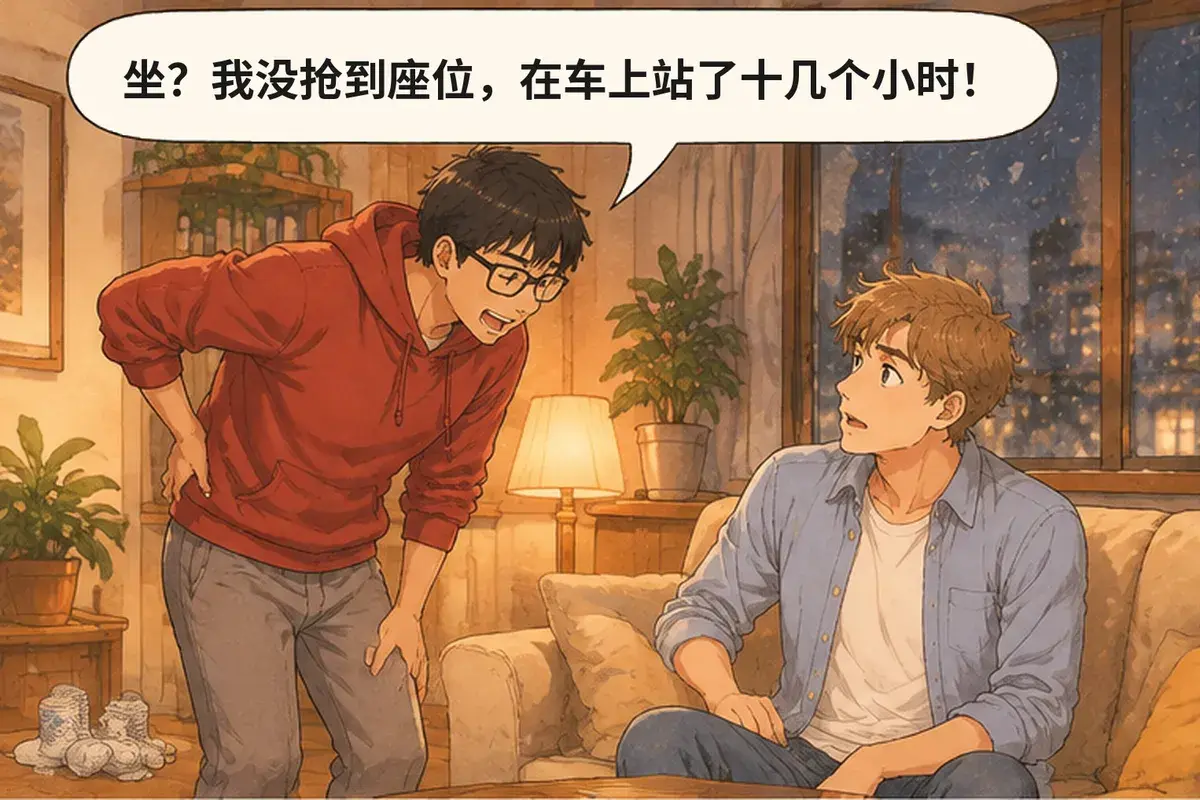
坐?我没抢到座位,在车上站了十几个小时!
Sit? I didn't get a seat. I stood on the train for more than ten hours!

- 伊利亚
十几个小时?如果今年也抢不到,就在杭州过春节吧!
More than ten hours? If you can't get one this year either, celebrate Spring Festival in Hangzhou!

- 张磊
不行,我从小每年都在家过春节。
No way. Since I was little, I've spent every Spring Festival at home.
- 张磊
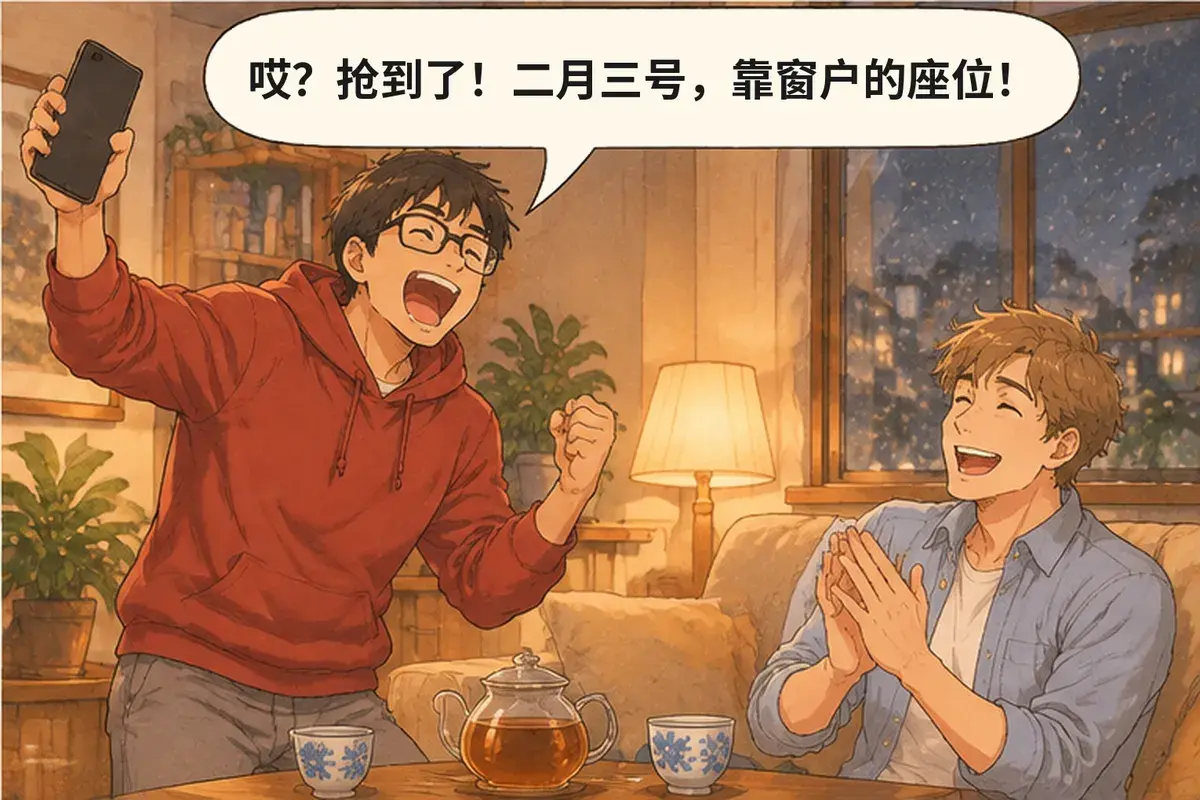
哎?抢到了!二月三号,靠窗户的座位!
Huh? Got it! February 3, a window seat!
Grammar for this text
我 抢 了 三 天 票 了! — I've been trying to get a ticket for three days! How long something lasted goes after the verb: 抢 了 三 天, and only then the thing, 票. The second 了 at the end means "and it's still going on": Zhang Lei is still at it (see the unit grammar). 抢 票 means "to grab a ticket": during the Spring Festival travel rush, tickets in the app sell out in minutes, so people refresh the screen again and again.
试 了 二十 多 次, 都 没 抢到。 — I tried more than twenty times and didn't get one. How many times also goes after the verb; 二十 多 means "more than twenty" (unit 21); 都 没 means "not once".
春运 (chūnyùn) — the Spring Festival travel rush: about forty days around the Spring Festival when the whole country travels home. In 2027 the Spring Festival is on February 6.
我 在 外地 打工, 一 年 只 回去 一 次。 — I work in another city, and I only go home once a year. 外地 means "a place that is not your hometown"; 打工 means "to work for an employer", and even programmers joke about themselves this way. In 一 年 … 一 次 the period comes first, then how many times, like 一 天 三 次 ("three times a day", A1).
昨天 我 从 早上 等到 晚上… — Yesterday I waited from morning until evening. 等到 means "to wait until". 票 一 出来 就 没 了 — The tickets were gone as soon as they came out. 一 … 就 means "as soon as … right away" (unit 11); 没 了 means "gone, sold out".
坐 了 多久? — How long did you sit? 多久 means "how long". Zhang Lei picks up on the word: 坐 means both "to ride" and "to sit", and he stood the whole way: 在 车上 站 了 十 几 个 小时 — I stood on the train for more than ten hours (十 几 means "ten-something", unit 21).
如果 今年 也 抢不到… — If you can't get one this year either… 抢不到 means "there's no way to get it" (the potential form, unit 6).
靠 窗户 的 座位! — 靠 (kào) means "to be right next to": "a window seat". Tickets and apps write it shorter: "靠窗".
Words and grammar of the unit: Get a ticket home in the Spring Festival travel rush.
Learn the words from the texts with flashcards
In the app, you can tap any word in a text to see its translation, forms and examples, and new words stick with flashcards. 15 minutes a day.
Start for freeEverything is open for free. No card needed to sign up.