
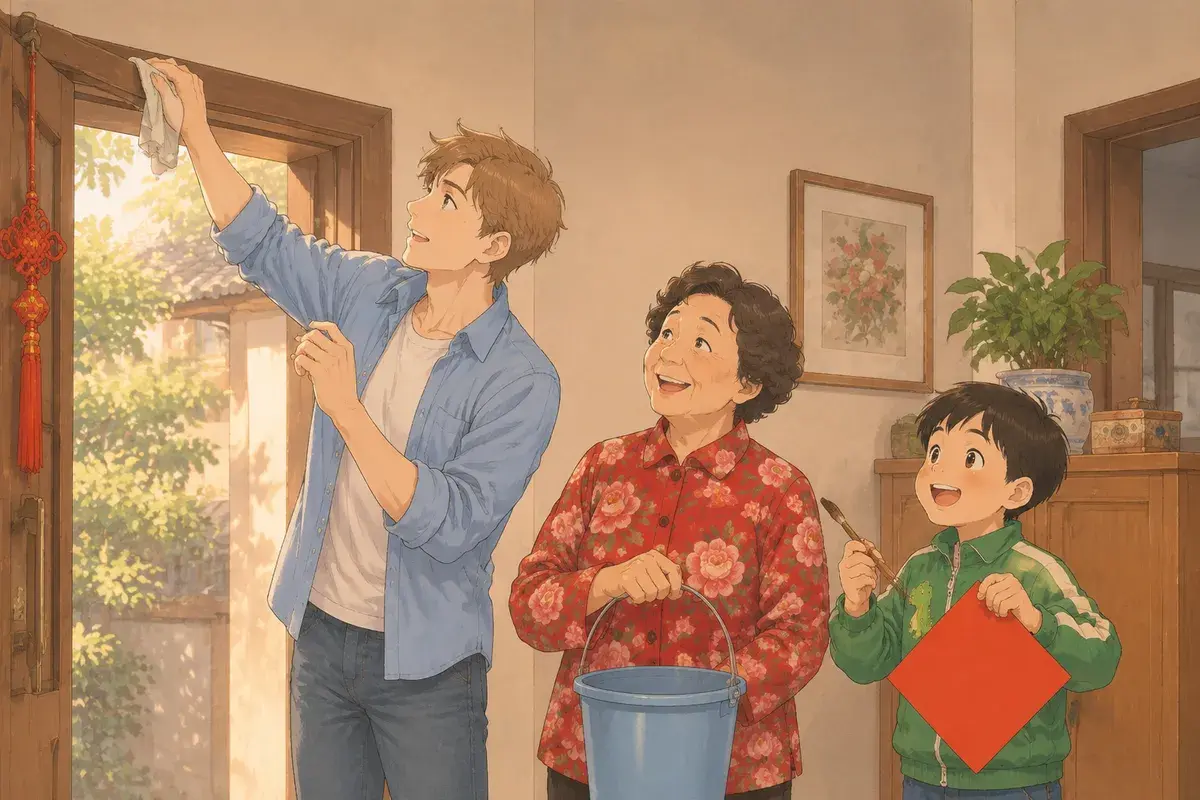
Chinese dialogue with translation · A2 · 16 lines
你昨天买的春联呢? Where are the New Year couplets you bought yesterday?
Comic · 16 panels
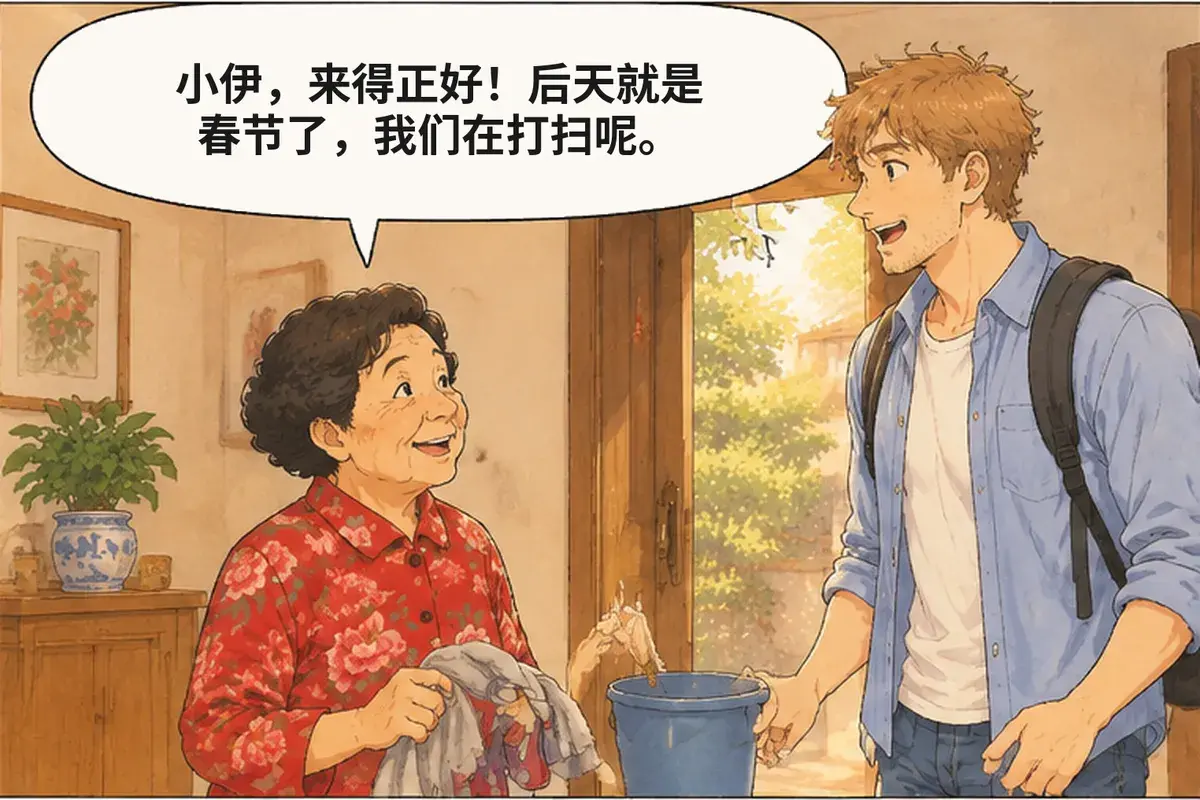
- 王阿姨
小伊,来得正好!后天就是春节了,我们在打扫呢。
Xiao Yi, you're just in time! It's Spring Festival the day after tomorrow, and we're cleaning.
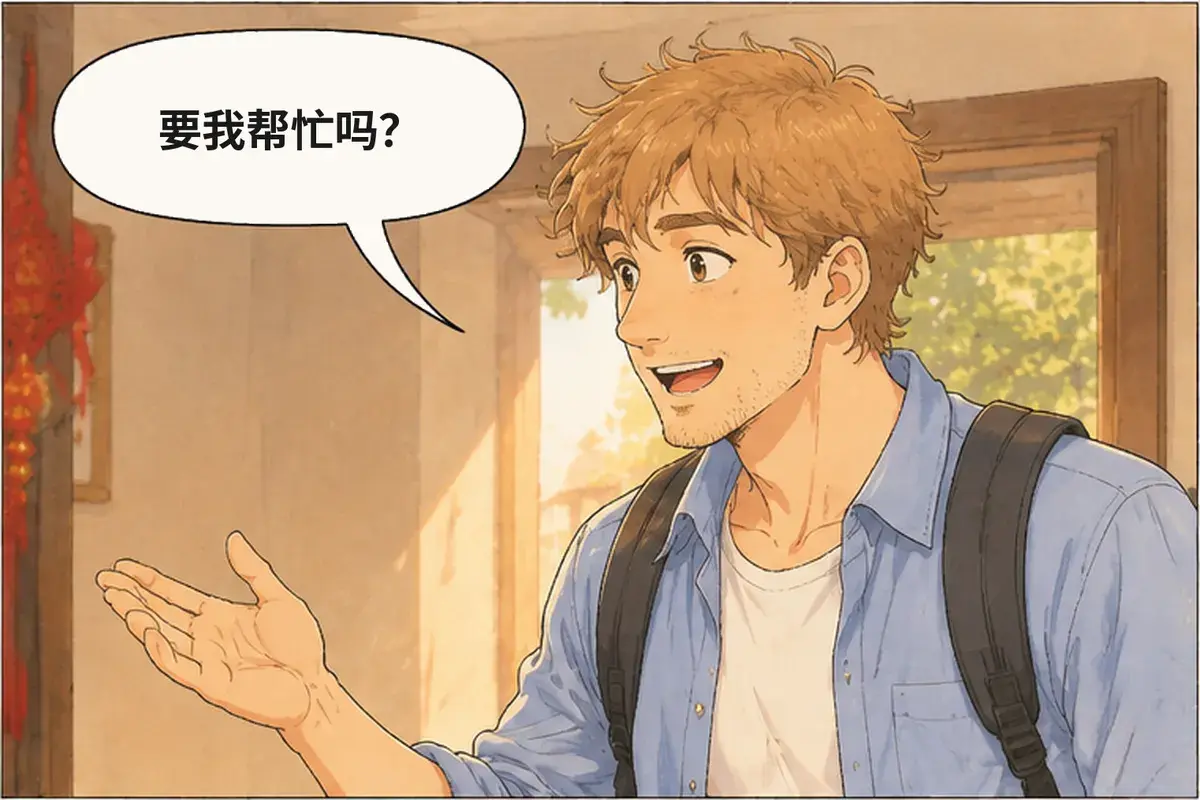
- 伊利亚
要我帮忙吗?
Do you want me to help?
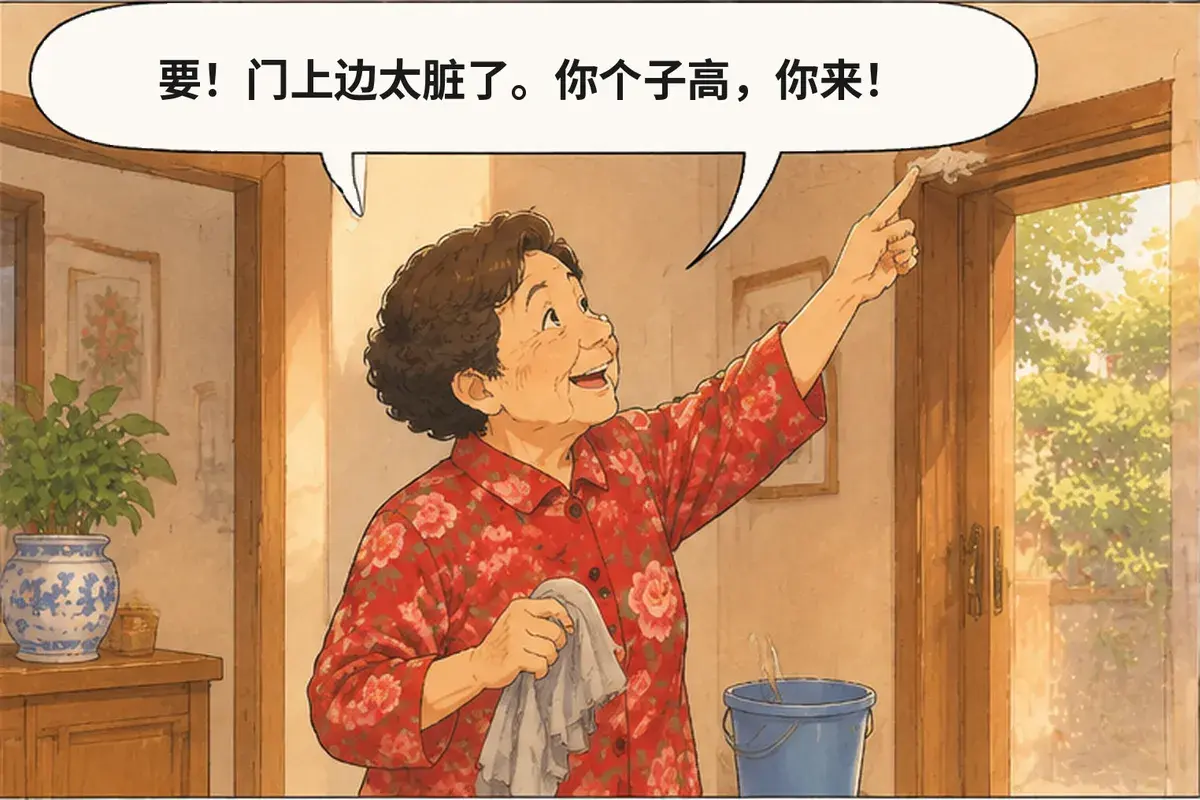
- 王阿姨
要!门上边太脏了。你个子高,你来!
Yes! The top of the door is really dirty. You're tall, so you do it!
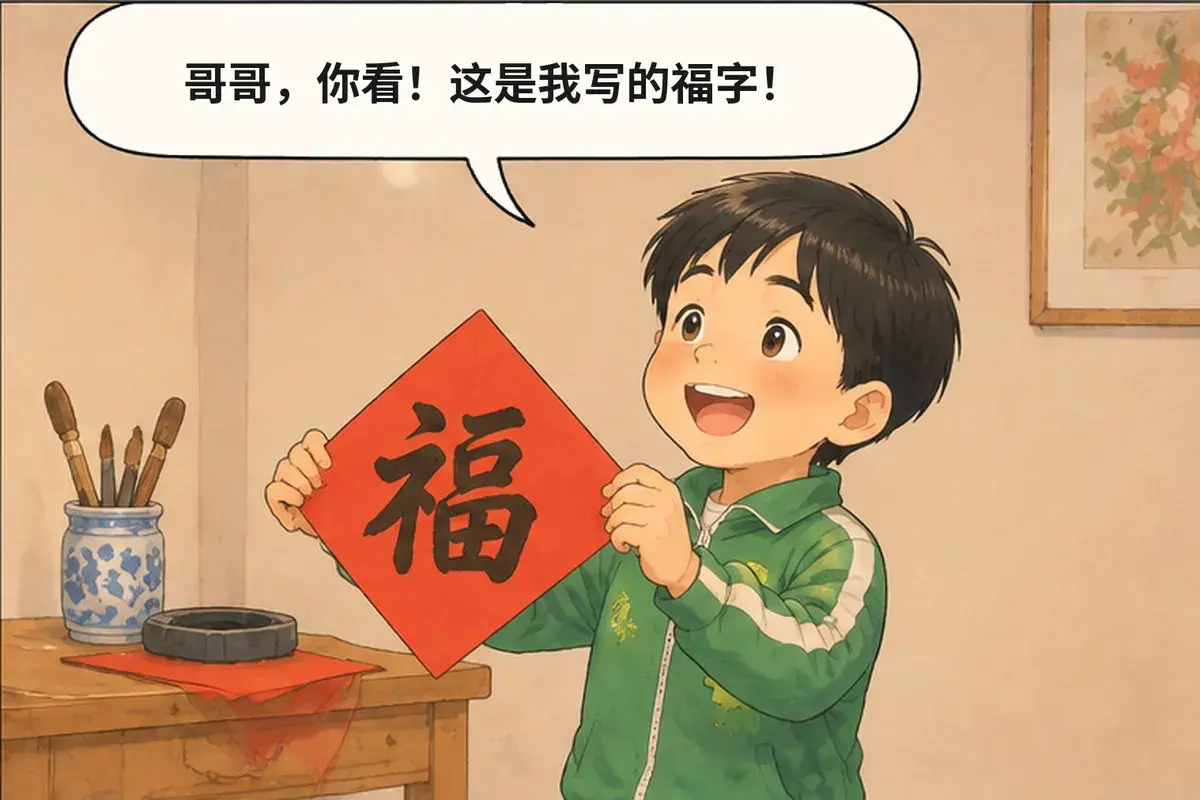
- 豆豆
哥哥,你看!这是我写的福字!
Big brother, look! This is the fu character I wrote!
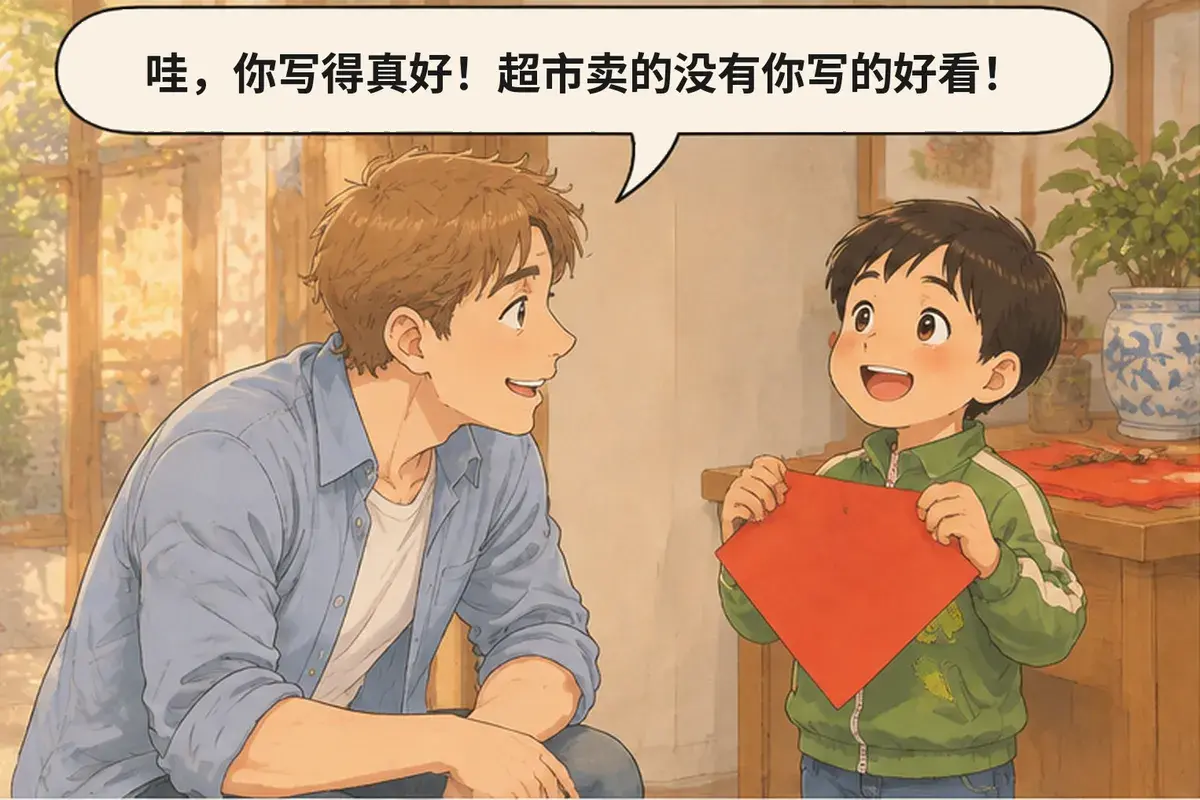
- 伊利亚
哇,你写得真好!超市卖的没有你写的好看!
Wow, you write so well! The ones they sell at the supermarket aren't as nice as the one you wrote!
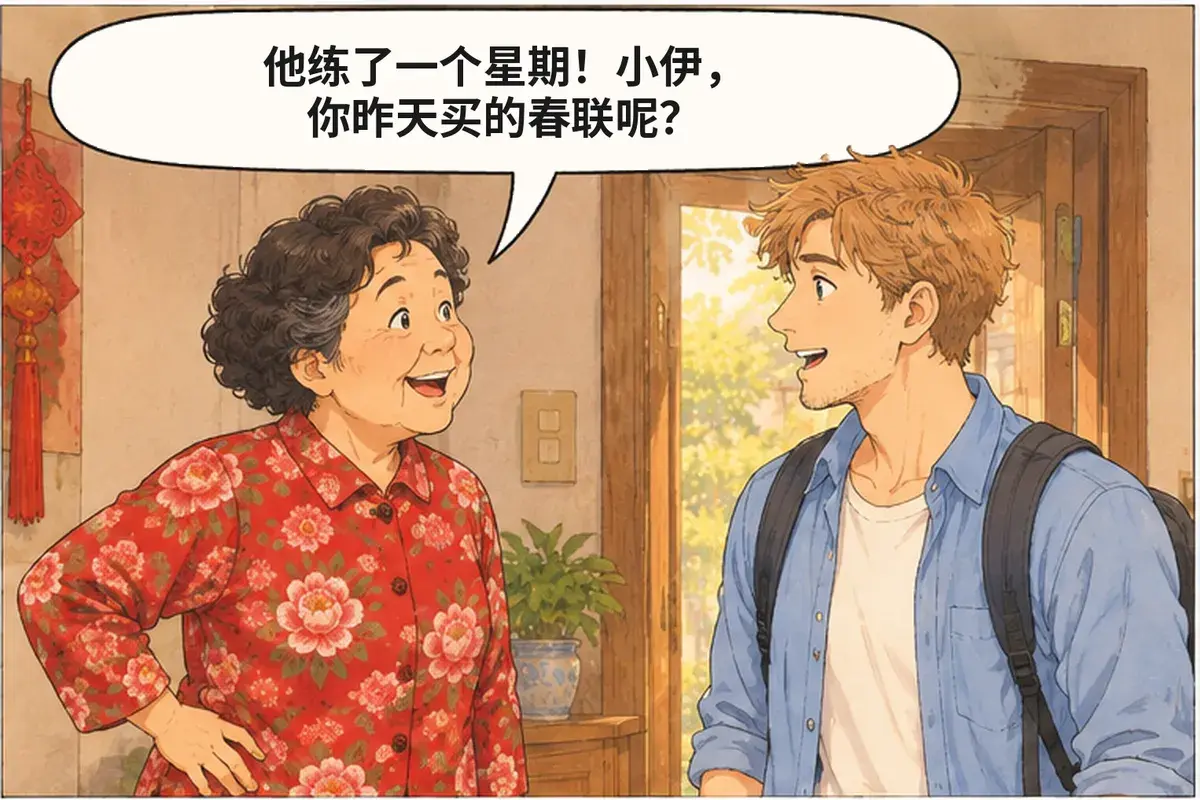
- 王阿姨
他练了一个星期!小伊,你昨天买的春联呢?
He practiced for a whole week! Xiao Yi, where are the New Year couplets you bought yesterday?
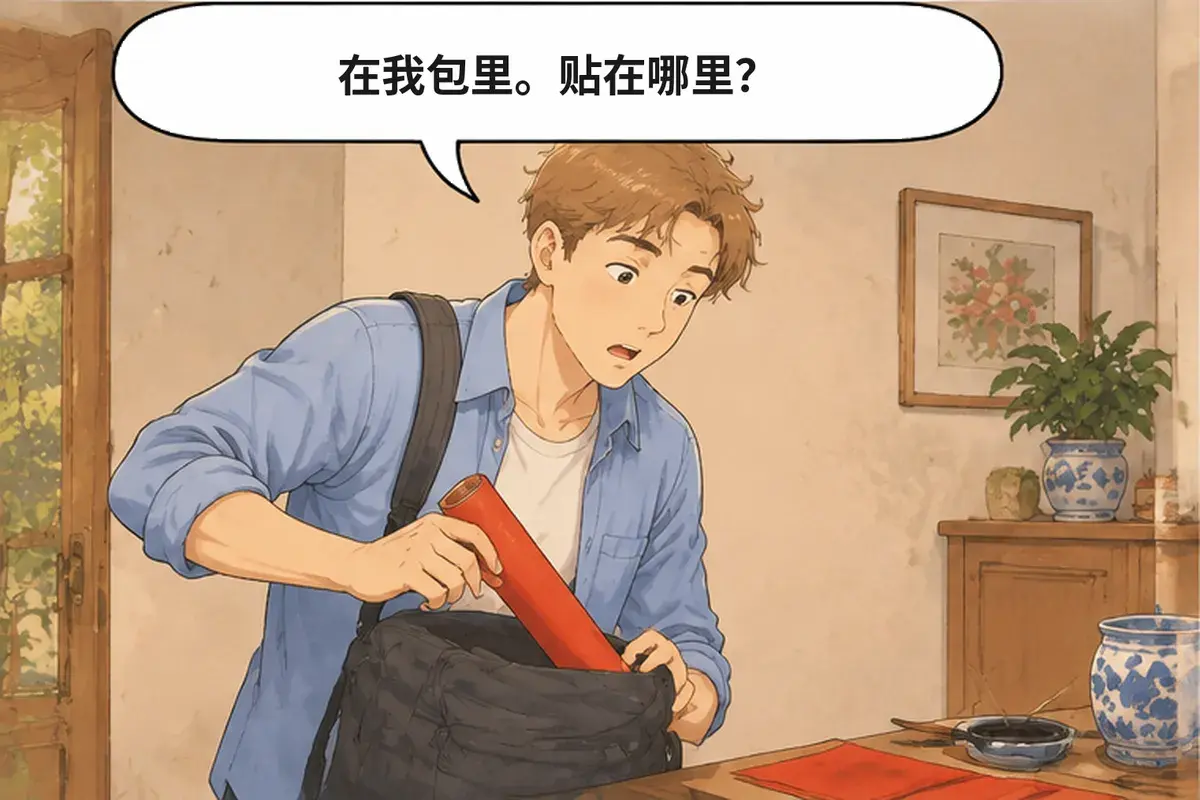
- 伊利亚
在我包里。贴在哪里?
They're in my bag. Where do I put them up?
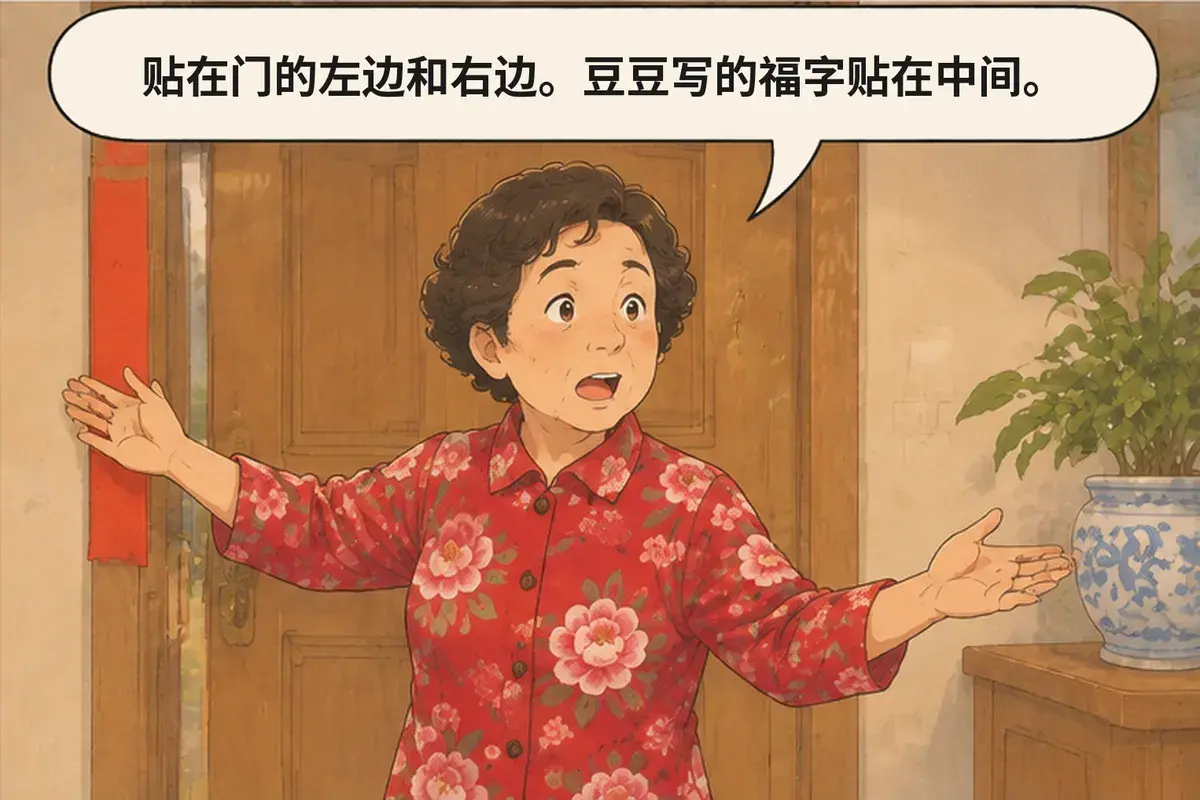
- 王阿姨
贴在门的左边和右边。豆豆写的福字贴在中间。
Put them on the left and right of the door. The fu character Doudou wrote goes in the middle.
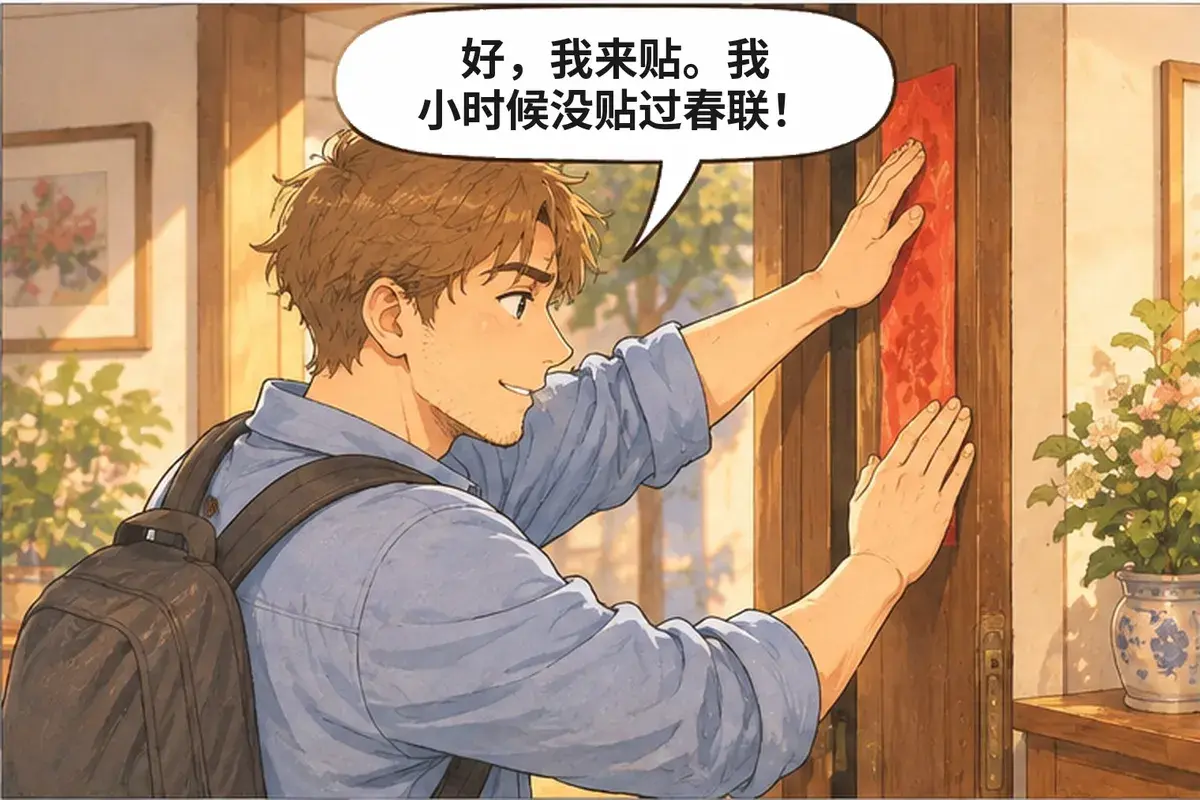
- 伊利亚
好,我来贴。我小时候没贴过春联!
OK, I'll put them up. I never put up couplets as a kid!
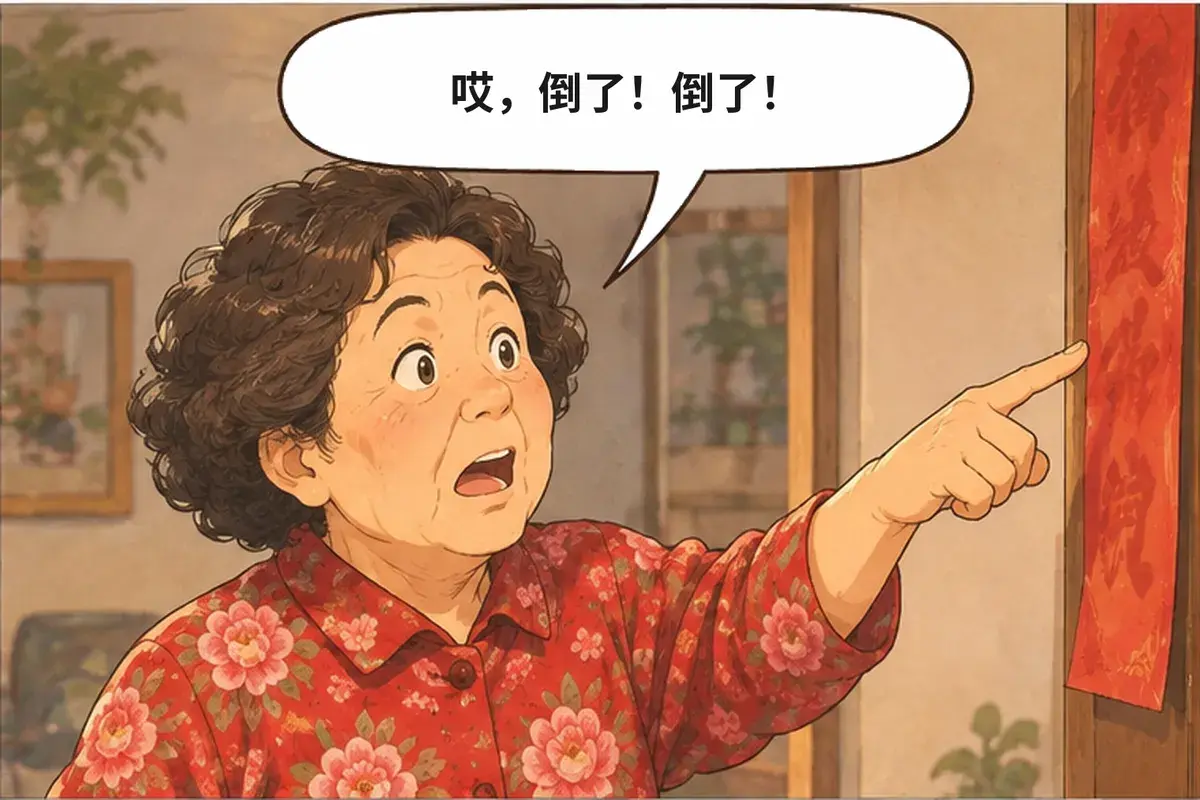
- 王阿姨
哎,倒了!倒了!
Hey, it's upside down! It's upside down!
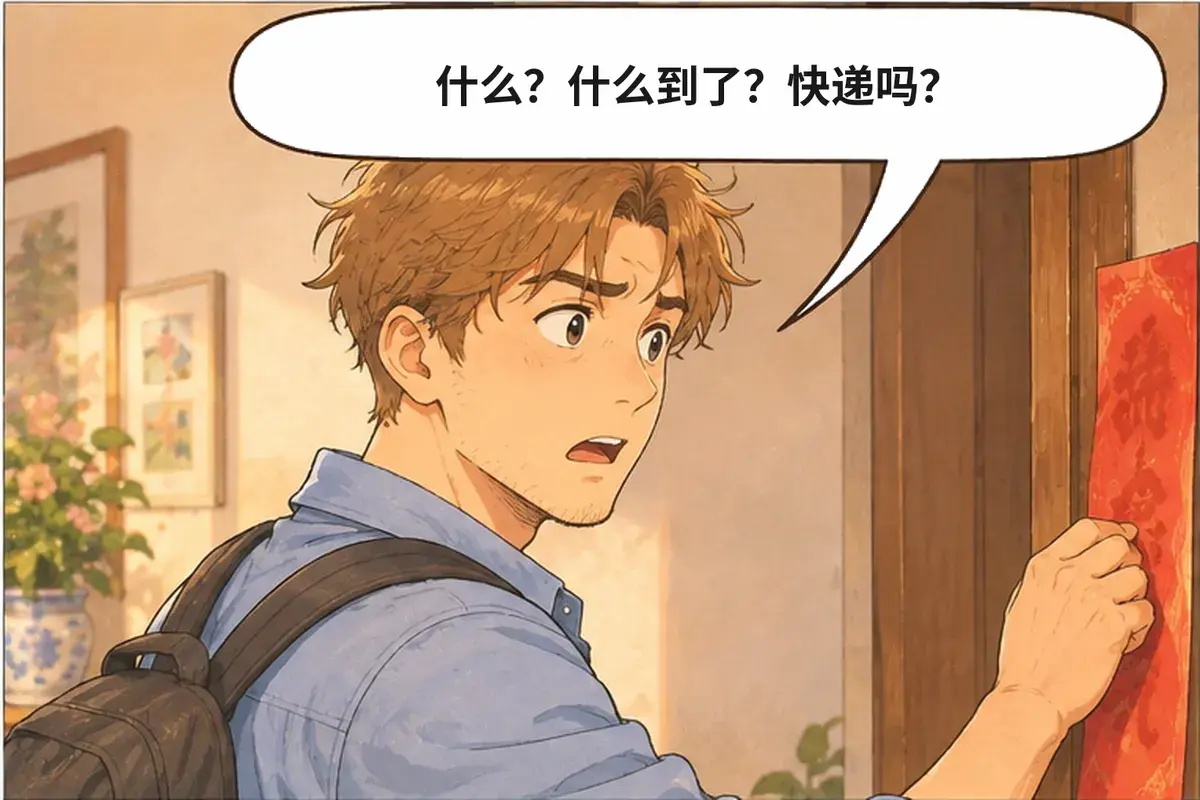
- 伊利亚
什么?什么到了?快递吗?
What? What arrived? A package?
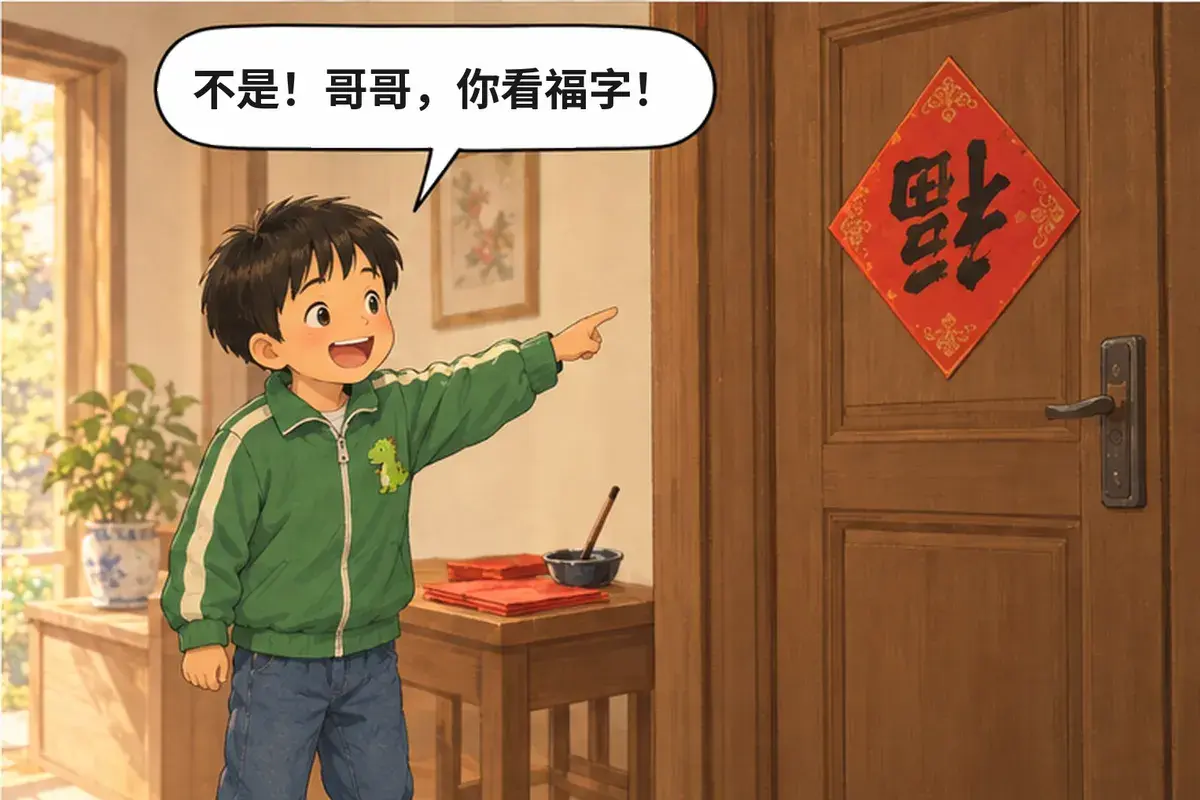
- 豆豆
不是!哥哥,你看福字!
No! Big brother, look at the fu character!
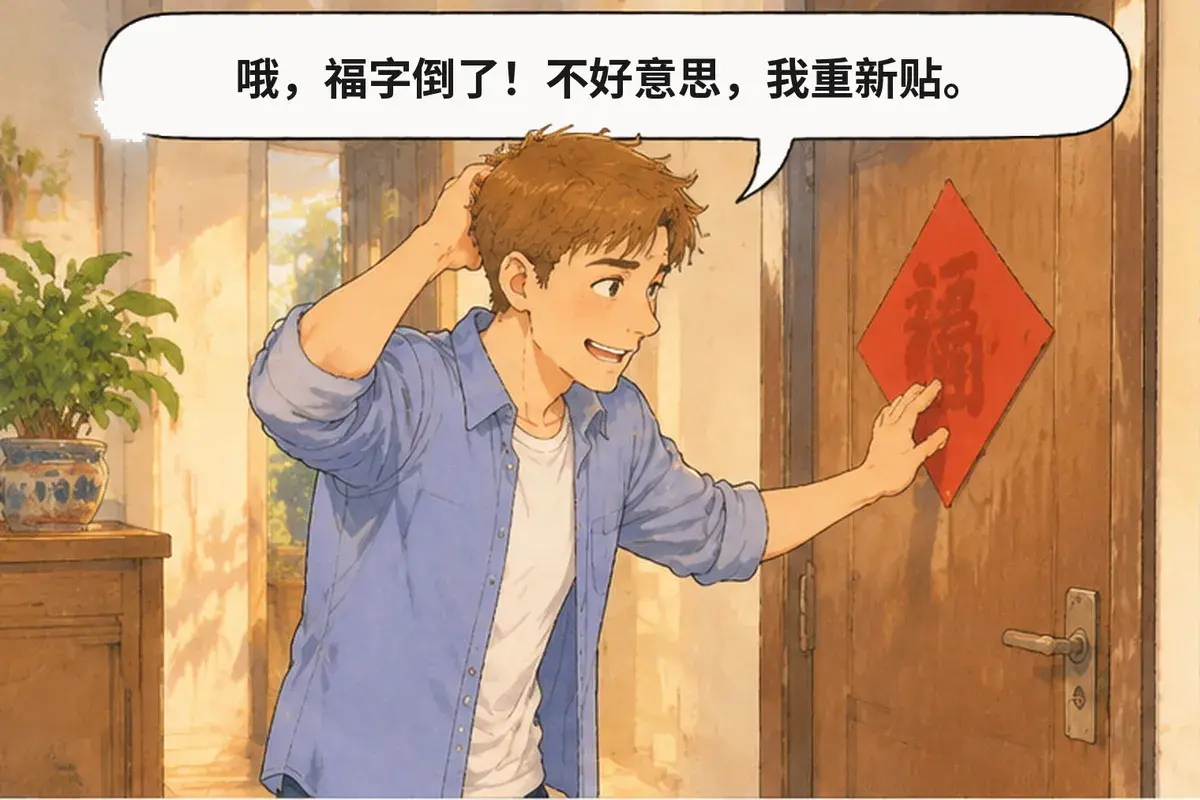
- 伊利亚
哦,福字倒了!不好意思,我重新贴。
Oh, the fu character is upside down! Sorry, I'll put it up again.
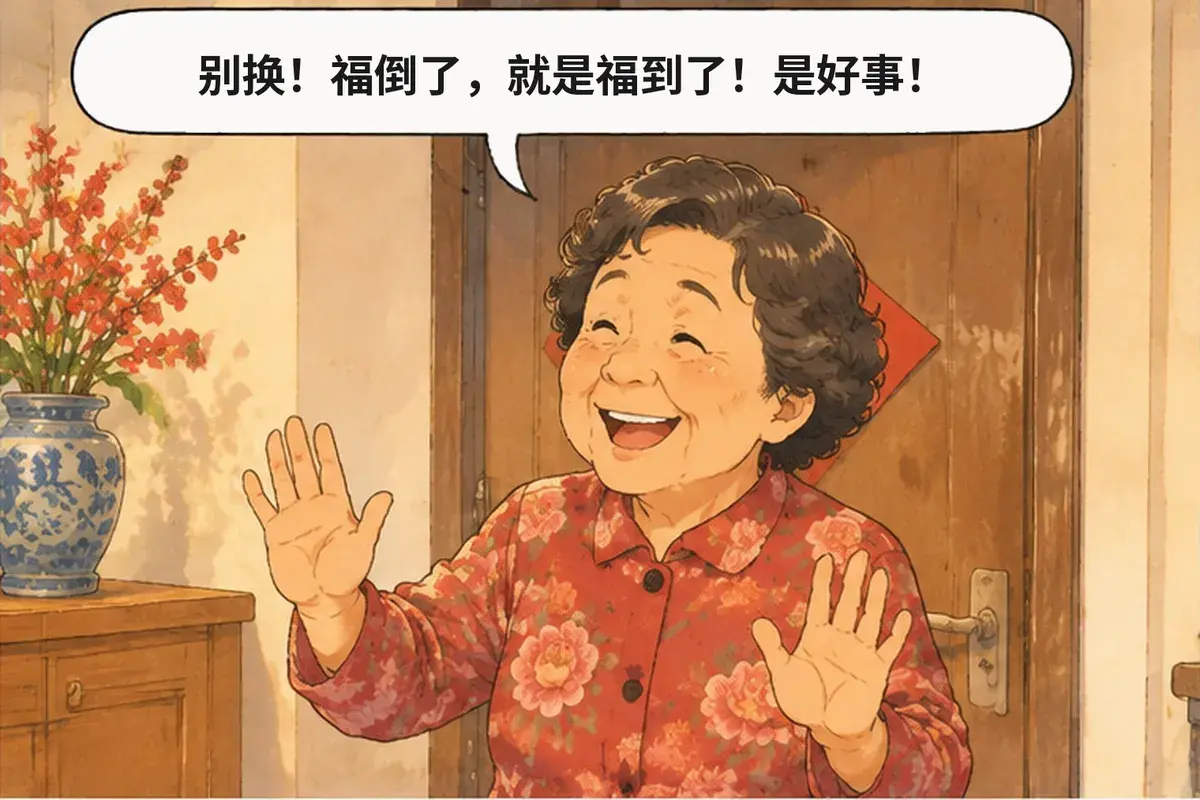
- 王阿姨
别换!福倒了,就是福到了!是好事!
Don't change it! If fu is upside down, then good fortune has arrived! That's a good thing!
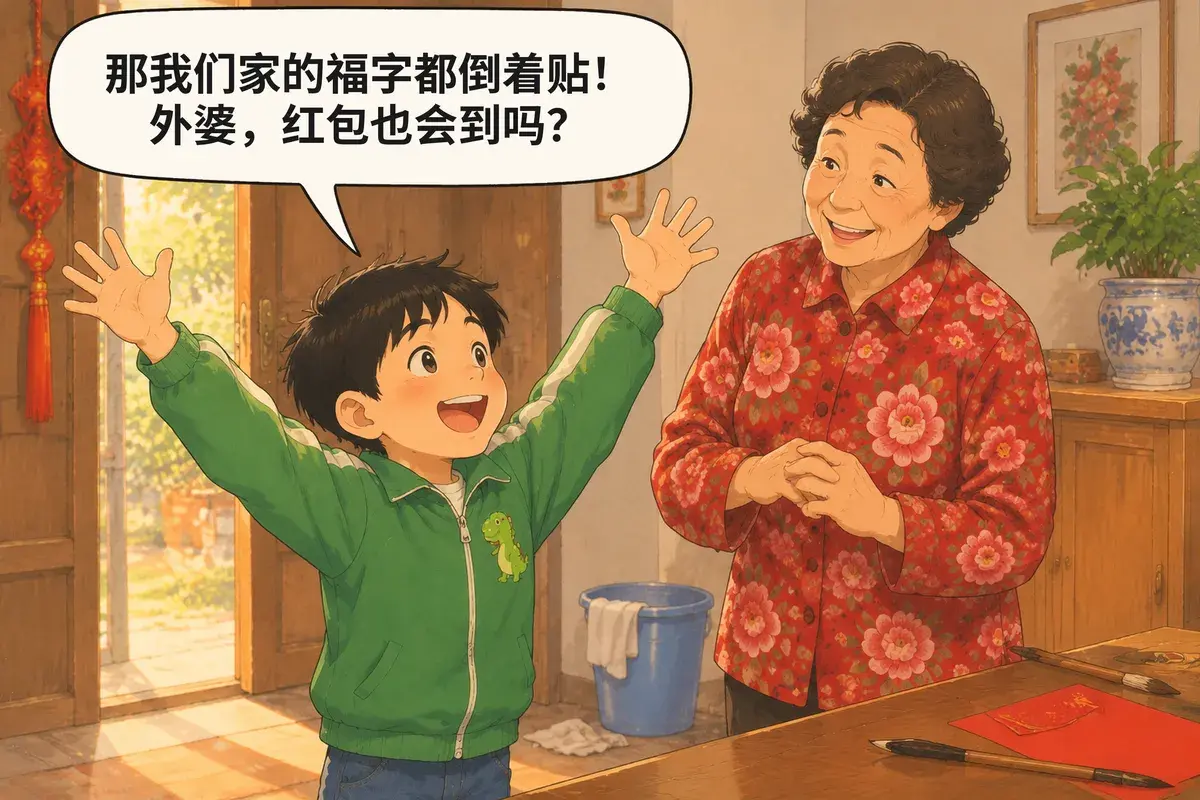
- 豆豆
那我们家的福字都倒着贴!外婆,红包也会到吗?
Then let's put up all the fu characters in our house upside down! Grandma, will red envelopes arrive too?
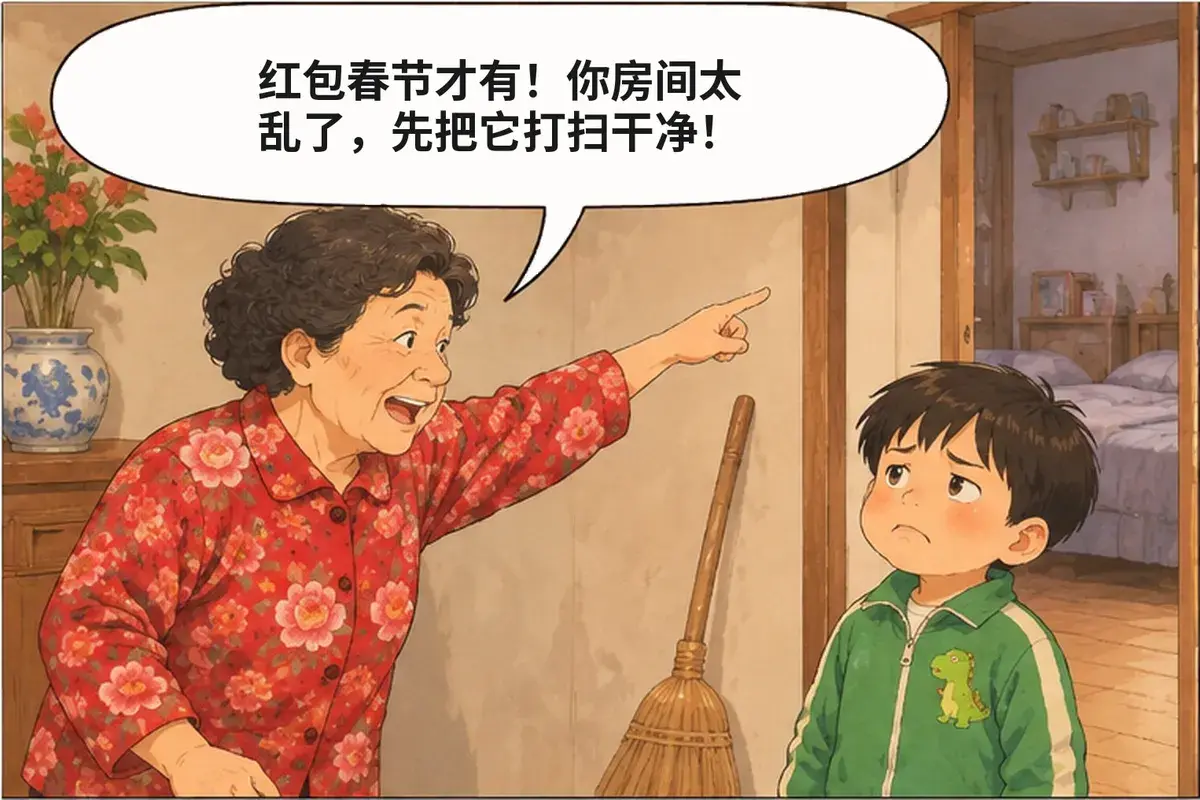
- 王阿姨
红包春节才有!你房间太乱了,先把它打扫干净!
Red envelopes only come at the Spring Festival! Your room is a mess. Clean it up first!
Grammar for this text
你 昨天 买 的 春联 呢? — Where are the couplets you bought yesterday? This is the main point of the unit: a describing phrase before the noun. 你 昨天 买 的 ("you bought yesterday") comes before 春联 and describes it, and 的 marks the edge. English puts the description after the noun ("couplets that you bought"); Chinese puts the whole description first. 春联 (chūnlián) are the New Year couplets: red paper strips with matching lines, put on both sides of the door.
这 是 我 写 的 福 字! — works the same way: "the character fu that I wrote". 福 (fú) means "good fortune"; people write it on red paper and put it on the door.
超市 卖 的 没有 你 写 的 好看! — the noun after 的 is dropped because it is clear (Unit 15): "the ones sold at the supermarket", "the one you wrote".
他 练 了 一 个 星期! — 练 (liàn) means "to practice": Auntie Wang is proud of her grandson, who practiced writing the character for a whole week. 一 个 星期 after the verb tells how long the action lasted.
我 小时候 没 贴 过 春联! — 小时候 (xiǎoshíhou) means "as a child"; 没 … 过 means "have never done". Ilya never put up couplets back home, so he puts the character up upside down.
哎, 倒 了! — 倒 (dào) means "upside down". It sounds exactly like 到 (dào) "to arrive", which is why Ilya thinks a package has come: 什么 到 了? 快递 吗? You will hear 快递 到 了 ("the package has arrived") in China every day.
福 倒 了, 就 是 福 到 了! — the custom rests on this sound match: an upside-down 福 means "good fortune has arrived". That is why Auntie Wang won't let Ilya redo it, and why Doudou wants to put up all the characters 倒 着 贴 — 着 means "in that position" (Unit 9).
来 得 正好 — "you came at just the right time": a degree phrase with 得 (Unit 19).
红包 春节 才 有! — 才 means "only then" (Unit 20). Before Spring Festival families do a big cleaning (打扫) to sweep out the old year.
你 房间 太 乱 了, 先 把 它 打扫 干净! — 乱 (luàn) means "messy": things are all over the place. Dirt is 脏 (like the door at the start of the text), while 乱 is mess. 把 它 打扫 干净 means "clean it up": the 把 construction.
Words and grammar of the unit: Get your home ready for the holiday.
Learn the words from the texts with flashcards
In the app, you can tap any word in a text to see its translation, forms and examples, and new words stick with flashcards. 15 minutes a day.
Start for freeEverything is open for free. No card needed to sign up.