

Chinese dialogue with translation · A2 · 18 lines
你的中文是在哪里学的? Where did you learn Chinese?
Comic · 14 panels

- 司机
尾号二七八八?
Number ending in 2788?
- 伊利亚
对,是我。
Yes, that's me.

- 司机
上海的外国人不少。你是哪国人啊?
There are quite a few foreigners in Shanghai. What country are you from?
- 伊利亚
我家很远,很远!
My home is far away, very far away!

- 司机
那么远?你的中文是在哪里学的?
That far? Where did you learn Chinese?
- 伊利亚
在杭州学的。我在杭州工作。
I learned it in Hangzhou. I work in Hangzhou.

- 司机
中文很难吧?那么多字!
Chinese is hard, right? So many characters!
- 伊利亚
对,实在太难了!字很难记,听也很难!
Yes, it's really hard! The characters are hard to remember, and listening is hard too!

- 司机
那你是来上海玩的?
So you came to Shanghai to have fun?

- 伊利亚
不是,是来出差的。
No, I came on a business trip.

- 司机
哦,做生意啊!你是什么时候来的?什么时候回杭州?
Oh, doing business! When did you come? When are you going back to Hangzhou?

- 伊利亚
什么?不好意思,您越说越快!请说慢一点。
What? Sorry, you're talking faster and faster! Please speak a little slower.

- 司机
好。你是什么时候来上海的?
OK. When did you come to Shanghai?

- 伊利亚
哦,懂了。昨天来的,明天回去。
Oh, I get it. I came yesterday, and I'm going back tomorrow.
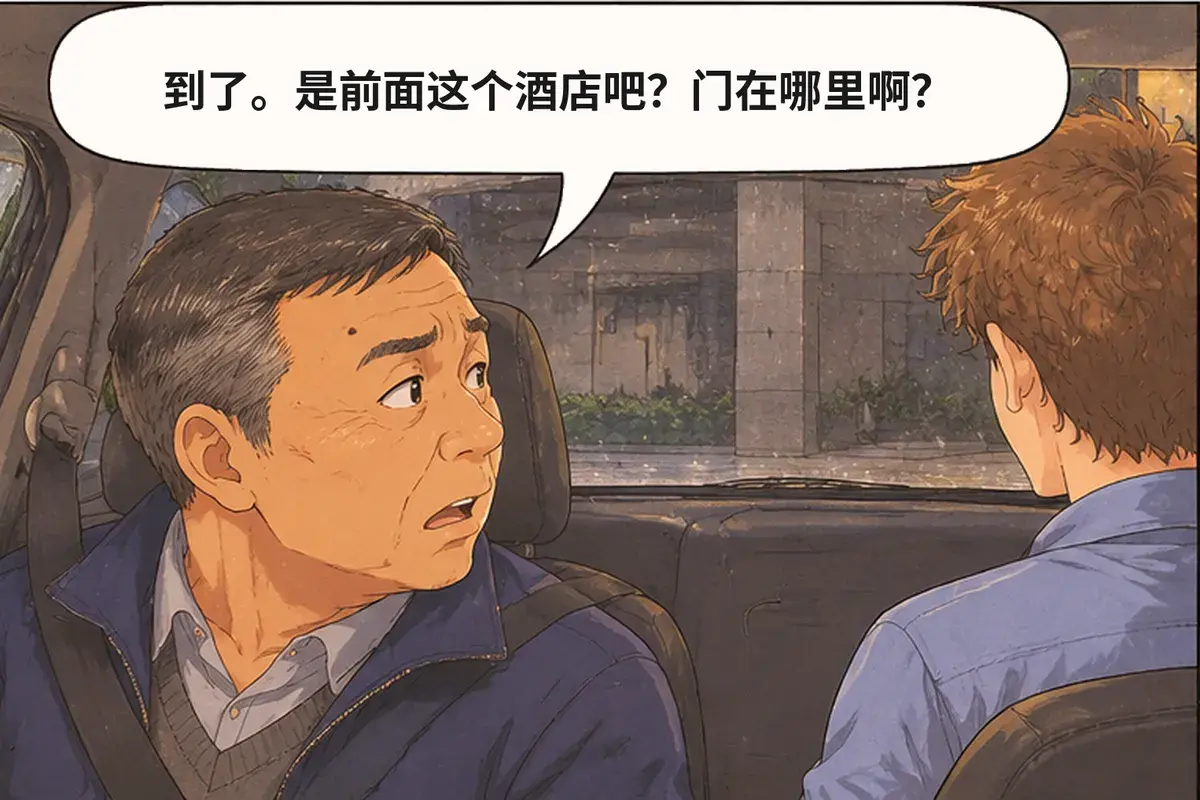
- 司机
到了。是前面这个酒店吧?门在哪里啊?
We're here. It's this hotel up ahead, right? Where's the door?

- 伊利亚
大门不在这边。往前走,再往右。
The main entrance isn't on this side. Go straight ahead, then turn right.

- 司机
看见了!你是上海人吧?
I see it! You're from Shanghai, right?

- 伊利亚
不是,只是手机地图认得路!
No, it's just that the map on my phone knows the way!
Grammar for this text
上海 的 外国 人 不少。 — 不少 means "quite a few, quite a lot": the driver starts a conversation, like all taxi drivers do.
你 的 中文 是 在 哪里 学 的? — common questions for a foreigner in China: where are you from, where did you learn the language, why did you come. The object 中文 is moved to the start as the topic, and the frame 是 … 的 points out "where".
我 家 很 远, 很 远! — to "what country are you from?" Ilya answers with a joke and doesn't name the country. 那么 远? — "that far?": 那么 is about something over there, far away (unit 1).
那 你 是 来 上海 玩 的? and 是 来 出差 的。 — the same frame points out why he came. 玩 is not only "to play", but also "to have fun, to go out and see places".
中文 很 难 吧? 那么 多 字! — "so many characters!": 那么 多 means "so many", 字 means "character". Ilya agrees: 对, 实在 太 难 了! — 实在 means "really, truly", stronger than 真: 实在 太 … 了 means "really too …". Then he explains: 字 很 难 记, 听 也 很 难! — 难 记 means "hard to remember" (难 before a verb), 听 means "to listen", here: to understand speech by ear. A minute later that's exactly what happens.
哦, 做 生意 啊! — 做 生意 means "to do business": for the driver, any business trip is "business".
尾号 二 七 八 八? — a taxi driver from an app checks the passenger by the last four digits of their phone number (A1, unit 11).
不好意思, 您 越 说 越 快! — 越 A 越 B means "the more A, the more B": 越 说 越 快 means "you're talking faster and faster". It's like the familiar 越来越, but with a verb instead of "as time goes on".
请 说 慢 一点。 — the driver asked two questions in a row, and fast. Ilya asks him to speak more slowly, and the driver repeats one question, shorter.
哦, 懂 了。 — "oh, I get it": 懂 means "to understand". 昨天 来 的, 明天 回去。 — the past goes in the frame (是 is dropped), the future goes without the frame.
是 前面 这 个 酒店 吧? — 前面 means "up ahead, in front": the hotel is already in sight. In 往 前 走 one 前 is enough.
你 是 上海 人 吧? — a joke: the foreigner found the entrance faster than the local driver. 吧 means "probably, right?".
只是 手机 地图 认得 路! — 只是 means "just, only": Ilya is being modest. 认得 means "to know, to recognize something you've seen before": a road, a face, a character. 认识 is broader: it also means "to know" a person, to be acquainted.
Words and grammar of the unit: Talk about your trip to Shanghai.
Learn the words from the texts with flashcards
In the app, you can tap any word in a text to see its translation, forms and examples, and new words stick with flashcards. 15 minutes a day.
Start for freeEverything is open for free. No card needed to sign up.