

Chinese dialogue with translation · A1 · 13 lines
微信还是支付宝? WeChat or Alipay?
Comic · 12 panels
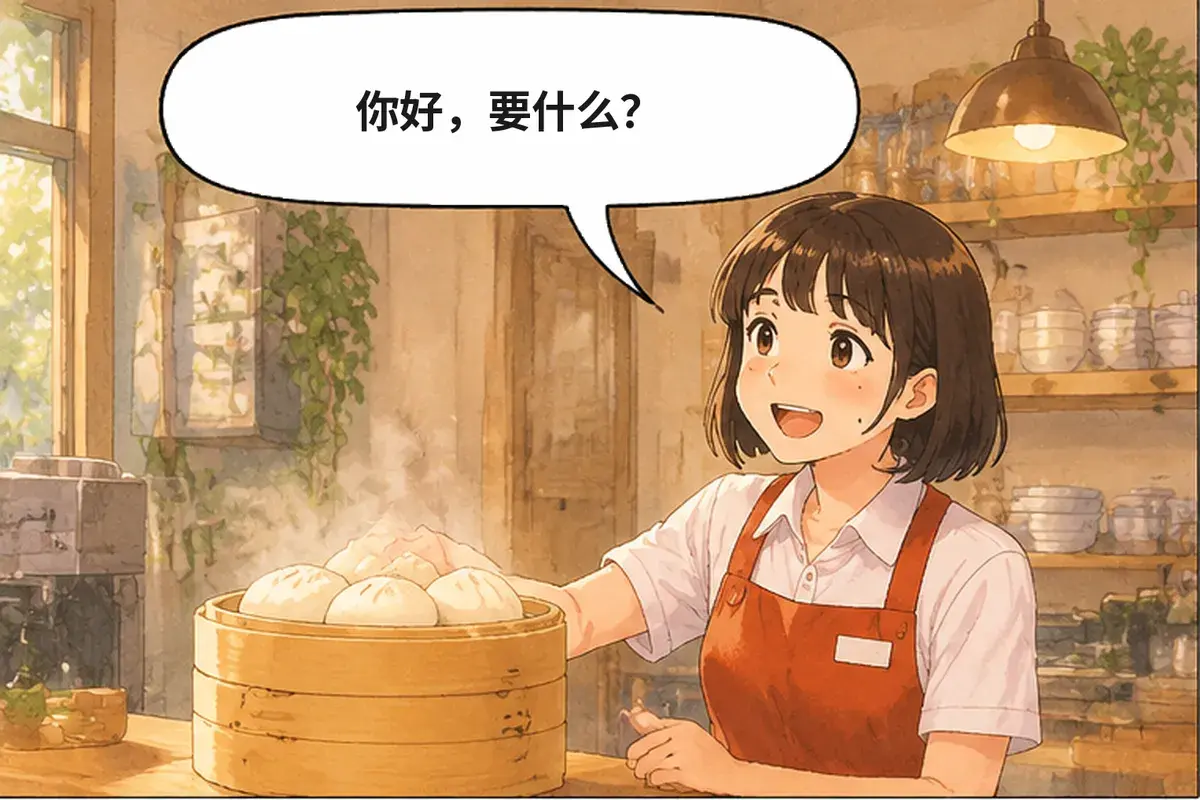
- 店员
你好,要什么?
Hi, what would you like?

- 伊利亚
两个包子,一杯热咖啡。多少钱?
Two steamed buns and a cup of hot coffee. How much is it?

- 店员
包子一个两块五,咖啡十五块。
The steamed buns are two yuan fifty each, and the coffee is fifteen yuan.

- 伊利亚
十五块?太贵了!便宜一点吧?
Fifteen yuan? That's too expensive! How about a little cheaper?

- 店员
不行,这是大杯!一共二十块。
No, this is a large cup! Twenty yuan in total.

- 伊利亚
好吧……可以用手机吗?
Well, OK… Can I use my phone?

- 店员
可以。微信还是支付宝?
You can. WeChat or Alipay?

- 伊利亚
微信。
WeChat.

- 店员
你扫我还是我扫你?
Do you scan me, or do I scan you?

- 伊利亚
啊?不好意思,我听不懂。
Huh? Sorry, I don't understand.
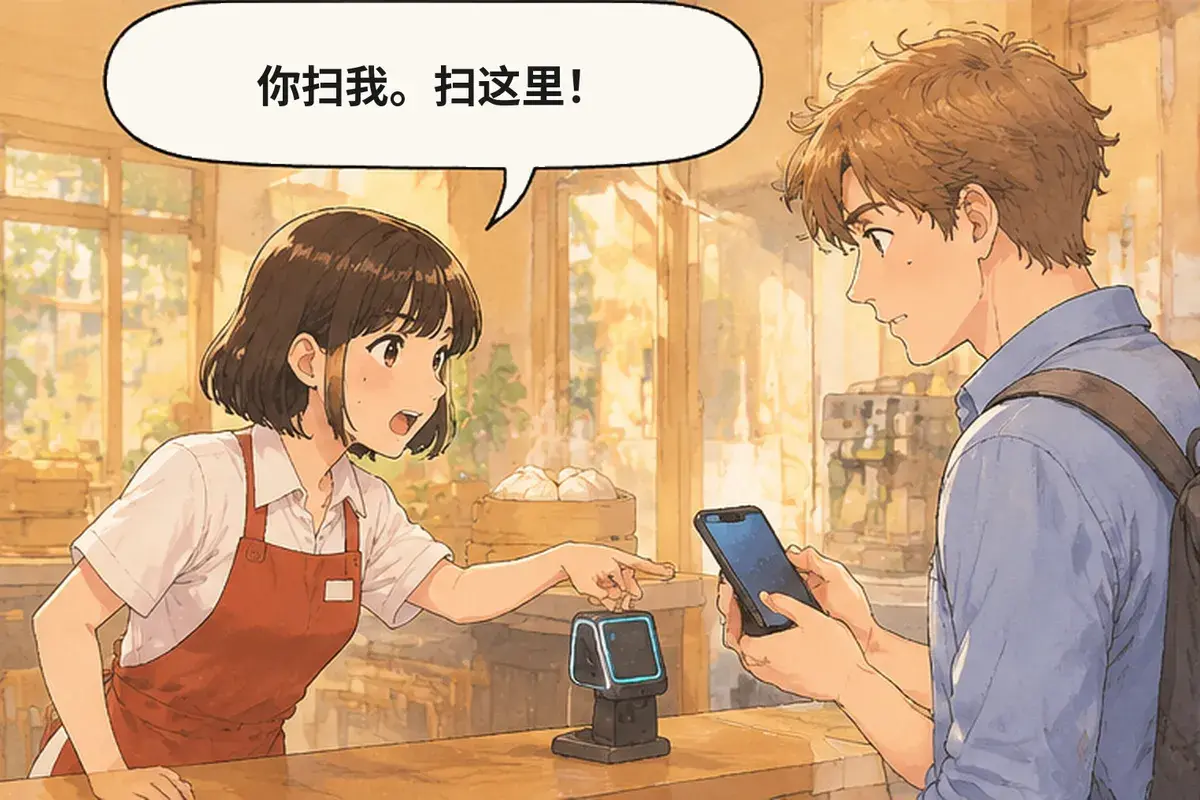
- 店员
你扫我。扫这里!
You scan me. Scan here!
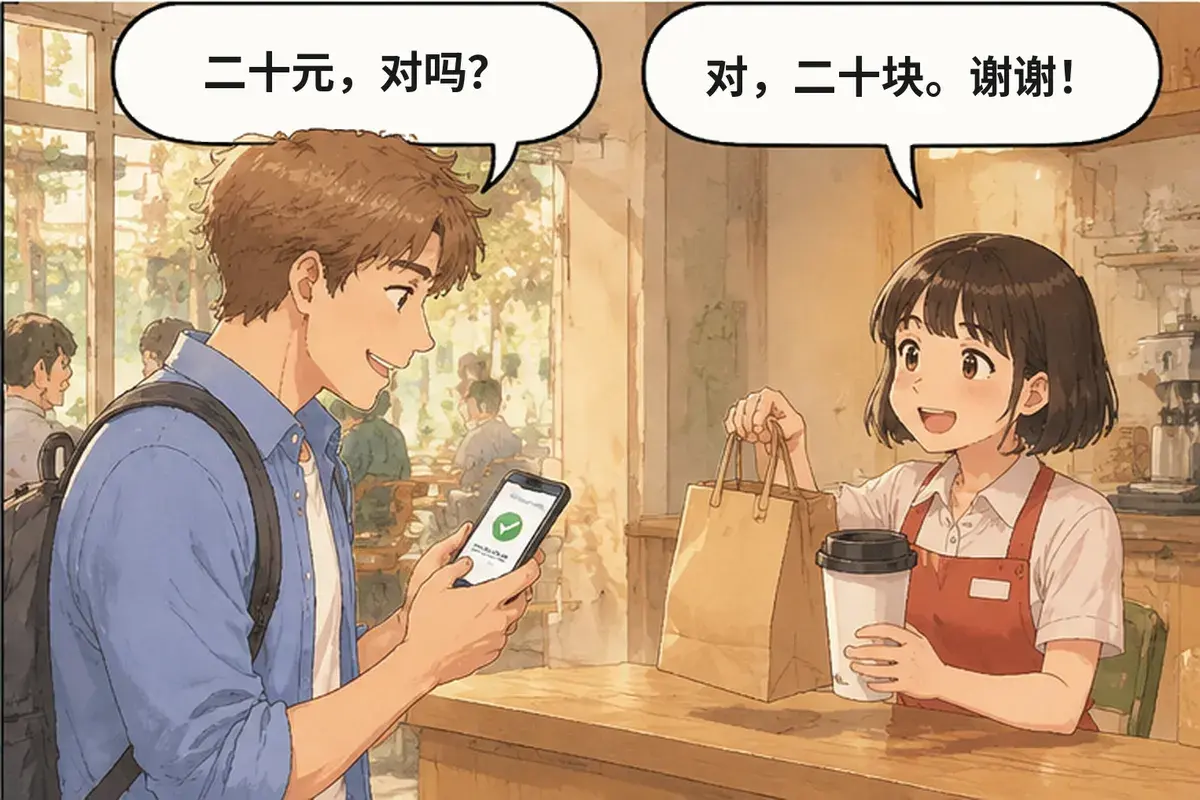
- 伊利亚
二十元,对吗?
Twenty yuan, right?
- 店员
对,二十块。谢谢!
Right, twenty yuan. Thank you!
Grammar for this text
你 扫 我 还是 我 扫 你? — the key question at the checkout: "do you scan (my code), or do I scan (yours)?". 扫 (sǎo) means "to scan", and 我 and 你 here mean "my code" and "your code". The customer either points their phone at the store's QR code or shows their own code to the salesclerk. 还是 is "or" in a question (Unit 3), so there's no 吗 at the end. Ilya doesn't understand, so the salesclerk makes it simpler: 你 扫 我。 扫 这里!
微信 还是 支付宝? — the two main ways to pay by phone: WeChat and Alipay.
包子 一 个 两 块 五 — "steamed buns: two yuan fifty each". 块 is the spoken yuan. 两 块 五 (liǎng kuài wǔ) is 2.5 yuan: the tenths at the end aren't named, just like English "two fifty". Before 块 it's 两, not 二.
太 贵 了! — 太 … 了 means "too …", a ready-made phrase; more about 了 in Unit 14.
便宜 一点 吧? — 一点 (yìdiǎn) after an adjective means "a little": "a little cheaper". 吧 makes the request softer. In a store with price tags people don't bargain, so the salesclerk answers 不 行 — "no". You can bargain at a market (Unit 9).
好 吧…… — "well, OK": with 吧 the agreement sounds reluctant.
可以 用 手机 吗? — 可以 means "may, can", and 用 means "to use".
二十 元, 对 吗? — Ilya types the amount into his phone himself, and the screen says 元: that's how the yuan is written on price tags, receipts and in apps. Out loud people say 块: 对, 二十 块。
Words and grammar of the unit: Pay with your phone.
Learn the words from the texts with flashcards
In the app, you can tap any word in a text to see its translation, forms and examples, and new words stick with flashcards. 15 minutes a day.
Start for freeEverything is open for free. No card needed to sign up.