

Chinese dialogue with translation · A1 · 13 lines
今天能来吗? Can you come today?
Comic · 12 panels
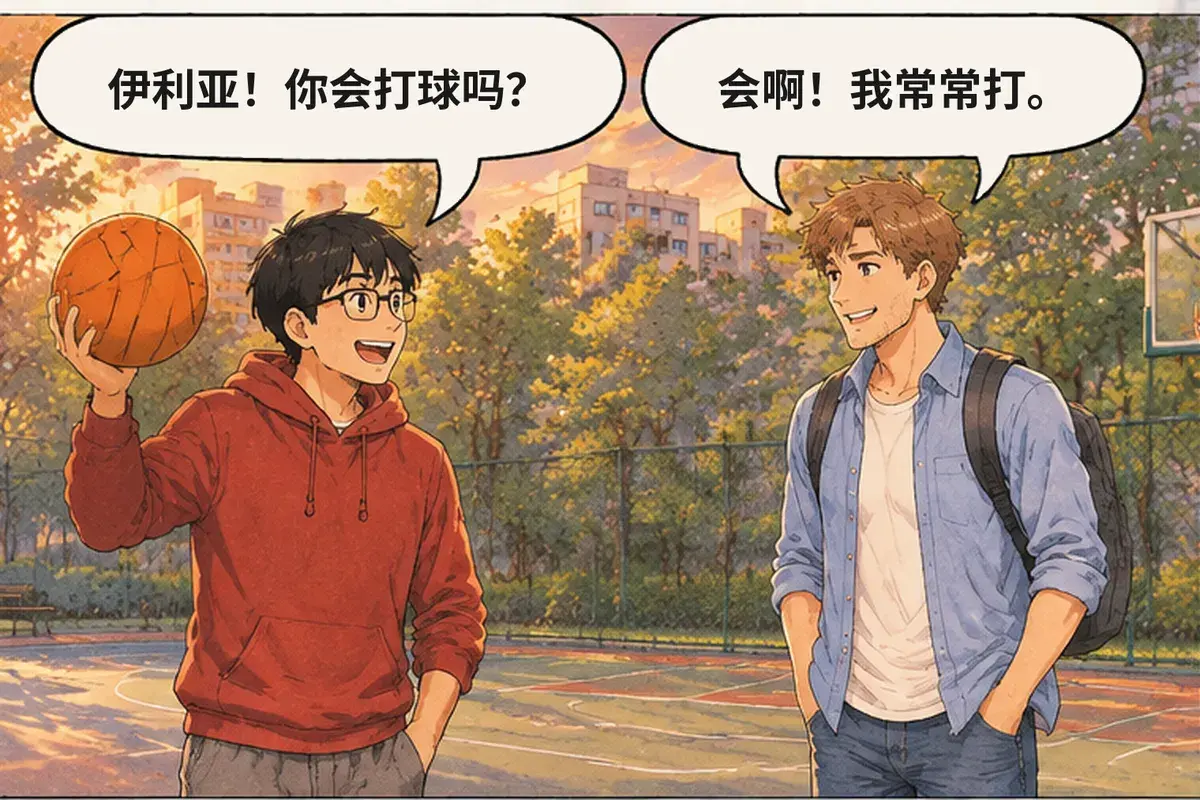
- 张磊
伊利亚!你会打球吗?
Ilya! Do you know how to play ball?
- 伊利亚
会啊!我常常打。
Sure I do! I play a lot.
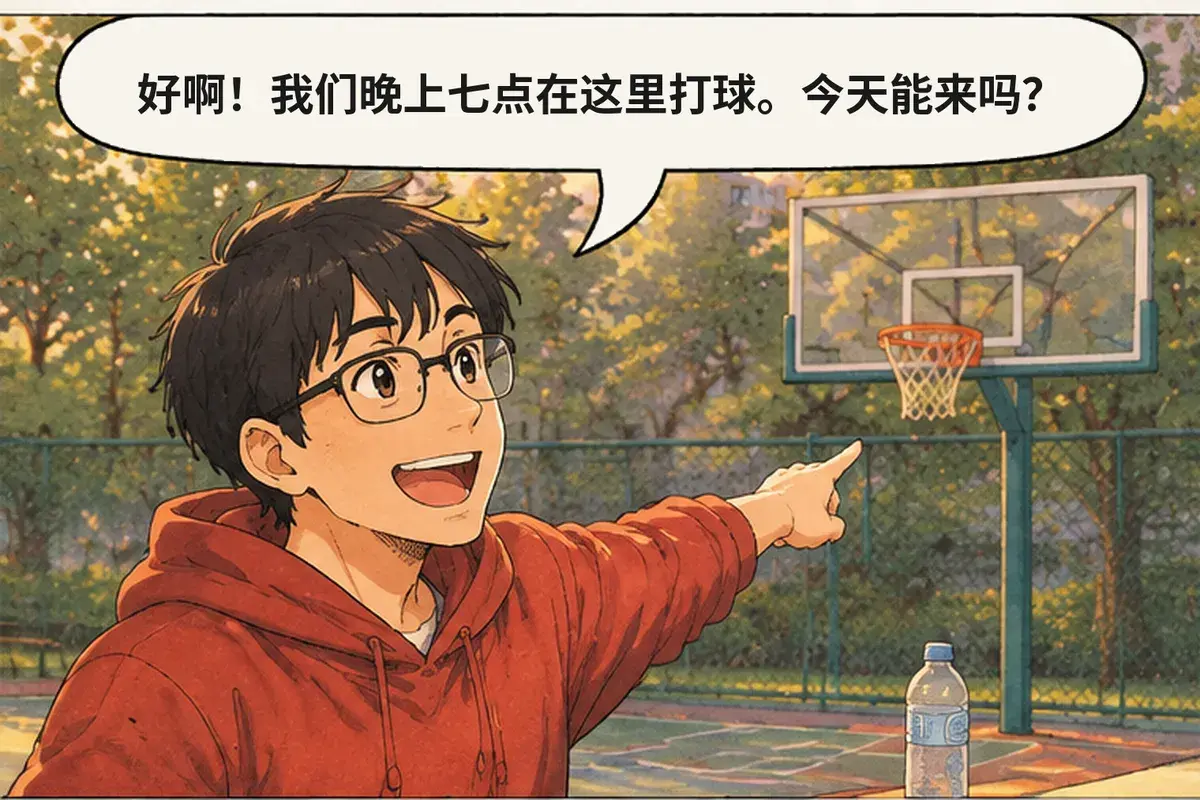
- 张磊
好啊!我们晚上七点在这里打球。今天能来吗?
Great! We play ball here at seven in the evening. Can you come today?

- 伊利亚
今天不能,晚上我要加班。明天行吗?
I can't today, I have to work overtime this evening. Is tomorrow OK?

- 张磊
行!明天七点。
OK! Tomorrow at seven.

- 伊利亚
那明天来我家吃晚饭吧!我做饺子。
Then come to my place for dinner tomorrow! I'll make dumplings.
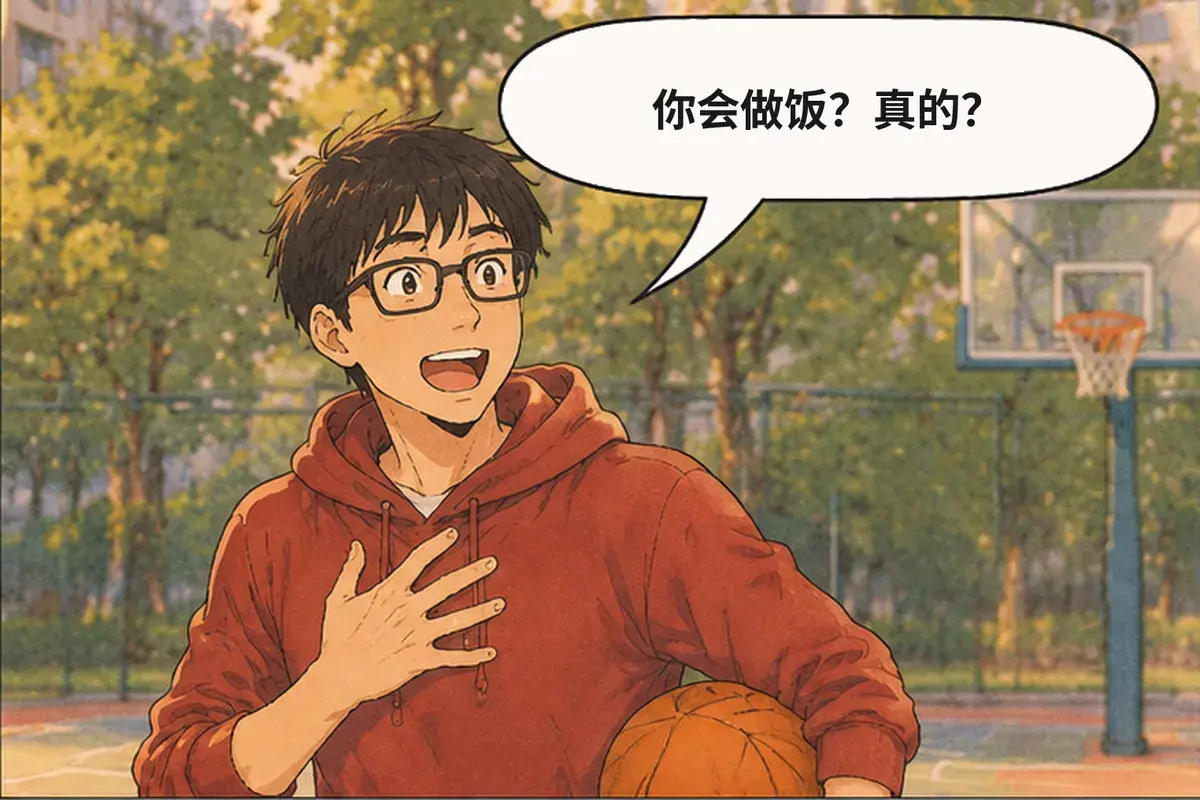
- 张磊
你会做饭?真的?
You know how to cook? Really?

- 伊利亚
会!我奶奶教我做饺子。
I do! My grandma taught me how to make dumplings.
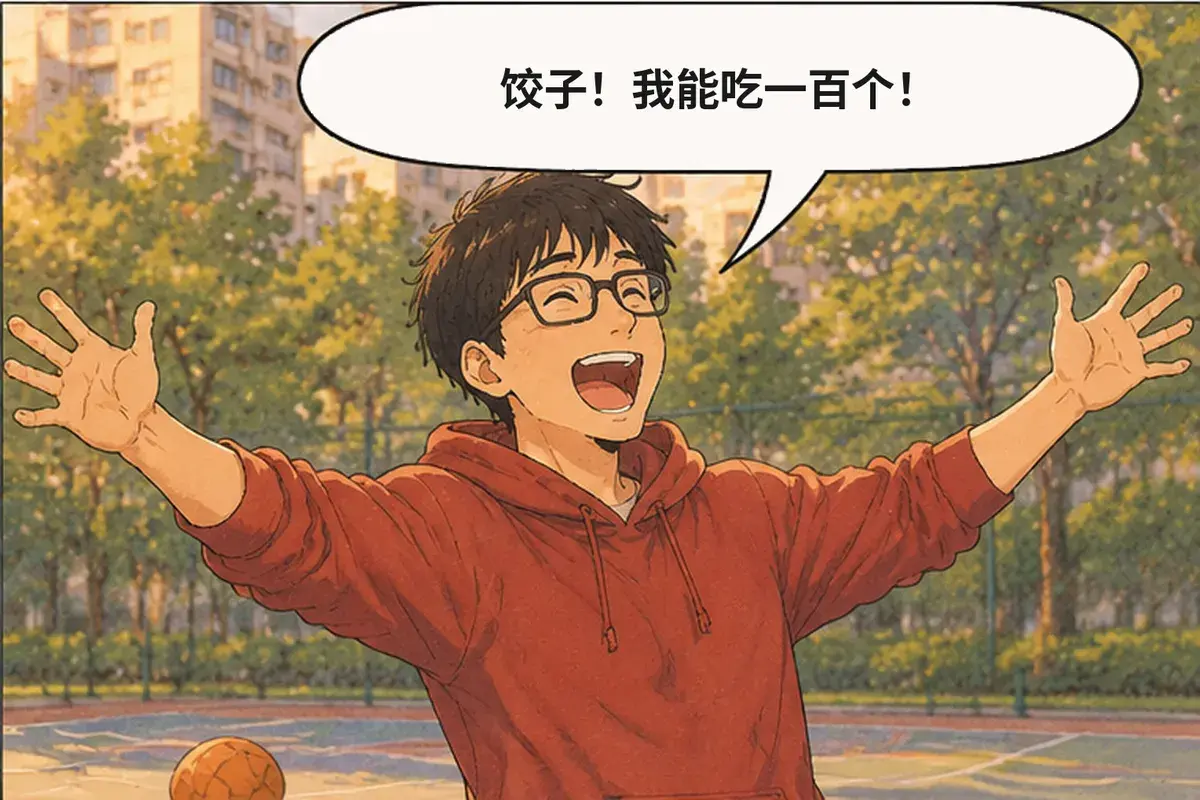
- 张磊
饺子!我能吃一百个!
Dumplings! I can eat a hundred!

- 伊利亚
一百个?那你能帮忙吗?
A hundred? Then can you help?
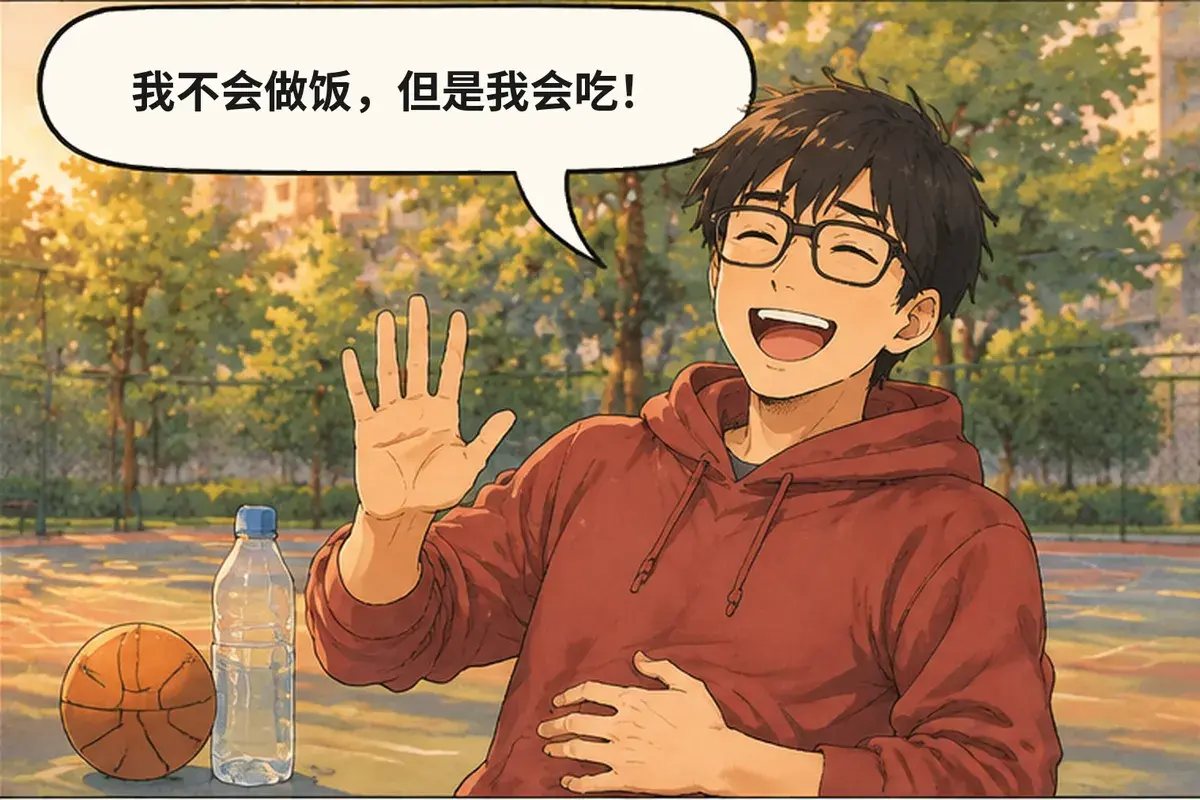
- 张磊
我不会做饭,但是我会吃!
I don't know how to cook, but I know how to eat!

- 伊利亚
好吧。你帮我买肉吧。
All right. You help me buy the meat.
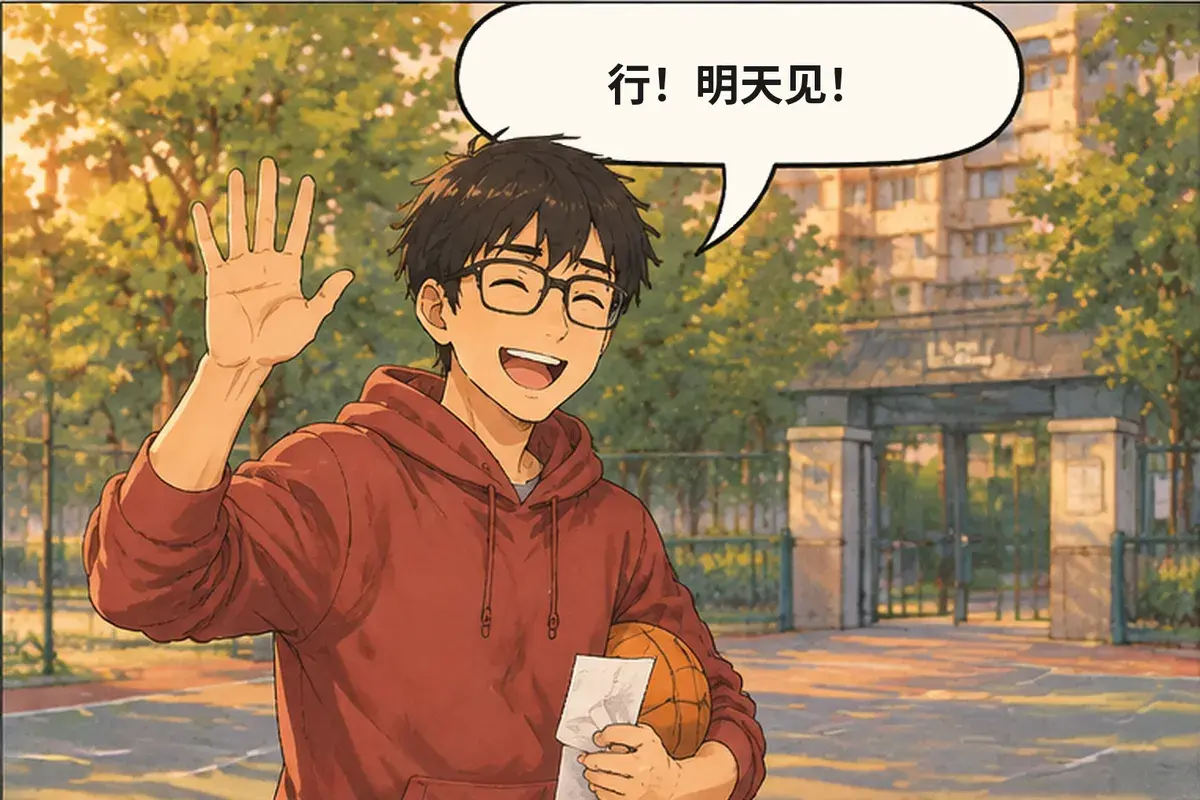
- 张磊
行!明天见!
OK! See you tomorrow!
Grammar for this text
今天 能 来 吗? — 能 is "can you, are you able to": Zhang Lei isn't asking whether Ilya knows how to play, but whether he's free. That's why the answer is 今天 不 能: Ilya knows how to play, but he has work this evening.
你 会 打球 吗? — 会 is "do you know how, have you learned". 打球 (dǎqiú) is "to play ball", one word: 打 "to hit" + 球 "ball": people say it about ball games, and in a residential compound it usually means basketball. Many compounds have their own courts.
我 常常 打。 — no 了: this is a habit, not a single event. 常常 (unit 13) means "often" and goes before the verb.
我 奶奶 教 我 做 饺子。 — the order is 教 + whom + what to do. 奶奶 is your dad's mother.
我 能 吃 一百 个! — 能 also tells how much you can manage.
我 不 会 做饭, 但是 我 会 吃! — the joke is built on 会: "I don't know how to cook, but I know how to eat!" Chinese people joke about themselves like this when they love good food.
你 能 帮忙 吗? and 你 帮 我 买 肉 吧 — 帮忙 has no "whom" after it; when there's a "whom" and "what to do", it's 帮 + whom + verb.
明天 见! — a set phrase: "see you tomorrow".
Words and grammar of the unit: Say what you can do.
Learn the words from the texts with flashcards
In the app, you can tap any word in a text to see its translation, forms and examples, and new words stick with flashcards. 15 minutes a day.
Start for freeEverything is open for free. No card needed to sign up.