

Chinese dialogue with translation · A1 · 10 lines
你是林晓雨吗? Are you Lin Xiaoyu?
Comic · 10 panels
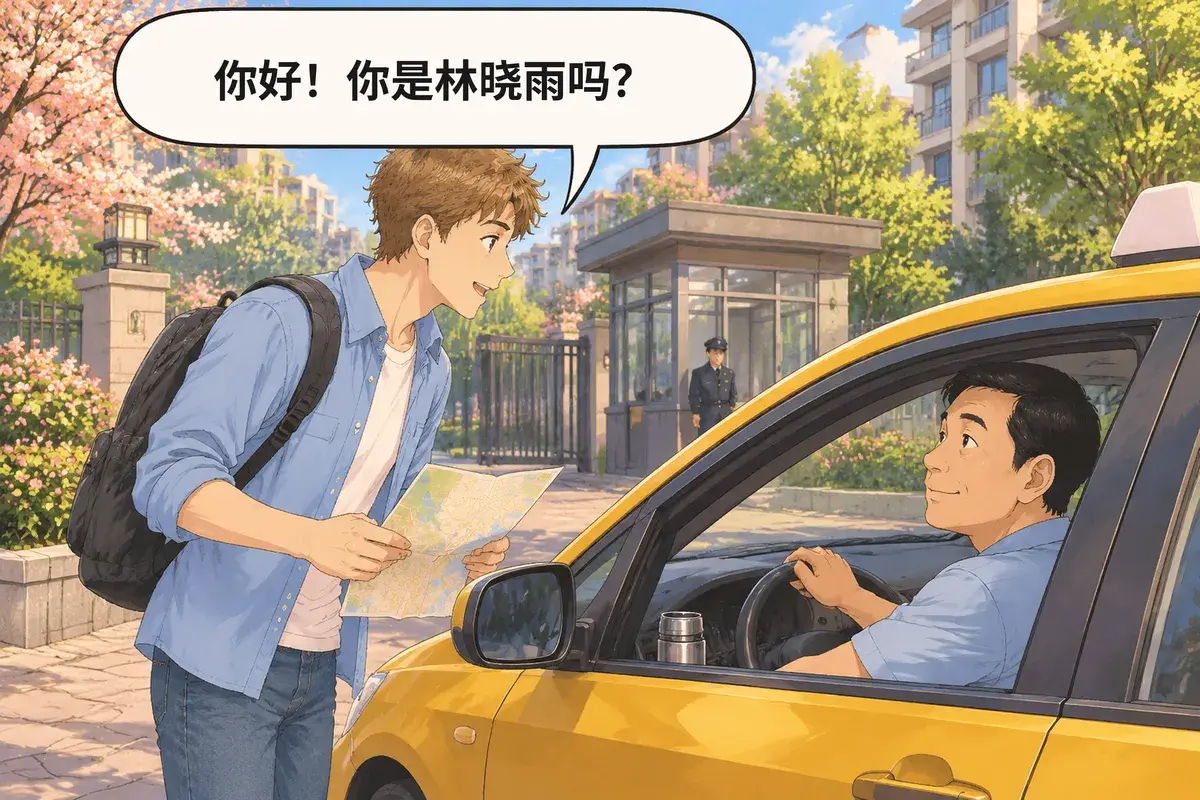
- 伊利亚
你好!你是林晓雨吗?
Hello! Are you Lin Xiaoyu?
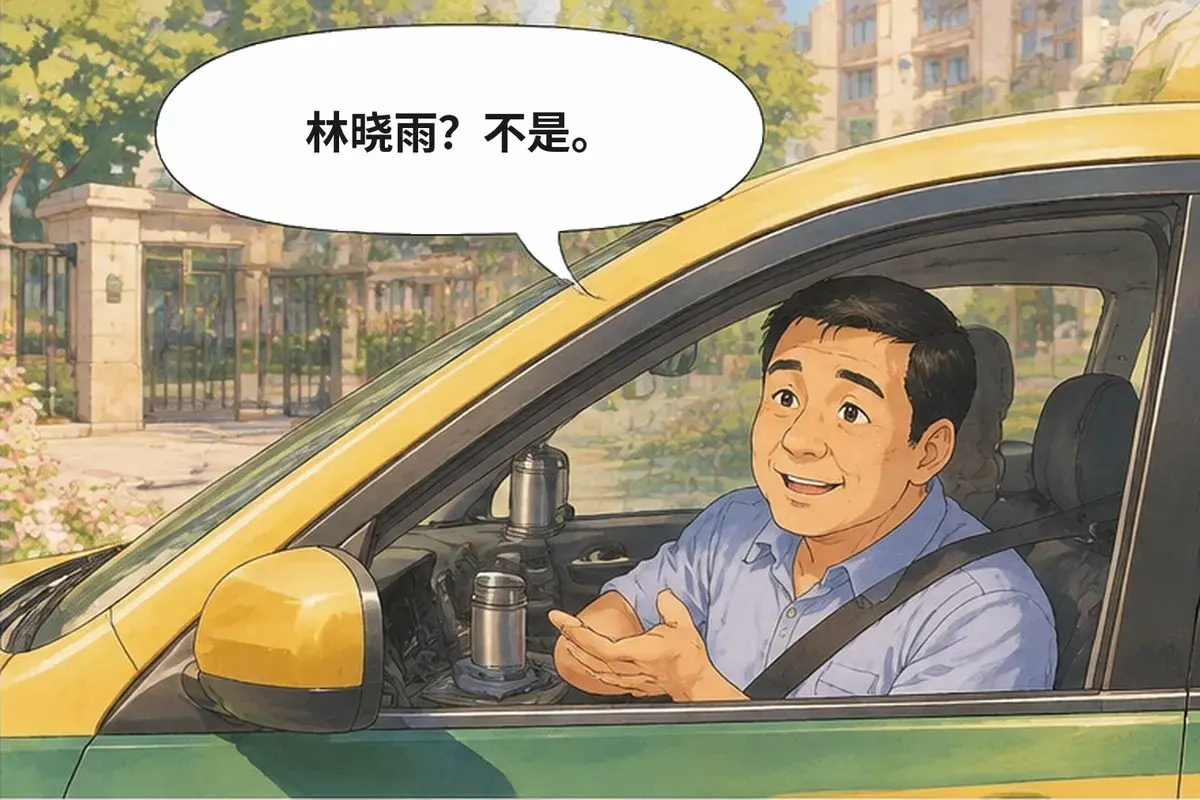
- 司机
林晓雨?不是。
Lin Xiaoyu? No.
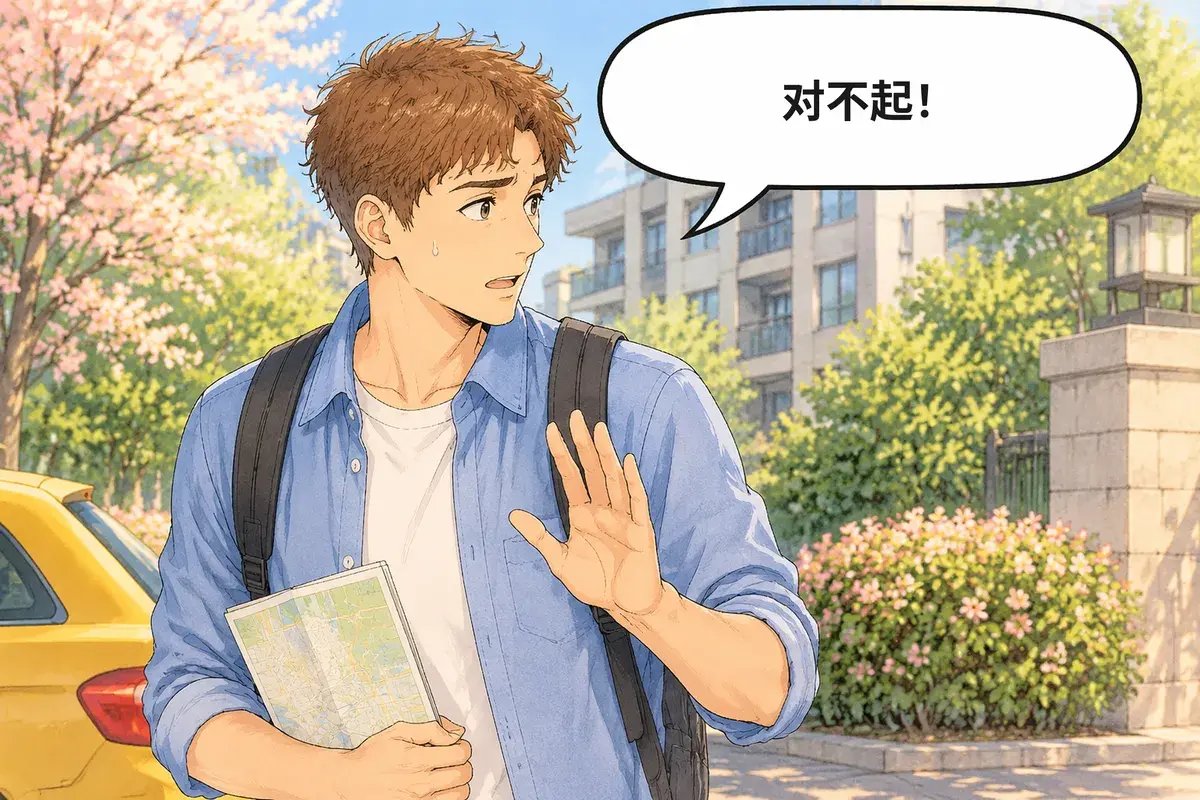
- 伊利亚
对不起!
Sorry!
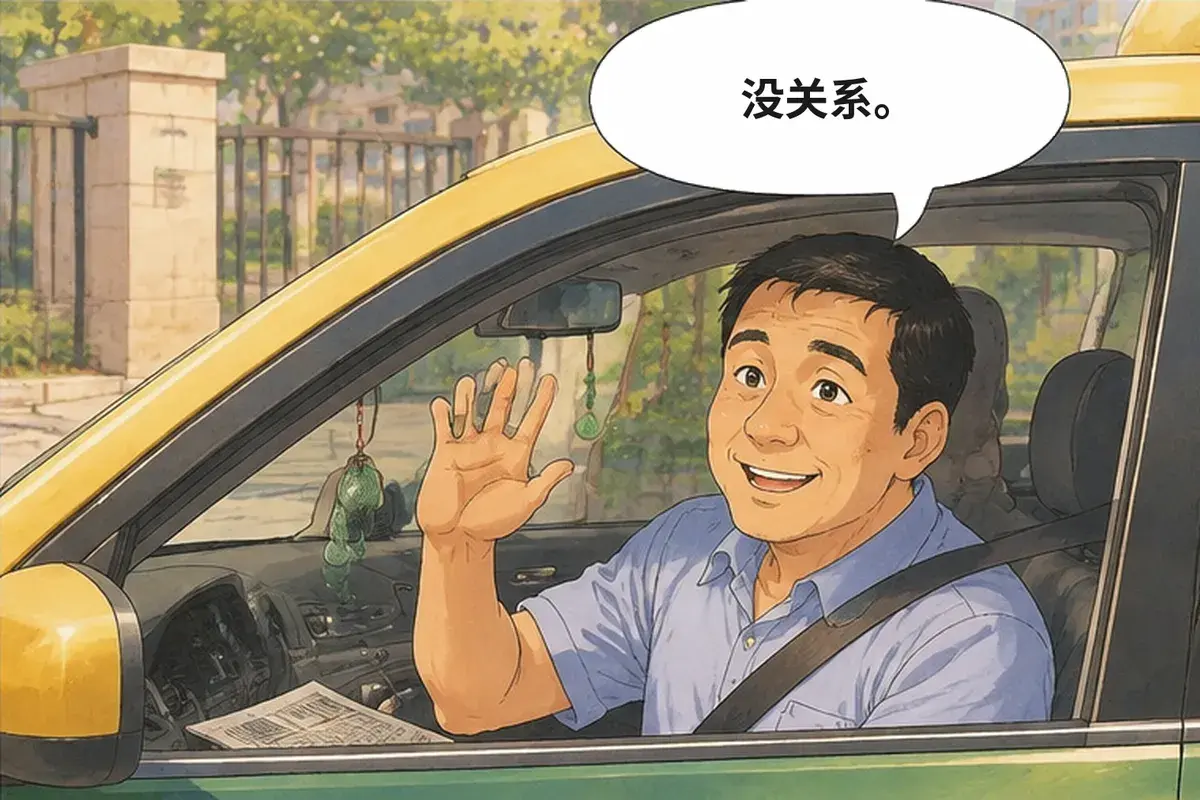
- 司机
没关系。
It's OK.

- 晓雨
你好!你是伊利亚吗?
Hello! Are you Ilya?

- 伊利亚
对,我是伊利亚。你呢?
Yes, I'm Ilya. And you?

- 晓雨
我是林晓雨。
I'm Lin Xiaoyu.

- 伊利亚
你是林晓雨!他不是。
You're Lin Xiaoyu! He isn't.

- 晓雨
对!欢迎,欢迎!
Yes! Welcome, welcome!
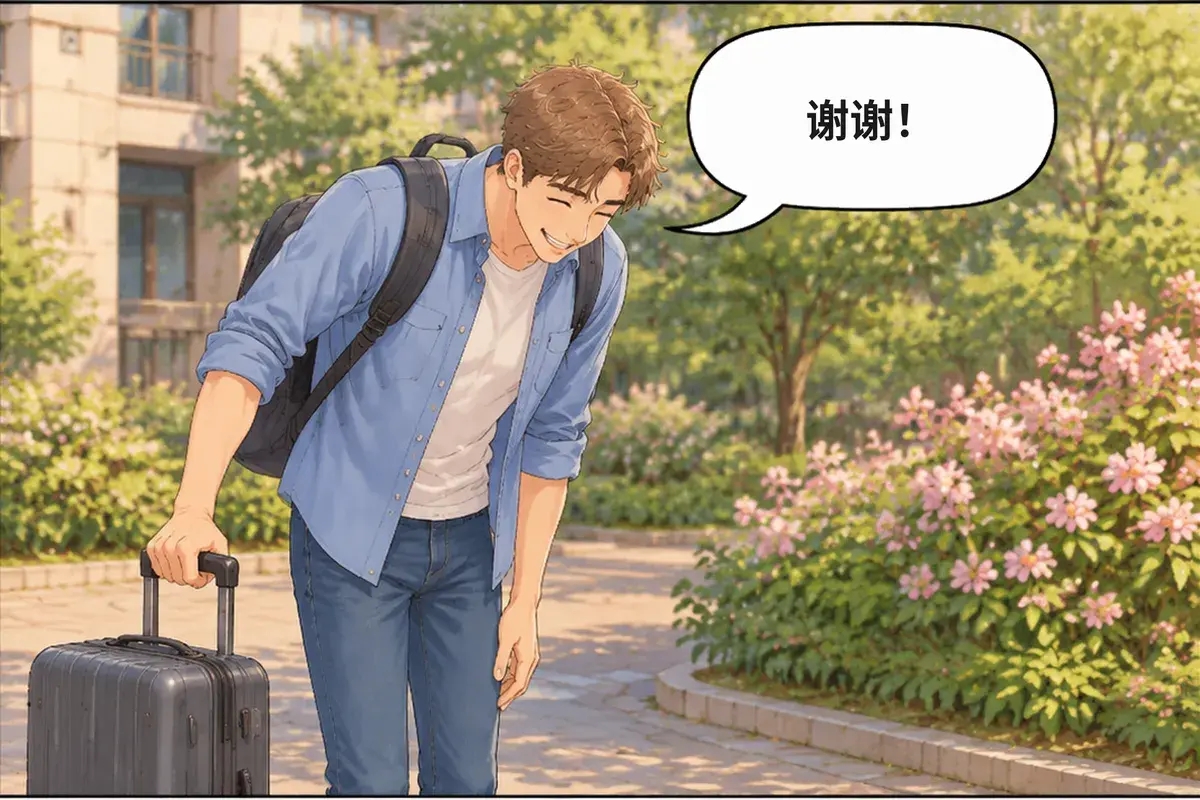
- 伊利亚
谢谢!
Thank you!
Grammar for this text
你 是 林晓雨 吗? — this is how you ask a yes-no question: take an ordinary statement, 你 是 林晓雨 ("you are Lin Xiaoyu"), and put 吗 at the end. The word order doesn't change. 是 means "to be".
林晓雨? 不 是。 — there is no separate word for "no": you repeat the verb of the question with 不. Asked 是…吗?, you answer 不 是 (bú shì): 不 before a 4th tone sounds like a 2nd tone.
对, 我 是 伊利亚。 — "yes" here is 对, literally "right".
你 呢? — "and you?": 呢 sends the same question back, so you don't repeat it.
你 是 林晓雨! 他 不 是。 — in the second sentence 不 是 is enough: it's clear who we're talking about.
对不起! — 没关系。 — "Sorry!" — "It's OK." Both are set phrases; learn them whole. In 对不起 (duìbuqǐ) the 不 sounds weak.
欢迎, 欢迎! — "Welcome!": this is how you greet a guest, and saying it twice is just being polite.
In the arrivals hall, drivers stand with signs, and the names on the signs are written in Chinese characters. Ilya can't read them and walks up to the first driver. He says 你 to him: the plain "you" is normal with strangers. Xiaoyu is his age and a coworker, so 你 is right for her too.
Words and grammar of the unit: Meet a colleague at the airport.
Learn the words from the texts with flashcards
In the app, you can tap any word in a text to see its translation, forms and examples, and new words stick with flashcards. 15 minutes a day.
Start for freeEverything is open for free. No card needed to sign up.