
Chinese dialogue with translation · A1 · 14 lines
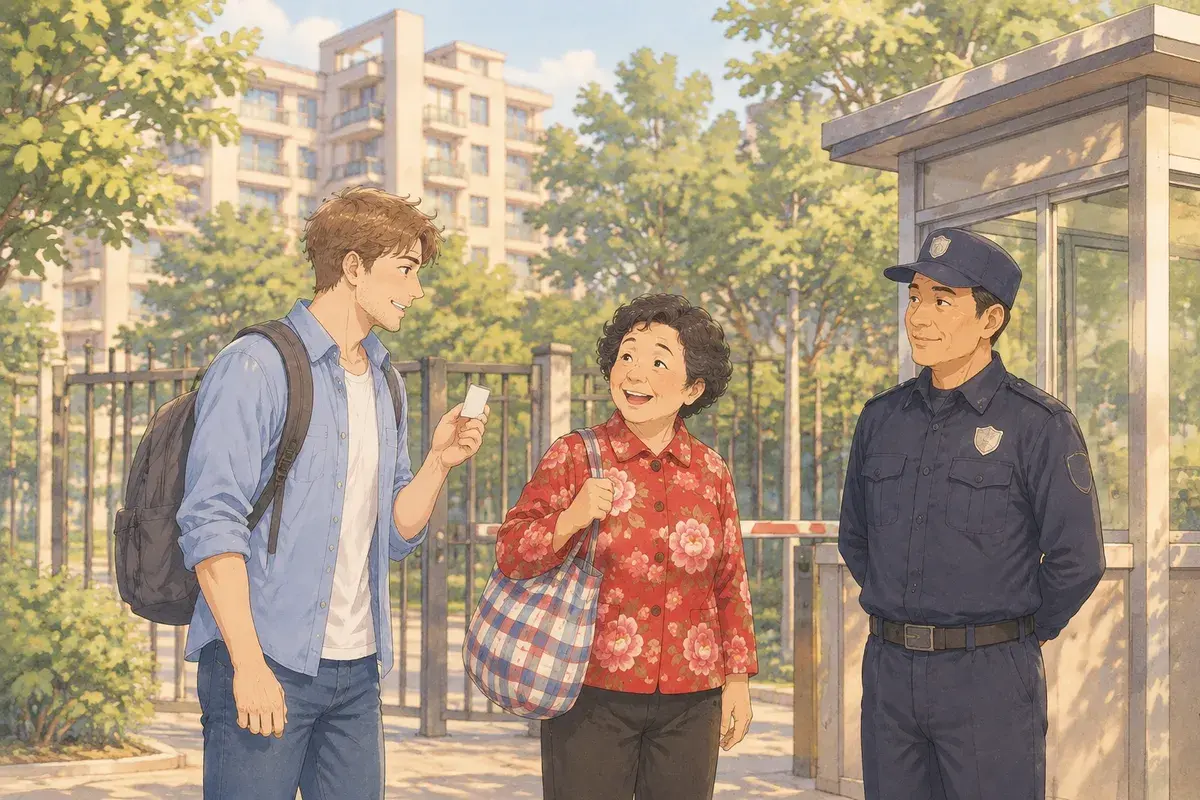
你找谁? Who are you here to see?
Comic · 13 panels
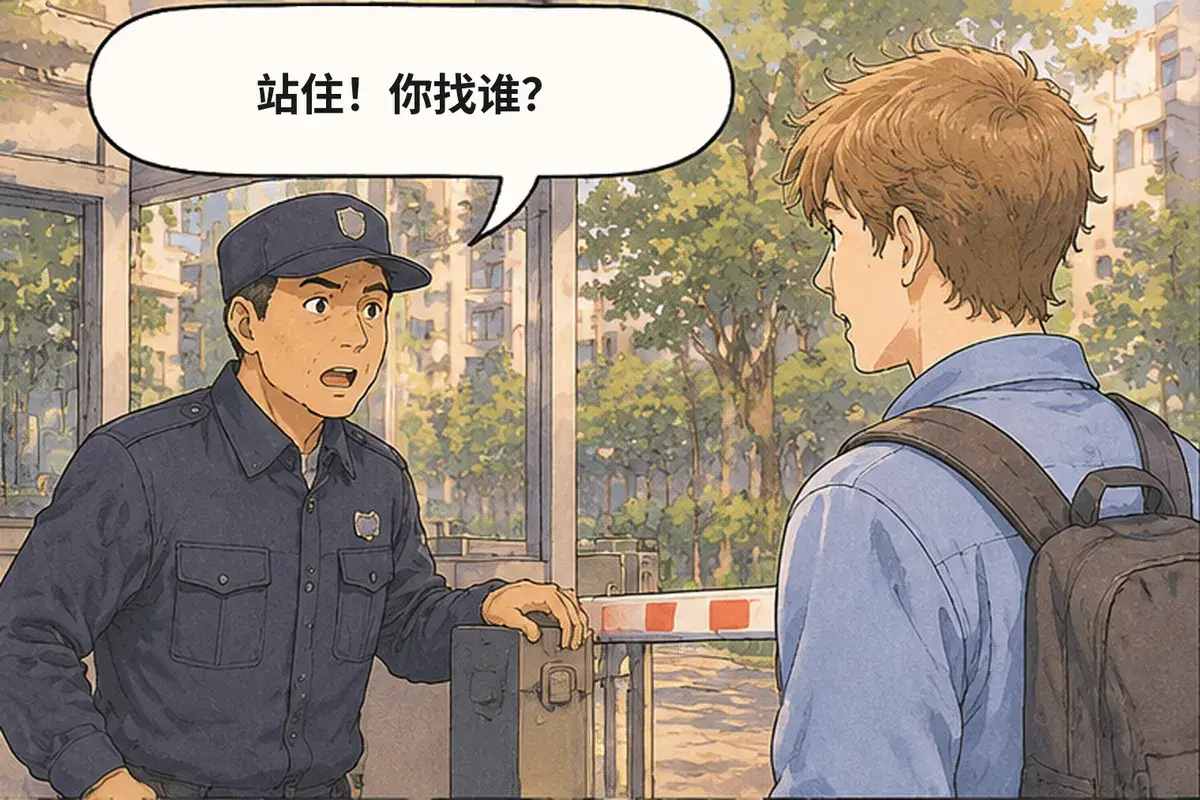
- 保安
站住!你找谁?
Stop right there! Who are you here to see?
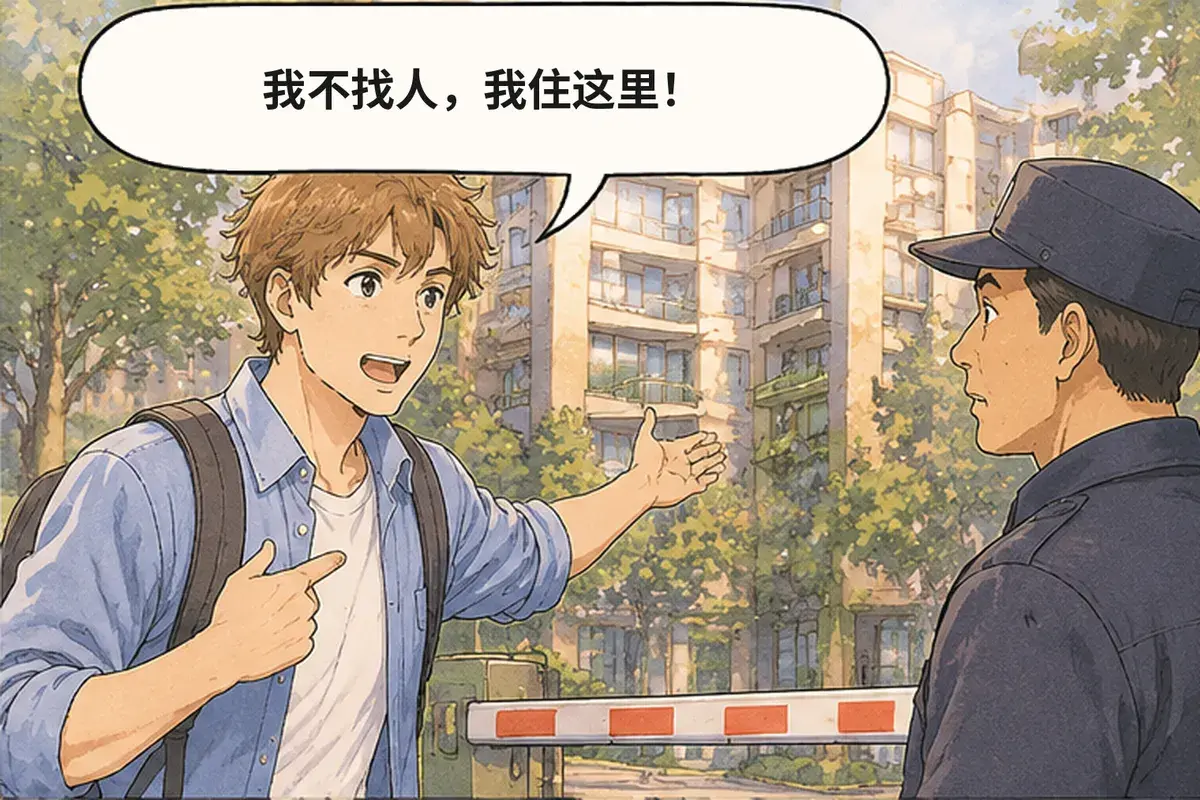
- 伊利亚
我不找人,我住这里!
I'm not looking for anyone, I live here!
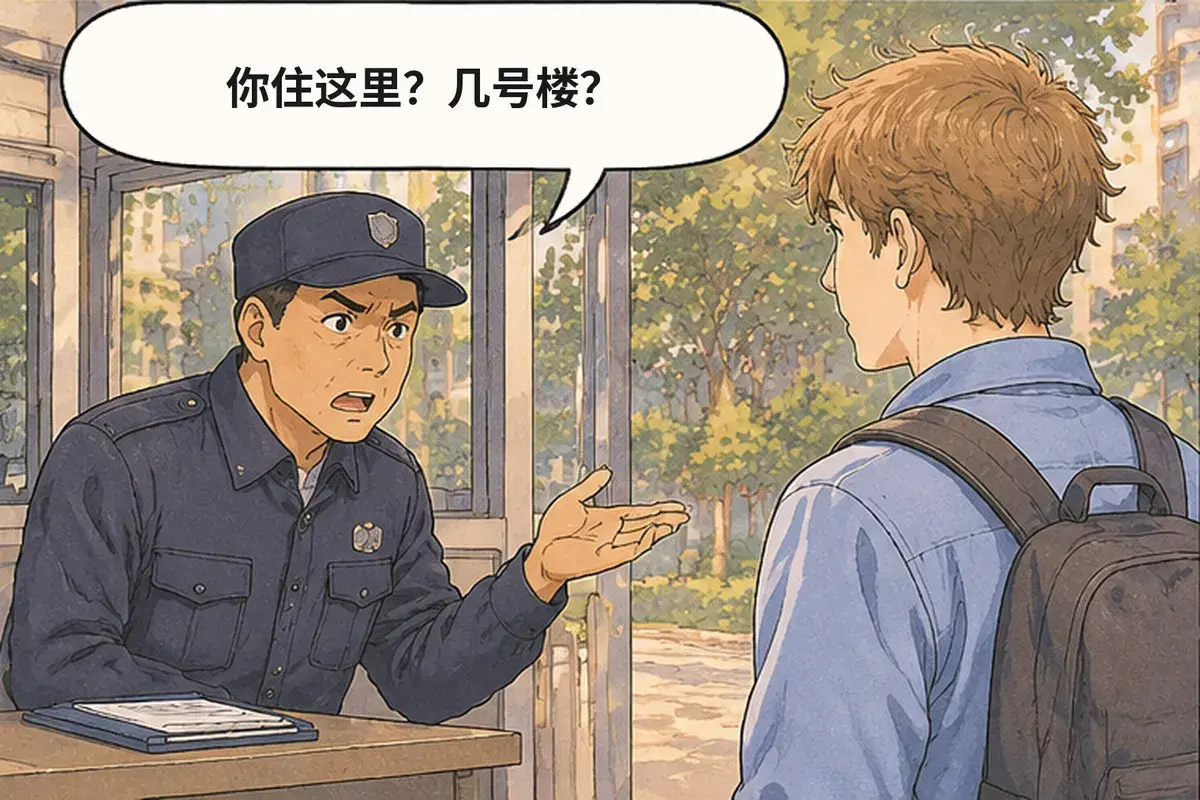
- 保安
你住这里?几号楼?
You live here? Which building?
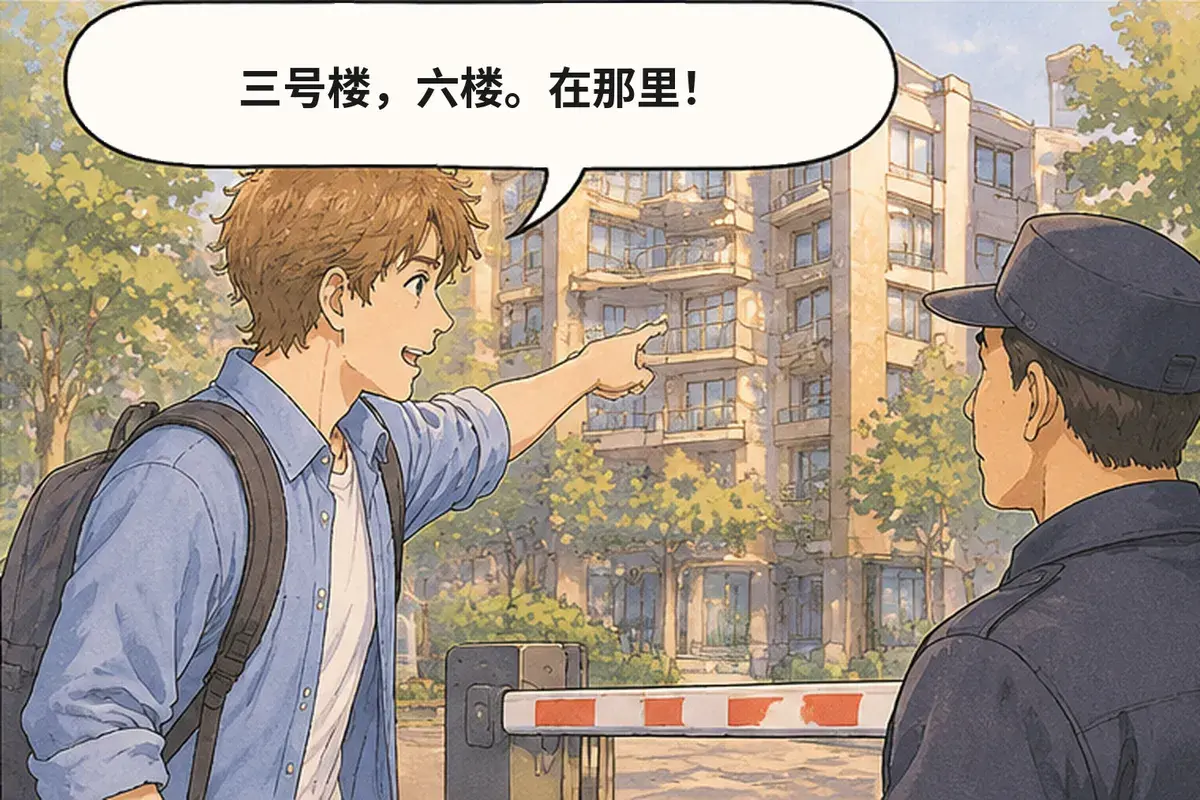
- 伊利亚
三号楼,六楼。在那里!
Building 3, the sixth floor. It's over there!
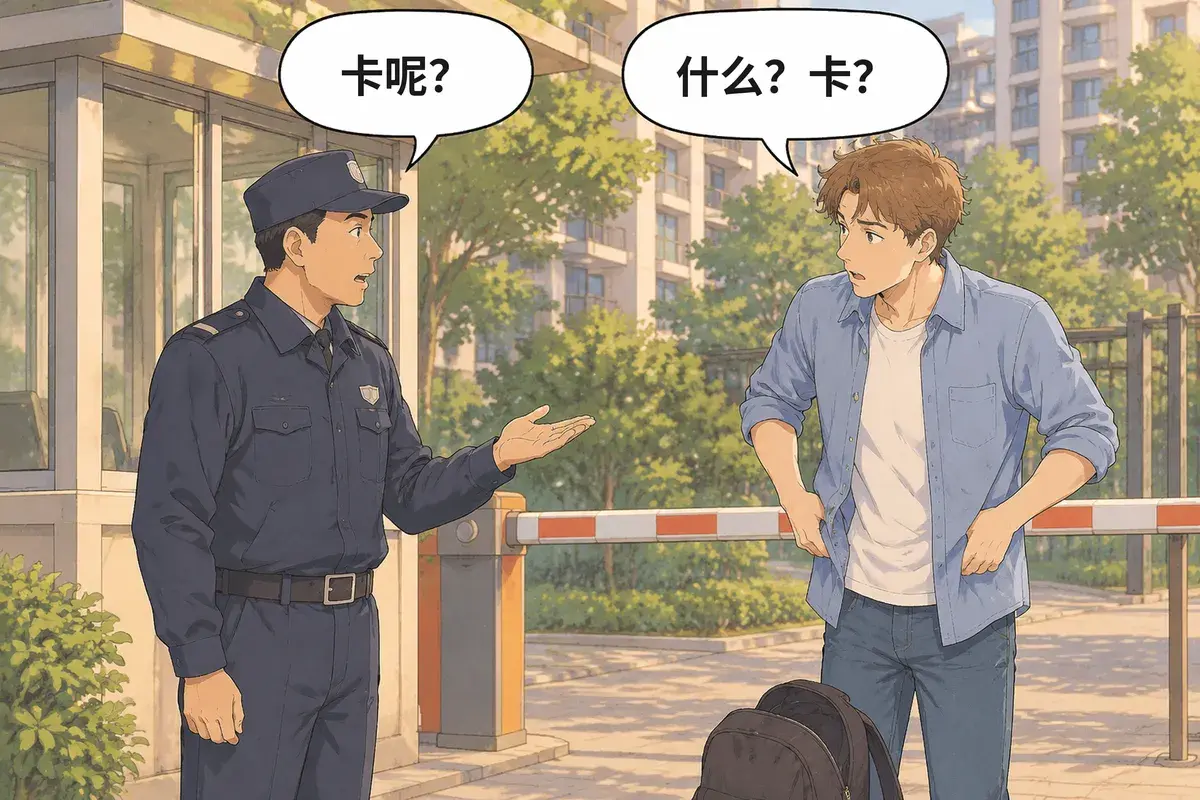
- 保安
卡呢?
Where's your card?
- 伊利亚
什么?卡?
What? A card?
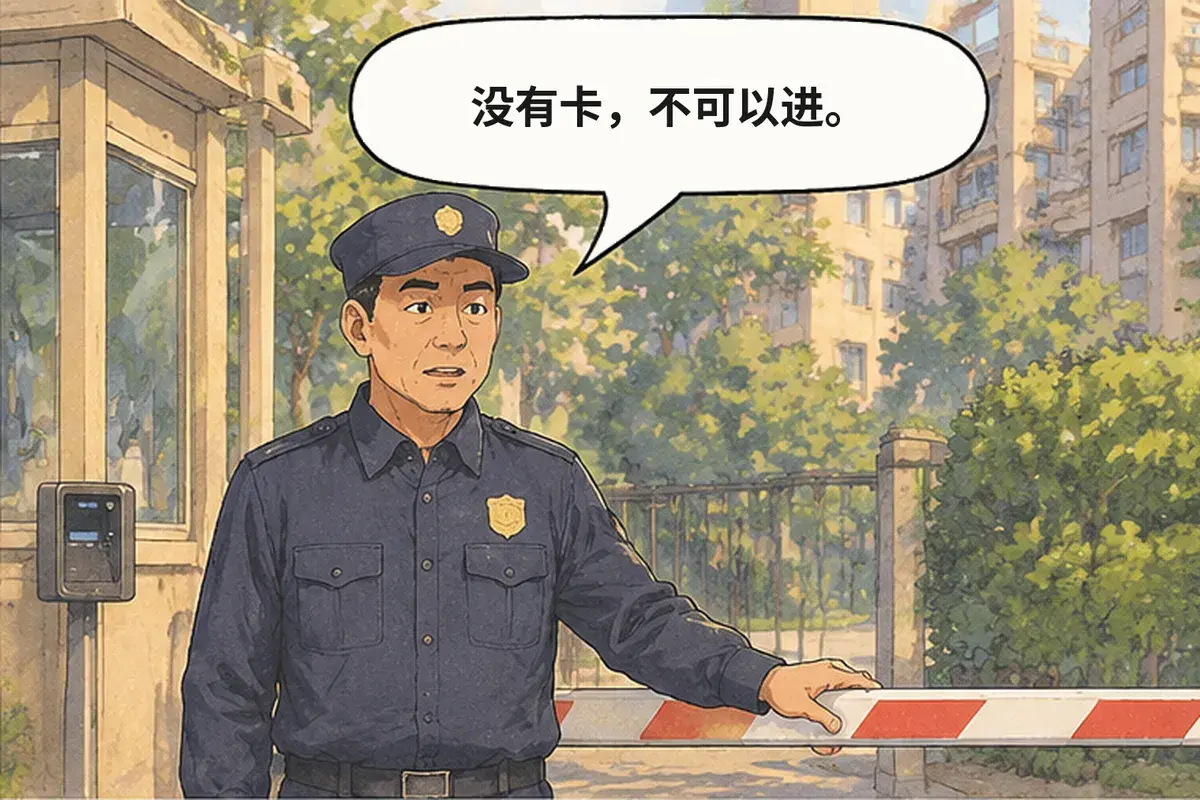
- 保安
没有卡,不可以进。
Without a card, you can't go in.
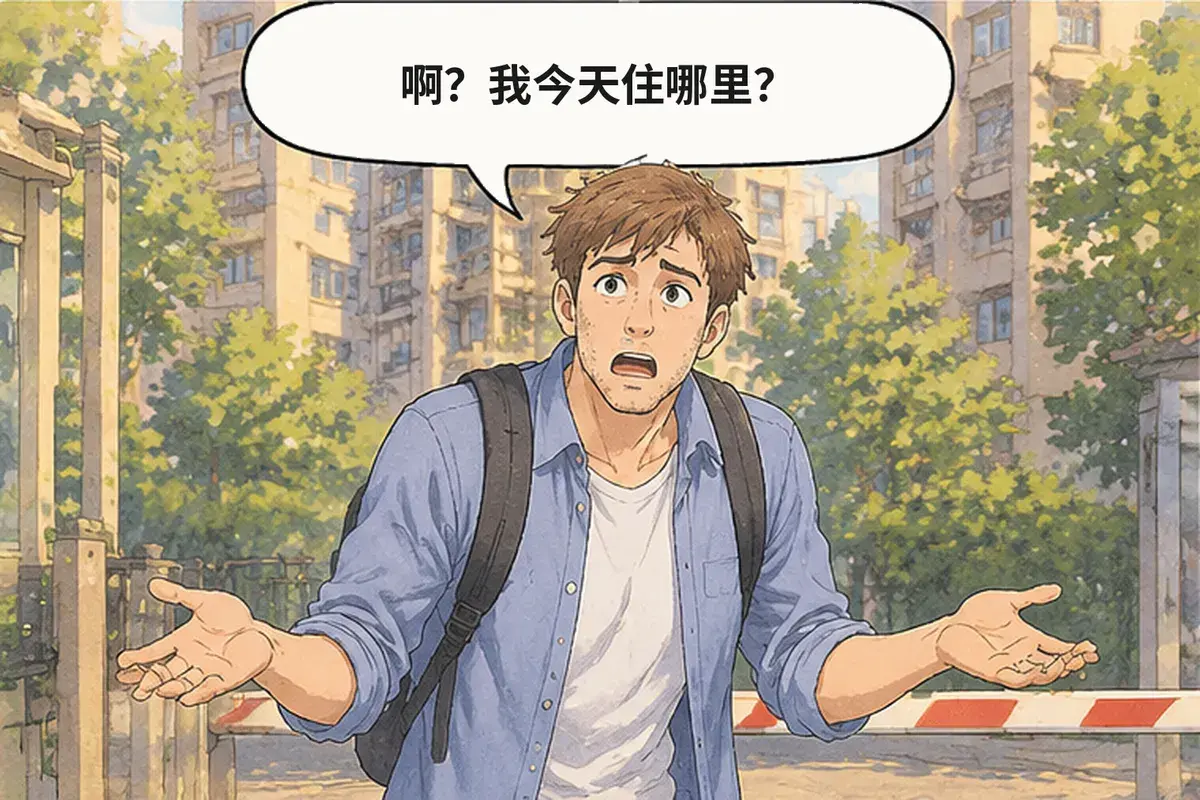
- 伊利亚
啊?我今天住哪里?
Huh? So where am I going to stay today?
- 保安
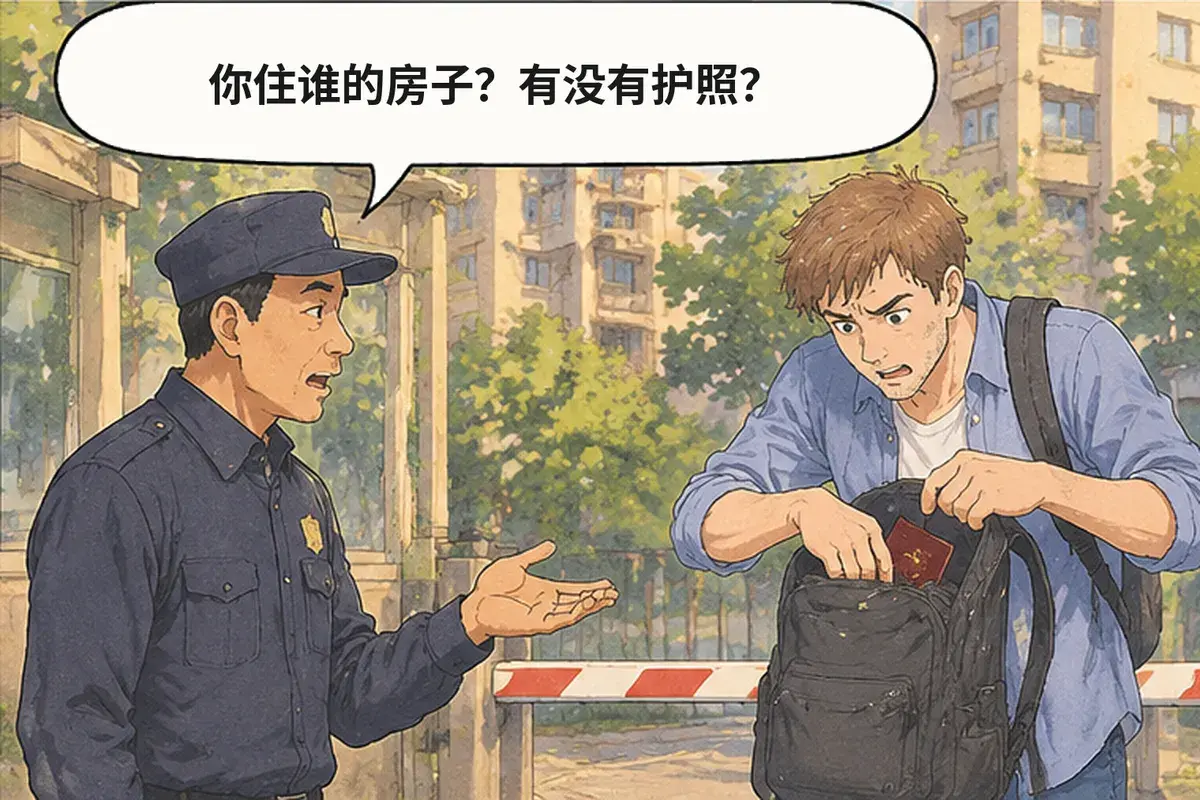
你住谁的房子?有没有护照?
Whose apartment do you live in? Do you have a passport?
- 王阿姨
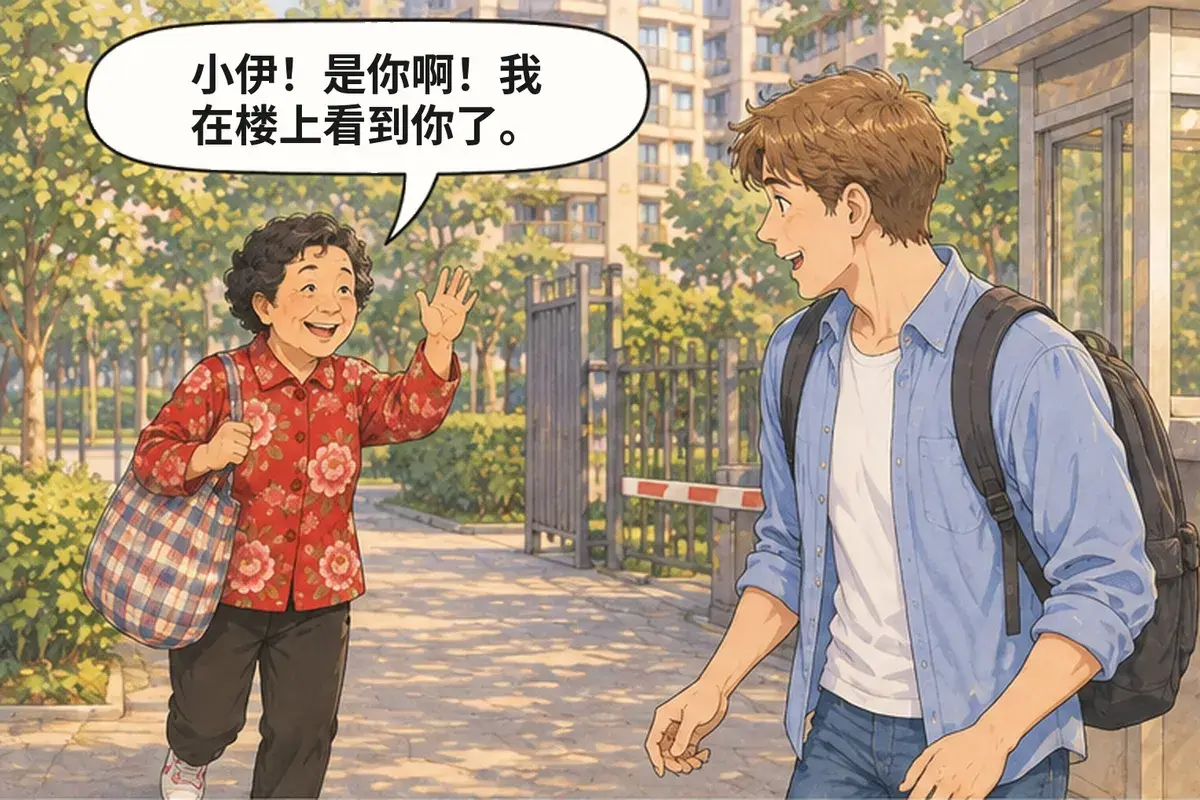
小伊!是你啊!我在楼上看到你了。
Xiao Yi! It's you! I saw you from upstairs.
- 保安
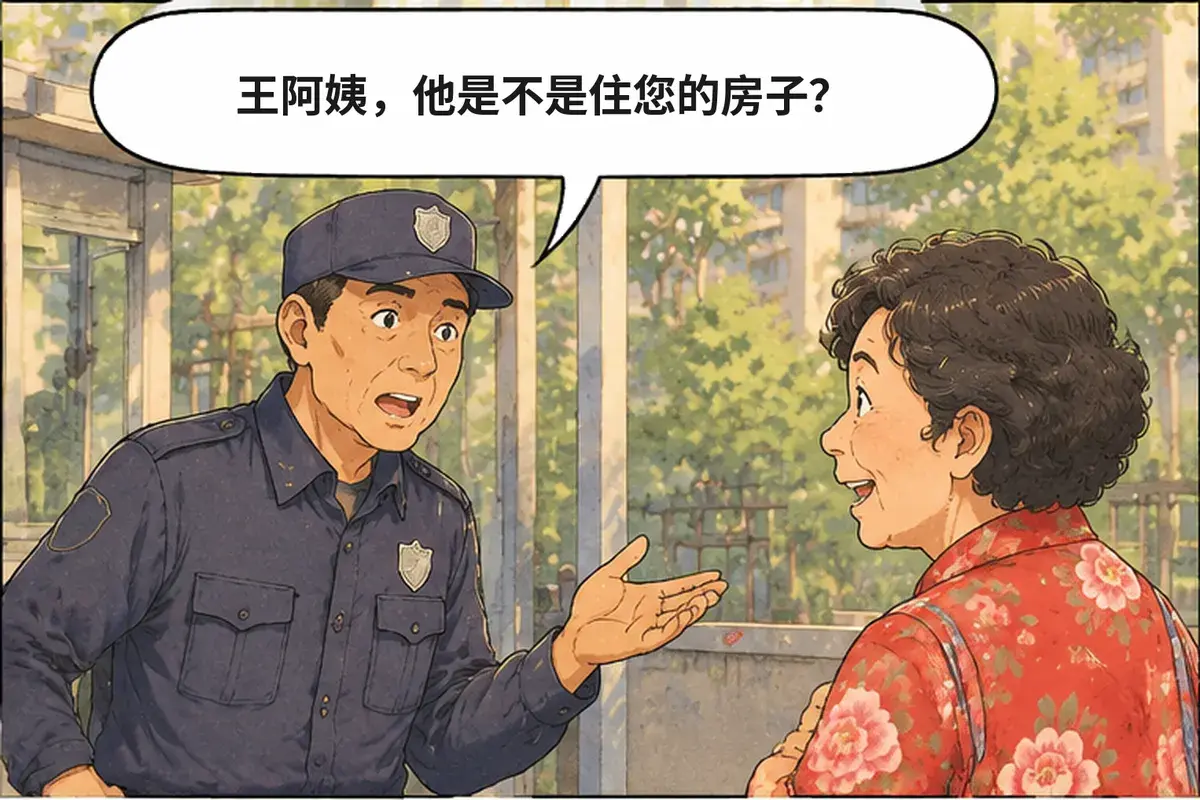
王阿姨,他是不是住您的房子?
Auntie Wang, he lives in your apartment, right? (polite)
- 王阿姨
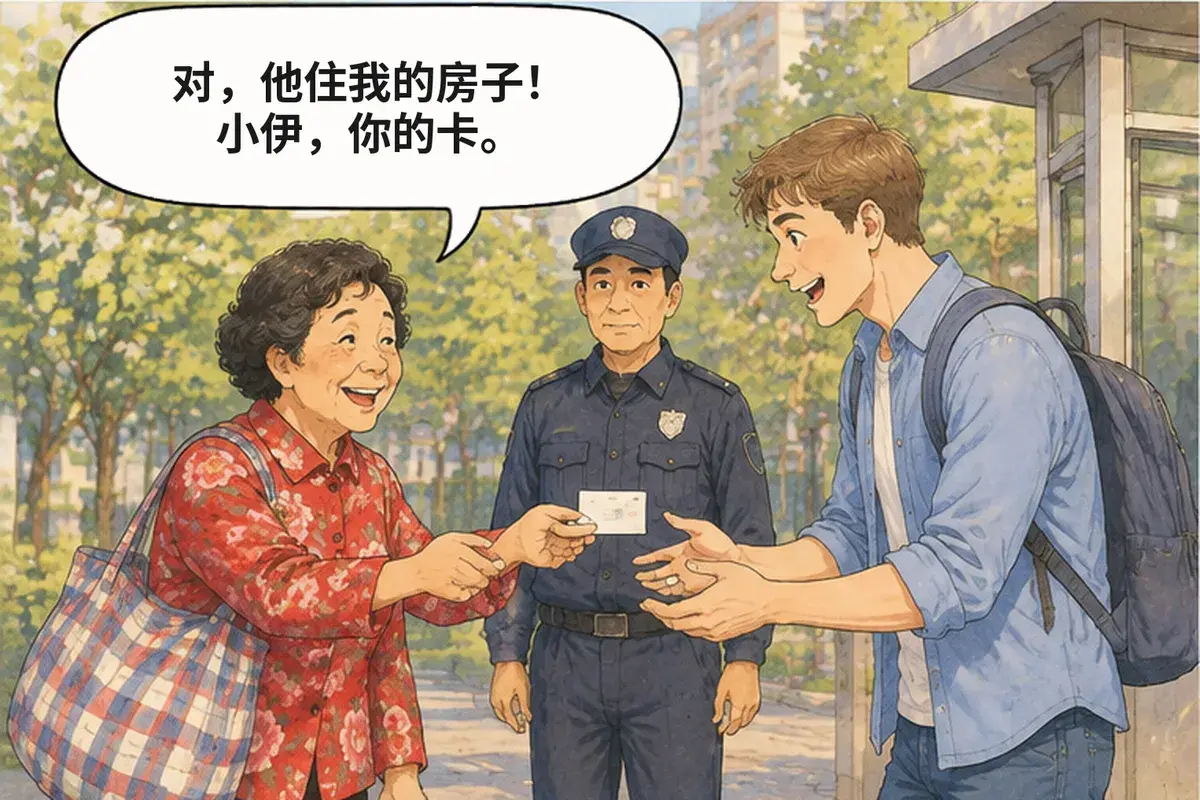
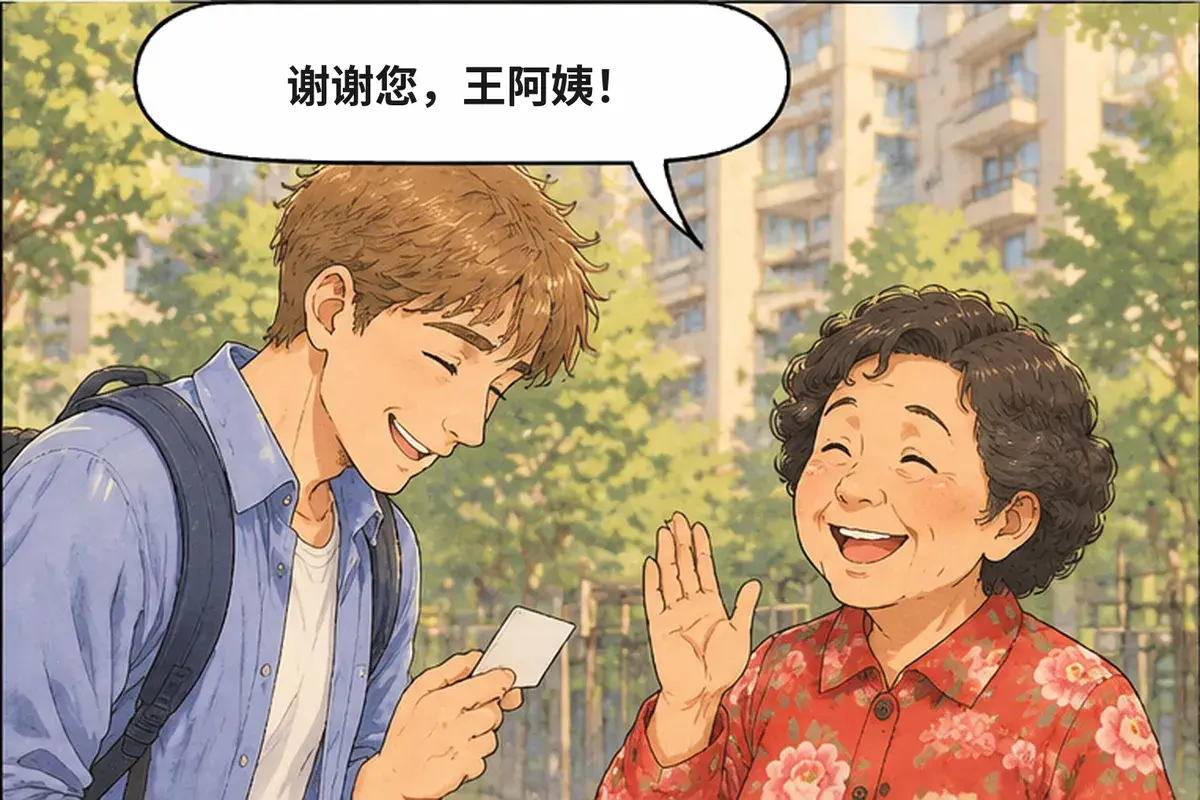
对,他住我的房子!小伊,你的卡。
Yes, he lives in my apartment! Xiao Yi, here's your card.
- 伊利亚
谢谢您,王阿姨!
Thank you, Auntie Wang! (polite)
- 王阿姨
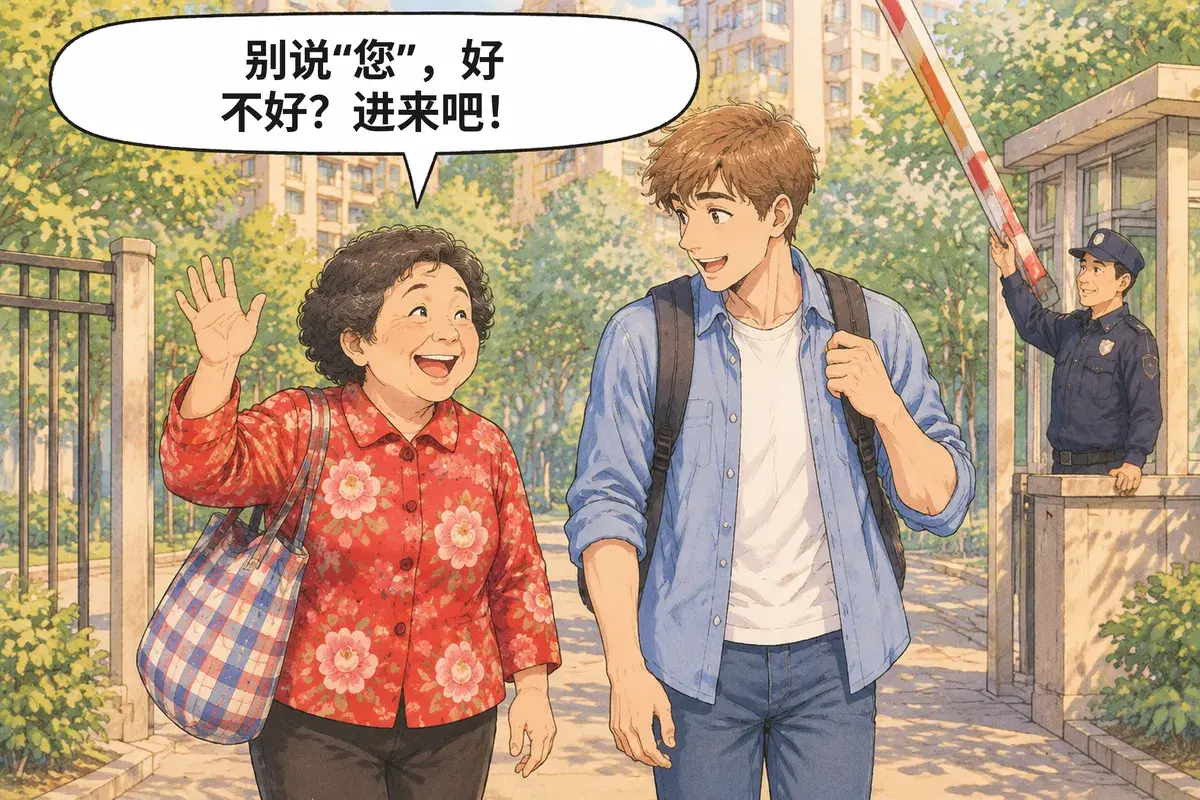
别说“您”,好不好?进来吧!
Don't say "nín", OK? Come on in!
Grammar for this text
站住! 你 找 谁? — 站住 is "stop!", a guard's shout. 你 找 谁? is "Who are you here to see?", literally "who are you looking for?". That's what a security guard asks at the gate of a residential compound: strangers aren't let in, and residents get in with a card or because the guard knows them.
我 不 找 人, 我 住 这里! — Ilya took the question literally: "I'm not looking for anyone". The place goes right after 住: 住 这里 "live here".
三 号 楼, 六楼。 — 三 号 楼 is "Building 3", and 六楼 is "the sixth floor": the floor number is one word.
卡 呢? — 呢 after a single word means "where's …?": "where's your card?".
啊? 我 今天 住 哪里? — "so where am I going to stay today?". Chinese needs no word for "going to" or "will" here: 今天 "today" is enough to show when.
你 住 谁 的 房子? — 谁 的 means "whose": "whose apartment do you live in?".
他 是 不 是 住 您 的 房子? — 是 不 是 before an action checks something you're almost sure of: "he lives in your apartment, right?". To his older neighbor the guard says the polite 您.
小伊! 是 你 啊! — 小伊 (Xiǎo Yī) is Auntie Wang's friendly name for Ilya: 小 + part of the name, the way older people address younger ones.
我 在 楼 上 看到 你 了。 — 看到 is "to see": 看 "to look" + 到 "got there". 楼 上 is "upstairs, in the building", like 车 上 (unit 4). 了 after an action means "it already happened"; more in unit 12.
别 说 “您”, 好 不 好? — Ilya said 谢谢 您 again. 好 不 好 after a request means "OK?": a yes-no question by repeating, like 有 没有.
Words and grammar of the unit: Rent an apartment from a landlady.
Learn the words from the texts with flashcards
In the app, you can tap any word in a text to see its translation, forms and examples, and new words stick with flashcards. 15 minutes a day.
Start for freeEverything is open for free. No card needed to sign up.