

Chinese dialogue with translation · A1 · 14 lines
甜的还是咸的? Sweet or salty?
Comic · 10 panels
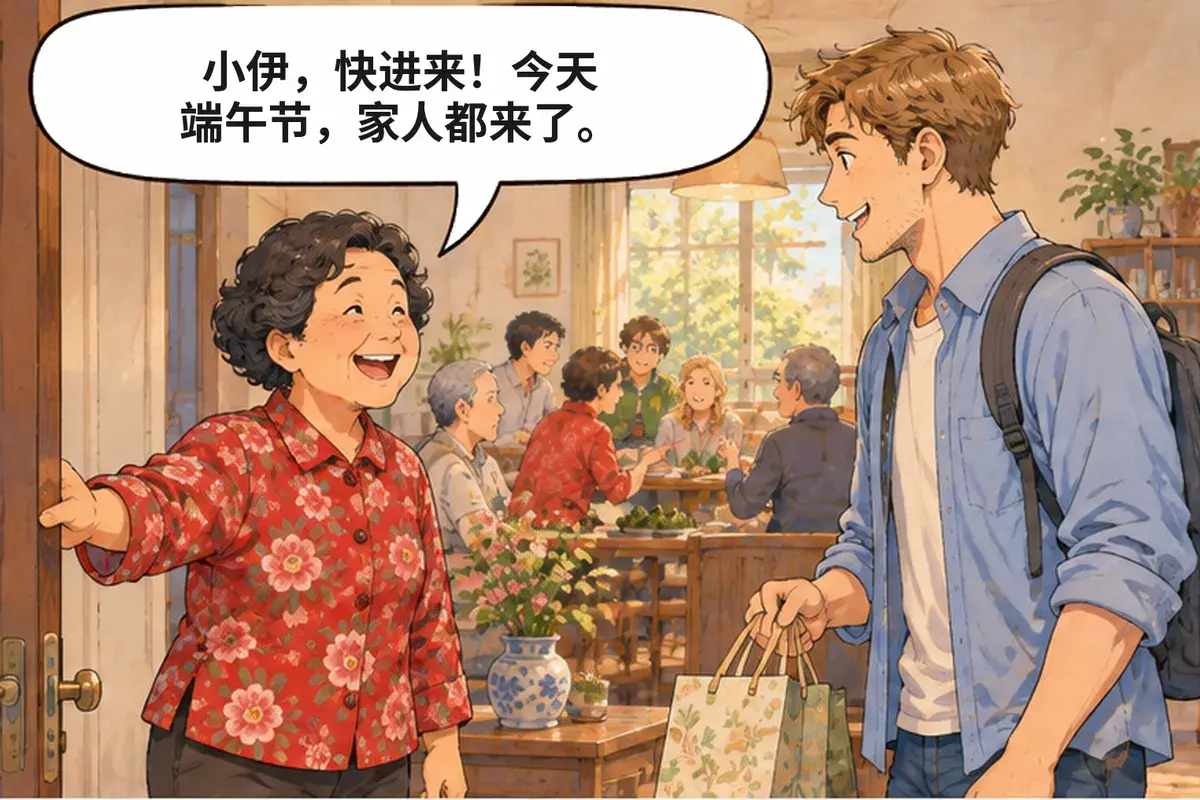
- 王阿姨
小伊,快进来!今天端午节,家人都来了。
Xiao Yi, come in, quick! Today is the Dragon Boat Festival, and the whole family has come.
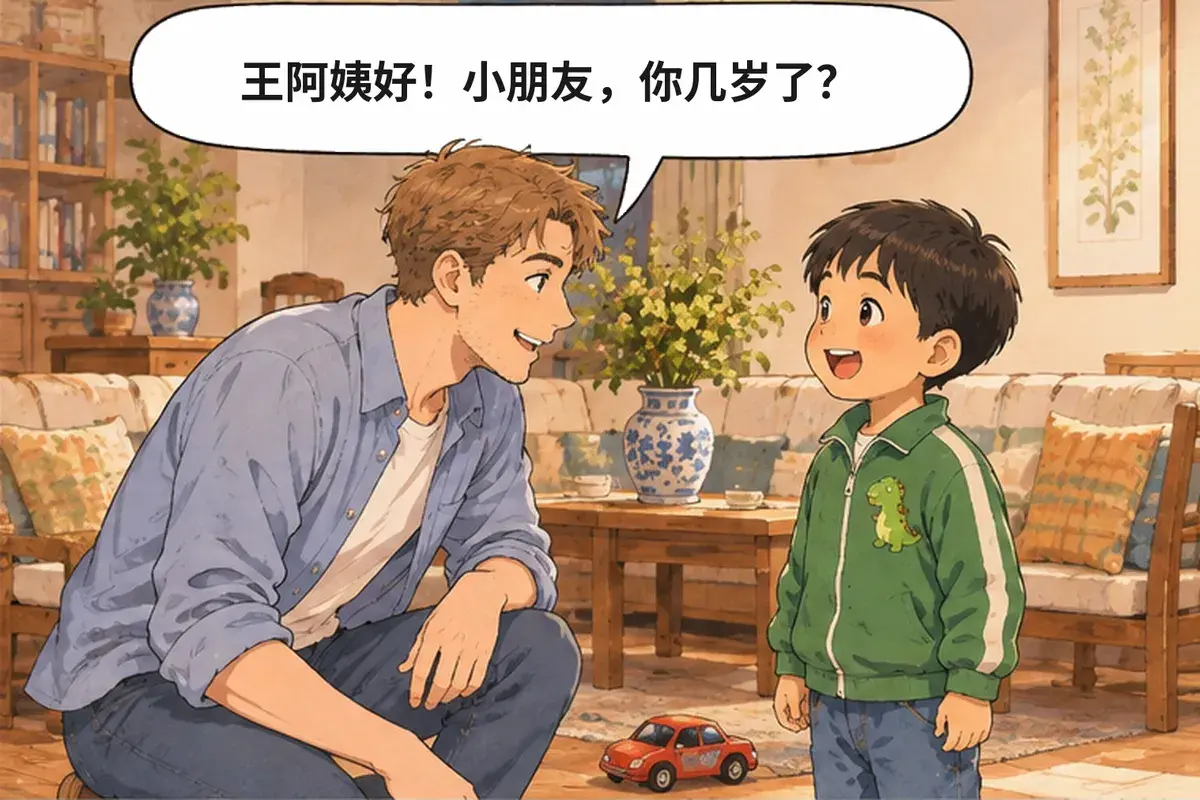
- 伊利亚
王阿姨好!小朋友,你几岁了?
Hello, Auntie Wang! Little one, how old are you?
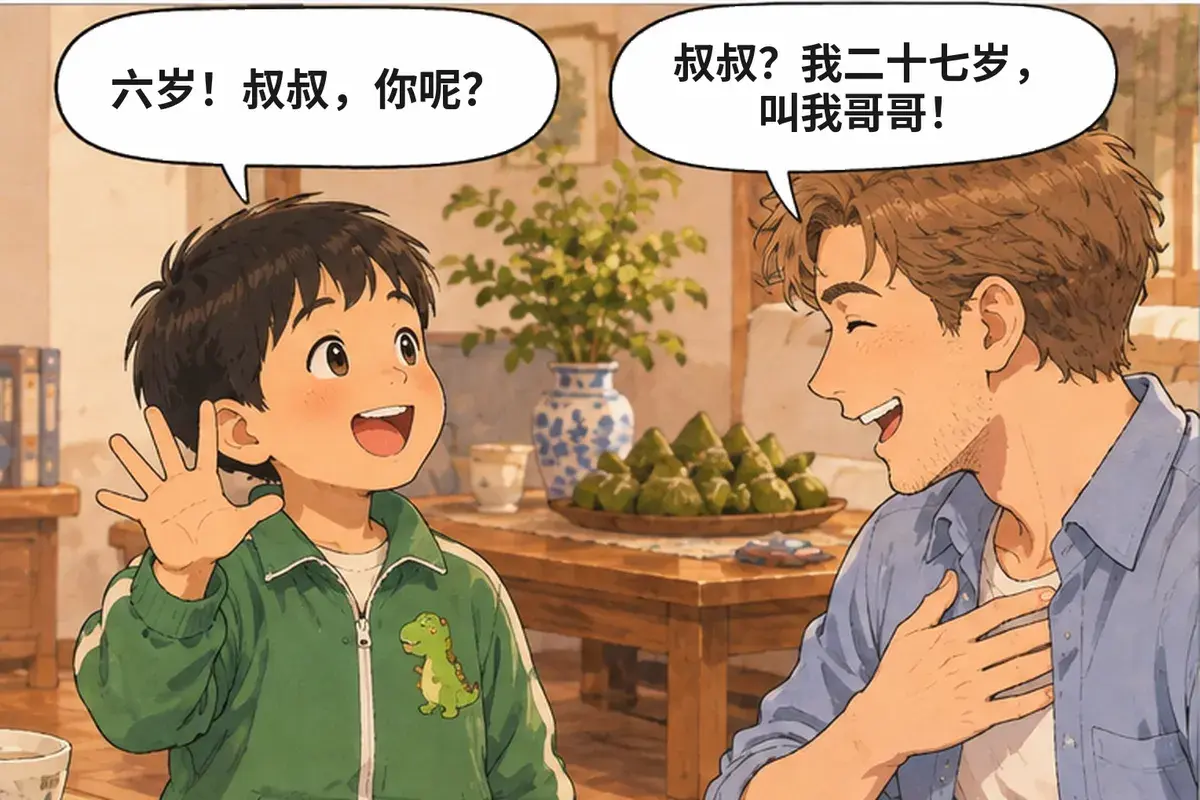
- 豆豆
六岁!叔叔,你呢?
Six! Uncle, what about you?
- 伊利亚
叔叔?我二十七岁,叫我哥哥!
Uncle? I'm twenty-seven, call me big brother!
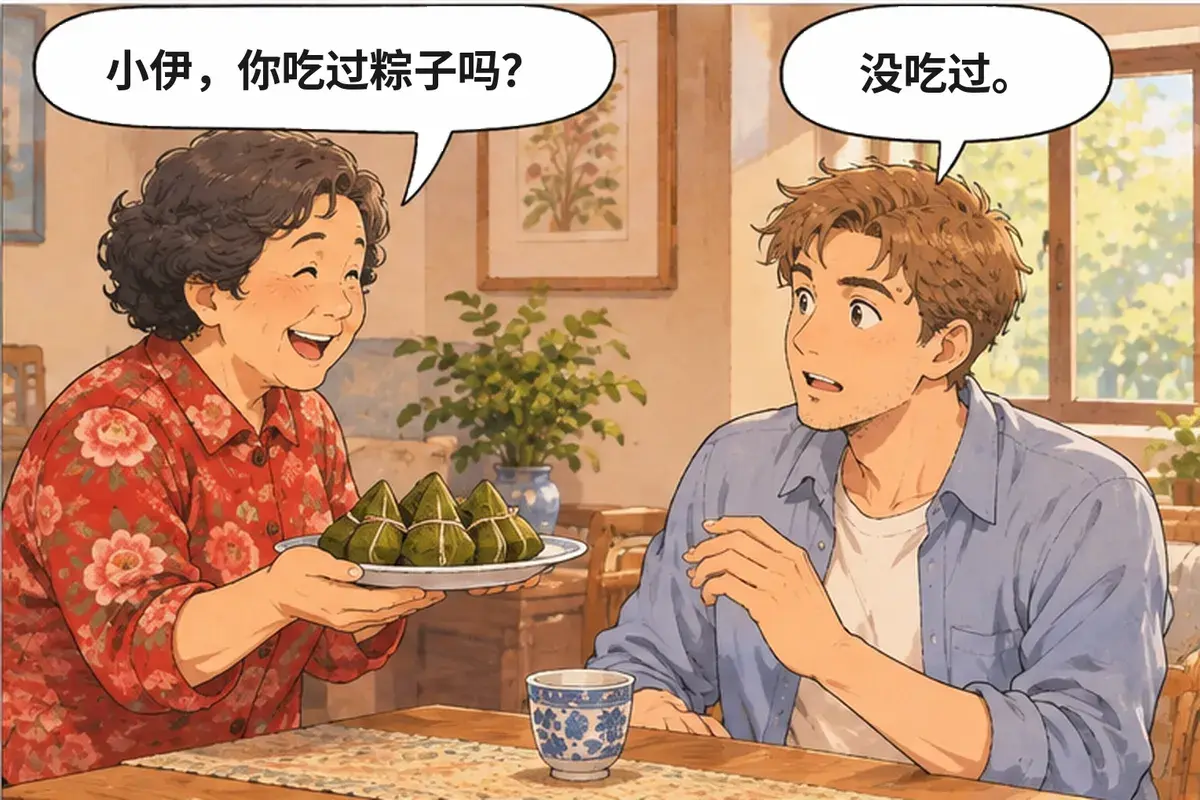
- 王阿姨
小伊,你吃过粽子吗?
Xiao Yi, have you ever eaten zongzi?
- 伊利亚
没吃过。
I've never eaten them.
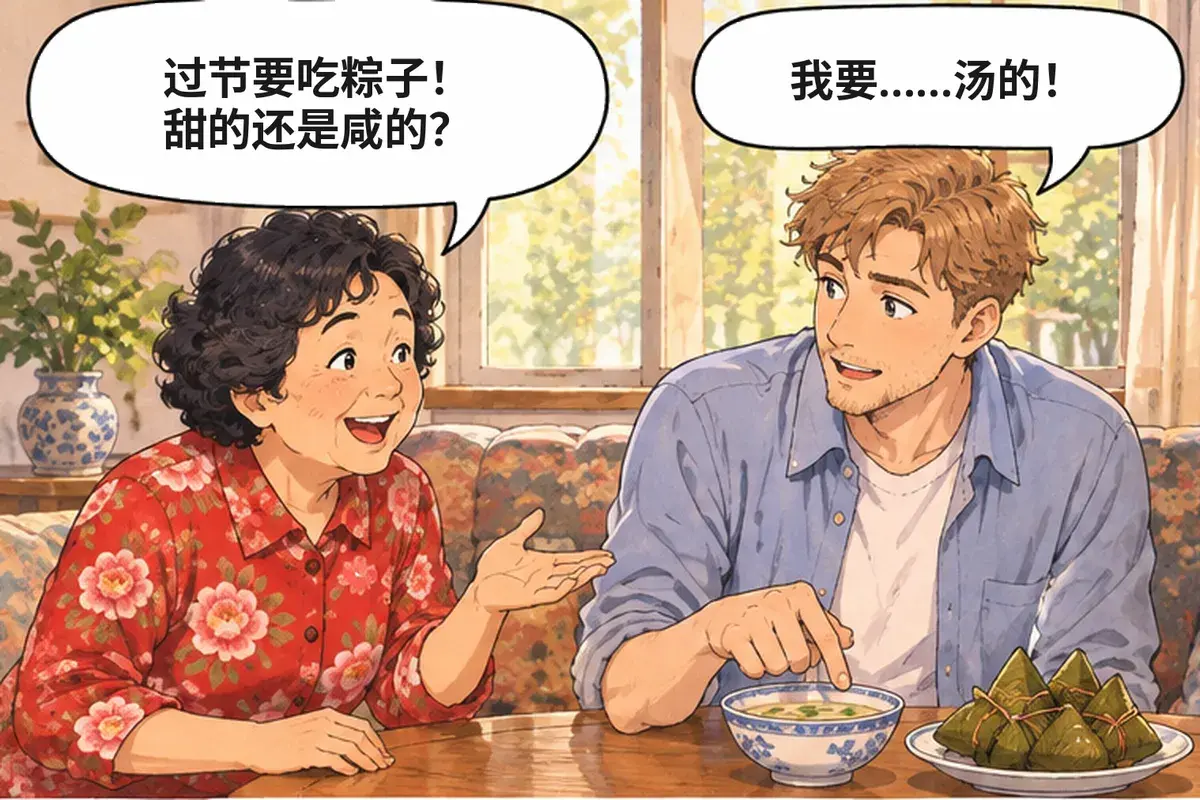
- 王阿姨
过节要吃粽子!甜的还是咸的?
To celebrate the holiday, you have to eat zongzi! Sweet or salty?
- 伊利亚
我要……汤的!
I want... soup ones!
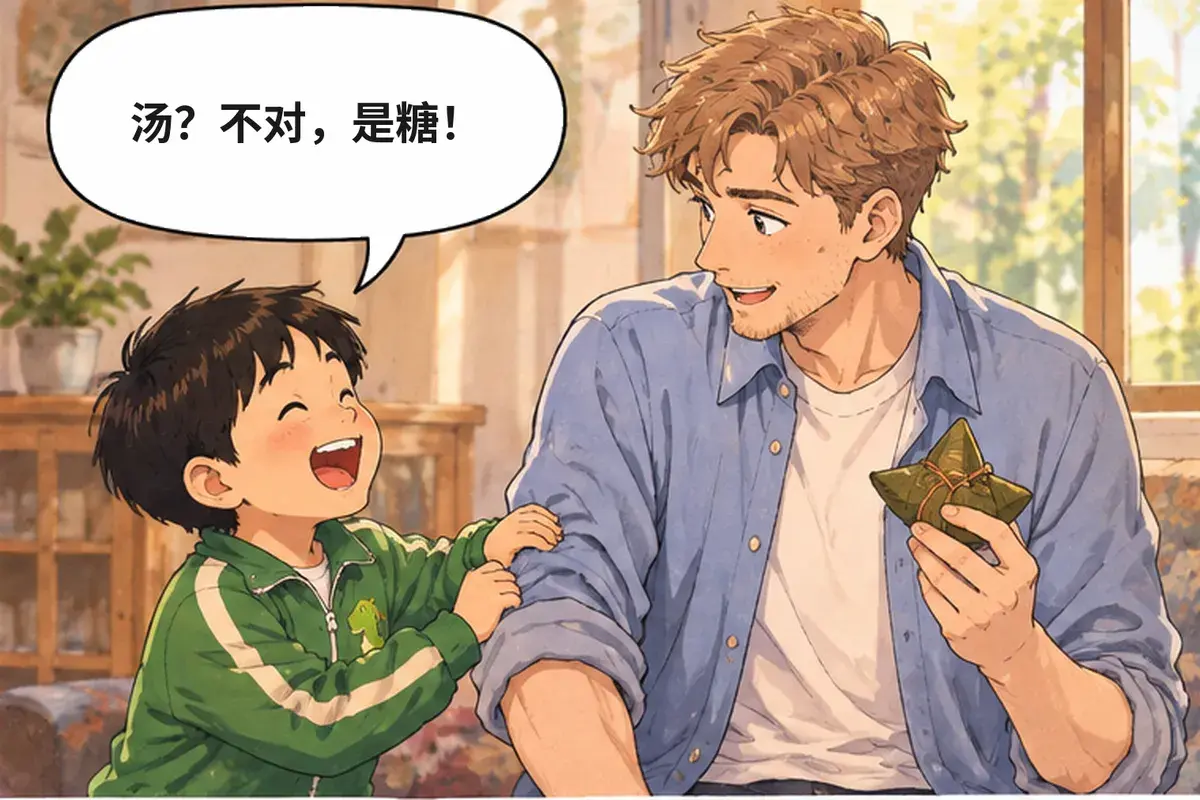
- 豆豆
汤?不对,是糖!
Soup? Wrong, it's sugar!
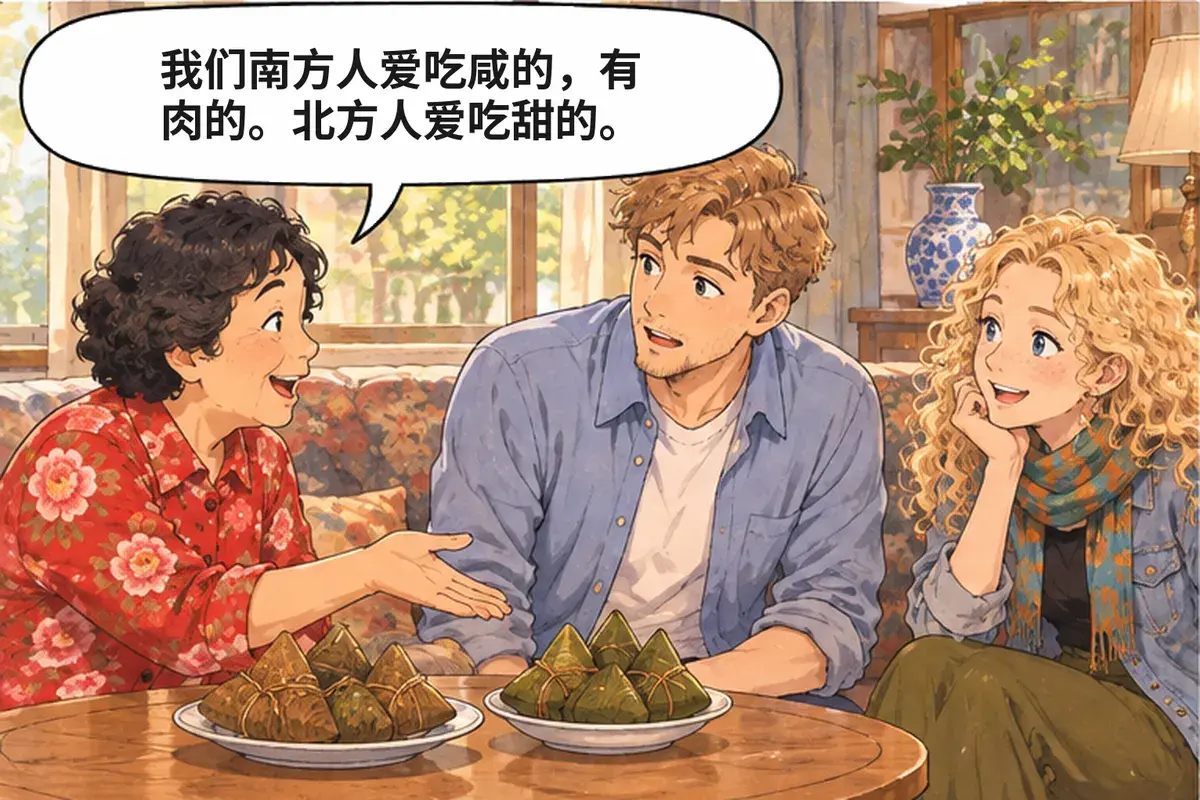
- 王阿姨
我们南方人爱吃咸的,有肉的。北方人爱吃甜的。
We southerners love the salty ones, with meat. Northerners love the sweet ones.
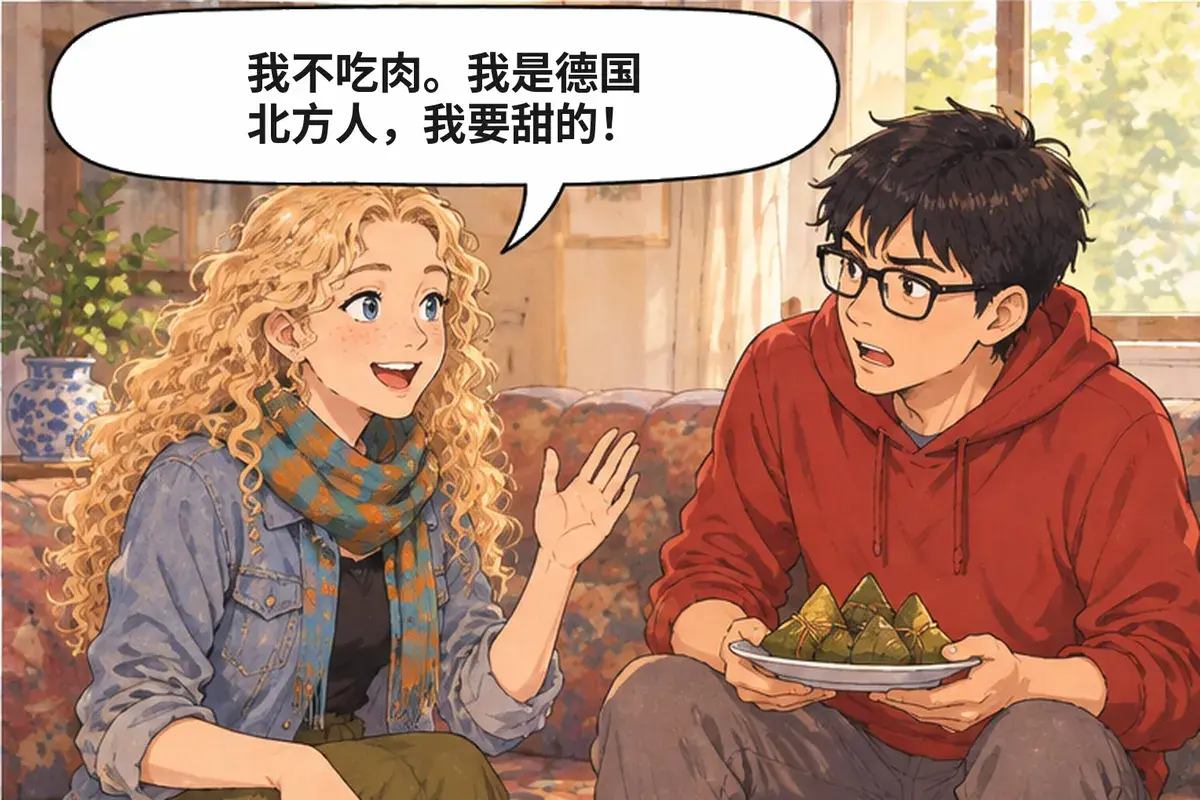
- 萨拉
我不吃肉。我是德国北方人,我要甜的!
I don't eat meat. I'm from the north of Germany, I want a sweet one!
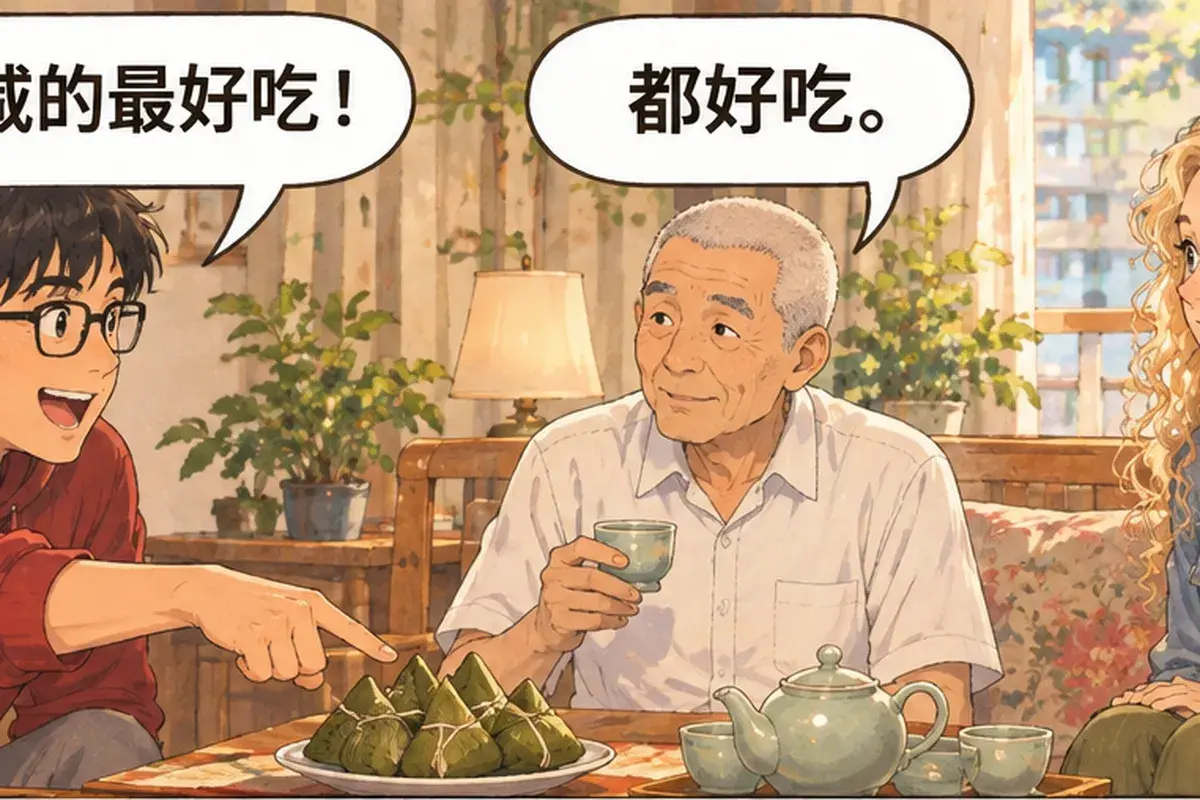
- 张磊
甜的?不行!咸的最好吃!
Sweet ones? No way! Salty ones are the tastiest!
- 王叔叔
都好吃。
They're all delicious.
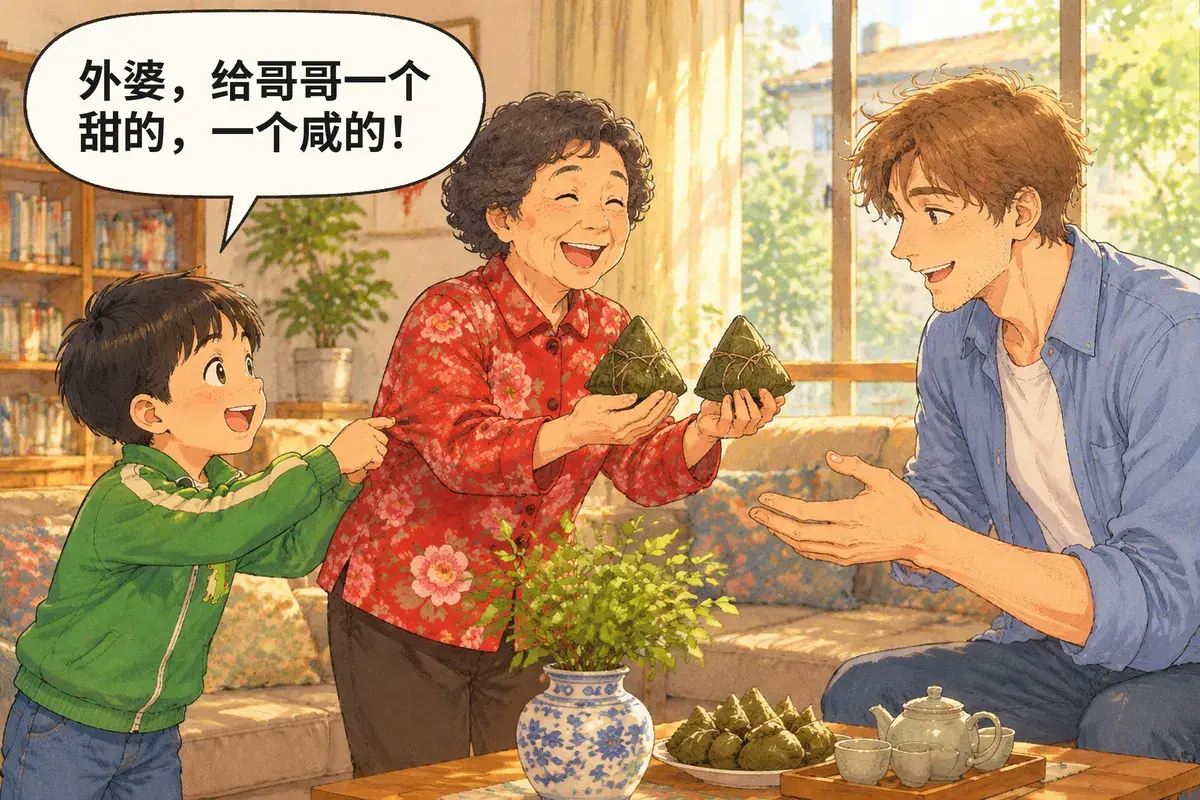
- 豆豆
外婆,给哥哥一个甜的,一个咸的!
Grandma, give big brother one sweet one and one salty one!
Grammar for this text
你 吃 过 粽子 吗? — 过 (guo) right after a verb is the particle "have ever" (unit 17): "have you ever eaten them?". The answer 没 吃 过。 has no 了.
过 节 要 吃 粽子! — but here 过 (guò) is the verb "to celebrate", and it comes before 节. 要 here isn't "want" but "have to, it's the custom".
我 要…… 汤 的! — Ilya wanted to say 糖 的 (táng de) "sugar ones", that is, sweet ones, but he said it in the 1st tone, and it came out as 汤 (tāng) "soup". Doudou corrects him: 汤? 不对, 是 糖! Even a six-year-old knows his tones.
甜 的 还是 咸 的? — 的 after an adjective stands for the noun itself: "sweet (zongzi) or salty (zongzi)". Zongzi are rice wrapped in bamboo leaves; in the South people like them salty, with meat, and in the North, sweet, and every year people argue about it as a joke.
王 阿姨 好! — name + 好: that's how you greet older people. 叔叔, 你 呢? — children call any adult man 叔叔 "uncle", but Ilya is twenty-seven, so he'd rather hear 哥哥 "big brother": that's what young guys are called.
今天 端午节, 家人 都 来 了。 — a date is said without 是, like 今天 星期一; 了 at the end means the family has arrived, and now everyone is here.
外婆, 给 哥哥… — 外婆 is mom's mother: Doudou is the son of Auntie Wang's daughter. 我 是 德国 北方 人 — Sara is from Hamburg, in the north of Germany.
Words and grammar of the unit: Celebrate the Dragon Boat Festival.
Learn the words from the texts with flashcards
In the app, you can tap any word in a text to see its translation, forms and examples, and new words stick with flashcards. 15 minutes a day.
Start for freeEverything is open for free. No card needed to sign up.