

Thai dialogue with translation · A2 · 14 lines
ดูสภาพทุกคนสิ Look at the state of you all
Comic · 9 panels

- ป้าศรี
ดูสภาพทุกคนสิ เปียกทั้งตัวเลยจ้ะ
Look at the state of you all! You're soaking wet.
- ป้าศรี
เกิดอะไรขึ้นบ้าง เล่าให้ป้าฟังหน่อยจ้ะ
What happened to you all? Tell me about it.
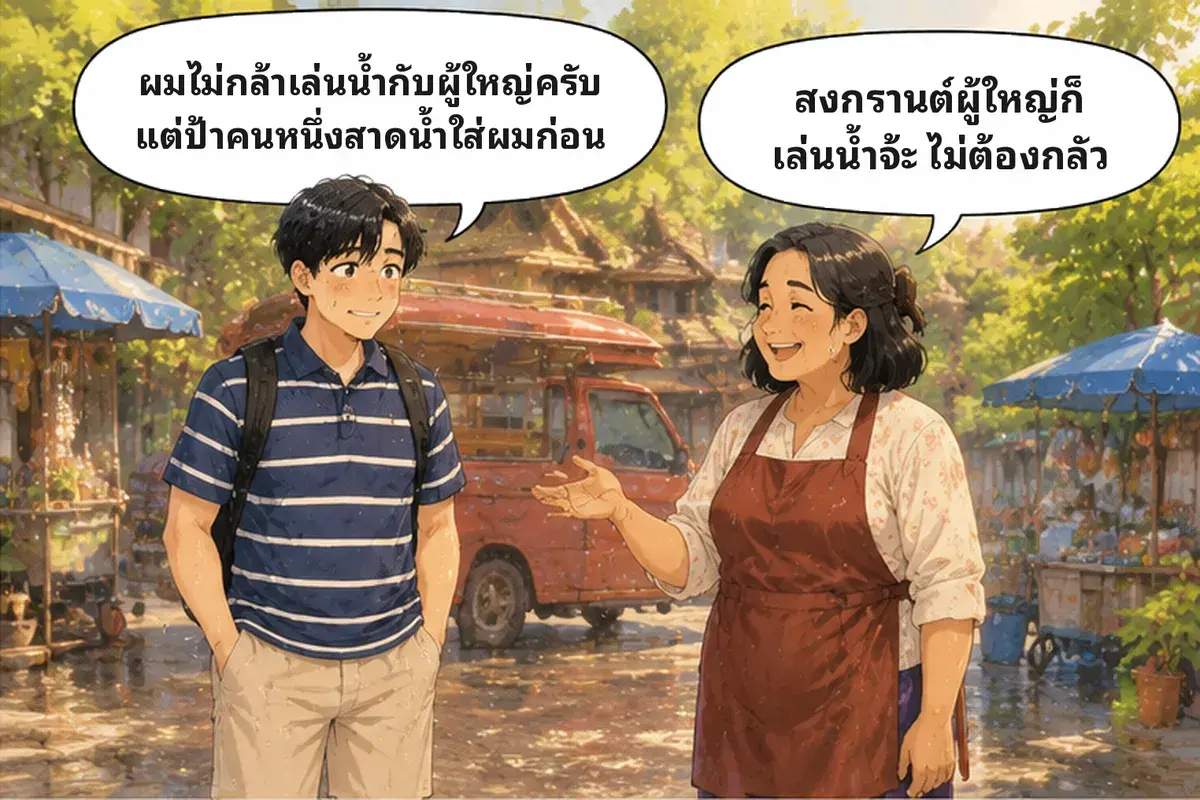
- เคน
ผมไม่กล้าเล่นน้ำกับผู้ใหญ่ครับ แต่ป้าคนหนึ่งสาดน้ำใส่ผมก่อน
I didn't dare play water games with the grown-ups, but one older lady splashed water on me first (man speaking).
- ป้าศรี
สงกรานต์ผู้ใหญ่ก็เล่นน้ำจ้ะ ไม่ต้องกลัว
At Songkran grown-ups play with water too. No need to be afraid.
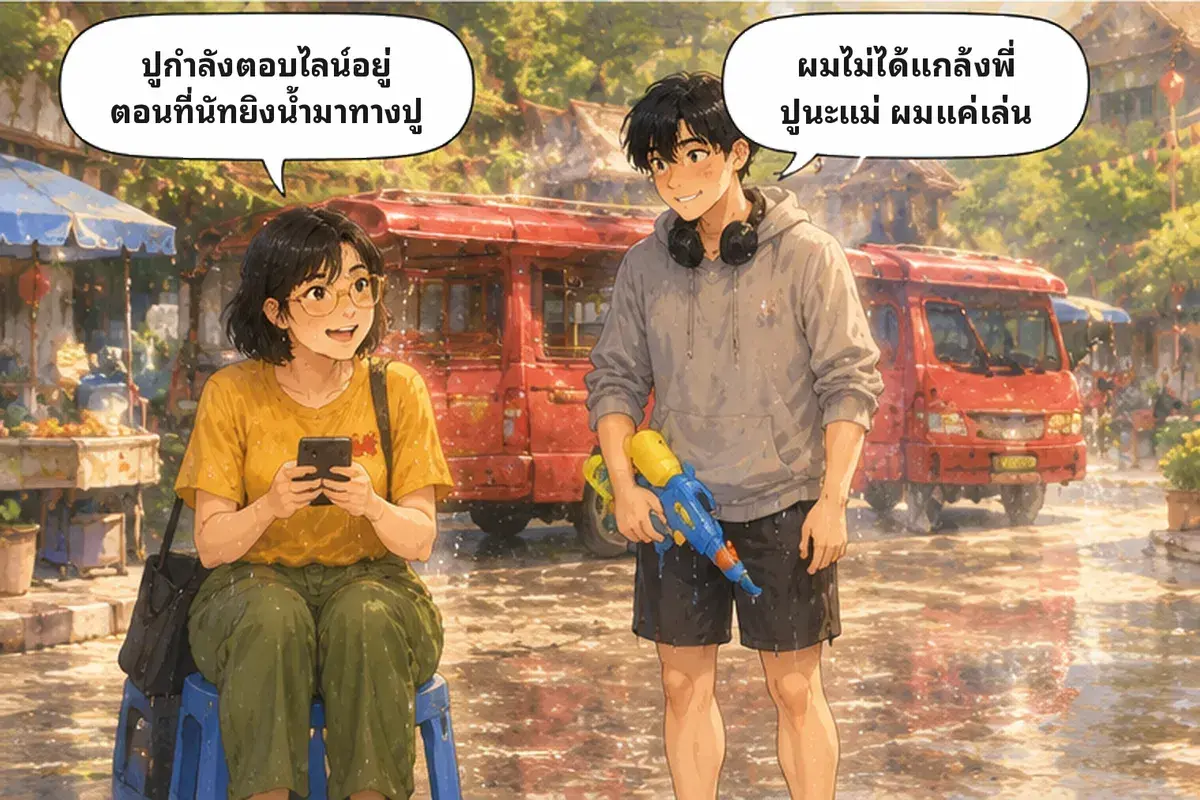
- ปู
ปูกำลังตอบไลน์อยู่ตอนที่นัทยิงน้ำมาทางปู
I was answering a LINE message when Nat shot water at me.
- นัท
ผมไม่ได้แกล้งพี่ปูนะแม่ ผมแค่เล่น
Mom, I wasn't teasing Pu! I was just playing (man speaking).
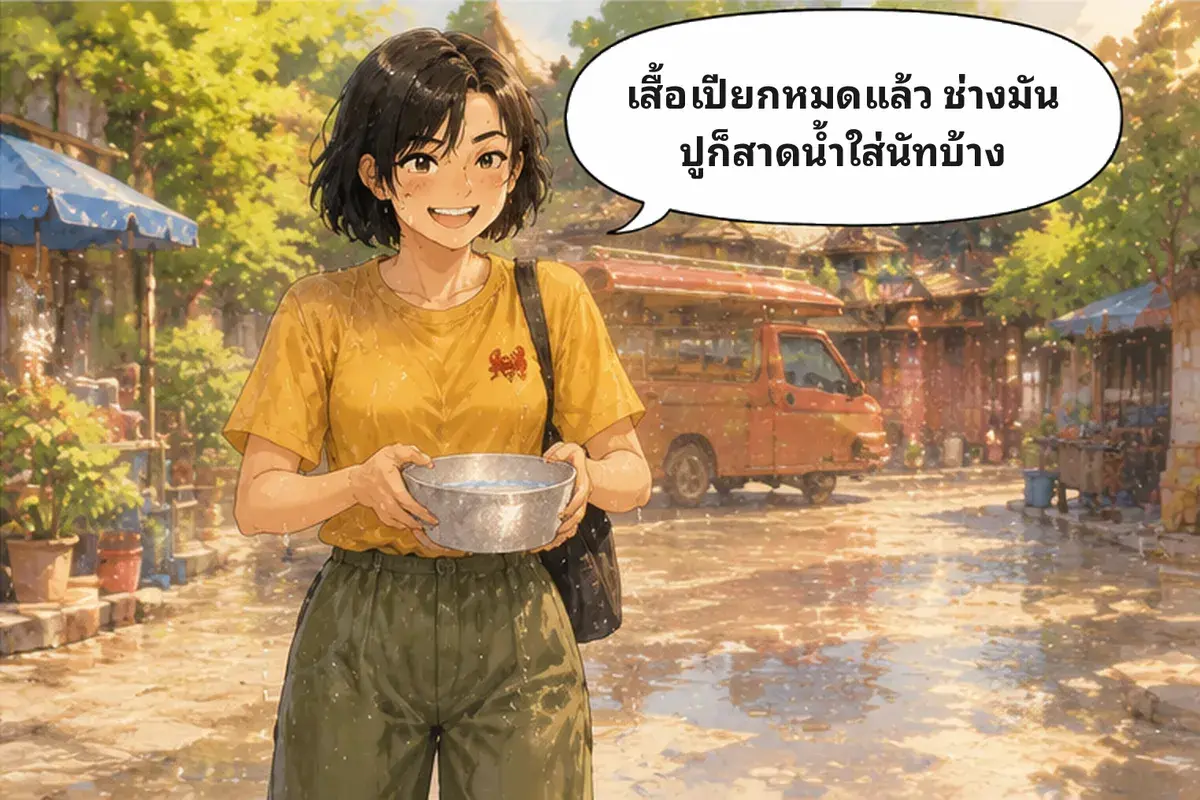
- ปู
เสื้อเปียกหมดแล้ว ช่างมัน ปูก็สาดน้ำใส่นัทบ้าง
My shirt is already soaking wet. Oh, forget it. I splashed Nat back, too.
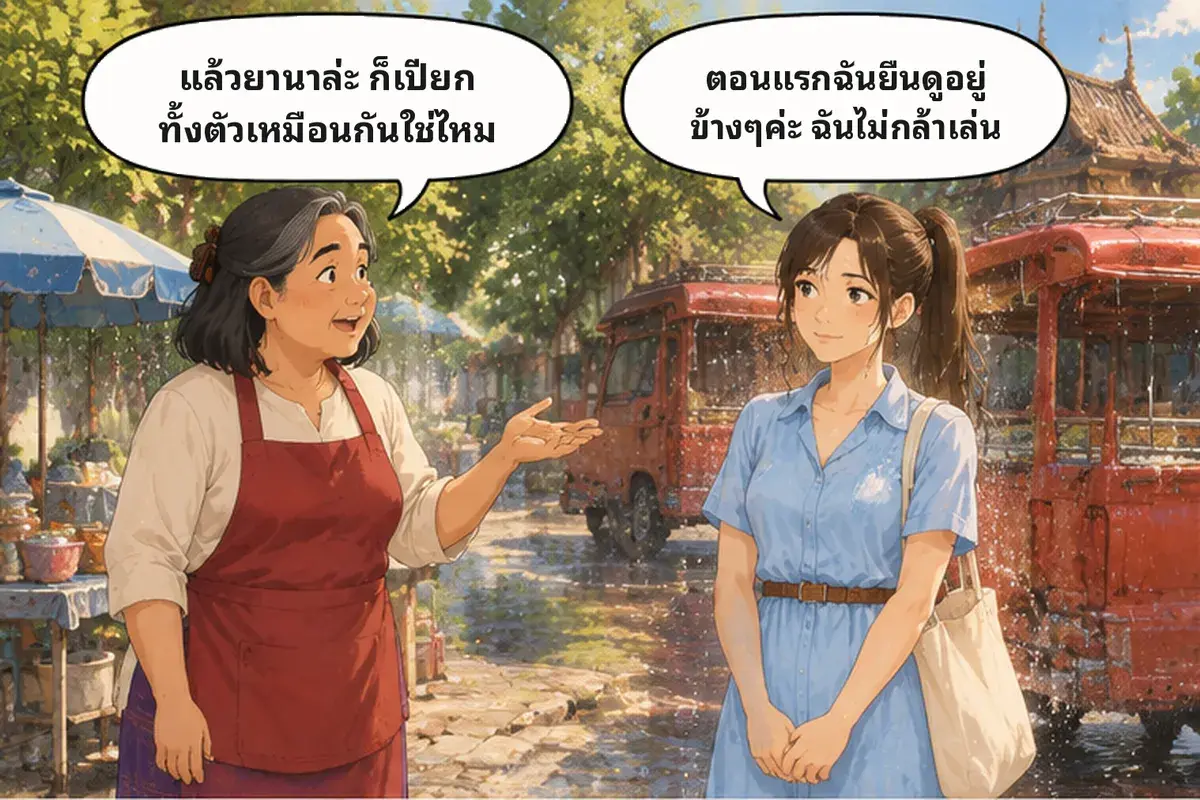
- ป้าศรี
แล้วยานาล่ะ ก็เปียกทั้งตัวเหมือนกันใช่ไหม
And what about you, Yana? You're soaking wet too, aren't you?
- ยานา
ตอนแรกฉันยืนดูอยู่ข้างๆค่ะ ฉันไม่กล้าเล่น
At first I stood off to the side and watched. I didn't dare play (woman speaking).

- ป้าศรี
แล้วทำไมเปียกล่ะจ้ะ
Then why are you wet?
- ยานา
แดดแรงมากค่ะ ฉันก็เลยร่วมเล่นน้ำกับทุกคน
The sun was really strong, so I joined everyone in the water fight (woman speaking).

- ยานา
น้ำเย็นมากค่ะ ฉันตัวสั่นแต่สดชื่นจัง
The water was really cold. I was shivering, but it felt so refreshing (woman speaking).

- ลุงชัย
ผมแห้งคนเดียวครับ รถเปียกทั้งคัน
I'm the only one who's dry. The whole truck is soaking wet (man speaking).
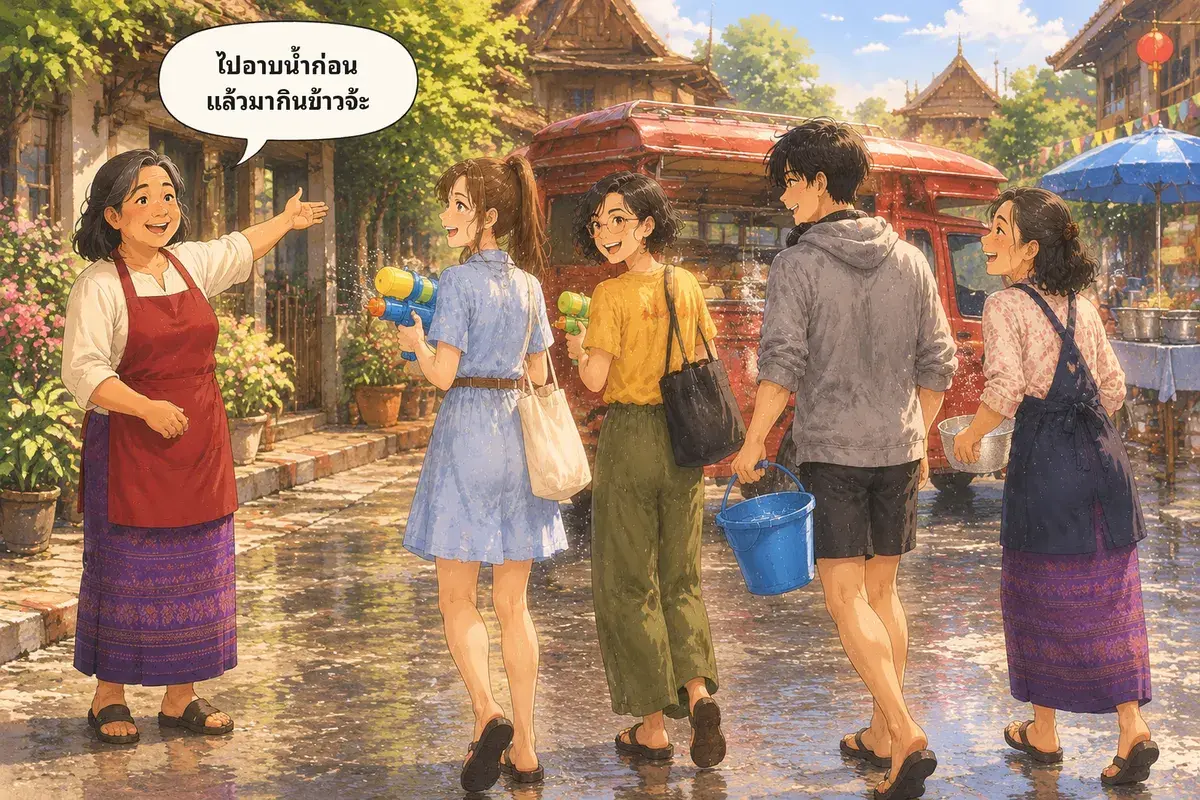
- ป้าศรี
ไปอาบน้ำก่อน แล้วมากินข้าวจ้ะ
Go take a shower first, then come eat.
Grammar for this text
- ดูสภาพทุกคนสิ — "look at the state of you all!"
สภาพ(sà-pâap) means "condition, shape": people say it about someone messy, wet, or dirty, often with a smile. - เล่าให้ป้าฟังหน่อยจ้ะ — "tell me about it." Auntie Sri calls herself
ป้า(bpâa), "auntie", andจ้ะ(jâ) is a warm particle that older people use. - ผมไม่กล้าเล่นน้ำกับผู้ใหญ่ครับ — "I didn't dare play water games with the grown-ups."
กล้า(glâa) goes before a verb and means "to dare"; withไม่it means "not to dare". - สงกรานต์ผู้ใหญ่ก็เล่นน้ำจ้ะ — "at Songkran grown-ups play with water too." Everyone gets splashed, older people too, and it isn't rude.
- ปูกำลังตอบไลน์อยู่ตอนที่นัทยิงน้ำมาทางปู — "I was answering a LINE message when Nat shot water at me." The same pattern as in the first text. Pu says her own name instead of "I", as is common in a family.
- ช่างมัน — "oh, forget it." You say
ช่างมัน(châang-man) to friends and younger people; to an older person it's better to sayไม่เป็นไร(mâi-bpen-rai).
Words and grammar of the unit: Tell what happened at a festival.
Learn the words from the texts with flashcards
In the app, you can tap any word in a text to see its translation, forms and examples, and new words stick with flashcards. 15 minutes a day.
Start for freeEverything is open for free. No card needed to sign up.