

Thai dialogue with translation · A2 · 16 lines
เหลือเตียงไหมคะ Are there any berths left?
Comic · 16 panels

- ยานา
สวัสดีค่ะ ขอตั๋วไปเชียงใหม่คืนนี้ค่ะ
Hello. Tickets to Chiang Mai for tonight, please (woman speaking).
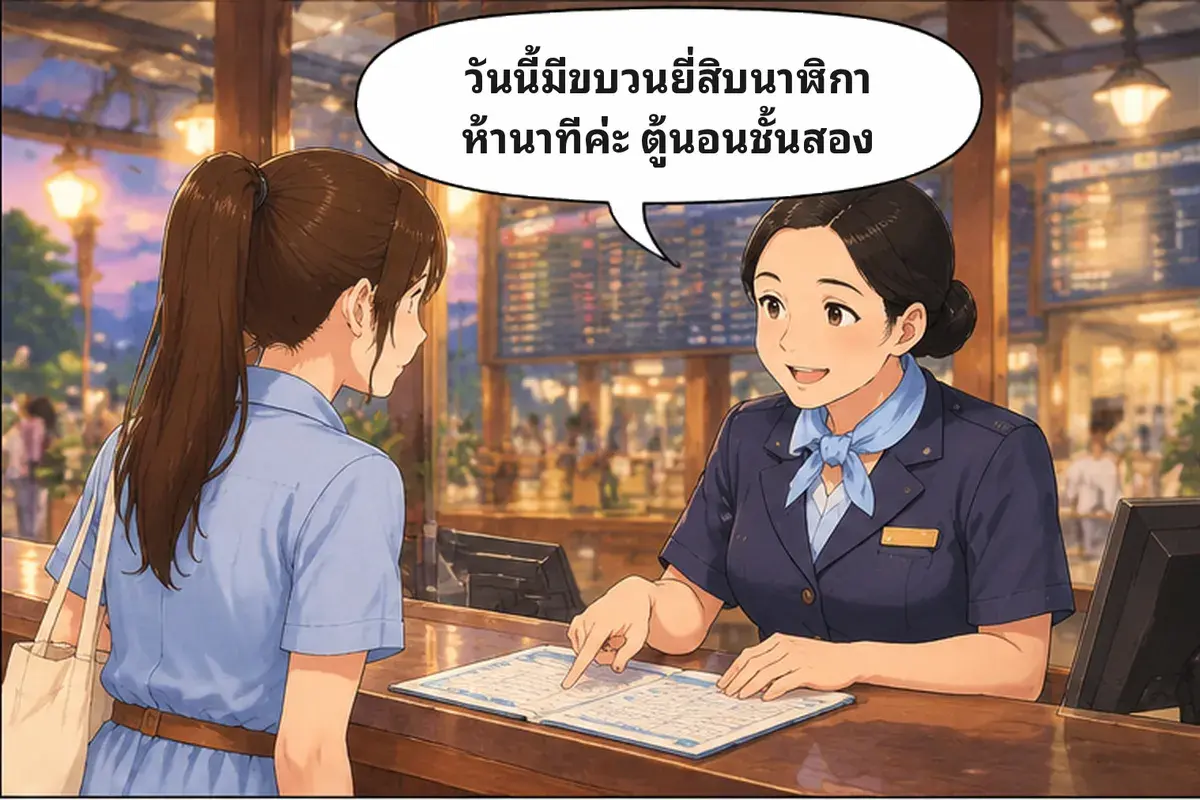
- พนักงาน
วันนี้มีขบวนยี่สิบนาฬิกาห้านาทีค่ะ ตู้นอนชั้นสอง
There's a train at 20:05 today. Sleeper car, second class (woman speaking).
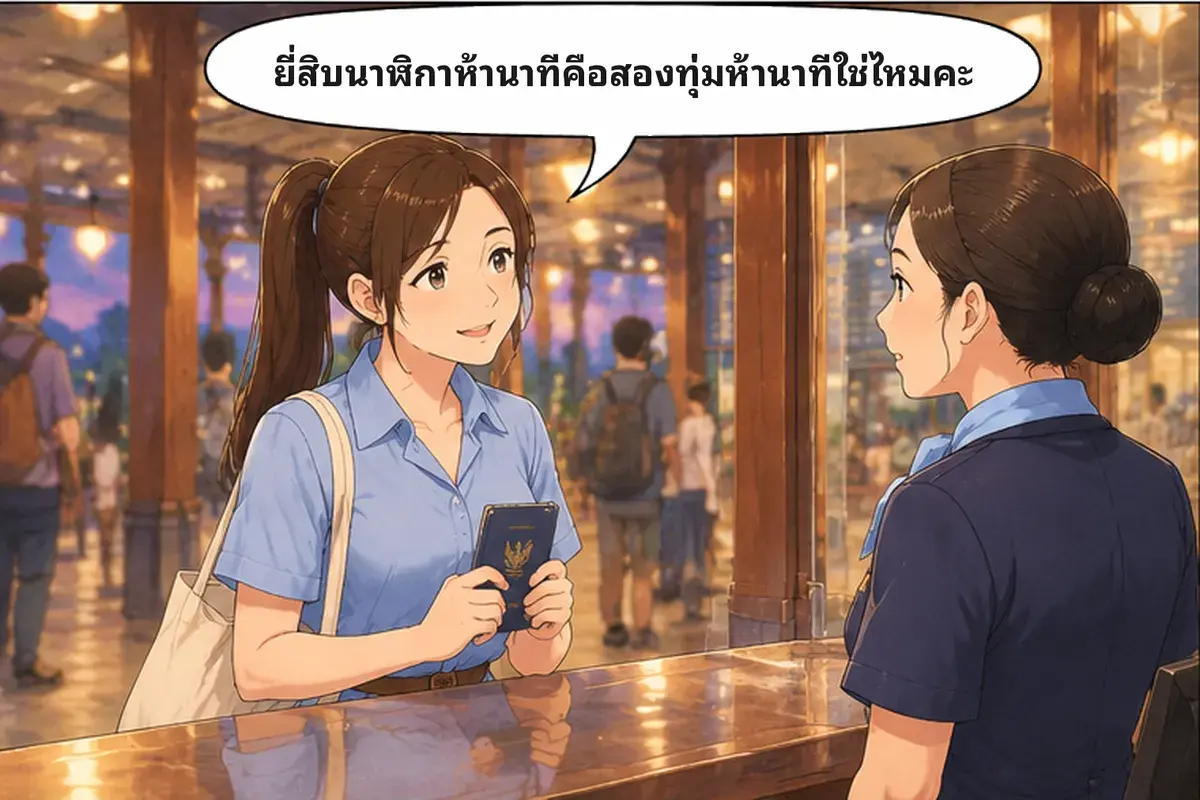
- ยานา
ยี่สิบนาฬิกาห้านาทีคือสองทุ่มห้านาทีใช่ไหมคะ
20:05 is five past eight in the evening, right? (woman speaking)
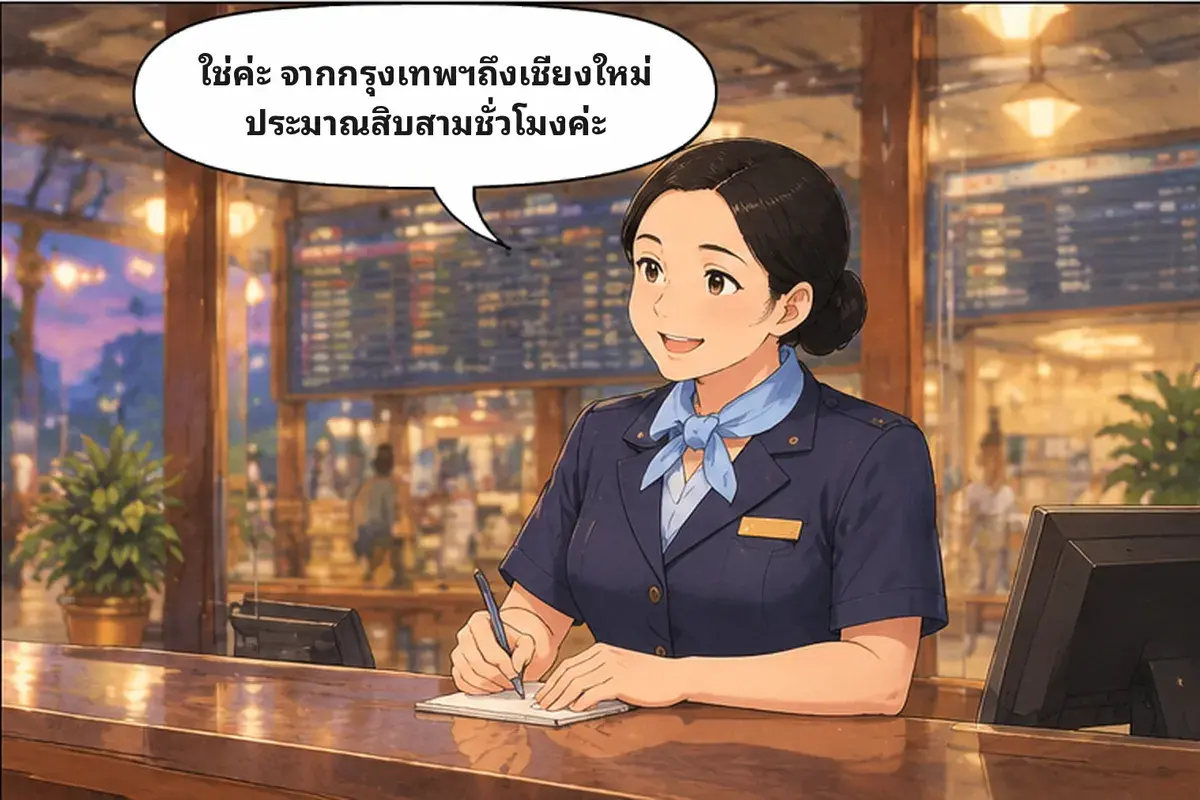
- พนักงาน
ใช่ค่ะ จากกรุงเทพฯถึงเชียงใหม่ประมาณสิบสามชั่วโมงค่ะ
Yes. From Bangkok to Chiang Mai it's about thirteen hours (woman speaking).
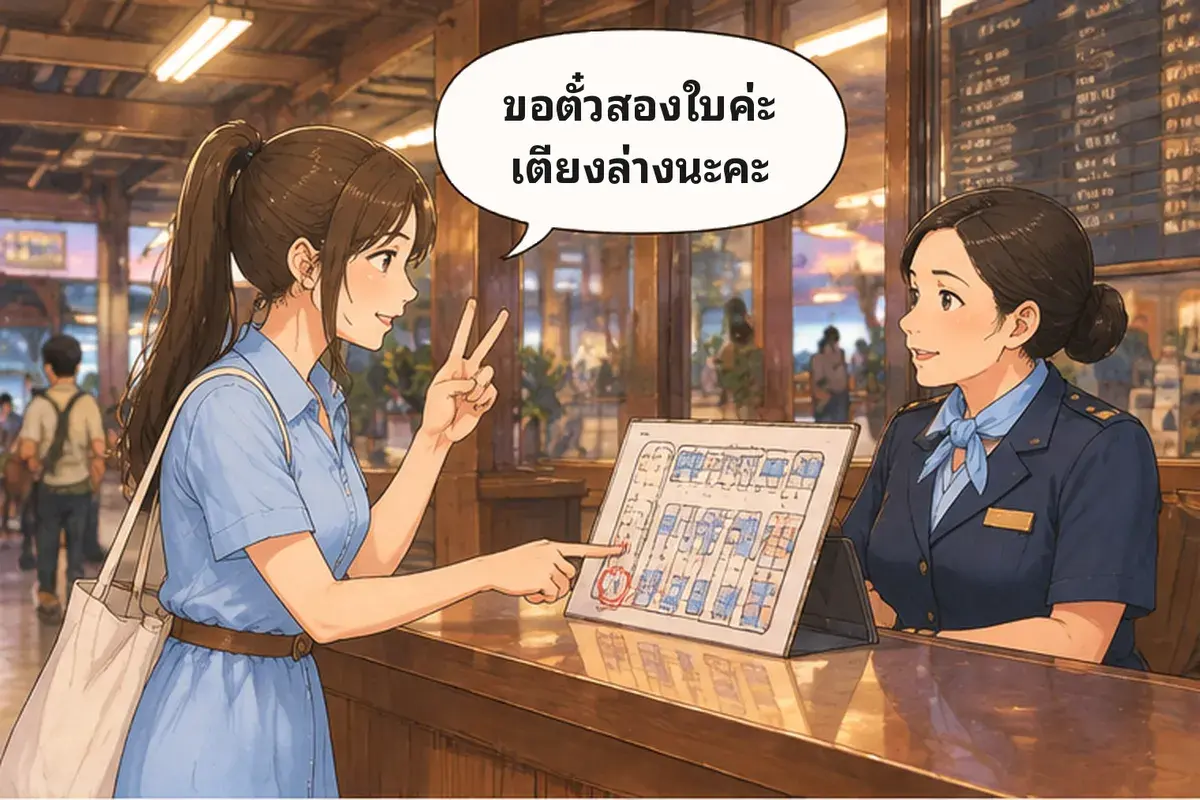
- ยานา
ขอตั๋วสองใบค่ะ เตียงล่างนะคะ
Two tickets, please. Lower berths, OK? (woman speaking)

- พนักงาน
เตียงล่างขายหมดแล้วค่ะ ต้องจองล่วงหน้าค่ะ
The lower berths are sold out. You have to book in advance (woman speaking).
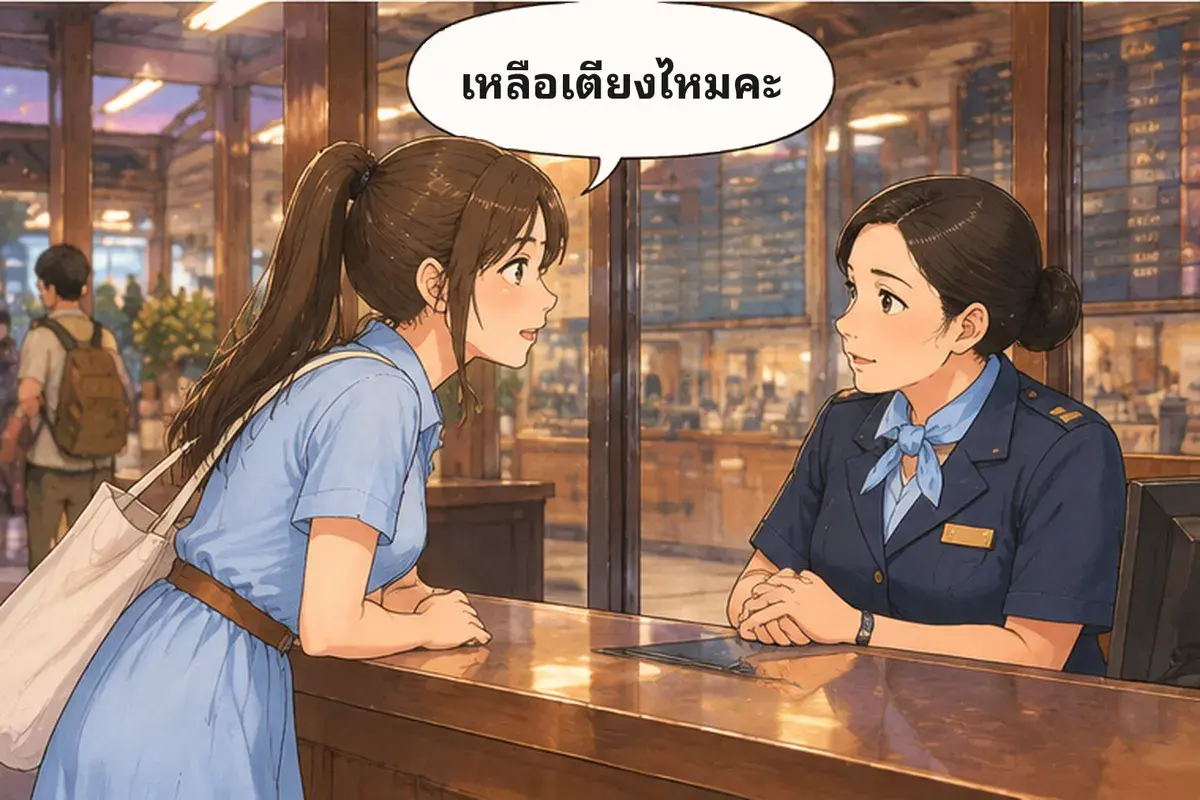
- ยานา
เหลือเตียงไหมคะ
Are there any berths left? (woman speaking)
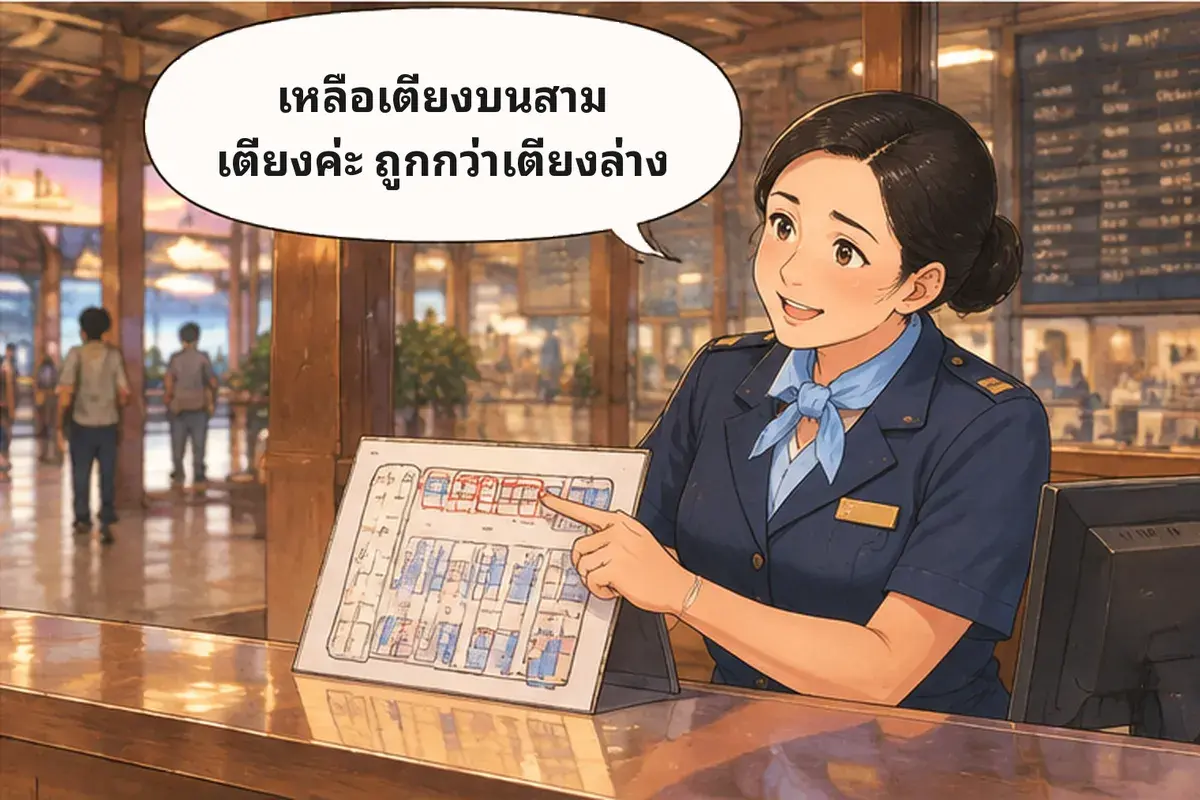
- พนักงาน
เหลือเตียงบนสามเตียงค่ะ ถูกกว่าเตียงล่าง
There are three upper berths left. They're cheaper than the lower ones (woman speaking).

- ดีมา
เอาเตียงบนครับ ถูกกว่าดีครับ
We'll take the upper berths. Cheaper is good (man speaking).
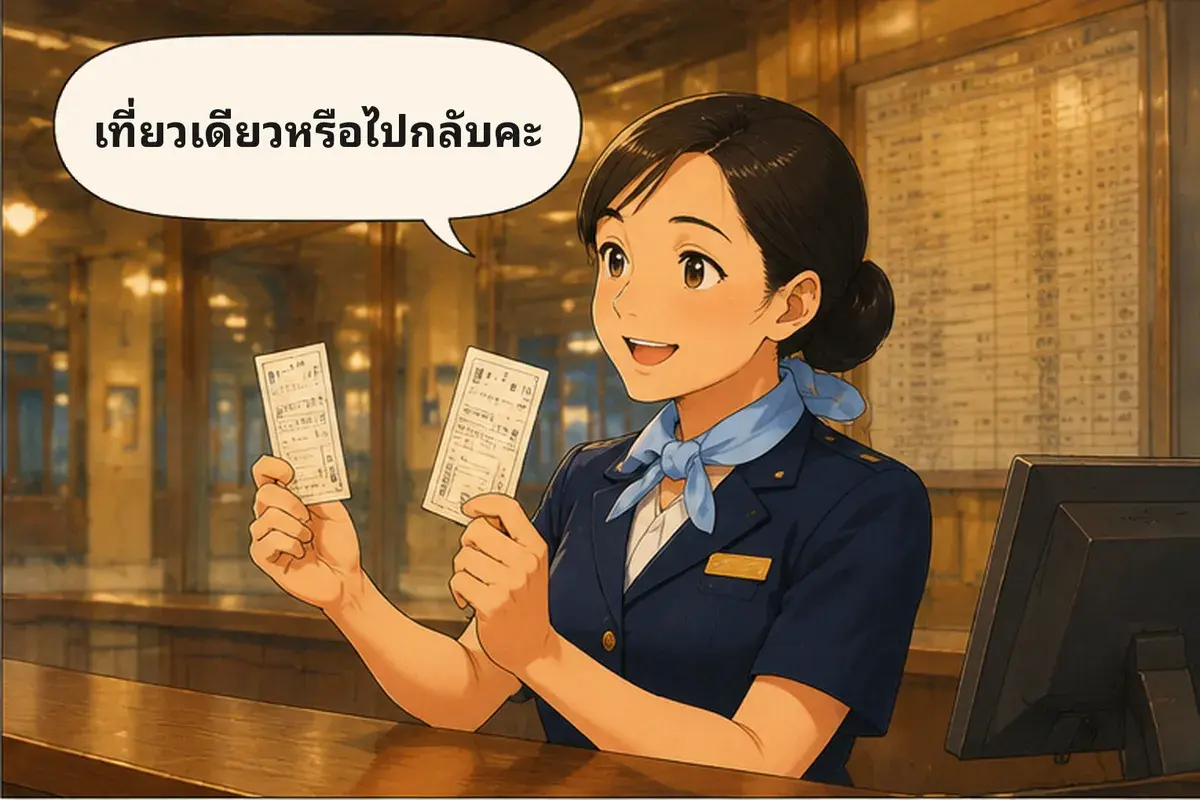
- พนักงาน
เที่ยวเดียวหรือไปกลับคะ
One-way or round trip? (woman speaking)
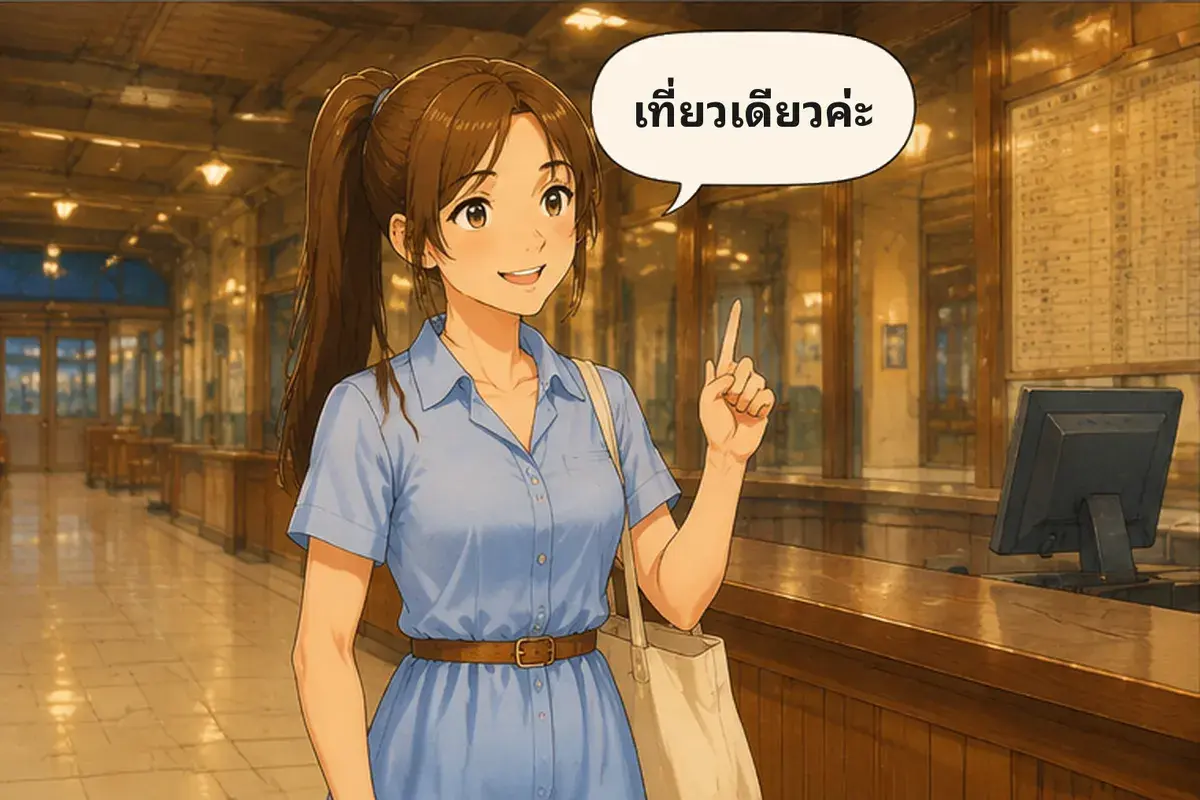
- ยานา
เที่ยวเดียวค่ะ
One-way (woman speaking).
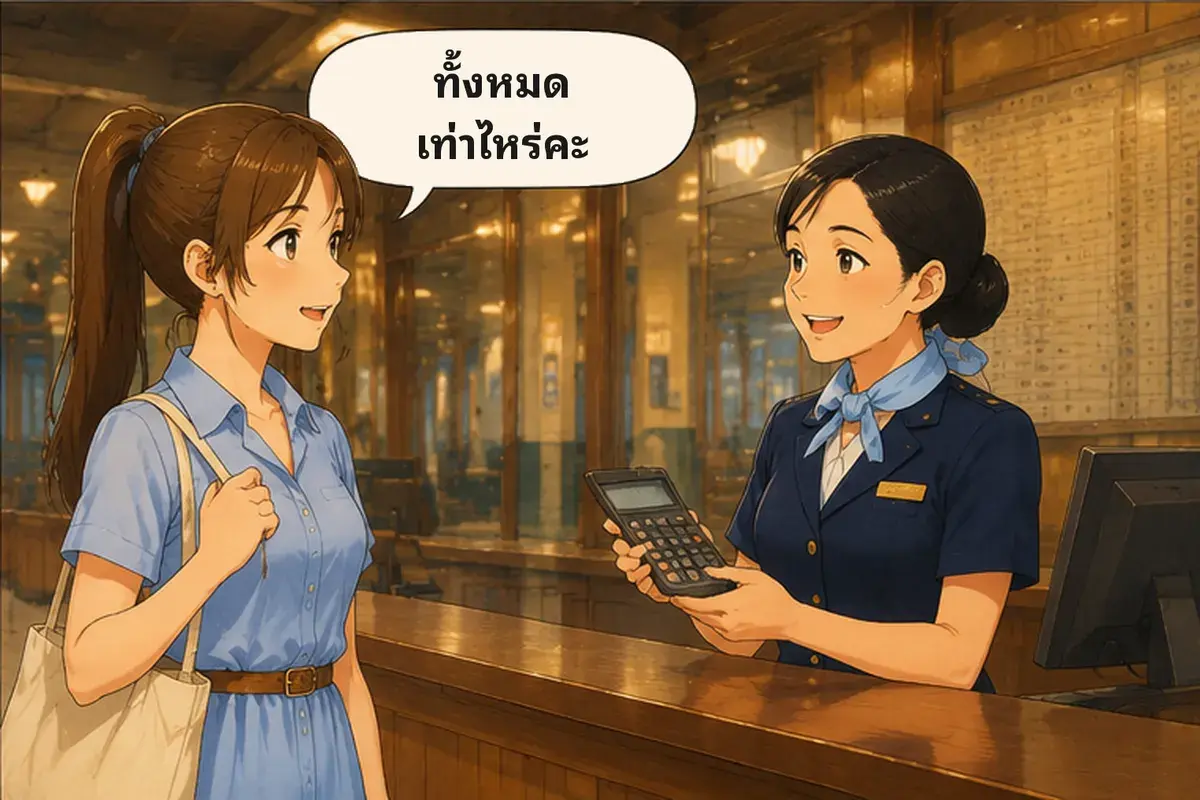
- ยานา
ทั้งหมดเท่าไหร่คะ
How much is it altogether? (woman speaking)
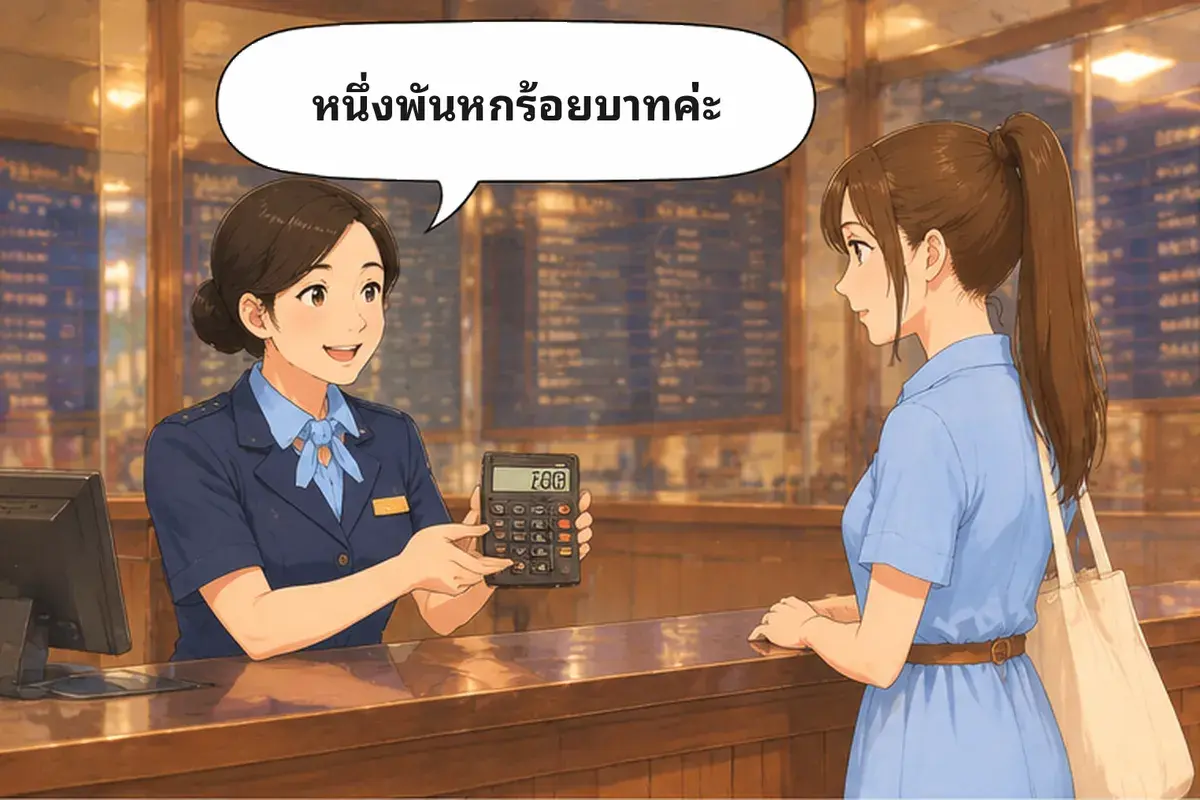
- พนักงาน
หนึ่งพันหกร้อยบาทค่ะ
One thousand six hundred baht (woman speaking).

- พนักงาน
ขอดูพาสปอร์ตหน่อยค่ะ คนต่างชาติต้องใช้พาสปอร์ต
May I see your passport, please? Foreigners need a passport (woman speaking).
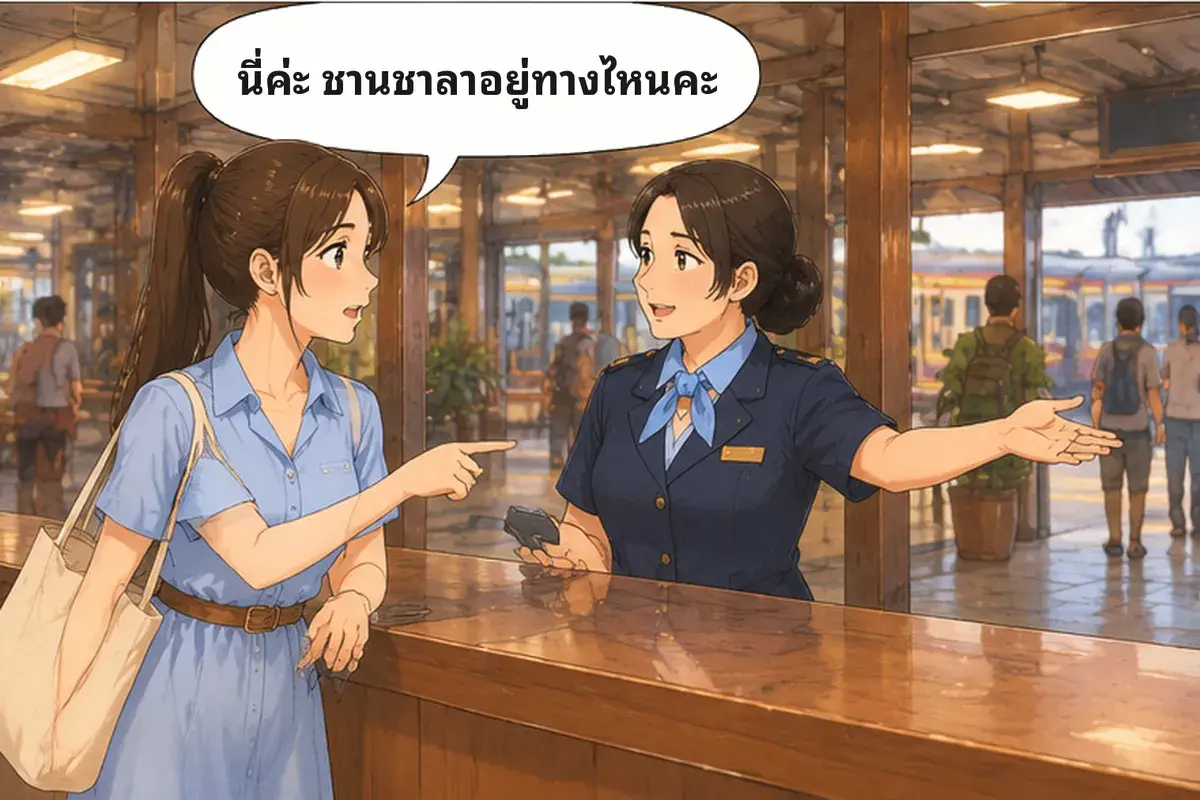
- ยานา
นี่ค่ะ ชานชาลาอยู่ทางไหนคะ
Here you are. Which way is the platform? (woman speaking)
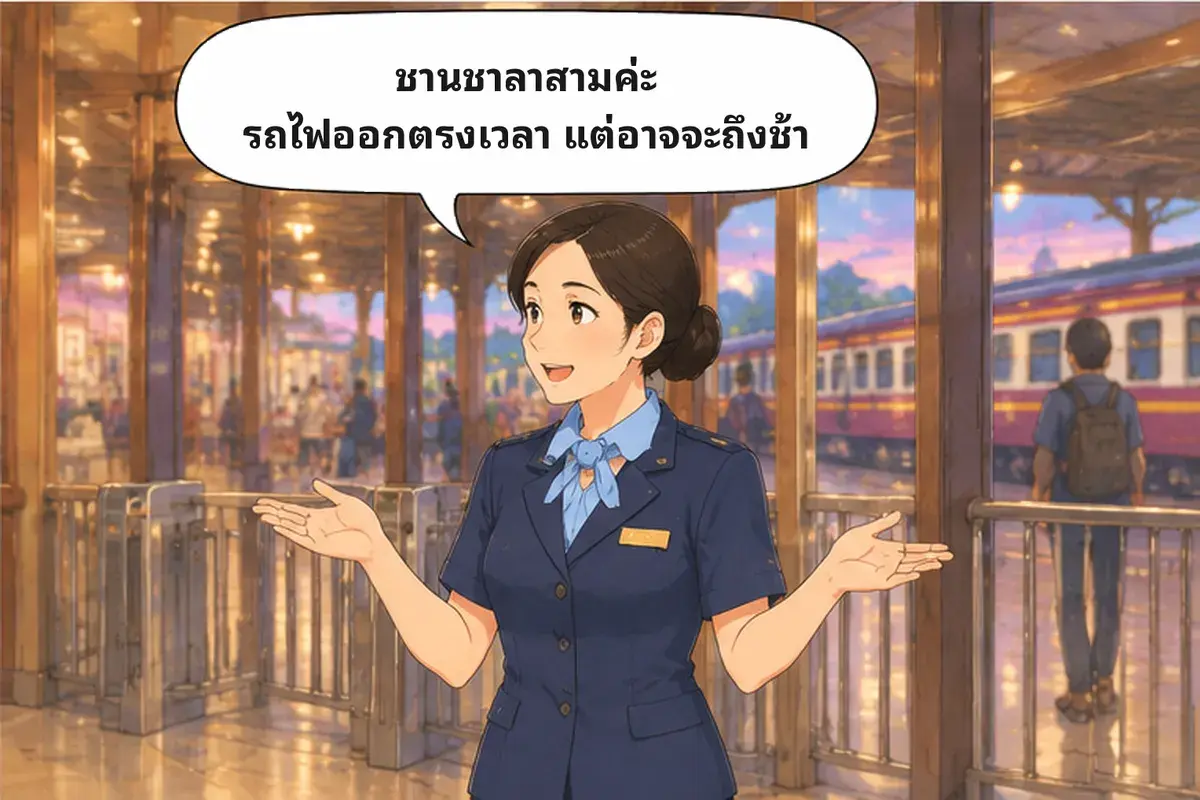
- พนักงาน
ชานชาลาสามค่ะ รถไฟออกตรงเวลา แต่อาจจะถึงช้า
Platform three. The train leaves on time, but it might arrive late (woman speaking).
Grammar for this text
- ขอตั๋วไปเชียงใหม่คืนนี้ค่ะ — Tickets to Chiang Mai for tonight, please (woman speaking). At the ticket office you ask like this:
ขอ(kɔ̌ɔ) 'may I have' + what you need + where and when.คืนนี้(kʉʉn-níi) means 'tonight'. - ยี่สิบนาฬิกาห้านาที — 20:05. This is how stations and schedules give the time: the hour, then
นาฬิกา, then the minutes. In everyday speech the same time is สองทุ่มห้านาที — five past eight in the evening. Yana checks one against the other withคือ(kʉʉ) 'is, that is'. - ตู้นอนชั้นสอง — sleeper car, second class.
ตู้นอน— sleeper car,ชั้น สอง— second class.ชั้นis the same word as 'floor', but here it means 'class'. - เตียงล่างขายหมดแล้ว — The lower berths are sold out.
ขาย หมด(kǎai mòt) — sold out. To ask what's left: เหลือเตียงไหมคะ — Are there any berths left? (woman speaking)เหลือ— to be left. Berths are counted withเตียง. - เที่ยวเดียวหรือไปกลับ — One-way or round trip? You can answer in two words: เที่ยวเดียวค่ะ — One-way (woman speaking).
- อาจจะถึงช้า — It might arrive late.
อาจจะ(àat-jà) — maybe, might: it goes before the verb and sounds less sure thanจะ.
Words and grammar of the unit: Buy a ticket for the night train.
Learn the words from the texts with flashcards
In the app, you can tap any word in a text to see its translation, forms and examples, and new words stick with flashcards. 15 minutes a day.
Start for freeEverything is open for free. No card needed to sign up.