

Thai dialogue with translation · A2 · 12 lines
ไกลนะครับ ต้องเหมา It's far, you'll have to hire the whole truck
Comic · 6 panels

- ยานา
ไปที่นี่ได้ไหมคะ นี่ค่ะแผนที่ ค่ารถเท่าไหร่คะ
Can you go here? Here's the map. How much is the fare? (woman speaking)
- คนขับ
ไกลนะครับ ต้องเหมา สามร้อยบาทครับ
It's far, you know. You'll have to hire the whole truck. Three hundred baht (man speaking).
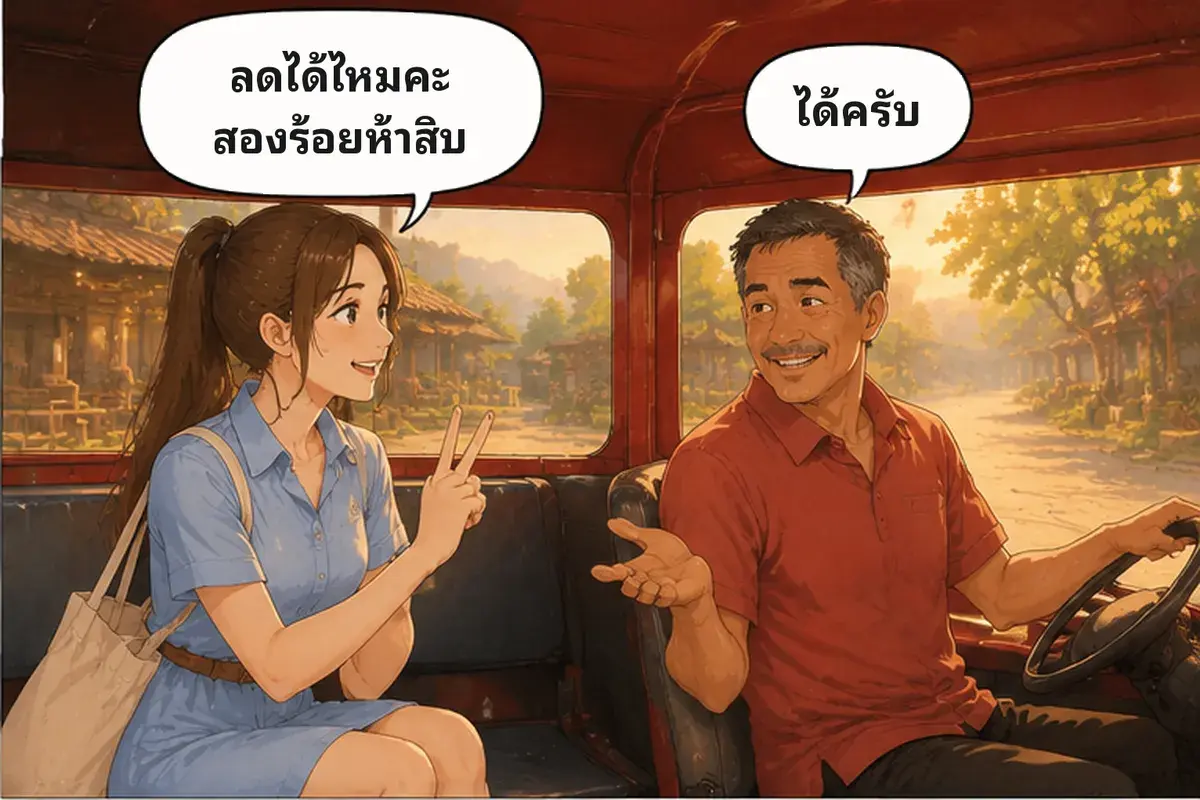
- ยานา
ลดได้ไหมคะ สองร้อยห้าสิบ
Can you lower the price? Two hundred fifty (woman speaking).
- คนขับ
ได้ครับ
All right (man speaking).

- ดีมา
ผมนั่งข้างหน้าได้ไหมครับ
Can I sit in front? (man speaking)
- คนขับ
ได้ครับ ข้างหน้ามีแอร์ ขึ้นมาเลยครับ
Sure. There's air conditioning in front. Come on up (man speaking).

- คนขับ
ถึงหมู่บ้านแล้วครับ จอดที่ไหนครับ
We've reached the village. Where should I stop? (man speaking)
- ยานา
เลยสี่แยกไปอีกนิดหน่อยค่ะ จอดหน้าร้านข้าวซอย ซ้ายมือค่ะ
Go past the intersection, a little further. Stop in front of the khao soi shop, on the left (woman speaking).

- คนขับ
ตรงนี้ใช่ไหมครับ
Right here, right? (man speaking)
- ยานา
ใช่ค่ะ นี่ค่ะ สองร้อยห้าสิบบาท
Yes. Here you go: two hundred fifty baht (woman speaking).
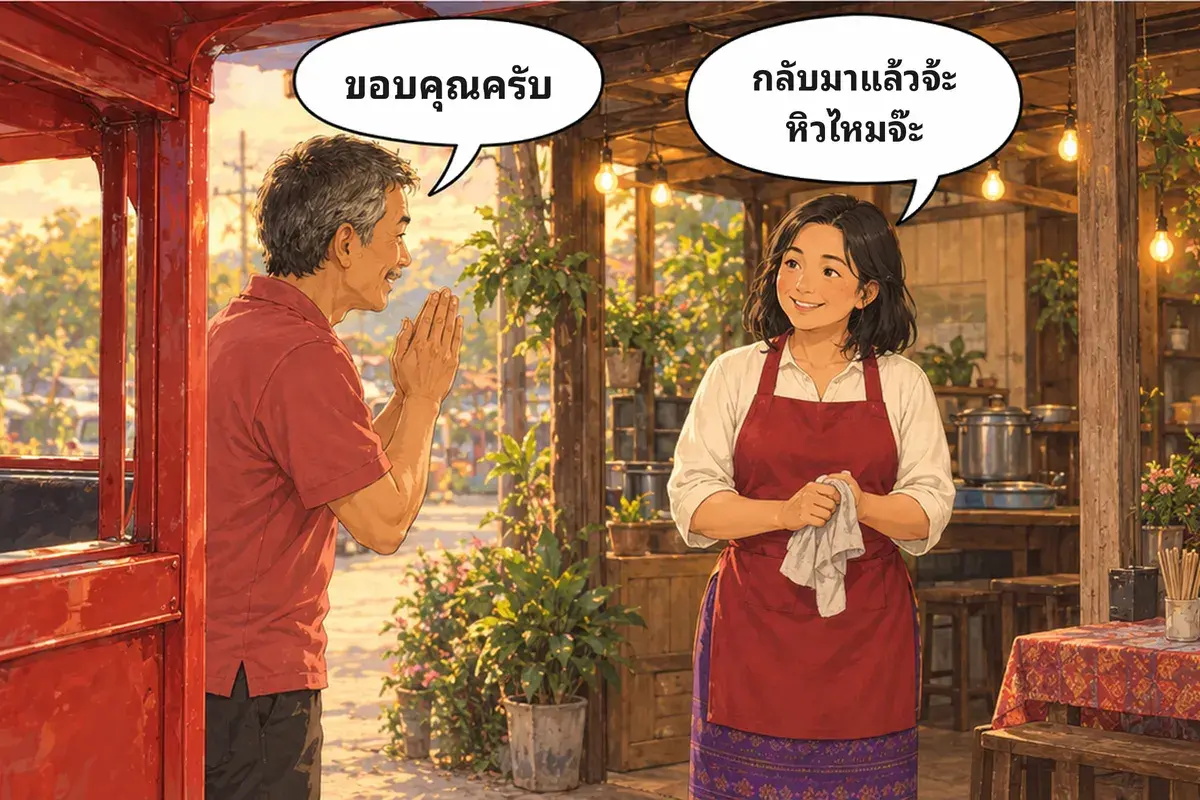
- คนขับ
ขอบคุณครับ
Thank you (man speaking).
- ป้าศรี
กลับมาแล้วจ้ะ หิวไหมจ๊ะ
You're back! Are you hungry?
Grammar for this text
- ค่ารถเท่าไหร่คะ — How much is the fare? (woman speaking)
ค่า(kâa) + a thing means "the charge for…":ค่ารถis the fare. Ask the price before you get in. - ต้องเหมา —
เหมา(mǎo) means "hire the whole truck". For a long ride a red truck charges one price for the whole truck, notคนละ(per person): ask how much first, then name your own price. - ขึ้นมาเลยครับ —
ขึ้น มาmeans "climb up to me": the driver sits in the cab and calls you over, so it'sมา. The driver in the first text sent his passengers into the back, away from him, withขึ้นไป. - ผมนั่งข้างหน้าได้ไหมครับ —
ข้างหน้า(kâang-nâa) means "in front": in the cab, next to the driver. That's usually fine when you've hired the whole truck. - เลยสี่แยกไปอีกนิดหน่อยค่ะ — here
เลยis a verb, "go past": first what you pass (เลย+สี่แยก, the intersection), then where to go on (ไป). - จอดหน้าร้านข้าวซอย —
จอด(jɔ̀ɔt) means "stop (the car)";หน้าmeans "in front of". This is how you ask to be dropped off at a landmark. - ซ้ายมือค่ะ — "on the left": how you say which side of the road a house or a shop is on. On the right is
ขวามือ(kwǎa-mʉʉ).
Words and grammar of the unit: Get around by red truck.
Learn the words from the texts with flashcards
In the app, you can tap any word in a text to see its translation, forms and examples, and new words stick with flashcards. 15 minutes a day.
Start for freeEverything is open for free. No card needed to sign up.