

Thai dialogue with translation · A2 · 13 lines
ผมมาถึงแล้วครับ อยู่ตรงไหนครับ I'm here. Where are you?
Comic · 11 panels

- คนขับ
ฮัลโหลครับ ผมมาถึงแล้วครับ อยู่ตรงไหนครับ
Hello. I've arrived. Where are you? (man speaking)

- ยานา
ขอโทษค่ะ ฟังไม่ทันค่ะ พูดช้าๆหน่อยได้ไหมคะ
Sorry, I can't keep up. Could you speak more slowly? (woman speaking)
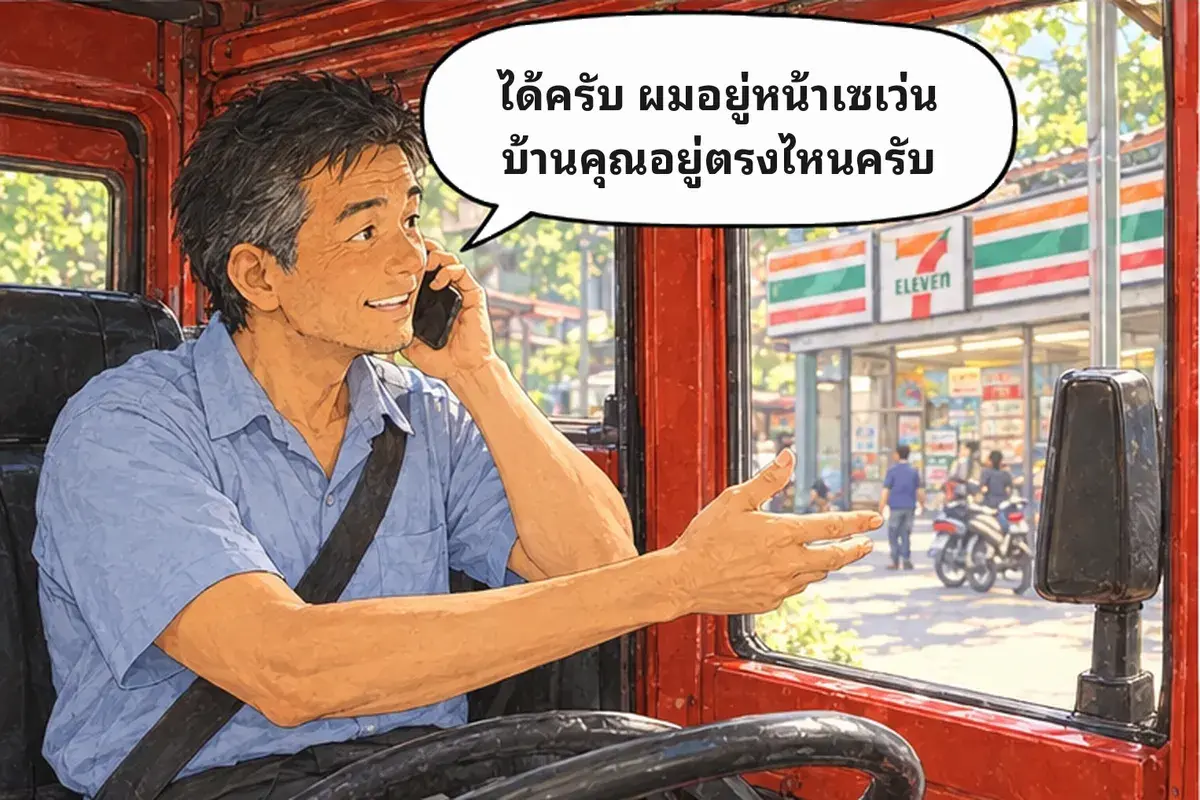
- คนขับ
ได้ครับ ผมอยู่หน้าเซเว่น บ้านคุณอยู่ตรงไหนครับ
Sure. I'm in front of 7-Eleven. Where's your house? (man speaking)

- ยานา
ในซอยข้างเซเว่นค่ะ หน้าบ้านมีร้านข้าวซอยค่ะ
In the soi next to 7-Eleven. In front of the house there's a khao soi shop (woman speaking).
- คนขับ
อ๋อ ร้านป้าศรี รู้จักครับ รถเข้าซอยได้หรือเปล่าครับ
Oh, Auntie Sri's shop. I know it. Can a car get into the soi or not? (man speaking)

- ยานา
ได้ค่ะ แต่ซอยแคบนิดหน่อยค่ะ
It can, but the soi is a little narrow (woman speaking).

- คนขับ
ไม่เป็นไรครับ ส่งโลเคชั่นมาทางแชทได้ไหมครับ
No problem. Could you send your location through chat? (man speaking)

- ยานา
ได้ค่ะ ส่งแล้วค่ะ อีกกี่นาทีคะ
Yes. I've sent it. How many more minutes? (woman speaking)

- คนขับ
สามนาทีครับ
Three minutes (man speaking).
- นัท
เก่งมากครับพี่ยานา เขาพูดเร็วมาก
Well done, Yana! He talked really fast (man speaking).

- ยานา
ตอนแรกฉันฟังไม่ทันค่ะ แต่ยิ่งฟังยิ่งคุ้นหูค่ะ
At first I couldn't keep up. But the more I listen, the more familiar it sounds (woman speaking).

- นัท
ได้ยินไหมครับ เขาพูดคับ ไม่ได้พูดครับ
Did you hear? He said คับ, not ครับ (man speaking).

- ยานา
ได้ยินค่ะ ภาษาพูดกับภาษาเขียนไม่เหมือนกันเลยค่ะ
I heard it. Spoken language and written language aren't the same at all (woman speaking).
Grammar for this text
- ฟังไม่ทันค่ะ — I can't keep up.
ทันmeans "to keep up with". Don't mix it up with "I don't understand what it's about": there the meaning is unclear, but here the speech is simply too fast, even though the words are familiar. - ผมอยู่หน้าเซเว่น — I'm in front of 7-Eleven. The driver names a landmark, not an address: 7-Elevens (
เซเว่น) are on every corner and easy to spot.ตรงไหนmeans "where exactly". - ซอยแคบนิดหน่อยค่ะ — The soi is a little narrow.
แคบmeans "narrow" and is used for a side street, a road or a room. The driver immediately asks whether the car can get in. - ส่งโลเคชั่นมาทางแชทได้ไหมครับ — Could you send your location through chat? In Thailand an address is more often explained with a point on a map than with words.
ทางhere means "through",ทางแชทmeans "through chat", andมาmeans "to me". - ยิ่งฟังยิ่งคุ้นหู — The more I listen, the more familiar it sounds.
ยิ่ง… ยิ่ง…means "the more… the more…" andคุ้นหูmeans "familiar to the ear". A good way to say your ear is getting used to it. - เขาพูดคับ — He said
คับ.คับisครับsaid fast: theรis gone, and it sounds like káp. Some people write it that way in chats, but to be polite, writeครับin full.
Words and grammar of the unit: Understand fast speech.
Learn the words from the texts with flashcards
In the app, you can tap any word in a text to see its translation, forms and examples, and new words stick with flashcards. 15 minutes a day.
Start for freeEverything is open for free. No card needed to sign up.